By Sym Posey | The Birmingham Times
With May 1963 the most pivotal month of the Birmingham Civil Rights Movement, Nadine Smith can proudly remember her fight for freedom.
Smith, 13 years old at that time, would become one of more than 1,000 children ranging from elementary to high school ages demonstrating en masse against the Birmingham Police Department and arrested beginning May 2, most in groups ranging in size from 30 to 60.
“I went to jail the day after, May 3 and I was in jail for nine days,” Smith told The Birmingham Times. “They took us to the city jail and because we were too young to be there, they put us back on a bus and took us to juvenile court. That’s where we got processed. From juvenile court, they took us to the Alabama Fairgrounds which is now the CrossPlex. When they took us to the CrossPlex, it was an old air force barracks and that’s where I stayed for those nine days.”
Early on, Smith became known as one of the city’s youngest Foot Soldiers which “means that I was one of the first to help with trying to make a change within Birmingham,” she said.
Initiated and organized on May 2, 1963 by Reverend James Bevel, students across the city skipped school and marched through downtown Birmingham. Eight days later, leaders of the demonstrations, represented by Dr. Martin Luther King Jr., and the white business community, represented by Sidney Smyer, reach an agreement including an end to demonstrations and a cooling-off period.
“[I] knew that it was for a cause,” Smith said. “My parents were heavily involved with the (Civil Rights) Movements so I knew what I was going for. I didn’t just go because of a fun thing. I went because I wanted to be a part of the group that made a change.”
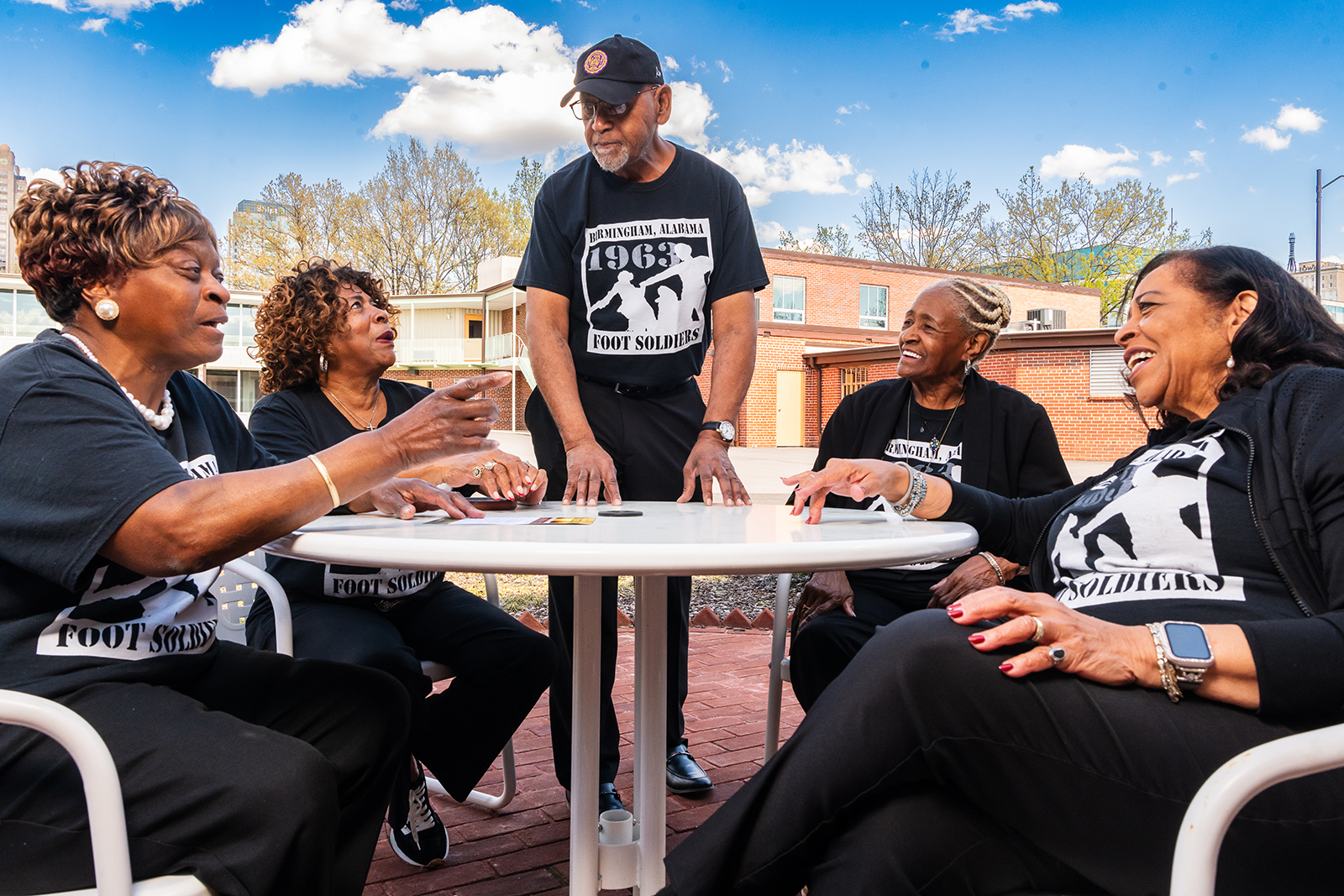
Today, Smith is still working to make a change through the Civil Rights Activist Committee, an organization dedicated to documenting the stories of Foot Soldiers.
The group is led by Paulette Roby, who currently serves as the Chair, a role she has held since 2014. “I am proud to work in that space. Telling my story, I feel like there is something I could say to someone that will listen that will help them,” she said. “There’s something there for them to grasp from the conversations we will have.”
Roby pointed out that the late Tommy Wrenn, founded the group and served as a field staffer for Rev. Martin Luther King Jr’s Southern Christian Leadership Conference (SCLC). “[Wrenn] wanted a place for the Foot Soldiers to tell their stories,” Roby said. “He wanted a place so that they can preserve the stories by collecting their data. We have some people who don’t like to talk and tell their stories. I am one of the ones that will tell my story and I’m going to keep on telling it, because the more I tell it, the more people will want to hear,” said Roby, adding, “it’s important to keep the legacy of the Foot Soldiers alive for the future generations.
Foot Soldiers did more than march, Roby said. “A Foot Soldier could be a person that was participating in the Movement in anyway. It could’ve been someone who put money in the collection box to help get others out of jail. A Foot Soldier could have been a person who picked up other people in their car. I feel like anybody who participated in the movement is considered a Foot Soldier,” she said.
Birmingham, Alabama
Timelime: 1963
Wednesday, May 1
Judge William Jenkins hands down sentences for five days in jail and $50 fines for eleven leaders held in contempt of court for ignoring his April 11 injunction.
Thursday, May 2
Children demonstrate en masse against the Birmingham Police Department and Commissioner Bull Connor. Nearly one thousand children are arrested, most in groups ranging in size from thirty to sixty.
Friday, May 3 and Saturday, May 4
Demonstrations involving children continue. Connor responds with police dogs and water hoses, infuriating demonstrators and onlookers.
Sunday, May 5
A mass rally is held at the New Pilgrim Baptist Church (Sixth Avenue and 10th Street South). The rally culminates with a march to the Southside jail and a massive demonstration in Memorial Park across from the jail.
Monday, May 6
Several groups of children and adults that had assembled at the Sixteenth Street Baptist Church are arrested.
Tuesday, May 7
Children continue to demonstrate. Shuttlesworth is hospitalized with injuries inflicted by high-powered water hoses on the steps on the Sixteenth Street Baptist Church.
Wednesday, May 8
Demonstrations are suspended. Movement leaders say white business leaders are acting in good faith to settle issues of concern.
Friday, May 10
Leaders of the demonstrations, represented by Dr. King, and the white business community, represented by Sidney Smyer, reach an agreement including an end to demonstrations and a cooling-off period.
Saturday, May 11
The A. G. Gaston Motel and the home of the Rev. Alfred Daniel (A.D.) King are bombed. Three people are injured in the Gaston Motel explosion. King’s family escapes injury.
Sunday, May 12
President John Fitzgerald Kennedy sends U.S. troops trained in riot control to military bases near Birmingham and pledges that the federal government will “do whatever must be done” to preserve order in the strife-torn city.
Monday, May 20
The Birmingham Board of Education issues an order directing the expulsion of 1,081 Black students arrested in Birmingham racial demonstrations.
Wednesday, May 22
A federal judge rules that the children were illegally expelled and orders the student demonstrators to return to class.
Thursday, May 23
Alabama Supreme Court backs Birmingham voters in their decision to change to mayor-council form of government.
Thursday, May 23
More than one thousand Black student demonstrators return to class under a federal judge’s order that they had been illegally expelled.
Tuesday, May 28
U.S. District Judge Seybourn H. Lynne refuses to order desegregation of Birmingham schools.