By Javacia Harris Bowser | For the Birmingham Times
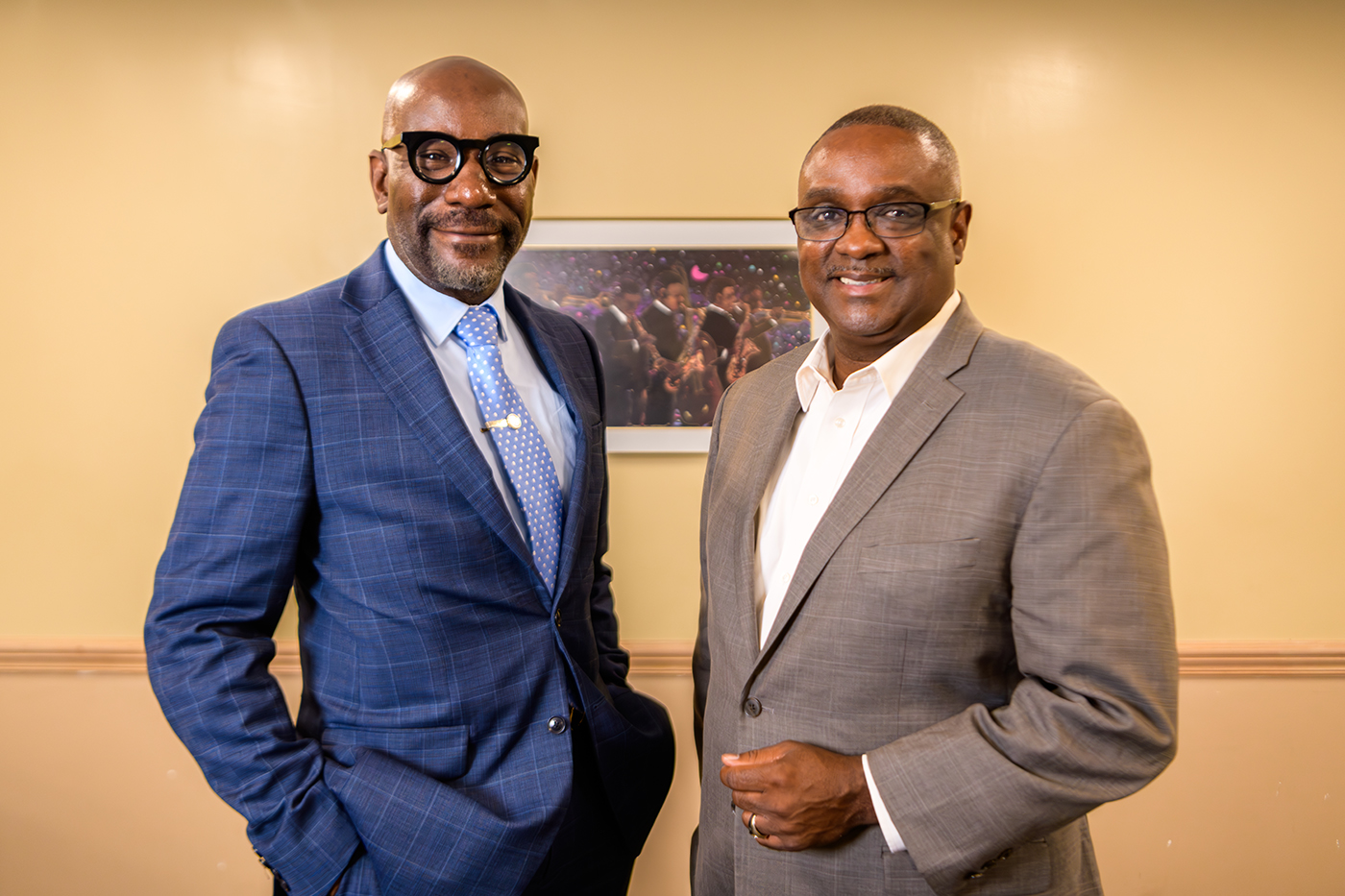
Birmingham City Schools (BCS) Superintendent Mark Sullivan, Ed.D., and Jefferson County Schools (JEFCOED) Superintendent Walter Gonsoulin, Ed.D., are used to challenges. And as both prepare for next week’s start of the 2025–2026 school term, this year is no different.
In mid-July the U.S. Supreme Court cleared the way for the Trump administration to fire more than 1,000 U.S. Department of Education (USDOE) employees. The administration also notified states that it was withholding over $6 billion in previously approved federal education grants to schools —and then, on Friday, July 25, announced that it would release the money.
But if anyone could surmount hurdles facing education it would be Gonsoulin and Sullivan, both of whom have made history and headlines during their tenures.
Gonsoulin, the first African American to lead Alabama’s second-largest public school system, this year also became the state’s first school leader to be named National Superintendent of the Year.
Since his 2019 appointment, he’s been celebrated for his efforts on behalf of the more than 36,000 students attending JEFCOED schools — including growing magnet programs (schools designed to attract children of various socioeconomic backgrounds and academic achievement levels), enhancing career and technical education options, and offering students opportunities to earn a college degree while completing high school.
Meanwhile, Sullivan has been praised nationally for several successes, including increasing math proficiency from 4 percent to 19 percent between 2021 and 2023, improving third grade reading proficiency from 50 percent to 81 percent, and decreasing chronic absenteeism while increasing enrollment. He has also added a number of programs to offer additional instruction, personalized academic interventions, and mental health support to the more than 19,000 students that BCS serves.
And these gains came for both despite taking the helm of their districts in the midst of the COVID-19 pandemic in 2020, when many school systems fell behind.
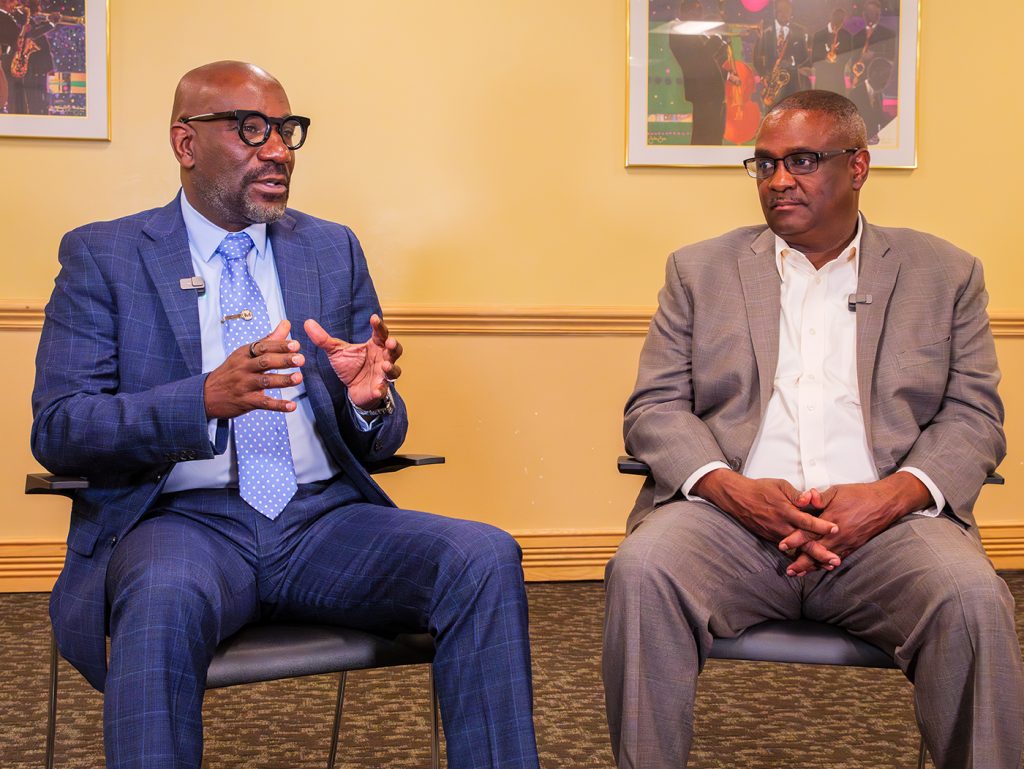
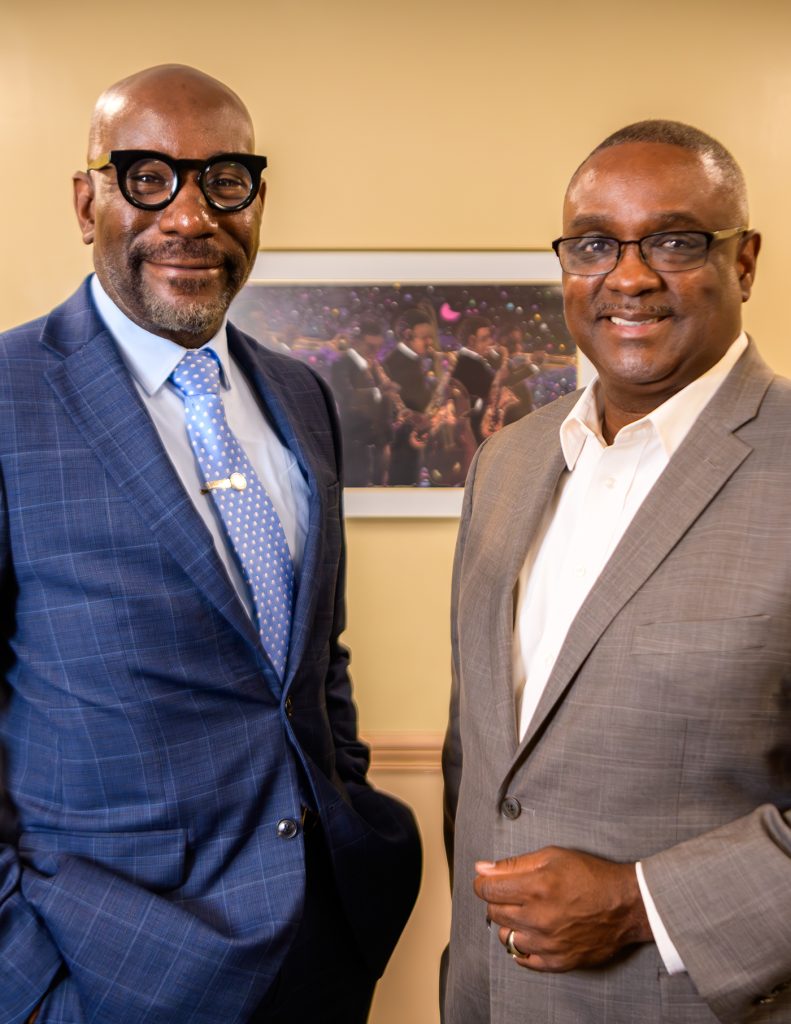
Earlier this month, The Birmingham Times brought together the two superintendents for their first-ever joint public media interview. During the 90-minute candid conversation, held at the Birmingham Public Library’s Titusville branch, Sullivan and Gonsoulin discussed several topics, such as the possible dismantling of the USDOE and the need for more male teachers — and offered words of encouragement to one another. (Both are also members of Alphi Phi Alpha Fraternity, Inc.)
Most of all, the two superintendents reflected on how they hope to shift the narrative about public education and help write the story of a bright future for Alabama’s students.
The first day of the 2025–2026 school year for both Jefferson County and Birmingham is August 7.
How Gonsoulin and Sullivan Met
Sullivan: I met Walter Gonsoulin when he was superintendent in Fairfield, [Alabama], and I was a principal at Phillips Academy. Walter brought a group of individuals from Fairfield to visit our school. … During the pandemic, I was calling on him all the time. … Walter has been like a sounding board for me as my career moved on into superintendency.
Gonsoulin: When I visited Phillips Academy and met Dr. Sullivan, … I immediately grew a respect for a fellow educator and felt that he knew this business called education. So, it was a pleasure for me to meet him. But in getting to know him further than that — further than just the educator but as a man and as a person — I also got to know his heart for education and for people, and I began to respect that, as well.
On the Need for More Male Teachers
Sullivan: My first permanent position was at Dupuy [Elementary School in Birmingham’s Kingston neighborhood]. The principal at the time was Samuetta Drew, [a BCS teacher, principal, and administrator, who retired from the system in 2013]. She hired three male teachers that year, and we were the only male teachers in the entire building. We were all brand new teachers, and the kids had never been taught by a male teacher before. They did kind of look at me like, ‘Yo, who are you?’ I would wear a shirt and tie to work and the kids would say, ‘Are you a preacher?’ … I still know many of the students in that class, and that [experience] instilled a love for education in me.
I think both male and female students need to have diverse teachers, diverse perspectives in the classroom. If you go to kindergarten and pre-K classrooms, you will see that boys and girls are equally engaged in academics. But walk up to 4th and 5th grade, then you start seeing a little boy sitting over the corner because he’s not behaving well or [another] boy with his head on his desk, but you still see girls actively involved in the education process.
Boys need to see that academics [and] being intelligent are things to aspire to. Sometimes they see through videos, through music, even through just life and the environment they grow up in that being intelligent, academically smart, is not something that they see as being cool. … I think that by being exposed to what masculinity looks like all along that spectrum, boys can [say to themselves], “I can fit in here. It’s OK for me to learn.”
Gonsoulin: And having males in schools provides role models not just for the students but for other men, too.
Gonsoulin’s National Superintendent of the Year Award
Gonsoulin: When I was about to interview for the state [award], myself, Dr. Sullivan, and I think it was two other superintendents were standing around talking, and the question was asked, “Can anyone from Alabama actually represent us and compete at the national level?” One of the other superintendents asked that question and didn’t think that anyone could. Dr. Sullivan immediately said, “What are you talking about? He can!” [as he pointed to me].
Sullivan: I said, “Walter, you’re going to be the state superintendent, and you’re going to be the national superintendent.” I go to national conferences all the time, and I see the work around the nation, and I would put the work that we’re doing here in Alabama up against anybody. I knew that Walter started a program involving school choice with his high schools. Those types of programs are not just innovative here in Jefferson County, Alabama. Those are nationally innovative programs, so I knew Walter was going to win.
Gonsoulin: With the school choice conversation, I started thinking about that because that became and is still our competition, whether we’re talking about public charter or whether we’re talking about private schools, parochial schools. And I didn’t have a problem with the concept of a parent choosing where their child would go to school. The problem I had was that public education was being left out of the conversation.
On the Possible Dismantling the USDOE
Sullivan: The [USDOE] supports students in our district in a lot of ways. All of our schools are Title I. Eighty-seven percent of students qualify for free, reduced lunch, 89 percent of our students are African American, 11 percent of our students are Latino. We receive [money] from the federal government through Title I and … for Title II, which is for professional development.
One of the things we learned during the pandemic, when we received all of the COVID money, was that we were able to see some positive results. People say you can’t throw money at a problem, but if you have communities and school systems that have been historically underfunded and you bring them up to level funding, you’ll be surprised at the results you get.
It’s really targeting poor, minority, and disadvantaged students when you cut the [USDOE]. … So, then you ask yourself, “What is the end goal? And what kind of country do we want to be? Do we want to be a country where we truly say that every child, regardless of circumstance, has an opportunity to achieve? Or are you saying that only students in districts where people who have funding themselves and in their communities to fund certain programs can succeed … and other students have to struggle?
Gonsoulin: What I don’t want compromised is the fact that children are able to go from kindergarten or pre-K to exiting high school and have the opportunity to pursue their dreams, whether that’s going to college or into a career that really counts. In the end, that’s really what matters. What are we preparing them for?
When we talk about commencement day, some people view it as the end, but commencement doesn’t mean the end — it means the beginning. And, so, what public education should do, and has done, is answer the question, “The beginning of what? What’s next?”
Sullivan: When you talk about the most vulnerable students, you’re talking about special education students, and the [USDOE] makes sure those kids are being served. You’re talking about kids who speak a language other than English. You’re talking about kids who have disabilities. The [USDOE] helps to manage [those programs] and ensure that those students’ rights and their education are protected. How do we do that when you cut or dismantle the organization that is supposed to be holding us accountable for doing the right things for children?
Gonsoulin: If anything is dismantled, anything is built, it needs to be under the guidance of people who have made education their livelihood. You cannot make those decisions without people who understand how education works. We’re not saying we don’t want you to review something. We’re not saying we don’t want to change that. We’re saying we’re equipped to do all of that, but you cannot freeze the process of education.
The Challenges Ahead
Gonsoulin: The more you take away dollars from the public school system, what does that allow us to do? … In Jefferson County, we do that by being as competitive as the people we’re competing against — [charter, private, and parochial schools] — by outcompeting them, by providing options that make it so our children and our families don’t want to leave.
Sullivan: There appears to be … an attack on public education, even though the vast majority of students in this state attend public schools and the vast majority of students nationwide attend public schools. There seems to be a level of distrust toward what’s being taught in public education. So, we have to, as Walter indicated, compete. [JEFCOED has] Signature Academies, and [BCS] has had Academies since 2014. … We provide transportation for students who want to go and learn culinary arts, which are available at Wenonah High School. If you want business finance, that’s at Woodlawn [High School]. If you want health care, that’s at Huffman and Carver [high schools]. Engineering is at Ramsay [High School].
Gonsoulin: The narrative that public education is not doing a good job for our children is not accurate. So, our job is going to be communicating that and communicating it with the right data, the accurate data.
Words of Encouragement Ahead of the Upcoming School Year
Sullivan: Walter, I have known you for quite some time. You are a man of integrity. I would say that you are, probably just like I am, going to have some really bad days and have some really good days. Don’t let your bad days pull you too far down, and don’t let your good days pull you too high up. Keep your same even-keeled personality, and I know you’re going to continue to see great success in Jefferson County.
Gonsoulin: Thank you, Mark. I appreciate that. You’ve not changed from the person that I met. You’re the same guy, just a little bit older. When I walked into Phillips Academy that day, I saw the ultimate educator, the ultimate professional. … I really was just listening to your ideology, and I was like, “OK, this guy knows what he’s talking about. He knows curriculum.” So, when I say you’ve not changed, I see that as you’re over the district, you’ve brought that same passion, that same professionalism, that same expertise — and it’s going to work. Keep running that play, man, and it’s going to help the children we serve and the Greater Birmingham area as a whole.
Gonsoulin on School Choice and Signature Academies
Gonsoulin: With the school choice conversation, I started thinking about that because it became and is still our competition, whether we’re talking about public charter or whether we’re talking about private schools, parochial schools. I didn’t have a problem with the concept of a parent choosing where their child would go to school. The problem I had was that public education was being left out of the conversation.
So, [JEFCOED] started creating our own choice model, where we clustered our high schools into four different regions: northern, southern, eastern, and western. … We put certain Signature Academies — [an innovative and unique approach to education that is designed to increase student engagement and foster in-depth learning within specific fields of interest] — in each one of those zones, which are typically grouped by three high schools. … If you’re a student at Pinson Valley High School and you want to stay [there], you could be involved in the [Art–Special Effects Academy], but if you were interested in early college, on a part-time basis you could go to Center Point High School, where you could earn a high school diploma and an associate’s degree at the same time [through one of the ACE–College Excellence pathways]. Or you could go to Mortimer Jordan High School and [be part of the Culinary Arts Academy]. … When you get a teacher who loves and is passionate about what they’re teaching, and then you get a child who’s passionate about learning, magic occurs.
Sullivan on the BCS Intersession Programs
Sullivan: Coming out of the [COVID-19] pandemic, we saw that our test scores were not what we wanted them to be. We always talk about this in education: summer slide, when kids are out for three months during the summer and you spend the first two weeks or maybe three weeks of school just remediating kids. It’s a waste of 14 or 21 days of school. In most industrialized countries, summer break is unheard of. So, I said, “Well, if now is not the time for us to do something different and innovative, when is the time?” I took [the idea of Intersession Programs] to the school board at the time, and I couldn’t really get the votes I needed. Then I surveyed my parents, and they were like, “No, we don’t want to do year-round school.” I surveyed the staff and the unions next, and they were like, “No.” Then we surveyed the kids, and they were like, “H-E-double hockey sticks, No!” So, what we did was compromise, and we started the Intersession Program.
Students attend school for nine weeks, and they’re out for a week. … During the week that they’re out, we continue to have school. We have remediation and intervention support for students. We have prep classes for the ACT Test, [a standardized test used for college admissions in the United States], at the high schools. Kids also get a chance to do [Science, Technology, Engineering, and Mathematics (STEM)] projects. By the end of that [inaugural] year, we did [Intersession Programs] three times a year. We had 7,000 students in school during the weeks when they didn’t have to be — that’s about a third of our total student population who get nearly 200 days of instruction. [Students typically receive 180 days of instruction.]
I was telling my school board and some of the teachers that if [former University of Alabama Football Coach] Nick Saban got 15 extra days of practice, and nobody else got their 15 extra days practice, he’d have jumped all over it. [Intersession Programs are] just like that for students — giving them extra days of practice so they can be better prepared.