By Grace Howard | bhamnow.com
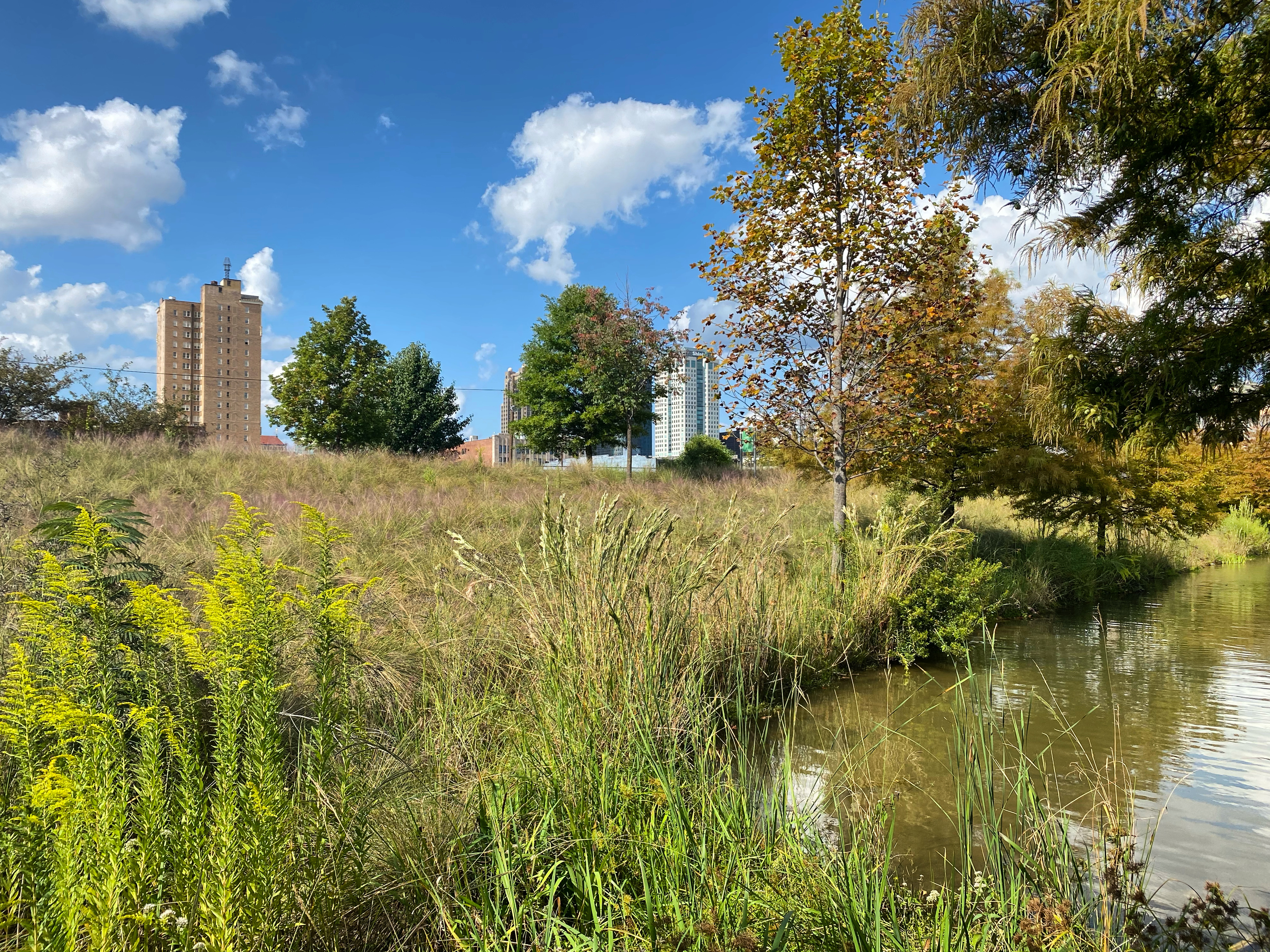
If you’ve ever watched a sunset over the Birmingham skyline from the green slopes of Railroad Park you know the feeling of a place where joggers, students, families and a diverse ecosystem of wildlife all share the same open air. This year, as the park celebrates its 15th anniversary, a team of Birmingham women is telling the story behind the space that changed everything for the Magic City.
Their new documentary, “Birmingham’s Front Lawn: 15 Years of Railroad Park,” premieres October 16 at the Lyric Theatre. Produced by filmmaker and educator Michele Forman, community leader Ginger Jefferson and cinematographer Marika Gray Taylor, the film captures how an underutilized industrial corridor became one of the city’s most transformative civic spaces.
Bham Now sat down with the team behind this film to learn more about the history and impact of Railroad Park and what makes “Birmingham’s Front Lawn” a must-see.
Swampy Land
It’s hard to imagine now, but before Railroad Park opened in 2010, the blocks between the railroad tracks and UAB were a stretch of swampy land beneath the skyline, scattered with abandoned railcars and warehouses.
Designed by internationally renowned landscape architect Tom Leader in partnership with local firm Macknally Land Design, Railroad Park was built to reflect Birmingham, honoring its industrial roots while embracing its natural beauty and future potential.
Leader’s design mirrors the city’s topography, with rolling lawns, ponds and gardens representing the hills and valleys of central Alabama. Subtle steel details echo Birmingham’s industrial heritage, while native plantings invite wildlife back into the city’s core. In fact, over 120 bird species have been documented in Railroad Park according to Alabama Audubon.
“Tom wanted it to feel like a series of rooms: open and inspiring but also welcoming. There are some very subtle things, like the old tracks that are reminiscent of the railroad, while not taking away from the fact that there’s a live railroad right there,” said Camille Spratling, Executive Director of Railroad Park Foundation. “The industrial look also hearkens to Sloss Furnaces and other pieces of our history that are a part of how Birmingham came to be. It serves as a microcosm of Birmingham in many ways.”
“Everybody Played A Part”
The story of Railroad Park didn’t happen overnight. Its roots stretch back to the 1970s, when local residents and city leaders began to imagine how to transform a stretch of unused rail land into something that could bring people together.
“There were hundreds of people involved over decades. It crossed mayoral administrations, involved city planners, private citizens, foundations, corporations and an incredible group called Friends of the Railroad Reservation District (FoRRd). Everyone played a part,” said Spratling.
That collaborative spirit—and the patience to see it through—became the soul of the park.
“There were over 100 listening sessions held with community members about what they wanted to see. That’s the secret sauce. The community built it,” said the Railroad Park Foundation executive director.
The park now welcomes roughly half a million visitors every year, serving as a backdrop for everything from yoga classes and concerts to first dates and even engagements.
Beyond the environmental benefits, the park’s economic impact has been equally impressive. A study from Georgia Tech found that Railroad Park has spurred more than half a billion dollars in private investment, serving as the spark for developments like Regions Field and the surrounding Parkside district.
As Camille put it, “Railroad Park was the first domino. Everything else followed.”
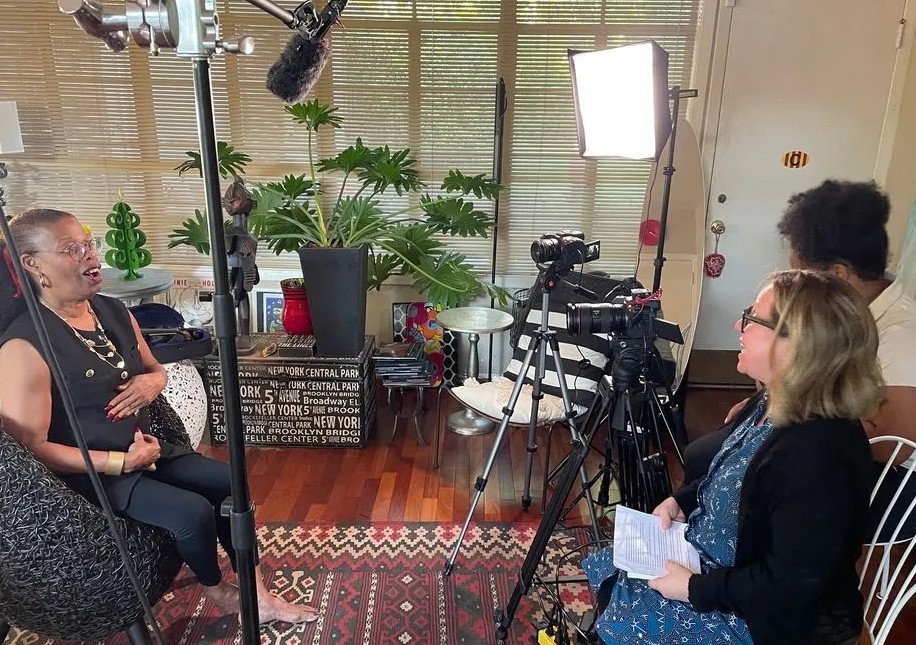
Like the park itself, the creation of “Birmingham’s Front Lawn: 15 Years of Railroad Park” was long in the making for director Michele Forman.
“My connection goes back to a student film about graffiti and the railroad corridor in 2004,” said Michele Forman, Director and Co-producer. “The designer of the park, Tom Leader, saw it and reached out. That creative connection between a student’s film and the park’s designer was kind of the spark that started it all.”
Community Persistence
Years later, as the 15th anniversary approached, Forman teamed up with Jefferson and cinematographer Marika Gray Taylor to tell the park’s story through film. Together, they created a visually rich, emotionally resonant documentary look at how a community’s persistence reshaped its city.
The film isn’t just a retrospective; it’s a celebration of collective action, creative vision and the idea that public spaces belong to everyone.
“There were people who told the design team during those early community meetings that they had never been across the railroad tracks,” said Ginger Jefferson, Co-producer. “That’s what this park has done. It’s connected communities.”
Forman’s collaborator and cinematographer, Marika Gray Taylor, describes it simply: “Our goal was to make it immersive—to help you feel what you feel in the park. The joy, the community, the togetherness.”
Following the film, there will be a panel discussion with key leaders involved with Railroad Park’s inception. Panel members include:
- Spratling
- Architect Tom Leader
- Bill Gilchrist, former director of the Department of Planning, Engineering & Permits for the City of Birmingham, currently with the City of Oakland, CA
- Renee Kemp-Rotan, former Director Capital Projects Mayor’s Office at City of Birmingham, currently CEO studiorotan
- Deontée Gordon, Founding Junior Board Member and former Board Member of Railroad Park Foundation, currently CEO, Tech Birmingham
What: Birmingham’s Front Lawn: 15 Years of Railroad Park Where: Lyric Theatre, Birmingham 1800 3rd Ave N, Birmingham, AL 35203 When: Wednesday, October 16 Doors open 5 p.m. Film begins 5:30 p.m. Panel discussion 6:25 p.m. Buy your ticket here.