By Anthony Cook | Alabama News Center
Students from five historically Black colleges and universities (HBCUs) squared off recently in the fourth annual HBCU Energy Hackathon presented by the American Association of Blacks in Energy (AABE). The event featured teams from Alabama A&M University, Tuskegee University, Talladega College, Lawson State Community College and Trenholm State Community College competing for prizes totaling $17,500.
The Birmingham Chapter of AABE partnered with the Alabama Power Foundation to present the hackathon last month at Alabama Power headquarters in downtown Birmingham. The purpose is to introduce students to human-centered design thinking and foster innovation around energy-related challenges.
The hallenge was to “Quantify the Impact: A Digital Tool for Non-Energy Benefits of Home Efficiency.” Students were tasked with designing a digital platform (web or mobile) to estimate and visualize non-energy benefits – such as health improvements, economic gains, and social outcomes – resulting from energy efficiency upgrades. The teams were scored on creativity, innovation, potential impact and presentation delivery.
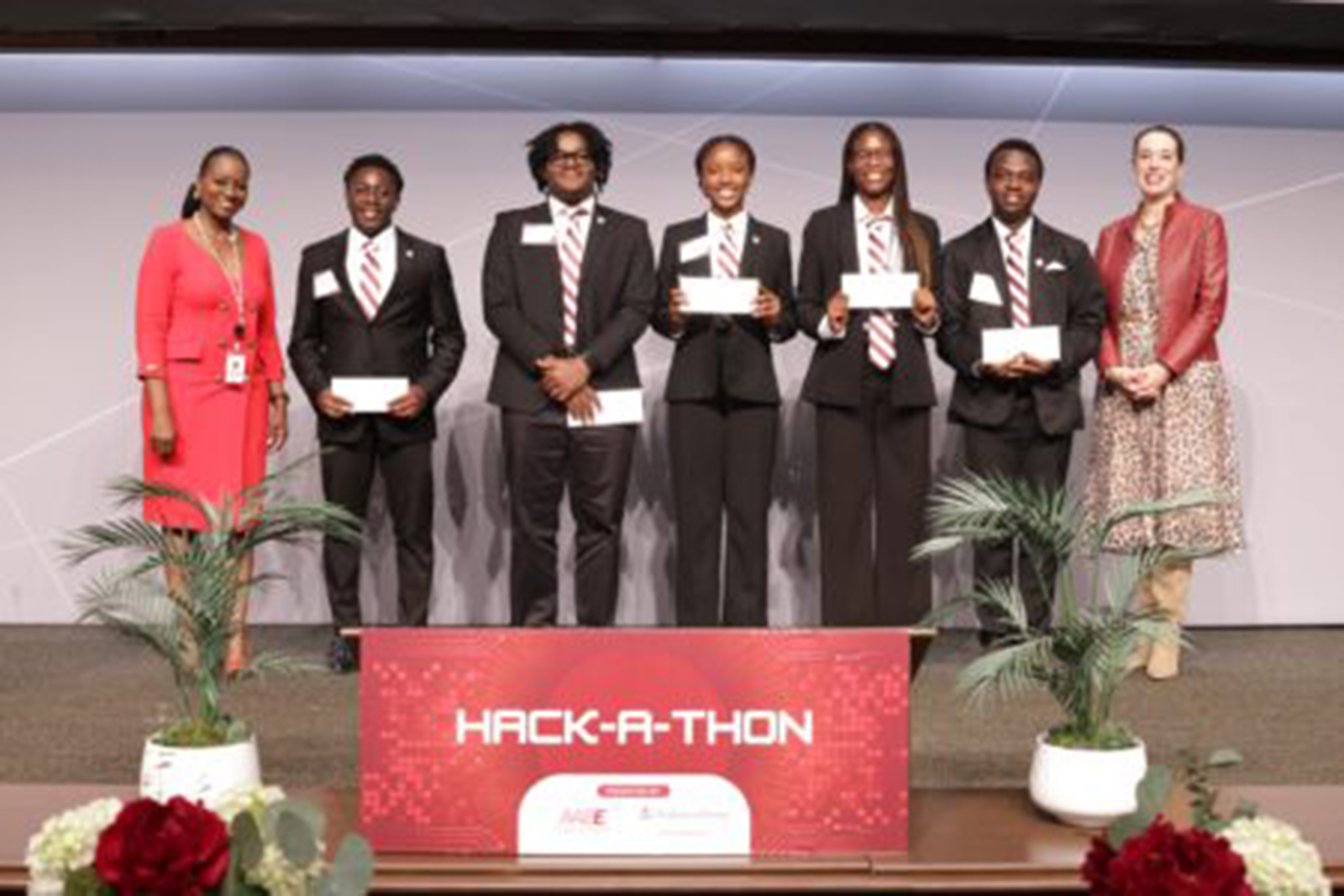
Winners by division were: Best four-year institution, Alabama A&M; Best two-year institution, Lawson State Community College; and Community impact, Talladega College.The HBCU Energy Hackathon is just one facet of Alabama Power’s and the Alabama Power Foundation’s ongoing support of Alabama HBCUs. So far this year, the Foundation has awarded more than $1.2 million in grants to support HBCU institutions and students.
“We’re committed to creating opportunities where students can showcase their talents and connect with mentors who are invested in their growth,” said Staci Brooks, Alabama Power VP of Charitable Giving. “The hackathon is a springboard for future leaders, and it’s inspiring to see students seize every opportunity to learn and lead.”
Serving as judges were Dr. Brittany Holloman, executive director of HBCU CARES; Chris Blake, Alabama Power assistant treasurer; Estes Hughes, vice president of innovation and entrepreneurship for the Economic Development Partnership of Alabama; Dr. Patrick Murphy, Goodrich chair and professor, director for the J. Frank Barefield Jr. Entrepreneurship Program at the University of Alabama at Birmingham; and Monica McShan, supplier inclusion manager for Southern Company Services.
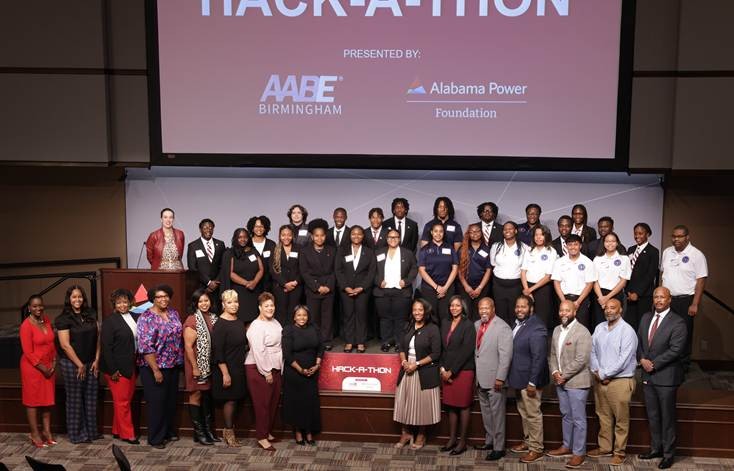
Students participating in this year’s hackathon included:
- Tuskegee University — Team: Tuskegee Golden Roar
- Christopher Anderson — Junior, Computer Science
- Madison Harper — Junior, Computer Engineering
- Izhar Jean — Sophomore, Electrical Engineering
- Diara Lawrence — Senior, Mechanical Engineering
- Azya Wilson — Senior, Mechanical Engineering
Lawson State Community College — Team: Cougar W.A.T.T.S.
- Taylor Grace — Sophomore, Aerospace Engineering
- Akira Hubbard — Sophomore, Electrical Engineering
- McKinley — Freshman, General Studies (Civil Engineering concentration)
- Dale Miller — Sophomore, Computer Science
- AJay Thedford — Sophomore, Graphic Arts Communication / Media Production
Talladega College — Team: Dega Tornadoes
- Abigail Osunde — Junior, Computer Science
- Oluwatosin Oseni — Junior, Computer Science
- Mark Willis — Senior, Computer Science
- Natassia Mohammed — Junior, Cybersecurity
- Rokibat Adepoju — Junior, Business Administration (Marketing concentration)
Trenholm State Community College — Team: Terrific Titans
- Jacqueline Pou — Senior, Computer Information Systems
- Roosevelt Robinson Jr. — Sophomore, Computer Information Systems
- Kennedi Kemp — Senior, Computer Information Systems (Cybersecurity concentration)
- Henry Chun — Sophomore, CIS
- Jaylen Hardy — Sophomore, Computer Information Systems
Alabama A&M University — Team: Enerlytix
- John Adeyemo — Junior, Electrical Engineering
- Uchenna Justin — Junior, Computer Science
- Tapiwa Musinga — Junior, Computer Science
- Amarachi Ezekiel — Junior, Computer Science
- Ayoola Akinlawon — Junior, Accounting
In addition to tackling a critical energy issue, the event also provides networking opportunities, exposure to energy careers and mentorship from energy professionals. The evening before the hackathon, students were able to attend a fireside chat featuring McShan and moderated by Tondra Fields, program manager for Southern Company Services, Campus Recruiting.
The AABE Birmingham Chapter, founded in 1989, is a nonprofit organization and one of nine chapters in the Southeast Region. Its mission is to provide direct input into the deliberations and developments of energy policies, regulations, emerging technologies, and environmental issues.
AABE chapters are dedicated to promoting and building awareness around energy and energy issues and sustainability by offering community engagement opportunities and innovative educational programs. Another focus for AABE is encouraging African American students to pursue careers in energy-related fields.
As a testament to the impact of the hackathon, a first-year participant, LaTroy Wagner, attended this year’s competition. Wagner is now employed in Transmission Planning at Alabama Power.
Terrance Moultrie, AABE Birmingham Chapter president, said that’s what it’s all about.
“As we celebrate our fourth annual HBCU Hackathon, we’re reminded of the power of partnership and mentorship,” Moultrie said. “This event gives students the chance to showcase their skills, build relationships, and envision their future in the energy sector.”
Learn more about the American Association of Blacks in Energy at AABE.org. Learn more about the Alabama Power Foundation at powerofgood.com.