Alabama Public Television leaders say donations have increased since choosing to stick with PBS, while WLRH, a radio station in Huntsville, saw a dramatic loss of financial support after dropping National Public Radio (NPR).
Supporters say the same could happen if APT drops PBS.
“We feel that APT is not serving WLRH or the interest of the public that loves this station. We’re worried. This is an existential threat to the station.”
In October 2025, WLRH dropped its National Public Radio (NPR) programming due to federal funding cuts to the Corporation for Public Broadcasting (CPB), which was the main funding source for local public radio and television stations across the nation.
The station has seen a sizable decrease in donations as a result, according to Wayne Reid, APT’s executive director.
On the other hand, since about the same time, APT has received a significant increase in donations — $422,350 from major donors, which is a 179% increase compared to the first quarter of fiscal year 2025.
That uptick coincides with the period when APT was wrestling with the possibility of disaffiliating from PBS. In November 2025, the broadcaster decided to stick with PBS – for now.
On the other hand, WLRH’s $28,155 in major donations is a 50% decrease compared to the first quarter of fiscal year 2025.
Now, APT supporters say they worry dropping PBS – still a possibility – will have a similar impact.
Reid said these numbers could be a “defining factor” when deciding whether to remain in partnership with PBS.
With CPB’s recent decision to dissolve itself, supporters are asking what’s next.
The Arkansas Educational Television Commission voted to disaffiliate from PBS, making it the first state to do so.
The fate of APT remains unknown months after Alabama Educational Television Commissioners voted to tentatively stick with PBS until June 2026.
What happened at the meeting
The commission voted to appoint Dick Brewbaker, a former Republican state senator and longtime Montgomery car dealer, to the foundation.
The vote came as a surprise to Commissioner Pete Conroy, who said he hoped the commission would consider a different candidate or take more time to make the final decision.
Commissioner Ferris Stephens said Brewbaker can use his experience on the Senate floor to be an advocate for APT.
Following that vote, Conroy asked the board to allow for public comment at every meeting going forward, which has been a point of contention among the commissioners.
Stephens argued that the point of the commission is to make decisions on behalf of listeners and supporters. He voted not to hold public hearings.
“It’s not productive,” Stephens said. “The comments tend to be repetitive.”
Despite pushback from Stephens and Commissioner Les Barnett, the motion was approved.
“I think right now people should speak, and it’s great to see them there,” Commissioner William Green said. “After all, this is Alabama Public Television.”
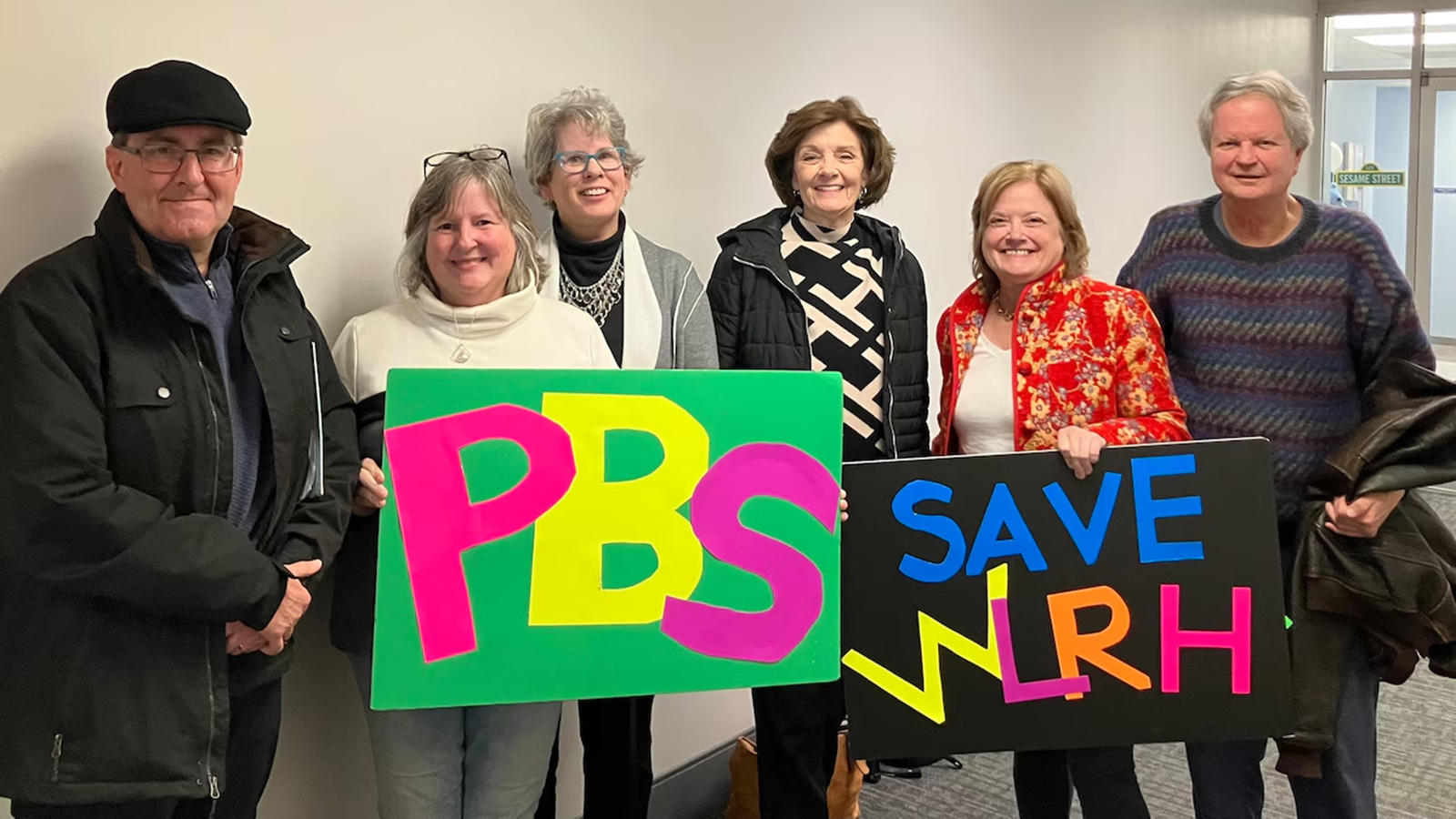
So, in the packed meeting room, APT supporters and WLRH listeners pleaded with the commissioners to continue its relationship with PBS.
Lee Ann Bryant said she was “blindsided” after WLRH dropped NPR.
She said that while she appreciated the station’s local content, NPR was the reason she tuned in. Now she doesn’t listen to the radio station at all.
“It felt like we didn’t have any input,” Bryant said. “I just don’t listen to it anymore.”
Pam Caruso, a longtime WLRH listener who drove from Huntsville to speak at the meeting, said she wants the commission to be more transparent when making decisions.
“It was disturbing to hear them say that they didn’t want to hear from us,” Caruso said. “We are afraid that WLRH is going to fail… We feel like WLRH has never been important to them for them to help us find a solution for this problem.”
Liz Laney said she was willing to gather donations to keep NPR, but the decision had already been made without public input.
“Even though they blame finances, it’s clearly not exactly a financial decision, because they didn’t give us a chance to raise the money,” Laney said. “They could have at least offered us a chance.”
Reid said the former NPR slot may be filled with music and there is little chance of bringing the public radio giant back.
Reid added that he will soon begin forming the committee to address Gov. Kay Ivey’s suggestions to survey Alabamians and “prepare a thorough disaffiliation plan for public review,” a promise made during the vote to tentatively keep PBS.
“They have a job to do. [Ivey] gave them a task, and they have not done it. They haven’t even taken step one on that task,” Caruso said.