

As a certified life coach and longtime community advocate, Taylor wears many hats. She works with local organizations to support job training and certification programs, mentors young men in schools, and stays deeply engaged in neighborhood-based initiatives. Above all, she describes herself simply as someone who enjoys helping people find their footing.
That passion led her to the Leading Healthy Eating and Activity Promotion (LEAP) program, a CARES Center initiative designed to support individuals interested in reducing their cancer risk and improving their health. Together, they help build sustainable healthy habits around nutrition and physical activity.
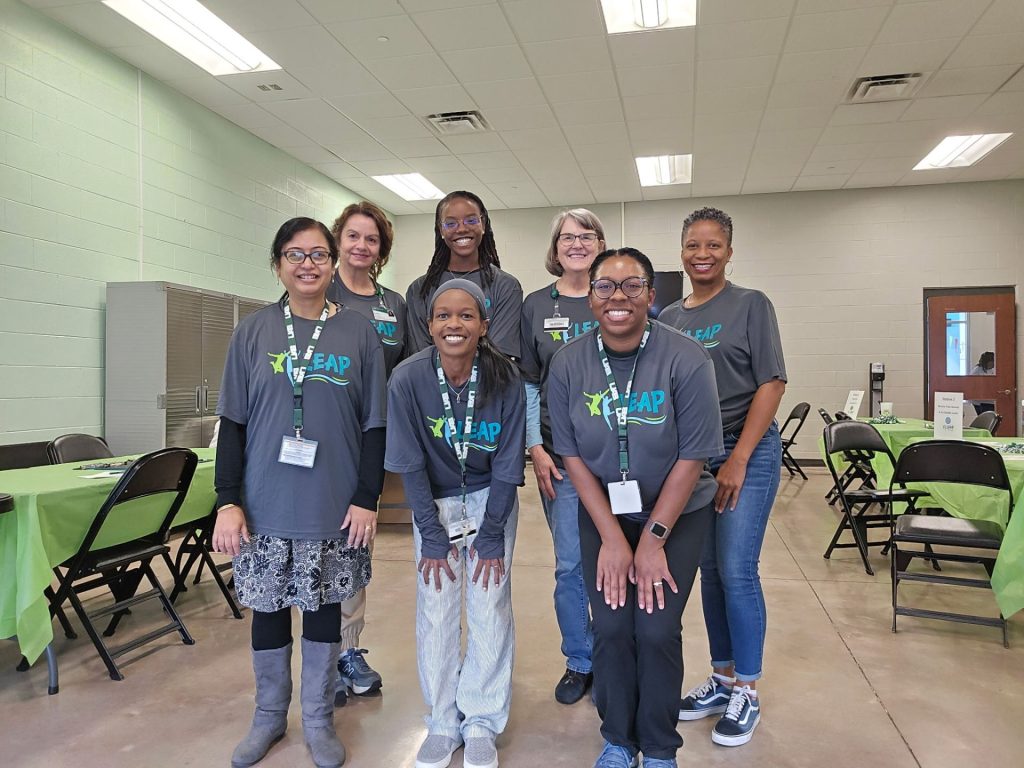
A trusted presence in the community
Taylor serves as a community liaison for LEAP, working as part of the Community Health Coach core within the UAB Comprehensive Healthy Living Research Center. This role drew on her existing relationships and familiarity with the neighborhoods where the program is being introduced. She was connected to the LEAP team through mutual contacts who knew both her work and her reputation for authentic engagement.
“They were really looking for people who were already connected to the neighborhoods,” Taylor said. “That way, the community feels comfortable and open to listening.”
That trust has been essential as LEAP begins its work in communities across Jefferson County. At its core, LEAP helps participants better understand how nutrition and movement work together to support overall well-being. In her role, Taylor supports the program’s success by helping build community partnerships, raising awareness about LEAP, and ensuring the program is a good fit within the neighborhoods where it is introduced.
For many participants, often older adults, Taylor says the program helps reframe health as something still worth investing in, no matter past challenges.
“There’s life to live,” she said. “Even when you’ve faced adversity, those small steps, like getting off the couch or making just one healthier choice, can shift your mindset.”
As a coach, Taylor emphasizes collaboration over instruction. Rather than telling participants what they “should” do, she works with them to identify realistic changes that fit their daily routines.
“If someone drinks a soda every day, we talk through what feels doable,” she explained. “Maybe it’s half soda, half water. The idea is that it’s their choice.”
Movement is approached the same way. Exercises are adapted to comfort levels and accessibility, whether that means stretching during television commercial breaks or using household items as light weights.
“If you don’t have equipment, use what you have,” she said. “A milk jug filled with water. Canned goods. There’s always an option B.”
Taylor’s approach has made her a key part of LEAP’s early implementation. Her consistent presence, familiarity with local dynamics, and ability to read a room have helped the team think carefully about how and where the program is introduced.
“When you’re going into different communities, you can’t just show up and expect people to be accepting,” she said. “It’s about energy, being inviting, and showing that you genuinely want to help.”
She also serves as a sounding board for the LEAP team, offering insights on engagement strategies and suggesting adjustments based on community feedback. Often, simply being a familiar face can make the difference.
Small changes, massive momentum
Although LEAP is still in its early phases, Taylor has already seen moments that signal progress. During a kickoff event at the Bessemer Recreation Center, participants rotated through stations focused on healthy living and engaged in one-on-one conversations with coaches.
In the weeks that followed, Taylor noticed participants beginning to reflect on their habits and share examples of small changes they were trying at home.
Over time, Taylor says, those small shifts add up, often without participants realizing it.
“It’s gradual, but you see that ‘aha’ moment,” she said. “Then you see them move from one stage to the next.”
Making health accessible
One of the most common challenges participants face is access to healthy foods and to safe, affordable places to be active. Taylor acknowledges that these barriers are real, but she focuses on helping participants identify options that are within reach.
She points participants to local resources such as the Live HealthSmart Alabama Mobile Market, recreation centers, and shared-ride transportation, while also offering creative alternatives for exercising at home.
As LEAP continues to grow, Taylor is excited about the ripple effect she believes the program will create.
“At first, people might wonder, ‘What is that?’” she said. “But once they start seeing changes, people feeling better, moving more, it becomes word of mouth.”
For Taylor, the program’s value lies not only in education but also in how it meets people where they are and helps them figure out what healthy living looks like for them.
“It’s not just about being told to do better,” she said. “It’s about understanding how that fits into your life.”
Through LEAP, Taylor is helping healthy habits stick one conversation, one small change, and one community connection at a time.
To learn more about LEAP or get involved in upcoming programming, contact leap4life@uabmc.edu or the CARES Center at carescenter@uabmc.edu.