By Sym Posey | The Birmingham Times
Deborah Bowie has returned home. And you can hear it in her voice.
“For the 14 years that I’ve been gone,” she said, “my tribe is actually in Birmingham, even though I’m a Florida girl. Birmingham is my home.”
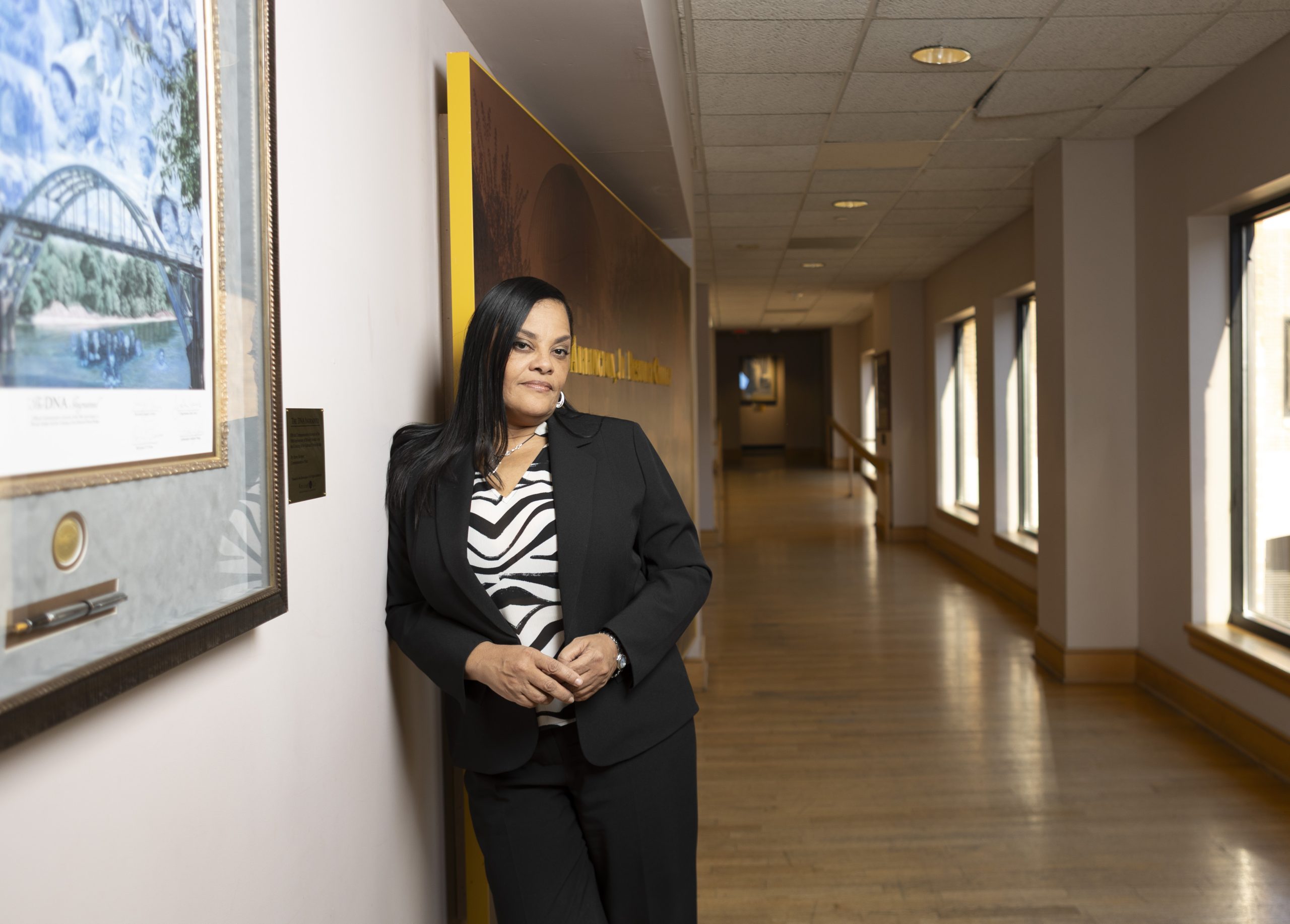
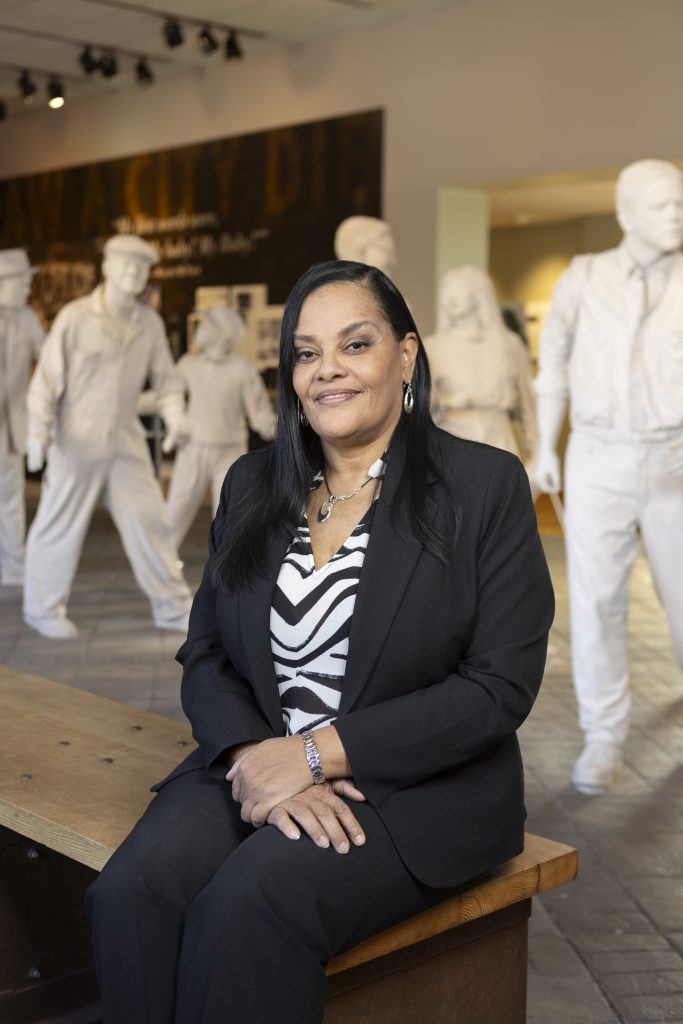
Bowie was recently named President and CEO of the Birmingham Civil Rights Institute (BCRI).
She studied in New Orleans at Xavier University and came to Birmingham in 1993 — a move that would alter the course of her life. “I feel like that’s (Birmingham) where most of my career [was built]. I mean, I feel like I grew up professionally in Birmingham,” Bowie said.
She spent nearly two decades in the city — working in news, serving as a public information officer for the city council, leading at the Chamber of Commerce, and eventually becoming chief of staff to former Mayor Larry Langford.
“That was the best job I’ve ever had,” she said. “I learned so much … It put like a fire under our team to make sure that Mayor Langford’s big vision projects actually came to fruition.”
That fire — a refusal to back down from hard work, hard truths, or hard fights — has defined her career ever since. And that’s some of what she plans to bring to the BCRI. Bowie steps into leadership at a critical time for the institute.
The building — owned by the city since 1992 — faces infrastructure challenges. Exhibits have not been significantly updated since 2009. Staff reductions have thinned capacity. Archives hold untold stories waiting to be preserved.
But Bowie sees opportunity. “We don’t have any new exhibits,” she said. “That means Black Lives Matter is nowhere in the institute. And it should be.”
She envisions updated technology, new galleries, AI-enhanced experiences, expanded programming, revitalized fundraising, and a renewed commitment to truth-telling.
She’s especially proud of the Institute’s nearly 20-year-old Youth Legacy Leadership Program. “It’s probably the best thing the institute has ever done,” she said. “The world needs more people versed in the history, not less.”
She is equally passionate about the archives — and capturing oral histories before they are lost.
“How many people like that exist in Birmingham whose stories?” she asked after meeting a former prosecutor who had never been asked to record his history. “Tons.”
A Fighter’s Heart
Bowie, 56, has never been one to back down, but she doesn’t see herself as combative. She sees herself as committed. “One thing I know about me is, one, I am a fighter. I don’t bow down for anything. I’m not afraid of anything. I’m actually more committed to the work now.”
Her passion for advocacy is personal.
She is the daughter of an interracial marriage. Her Jewish mother was disowned for marrying a Black man. Bowie and her sister grew up isolated, navigating rejection and instability. Later, Bowie’s sister was murdered in a home invasion — a tragedy that pulled her into courtrooms for decades.
“I have never doubted myself,” she said. “I’ve always realized that there wasn’t anything wrong with me. There might be something wrong with the rest of the world.”
That perspective shaped her professional throughline: advocating for marginalized communities. Whether leading immigrant policy initiatives, running the United Way of North Central Florida, serving as interim city manager during a pandemic in Gainesville, Florida, or heading a foundation created after a mass shooting in Orlando, Florida, her work consistently centered access, inclusion, and dignity.
“All the work that I have really ever done… has been about advocating for people who are marginalized, who don’t have resources,” she said. “They all connect. I’ve just been in different roles.”
Preserving The Institution
They all connected and seemed to lead back to the Magic City.
Even while living in Georgia and Florida, Bowie found herself constantly talking about Birmingham.
“To the point where my colleagues and friends would say, you know, you talk about Birmingham all the time.”
She stayed connected to friends. To mentors. To the spirit of the place. “I realized… Birmingham was my chosen family,” she said.
Birmingham also represents something rare, said the CEO.
“I don’t know of a place I’ve ever lived where people would say, ‘I’m willing to be bitten by a dog or hosed or thrown in jail before I let you treat me like dirt.’”
She pauses when she says this, as if weighing the present against the past.
“If this is not the time to stand 10 toes down, then I don’t know what is. I don’t think it’s been a time since 63 years ago where we are right now, where you must be in the space. You must preserve the institution itself. You must preserve the memory. You must preserve the history. And you must teach it to the next generation — and it needs to be based on truth.”
She adds, without hesitation: “I am in no way discouraged… I think this is the gasoline that we needed to wake people up to how important it is to advocate, stand up, and preserve and enshrine the work of the institute.”
“I feel like Birmingham was a place where I grew up. It’s where I came into my identity in terms of who I am and what I believe in.”
Fifteen years ago, she says, she wouldn’t have been ready to lead the Institute.
“I can tell you based on everything that I’ve been through since — I wasn’t ready. I feel like all these other experiences have really prepared me.”
“Hit The Ground Running”
Bowie is returning to Birmingham with her children, Ryanne, Cloud, and Raymond — including her eldest daughter Alexis, a board-certified behavior analyst who works with children like her brother, Raymond.
“I feel like Birmingham was a place where I grew up. It’s where I came into my identity in terms of who I am and what I believe in.”
Fifteen years ago, she says, she wouldn’t have been ready to lead the Institute.
“I can tell you based on everything that I’ve been through since — I wasn’t ready. I feel like all these other experiences have really prepared me.”
Now, she feels uniquely positioned to bridge business, higher education, civic leadership, and community voices.
“I just feel like I’m in a unique position to bring back all of that experience … I feel like I could hit the ground running. And I am.”