By Javacia Harris Bowser | For the Birmingham Times
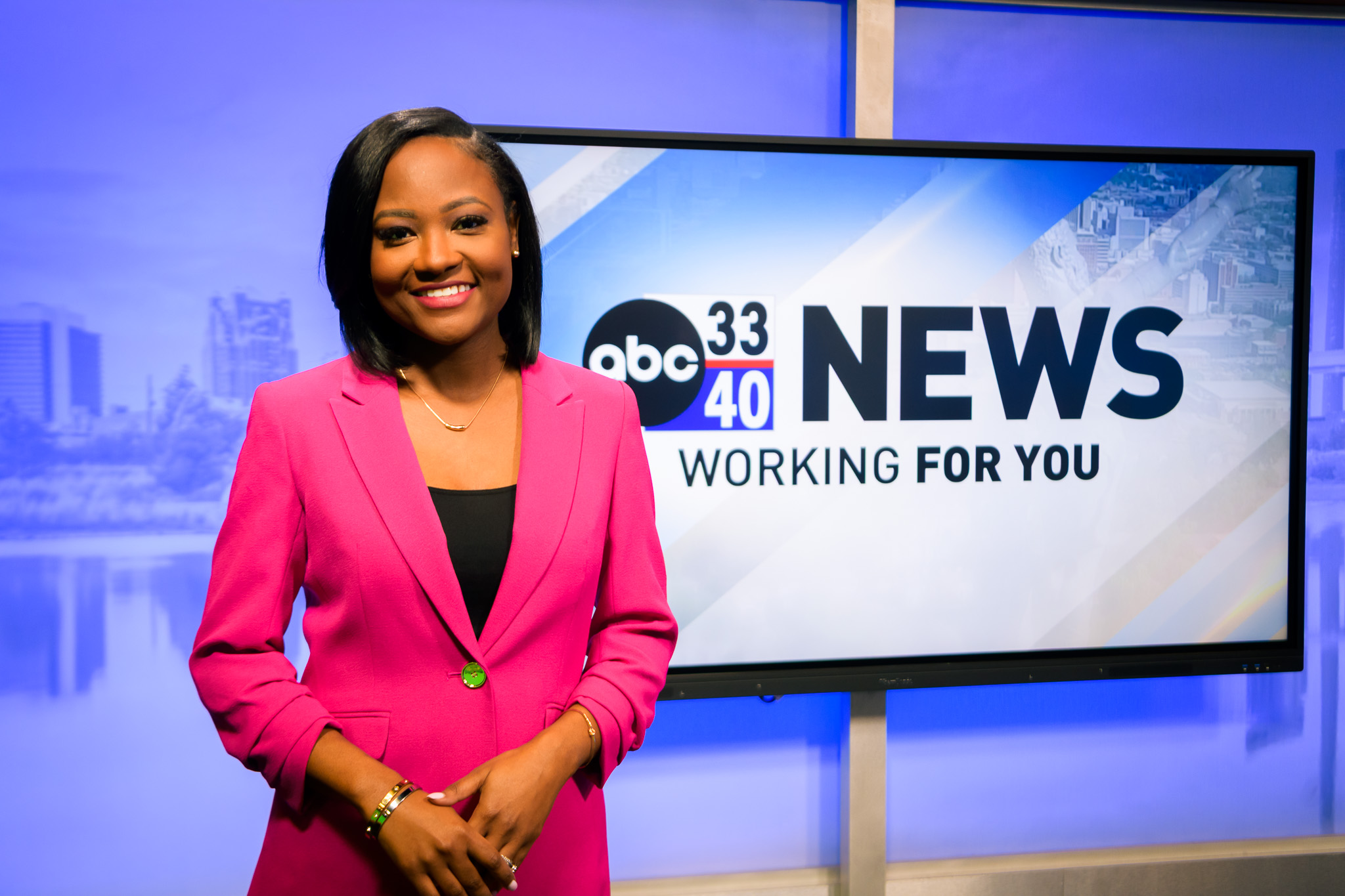
Muriel Bailey knew she wanted to be a broadcast journalist before she fully understood the career.
“Growing up, every morning, getting ready for school my mom would have the news on and there was a Black woman who was a morning anchor,” said the New Orleans, Louisiana, native who currently serves as an evening anchor for WBMA ABC 33/40. “One day [that morning anchor] came to our school, and I was sitting there thinking, ‘I want to be like her. I want to do what she does.’”
For Women’s History Month, The Birmingham Times highlights some of the most watched Black women anchors in our area. These women have dedicated their life’s work to sharing other people’s stories. Now, it’s time to share their stories.
Bailey said her parents encouraged her aspirations. In fact, her father, the late Steven Bailey, would call her “Channel 6,” she said.
“He would say, ‘If anything happens, ask her. She’s gonna know. She’s gonna tell you everything that happened. She’s gonna explain it to you. That’s little Channel 6 right there.’”
While attending Northwestern State University of Louisiana (NSULA), Bailey learned that journalism could be more than simply sharing information.
“I started to realize you can be a voice for people,” she said.
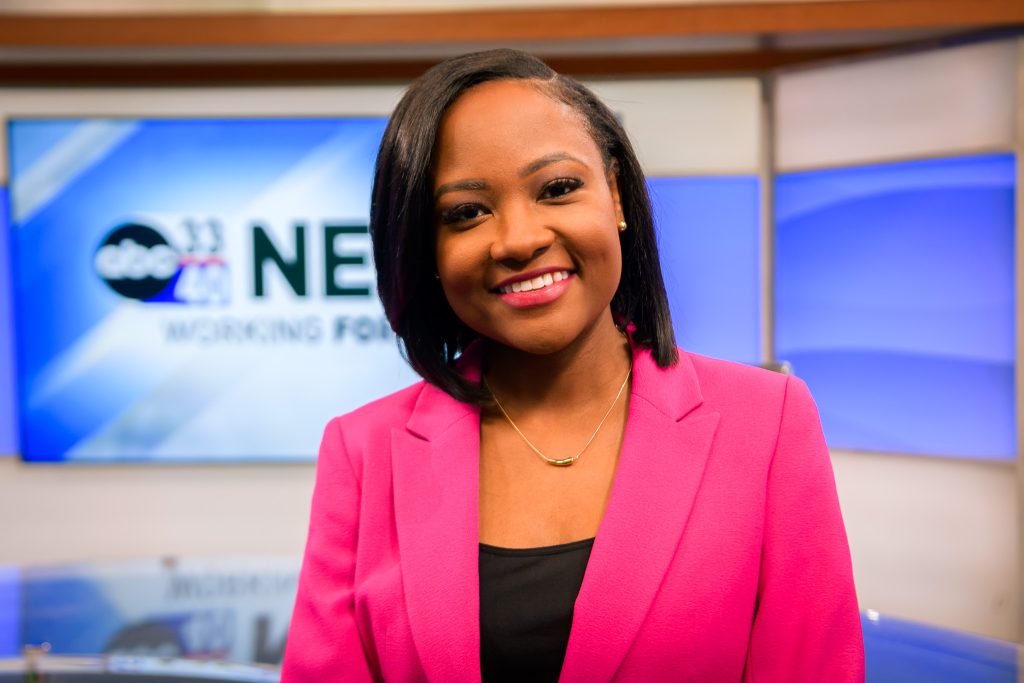
Career Path: Bailey graduated from NSULA in 2008, at a time when getting a job on-air was nearly impossible. So, she became an associate producer at a station in her hometown and worked a second job in customer service at a local supermarket. She said it was hard not to get discouraged and give up on her dream — but she stuck with it.
In 2011, Bailey relocated to Dothan, Alabama, where she worked as a reporter, producer, and fill-in anchor for WTVY News 4.
“The move to Dothan was for me to get comfortable on air, to learn the foundation of reporting, to make my mistakes and just get my feet wet,” she said, adding that her time in Dothan also taught her how to build relationships with her colleagues.
As a morning reporter for WAFF 48 in Huntsville, Alabama, a job she started in 2013, Bailey had the chance to sharpen her live-shot skills.
“I perfected it,” she said. “I could go live, drop of a dime, with little information, and I could give you a whole live hit.”
Bailey moved to Mobile, Alabama, in 2015 to serve as a nightside reporter and fill-in anchor for WPMI NBC 15 News. Here, Bailey not only got comfortable anchoring but also learned how to handle breaking news and busy nights.
“Mobile taught me how to move fast,” she said, “how to put that package together in little to no time and be ready for the live shot, and how to be versatile.”
Bailey came to Birmingham in 2019 to begin her tenure at ABC 33/40, first as a weekend anchor. She was promoted to evening anchor in 2021.
“I feel like my trajectory, the flow of my career, really helped build me to this point,” she said. “Every move, every position, every station, I got something from it that made me better.”
Career Highlights: In 2024, Bailey won an Emmy Award for her work on ABC 33/40’s program on Alabama’s medical marijuana industry.
“It was a group effort,” she said of the package. “I’m not doing this for the awards. I’m not coming in every day, beating the pavement, doing interviews, or doing any of this because I want an award at the end of the year, but the Emmy was great! It made me really excited, really happy, and really grateful for the moment. It feels good to be acknowledged for your hard work.”
On Changes in the Media: Bailey worries that today’s young journalists aren’t getting the same experience that helped to shape her. Post-pandemic, the broadcast media landscape began to shift, she explained, and it became easier for students to get higher ranking roles fresh out of college.
“I always try to tell aspiring journalists, ‘Don’t jump too high, too fast,’” she said. “You don’t want to get eaten alive, and then you end up getting out of the business.”
Most Challenging Parts of Her Career: Learning to turn off her New Orleans accent when on air was tough. Bailey would record herself reading scripts and then listen to the recording to critique her pronunciation of each word.
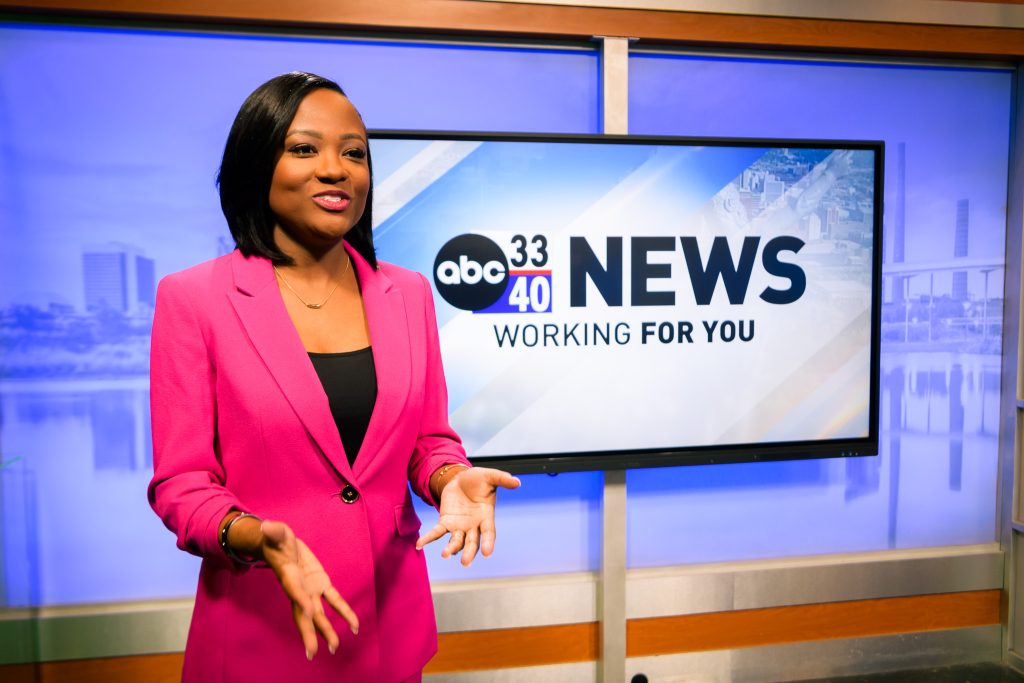
On Being a Black Woman in Broadcasting: “There was a time when I felt at certain stations in certain points in my life that there could only be one Black woman anchor or one Black reporter,” she said. “Even when I would apply somewhere, I would look at their team, and if I saw they already had one or two Black women, I would be hesitant to apply because you would never see a station where there were a lot of us. … That made you feel like there’s room for only one or two Black women.”
Fortunately, things have changed, Bailey said: “Now you might see three Black women anchors [at the same station] and you can see Black women meteorologists. Now you see several of us and that’s so good!”
On Representation: “Representation matters,” Bailey said. “You can get inspired by other people who don’t look like you, but when you see someone who looks like you who’s doing something you want to do, it makes it real to you. You think, ‘If she can do it, I can do it.’”
Along with getting people the information they need and being an advocate for people who feel they don’t have a voice, another rewarding part of Bailey’s job is being the same type of representation that long ago motivated her to get into the business.
“If I go to a school, the young Black kids are so excited to see me,” she said. “I get a lot of messages from parents saying, ‘My daughter loves watching you.’ The same way I was inspired, now I can do that.”
Muriel Bailey can be seen on WBMA ABC 33/40 anchoring the evening newscasts on weekdays at 4 p.m., 5 p.m., and 10 p.m.