By Javacia Harris Bowser | The Birmingham Times
In 2025, the Edistone Hotel in Selma, Alabama, came close to being demolished.
Built in 1855, the hotel tells stories of tragedy and triumph. Before the Civil War, the site was the largest market for enslaved people in Dallas County. After the war, during Reconstruction, it housed the Freedmen’s Bureau, a federal agency created by Congress to provide newly freed African Americans with essentials like food, clothing, and shelter. By the 1870s, the hotel’s owner made the notable decision to welcome guests of all races and offer equal accommodation to all patrons.
The Edistone Hotel also sits just steps from the Edmund Pettus Bridge, where on March 7, 1965, more than 500 civil rights marchers were violently attacked while en route to Montgomery — a day remembered as Bloody Sunday.
Had it been destroyed, the building’s history could have been lost as well. That’s why The Conservation Fund stepped in to save the Edistone Hotel from the wrecking ball.
“It’s unfathomable that the Edistone Hotel, a place so rich in American history, came so close to being lost forever,” Phillip Howard, Director of the Legacy Places Initiative for The Conservation Fund, said in a statement after The Conservation Fund secured the property. “As the site of the Freedman’s Bureau after the Civil War, you can imagine that the Edistone Hotel was one of the first places a formerly enslaved person in the South would have been treated like a human. By saving the Edistone Hotel, we’re not just protecting the physical location. We’re protecting the stories and legacies of all those that passed through its doors, or stood at this site, and are ensuring those stories live on as part of our shared American history.”
Through the Legacy Places Initiative, The Conservation Fund works with local communities and partners to identify sites across the country tied to African American history that are at risk of being forgotten, demolished, or developed in ways that ignore their history. The group focuses on sites linked to the civil rights movements of the South, areas along the Underground Railroad, and locations where Black American culture and art were created.
The Conservation Fund, through its Legacy Places Initiative, has worked to protect several other African American heritage sites, including the final home of famous author Zora Neale Hurston, the Freedom Riders National Monument in Alabama, and, more recently, the Ben Moore Hotel in Montgomery, Alabama. Built in 1945, the Ben Moore Hotel hosted civil rights meetings and served as a safe space for lodging and socializing. On the first floor, the hotel housed Malden Brothers Barber Shop, which serviced many in the neighborhood, including its most famous customer, Dr. Martin Luther King Jr.
“It’s always important to conserve history.”
With history exhibits and historical markers tied to Black culture being removed in areas across the nation, many now feel a sense of urgency about preserving African American heritage sites. But for Howard and others at The Conversation Fund, this work has long been a top priority.
“I think it’s always important to conserve history and preserve history,” Howard told the Birmingham Times. “So, although there are challenges that are more pronounced now, I think for people in the space, it’s always been a challenge, and there have always been obstacles. It seems like it’s different, but the work has been going on. There have been great organizations leading in this space for years.”
Along with securing funding, Howard said that coalition building is one of the hardest parts of his job.
“Historic sites that are on the same block sometimes don’t even talk to each other about how they can work together, let alone across counties that share historical narratives and stories,” Howard said. “As you can imagine, if everyone’s going after the same funding, they’re probably not going to be apt to work together.”
But Howard believes collaboration is key, especially for rural sites with limited resources.
“We’ve been really intentional about building partnerships,” he said.
Son of the Black Belt
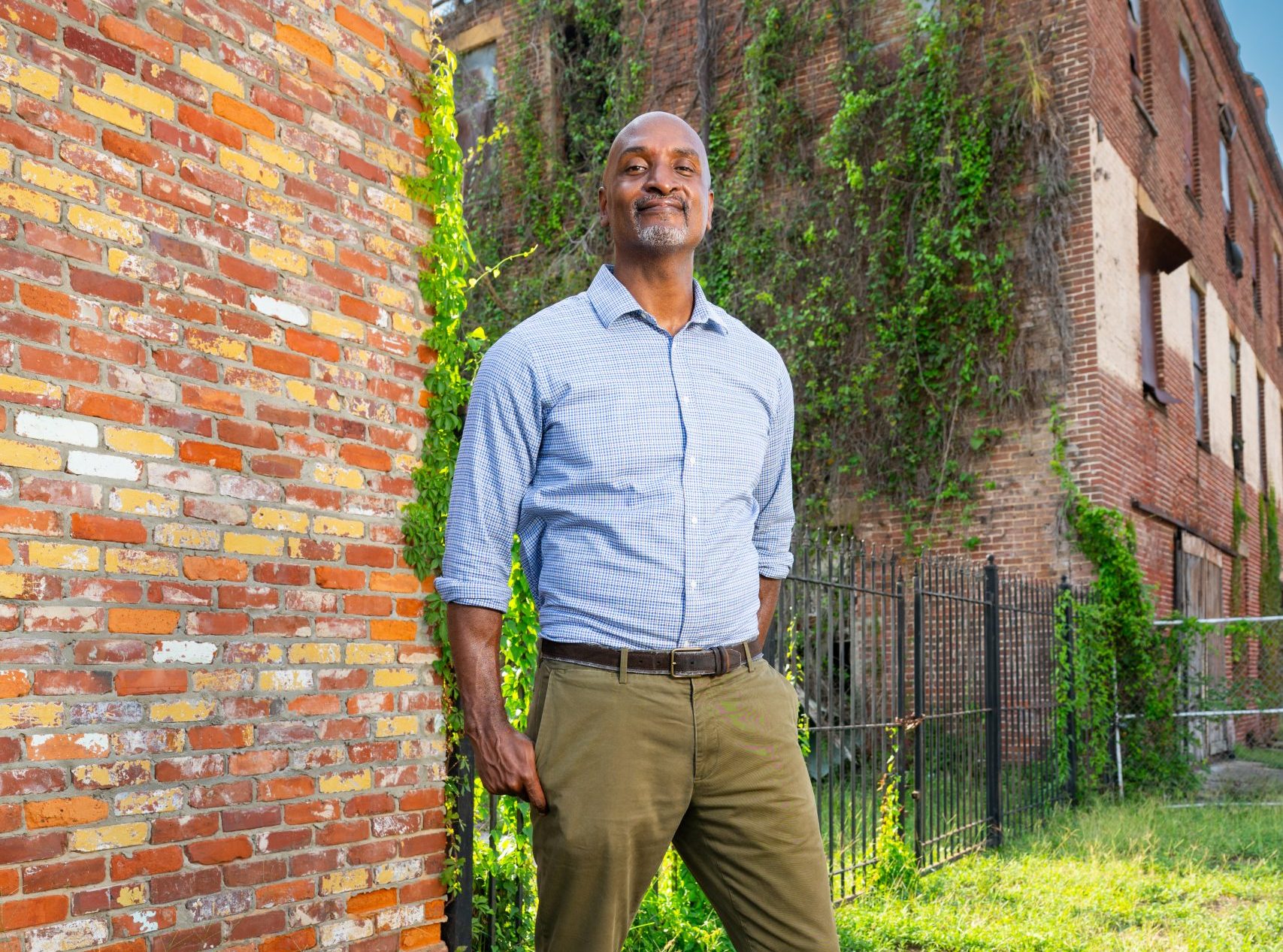
Howard, who served in the Marine Corps and worked at the Department of Justice as a Community Outreach Reentry Coordinator, joined The Conservation Fund in 2022.
“It just started with me wanting to understand history and loving history,” Howard said when asked how he became interested in his line of work. His love of history was inspired by the story of Charles Person, the youngest of the original Freedom Riders, and by his father, who was a World War II veteran.
“All of it is challenging, but it’s also really fun,” Howard said of his work, pointing out that building relationships with people who lived the history he enjoys learning about is a highlight of his job.
And as a native of Eutaw, Alabama, for Howard, this work is personal.
“I am a son of the Black Belt,” he said.
But Howard believes that preserving legacy places should be important to everyone, regardless of where they call home.
“People who were a part of this history — looking particularly at the civil rights movement — they are passing,” Howard said. “And so, it makes it even more significant. If we’re losing the people who can tell us the stories and we lose the places where the stories happened, then anyone can rewrite history.”
But Howard and The Conservation Fund are determined to preserve the truth.
Learn more about the Legacy Places Initiative of The Conversation Fund at conservationfund.org/our-programs/legacy-places-initiative.