By Mia Watkins | For the Birmingham Times
A 60-year-old legacy began with a simple observation.
Business titan and Birmingham’s first Black millionaire, Dr. Arthur George “A.G.” Gaston, was in downtown Birmingham one day during the height of the Civil Rights Movement and noticed a group of young, Black men idling. Not necessarily doing anything nefarious, but they were what we would refer to today as hanging out.
“He looked at them and said, ‘Idle hands…maybe we need to find something for them to do,’” according to A.G. Gaston Boys & Girls Club CEO Andre McFadden.
Now, 20,000 young people later, the A.G. Gaston Boys & Girls Club is celebrating its 60th anniversary. An amazing feat, according to McFadden.
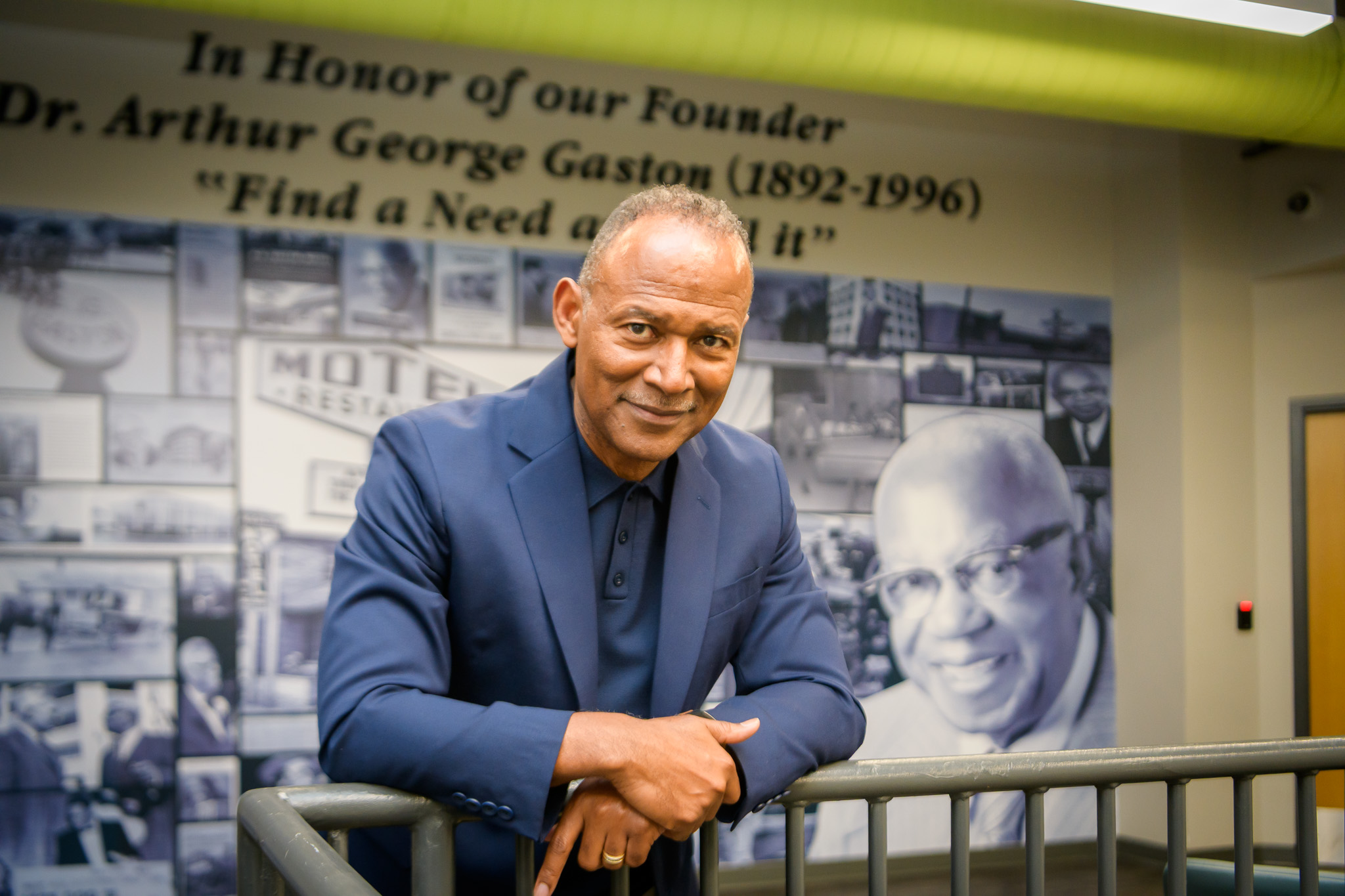
The anniversary continues one of Gaston’s most popular tenets: Find a need and fill it. That principle, found on the second-floor wall of the club in a breathtaking mural that showcases prominent photos and news articles about Gaston, is the basis of everything the club does for young people in the Birmingham metro area.
The club will celebrate this momentous achievement with a celebration dinner on May 14 at the Renaissance Birmingham Ross Bridge Golf Resort & Spa featuring Super Bowl champion Jalen Hurts in a fireside chat.
“For him to come here and do something here, I take it as saying a lot about how he feels about our organization,” McFadden said of Hurts’ participation.
He said the celebration will galvanize the community around the club’s mission.
“I think it’s a proper celebration for 60 years,” he said. “If you’re a nonprofit and you’re around for 60 years, that says a lot. If you are thriving and accelerating 60 years later instead of limping to the end, that says a lot. If you can do it in a big way, that says a lot.”
Since its inception, the club has provided academic and recreational services for boys and, eventually, girls.
In 1966, Gaston gathered Black and white businessmen who enthusiastically supported his idea for a new facility for an existing Boys Club in the city, according to the Gaston biography, “Black Titan: A.G Gaston and the Making of a Black American Millionaire,” by his niece Carol Jenkins. He donated a building on Fourteenth Street and Seventh Avenue for its original headquarters and began a fundraising campaign for renovation.
By 1967, Gaston and his cohorts had raised $350,000. He personally donated $50,000.
When the renovated space opened its doors in 1967, it was a state-of-the-art facility with athletic fields, libraries, game rooms and a gym.
A Marker of Progress
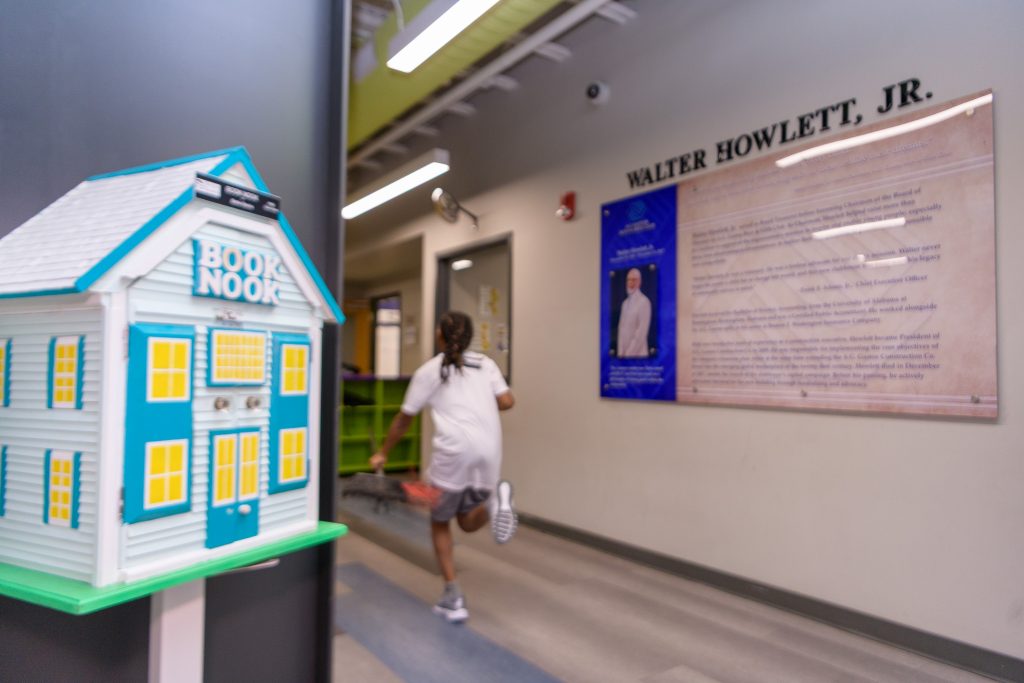
Today, the club’s headquarters is located on Avenue W in the Walter Howlett Jr. Building, a 25,000 square-foot, two-story structure named after the former A.G. Gaston Enterprises, LLC. president and CEO, who died in 2017. The $7 million space opened in 2020 and won the People’s Choice Award from the Birmingham Chapter of the American Institute of Architects.
It serves as a marker of progress in the area, nestled in Crossplex Village behind the Bill Harris Arena.
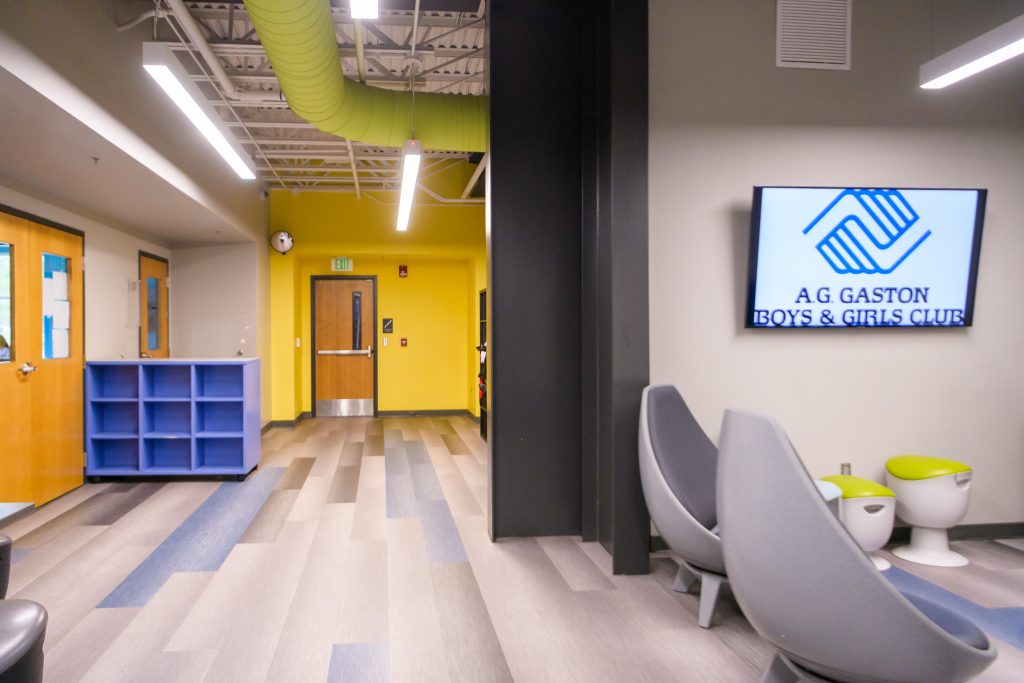
Much like the original clubhouse, it is a modern outfit. Bright blues, yellows and greens play on the walls inside and outside of the building. The first floor is dedicated to programming for club members ages 7-12 and opens up to a large set of steps that serves as both a gathering point and a timeout area for kids. It also, surprisingly, serves as a space to connect with students, according to McFadden.
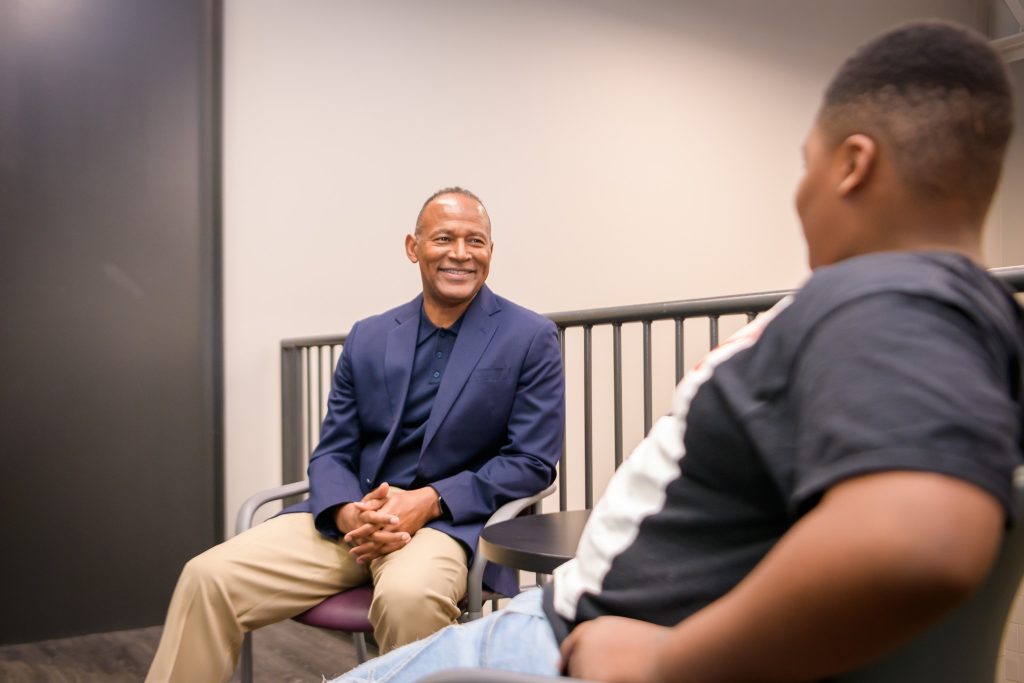
He recalled a time when a young man was put on the stairs for a confrontation with another club member. McFadden said that he was able to talk to the student about why he did what he did and how he could have handled things differently.
“Basically, he got a lesson one-on-one on how to de-escalate situations,” he recalled. “There’s one kid in front of me and I teach that one kid. Hopefully, when he goes home, he might teach his brother or sister, or he goes to school and he might teach them, and they might teach other people. It’s just a mushroom of stuff. The things that our members learn here, we don’t know where they go and take them. There’s a multiplier, so we are helping people who we’ve never seen and will never meet.”
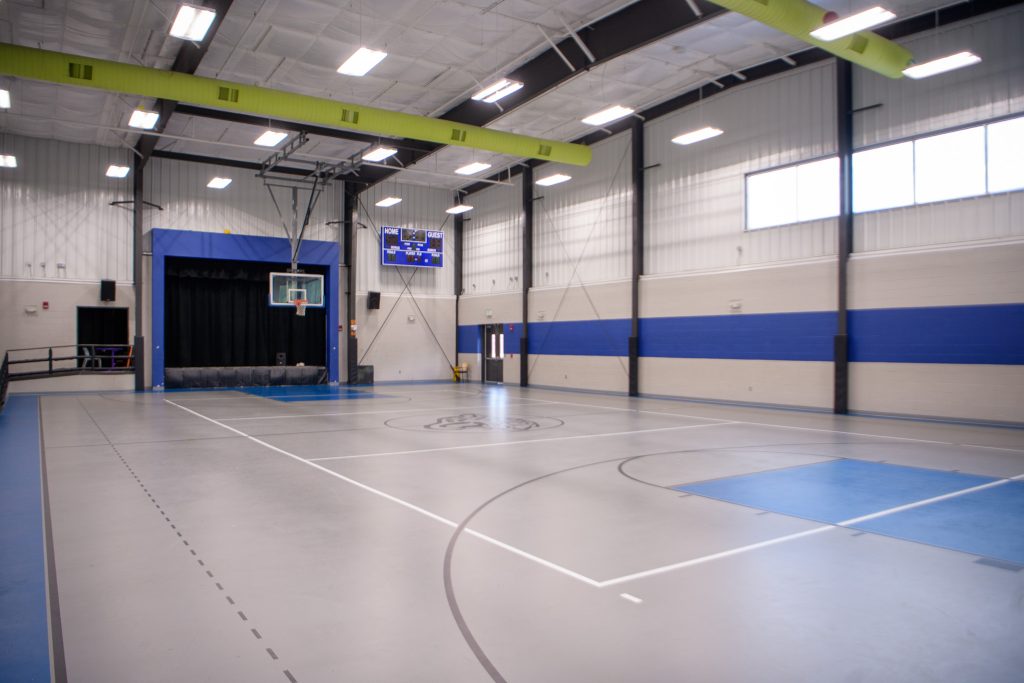
The stairs overlook the basketball court that is also used as a meeting and performance space. There is a game room, a teaching kitchen and a cafe. Upstairs, there is a dedicated area for teen members.
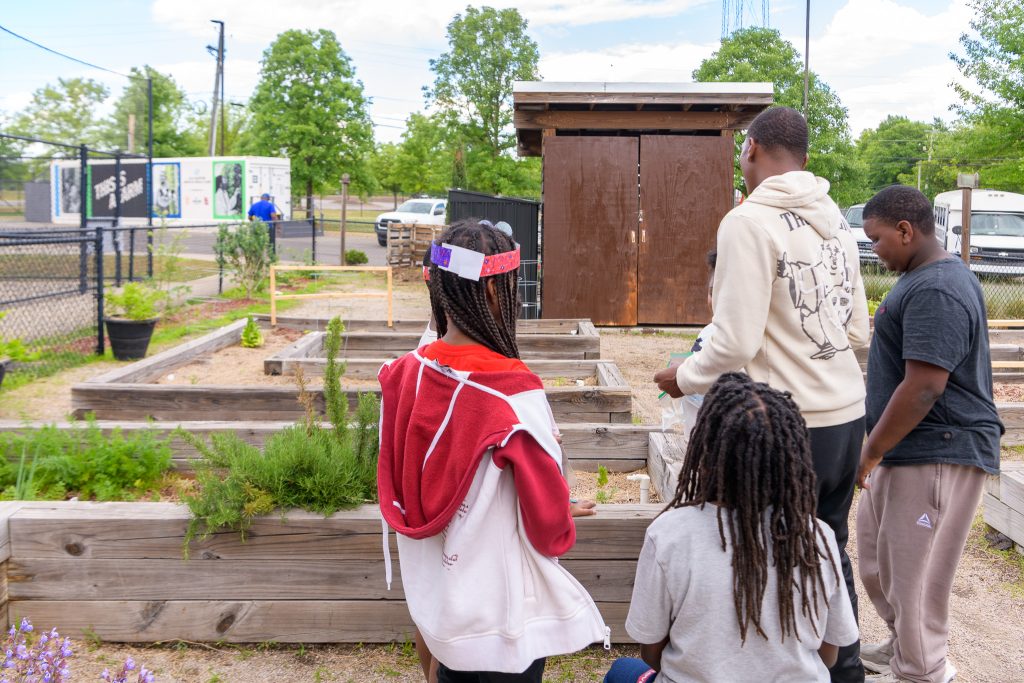
After school, the building comes alive with children of all ages, they’re in classrooms asking staff questions, grabbing snacks from the cafe and playing games. There’s laughter, children sharing what they’ve learned and others ready to check on plants that they’re helping grow in the campus garden.

Focus on the Future
The club includes a first-of-its-kind in the state Connected Learning Center, sponsored by AT&T. The center features access to up-to-date computers, Wi-Fi and other technology aimed at closing the internet access gap. There is access on the second floor for teens and access on the main floor for younger members.
“We are very, very proud of that,” McFadden said. “Out of all of the schools and all the other organizations in the state, for AT&T to choose us and to put the Connected Learning Center here.”
The partnership started with a call from AT&T, according to him. Thanks to a $50,000 contribution from the communications giant, the club was able to switch out its outdated equipment. The collaboration also became the impetus for a focus on science, technology, engineering and math (STEM) at the club.
“We’re trying to get beyond the club,” he said. “The club is from first grade to 12th grade, and what happens after that? We’re looking at doing something with workforce development in the future. If we’re going to do something with workforce development, then we’ll have some certificate programs.”
The club in Ensley is also home to the Freight Farm, a hydroponic gardening initiative in partnership with Major League Baseball that originated during the league’s celebration of the historic Negro Leagues in 2024. The farm teaches members how to grow their own vegetables, and a staff member is dedicated to its maintenance.
The league was looking for a way to leave a lasting impression in the city that once housed the Birmingham Black Barons, according to McFadden. The call came out of the blue
“After a series of meetings we had with them, we stumbled across the fact that one of the things we’re interested in is food insecurity,” he said. “All of these kids come here every day, some of them are not going to eat dinner when they get home. You can’t look at them and know which one. We told MLB that we wanted to do something that focuses on food insecurity and they said that’s one of their primary objectives, too. How can we do this together? I told them about this hydropic system that we’re looking at and they said, “Can we work with you on that?’ We said, ‘100-percent.’”
The farm grows fresh greens such as kale and bok choy that club members can take home and share with their families.
A Shift in Mindset
The club’s new facility isn’t just a renovation; it marks a shift in mindset for the organization. The club has expanded to six campuses — the Walter Howlett Club, a site at Legacy Prep School, the Freedom Prep School Site, a new Irondale Club, the Vacca Campus Club and The Club at the Magic City Acceptance Academy (MCAA).
“Probably for 55 years, we looked at ourselves as a Birmingham organization, and we’re serving Birmingham kids,” McFadden said. “But, over the last several years, we realized that the issues that are going on for the young people in Birmingham are the same ones that are going on for the young people in Irondale, Hoover and Fairfield and on and on and on.”
The newest club in Irondale marks an exciting chapter for the A.G. Gaston Boys & Girls Club. It’s located in the old Irondale Public Library space.
“It’s a totally different vibe over there because you seem so much like you’re a part of the community,” McFadden said. “Across the street is a church, across the street is the police department. And, then there are homes behind you, and there’s a restaurant across the street. You’re really in the middle of everything. And the community just keeps coming asking how they can help.”
Alice Moore has worked at the club for about a year and has not only seen the difference she’s making at the Howlett Club, but also the difference the club is making in her son’s life. Her 10-year-old son, Oin, is thriving at the Irondale club.
“He has made some wonderful friends over there,” she said. “He’s very much come out of his shell and is very outgoing. He likes to sort of show people around and show people what is going on there. He steps up into that role.”
Unique Clubs
Vacca and The Club at MCAA are unique clubs. The club at MCAA has a mental health focus in its programming, while the Vacca Campus Club is on-site at a juvenile correctional facility.
“Our objective is to serve as many kids as we can, and that doesn’t exclude people who are temporarily in juvenile detention centers,” said McFadden.
The Vacca club looks nothing like what most people imagine, according to him.
“The campus reminds you of an HBCU with a fence around it,” he said. “I was totally shocked when I got there. I was expecting something totally different.”
The Vacca site uses the club curriculum and provides extracurricular activities to serve the whole young man, according to Alecia Allen, Deputy Director of Institutional Services at the Alabama Department of Youth Services. There, members participate in programs such as Money Matters, Career Launch, Diploma to Degree and Passport to Manhood.
“The curriculums are really working on helping young men to be forward-focused and to look at bettering themselves by having involvement with other positive, pro-social men, but also getting to social skills development through training and to look at increasing their understanding and knowledge of how they can use things such as education, career, finances and what manhood is about to focus on how they can be better young men,” she said.
McFadden said that there’s no fundamental difference between members at Vacca and members at other clubhouses.
“We don’t look at them any differently than the kids here,” he said. “Once you’re in Vacca, whether you’re behind the fence or not, you are a member of this club.”
Once club members are out of custody, they retain their memberships and can attend any club near them.
Lives Changed
The lives changed by the club extend past circumstance and generations. Just ask former member Maxwell Hawkins. He said the mentoring he received from his basketball and baseball coaches there affected his life trajectory.
“They taught me a lot about competition and that you can always get better at your craft,” he said. “Whatever your craft may be, you can always be better because when you’re not working, there’s somebody that is. The lessons that I learned relate a lot to my real life.”
Hawkins, who currently works for the Social Security Administration, said his coaches were not only mentors, they were family.
“Overall, for me, the coaches at Boys Club were second parents,” he said. “I was raised by my grandfather. He was older and couldn’t always get around. I didn’t have a car, so they would come pick me up and take me home. They treated me like another son.”
His coaches influenced his decision to further his education.
“With the Boys Club, they showed me there was a different way of life,” he said. “I didn’t have to hang out with the guys on the street who didn’t want to go to school. They showed me another way. In this time, it’s very important to have those role models to look up to. I thank God for the A.G. Gaston Boys & Girls Club because they had people in place that actually cared.”
His time at the club also garnered him lifelong friends like well-known comedian, actor, writer and Birmingham native Roy Wood Jr. He started with the Alabama Boys & Girls Club and attended briefly when the A.G. Gaston club took over at the location. His father, Roy Wood Sr., also worked for Gaston.
“He was always lobbying me to play football at A.G. Gaston, I just didn’t like football,” Wood Jr. said.
“In terms of its worth to the community and building up young men and keeping them off the streets, I can definitely say that they did exactly that,” Wood Jr. added. “One thing that they always did that I appreciated was focus on the character and development of a man. It wasn’t always about coming after school and shooting baskets. It was about remaining cognizant of the decisions you’re making out in the world and whether or not you’re being an upstanding individual.”
McFadden said the club’s work is about providing a third space for children and teens where they feel seen and cared for.
“You come here, you know that you’re going to get that nurturing and caring,” he said. “Somebody’s going to give you a hug, somebody’s going to give you a smile and ask how did school go and hold you accountable.
Honoring Gaston’s Legacy
Area Director Dominic McCoy has been at the club for eight years. He said his work excites him.
His work, he said, is about honoring Gaston’s legacy.
“I’m learning a lot about the rich history that A.G. Gaston has in the community,” he said. “Everybody doesn’t understand that he’s a big pillar financially and through entrepreneurship.”
Spreading Gaston’s message also includes partnering with Birmingham City Councilor Clinton Woods to reprint Gaston’s autobiography, “Green Power: The Successful Way of A.G. Gaston.”
After reading “Black Titan,” Woods wanted to learn even more about Gaston’s secrets to success but found that the memoir was out of print and the copies available cost upwards of $3,000.
He approached McFadden about getting the book in circulation. He and McFadden worked with a local printer in Birmingham that receives orders, processes them and triggers reprinting automatically.
The reprint also serves as a fundraiser for the club, just like the first edition did. Woods calls the book a story of inspiration and importance to Birmingham.
“His story is something that everybody can benefit from,” Woods said of the autobiography. “It truly is a story of determination and how solving problems for other people can really take you places that you maybe never dreamed of. I was just thoroughly impressed and inspired.”
To take the story a step further, they recently worked with Dr. Henry Panion, a composer, arranger and music educator, to produce an audiobook version of Gaston’s story.
“We reviewed several voice actors and people who wanted to be considered for that,” he said about the process. “I think we selected a very good choice. Victor [Thomas] really harkens back to the time period.”
The next phase of the project is getting the book in schools via the national Boys & Girls Clubs. Wood said that Gaston’s story could be a source of inspiration for young people.
“Being able to hear this story early on in your journey kind of gives you an ease around your own future and what you can achieve at a high level and go after big goals,” he said. “It’s really focused on finding a need and filling it. It was the basic tenet that he lived by that really guided his decision-making. I think that’s key to making sure you know your history and to be inspired to achieve and fulfill your purpose. We want to capture that for the new generation and not let that fly away.”
McFadden said he often thinks about what Gaston would think and say as he leads the club.
“Sometimes, when I think of the 60th anniversary, I think what if he was sitting at the table right in the front row, how would he feel about that,” he said. “I’d like to think that he would be happy and he would be proud.”
Learn more at aggastonbgc.org.
The A.G. Gaston Boys & Girls Club will celebrate its 60th anniversary with the help of Philadelphia Eagles Quarterback and Super Bowl Champion Jalen Hurts in a fireside chat.
When: Thursday, May 14th
Where: Renaissance Birmingham Ross Bridge Golf Resort & Spa
Time: 6:30 p.m.
Attire: Cocktail
Price: $250
To purchase tickets, visit https://secure.givelively.org/event/a-g-gaston-boys-girls-club/diamond-celebration-of-a-g-gaston-boys-girls-club-featuring-jalen-hurts/diamond-celebration-of-a-g-gaston-boys-girls-club-featuring-jalen-hurts