Home Blog Page 1368

Keeping an Eye on Safety
0

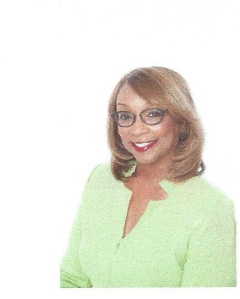
Samuetta DrewBy Samuetta Hill Drew

In another century, the lyrics from a poem later turned into a song “Over the river and through the woods; to grandmother’s house we go; the horse knows the way to carry the sleigh;…” transcended time and is often sung by choirs in schools across the country.  The original song speaks to fond memories of the author’s family traveling to their grandmother home for the holidays.  Well, we’re not crossing the river, going through the woods in a sleigh any longer to our grandmother’s home for the holidays but, we do continue the tradition of traveling over the holiday season. Our mode of transportation, thankfully, has been upgraded to cars, trucks and SUVs as we travel to family, friends and various sporting events during this time of year. Traveling involves some pre-planning relative to housing, food clothing and travel routes. This week we want to review a few vehicle safety tips which should be included in your pre-planning for the holiday season.

Tip One:  Tire Pressure – Always check your tire pressure before traveling. The weather patterns change often this time of year from regions within the state as well as regions outside our state. As you know, the change of weather can alter the tire pressure, sometimes creating unsafe travel conditions, if not checked and addressed properly.

Tip Two:  Refueling – Make sure when traveling you maintain a reasonable amount of gasoline in your tank for two important reasons. Unfortunately during this season many accidents occur resulting in slow travel pace or sometimes a detour off the main road. You do not want to be in a position where you are low on fuel and could become stranded off the side of the road. Note, cellular telephone and/or navigation systems receptions are not always available in some areas while traveling. The second reason is that all gasoline stops are not located in a safe area especially for females traveling alone or with small children. This decreases the risk of someone following you once you return to your travel route. Do Not display a great deal of cash if you purchase items in the convenience store associated with the gasoline station nor leave your car doors opened or an open purse on display, if you go into the store portion of the gasoline station.

Tip Three:  Notification – Make sure you notify a friend and/or family member of your travel plans and route. Contact these individuals when you begin your travel and when you arrive. You should also give them a description of the clothing you’re wearing or take a selfie and forward it to them before leaving, especially if you’re traveling alone.

Remember following these or any other safety tips can never guarantee nothing adversely will ever happen to you or your love ones, but it does help decrease the possibility by keeping an eye on safety.

Preparing Your Car for Rough Weather Ahead

0

Preparing for your Car(NAPSI)—Your car can really take a beating from cold, wet weather, so it makes sense to take a few precautions.
These tips can help you prepare:
1. Take care of the outside: Check essential safety components such as your tires, headlights and windshield wipers. Make sure tires are inflated to the correct pressure and have enough tread, that your headlights are bright and that your wipers are in good working condition.
2. Make sure you have the right tire: If you do most of your driving in moderate climates, all-season tires are a good bet for handling dry and wet conditions equally and offering some snow performance. For example, the MICHELIN Premier A/S tire with EverGrip features an evolving tread design and high-traction rubber compound to deliver exceptional levels of wet grip, providing enhanced safety even as the tires wear down. If, however, you’ll be driving where the temperatures are consistently below 44 degrees Fahrenheit, you may want to consider switching to winter tires, such as the MICHELIN X-Ice Xi3, to better manage ice and snow.
3. Take care of the inside: Test all the necessary equipment, including your heater and defroster. Check and change, if necessary, all fluids, especially the antifreeze and washer fluid. A cold snap may also be a time your battery shows signs it needs replacing. You can get it checked, free, at many auto parts stores.
4. Have a winter-ready kit in the trunk: Be sure you know where your ice scraper or snow brush can be found. It’s not a bad idea to have an extra set of gloves in the trunk, as well as a shovel, ice melt and jumper cables. Consider adding snow chains to your kit. MICHELIN Easy Grip composite snow chains are a lighter alternative to traditional metal chains, with fibers that grip snow and steel clips that are capable of digging into ice.
It’s also worth it to get your tires and car checked by a professional to make sure everything is in working order. With a little preparation, you won’t get caught when the weather turns.
Learn More
For other car and tire tips, visit www.MichelinMan.com.

New Drive, Fresh Wheels

0

Cheryl canyonby Cheryl Eldridge and wire reports

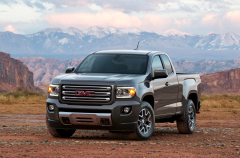
The 2015  GMC Canyon Crew Cab is definitely one that was built with class. Not only did the engineers put a lot of tough work and thought in the new GMC, it is a plus when it comes to family trips and hauling. It’s also noted as one fuel efficient truck.
Last week’s tester was fairly new with only 260 miles on the dash. The exterior and interior drew a lot of attention from passersby and stood tall in the road among other GMCs.
After a brief absence, General Motors re-enters the midsize pickup segment with the 2015 GMC Canyon. GMC ended midsize pickup production with the 2012 Canyon, ceding the field to the Toyota Tacoma and Nissan Frontier (Ford ended U.S. production of its Ranger midsize pickup in 2011). But even before its end, the Canyon was saddled with an inefficient powertrain and subpar interior, and never seriously contested the Tacoma’s supremacy in the segment.
With the redesigned full-size Sierra’s success, GMC has timing on its side for the Canyon launch. The midsize pickup should benefit from the Sierra’s spotlight without being perceived as a junior model. A large three-bar grille design, set inside an equally massive front fascia with LED-trimmed headlights, retains the family look in a smaller, modern workhorse package.
The Canyon will be available as an extended cab with a 6-foot bed, or as a crew cab in 5- and 6-foot bed lengths.
Base, SLE and SLT trims will be offered (the SLE is available with the off-road-oriented All-Terrain package) with either two- or four-wheel drive. The base 2.5-liter four-cylinder engine is rated at 200 horsepower and 191 pound-feet of torque, enough for light duty around town and off-road. For bigger payloads and bigger toys, there’s a 3.6-liter V6 good for a 305 hp and 269 lb-ft of torque. A 2.8-liter turbodiesel four-cylinder is scheduled for the 2016 model year.
A six-speed automatic transmission is standard, enhanced with automatic grade braking and a tow/haul mode. Select rear-wheel-drive extended-cab models can be ordered with a six-speed manual transmission. A properly equipped Canyon is rated for towing up to 7,000 pounds, more than the current Tacoma.
Unique features include an automatic mode on four-wheel-drive models that engages four-wheel-drive only when needed. There is also a step integrated into the rear bumper and the optional “EZ Lift-and-Lower” tailgate, which makes for one-handed closing and no-bang opening of the tailgate. An added plus is the front passenger assist steps.
The new Canyon’s cabin is a nicer place to sit and drive. Materials quality appears as good as anything in the Chevrolet Cruze compact sedan, for example. The Canyon also offers 4G LTE cellular connectivity, making the truck a Wi-Fi hotspot, while the latest GMC IntelliLink infotainment system enables gesture recognition and “natural” voice recognition. A rearview camera comes standard, while optional safety features include forward-collision alert, lane departure warning and adaptive cruise control. The Canyon also has big buttons and a large  eight inch color touch w/intellink load with XM radio and other amenities. It was nice to drive a truck with a large screen while using its Navigation system. Oh by the way, the rearview camera was amazing.
Gas mileage for the Canyon was 26 mpg in the city and 18 on the highway and sticker price is $39,090.
Until next week, drive safe and buckle up, it’s the law.

Rare Blood Cancer Poses a Challenge to African-Americans

0

Rare Blood Cancer (NAPSI)—While there is hopeful news in the battle against a rare blood disease, challenges remain, particularly in the African-American community.
That’s the word from experts who say multiple myeloma (MM) is an aggressive and rapidly progressive form of cancer that causes certain white blood cells, normally responsible for combating illnesses, to be overproduced. This proliferation of abnormal cells is known as myeloma cells, and can lead to the growth of tumors that may potentially spread to multiple sites in the body.
During the past 10-15 years, there has been a concentrated effort in developing updated and more effective medical treatments for this disease, which sees an average of 15,000 – 20,000 newly diagnosed cases in the U.S. each year.
As a result, new therapies are providing more effective treatment options for patients, increasing overall survival, in some cases as much as 10 years post-diagnosis. Multiple myeloma, not unlike many cancers, has become more of a managed illness for patients and their caregivers, but the illness is not without one curious health phenomenon: While the incident and mortality rates for multiple myeloma have mostly leveled off, this has not been the case within the African-American community, which has seen significant growth of the disease when compared to Caucasian populations.
As a result, this rare form of blood cancer disproportionately affects African-Americans and is one of the leading causes of cancer deaths among this population. Studies indicate that African-Americans are twice as likely to be diagnosed with this disease versus Caucasians and other ethnic groups, and data also points toward an increased incidence and younger onset of the disease.
Treatment Challenges Still Remain
The causes and reasons for this spike of activity, as well as the racial disparity in incidence and mortality, remain unclear. Various elements such as diet, socioeconomic status, and occupation have been closely studied to determine the root causes of this discrepancy, but nothing conclusive has been drawn.
Although the elevated risk of contracting multiple myeloma is seemingly elevated among African-Americans who live at certain socioeconomic levels and who operate within particular occupations, further research and discussion are required in order to determine the environmental and genetic factors that may determine multiple myeloma.
Additionally, data demonstrates that African-Americans also have a lower rate for becoming potential bone marrow and stem cell donors than other indigenous groups, and are less likely to participate in clinical trials with novel treatments. These facts are disconcerting among public health leaders who shoulder the responsibility to help these patients receive current disease information, but use that data for treatment.
With a clearer understanding of the genesis of the myeloma patient’s condition, the attending physician may suggest the intervention of an oncologist who will make a more accurate cancer diagnosis. It’s critical for African-Americans who experience any type of bone or muscle pain, numbness in their extremities, muscle weakness or infections, including pneumonia, to schedule an appointment with their physician to determine the extent of their condition.
Beyond Treatment—An Informed Black Community
There are a growing number of available resources to African-Americans who are living with MM or those who suspect they may have contracted this blood cancer. Groups such as the Multiple Myeloma Research Foundation, International Myeloma Foundation and Tackle Cancer Foundation are excellent sources for gathering important information about symptoms, treatment options, oncologists and a myriad of data that may impact a future cancer patient.
In fact, one of these resources that is directed at African-Americans and recently became available is an educational DVD co-sponsored by the Tackle Cancer Foundation and Millennium. “Multiple Myeloma in the African-American Community” is an effective resource for patients and caregivers and spearheaded by Kimberly Alexander, who lost her husband, Elijah, to multiple myeloma.
“My desire to stay educated about multiple myeloma didn’t end when my husband lost his battle with cancer due to complications from the disease. I will forever be concerned about the possible implications this may have for our children, grandchildren and future generations. Because I know the incidence rates of multiple myeloma within the African-American community, my wish for a cure goes beyond doing something in memory of my husband; it could be the difference maker for our family for years to come.”
Millennium’s involvement within this community has been ongoing and has identified outreach to the African-American community through its Patient Advocacy group. According to Kathy Gram, who is part of the company’s patient advocacy leadership, “We have African-American multiple myeloma patient ambassadors and caregivers tell their stories to the African-American community to offer hope, inspiration and the importance of clinical trial participation.
“The ambassadors also encourage MM patients to seek second opinions from an MM specialist and find a patient support group in their area. They are also reaching out to both the national office of minority health care and the state offices to identify channels for education and awareness.”
More Information Needed
Oncologists and other health care professionals involved in the treating of myeloma patients and those scientists challenged with developing future treatments—and possibly a cure—agree that there is a need for more information when it comes to understanding the impact of this disease on African-Americans.
There also remains a need for community education programs to educate this population about its risks for developing MM and the benefit of clinical trials so that they may better understand this new information and apply it to their lives.
For more information, visit www.mymultiplemyeloma.com.

Brain Injury: Returning Headaches a Serious Signal

0

Brain Injury(NAPSM)—Traumatic brain injury (TBI) is a serious public health problem, reports the Centers for Disease Control and Prevention (CDC)—some 2.5 million occur a year—but knowing a few facts can help protect yourself and your family.
Silent But Deadly
A TBI is caused by a bump, blow or jolt to the head or a penetrating head injury that disrupts the normal function of the brain. One of the most serious problems is what’s known as “talk and die syndrome.” The head injury sufferer is able to walk, talk and behave “normally” immediately after, and everyone thinks he or she is just fine. Then, hours later, headaches and irritability develop and the victim succumbs to the injury.
What To Do
That’s why it’s wise to err on the side of caution and get medical help immediately when a head injury may be involved. In addition, all concussion victims should take a complete break from cognitive as well as physical activity for the first three to five days, then try some light cognitive tasks and see how it goes. If headaches or dizziness come back, it’s not time to resume activity. Stay vigilant and promptly seek medical attention if headaches reappear. The headaches may indicate a brain injury but no one may have been thinking about a brain injury when the event occurred. Some head injury symptoms don’t show up until the person starts resuming everyday life and its demands.
What Causes TBI
Falls are the leading reason people have head injuries but they can also be due to slow-speed car accidents and sports injuries, particularly bicycling. The severity may range from “mild,” brief change in mental status or consciousness to “severe,” an extended period of unconsciousness or amnesia.
Who Gets Hurt
Men are more likely to have TBI hospitalizations than women, and children under 4 and adults over 65 are more likely than others to be hospitalized. African Americans have a higher death rate from brain injury than any other ethnic group; 25 percent higher than for the overall population.
Signs and Symptoms
Most people understand headaches follow concussions, often starting immediately after the blow to the head occurs. What many do not realize, however, is that these headaches can become permanent and life threatening and may not occur immediately but long after a seemingly innocuous incident.
Learn More
For further facts on handling brain injuries including whether you might need a lawyer, get a free guide at http://accidentattorneys.org.

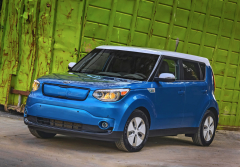
2015 Kia Soul EV

0

2015 Kia Soul EVBy Frank S. Washington

DANA POINT, Calif. – The Kia Soul is the most successful alternatively shaped car (read square box) on the road. Now the Korean automaker is attempting to transfer the vehicle’s popularity to the new Soul EV – that stands for electric vehicle.
Electric powered vehicles are not as rare as you might think. There is a robust competition in the segment. There are 11 all electric vehicles on the market and more are on the way. The 2015 Soul EV was the latest when it went on sale in early October.
The Soul EV uses a Lithium Ion Polymer battery. It has a range of 93 miles, better than all EVs except the luxury Telsa S, and it has regenerative braking to help recharge the battery. But it is not a closed system. In other words, the battery must be recharged externally.
It takes a substantive 24 hours to recharge the Soul EV’s battery from zero capacity using a standard 120 volt electrical outlet. A 240 volt outlet will do the job in 4.5 hours. And a direct charge 490 volt outlet, not recommended for home use, will charge the battery to 80 percent of its capacity in 33 minutes.
The battery is engineered for use in warm weather, thus, it makes sense for Kia to first target California with the Soul EV. Los Angeles and San Francisco are the top markets for electric vehicles. However, for colder climes there is a battery warmer available.
You’ve got to know your Souls to distinguish a gasoline powered model from an electric variant. Our test vehicle still featured the Soul’s floating roof, square shoulders and windows that looked like wrap around tinted glasses. The difference was the grille; it was larger on the EV to accommodate the charging ports that were hidden behind it. A third of the grille panel swung out and over to allow charging.
The battery was underneath the car which didn’t cause much alteration to the interior. Thus, the Soul EV only lost three inches of rear passenger space that was cavernous to begin with. Cargo space remained at more than 18 cu. ft. with the second row seat up.
Electric vehicles are a new world. They not only include kilowatt hour readings but specifications on energy, power, volts (the Soul EV makes 360), battery pack watt hours, amp/hours and on it goes.
But some numbers were familiar. The car generated 109 horsepower and 210 pound-feet of torque. That electric motor was mated to a one-gear transmission. Oh, the torque was instantaneous and that one gear was more than adequate. These figures were not as piddling as they seem to be in print.
We test drove the Soul EV on a 68-mile route. When we were done, the gauges said we had 35 miles left in range and 35 percent of the charge remained. We took it easy during the drive because it (the electric automobile) is an unknown entity. Still, the vehicle was quiet; we heard nothing but some wind noise over the roof.
It also had all the bells and whistles you’ve come to expect: heated and cooled front seats, and heated rear seats, a navigation system, satellite radio, auxiliary and USB jacks, Bluetooth, push button start, smart key, rearview camera, there was nothing missing.
Power was good; we once got up to 80 mph without noticing. The top speed is electronically limited to 90 mph but the car can’t go much faster anyway. The Soul EV can get to 60 mph from a standstill in 11.2 seconds and when it comes to towing, the spec sheet said it is “not recommended.” We took that to mean don’t do it.
Once, backing out of a parking space we heard the crossover (that’s what Kia calls the Soul) chiming gently to alert pedestrians as well as other vehicles. Remember, this car runs virtually silent. That chime is supposed to sound off whenever the Soul EV is traveling at 12 mph or less to alert those on foot and other vehicles that it is there.
We thought the car handled extremely well. Kia engineers did a nice job in retuning the suspension to handle the 400 lbs. of extra weight. Though the Soul EV lost a gasoline engine and a conventional transmission, it gained a sizable battery, regenerative brakes and stiffer (read heavier) low resistance tires. What’s more, because of the retuning, the Soul EV’s center of gravity was lower and that made it hug the pavement even more.
It was a nice ride. But what Kia and other electric vehicle makers must overcome is range anxiety. Kia has opted to include a satellite feed to the Soul EV’s UVO system that tells drivers where the nearest charging station is in California’s fast growing electric charging infrastructure.
Since we didn’t need it we didn’t bother to check. But one of our colleagues got caught in a huge traffic jam on I-5 and could not go anywhere for more than an hour. He remarked that he was glad he was driving the Soul Sedona (another new Kia that was also tested) and we agreed.
But on reflection it occurred to us that getting caught in a traffic jam should not matter to the Soul EV. It is about range and battery charge. If you’re not moving, that does not impact either. A Kia official said that is right, unless you’ve got the air conditioner going or the radio playing and not moving, thus not using regenerative braking to recharge the 12 volt battery – the range could go down a little. But in stop and go traffic jams the regenerative brakes are being used – a lot.
Anyway, the point is that the public needs to be educated about electric vehicles; not by automakers but by owners of EVs. And Kia has a good one in the 2015 Soul EV; prices start at $33,700. Our test vehicle had a sticker of $36,625 including an $800 freight charge.

Frank S. Washington is editor of AboutThatCar.com.

Sisters Establish Community Diabetes Lectureship in Memory of Their Parents at the University of Tennessee Health Science Center

0
Sisters Beverly Williams-Cleaves, MD, second from left; Ethelyn Williams-Neal, MD, center; and Willie Williams Crittendon, PhD, are pictured at the inaugural Community Diabetes Lectureship, which they endowed in memory of their parents at the University of Tennessee Health Science Center (UTHSC). Guy Reed, MD, chair of the UTHSC Department of Medicine, is at far left, and featured speaker, James Gavin III, MD, is at right.

Inaugural John Ed and Odessa Williams Endowment Lecture brings diabetes expert to campus

MEMPHIS, Tenn.(BlackNews.com) — The first John Ed and Odessa Williams Endowment in Community Diabetes Lectureship brought diabetes expert James Gavin III, MD, to the University of Tennessee Health Science Center (UTHSC) campus as the keynote speaker.
The lectureship was established by sisters Willie M. Williams Crittendon, PhD, an educator; Ethelyn Williams-Neal, MD, a pediatrician and clinical assistant professor at UTHSC; and Beverly Williams-Cleaves, MD, an internist/endocrinologist and clinical associate professor at UTHSC, in memory of their parents, John Ed and Odessa Williams.
The endowment was developed to encourage greater diversity in support of UTHSC, to highlight the importance of excellent community care for those with diabetes, and to provide ancillary financial support for minority medical students at UTHSC.
“We were excited to have the opportunity to launch this inaugural lectureship,” Dr. Williams-Cleaves said. “Diabetes and community health are topics that are very dear to our hearts.”
As part of the two-day event at UTHSC, Dr. Gavin, clinical professor of Medicine at Emory University School of Medicine in Atlanta and at Indiana University School of Medicine in Indianapolis, gave a lecture for physicians, residents and medical students; consulted with endocrinology fellows; and spoke to the Bluff City Medical Society, which was founded by a group of African-American physicians to promote wellness and decrease health disparities in the African-American community. Dr. Gavin is past president of the American Diabetes Association and immediate past chairman of the National Diabetes Education Program.
“We were extremely pleased and honored to have Dr. James Gavin as our inaugural speaker,” Dr. Williams-Cleaves said. “He brought great stature to this event.”

Marching for Congressional Action on Police Brutality

0

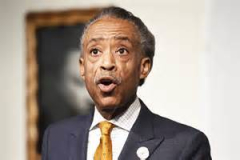
Al SharptonRev. Al Sharpton
President, National Action Network

On Saturday, Dec. 13, thousands will join the families of Eric Garner, Trayvon Martin, Akai Gurley and Michael Brown as they and National Action Network and other civil-rights organizations gather in Washington, D.C., for a march against police violence. Right now the nation is engaged in a thorough conversation about race, policing and healing. While this dialogue is necessary and long overdue, we need more than just talk; we need legislative action that will shift things both on the books and in the streets. President Obama announced a task force that will report back to him in 90 days with concrete recommendations, and he has also proposed millions in federal matching funds to provide body cameras for some 50,000 police officers. But what happens when he is no longer in the White House? Congress must immediately start hearings to deal with laws that will change the jurisdiction threshold for federal cases and policing. The executive branch has addressed this most pressing issue, and now it’s time the legislative branch do the same.
During the ’50s and ’60s people organized, marched, boycotted and literally put their lives on the line for the sake of progress. But they didn’t do it just for President Kennedy to take action; they continued until congressional laws were passed. They pushed their message forward until things like the Civil Rights Act of 1964 and the Fair Housing Act of 1968 became codified into law. Today our battle is against police brutality and excessive force. When local prosecutors fail to conduct a fair grand-jury investigation at the state level, as happened in Ferguson and Staten Island recently, the threshold is so high for the federal government to be able to take over the case. That must change. We cannot continue to allow prosecutors who work with police regularly to then be in charge of cases investigating those same officers and police departments. That is a complete conflict of interest. And in order for federal authorities to step in, we must reform current laws.
I have been involved in the fight against police brutality and misconduct for most of my life. Looking into a mother’s or father’s eyes as they search for answers, for justice, never gets easier. But it is up to us to demand the changes we need to see implemented. As National Action Network and I were involved from day one in both the Ferguson and Staten Island cases, and as I said in my eulogy for both Michael Brown and Eric Garner, we need federal intervention without delay. The state has already proven that it cannot do the job. We are heartened to see many groups spontaneously take the movement to new levels across the country. This is an idea whose time has come. There will be those who will continue to say that we need to have a discussion. A discussion is necessary, as long as there is follow-through with decisive action. Otherwise, as the saying goes, talk is just cheap.
On our journey toward greater equality and fairness, many will try to ridicule us. They will attempt to divide us and paint us as something we are not. It is up to those of us who would like to live in a country where people are not profiled, harassed, arrested, beaten or killed because of their background or what they look like to keep pushing forward. Our detractors will use the actions of a few bad apples to condemn us all, but we know that our movement is peaceful and our cause just.
Our greatest civil-rights leader, Dr. Martin Luther King Jr., once said:
History will have to record that the greatest tragedy of this period of social transition was not the strident clamor of the bad people, but the appalling silence of the good people.

Do not be silent. Do not be complacent. Do not continue to live with police misconduct and violence as somehow acceptable. We are not anti-police; we are anti-police-brutality. And today we challenge Congress to follow in the president’s footsteps and take legislative action to protect us, the citizens.
Those who came before us sacrificed so that we may have a more just future. Now we must do the same for the generations that will come after us. As most Americans agree that we need some kind of reform, we head to the nation’s capital to answer what exactly we must change and how. See you on Saturday.
Click here for more information on joining the march in Washington, D.C., on Dec. 13, 2014.

10-Point Plan: National Urban League Police Reform and Accountability Recommendations

0

nmapv_flyer

Join us this Saturday, December 13th, 2014 in Washington, DC as we demand #Justice4All at the National March Against Police Violence!

10-Point Plan: National Urban League Police Reform and Accountability Recommendations
“The phenomenon we have seen in America since the announcement of the non-indictments of officers in the killings of Michael Brown and Eric Garner is new to a generation, but not to the nation. Young people have always helped to fuel historic social change. We must not forget – 50 years ago, it was young people on that bridge in Selma, Alabama; young people sitting-in in Greensboro, NC; young people riding Freedom buses all over this nation challenging conventional laws and the status quo; young people like Schwerner, Goodman and Chaney losing their lives in Philadelphia, Mississippi. A multicultural band of young people, united with historic civil rights organizations, legislators, clergy, and everyday Americans who decided that it was time for our country to do better and be better, have been the impetus for so many of the changes we’ve witnessed as a nation through the decades.

Millions of Americans have now taken to the streets and to social media not because the problems that have caused the outrage just began yesterday, but because sometimes difficult circumstances present a once-in-a-lifetime opportunity to bring about historic change. Now is that time. Now is our time.

This conversation and the subsequent action that will result from it will continue because we remain committed to the idea that these cases do not end where they are. In addition to the opportunity for the Justice Department to conduct independent investigations, we each have an opportunity to participate in our great democracy by helping to ensure that the America of tomorrow is better than who we are today.”

10-Point Plan: National Urban League Police Reform and Accountability Recommendations:

Widespread Use of Body Cameras and Dashboard Cameras
Broken Windows Reform and Implementation of 21st Century Community Policing Model
Review and Revision of Police Use of Deadly Force Policies
Comprehensive Retraining of All Police Officers
Comprehensive Review and Strengthening of Police Hiring Standards
Appointment of Special Prosecutors to Investigate Police Misconduct
Mandatory, Uniform FBI Reporting and Audit of Lethal Force Incidents Involving All Law Enforcement
Creation and Audit of National Database of Citizen Complaints against Police
Revision of National Police Accreditation System for Mandatory Use by Law Enforcement To Be Eligible for Federal Funds
National Comprehensive Anti-Racial Profiling Law

Congresswoman Johnson Applauds the Passage of a New Measure to Prevent Veteran Suicide

0

Congressman JohnsonWashington, DC — Congresswoman Johnson applauded the unanimous House passage of bipartisan legislation to address the epidemic of suicide among our nation’s veterans.

“One veteran lost to suicide is one veteran too many,” said Congresswoman Johnson.  “This bipartisan legislation provides our heroes with the care and support they’ve earned in order to overcome any mental health challenges, traumatic brain injuries, and post-traumatic stress disorders they might suffer from.  It was my honor to support this legislation, to ensure our nation is dedicated to standing  behind our brave veterans with compassion every day.”

Twenty-two veterans commit suicide every day – this amounts to more than 8,000 every year.  Of the more than 2 million Americans who have served in combat in Afghanistan and Iraq, it is estimated that one-third, roughly 600,000 women and men, have traumatic brain injury, PTSD or depression.  Named in honor of an Iraq and Afghanistan War veteran and noted suicide prevention advocate who took his own life on March 31, 2011, The Clay Hunt Suicide Prevention for American Veterans Act (H.R. 5059) is another step toward ensuring our nation’s veterans have the support they need by expanding access to and improving the effectiveness of mental health care for our veterans.

The Clay Hunt Suicide Prevention for American Veterans Act will establish a peer support and community outreach pilot program to assist transitioning service members with accessing VA mental health care services.  To ease access to services, the bill will require the VA to create a one-stop, interactive website to serve as a centralized source of information regarding all mental health services for veterans.  A student loan repayment pilot program aimed at recruiting and retaining psychiatrists included in the legislation will help address the shortage of mental health care professionals.  To improve care, the legislation will require an annual, third-party evaluation of all mental health care and suicide prevention practices and programs at the VA to find out what is working and what is not.

###
U.S. Representative Eddie Bernice Johnson is the ranking member of the House Committee on Science, Space, and Technology and the highest-ranking Texan on the House Committee on Transportation & Infrastructure. She represents the 30th Congressional District of Texas, which includes Downtown Dallas, Fair Park, Kessler Park, Old East Dallas, Pleasant Grove, South Dallas & South Oak Cliff; all of Cedar Hill, DeSoto, Duncanville, Hutchins, Lancaster & Wilmer and parts of Ferris, Glenn Heights, South Grand Prairie, Oak Lawn, Ovilla, Uptown/Victory Park and West Dallas.