Home Blog Page 1411

MillerCoors Presents Scholarship Checks for Magic City Classic

0

BIRMINGHAM, Ala. – Representatives of MillerCoors present $10,000 scholarship checks on behalf of MillerCoors to Alabama State University and Alabama A&M University during the 73rd Magic City Classic. Coors Light has supported HBCU classics for nearly three decades, and over the past six years has invested more than $1 million in the HBCU community by providing scholarships to participating colleges and universities. Pictured above (L/R): Michael Maddox, Chain Account Executive, MillerCoors; Gwendolyn Boyd, President, Alabama State University; Andrew Hugine, President, Alabama A&M University; Melvin Reeves, Chain Account Executive, MillerCoors. (Photo courtesy of MillerCoors/Lord David Nelson)
Also  R&B/hip hop music group and Magic City Classic performers, Bell Biv De Voe, pose for a picture after greeting fans during the Coors Light pre-game tailgate party. (Photo courtesy of MillerCoors/Lord David Nelson)

Dr. Frank Adams

0

Frank  AdamsThe Birmingham Times  dedicates this edition  in memory of Jazz Great and Influential Educator, Dr. Frank Adams, Sr, affectionally nicknamed “Doc.”

Make Halloween Fun, Not Scary, for Kids and Teenagers

0

halloween BIRMINGHAM, Ala. – While Halloween is a favorite holiday for many children and teenagers, it also presents challenges for parents concerned with safety. Halloween can be safe and fun for all involved.
“Children should enjoy the holiday,” said David Schwebel, Ph.D., University of Alabama at Birmingham psychologist and director of the UAB Youth Safety Lab. “It should be a fun time for family and friends, but safety is important too. Parents need to think about safety on the roads, safety with pumpkin carving and safety with candy.”
This year’s Halloween is on a Friday night, which is important to keep in mind, according to Schwebel.
“There are many different safety issues to take into consideration, such as making sure children aren’t out late unsupervised with the holiday falling on a weekend night this year,” Schwebel said. “Because school isn’t in session the following day, parents may be tempted to allow children to stay out later than usual.”
Schwebel cautions that allowing children to stay out late unsupervised is not safer on a holiday than it would be on any other day.
Schwebel offers additional tips that parents can follow to help ensure this Halloween is a safe one:
Jack-o’-Lanterns
•    Adults can teach older children to cut jack-o’-lanterns and light candles.
•    Younger children can scoop out the seeds and draw designs on the pumpkins with a marker.

Trick-or-Treating
•    Wear light clothing and reflective strips, and carry a flashlight.
•    Children should be supervised by an adult until the age of 10.
•    Look both ways, and cross the street only at crosswalks.

Halloween Costumes
•    Wear costumes that do not restrict vision.
•    Make sure that costumes and shoes permit safe, comfortable walking.
•    Avoid loose hanging clothing that could catch fire near candles.
•    Do not overdo it with scary costumes for and around younger children. Young children can be sensitive to unfamiliar, scary things, so caution should be used to avoid anxiety.

Motorists
•    Watch for children.
•    Drive more slowly than usual.
•    Avoid distractions while driving.

Safe Candy
•    Inspect all candy before it is eaten, and discard treats that are not sealed tightly.
•    Fruit should be thrown away, or else peeled, washed carefully and cut into small pieces.
•    Watch out for choking hazards with young children.

Domestic Violence Health Risks: Doctors Can Help

0

Domestic (NAPSA) – While intimate partner violence (IPV), or domestic violence, is one of the most common health risks to women in the United States and can have a profoundly negative impact on health and well-being, there are ways to prevent it. Unfortunately, every minute, 24 people are victims of rape, physical violence, or stalking by a partner or spouse in the United States, according to a National Intimate Partner and Sexual Violence Survey.
IPV is physical, psychological or sexual harm by a current or former partner or spouse. Both women and men can be at risk from either heterosexual or same-sex partners. IPV affects people in every community, regardless of race, religion, educational background or economic status.
Domestic violence stems from an abuser using power and control to emotionally or physically hurt a person close to him or her, typically in an intimate or family relationship. Someone experiencing domestic violence may have physical injuries, psychological trauma or may even die from the abuse.

Injury Beyond Wounds
IPV can result in a variety of negative health outcomes including injury and pain, nervousness and stomach disorders, severe headaches, and mental health problems. In addition, the stress of being threatened and injured by a loved one can lead to coping in ways that compromise health and wellness – things such as over- or undereating, alcohol and drug use, and isolation.
Those who witness violence – typically children – are also affected. Intimate partner violence often cycles and passes from parents to their children largely because what is seen at a young age is later believed to be “normal” in their own family and in relationships. Stopping the cycle of violence begins when steps can be taken to support healthy relationships that are not abusive.

Your Doctor Can Help
Domestic violence often goes undetected or unreported. Fortunately, new research shows that screening and support programs offered in primary care can help prevent violence against women. As a result, the U.S. Preventive Services Task Force has recommended that primary care clinicians screen all women ages 14 to 46 for intimate partner violence. Discussions with doctors and nurses are a safe way for patients to discuss what is happening and get help and referrals to supportive programs and services.

Domestic Violence Screening and Support Services
Doctors often screen for health risks that were once considered too private to discuss, such as tobacco use, alcohol abuse, and HIV and other sexually transmitted infections. Now, IPV has been added to that list. This means that if you are a woman between the ages of 14 and 46, you may be asked about your intimate relationship or given a questionnaire about IPV during a doctor’s office visit. Since, by some estimates, one in four women experience IPV, many women may be helped as a result of this screening.
The benefit of screening for intimate partner violence is to identify women who are being abused, link them with the help they may need, and reduce the chance of future violence and abuse. It may also help identify physical and mental harms that stem from IPV, even if the woman is not showing signs or symptoms of these conditions. If a woman screens positive for IPV, supports offered by her doctor can range from a toll-free hotline to peer support programs or domestic violence shelters, depending on her situation and the community resources available.
While family violence can be experienced by anyone – children, men, women, the elderly – there is currently not enough evidence about how primary care clinicians can effectively screen and intervene for individuals aside from women ages 14 to 46. But anyone concerned about this issue should talk with a doctor or nurse.

Protecting Your Health
The U.S. Preventive Services Task Force is an independent group of national experts in prevention and evidence-based medicine that makes recommendations on primary care services. Recently, the Task Force reviewed the research on screening women for intimate partner violence and issued a recommendation.
For more information on the Task Force and to read the full report on intimate partner violence, visit www.uspreventiveservicestaskforce.org.
If you are experiencing domestic violence, there is help at the National Domestic Violence Hotline – (800) 799-7233.

Doctors are screening women to find victims of rape, physical violence, or stalking by a partner or spouse.

Whooping Cough Cases are on the Rise – Be Protected

0

Whooping cough(NAPSA) – Whooping cough is often thought of as a disease of the past but, unfortunately, it’s making a comeback. To provide yourself and your family with the best protection, get vaccinated against the disease.
There are many factors contributing to the current resurgence of whooping cough. While offering protection, the whooping cough vaccines used now do not last as long as health care professionals would like. Raised awareness, along with better tests to diagnose patients, has contributed to an increase in the number of whooping cough cases being diagnosed and reported.
Whooping cough can take a toll on anyone but it can be deadly for babies. There are between 10,000 and 50,000 whooping cough cases reported each year in the United States, with about 10 to 20 infant deaths due to the disease. Most deaths are in babies too young to be protected by their own vaccination.
The best protection against whooping cough is the whooping cough vaccine. Babies, teens, adults and pregnant women need to be vaccinated according to the Centers for Disease Control and Prevention’s (CDC) recommended schedule.
For babies, protection against whooping cough can start before they’re even born. During pregnancy, women should get the Tdap vaccine; a shot combining protection against whooping cough, tetanus and diphtheria. Antibodies will be passed to the baby, providing protection until they are old enough to receive their first whooping cough vaccine, and the mother will be protected against spreading whooping cough to her newborn.
Before her baby is born, a pregnant woman should also talk to others about making sure they are up to date with the Tdap vaccine. This includes the baby’s father, grandparents, siblings, aunts, uncles, cousins, babysitters and day care staff. If someone is not up to date, he or she should get the whooping cough vaccine at least two weeks before coming in close contact with the new baby.
Babies begin their series of vaccines against whooping cough at 2 months of age with their first dose of DTaP. Like Tdap, this shot combines protection against whooping cough, tetanus and diphtheria. The series is completed by getting additional doses at 4 months, 6 months, 15 through 18 months, and 4 through 6 years of age. Since the protection the DTaP vaccine provides young children decreases over time, preteens need the Tdap booster shot at 11 or 12 years old.
Even if you don’t have children or a baby on the way, you can help protect yourself and those who are vulnerable around you by ensuring your whooping cough vaccine is up to date. The CDC recommends that all teens and adults who have never gotten the Tdap vaccine receive a dose.
Do your part to protect yourself and your family from whooping cough. Visit www.cdc.gov/whoopingcough for more information and talk to your doctor about the whooping cough vaccine.

Getting vaccinated against whooping cough can protect you, and keep you from infecting babies too young to be vaccinated.

Rare Blood Cancer Has Higher Incidence in African-Americans

0

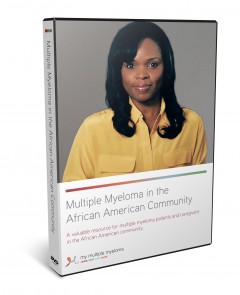
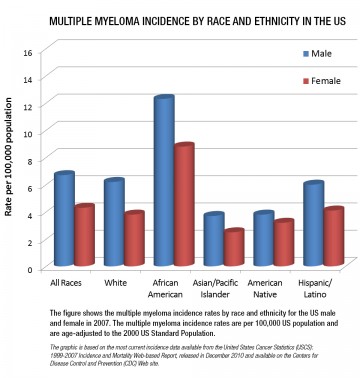
MyMM DVD CaseDisplayMM Graph - CDCAlthough it is a rare blood cancer, Multiple Myeloma is an aggressive and rapidly progressive illness that causes certain white blood cells, normally responsible for combating illnesses, to be overproduced. This proliferation of abnormal cells is known as myeloma cells, and can lead to the growth of tumors that may potentially spread to multiple sites in the body.
During the past 10-15 years there has been a concentrated effort in developing updated and more effective medical treatments for this disease, which sees an average of 15,000-20,000 newly-diagnosed cases in the U.S. each year. New therapies are providing more effective treatment options for patients that increase overall survival, in some cases, to as many as 10 years post-diagnosis. Multiple Myeloma, not unlike many cancers, has become more of a managed illness for patients and their caregivers, but the illness is not without one curious health phenomenon.
For the past three decades, the incident and mortality rates for multiple myeloma have mostly leveled off, except within the Black community, which has seen significant growth when compared to Caucasian populations. This rare form of blood cancer disproportionately affects African Americans and is one of the leading causes of cancer deaths among Blacks. Studies indicate that African Americans are twice as likely to be diagnosed with this disease versus Caucasians and other ethnic groups, and data also points toward an increased incidence and younger onset of the disease.

Treatment Challenges Remain
 The causes and reasons for this spike of activity, as well as the racial disparity in incidence and mortality remain unclear. Various elements such as diet, socioeconomic status, and occupation have been closely studied to determine the root causes of this discrepancy, but nothing conclusive has been drawn. Although the elevated risk of contracting multiple myeloma is seemingly elevated among Blacks who live at certain socioeconomic levels and who operate within particular occupations, further research and discussion is required in order to determine the environmental and genetic factors that may determine multiple myeloma. Additionally, data demonstrates that African-Americans also have a lower rate for becoming potential bone marrow and stem cell donors than other indigenous groups, and are less likely to participate in clinical trials with novel treatments. These facts are disconcerting among public health leaders who shoulder the responsibility to help these patients receive current disease information, but use that data for treatment.
What makes myeloma a challenge to diagnose is that disease symptoms can also be found in other illnesses. For example, one of the medical conditions often caused by a myeloma tumor is the destruction of bone which may not be seen initially as cancer-related. With a clearer understanding of the genesis of the myeloma patient’s condition, the attending physician may suggest the intervention of an oncologist who will make a more accurate cancer diagnosis. It’s critical for African Americans who experience any type of bone or muscle pain, numbness in their extremities, muscle weakness or infections, including pneumonia, to schedule an appointment with their physician to determine the extent of their condition.

Beyond treatment. An Informed Black Community
 There are a growing number of available resources to African-Americans who are living with MM or those who suspect they may have contracted this blood cancer. Groups like the Multiple Myeloma Research Foundation, International Myeloma Foundation and Tackle Cancer Foundation are excellent sources for gathering important information about symptoms, treatment options, oncologists and a myriad of data that may impact a future cancer patient. In fact, one of these resources that is directed at African-Americans and recently became available is an educational DVD co-sponsored by the Tackle Cancer Foundation and Millennium: The Takeda Oncology Company. “Multiple Myeloma in the African American Community” is an effective resource for patients and caregivers and spearheaded by Kimberly Alexander, who lost her husband, Elijah, to multiple myeloma.
“My desire to stay educated about multiple myeloma didn’t end when my husband lost his battle with cancer due to complications from the disease. I will forever be concerned about the possible implications this may have for our children, grandchildren and future generations. Because I know of the incidence rates of multiple myeloma within the African American community my wish for a cure goes beyond doing something in memory of my husband, it could be the difference maker for our family for years to come.”
For more information about obtaining this DVD, please visit www.mymultiplemyeloma.com.
Millennium’s involvement within this community has been ongoing and have identified outreach to the African American community, an underserved population, a focus through their Patient Advocacy group. According to Kathy Gram who is part of the company’s patient advocacy leadership, “we have African American MM patient ambassadors and caregivers tell their stories to the African American community to offer hope, inspiration and the importance of clinical trial participation. The ambassadors also encourage MM patients to seek second opinions (MM specialist) and find a patient support group in their area. They are also reaching out to both the national office of minority health care and the state offices to identify channels for education and awareness.”
Oncologists and other healthcare professionals involved in the treating of myeloma patients and those scientists challenged with developing future treatments; and possibly a cure, agree that there is a need for more information when it comes to understanding the impact of this disease on African Americans. There also remains a need for community education programs to educate this population about its risks for developing MM and the benefit of clinical trials so that they may better understand this new information and apply it to their lives.

This Red Ribbon Week, Win $1,000 for Your School and an iPad for Your Family

0

Red Ribbon WeekThere’s still time to enter the Red Ribbon Week ® Photo Contest. Deadline is Nov. 4!
MIAMI – Calling all schools and families across America…there’s still time to be part of the annual Red Ribbon Photo Contest, which comes with the chance to win an iPad and $1,000 for your K-12 school of choice. But hurry, the deadline to enter is Nov. 4.
As the nation celebrates the 29th Annual Red Ribbon Week, Oct. 23-31, the National Family Partnership (NFP) is urging students, families and schools to take part in its Red Ribbon Photo Contest, which promotes drug awareness and prevention among youth.
“This contest is a great way for families and schools to deliver the ‘Love Yourself. Be Drug Free.’ message,” said NFP President Peggy Sapp. “By uniting and involving families, schools and communities, we can be more effective in helping our children make smart decisions and grow up safe, healthy and drug free.”
Ten families across America will be selected to win the grand prize: an iPad and $1,000 donation to a K-12 school of their choosing.
There will also be one prize awarded for a school decoration. Here’s how simple it is to enter:
•    Students and families decorate their home’s front door, mailbox or fence with a double-looped red ribbon and the theme, “Love Yourself. Be Drug Free.” Schools may decorate any part of their campus.
•    Take a photo with your decoration and upload it to www.RedRibbon.org/enter now through Nov.4. You must be 18 years or older to upload the photo and can do so from any desktop or mobile device.
•    Ask family and friends to vote for your entry beginning Nov. 5.
•    Eleven winners will be announced Dec. 5.

To learn more about contest rules, visit www.RedRibbon.org.

Hepatitis C Reaches Historic Highs:

0

HEP-C-Awarness-Ribbon1Burgeoning Baby Boomer Generation at Extreme Risk with More Than 75% Infected as Spending on HCV Treatment Predicted to Surge More Than 200% by 2015


Expert available to discuss reasoning’s, resolutions and frightening factoids about the escalating incidence of Hepatitis C, including populations most at risk; what is perpetuating the epidemic; devastating personal health and socioeconomic impacts; the ease, importance and availability of testing; curative treatment options; exorbitant drug costs now as high as $1,000 per pill; and important pending legislation
The numbers are sobering: While the U.S. Centers for Disease Control and Prevention (CDC) estimates that 3.2 million Americans are currently infected with the Hepatitis C virus (HCV), the World Health Organization (WHO) further estimates that a staggering 130–150 million people globally have a chronic HCV infection and that 350 000 to 500 000 people die each year from HCV-related liver diseases. While alarming, these data points are no surprise given that the vast majority of those infected with the debilitating, costly and life threatening HCV virus—the leading cause of advanced liver disease, cirrhosis, liver cancer and liver transplants—are entirely unaware and asymptomatic. As worrisome, since the virus often goes undetected, individuals often unknowingly transmit the disease to others. Even those who are aware of their HCV positive status face barriers relating to exorbitant drug costs, which can currently reach a prohibitive $1,000 a pill. One recent report even cited a “jaw-dropping” prediction that spending on HCV treatment would surge by more than 100% in 2014 and by more than 200% in both 2015 and 2016. View additional frightening factoids about HCV bulleted down below.

Because myths abound about how the HCV virus is transmitted, far too many—like those who have never used recreational drugs and/or shared a needle with another person, for example—erroneously believe they are not at risk and never get tested.  Many are surprised to learn that the population most at risk is the swelling baby-boomer generation. In fact, individuals born between 1945 and 1965 are a whopping five times more likely to have HCV than any other age group due to both previous blood transfusion screening and lifestyle issues. The overwhelming majority (more than 75%) of Americans who today are living with HCV are baby boomers. This is why the CDC and the United States Preventive Services Task Force (USPSTF) recommends that everyone born between the years 1945 and 1965 get a one-time screening for HCV—testing that is covered by insurance plans and Medicare in many cases.

But, baby boomers are not the only critically high risk population for HCV. African-Americans also have a substantially higher rate of chronic HCV infection and are twice as likely as Caucasians to be infected. In fact, chronic liver disease, often HCV-related, is the leading cause of death among African-Americans between the ages of 45 and 64.

With all of this in mind, public health advocate Pernessa Seele, founder and CEO of The Balm In Gilead—a nonprofit organization that spearheads activism initiatives to proactively address life-threatening diseases like the silent but deadly viral HCV epidemic, is available for interviews and editorials on the reasoning’s, resolutions and frightening factoids (as listed below) regarding the rapidly escalating incidence of HCV in America.

For its part, HCV will be a primary topic of discussion at the upcoming Healthy Churches 2020 Conference to be held in North Carolina his November 13-15—an event Seele founded and oversees to directly address how faith-based communities, for their part, can play a more significant front-line role in addressing life-threatening diseases like HCV and others. Through this large-scale industry event, and also grassroots Town Hall Meeting forums that Seele hosts in cities across the United States, she is working tirelessly to educate regional populations on the risks and realities of HCV while concurrently helping faith-based organizations better achieve their community health-related goals.

“Our goal with executing events and forums, and our advocacy work at large, is to raise awareness about Hepatitis C and to mobilize communities all across America to get tested. Screening for Hepatitis C is the critical first step in connecting people with treatment and preventing the disease from spreading throughout our local communities, across the country and around the globe,” notes Seele.

“In addition, with so many Americans across a multitude of racial and age boundaries at high or direct risk for HCV, I also urge citizens to support common sense legislation like the Viral Hepatitis Testing Act (S.2538/H.R. 3723) that would help address this public health crisis by creating the first coordinated national system to address and combat viral hepatitis,” Seele continues. “By expanding hepatitis education, testing and care–with a concerted focus on reaching those most at-risk–this legislation would meet an essential need across the country. Indeed, this sound public policy will help ensure that baby boomers, African-Americans and other at-risk populations have unencumbered access to Hepatitis screening.”

Frightening Factoids about the Hepatitis C Epidemic and High Risk Populations Like Baby Boomers
Unless current trends are reversed, the CDC predicts that deaths due to hepatitis C will double or even triple in the next 20 years. Quick diagnostic testing of baby boomers and other at-risk individuals can help reduce the spread of hepatitis C by connecting infected individuals with education and treatment, while improving general awareness of the disease. The CDC and the U.S. Preventative Services Task Force (USPSTF) have both recommended one-time screening of Americans born from 1945 through 1965, and this testing is covered by insurance plans and Medicare.
–The majority of patients are asymptomatic
–Some patients may not have any symptoms for up to 20 years, and yet have liver disease progression
–Symptoms of HCV may include:
•    Fatigue
•    Nausea
•    Poor appetite/weight loss
•    Muscle and joint pains/weakness
•    Jaundice
•    Abdominal pain or swelling
•    Dark urine
•    Itching
•    Fluid retention

–Progression of Hepatitis C
•    For every 100 people infected with Hepatitis C
•    75-85 will develop chronic infection
•    60-70 will develop chronic liver disease
•    5-20 will develop cirrhosis
•    1-5 will die of cirrhosis or liver cancer
•    Approximately 12,000 people die in the US every year from HCV related disease

–How it’s spread:
•    Through BLOOD!
•    Blood transfusions and organ transplants before the routine screening of the blood supply in 1992
•    Blood contamination in medical settings
•    Occupational blood exposure (needle sticks)
•    Birth to an infected mother
•    Sex with an infected partner
•    Injection drug use / sharing needles
•    Unsanitary tattoo application
atitius
–Persons with chronic HCV are at risk for cirrhosis, liver failure, liver cancer and/or death

–HCV Screening: Persons Most Likely to be Infected with HCV
▪    Adults born between 1945 and 1965 – “Baby Boomers”
▪    Selected medical conditions
•    Recipients of clotting factors (prior 1987)
•    Chronic hemodialysis
•    Persistently abnormal ALT
▪    Recipients of transfusions or organ transplants
▪    Persons with recognized exposures (needle-sticks, mucosal exposures)
▪    Past or current injection drug use / sharing needles
▪    HIV-infected persons
▪    Birth to an infected mother

Baby Boomer Facts:
•    Hepatitis C (HCV), which is already a greater epidemic in this country than HIV/AIDS.
•    1 out of 5 people with Hepatitis C don’t know they have it!
•    More than 2 million U.S. baby boomers are infected with hepatitis C – accounting for more than 75 percent of all American adults living with the virus. Hepatitis C is a liver disease that results from infection with the Hepatitis C virus.
•    While anyone can get Hepatitis C, more than 75% of adults with Hepatitis C are baby boomers – born from 1945 through 1965.
•    Within the African American community, chronic liver disease, often Hepatitis C-related, is a leading cause of death among persons aged 45-64 years.
•    The Centers for Disease Control and Prevention has strongly encouraged that EVERY baby boomer in the country be tested, at least, once for HCV.
•    Hepatitis C causes serious liver diseases, including liver cancer (the fastest-rising cause of cancer-related deaths) and is the leading cause of liver transplants in the United States.
•    The GOOD NEWS is that with early screening and treatment, the virus that causes Hepatitis C can be eliminated from the body and liver damage – even liver cancer – can be prevented.

Baby Boomers:
•    Account for 76.5% of Hepatitis C Cases in the US
•    Disease acquired in the 1980s and 1990s
•    Individuals now presenting with liver cirrhosis and hepatocellular cancer
•    2X commoner in men than women
•    2X commoner amongst black men than Caucasian men
•    All individuals in this birth cohort regardless of other risk factors should get a hepatitis C test

Conclusion
•    There are many people infected with hepatitis C who do not know it
•    If undetected and untreated, hepatitis C can cause severe illness and premature death
•    There are simple, effective treatment with very few side effects available and more coming soon
•    Get tested today!
About Pernessa Seele
Pernessa C. Seele is founder and CEO of The Balm In Gilead is a 501(c) (3), a not-for-profit non-governmental organization (NGO) whose primary mission is to prevent diseases and to improve the health of individuals by building the capacity of faith and other communities to address life-threatening issues, including HCV, HIV/AIDS, obesity, cervical cancer and sexual violence, in areas of health education and service program design, implementation and evaluation. Now in its 25th year, Seele’s The Balm In Gilead operates out of both Richmond, Virginia in the U.S. and Dar es Salaam in Tanzania, providing technical support to over 10,000 institutions.

Seele has worked with three U.S. presidential administrations on important health issues. She is known for her extraordinary vision and ability to create national and global partnerships among leaders of various cultures and religious doctrines in areas of health promotion and disease prevention.  Seele is the recipient of numerous citations and honors including being featured on the cover of TIME magazine in 2006 as One of the Most Influential Persons In the World. Ebony Magazine selected Dr. Seele as one of their Power 150; Essence Magazine has honored her with numerous features. In its 35th Anniversary issue, she was named one of the 35 Most Beautiful And Remarkable Women In The World; In May 2010, Dr. Seele was selected as 21 Leaders of the 21st Century of Women E-News in New York City.

Seele is a licensed minister; an honorary member of Alpha Kappa Alpha Sorority, Inc.; and a life-time member of The National Council of Negro Women. She received a Bachelor of Science degree and Master of Science from Clark Atlanta University in 1976 & 1979 respectively, and a Doctorate of Humane Letters from the College of New Rochelle, NY in 2007. She is a native of Lincolnville, SC.

Learn more online at www.BalmInGilead.org.

Please let me know if you would like to connect with Pernessa as I would be delighted to facilitate.

Contact:  Anne Gold or Merilee Kern, 858-577-0206, Anne@KernCommunications.com

Making Medicare make sense

0

MedicareAnswers to some of the most commonly asked Medicare questions

Q:  I heard the Medicare Part B premium and deductible for 2015 will remain the same as it was in 2014; is this true?  Also, what are the premiums and deductibles for Medicare Part A in 2015?
A:  Good news!  The standard monthly Part B premium and deductible will remain the same as it has been the last two years, leaving more of the Social Security cost of living adjustment in the pockets of Medicare beneficiaries. The Medicare Part B premium which will be $104.90 in 2015, exactly the same as it was in 2014, helps cover physicians’ services, outpatient hospital services, certain home health services, durable medical equipment and other items. The Part B deductible which will be $147 in 2015 is also the same as it was in 2014.  This is the amount one pays towards Medicare Part B services before Medicare pays. However, most preventive benefits have no out-of-pocket costs before they are completely covered by Medicare.
The premium has either been less than projected or remained the same, for the past four years.  The stabilization of Part B premiums is another example of how we are containing health care costs to provide a more sustainable and affordable health delivery system.
About 99 percent of people on Medicare don’t pay any premium for Part A, because they or their spouse paid into the Medicare Trust Fund through payroll withholding for at least 40 quarters during their working lifetimes.  For those few beneficiaries who do pay premiums for Part A, depending on the number of quarters worked, premiums are going down by either $10 a month or $19 a month in 2015.  Medicare Part A covers inpatient hospital, skilled nursing facility and some home health care services.
The Medicare Part A deductible that beneficiaries pay when admitted to the hospital will be $1,260 in 2015, a modest increase of $44 from this year’s $1,216 deductible. The Part A deductible covers beneficiary’s share of the costs for the first 60 days of Medicare-covered inpatient hospital care in a benefit period. For days 61 through 90 beneficiaries will pay an additional $315 per day and after that $630 per day for hospital stays beyond the 90th day.
For beneficiaries in skilled nursing facilities, the daily co-insurance for days 21 through 100 will be $157.50 in 2015, an increase of a little more than $5 from 2014.  Beneficiaries do not pay anything for the first 20 days of skilled nursing facility care.  However, to qualify for Medicare coverage, your doctor must certify that you need daily skilled care, like intravenous injections or physical therapy, and your stay follows at least a 3-day, medically necessary, inpatient hospital stay for a related illness or injury.
Less than 5 percent of the current Medicare population will pay higher Medicare Part B premiums, based on his or her annual income. This means your Part B premiums are higher in 2015 if the income shown on your 2013 tax return (the one you filed in April of 2014) is greater than $85,000 for an individual return, or $170,000 for a joint return. If this is the case for you, you will get a special notification about it, along with information about how to pay, and how to appeal if you think you shouldn’t have to pay the higher premiums. If you are in this group, and if you also have a Medicare Prescription Drug Plan (including Medicare Advantage plans which incorporate prescription drug coverage), you will also have to pay a surcharge based on income.  This will also be sent to you separately. The income related monthly premium rates will also remain the same as they were in 2014.
However, people with low incomes can participate in state programs that reduce or even eliminate Part B premiums, deductibles, and/or co-payments. For information about this, contact your local State Health Insurance Assistance Program (SHIP).  The contact number is printed on the back of your Medicare & You handbook, or call 1-800-MEDICARE [1-800-633-4227] and ask for the SHIP number in your state.
Low-income Medicare beneficiaries who have a Medicare prescription drug plan may also qualify for the Extra-Help program to help with their out-of-pocket prescription costs. The Social Security Administration qualifies and enrolls Medicare beneficiaries into this program. Call 1-800-772-1213 (TTY 1-800-325-0778) or apply online at www.ssa.gov.
Finally, remember that the annual Open Enrollment period for Medicare health and drug plans began on October 15, and ends December 7. Each year, plan costs and covered benefits can change. Medicare beneficiaries should look at their Medicare coverage choices and decide what options best meet their needs. Beneficiaries who need assistance can visit www.medicare.gov, call 1-800-MEDICARE, [1-800-633-4227] or contact their State Health Insurance Assistance Program (SHIP) for an enrollment event or appointment in their area; 1-800-MEDICARE can help you locate the SHIP in your state.

Chester’s Comic

0

CHESTER COMIC