Home Blog Page 1467

Facebook Post Leads to Unemployment
0

In today’s society, social media is a leading force.  Since 2004, Facebook, an online social networking service headquartered in  Menlo Park, California  has been ranked number one in the country and is expanding as I type this column. On the flipside, Facebook can lead one into a “world of trouble.” -Rhonda A. Lee

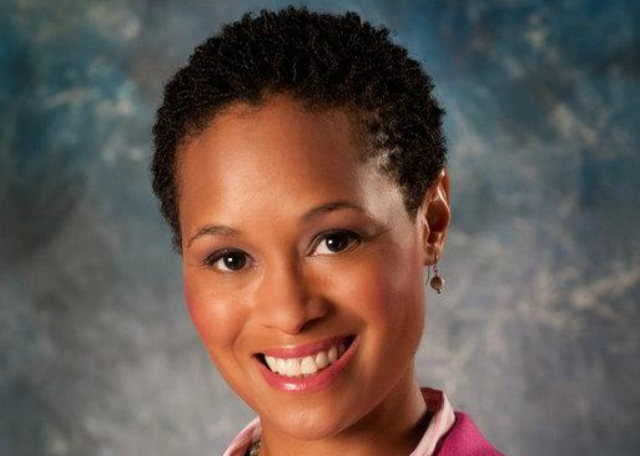
A Black woman who was fired from her meteorologist job, after defending her natural hair on the station’s Facebook page, has just accepted a job with a national weather channel in Colorado. Lee announced on her Twitter and Facebook pages that she has accepted a meteorology position with WeatherNation in Denver. “By all accounts, it is my dream job and I am thrilled to be a part of the WeatherNation family,” she said Thursday night on Facebook. Lee told NewsOne that she accepted the position a week ago but wanted to fine-tune some particulars before making an announcement. The offer came soon after the veteran weather woman had lost hope of ever working in television again.

According to sources, a month ago, she  told her  husband that  she was  pretty that she would never work in weather again and  had completely lost faith. However, in a matter of a week or so, all of a sudden, three people showed interest in her. It was an awakening is what it was. She really had given up. Lee had several offers in other markets, including a chief meteorologist position, but went with WeatherNation because it’s a national network that reaches millions of homes. More than a year and a half has passed since Lee was fired from KTBS 3 News, an ABC affiliate in Shreveport, after she responded to users on Facebook who complained about her natural hairstyle. The station said Lee was fired for violating its social media policy. She has filed an EEOC complaint against the station and is in mediation to resolve her dismissal. Lee said she has no regrets about defending her natural hair and says her dispute with the Shreveport station hasn’t been an issue with her new employer.

After all the hoopla, my question is – did the African American woman’s hairstyle get her fired or her feedback on Facebook? Most of us already know  the answer to that question. According to the U. S. Equal Employment Opportunity Commisssion, it is unlawful to harass a person because of that person’s race or color. Harassment can include, for example, racial slurs, offensive or derogatory remarks about a person’s race or color, or the display of racially-offensive symbols. Although the law doesn’t prohibit simple teasing, offhand comments, or isolated incidents that are not very serious, harassment is illegal when it is so frequent or severe that it creates a hostile or offensive work environment or when it results in an adverse employment decision (such as the victim being fired or demoted). The harasser can be the victim’s supervisor, a supervisor in another area, a co-worker, or someone who is not an employee of the employer, such as a client or customer. 121212-Rhonda-Lee-400

An employment policy or practice that applies to everyone, regardless of race or color, can be illegal if it has a negative impact on the employment of people of a particular race or color and is not job-related and necessary to the operation of the business. For example, a “no-beard” employment policy that applies to all workers without regard to race may still be unlawful if it is not job-related and has a negative impact on the employment of African-American men (who have a predisposition to a skin condition that causes severe shaving bumps). According to Mrs. Lee, it wouldn’t require anything more than a brief explanation. Her new boss said that, ‘I heard about that,’ and we moved on so that was it. Every once in a while in life, you find good people with good sense who know talent when they see it and know a good employee when they see it.” Despite the frustration that comes from refusing to change her hair style to have a more mainstream, broadcast aesthetic, Lee says sticking to her values made the pain of unemployment worth it. It’s revealing to me that you should never give up,” she said. “I tell people that all the time in any speech that I give. For me to actually follow my own advice is a pretty beautiful thing.”

Unfortunately, Lee doesn’t know when she will be on-air, but says she will be on Channel 361 on DIRECTV. She, her husband, and their 10-month-old son will be moving to Denver in a few weeks.

By: Cheryl Eldridge

Prevent Foodborne Illnesses on Hot Summer Days

0

Picnics, backyard grilling, camping, weddings and outdoor family reunion meals can provide a perfect environment for foodborne illnesses because the hot temperatures of summer create an ideal time for bacteria to grow. Recent foodborne illness outbreaks that resulted in hospitalizations should remind Alabamians to follow safe food preparation and storage practices.“We want to emphasize the importance of preventing foodborne illnesses that could make you and your family very ill,” Dr. Mary McIntyre, Assistant State Health Officer for Disease Control and Prevention, said. “Cross contamination of food can occur any time harmful germs, such as bacteria, viruses or parasites are transferred from one food, preparer, or surface to another. As food heats up in summer temperatures, germs multiply rapidly.” Some important food handling tips are summarized here.
Clean
· Wash hands (running water and soap for 20 seconds) before and after going to the
bathroom, changing diapers, and handling and feeding pets.
· Wash all surfaces with hot soapy water before and after preparing each food item.
· Use paper towels to clean up kitchen surfaces. If cloth towels are used, select the hot
cycle on washing machine to clean.
· Rinse all fresh fruit and vegetables, including those with skins and rinds, under running water.
· Do not wash raw poultry before cooking, because bacteria in raw poultry juices can be
spread to other foods, utensils and surfaces.
· Rub firm-skin fruits and vegetables under running water or scrub with a clean brush.
· Clean the lids of canned foods before opening.
Separate
· Avoid direct contact between raw food and ready-to-eat food during transport, storage
and preparation.
· Separate raw meat, poultry, seafood and eggs from other food in the grocery cart,
grocery bag and refrigerator. On the lowest refrigerator shelf, store raw meat to prevent
blood from dripping on other foods.
· Use one cutting board for produce and a separate board for raw meat.
· Never place cooked food on surfaces that previously touched raw meat.
· Do not reuse marinades.
Cook
· Cook food to the correct internal temperature to kill harmful germs that cause illness.
· Use a food thermometer to measure the internal temperature in various places.
· Cook ground meat and poultry to the correct temperature, not by color.
· Cook eggs until yolk and white are firm.
· When using a microwave, cover, stir and rotate food for even cooking.
· Reheat sauces, soups and gravies to a boil.
Chill
· Refrigerate or freeze meat, poultry, eggs, seafood and other perishables within 2 hours
of cooking or purchasing. Refrigerate within 1 hour if the outside temperature is above
90 degrees F.
· Do not overfill the refrigerator. Cold air must circulate to keep food safe.
· Keep refrigerator at 40 degrees F or below.
· Use an appliance thermometer to measure the inside refrigerator temperature.
· Never thaw food at room temperature. Food must be kept at a safe temperature during
thawing.
· Three safe ways to thaw food include: in the refrigerator, in cold water, and in the
microwave.
· While marinating, always store food in refrigerator.
· Divide leftovers into shallow containers for quicker cooling in the refrigerator.
· Eat or throw away refrigerated food on a regular basis and pay attention to expiration
dates.
Report: Report suspected foodborne illnesses to your local health department. Oftentimes calls from concerned citizens are the way outbreaks are first detected. Phone numbers are found at http://adph.org/administration/assets/countylist.pdf. If a public health representative contacts you to find out more about an illness you had, your cooperation is important. Representatives will provide their name and a call-back number. “Minimizing the time foods are held in the hazardous temperature zone will lessen the chance of acquiring a foodborne illness,” Ron Dawsey, deputy director of the Bureau of Environmental
Services, said. “The time-proven rule of keeping cold foods cold and hot foods hot applies.” People with a foodborne illness may have symptoms such as fever, vomiting, diarrhea (sometimes bloody), nausea, chills and abdominal cramps. People at a higher risk for developing foodborne illness, include pregnant women, young children, older adults, and people with medical conditions. By remembering to handle potentially hazardous foods properly, you can help ensure your family and guests have safe and healthful summer season.

Why Do White Conservatives Condemn Hip Hop?

0

I won’t waste time reviewing Forbes Magazine’s list of the world’s most powerful celebrities, or noting that Beyonce was ranked number one for earning $115 million between June 2013 and June 2014, or applauding her husband Jay Z, Dr. Dre and Rihanna for also being ranked in the top ten. Yet, each one of them, either in general or specifically, have been so condemned by conservative racists for being influential in the worldwide hip hop scene that even a casual observer would wonder whether they are truly rich.

Chris McDaniel, the Tea Party crybaby and sore loser in the Republican primary Senate race in Mississippi, who complained about Senator Thad Cochran’s appeal to Blacks to win the primary, ranted on his former radio program, The Right Side, that hip hop was dangerous to Canadian and American culture. Bill O’Reilly, the racist host of the O’Reilly Factor on FOX News, dissed hip hop and rap during his interview with Kentucky basketball coach John Calipari. So, instead of focusing on the Forbes’ list, let’s consider why those bigots criticize hip hop in the first place. And what grabs our attention almost immediately, what yanks us by our coat tails and turns us around, is the white conservative’s fear of hip hop.

The fear of hip hop bubbles from his astonished imagination like an erupting volcano’s hot lava. He just can’t understand her appeal. What he does know, however, is this: Hip hop has successfully repulsed the right-wing way of life. She has so eroded the white right-wing’s influence that it now resembles a mountain after a mudslide. She has blocked the advance of the right-wing’s march. And she has shamed the immoral morals that underlie right-wing judgments. But what fascinates us even more is the psychological harm hip hop has wrung from white conservatism’s anguish. Just as figs fallen from a tree are useless until picked up, put in a basket, washed, cleaned, then sold at a farmer’s market, so conservatives must sell hatred of hip hop to their customers. That’s really easy for them, because hate is the timber from which racism is made. And racism runs through the right-wing’s veins as if it were turpentine. But hatred also terrorizes them to the fact that hip hop seems to be unstoppable. And so though in one sense the white conservative hates hip hop, in another sense he resents her. Why? Because like the regular return of the flu in winter, hip hop success has engendered right-wing envy.

The white conservative looks at all these hip hop artists who were poor a few years ago and now sees them driving BMWs, wearing $25,000 Rolex watches and owning seven and eight bed-room mansions with swimming pools, four-car garages and tennis courts. He sees them and wonders “What went wrong? White people, not Black people, are supposed to possess all this wealth!” He realizes he can never come close to amassing their wealth. And so as hatred turned to envy, envy skidded into frustration. Hip hop reached the outskirts of Black appeal, sailed across the seas of unknown adventures, and invaded and conquered other cultures and countries.

Even whites in America, as well as Europe and South America, have surrendered to hip hop’s charm. Her freedom of expression they adore, her liberation from white conservative hypocrisy they prize. White hip hop artists like Eminem and Justin Bieber have become millionaires by bowing their heads and worshiping at the feet that sensuous goddess. And white conservatives have been unable to sell country music to the world as an alternative. As we can see, the white conservative’s fear of hip hop is not coincidental. Most of them hate hip hop, some envy hip hop and others are frustrated they cannot run her down or wound her in a drive-by shooting. They cannot control her, so they dread her; they cannot contain her, so they loathe her. But to the Black masses hip hop’s influence is fair compensation for white producers and music artists, such as the Chess brothers, the Rolling Stones and Bob Dylan, taking the rhythms of blues and jazz musicians, or even covering them, and making millions when the original Black artists made virtually nothing. Moreover, Blacks and whites see another principle waving her hands as a result of the white conservative racist’s frustration with hip hop: We condemn that which threatens our way of life and fear that on which we cannot put a bridle over its mouth and throw a saddle on its back.

By: James Strong

Whole Foods Market Gives Loan to Coyote Creek Farm and Makes Organic Chicken Feed Available Throughout the South

0

Local producer loans reinvest in communities

(ATLANTA) Starting this week, Whole Foods Market shoppers who raise chickens in the backyard can add organic chicken feed to their grocery list. Thanks to the company’s Local Producer Loan Program (LPLP), Coyote Creek Farm organic feed is now available throughout Alabama, Georgia, Mississippi, North Carolina, South Carolina and Tennessee. Consumers win too, since it will be easier to find Non-GMO eggs in the grocery aisles.
“Our goal is to give backyard chicken owners a chance to feed their chickens organically, thereby supporting organic production all the way back to the farm where the grains were grown,” says Stephen Corradini, vice president of purchasing for Whole Foods Market South Region. “We are proud to partner with Coyote Creek in the movement to increase organic production on farmland throughout the South and consequentially to strengthen rural agricultural economies.”

Coyote Creek Farm received $450,000, one of the largest Local Producer Loans to date, from Whole Foods Market. Coyote Creek focuses on revitalizing rural farms while caring for animals and humans in a holistic fashion, producing Coyote Creek Organic Feed Mill, the only certified organic commercial feed mill from Texas to North Carolina. The funding enables the company to adhere to the founder’s mission of raising chickens humanely and organically in the habitat nature intended, so they can thrive and produce great-tasting organic eggs. Since 2007, Whole Foods Market has funded more than $10 million in 184+ low-interest loans through its LPLP to provide more than 155 local producers access to the tools and resources they need to expand their businesses. In the fiscal year for 2012, it disbursed 29 low-interest loans, which totaled $1.6 million, with an average loan amount and interest rate of $50,010 and 5.4 percent, respectively. Whether it’s helping local partners purchase more livestock, invest in new equipment or convert to organic production, Whole Foods Market wants to help them shine. Best of all, supporting local business means keeping money in the pockets of growers in the communities it serves.

Another recent LPLP recipient is High Road Craft Ice Cream. Located in Atlanta, High Road Craft produces chef-driven, culturally inspired flavors and was founded by Kennesaw State University alums Keith Schroeder and Hunter Thornton who created the concept while enrolled in the university’s Executive MBA program. All of their ice cream is made onsite at their new Marietta location, and uses locally-sourced ingredients. Now their creations are used by chefs around the country, and can currently be found in the Southeast and Northern California regions of Whole Foods Market. Zocalo’s 100% Salsas also received a loan from Whole Foods Market. Located in Atlanta, 100% Salsas is an artisan food manufacturer specializing in authentic Mexican salsas, tamales and empanadas as convenient packaged food with nine handcrafted, all-natural salsas for stores in the South region. Launched in 2008 as an offshoot of popular Midtown Atlanta restaurant Zocalo, owners Marco Martinez and his wife, Ana, started selling their popular salsas and moles in farmers markets throughout Atlanta. Encouraging their customers to incorporate salsas into cooking (as opposed to the popular stand-alone chips and salsa option), they provide a myriad of easy recipes to experiment with authentic Mexican flavors. Focusing more on flavor rather than heat, 100% Salsas flavors range from traditional verde and rojas to multilayered moles and smoky chipotle. 100% Salsas are never frozen, never preserved and free of additives or fillers. Sweetwater Growers in Canton, Ga. is another Local Producer loan recipient. Brothers James, Scott and Dennis Dault have been producing fresh culinary herbs and specialty greens since 2003. In addition to their herbs and greens, Sweetwater produces infused oils created with their fresh herbs. Whole Foods Market was one of Sweetwater’s very first customers, and the nationally acclaimed store dedicated to customers’ wellness continues to support them through purchases and through their LPLP loan, which was used to build two additional greenhouses for live basil.

In fact, Whole Foods Market supports a myriad of food growers and product creators throughout the country. Throughout the store, customers will notice signs highlighting recipients in their neck of the woods, such as:

· Thistle Farms (Nashville, Tenn.)
· To Your Health (Fitzpatrick, Ala.)
· Jones Farm/GrassRoots Pork Co. (Beulaville, N.C.)
· Kitchens of Africa (Raleigh, N.C.)
· Originally Created Vegan (Memphis, Tenn.)
· The Accidental Baker (Hillsborough, N.C.)
· Pure Bliss Organics (Marietta, Ga.)
· Atlanta Fresh Artisan Creamery (Atlanta)
· Smiling Hara (Asheville, N.C.)
· Buchi (Weaverville, N.C.)
· Roots (Asheville, N.C.)
· White Oak Pastures (Bluffton, Ga.)
· Thompson Farms (Dixie, Ga.)
· Eastern Carolina Organics (Durham, N.C.).

Together, Whole Foods Market and these exceptional loan recipients continue to invest in the health of their businesses as a step toward a healthier planet. For more information, visit wholefoodsmarket.com.

Total Commitment

0

Then Jesus said to His disciples, “If anyone desires to come after Me, let him deny himself, and take up his cross, and follow Me. Matthew 16:24

Have you ever asked yourself why you aren’t progressing even though you are doing everything you need to do to move forward? How many times have you asked God “why don’t they choose me?” or “what else do I need to do Lord?” Recently I have been hearing a lot about God’s expectation of us, I’ve been reading a lot about what He needs from us and I’ve come to realize why I haven’t been able to get where I’ve worked so hard to be. I went to God and I said “so if you would sum it all up, what do you really want from your children?” His response to me was “TOTAL COMMITMENT”. Too many people believe that because they believe in Christ, they are Christians. Some are convinced that because they attend church EVERY Sunday and  Bible study, they are getting closer to God. There are even some that think listening to Gospel or Christian music and hanging out with church folks makes them special to God, NOT SO. If you really want to progress and please God, He wants your TOTAL COMMITMENT.

“I know your works, and where you dwell, where Satan’s throne is. And you hold fast to My name, and did not deny My faith even in the days in which Antipas was My faithful martyr, who was killed among you, where Satan dwells. Revelation 2:13

God knows your struggles and He knows what Satan has been using to keep distance between Him and you but He has also given you everything you need to defeat Satan at his own game. God has given you His Word as a GPS to a committed life. I know it’s hard to let go of some of the things you have been keeping on life support within you. Your pride, your ego, the way you do things, the person you are, your habits and even your character. However, until you TOTALLY COMMIT to God EVERY piece of you, you will inch your way along the journey to your destiny. If you want to speed up your progress, TOTALLY SURRENDER to the will of God. Make a commitment to read His Word DAILY, make a daily effort to live like Jesus (loving those that misuse you, helping those that need you, etc.) give Him back 10 percent of what He gives you, talk to Him regularly and follow His lead. It’s not about you – IT’S ABOUT HIM! If you want what God has for you and want to live the life you were created to live, it’s time for a TOTAL COMMITMENT.

No more half stepping,
Minister Deidra Bibb

HAVE BLACK GIRLS BEEN OVERLOOKED: Why Are 40 Percent of Black Females Dropping Out?

0

Why Are 40 Percent of Black Females Dropping Out? Why has America and the Black community been silent about this epidemic?

We hear so much about the 47 percent dropout rate among Black males, but I believe a 40 percent dropout rate among Black females is outrageous and unacceptable. Black males may be on life support, but Black females are in critical condition. What are the factors causing so many Black girls to leave school? Could one factor be that only 18 percent of Black girls by eighth grade are proficient in reading? Could another factor be that only 13 percent are proficient in math by eighth grade? What about the fact that 21 percent of Black girls are retained at least once? How does retention affect the psyche of Black girls? What effect does Black girls’ suspension rate of 12 percent have on their dropout rate? Black girls’ pregnancy rate had been considered a factor in their dropout rate. But then in-school and alternative school programs emerged. Are these programs succeeding at helping young Black mothers join the ranks of college students?
Are some schools hostile environments for Black girls? Do schools like Black girls? Do they respect Black females? Do they understand and appreciate Black female culture? Do they appreciate Black females’ hairstyles? Do they encourage Black female expression? Are Black females dropping out or being pushed out? Why are so many suspended Black females being moved to the juvenile justice system? Black girls should be treated like students, not criminals. When Black girls encounter hostile, unrewarding school environments, what awaits them if they drop out? What is their likely short- and long-term future? Can they access highly paid jobs? How will they acquire skills for jobs? How will they access housing in safe, multi-functional communities? What means will they have for establishing their own businesses, accumulating a financial portfolio and building toward their retirement years? Black females are crying out for help. So much attention is being given to our males while our girls are being overlooked. Black girls need more Black female teachers. They need all teachers to give them higher expectations. They need schools to treat them fairly. Their suspension and dropout rates are four times greater than those of white girls. Black girls need Black female mentors. They need to be taught the beauty of their history. They need an education that embraces all determined efforts to keep Black girls in school, including: mediation, schools that feature alternative learning styles and STEM careers, all-girl schools that demonstrate high success rates of graduation and college entrance,and a change in school culture. Black females need to be encouraged not to drop out. These issues and more are discussed in my latest book, Educating Black Girls.

Dr. Jawanza Kunjufu is the author of more than 30 books including the national best sellers Raising Black Boys and Understanding Black Male Learning Styles. He has been a guest speaker at many universities and has been a consultant at most urban school districts. His work has been featured in Ebony and Essence magazine, and he has been a guest on BET and Oprah.

Magic City HDC/Gene Jelks Youth Football Camp for HABD Public Housing Youth

0

The Magic City Housing Development Corporation (MCHDC) in partnership with Gene Jelks is hosting the “1st Annual Youth Football Camp” for public housing children from ages 7 – 18. The event is held Saturday, July 12, at 9:00 a.m. It will take place at the Legion Field Stadium, 400 Graymont Ave W, Birmingham, AL 35204. Registration is required. Participants must be a HABD Public Housing resident. Food and transportation are provided to all the HABD camp participants.

A V.I.P. meet and greet reception Phoenix Rising – “Live Above Your Circumstances and Keep Moving Forward” will be held Friday, July 11, at the Legion Field Skybox at 6 p.m. For information, please contact Gene Jelks at 404-953-1246. Attendance is by invitation only.

The Magic City Housing Development Corporation (MCHDC) is a subsidiary corporation under the Housing Authority of the Birmingham District (HABD) that provides decent and affordable housing for low and moderate-income persons. The MCHDC, in collaboration with Gene Jelks, former University of Alabama All-Star NFL & CFL works with youth across the country through his annual football camps and outreach ministry.This training camp will provide sports education through football drills and mentoring, build character, opportunity, and prepare youth for life and career choices. It will also support a spirit of overcoming obstacles, perseverance and recovery from setbacks.

If you need additional information about this event, please call 205-521-0623.

Vera Hendrix named Vice President of AIDB Instructional Programs

0

(TALLADEGA) A veteran AIDB educator with more than 37 years of classroom and administrative experience in special education programs has been named Vice President of Instructional Programs at Alabama Institute for Deaf and Blind. AIDB President John Mascia announced that Vera Hendrix will assume her new duties on August 1 upon the retirement of Dr. Frieda Meacham.

Ms. Hendrix has served as Special Education and System Test Coordinator for AIDB since 2007 and previously served as the High School Director and as a classroom teacher at Alabama School for the Deaf. She also has teaching experience in early intervention programs and in the Tuscaloosa City and Bibb County school systems. She began her education career at AIDB in 1977. Ms. Hendrix is a graduate of the University of Alabama with a Bachelor’s degree in Hearing Impairment, Master’s degree in Specific Learning Disabilities and Education Specialist in Specific Learning Disabilities. She also has a Master’s degree from Jacksonville State University in Education Administration. In her current role, Ms. Hendrix is responsible for all student Individual Education Plans (IEP), and is highly skilled and knowledgeable in state assessment standards and school law.  She has been involved in AIDB’s accreditation process and served in an interim leadership role at the Helen Keller School. “I am an advocate for professional development,” said Ms. Hendrix. “I enjoy learning and sharing what I have learned with others. It makes me proud when I can introduce a teacher to a new strategy that is successful in helping a student succeed.  It’s all about the kids. Everything we do – it is all about helping our kids to learn and encouraging them to become the very best they can be.” “I am pleased that Ms. Hendrix will assume the duties of Vice President of Instructional Programs.  She is a gifted educator and administrator.  Her passion for wanting our students and staff to excel and achieve great things will be felt immediately by our staff, students and families served in all AIDB instructional programs,” said AIDB President John Mascia.  “I am thrilled to have her as part of the President’s leadership team.” Ms. Hendrix will be responsible for instructional programs at Alabama School for the Deaf, Alabama School for the Blind and Helen Keller School as well as AIDB’s Child Nutrition Program and Health and Clinical Services.

Ms. Hendrix is the daughter of Dora Lee Wesley and the late Ocie Wesley Sr. of West Blocton, Alabama.  She has two adult children, Tara Denise Hendrix and Theodore Roderick Hendrix, both of Arlington, Texas.  Ms. Hendrix is an active member of the Optimist Club, Talladega, Alabama and also attends Mt. Canaan Baptist Church.
Vera Hendrix

Budget Year Off to a Great Start: Birmingham City Councilors and Mayor Bell Celebrate Success

0

Birmingham City Councilors and Mayor William Bell celebrated a milestone on Tuesday just before the city council meeting. For the first time in over 15 years the Council and the Mayor have passed a budget for the city prior to the new fiscal year.

“The budget process begins in February and it’s a very tedious one, dotting every “I” and crossing every “T”. The public may see it as a short process, but it is tough and long. So thank you to my staff and the council for working so diligently to get it passed,” Mayor Bell said. The new budget reflects a joint effort between the council and the mayor to ensure that fiscal needs are met across the board. After weeks of studying each line item both sides were able to come up with a balanced budget that was in place weeks before the July 1st deadline.

“As a council we are continuously working together to ensure that the best decisions are made for the citizens of Birmingham in an efficient and timely manner,” Council President Austin said. Councilor Valerie Abbott, chair of the Budget and Finance Committee added, “We’ve got to hold fast to what we said about not going into our reserve fund and holding the Mayor accountable to the budget that he proposed to us.”