Home Blog Page 1485

Birmingham City Schools Inducts 500 Students Into Career Academies Program

0

bcs-district-logoCEO of largest paid internship placement organization  keynotes  
 BIRMINGHAM, Ala. — May 1, at 9 a.m., more than 1000 parents and students assembled at Boutwell Auditorium to celebrate the induction of more than 500 students into Birmingham City School System’s Academies of Birmingham program.
To help induct the students, Forest Harper, CEO of INROADS – the largest paid internship placement organization in the nation, provided the keynote address.
“Since the inception of Career Academies in 2012, we’ve seen incredible growth in interest in the program from students and parents, said Spencer Horn, director of Academies of Birmingham for the school district.
The Academies program has been so successful that plans are now underway to expand the curriculum offering to allow all high school students to participate.
“When you have a program that is as effective as Academies of Birmingham in terms of its ability to prepare students for college and career success, you have to do what you can to expand the program to as many students as possible,” said Witherspoon, superintendent, Birmingham City Schools.
Academies of Birmingham is an innovative approach to education that exposes high school students to curriculum and real-world experiences that align with their career interests. Currently, the following career academies are offered:
·       Parker High School: Academy of Urban Educators
·       Huffman High School: Academies of Architecture and
Construction Design
·       G.W. Carver High School: Academy of Engineering and Academy
of Health Sciences
·       P.D. Jackson-Olin High School: Academy of Health Sciences
·       Woodlawn High School: Academies of Business and Finance
·       Woodlawn High School: Academy of Hospitality and Tourism
To learn more visit www.imreadytolead.com.

UAB receives NCI grant as lead site in National Clinical Trials Network 

0

NCIBIRMINGHAM, Ala. – The University of Alabama at Birmingham Comprehensive Cancer Center has received a $2.5 million grant from the National Cancer Institute as a National Clinical Trial Network Lead Academic Participating Site.
After a competitive peer-review application process, the UAB Cancer Center was selected as one of 30 cancer centers in the nation, and one of only five in the Southeast.
The five-year grant, which awards $497,800 annually, allows the Cancer Center to be part of NCI’s primary infrastructure to conduct state-of-the-art cancer treatment and advanced imaging clinical trials, especially large, definitive multi-institutional trials evaluating new cancer therapies and related clinical approaches for both adult and pediatric patients.
“With this grant, we are now able to open up our clinical trials across a nationwide network,” said Edward Partridge, M.D., director of the UAB Comprehensive Cancer Center. “We are thrilled to have the opportunity to provide patients access to treatment options that they might not otherwise have.”
There are currently more than 180 cancer-related clinical trials at UAB exploring a wide array of therapies, diagnostics and preventive options. Clinical trials test new treatments in people with cancer with the goal of finding better ways to treat cancer. If a new treatment proves effective in a study, it may become a new standard treatment. Many of today’s most effective standard treatments are based on previous study results, including treatments for breast, colon, rectal and childhood cancers.
Previously, clinical trials were sometimes seen as a last resort for people who had no other treatment choices. Today, however, many cancer patients often choose to receive their first treatment in a clinical trial. Because of this type of progress made through clinical trials, many people treated for cancer are now living longer.
Several UAB faculty from a variety of departments helped bring the NCTN grant to fruition, including principal investigator Ronald Alvarez, M.D., director of the Division of Gynecologic Oncology.
“This multifaceted approach maintains the Cancer Center’s connections with the national cancer research community while fostering the development of translational research linked to UAB’s scientific resources,” Alvarez said.
Co-principal investigators include physicians Jennifer De Los Santos, Warner Huh, Harry Erba, Desiree Morgan, Carla Falkson and Andres Forero.
“This project reflects the collaborative nature of the UAB Cancer Center, involving hematology and oncology, radiation oncology, gynecologic oncology, and radiology, all working together for the greater good, and on aneven broader level than previously possible,” Alvarez said.

MAX Bus Operator Wins Award at the 2014 International Bus Rodeo

0
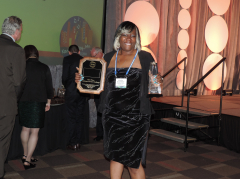
MAX Driver and Rodeo Customer Service Challenge Winner Kiunta Adamson.

KANSAS CITY, Mo. – Public transportation industry experts from across the country met in Kansas City, Missouri this past week for the American Public Transportation Association’s Bus & Paratransit Conference. The event was held in conjunction with the 2014 International Bus Rodeo, which highlighted the best bus operators and bus maintenance teams in North America. Birmingham-Jefferson County Transit Authority bus operator Kiunta Adamson walked away as the winner of the Customer Service Challenge Award. This competition judged professionalism, customer service skills, and problem-solving creativity.
“We are proud of Kiunta and how she represented the City, County and State. We are thrilled that one of our own was able to compete and bring home the gold,” said MAX Executive Director, Ann August.
The International Bus Rodeo is comprised of bus operators and mechanics from public transit systems across North America who participate in separate competitions, which showcase their skills in safe driving and vehicle maintenance. Other MAX local Rodeo winners competing in the international Maintenance and Operator competition included:  Dan Green, Jonathan Mitchell, Alan Martin, J.C. Mashburn, Synethia Effinger and Quinton Haley

At Home with Shellie

0

Shellie LayneCover Girl: A Bump in the Night

Early Monday morning, before the birds had their coffee and began to chirp with their feathered friends, and before the sun started to smile brightly and peek through the blinds in my bedroom window, excited about the day ahead I relaxed the grip my arms had around my pillow, sat up in bed, whipped my legs from under the covers, placed my feet in to my worn, comfy slippers and headed for the bathroom. I turned on the light, rubbed my eyes, peered in to the mirror and nearly passed out from what I beheld. It was…It was…a pimple, a huge bump on my face. No big deal you say? You would only say that if you are a guy, not a girly-girl reading this column. I had a very important meeting in just a few hours; I had diligently prepared the presentation, my clothes were meticulously ironed and I was ready to conquer the world…. But I was forced to contend with an uninvited friend. I was confronted by this defiant blemish that seemed to be standing boldly on my face with its little hands on its hips, tapping its tiny foot. My bump had a personality of its own. No matter which direction I turned in the mirror my new appendage was staring back at me. I was horrified, yet in that split second I thought of YOU and how this related to my At Home improvement project just months before….
For a few months I had been toying with the idea of making some simple improvements on my home. I had been in the house four years and had done absolutely nothing except keep it clean, and some days because of a busy schedule just trying to keep it clean was a daredevil feat. The dramatic decline in the economy made home improvement during my four years in the house seem senseless. Like many of you, my home is worth less now than the mortgage I am currently paying and I knew that it would not be wise to make major dollar investments that I would never recoup if I decided to sell. After much pondering I was determined to make at least some minor cosmetic improvements and get re-energized about my dwelling. Optimistic and excited about my plan I engaged the services of a handy-man contracting company. A handy-man? Yes, even in my secret life of “At Home Girl” there are projects that I can’t do, but I hovered around them and gleaned everything I could for my next repair project to share with you.
I prepared my list of to do’s with my handy-men and they promptly went to work. As they began to tear things down their diligence uncovered items that had been hidden for years. The more they stripped, sanded and pulled down, the more things I was not prepared to address were exposed. The loud voice of my few years of neglect was unbearable, but I was forced to listen. I could not escape what was being uncovered. There were many unaddressed repairs that I had allowed to build up because of ignorance, lack of motivation and time; probably disinterest, fear and lack of funds. I couldn’t tell my handy-man team to stop the work and leave it unfinished. I dare not ask them to cover all that had been revealed. Consequently my simple “cosmetic” (remember that word for later) project got bigger and the cost became greater.
The secrets were out! The blemishes were revealed. The At Home hidden repair issues were exposed. It would have been less painful and less expensive to have them slap some Kiltz on those areas that seemed to only need cosmetic or surface work; a cover-up, a concealer, but the shoddy workmanship would quickly bleed through. I had to confront the issues in order to correct them.
And now ladies you wonder how does this relate to you and life? I’d like to say my story parallels are deep and intellectual, but in truth they are very simple. The work in my house resembled life and divulged some uncanny parallels to my bathroom mirror horror “A Bump in the Night.” Corny, but it works for our story.
To be completely transparent, what I did not share in the beginning of my story was that there are a few foods that I absolutely love, but with age and change I can no longer eat. They cause a negative reaction in my skin. Days prior to my bathroom nightmare I indulged myself in these fun, yummy treats and you guessed it, the results manifested on the worst day possible. In my handy-man saga, for four years I allowed projects and repairs in my house to go unaddressed. Simple fixes turned in to major repairs and instead of confronting the problems, my solution was to cover them up; to conceal or gloss over issues and poor choices that should have been addressed days, months or years before.  I bet you have some of those issues too.
For those of us who wear makeup there are many brands of cosmetic concealers. A concealer uniquely and quietly covers scars and blemishes. They can cover and make skin appear to be healthy and healed, but those products just make us look better on the outside and fail to address the source of the irritation which usually emanates from a deeper issue. In the tool or repair world (where “At Home Girl” hangs out) there are many effective concealing products that cover spots, stains, surface blemishes, water stains and almost any paint mistake or discoloration. My home improvement situation ended up to be more costly than expected, but in the end confronting the damage and repairing it made a great improvement to the overall look and feel of my home. After the initial shock and dismantling stage the process became easier. I watched with eager excitement and anticipation as old deteriorated wood and paint were transformed into new, smooth, fresh treated wood and bright, clean, vibrant colored paint. Those areas that had been dark and dank were now brilliant, dazzling, open and purged.
In my unexpected bathroom dilemma, my skin blemish sneered and laughed at me that morning tempting me to reschedule the meeting and wait for it to disappear. But, I pressed forward to a successful presentation and knowing the consequences, from that point on I stayed clear of the yummy but forbidden treats I so adored.

6 Quick Life and Tool Tips for the Uncovering Process At Home:
(Don’t Be a Cover Girl!)

1.    Be willing to confront those hidden things: Home improvement projects and relationship issues before they become costly – money, time and emotions.
2.    Make a to do list and follow it – don’t reschedule and don’t quit!
3.    Count the cost emotionally and financially – expose, don’t try to cover up.
4.    Call on the expertise of the One who can handle the project.
5.    Establish a timeline for completion, but be flexible – it may take more time and energy.
6.    Celebrate the work, the improvements and the added value.

Whether it is an At Home or life improvement, be willing to uncover and expose those things that hold the newness and healing from shining through. Make difficult choices, confront and repair. This can be a costly process, but the value of the end result will be more than you could ever expect.

“I don’t have all the answers, but I know the One who does.”
Contact me via email athomewithshellie1@Yahoo.com or my website http://www.athomewithshellie.com/


Pertussis vaccination during pregnancy could protect infants during the period of highest vulnerability

0

Pertussis HOUSTON – Newborns whose mothers received the tetanus, diphtheria and acellular pertussis (Tdap) vaccine during pregnancy received immunity from their mothers at birth and in their first few months of life, and responded adequately to their own vaccinations, according to researchers at Baylor College of Medicine in a report that appears today in the Journal of the American Medical Association.
“Our findings support current recommendations from the Centers for Disease Control and Prevention that women should receive the Tdap vaccine during the third trimester of pregnancy to protect their newborns against pertussis,” said Dr. Flor Muñoz, associate professor of pediatrics – infectious diseases at Baylor and Texas Children’s Hospital and first author of the study.
Pertussis, or whooping cough, is a highly contagious respiratory tract infection that can turn serious in infants. A rising number of pertussis cases have been reported in infants under 2 months of age who are too young to be vaccinated and can suffer complications and death from pertussis. Researchers have found that their mothers have very little pertussis antibodies from the vaccine that they themselves received during childhood.
Infants routinely receive five doses of the diphtheria, tetanus and acellular pertussis vaccine (DTaP) at 2, 4, 6 and 15 through 18 months and 4 through 6 years of age. The Tdap vaccine is given to those ages 11 and older, including adults, and it was recommended for all pregnant women in 2012.
“Our study, which started in 2009, provides important information about how to prevent pertussis in babies who are at the greatest risk for complications and death from this disease because they are not getting protection from their mothers’ antibodies and are too young to have received their DTaP vaccine,” said Muñoz.
Researchers at Baylor and two other National Institutes of Health-funded Vaccine Treatment and Evaluation Unit sites, Duke University School of Medicine and Group Health Research Institute in Seattle, studied the previously-licensed adult vaccine for pertussis, Tdap, in 48 pregnant women, 33 of whom were vaccinated in the third trimester of pregnancy and 15 postpartum, and 32 non-pregnant women and found that:
•    The Tdap vaccine was safe in pregnant women.
•    Pregnant women had adequate immune responses from the vaccine, similar to those of women who were not pregnant.
•    At the time of delivery, women who were vaccinated during pregnancy had significantly higher concentrations of antibodies to pertussis compared to women who received the vaccine postpartum.
•    Infants of mothers who received the vaccine during pregnancy had significantly higher concentrations of antibodies to pertussis at birth and in the first two months of life, likely providing protection during the period of highest vulnerability to pertussis and its complications.
Researchers continued to follow these babies during the first year of life and after receipt of routine vaccines for pertussis and measured their antibodies after the first three doses of DTaP and after their first booster and determined that even if their mother gave them antibodies from her Tdap vaccine during pregnancy, infants were able to respond to their own vaccine.
“Maternal immunization with Tdap is the most effective method currently available to protect babies against pertussis. However, infants need to receive their recommended vaccines starting at 2 months of age, even if the mother receives the vaccination during pregnancy,” said Munoz.
Dr. Carol J. Baker, professor of pediatrics at Baylor and Texas Children’s Hospital and senior investigator of the study, added that maternal immunization is not expected to be 100 percent effective in protecting babies.
“Infants still need to be protected before the first dose of DTaP so their care givers should also receive Tdap vaccine before the baby is born,” Baker said.
The CDC recommends that pregnant women receive the Tdap vaccine during each pregnancy, preferably between 27 and 36 weeks of gestation, to protect newborns against pertussis.
Others who took part in the study include Nanette H. Bond, Dr. Maurizio Maccato, Dr. Phillip Pinell, Dr. Morven S. Edwards, Dr. and C. Mary Healy from Baylor; Dr. Hunter A. Hammill from a private practice in Houston; Dr. Geeta K. Swamy and Dr. Emmanuel B. Walter from Duke University School of Medicine; Dr. Lisa A. Jackson of Group Health Research Institute; Dr. Janet A. Englund of Seattle Children’s Research Institute; and Dr. Carey R. Petrie, Jennifer Ferreira and Johannes B. Goll of EMMES Corporation in Rockville, Md.
Funding for this study came from the National Institute of Allergy and Infectious Diseases, one of the National Institutes of Health.

Congratulations Dr. Brittney Z. Heard

0

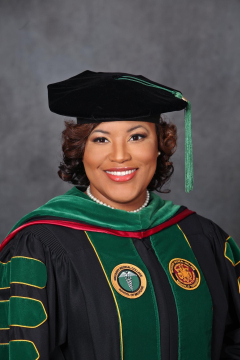
Dr. Brittney HeardMrs. Bridget Heard & Mr. Wayne Heard Sr. are  pleased to announce that their daughter, Brittney Z. Heard, received her Doctor of Medicine (M.D.) Degree from Meharry Medical College on Saturday, May 17, 2014.
Brittney is a product of the Birmingham School System and a 2005 graduate from Alabama School of Fine Arts.
She received her Bachelor of Science in Biomedical Engineering  from Washington University in St. Louis in 2009.
Brittney’s Residency will begin later this summer at the University of Tennessee in Internal Medicine. She is prayerful that afterwards she will be able to pursue a fellowship in Cardiology & Electrophysiology.

New pacemaker technology allows patients to receive MRI scans

0

StrokesBy Jessica Jones
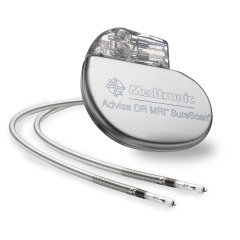
There’s good news for those who have pacemakers and have experienced a stroke or are at risk for one: the FDA has approved the Medtronic SureScan Pacing Systems, the first and only pacemakers that will allow patients to have an MRI scan anywhere in the body, including the brain and chest. This news comes as the nation observes National Stroke Awareness Month in May.
Typically, patients who have artificial pacemakers are unable to receive MRI scans, which can be beneficial to patients who are suspected of having a stroke. The new technology allows patients to receive MRI scans without interfering with the patient’s pacemaker, said Dr. Raashid Ashraf of Cardiovascular Associates in Birmingham.
“Pacemakers have been around for over 100 years,” Dr. Ashraf said.  “And among the implantable pacemakers, they all do the same thing until recently where the technology has gotten to a point where one has offered an edge over another because of the utilization. We have MRI machines that are increasingly used for the diagnosis of stroke, heart disease, and a large number of patients, up to 2,000 patients in the U.S. alone, were denied this modern technology.”
Stroke patients are usually diagnosed through the combination of a clinical examination and either an MRI or a PET scan, an imaging test that uses radiation. With the MRI being less harmful and able to produce better imagery than a PET scan, yet unavailable to pacemaker patients, the answer to the limited options was to create a pacemaker that could withstand the magnetic field of the MRI, Dr. Ashraf said.
Making MRI technology available to patients who have artificial pacemakers is crucial in the event that the patient has a stroke, Dr. Ashraf said, as early detection is the key for a positive outcome.
“A stroke is just like a heart attack, time is critical for the early diagnosis and treatment of heart attacks,” he said. “The same thing applies to strokes. A blood vessel is clogged in the brain and it causes a brain attack, so to say, and the earlier you diagnosis it, the earlier you get that artery open and start the blood thinner treatment, the more brain tissue can be saved, and we know if you diagnose the stroke early and provide proper treatment early on you can have a better clinical outcome. There is less damage to the brain tissue and people come out with less handicaps and less instability so you have to be able to stop the process of evolution of the stroke as soon as you possibly can for the patients to have a better outcome.”
Having a pacemaker doesn’t put a patient at more of a risk for having a stroke, but age certainly can.
“The majority of the patients who require pacemakers are older than 65 and the majority of patients who have strokes are also over age 65,” Dr. Ashraf said.  “So it’s a problem that happens in elderly folks and these conditions tend to coexist in that group…that’s why it’s important that a pacemaker should not interfere with the patient’s ability to receive certain diagnostic testing like an MRI.”
When a doctor decides that a patient should receive an artificial pacemaker it’s important to consider future need for an MRI including, but not limited to heart related issues.
Patients and physicians should consider the patient’s past health and evaluate the other health issues that might require the use of an MRI scan such as Alzheimer’s, previous MRIs, back or neck problems dementia, or cancer, Dr. Ashraf said.
“We know that for the lifetime of the pacemaker patients are 50-75 percent more likely to require an MRI in their lifetime,” he said. “So…we need to make patients aware and the public aware that there is a technology that is available for the early diagnosis and detection of stroke and we have to make sure that if someone is in a position to have a choice to have a pacemaker that they should pick the one that should not interfere with the future treatment of stroke or the future requirements for an MRI or a non-heart-related problem.”

Caregiver Workshop

0

vitasversionALABASTER, Ala. –  VITAS Innovative Hospice Care, along with Sunshine Manor Adult Day Care and the Middle Alabama Area Agency on Aging, are hosting “Precious Presents,” a free workshop for caregivers from 10:30 a.m. to 12:30 p.m. on Wednesday, June 4, at Shelby Baptist Medical Center – Women’s Center, North Hall Meeting Room, 1000 First Street, North Alabaster, Alabama, 35007.
“Precious Presents” workshop will offer unique caregiving tips to prevent caregiver burnout. Light refreshments will be served. If a caregiver’s loved one meets eligibility requirements, Sunshine Manor Adult Day Care will provide lunch and activities while the caregiver attends the workshop, for Shelby County residents only.
Deadline to register is Friday, May 30. For more information or to reserve your space, call VITAS Bereavement Services Manager Lance Lee at (205) 663-5614 or email Lance.Lee@vitas.com. For more information about VITAS, visit www.VITAS.com.

Bow Ties and More

0

Bowties_1 Bowties_2photo credit: Skyye Camm Photography


by Jessica Jones

Taneshia Taylor has loved fashion since she was a little girl, and she’s recently found a way to bring her love of fashion and accessories together in a unique way by starting her own stylish line of bow ties.
“I’ve been a fashonista all my life,” she said. “I’ve been designing clothes since elementary school and it wasn’t designing like I do today, it was more so cutting things up and tying things together, pinning and patching things together, because I didn’t know the sewing machine that young.”
In high school she began sewing, stitching and selling the pieces she created, and even began distressing jeans for other students.
“I thought that was so cool that I was getting paid to do something so simple and easy but it was artistic in its own right,” she said.
After high school, she decided to further her knowledge of fashion. At 21 she moved to Atlanta to study fashion designing and merchandising at American Intercontinental University where she learned the essentials of fashion such as garment construction, fashion history, creative design and analysis, pattern making, fashion sketching, as well as figure drawing, to “learn the curves and angles of a body,” she said.
She’d been in Atlanta for five months before getting her first job at a magazine company as a fashion stylist for people who came in for interviews, moved back to Birmingham about three years ago and discovered her love for bow tie making.
“I didn’t take [bow tie making] to the level I’m on today,” she said. “I was very avant garde with it. I was big and exaggerated with it and I made them only for ladies and I got that from my mentor who is a tailor in town, he owns Bush Hill Tailors where he makes bow ties.”
Taylor has been creating bow ties for the past year and is currently working on incorporating never before seen elements into her designs. Her latest innovative creation is a two sided bow tie with different prints and colors on each side.
“I’m always on fashion sites looking for new and innovative ways to do my bow ties and I think this is my niche in fashion,” she said. “I love everything about fashion but I found over the last eight years I don’t like constructing garments because it takes so long. I’d rather design [garments instead of make them], but with the bowties being such a small garment, I can mass produce it by myself.”
Bow ties aren’t’ the only thing she produces. She also embellishes accessories for little girls, newborns to tweens including hairbands, jewelry, leggings, socks and garments such as small dresses and shoes.
Taylor’s talent has given her the opportunity to work on several music videos and television shows as a fashion assistant and makeup artist, but her focus has now shifted to creating her own brand, returning to school to complete her merchandising degree and possibly starting her own boutique.
“I would love to have a store myself, but I want to get my bow tie line up and off the ground,” Taylor said. “I’m in the process of doing an e-store, so I’ll have an online store and hopefully by this time next year I’ll have a storefront and I have an idea that’s a tad bit different from your normal boutique.”
To see more of her work visit her on Instagram at tayloredknighs_bowties.

Stepping Out Against Childhood Obesity: Spring Scramble Benefits Children’s Center for Weight Management

0

WeightManagement BIRMINGHAM – According to recent statistics, as much as 32 percent of Alabama’s youth are considered obese. On Saturday, May 25, money raised at the eighth-annual Spring Scramble 5K and 1 mile Fun Run will benefit the Children’s Center for Weight Management (CCWM) and the LESTER Program. Sponsored by the UAB pediatric residents, the race is also being held to educate and inspire healthy lifestyle choices for all of our communities’ youngsters.
The event is open to the public and registration is $20 for all UAB or Children’s employees. General public prices are $25 per individual. All students under 12 years old race for free if they recruit an adult to run. The registration fee includes a T-shirt and goodie bag. Preregistration is required and can be made by visiting www.springscramble.org.
The race begins at 8 a.m. and the starting line is located at the Trak Shak in downtown Homewood (2839 18th St S.).
Individual awards will be given for the 5k format only. Awards will be given for the 1st and 2nd place male and female in each age group. Awards will also be given to the overall male and female top finishers (1st, 2nd and 3rd place). Runners must be present to collect their prizes.