
Birmingham Promise Accepting Applications for Students to Get Paid Internships
dcwins.com
dcwins.com
By Stacy M. Brown
NNPA Newswire Senior National Correspondent
@StacyBrownMedia
Footage from Tyre Nichols’ fatal traffic stop found that police officers issued a barrage of confusing, conflicting, and sometimes impossible to obey commands.
If Nichols did not comply, or even if he did, the police would respond with increasing force.
According to the footage analyze by the New York Times, police officers shouted a total of at least 71 orders in the roughly 13 minutes before they radioed in that Nichols was in custody.The orders were given in two separate places: one near Nichols’ vehicle, and another where he had run to avoid being beaten severely.
The video revealed that often the officers shouted conflicting orders, making it difficult for Nichols to understand and obey. Nichols was ordered by officers to display his hand, even as officers held the young man’s hands.
At one point, they shouted for him to get down on the ground while he was already on the ground. And when they had his body under their control, the officers still made him change positions.
The experts agree that the actions of the Memphis police officers were a blatant illustration of a widespread problem in policing, in which officers physically punish civilians for perceived disrespect or disobedience, a phenomenon known as “contempt of cop,” the Times reported. Professor of criminology and criminal justice at the University of South Carolina Geoffrey Alpert said, “It was far more rampant in the ‘80s when I started doing police work than in the ‘90s or 2000s.”
Before body cameras, police officers were becoming more professional and less likely to take things personally, as appeared to have happened with Nichols, Alpert stated.
Because of the potential for escalation and confusion during police encounters, modern police training typically calls for a single officer to be present at the scene to issue clear and specific commands. It also necessitates that police officers respond professionally and proportionally to any perceived act of defiance.
The review by the Times, however, shows that the Memphis officers consistently did the opposite. There is no evidence in the footage that the present officers did anything to prevent the excessive use of force. Actually, it seems to prove the opposite. After Nichols attempted to flee the scene, an officer can be heard on camera saying, “I hope they stomp his ass.”
The Times noted four “crucial instances” in which police officers reprimanded Nichols for disobeying incorrect orders. An officer is seen pulling up to the intersection where Nichols’ car was trapped between two unmarked police cars at the start of the footage. The cop springs out of the car, gun drawn, to join two others who are racing toward Nichols. When one of the officers pulls Nichols out of the car, the other two immediately begin shouting, “On the ground!” These are the initial instructions in a series of contradictory directives that throw Nichols off.
Nichols notes that the police officers have ordered him to sit on the ground.
However, several officers can be heard yelling the same order with growing anger and threats of violence. One shouts, “Get down on the ground! I am going to tase your ass.” It appears that the officers’ tension rises when Nichols repositions himself, yet still assures the officers that he’s no threat. “You guys are really doing a lot right now,” Nichols says. “I’m just trying to go home.”
Nichols then protests, “I am on the ground!” as officers pinned his arms down, pressed a Taser against his leg, and barked increasingly threatening words at him.
Now one of the officers gives more detailed instructions: ‘On your stomach.’
Nichols is hit in the face with pepper spray three seconds later by one of the officers. Nichols is now surrounded by officers who demand to see his hands.
However, one of them has a hold on his left arm, while another cop has a hold on his right. The police still hadn’t made it clear how they wanted Nichols to behave.
A third officer rushes up with pepper spray. Then he warns, “You’re about to get sprayed good.” The other officers began punching Nichols in the face.
Nichols reacts by pulling his hands back to cover his face. As the punching gets more intense, the pepper spray is released. Nichols again tries to reassure the officers that he is attempting to cooperate, all the while he attempts to wipe the pepper spray from his eyes. “OK,” Nichols pleads. “All right. All right.” While one of the officers has a firm grip on Nichols, a second officer arrives and makes the same demand: that he show his hands. Once again, Nichols appears confused by the competing instructions. As he flails about, the police officers issue even more conflicting commands and apply more physical punishment.
Again, he is hit with pepper spray. After being pepper-sprayed three more times, Nichols is lying on his side and rubbing his eyes as two officers stand over him.
An officer then kicks Nichols in the face. At this point, Nichols is barely conscious or coherent, but the police are treating him as though he is actively resisting them.
“Lay flat, goddamn it,” one officer yells. As he lies there, Nichols groans and writhes in pain, having repeatedly been tased, kicked in the head, punched, and pepper sprayed. When another officer yells, “Lay flat!” they behave as if Nichols is refusing to comply.
One officer lifts Nichols off the ground and forces him to kneel by grabbing his handcuffed arm. Another officer then repeatedly hits him with a baton while demanding, “Give us your hands!” He tries to avoid being hit with the baton as he is surrounded by four police officers. “Give me your [bleeping] hands!” another officer demands.
But Nichols, because of having an officer pin his arms behind his back, another grip his handcuffed wrist, and a third punch him in the face, simply cannot comply.
He collapses to the ground and cries for his mom, but the brutality continued.
In total, six officers have been dismissed and five stand accused of second-degree murder. In a press conference last week, attorneys for two of them said their clients would be entering not guilty pleas.
By ROB MAADD AP
PHILADELPHIA (AP) — Black quarterbacks have come a long way in the NFL since Fritz Pollard became the first to play in the league in 1923 and Doug Williams was the first to start and win a Super Bowl following the 1987 season.
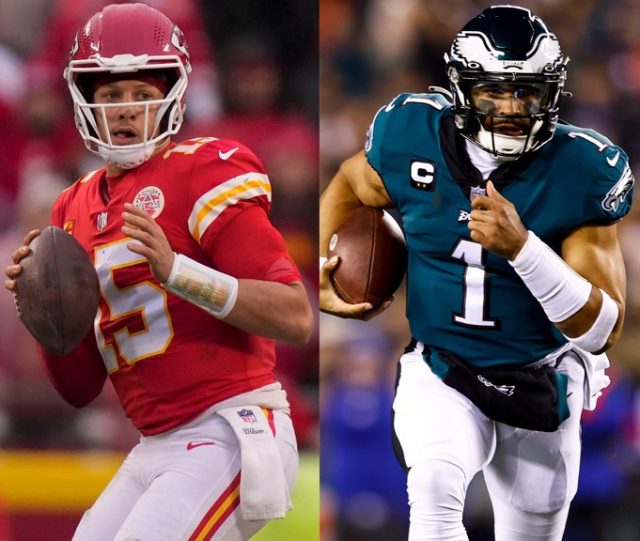
Now, Patrick Mahomes and Jalen Hurts will be the first Black QBs to face off in a Super Bowl.
It’s fitting that a season which began with 11 Black QBs starting in Week 1 will end with a historic matchup.
Mahomes can become the first two-time winner if he leads the Kansas City Chiefs to victory over the Philadelphia Eagles on Feb. 12. Hurts aims to become the fourth Black QB to win the Super Bowl, joining Williams, Mahomes and Russell Wilson.
Steve McNair, Colin Kaepernick, Cam Newton and Wilson also started in the Super Bowl and lost.
Michael Vick was the first Black QB selected No. 1 overall in the draft in 2001. McNair became the first Black QB to win MVP in 2003. Mahomes and Lamar Jackson won it back-to-back years.
They all had to overcome stereotypes to get to this point.
Jackson said a scout from the Los Angeles Chargers asked him to run routes at the NFL combine in 2018. The Baltimore Ravens ended up selecting him with the 32nd pick in the first round and he was MVP in his second season.
Donovan McNabb, a six-time Pro Bowl QB who started five NFC championship games for the Eagles, was told by some college scouts that he had to play running back or wide receiver. He wouldn’t switch positions, went to Syracuse to play quarterback and was drafted No. 2 overall in 1999 by Philadelphia.
Hurts began his NFL career in 2020 as an all-purpose QB after the Eagles took him in the second round. Playing behind Carson Wentz, Hurts had 12 rushing attempts, one catch and threw just three passes in his first nine games before taking over as Philadelphia’s QB.
He clearly has not forgotten that the decision to draft him in the second round of the 2020 draft was widely criticized by reporters and fans.
“My first year here, (people) probably didn’t even want to draft me here,” Hurts said Sunday. “It was probably one of those things. But it always handles itself.”
Neither Hurts nor Mahomes celebrated their conference championship wins too much. The main goal remains ahead. They each want one more win.
Hurts puffed a victory cigar after the Eagles routed the San Francisco 49ers 31-7 but he showed little emotion, per usual, in his postgame news conference.
“I don’t really know how to feel to be honest. You work really hard to put yourself in this position and I’m forever grateful,” Hurts said. “Only God knows the things that each individual on this team has been able to overcome for us to come together as a team and do something special as a group. That’s what means the most. I always want to go out there and give my best regardless of what’s going on because I don’t want to let down the guy next to me. That makes us all go harder.”
Hurts, a finalist along with Mahomes for AP NFL MVP and Offensive Player of the Year, missed two games late in the season with a shoulder injury. The Eagles haven’t had to lean on him in two lopsided playoff wins. He has only 275 yards passing and two TDs along with 73 yards rushing and two scores.
“I know I’ve been through a lot personally, but I don’t want to steer away from the direction of how good this team has been at playing together, being together, and challenging one another,” Hurts said. “When we experience some painful times and some tough times, we always found a way to overcome. You want to be going into a situation like this, and we have a chance to go out there and win it all, so we want to prepare to go do that.”
Mahomes battled through an ankle injury to help the Chiefs beat the Cincinnati Bengals 23-20 to advance to their third Super Bowl appearance in four years.
He had no intention of lighting up a victory cigar after a hard-fought win.
“I don’t think we have any cigars, but we’ll be ready to go at the Super Bowl,” Mahomes said, poking fun at Joe Burrow’s penchant for puffing those after big wins.
Only one QB can win the Super Bowl. Whether it’s Hurts or Mahomes, it’s another victory for the Black QBs who were overlooked throughout the years.
By Barnett Wright
The Birmingham Times
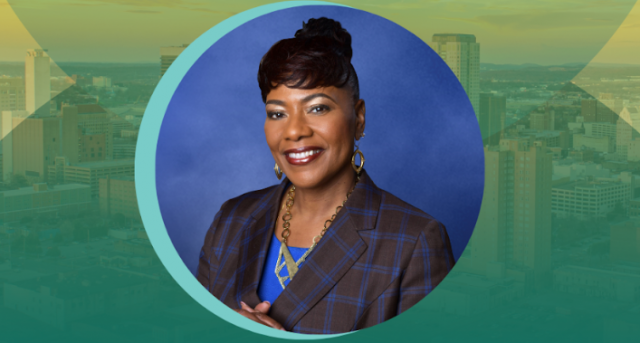
The Rev. Dr. Bernice A. King, daughter of Dr. Martin Luther King, Jr. and Coretta Scott King, will serve as keynote speaker for the 2023 International Peace Conference in Birmingham.
The two-day immersive experience will take place May 4-6 at the Birmingham-Jefferson Convention Center in downtown.
The Rotary International District 6860 (North and Central Alabama), in partnership with The Birmingham Civil Rights Institute, and the Institute for Human Rights at the University of Alabama at Birmingham, will host the conference.
“As we commemorate the 60th anniversary of the Children’s March in Birmingham, I believe that we desperately need the reminder this anniversary provides of the combined power of love, nonviolent strategy, and consistency to purpose,” said King.
“Courageous, committed children were willing to be inconvenienced to overcome injustice. That same courage and commitment are needed today, and this commemoration is a call up to both,” she said. “I am hopeful that we all, from the nation’s Capitol to city halls, from homes to houses of worship, and from chambers of commerce to corporations, will answer the call.”
In 1963, Birmingham served as a headquarters for the Civil Rights Movement as it was known to be one of the most segregated cities in America. Activists and leaders such as Dr. King, Jr., Rev. Fred Shuttlesworth, and Rev. Ralph Abernathy, among other organizations, worked together with the Southern Christian Leadership Conference (SCLC) to develop a non-violent plan to desegregate Birmingham.
On May 2, 1963, thousands of youths and children began a peaceful protest in Birmingham to help raise awareness about the lack of equality and the many injustices happening in the city. These young activists were met with violence from authorities, and in many cases, they were injured and jailed. Images of police using high-pressure water hoses and snarling police dogs on the children were seen across the globe. This event known as the Birmingham Children’s Crusade was the spark that ignited the Civil Rights Movement and changed history.
“We are extremely excited and honored to have Dr. Bernice A. King, a true peacebuilder in her own right who is also part of a remarkable family history, as one of our keynote speakers,” says Will Ratliff, Chairperson of the 2023 International Peace Conference.
“Not only will she serve as a keynote speaker for the International Peace Conference but also for the Youth Peace Conference, a partner event that will host over 300 youth participants,” he said. “Dr. King joins a roster of over 70 guest speakers from all over the United States, Asia, Africa, and Europe. We know she will inspire everyone in attendance.”
With the theme “Imagine Peace. Build Peace,” the Conference will consist of two days where Rotarians, non-Rotarians, and distinguished leaders in academia, government, public safety, religion, business, and community service gather to share ideas and propose solutions to some of society’s most complex challenges.
By addressing human trafficking, education, racial injustice, empowerment of women and girls, violence reduction, and other topics, the Conference will highlight the pursuit of peace at all levels of society.
Dr. Bernice King is a strategist, orator, peace advocate, and CEO of the Martin Luther King, Jr. Center for Nonviolent Social Change (The King Center), which was founded by her mother as the official living memorial to the life, work, and legacy of her father. She has continued to advance her parents’ legacy of nonviolent social change through policy, advocacy, research, as well as education and training through the Kingian philosophy of nonviolence, which she re-branded Nonviolence365TM.
The conference will also feature other guest speakers, including Mayor Randall L. Woodfin of Birmingham, AL; Jennifer Jones, President of Rotary International (Windsor, Ontario, Canada); Ms. Odessa Woolfolk, Founding President and Chair Emerita of the Birmingham Civil Rights Institute; Ravi Ravindran, Past President of Rotary International (Columbo, Sri Lanka); Steven Killelea, Founder and CEO of the Institute for Economics and Peace (Sydney, Australia); Felicia Beard, Senior Director, Racial Equity Initiatives for the Community Foundation of Greater Buffalo (Buffalo, NY); Bob Roth, CEO of the David Lynch Foundation and Transcendental Meditation Spokesperson (New York, NY); Rev. Becca Stevens, Founder and CEO of Thistle Farms (Nashville, TN); and many more.
Registration for the 2023 International Peace Conference is now open. To learn more about the 2023 International Peace Conference and to receive news, announcements, speakers, and more, visit, www.peaceconference2023bham.com
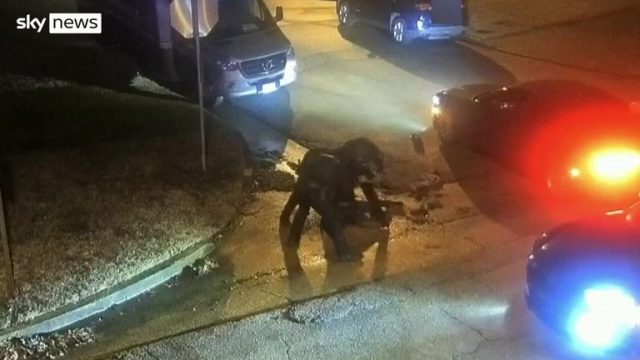
The actions of Demetrius Haley, Tadarrius Bean, Emmitt Martin III, Desmond Mills, Jr., and Justin Smith have left many convinced that policing in America cannot be reformed.
By Stacy M. Brown
NNPA Newswire Senior National Correspondent
@StacyBrownMedia
The devastating video of Memphis police officers rehearsing their excuse for their deadly use of force even as Tyre Nichols’ lifeless body lay just steps away painted a horrifying, if not entirely clear, portrait of five cops who murdered a man for no apparent reason and then conspired to destroy his reputation.
The actions of Demetrius Haley, Tadarrius Bean, Emmitt Martin III, Desmond Mills, Jr., and Justin Smith have left many convinced that policing in America cannot be reformed.
“One of the most devastating things to occur in this earthly existence is for one’s life to end in such a brutal and helpless way and to have the world watch, share, and analyze the video of you taking your last breath,” officials at the nonprofit The Black Girl’s Guide To Healing Emotional Wounds wrote in a statement.
They pleaded, “please, my friends, don’t share it or watch it. Let’s keep the family in our prayers and work to identify solutions to this nonsense.”
On Friday, January 27, over an hour of footage was extracted from the officers’ body cameras and an overhead surveillance video that the men in blue were apparently unaware existed.
Each officer was arrested and terminated. They have been charged with second-degree murder, kidnapping, and other crimes in connection with Nichols’ death.
Sheriff Floyd Bonner Jr. said in a statement that two additional Shelby County sheriff’s deputies were placed on administrative leave pending the outcome of an investigation.
A body camera worn by an officer revealed that Tyre was initially confronted on January 7 at 8:24 p.m. During what appeared to be a standard traffic stop, several officers approached with their weapons drawn.
Immediate hostility ensued, with one officer threatening Tyre, “You’re going to get your [expletive] blown off.”
Nichols is heard saying, “I’m just trying to go home. I’m not doing anything.”
He is then sprayed with pepper spray and repeatedly attacked.
One of the officers can be heard struggling to catch his breath while cursing Nichols due to the severity of the beating. Nichols begins yelling for his mother in a manner eerily similar to that of George Floyd, a Black man killed by police in 2020 in Minneapolis.
One of the officers, displaying no compassion, pulls out a baton and yells, “I’m going to baton the [bleep] out of you!” As the young man struggles to regain his balance, the officer strikes Nichols multiple times with the baton, while other officers can be seen punching him in the face and head.
Officers eventually drag Nichols and toss him against a patrol car. More than 21 minutes pass before emergency medical personnel arrive, during which time the officers celebrate their victory by fist-bumping and laughing about their crime.
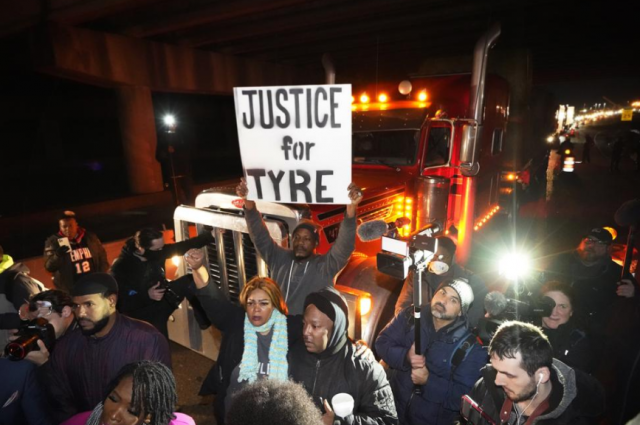
The release of the video sparked protests across the country, including in the District of Columbia, New York, Los Angeles, and Memphis, where the crime took place. In addition to civil rights organizations, federal lawmakers flooded journalists’ email inboxes with statements condemning the officers.
As is their custom, lawmakers promised legislation to reform American policing. Similar promises were made after the murders of Floyd in Minneapolis, Breonna Taylor in Kentucky, Tamir Rice in Ohio, and Eric Garner in New York, among numerous others. In contrast, the Memphis officers were immediately fired and arrested, and the police unions did not offer them any support.
“What I witnessed in that video was horrific. It was a barbaric assault on another human being and is sickening,” Maryland State Fraternal Order of Police President Clyde Boatwright said.
“This does not represent policing or the men and women who wear a badge and dutifully protect their communities. I hesitate to even call these men police officers, because what I saw on that video is not policing. They deserve the strongest punishment allowed by Tennessee law.” Boatwright added that in his state, “we have had historic police reform in our state over the last 5 years to ensure these types of actions don’t occur in Maryland. We will continue to be a partner with our communities as we work to protect those we serve.”
Patrick Gaspard, the president and CEO of the Center for American Progress, called driving while Black “one of the most dangerous acts in America.” “As we all just witnessed in the searing video of the brutal slaughter of Tyre Nichols at the hands of police who are paid by us to protect all of us. The evidence here is startling and indisputable. These officers need to be tried, convicted, and imprisoned to satisfy justice and to send a message to police in all of our cities that this culture of violence in their ranks will no longer be sanctioned,” Gaspard stated.
President Joe Biden said he spoke with Nichols’ family and expressed his outrage. “Like so many, I was outraged and deeply pained to see the horrific video of the beating that resulted in Tyre Nichols’ death,” the president stated. “It is yet another painful reminder of the profound fear and trauma, the pain, and the exhaustion that Black and Brown Americans experience every single day.”
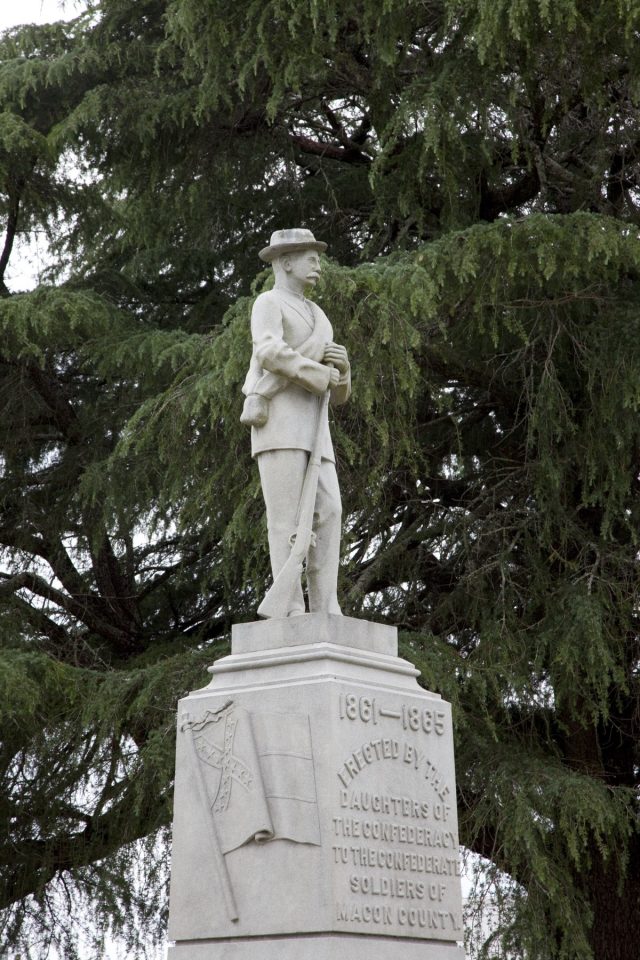
TUSKEGEE, Ala. (AP) _ An Alabama judge has paved the way for officials to remove a Confederate monument placed a century ago at the center of a historic, majority-Black city as part of a “park for white people.“
Since 1909, the Confederate monument has stood in the center of Tuskegee, a city famous for Tuskegee University and known as the training ground for Black pilots in World War II. The city’s population is now more than 93% Black. The monument has been a target of recent protests and vandalism attempts. The Macon County Commission filed a lawsuit to regain control of the land, which is the first step toward removing the statue.
The monument was erected at a time when white supremacy reigned _ and pro-Confederate groups across the South erected Civil War memorials to honor rebel troops and portray the cause of the slave-holding South as noble. Hundreds of rebel monuments were taken down in recent years as they came to be seen as symbols of racial oppression against Black people.
Circuit Judge Steven Perryman on Thursday ruled that the site should revert to the Macon County Commission under the terms of a 1906 deed that gave the space to the Tuskegee Chapter of the United Daughters of the Confederacy for the purpose of “maintaining a park for white people and maintaining a monument to the memory of the Confederate soldiers.“ Perryman said there was no evidence the space had been maintained as a segregated park so the land should revert to the county under deed terms that said the county would get the land back if it wasn’t used for those purposes.
The judge gave the Tuskegee Chapter of the United Daughters of the Confederacy 60 days to retrieve and remove the monument. The group could appeal the ruling.
A 2017 Alabama law meant to protect Confederate monuments imposes a $25,000 penalty for removing or altering any monument that’s been in place for 40 or more years. However, a number of local governments have opted to take down Confederate structures and pay the law’s fine.
Macon County Commission Chairman Louis Maxwell praised the decision. He said they needed to answer the question of who owns the property before taking any action about the monument. Maxwell said he hopes the statue will be gone by the spring festival that celebrates George Washington Carver, the famed 19th century scientist and Tuskegee professor.
“We will celebrate the removal of this statue. We will celebrate this decision,” Maxwell said in a press conference.
He asked county residents to be patient over the next 60 days.
“Don’t tear it down,“ Maxwell said. “Don’t deface it. Give them a chance to move it.”
By: Lawrence Specker | lspecker@al.com
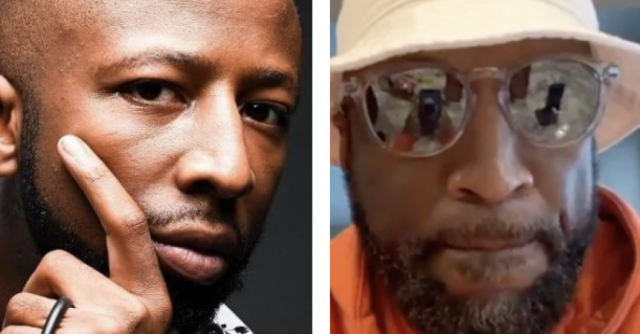
Comedian Rickey Smiley announced Sunday that his oldest son Brandon Smiley has died, in a raw message shared via social media channels.
In a brief video shared on Instagram and YouTube, Smiley said that he was on his way “to get to the airport to get to Birmingham” after getting the bad news Sunday morning. Smiley, a Birmingham native, did not address the specifics of his son’s death.
“I just want everybody to pray for me, pray for our family. My son Brandon Smiley has passed away this morning. I’m about to go get on a flight and try to get to Birmingham … Lord have mercy, Jesus,” he said.
He asked for prayers for family members, Brandon’s mother and siblings.
“I hate to announce this, I just want to give it to you before you hear it in the streets,” he said.
“I just don’t know what to do, I can’t think,” said Smiley, who went on to refer to the death of his father. “Now I see what my grandaddy went through and why the way he felt the way he felt,” he said.
Brandon Smiley, who had worked as a comedian and actor, reportedly was 32.
Birmingham Mayor Randall Woodfin extended his condolences via Twitter.
“I’m devastated to hear that my friend @RickeySmiley has lost his son Brandon,” Woodfin said in a Tweet. “Rickey has given so much to our city; this is the time when we need to give back to him. Join me in wrapping our arms around him & his family during this difficult time. We’re praying for you, Rickey.”