Home Blog Page 556

Farm-Ageddon: How New Tech Can Help Farmers Tackle Climate Change

0

SupPlant’s sensor-less product is intended for the nearly 80 percent of farmers worldwide who grow crops on less than two hectares of land. (Scott Olson/Getty Images)

By Brian Blum

“We help farmers speak better plant.”


It’s a clever tagline but, in the case of Israeli ag-tech startup SupPlant, it may literally be true.

SupPlant attaches sensors to crops to monitor their needs: Are they thirsty? Too hot? Too cold? How is climate change affecting their productivity?

By correlating data from the sensors with third-party weather predictions — will there be a heatwave this weekend? A freak morning frost? — SupPlant can provide highly accurate instructions for farmers striving to maximize yields.

But it’s the next generation that SupPlant is most excited about, already in the pipeline: a sensor-less approach that taps into SupPlant’s database of 31 crops in 14 countries to provide predictions at a cost of just $1 a month per farmer.

SupPlant’s sensor-less product is intended for the nearly 80 percent of farmers worldwide who grow crops on less than two hectares of land.

That comes out to 450 million “smallholder” farmers, many of them women, concentrated in the developing world — Africa, Asia and South America — who are mostly ignored by more expensive smart farming solutions.

All in the family

SupPlant’s founders have a long pedigree with the land. President and founder Zohar Ben Ner has 33 years of experience with irrigation and growing crops. His family arrived in Israel in the 1920s and his father, Avner, was a farmer. His son Ori is SupPlant’s CEO.

Zohar Ben Ner was in South Korea in 1996 while heading up Israeli drip irrigation pioneer Netafim’s Seoul office. One day, a Russian professor came in holding a box filled with sensors and cables.

“I’m coming from the USSR,” the professor told Ben Ner. “No one believes in my technology, but I think I have something amazing here.”

That technology became the basis of SupPlant’s sensors. Ben Ner was so enthusiastic that he left Netafim and SupPlant was born.

A passion for agriculture

SupPlant’s sensors can measure soil humidity, the size of a plant’s trunk and fruit, the temperature of the leaf, and more.

“We know when a plant gets into a stress condition,” SupPlant’s API Product Manager Itai Langer said.

Langer previously held executive positions at Microsoft and IBM. “I was turning 50. And I felt that something was missing. I decided, I have to chase my dreams. I wanted to make an impact.”

Langer says he has a passion for agriculture. “I love the smell of the ground, seeing the fruits, feeling the leaves. It opens up channels that are indescribable. I couldn’t do something like that sitting in my cozy office.”

When a plant gets stressed, it starts to shut down. It stops photosynthesizing, stops growing, and may drop its fruit on the ground.

Corn growing in a field irrigated with SupPlant technology. (Courtesy of SupPlant)

By installing sensors on the plants, SupPlant creates what Langer calls “autonomous farms.” The sensor data tells the irrigation systems how much water to deliver and when.

“Everyone knows the quantity of water is important,” Langer says. “But we also found that the timing of irrigation is crucial. The textbooks say, ‘Trees do not consume water at night.’ But they do! We learned that from the sensor data.”

Mitigating effects of climate change

SupPlant has a major role to play as climate change ravages farms and economies.

“The difference between an amazing growing season and a disastrous one is about four to five extreme weather events,” Langer notes.

“We have about 15,000 sensors deployed across the world. Next year it should be 50,000 and we’re aiming for a total of 150,000. All this data flows into our cloud database every half an hour. Our database can react faster than the climate itself!”

SupPlant’s extreme weather alert system is based on existing satellite data. “We can tell a farmer that there will be a heatwave in three days, and here’s our recommendation for how to deal with it,” Langer explains.

Take avocados as an example.

Avocados demand a lot of water. By using SupPlant, farmers can differentiate between when the tree needs tons of water and when all that’s required is wetting the soil. That saves the farmer money (and ultimately makes for tastier guacamole).

Irrigating palms in the UAE

SupPlant took a similar approach in the United Arab Emirates, where the company’s experts taught farmers how to irrigate their palm trees with 50 percent less water. (Zohar Ben Ner is managing the company’s work in the Emirates now.)

Sometimes, water is simply not available.

“In India, farmers will visit their plots every seven to 10 days but may not have water to irrigate. So, we say, ‘We’ll give you the critical timing in advance for when to water your crop in the next seven days to prevent damage and maximize growth,’” Langer says.

SupPlant has amassed 2.3 billion data points about various types of plants. That’s enough to make some super-smart predictions.

And that’s how we get to SupPlant’s new sensor-less push.

In places like India and Africa, smallholder farmers don’t have the resources to install sensors across their fields. But SupPlant knows enough about the crops being grown from the data it’s drawn from sensors elsewhere that all it needs to do is match that historical data with weather reports to make its recommendations.

A dollar a month may sound like a small amount, but for a subsistence farmer in Africa, it’s unaffordable and too often out of the question. Also, some farmers do not have a cell phone to track the alerts.

PlantVillage

That’s why SupPlant partnered with PlantVillage, a non-profit group affiliated with Penn State University that helps smallholder farmers worldwide.

PlantVillage has relationships with 500 women growing maize (corn) in Kenya. It supplies free phones to community leaders, who walk around notifying fellow farmers what to do prevent stress to their crops.

SupPlant aims to reach some two million smallholder farmers across Africa and India this way.

Although the total market is huge – 450 million farmers times $12 a year is nothing to scoff at –SupPlant isn’t giving up its work with big farms.

“We offer them a whole different kind of service,” Langer said. “We have dedicated agronomists who work with them, a control center that monitors their crops 24/7. They can call the switchboard and ask questions. It’s a very different SLA [service level agreement].”

SupPlant’s API Product Manager Itai Langer. (Courtesy of SupPlant)

When we spoke to Langer, he was preparing for a trip to Kenya to install sensors on a new variety of tomato that is not currently in SupPlant’s database.

“We’re installing sensors at our own cost, in order to get the data to help all the tomato growers in Kenya,” he says.

SupPlant is doing the same in India, where it’s making 30 farms “autonomous” in order to collect data on the cassava, an exotic fruit currently not in the company’s database.

Extreme weather

Langer’s job at SupPlant is all about the sensor-less approach. “By 2023, and maybe even sooner, my part of the business will be the biggest part of the company,” he says.

The timing is right: This past year saw extreme weather events worldwide: drought, fires, Antarctic temperatures usually found only in Europe during the height of summer.

“Smallholder farmers base what they do on what their parents did,” Langer explains. “But the rain spells are growing longer these days and a drop of rain is stronger now –crops aren’t used to that. One might not normally think of irrigating during the monsoon season, but you may need to, based on the data.”

It is this forward, data-driven approach that sets SupPlant apart from its competitors.

“Most of the other companies look at how much water evaporated from the ground in the past,” Langer says. “We don’t look into the past. We look into our database to see what plants like this will need in the future.”

In addition to PlantVillage, SupPlant is working with the largest telecom provider in India to build an app to deliver crop data. There’s another partner in Paraguay.

The 17-person Afula-based company has customers in South Africa, Poland and China, plus a few in Europe.

SupPlant has raised $22 million, including $10 million last June from Mivtach Shamir, Boresight Capital and Smart-Agro. The investments have paid off: During 2020, revenue for SupPlant grew by 1,200 percent.

Smart-Agro reports that, in the next 40 years, farmers will have to grow as much food as they have in the last 10,000 years combined.

As for the company’s name, it’s a mashup of “plant” (duh) and “sup” which means to gulp, consume or irrigate. Although there’s another intention.

This Israeli startup intends to supplant (that is, to replace) current ways of managing agriculture. If that can help grow more food at lower prices and keep smallholder farmers in business, Langer will have made the most of trading in his title in the C-suite for a life managing avocados, corn and newfangled Kenyan tomatoes.

For more information, click here 

Produced in association with Israel21C.


The post Farm-Ageddon: How New Tech Can Help Farmers Tackle Climate Change appeared first on Zenger News.
Dust Devastating: How High-Speed Space Dust Can Rock Spacecraft With Plasma Explosions

0

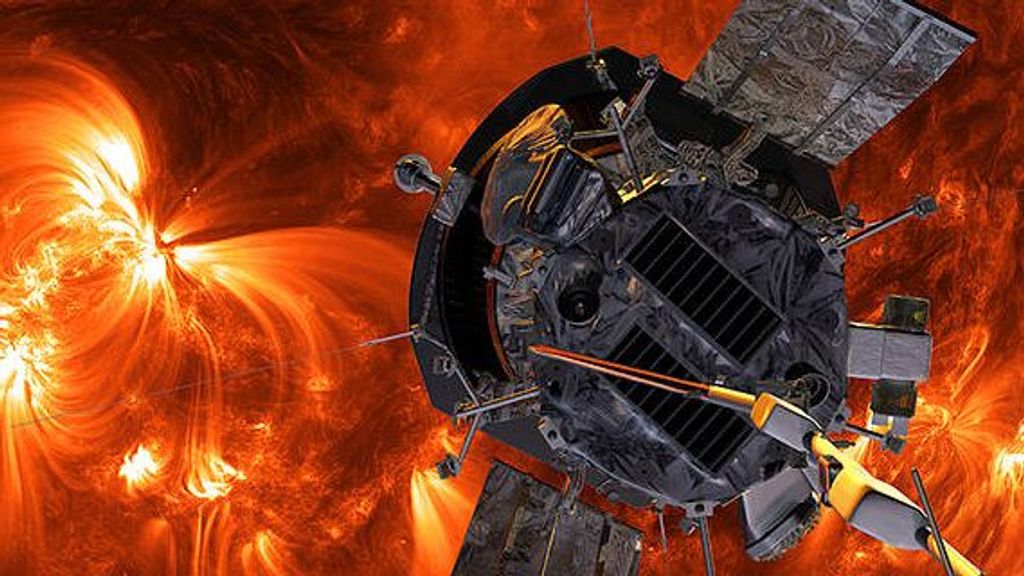
The Parker Space Probe, the fastest man-made object ever built, will continue to orbit the sun until 2025. It is collecting data on the outer corona of the sun and the dynamics of solar wind, all while surviving the impact of dust produced by comets and asteroids. (NASA)

By Martin M Barillas

NASA scientists have provided the most accurate picture to date of tiny, super-fast dust particles that damage spacecraft and impede space missions.


A team of scientists, led by David Malaspina of the University of Colorado Boulder, used electromagnetic and optical observations from the Parker Solar Probe, which is on a mission to observe the outer corona of the sun.

Orbiting at about 400,000 miles per hour, the probe is the fastest object ever built, and it endures collisions with grains of dust shed by asteroids and comets. It will eventually come as close as 4.3 million miles from the sun’s center.

“With these measurements, we can watch the plasma created by these dust impacts be swept away by the flow of the solar wind,” Malaspina said. The process the researchers used, albeit on a smaller scale, may lead to a better understanding of how the plasma in the upper atmospheres of Mars and Venus is swept away by solar wind.

The probe hurtles through the densest area of the pancake-shaped zodiacal cloud, which is composed of dust and extends throughout the solar system. Thousands of dust particles 2 to 20 microns in size strike the probe at hyper-velocity (at least 6,700 mph). When dust strikes the probe, the particles and the spacecraft surface are heated and vaporized. The material then ionizes, which means atoms are separated into their constituent ions and electrons, producing matter called plasma.

Measurements of electric fields, magnetic fields and camera images reveal the plasma explosions and clouds of debris created when very high-velocity dust impacts the Parker Solar Probe. By watching the dispersal of these small plasma and debris clouds, scientists can learn about how larger clouds of dust and debris are blown away from stars. (NASA)

The rapid vaporization and ionization of dust yields a plasma explosion that lasts less than one-thousandth of a second, while the biggest impacts produce clouds of debris that slowly expand away from the probe.

The researchers used antennas and magnetic field sensors to measure disturbances to the electromagnetic environment surrounding the probe. They studied how the plasma explosions interacted with the solar wind, or the stream of ions and electrons that the sun constantly generates.

The flakes of metal and paint knocked off the probe by dust collisions drifted and tumbled nearby, showing up as streaks on the images recorded by the Parker Solar Probe’s cameras.

“Many image streaks look radial, originating near the heat shield,” which protects the probe from the sun’s intense heat, the study said. Some debris reflected sunlight into the spacecraft’s navigation cameras, temporarily hampering the probe’s orientation. The danger to the probe is that it relies on the precise pointing of the heat shield to survive.

The results of the study will be presented at the annual meeting this month on plasma physics of the American Physical Society in Pittsburgh, Pennsylvania.

So far, the Parker Solar Probe has made nine complete orbits around the sun. By 2025, when its mission ends, 15 complete orbits are expected.

Edited by Richard Pretorius and Kristen Butler


The post Dust Devastating: How High-Speed Space Dust Can Rock Spacecraft With Plasma Explosions appeared first on Zenger News.

VIDEO: Drone Rescue: Spy In The Sky Finds Missing Woman Within Seconds

0

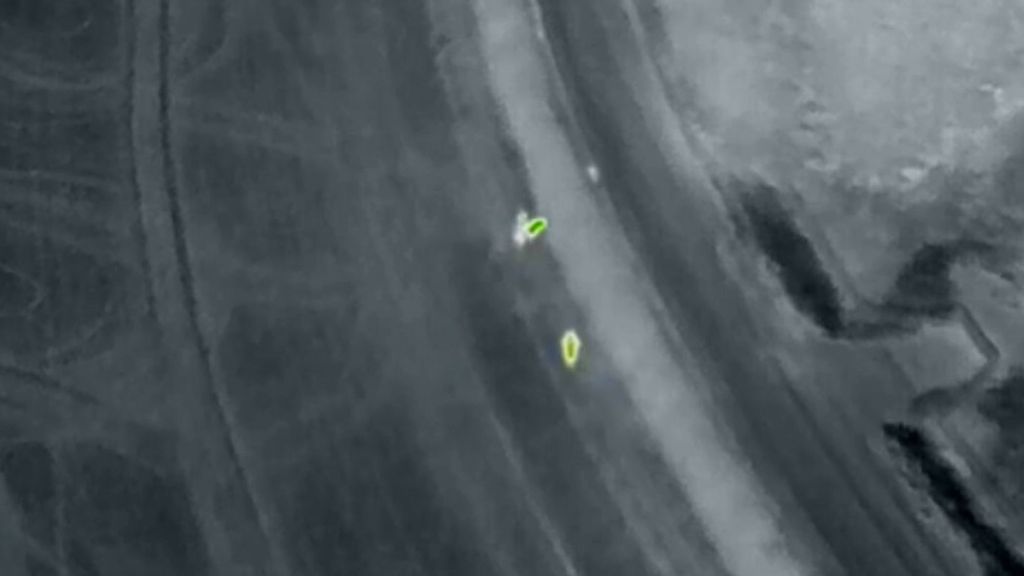
A police drone located a missing woman near Leicestershire, England, on the night of Nov. 4. (Nottinghamshire Police/Zenger)

By Lee Bullen

A high-tech police drone took mere seconds to find a vulnerable missing woman lying unconscious at the edge of a dark field in England on Nov. 4.


“A traditional search could have taken hours, but our drone was able to find her within seconds of taking off with its thermal imaging camera,” said Nottinghamshire Police. “The technology allows us to search very large areas in very short space of time and can be deployed very quickly when needed.

“This was a great bit of work by all the officers involved and further proof of the potentially life-saving impact of drone technology.”

Police said the woman, whose name was not disclosed, was reported as missing from her home and was believed to be in the area of Belvoir Castle on the Leicestershire border.

“Concerns were raised for her welfare, and officers from Nottinghamshire Police’s drones team were called in to help with the search,” police said.

“The force’s main drone took off shortly before 11:40 p.m. and within seconds its high-tech thermal imaging camera had identified the woman at the edge of a field. Officers on the ground were immediately dispatched to help her. She was later treated by paramedics but was not seriously hurt.”

The drone footage shows the moment the woman is detected at the edge of the field on the dark, rainy night, apparently lying motionless on the ground.

Within seconds, two police officers are seen running to the woman’s location and assisting her.

Police used a drone with thermal imaging capabilities to locate a vulnerable missing woman near Leicestershire in England. (Nottinghamshire Police/Zenger)

Police Constable Vince Saunders, Nottinghamshire Police’s chief drone pilot, said: “Finding vulnerable missing people is an area in which our drone technology really excels. … Officers were faced with the challenge of finding a cold, missing and potentially very poorly woman in total darkness.

“The technology allows us to search very large areas in very short space of time and can be deployed very quickly when needed,” he said. “This was a great bit of work by all the officers involved and further proof of the potentially life-saving impact of drone technology.”

Nottinghamshire Police said the drones team, made up of 17 volunteer pilots and four drones, is a resource shared with Nottinghamshire Fire and Rescue Service and is on hand 24/7 to carry out pre-planned and emergency response operations.

Typical operations include finding missing people, evidence gathering and supporting the arrest of criminal suspects.

In addition to thermal imaging, the drone used in the field rescue is able to pinpoint and track targets on a map and boasts a laser range-finder that offers accurate geo-location information up to 3,937 feet away, police said.

The Nottinghamshire Police said that U.K. police forces have been using a range of methods for gaining aerial views over events or people since the 1920s, including fixed-wing airplanes and airships.

“This was a great bit of work by all the officers involved,” Saunders said, “and further proof of the potentially life-saving impact of drone technology.”

Edited by Judith Isacoff and Kristen Butler


The post VIDEO: Drone Rescue: Spy In The Sky Finds Missing Woman Within Seconds appeared first on Zenger News.

It’s Here! Sneek Peek Of Spielberg’s ‘West Side Story’

0

strongSpielberg's ‘West Side Story’ will be released on Dec. 10. (EPK.TV)/strong

By Mina Castillo

The Walt Disney Company released the new “sneak peek” of Steven Spielberg’s “West Side Story” on Oct. 27, fueling the audience’s anticipation for the film.


Spectators look forward to its release for many reasons. Some wish to relive the nostalgia of the 1961 movie, directed by Jerome Robbins and Robert Wise.


View this post on Instagram


A post shared by @westsidestorythemovie

Most lead roles were not left to Latinos in the 1960s film. For some, Spielberg’s “West Side Story” provides the opportunity to pay off this debt.

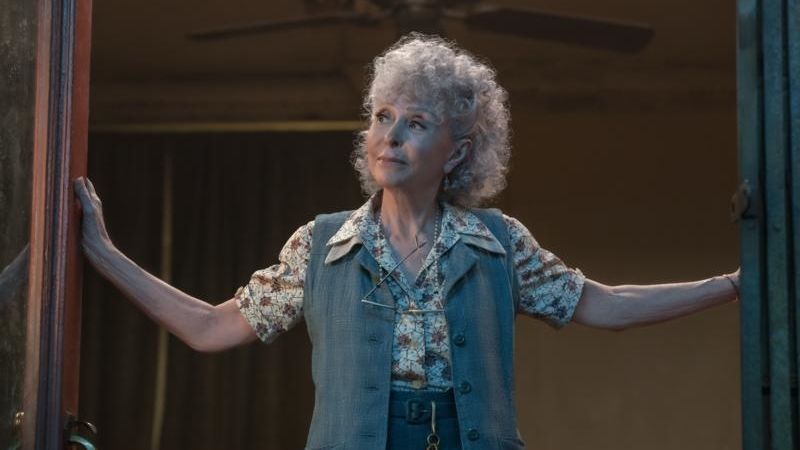
For others, Spielberg’s “West Side Story” will be the “full circle” moment for the revered actress Rita Moreno, who won an Oscar for her portrayal of Anita in the 1961 version. Moreno has a pivotal role in the new movie while taking on a new position as one of the executive producers.

Rita Moreno, who won an Oscar for the role of Anita in the 1961 film, also stars in the remake, besides taking on a new role as one of the executive producers. (EPK.TV)

The film stars Rachel Zegler and Ansel Elgort. Ziegler will make her feature film debut in the role of Maria while Elgort will play Tony.

The cast of several hundred actors and dancers includes Ariana DeBose, David Alvarez, Mike Faist, Josh Andrés Rivera, Corey Stoll, and Brian d’Arcy James. Choreography is by Justin Peck.

Born to a Colombian mother, Ziegler is a singer and songwriter raised in New Jersey. She was among the 30,000 persons auditioning for the role and managed to land it. Spielberg’s “West Side Story” is quite a leap for Zegler, who first played Maria’s role in a Performing Arts School presentation at Bergen Performing Arts Center.


View this post on Instagram


A post shared by West Side Story (@westsidestorymovie)

“West Side Story” is one of the most beloved musical romantic dramas. Spielberg is also co-producer, and Tony Kushner, its writer, is one of the executive producers.

The film went into development in 2014, at 20th Century Fox. Kushner began writing the screenplay by 2017. Spielberg came on board in 2018, and casting began late that year. The filming started in July 2019, with the shoot taking place in New York and New Jersey. The production stopped running during the COVID-19 lockdown, pushing back the release to Dec. 10.

It’s Here! Sneek Peek of Spielberg’s ”West Side Story” was published in collaboration with LatinHeat Entertainment.

Edited by Gabriela Alejandra Olmos and Melanie Slone


The post It’s Here! Sneek Peek Of Spielberg’s ‘West Side Story’ appeared first on Zenger News.

Justina Machado Co-Stars In Lifetime’s Drama ‘Switched Before Birth’ 

0

Justina Machado co-stars in the Lifetime movie. In the picture, she arrives at Variety and Lifetime's ‘Power of Women’ at the Wallis Annenberg Center for the Performing Arts on Sept. 30. (Emma McIntyre/Getty Images for Variety)

By Julio Martínez

Justina Machado takes a dramatic step forward in her career with the Lifetime movie “Switched Before Birth.” Machado is best known for her comedic roles as Penelope Alvarez on the Netflix and CBS sitcom “One Day at a Time” and Darci Factor in The CW’s “Jane the Virgin.”


Now, Machado is portraying Anna Ramirez, a woman who wishes to become a mother but struggles to conceive. Directed by Elizabeth Rohm, the film premiered on Oct. 23.


View this post on Instagram


A post shared by Justina Machado (@justinamachado)

“Switched Before Birth” follows Olivia Crawford (Skyler Samuels) and her husband Brian (Bo Yokely), who stretch themselves to financial limits after multiple failed in vitro fertilization (IVF) trials and miscarriages. While going through her latest round of IVF, Olivia meets and becomes friends with Anna Ramirez (Machado), who is struggling to have a child after years of focusing on her successful restaurants.

“I really don’t have a formula for this,” Machado said in a joint interview with her friend and the film’s director, Elizabeth Rohm. “I’m always looking at the character. And I really could relate to what she had to offer. Anna Ramirez loved everything that was going on in her life. The only thing she couldn’t deal with was what she couldn’t have. We all know what that feels like.”

When Olivia and Anna become pregnant, they both celebrate and prepare for their babies’ arrival. But Anna suffers a devastating miscarriage and struggles to move forward, while her marriage to restaurateur Gabe Ramirez (Yancey Arias) crumbles.

When Olivia and Brian finally welcome their twins, Olivia feels her life is complete. But the couple’s world is turned upside down when they discover one of the babies is biologically Anna and Gabe’s child, who had been implanted into Olivia by mistake. Pitted against each other, Olivia will do anything to keep the baby she delivered, while Anna will stop at nothing to bring her son home.

“Justina just kills it as Anna,” said Rohm. “People don’t know how we have our miracle babies. … I think this movie will do a lot to help people understand what is possible in this modern age.”

“This powerhouse was also the director. I’ve acted with her,” said Machado pointing to her friend. “Elizabeth is a talented lady. As for me, I just dig into the script. It is so much fun to be able to be this character and truly show what she is going through.”

The actor and director might work together on another project. Rohm hinted that she and Machado may team up again to reboot the 1980s police drama “Cagney & Lacey.”

Justina Machado Co-Stars in Lifetime’s Drama ‘Switched Before Birth’ was published in collaboration with LatinHeat Entertainment.

Edited by Gabriela Alejandra Olmos and Melanie Slone


The post Justina Machado Co-Stars In Lifetime’s Drama ‘Switched Before Birth’  appeared first on Zenger News.

Crackpot Theories? Scientists Find An Answer To Why Teapots Always Dribble

0

First described by Markus Reiner in 1956, the “teapot effect” that causes tea to dribble outside the pot has finally been explained in detail. (George Marks/Retrofile/Getty Images)

By Martin M Barillas

Scientists have now described the long-studied “teapot effect” in detail as the complex interplay of forces in the flow of a liquid that, when poured too slowly from a teapot, dribbles down the outside of it and not into the waiting cup.


The phenomenon, which has long stumped scientists, was first described by Markus Reiner in 1956. He became an important pioneer of rheology, the science of flow behavior.

“Although this is a very common and seemingly simple effect, it is remarkably difficult to explain it exactly within the framework of fluid mechanics,” said Bernhard Scheichl of Vienna Technological University and lead author of a paper published recently in the Journal of Fluid Mechanics.

“We have now succeeded for the first time in providing a complete theoretical explanation of why this drop forms and why the underside of the edge always remains wetted,” Scheichl said.

Researchers poured water from an inclined teapot at different flow rates while recording with high-speed cameras. This allowed them to learn exactly how the wetting of the edge below a critical pouring rate leads to the “teapot effect,” and confirmed their theory.

The sharp edge on the underside of the teapot beak is the most important part of the equation. When a drop forms, the area directly below the edge always remains wet. The size of the drop depends on the speed of the liquid flowing from the teapot. If it is slower than a critical threshold, the drop directs the entire flow around the edge and dribbles down the outside of the teapot.

A drop of tea on the lip of the spout will divert the whole flow down the side of the teapot if poured too slowly. (Paul Rogers – WPA Pool/Getty Images)

The interplay of inertia, viscous and capillary forces are complicated. Inertia ensures that the fluid maintains its initial direction. Capillary forces slow the fluid at the beak, while the interaction of inertia and capillary forces is at the root of the teapot effect. The capillary forces are essential to the teapot effect because they permit it only at a very specific contact angle between the wall and the liquid surface. The smaller this angle is or the more wettable, or hydrophilic, the teapot is, the more the liquid is slowed down.

While gravity determines the direction of flow from the teapot, its strength is not decisive in the teapot effect. Therefore, the teapot effect may also occur while drinking tea on the moon, but not in a space station where there is no gravity.

French researchers had previously pointed out that one way to avoid dribbling is to make the lip of the spout as thin as possible. They also said the teapot effect might be eliminated for good by using a thin, sharp-ended spout and coating the lip with a super-hydrophobic, or water-repellant, material.

Work on the teapot effect was awarded the satirical “IG Nobel Prize” in 1999.

Edited by Richard Pretorius and Kristen Butler


The post Crackpot Theories? Scientists Find An Answer To Why Teapots Always Dribble appeared first on Zenger News.

USFL in Birmingham Announcement Likely Next Week

0

By Barnett Wright

The Birmingham Times

Report touts Alabama’s natural, outdoor assets as economic development draw

0
The natural beauty in Alabama like Oak Mountain State Park's Peavine Falls should be viewed as an economic development asset, according to a new report. (Scott Dover)

Central American Migrant Trades American Dream For Mexican Dream 

0

The migrants' journey to the United States is full of risks. In the picture, Fernando Hernández travels on top of a trailer (left) and inside a trailer container with three friends and many other migrants (right). (Courtesy of Fernando Hernández)

By Julio Guzmán

Migrants’ journeys to the United States are fraught with danger.


Central American migrants often experience theft, abuse of authority and extortion.

Mexico’s Human Rights Commission estimates that 42.2 percent of migrants crossing the country are victims of robbery, followed by kidnappings (10.7 percent) and organized crime (10.2 percent).

Despite the risks, Fernando Hernández, then a 20-year-old high school graduate, wanted to secure the American dream. Along the way, he changed his mind.

He used to live in Santa Bárbara, a town located about 124 miles from Tegucigalpa, Honduras’ capital. Insecurity and unemployment forced him out of his hometown.

Hernández and three friends left Santa Bárbara in a bus on Oct. 15, 2018, intending to join a migrant caravan heading to Guatemala. Hernández left his town with 500 lempiras ($23), which he spent on the bus.

Crossing the Honduras–Guatemala border, they spotted the caravan, which was adding passengers daily. They joined the group, and Hernández called his family, since he was the only one of the four friends carrying a cell phone.

The journey was not easy. He woke up every day at 5 a.m. to walk with his fellow migrants. “We rested 15 minutes per hour to be able to walk the whole day. Sometimes a truck would stop and give us a ride,” he told Zenger.

When the caravan crossed Mexico’s southern border, agents from the country’s federal police and the National Migration Institute were waiting for them at the Rodolfo Robles border bridge. But there were so many migrants crossing that Hernández and his friends managed to continue their trip.

During his journey, two caravan members died, one in Córdoba, Veracruz, and the other in the state of Puebla.

“We hung ourselves from a double trailer. The truck hit a bump, and a fellow migrant who was not holding on well fell. When the second trailer ran over him, the truck stopped. He died instantly. … It could have been a friend, someone traveling next to me, or it could have been me,” he said.

In Mexico City, the caravan rested at a temporary shelter that provided migrants with food. An estimated 5,500 people from different countries, primarily Hondurans, made up the caravan, according to a government census.

Fernando Hernández and the three friends who left Honduras with him are seen on a Mexico City subway. (Julio Guzmán/Zenger)

At that point, one of his friends was homesick and concerned for his family. So he boarded one of the buses bound for Honduras provided by the mayor’s office.

Hernández’s caravan left for Querétaro, where the state government provided buses that drove the migrants to Mexicali, Baja California, on the U.S. border.

Some Mexicans helped Hernández and his friends. The aid usually ranged from a coin to a piece of bread. Even so, Hernández says they slept on the streets, went hungry for several days, and traveled crammed inside trailer containers.

“Once, we were sleeping on the sidewalk, and it started to rain. We woke up and looked for a dry place to sleep. I was not feeling well, and I said to myself, ‘I think this is as far as I’ll make it.’ I wanted to quit, but then I thought about my future,” he said.

Twenty days and 2,300 miles later, the caravan reached Mexicali. One of Hernández’s friends tried to cross to the U.S. but got arrested and was deported to Honduras.

After Hernández and the last friend still with him appeared on a local TV show, an employer invited them to work in construction. However, the friend, missing his wife and children, returned to his homeland a month later.

A work project allowed Hernández to move to Monterrey, in the Mexican border state of Nuevo León, in 2019. The immigration policies that then-President Donald J. Trump put in place, including the increase in deportations, had lengthened his stay in Mexico.

In Monterrey, he rented a house with some roommates. “I slept on the floor for two months. But I saved some money, bought a bed, and rented a room on my own. I was already getting to know the city,” he said.

He was working for a cable television company in Monterrey when he met a Mexican woman. They fell in love and moved in together. One day, after work, “I went home and learned I was going to become a dad. A Honduran [baby] was on the way. She was three and a half months pregnant, and I was the happiest person in the world,” he said.

Fernando Hernández and his partner got married. He was born in Honduras and she is Mexican. They later became parents of a son. (Courtesy of Fernando Hernández)

That was a turning point for Hernández. He reflected on his life perspectives and chose to live his dream in Mexico. He married his partner in August 2021, and today, they both work to provide a better future for their son.

“Now that we have the baby, I don’t want to go. I’m not going to leave him. I want what’s best for him. He needs to have a mom and a dad, a family. … Of course, I plan to go one day [to the United States], but I will … get a tourist visa.”

He also hopes to adjust his immigration status in Mexico.

Hernández’s friends feel inspired when seeing him achieve his dreams far from his homeland. Gibson Estanley Rodríguez, who left Honduras with him, also wanted to reach the United States. Along the way, he learned to value other things.

“Reaching the United States seems to be the goal, but … what we truly seek is financial stability, emotional stability, and Fernando was able to achieve all that. I’m happy for my friend, and I know that he will meet new friends,” he told Zenger.

Not all migrants are as fortunate.

Many lose their lives on the journey north. Hernández’s family is grateful he is still alive to pursue his dreams. More than three years after his departure, they all hope to see him again.

“Fernando is the youngest sibling. He taught me to be courageous and to take decisions aimed at obtaining a better quality of life. I learned we must make sacrifices if we want to achieve our dreams and that dreams are possible. Fernando and we — the family — are in constant communication, and we look forward to seeing him again,” Jerar Hernández, Fernando’s brother, told Zenger.

Hernández does not forget the challenging path he endured. Whenever he can, he supports migrants on their journeys.

He believes the essential thing migrants do is “overcoming, not giving up, believing in themselves, that they can and do achieve things. Other people’s opinions don’t matter. Back there [in my homeland], I had nothing. And I said: ‘I’m going to get through this.’ Throughout the journey, I felt bad for my family. My mother and my grandparents cried, asking me to come back. I felt pretty bad, but I didn’t give up.”

Translated by Gabriela Alejandra Olmos, Edited by Gabriela Alejandra Olmos and Fern Siegel


The post Central American Migrant Trades American Dream For Mexican Dream  appeared first on Zenger News.
Own A Verse Of The Bible On Blockchain

0

A visual image of CryptoVerses Genesis 1:1. (Courtesy of CryptoVerses)

By Abigail Klein Leichman

Looking for an unusual gift with a biblical twist?


You can already buy jewelry embedded with the nano-sized text of the 24 books of the Hebrew Scriptures.

And now there’s CryptoVerses, a project that allows you to buy, sell, collect or trade individual encrypted biblical verses stored on the blockchain.

Four months after CryptoVerses was launched in June, about 200 verses have been purchased in the form of NFTs (non-fungible tokens). These encrypted units each represent a specific image, in contrast to cryptocurrency tokens that are alike.

“An NFT represents ownership of something unique,” said software developer Yonatan Bendahan, co-founder and CTO of CryptoVerses.

CryptoVerses co-founder and Chief Business Development Officer Yuval Meyraz. (Courtesy of Yuval Meyraz)

His co-founder, Yuval Meyraz, saw that people were using NFTs to represent digital images such as photos, paintings, videos, text and audio.

“Yuval came up with the idea of using this technology to save information that people care about,” says Bendahan. “We took the Bible text, which billions of people in the world care about, and saved it on the blockchain.”

The CryptoVerses project has encrypted the 5,844 verses of the Five Books of Moses: Genesis, Exodus, Leviticus, Numbers and Deuteronomy.

“Each verse is blockchain-encrypted in Hebrew, the original language of the Bible,” says Bendahan.

“Because NFTs are abstract, we created a visual image for each that you can navigate and that can be seen in both English and Hebrew.”

All verses are classified into collections based on 45 stories and 536 biblical scenes. Some examples of the NFT Bible verses already sold are those describing the creation of the world; Moses and Pharaoh; the destruction of Sodom and Gomorrah; the Yom Kippur laws; and the breastplate of the high priest.

This Israeli project uses the Ethereum blockchain, enabling buyers to confirm sole ownership of a particular unique digital crypto version of a Biblical verse and verify the authenticity of this version.

CryptoVerses tokens may be traded on OpenSea, the world’s largest NFT marketplace.

The cost varies by verse, ranging from 0.05 Ethereums (1 Etherium today equals about $4,000) to 0.1 Ethereums. Bendahan said that most of the revenue goes toward transaction fees paid to the server network.

Preserving the text

CryptoVerses co-founder and Chief Technology Officer Yonatan Bendahan. (Hadar Cohen)

“We see this project as an evolution of text, from printing press to Internet to blockchain,” Bendahan says.

He said that CryptoVerses is not just an original gift and collectible idea, but also serves to preserve the text from deletion or corruption by bad actors.

“It’s saved on an independent decentralized network of computers, so nobody can delete it,” he says.

“We believe other than preserving the text, people will want encrypted verses for themselves and for future generations, which will become more and more digitally oriented,” says co-founder Meyraz, CryptoVerses’ chief business development officer.

For more information, click here.

Produced in association with Israel21C.


The post Own A Verse Of The Bible On Blockchain appeared first on Zenger News.