
By Barnett Wright | The Birmingham Times
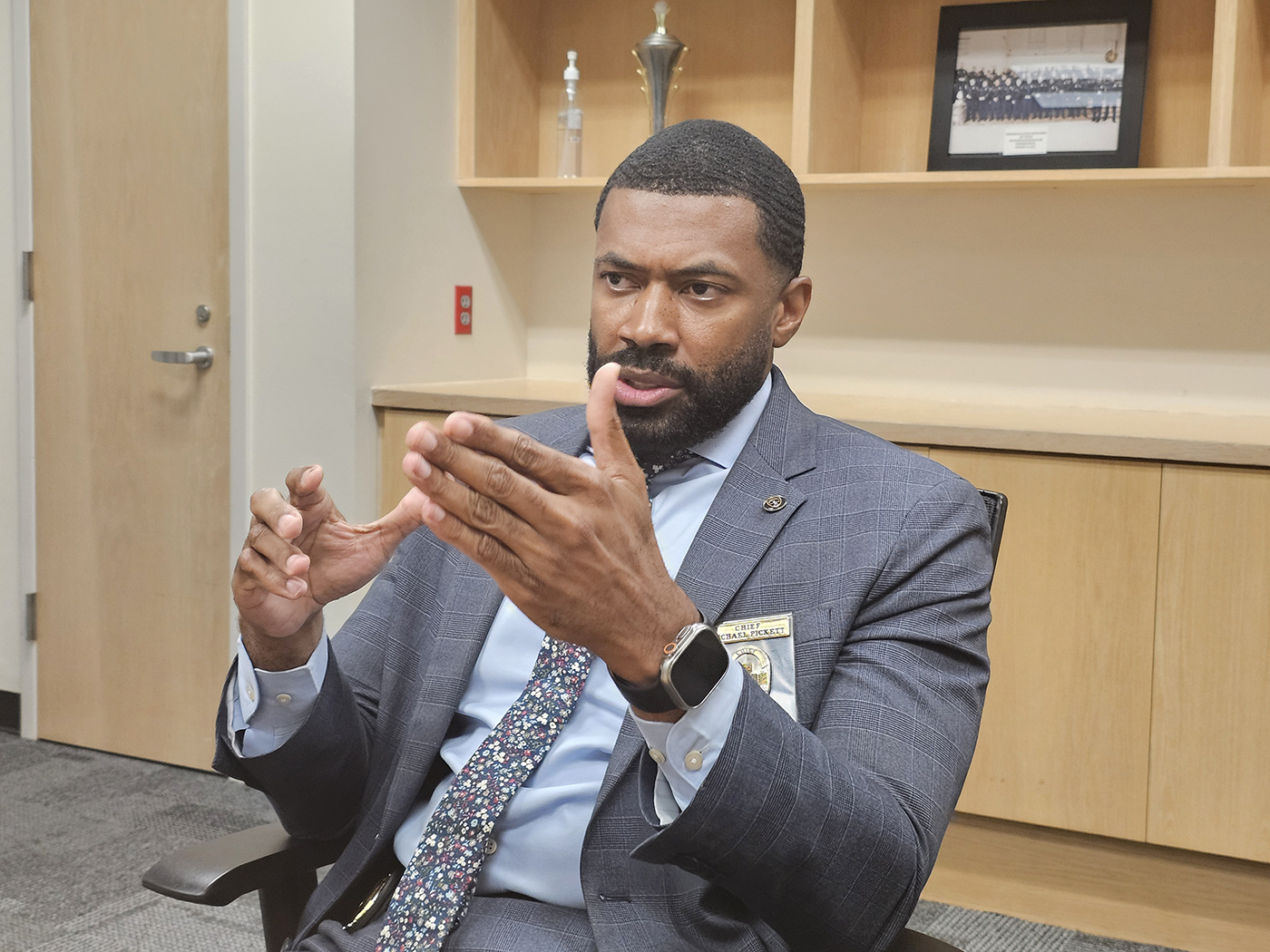
Birmingham Police Department (BPD) Chief Michael Pickett is not satisfied. He’s just entered a conference room at the department’s First Avenue North headquarters with some good news. There’s been a 56 percent reduction in homicides in the first six months of 2025, compared with where homicides were this time last year in the city. But this is no time for complacency, he said.
“Complacency is the most dangerous thing in law enforcement,” Pickett told The Birmingham Times during an hour-long interview. “I worked on the [Crime Reduction Team (CRT)], which was essentially an investigative SWAT team, and one of the things we say in the law enforcement world is ‘complacency kills’ the moment that you let your guard down.”
Last week, Pickett and Birmingham Mayor Randall Woodfin told the City Council homicides have decreased 52 percent for the first half of 2025 and now, in less than a week, that number has already reached 56 percent, Pickett told The Times, marking a major milestone in the city’s violent crime reduction efforts.
As of July 6, Birmingham had 37 homicides. This time last year, the city had 84 homicides. The homicide decrease comes after Birmingham ended 2024 with 151 homicides, the highest number of killings in the city in more than nine decades.
And Pickett had more good news: For the first six months of 2025, the clearance rate — the number of reported crimes that have been resolved, typically through an arrest and/or other means — is at an all-time high. For homicides this year, eight out of 10 have resulted in an arrest.
“That sends a clear message that shooters and killers cannot walk our streets freely and think they can get away with it,” Woodfin told the Council last week.
Even those numbers have Pickett looking for improvement.
“I’m ambitious,” he said. “We’re at 81 percent, but I truly want to see a 90 percent clearance rate here in Birmingham in 2025. … That’s a lofty goal for a city of our size and demographic as it relates to just the diversity, the different communities, and the economic levels we have. Most cities of our size and makeup don’t see a 90 percent clearance rate as related to homicides. But I’m confident that we can do it through the work of our detectives.”
He continued: “We’ve had 37 homicides this year so far. We’ve solved 30 of them, and we have seven more to go. … I would love to see a 100 percent clearance rate. I would love for us to, as a community, show criminals ‘You cannot commit murder in Birmingham.’ There only seven [unresolved cases] left and, with the community’s help, we’re gonna solve those next seven or get really close to it.”
Community Help
Pickett credits Birmingham residents for helping to reduce homicides. More tips are coming in, he said.
“Ninety-five percent of the time, somebody knows something because either somebody saw something or that individual may have shared something with someone. … Somebody knows something,” Pickett said.
Birminghamians are also sensing that homicides are declining, and they want to help make their communities safer, he said.
“The community starts to feel that shift, they start to call in more, they want to report more,” Pickett said. “They’re willing to open up to officers more on scene. … They see Birmingham police officers are putting in this work, moving about with a little extra spunk, as well. … It’s exciting to feel and see.”
And that goes beyond residents.
“I’m talking about business owners, the Birmingham community as a whole,” said Pickett. “I’ve had pastors reach out to me with information. I’ve had community foundations and all these different folks reaching out because, in my opinion, I feel like they are seeing that [the police] are doing everything they can to make Birmingham safe.”
“Right People In The Right Place”
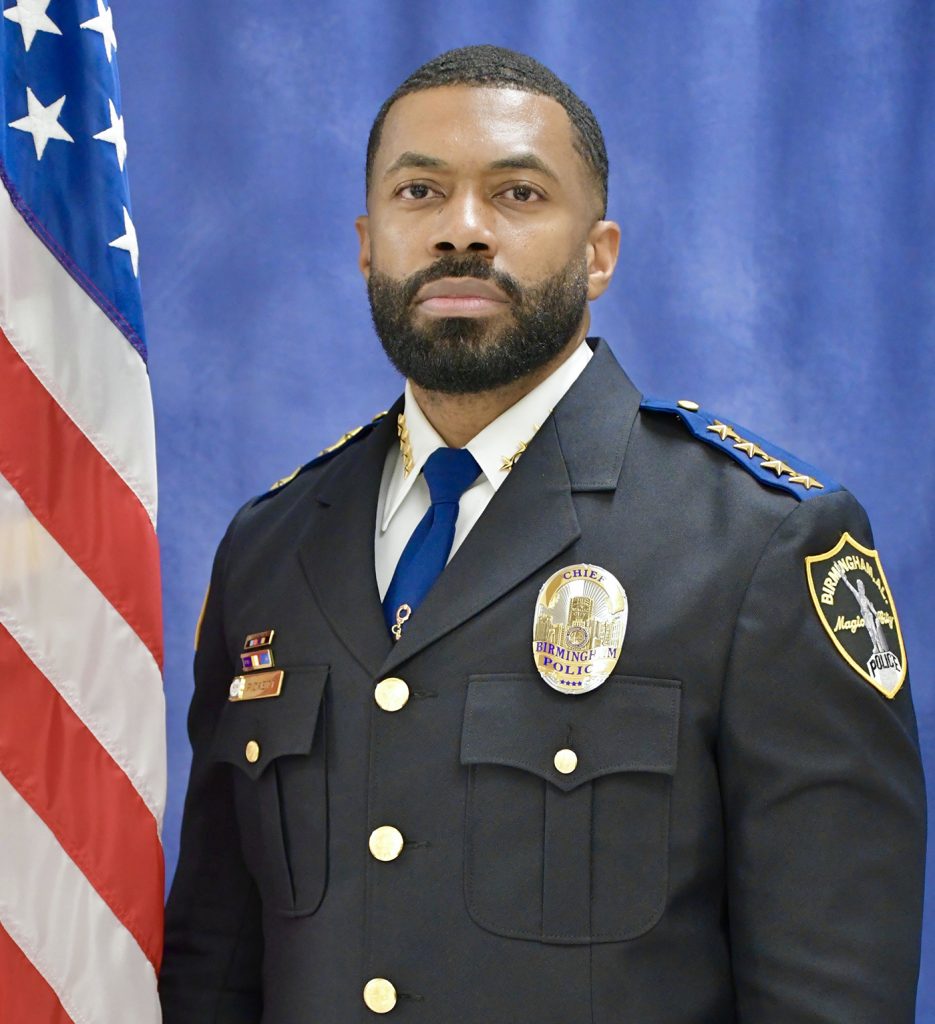
A Birmingham native, Pickett, 41, is a graduate of Ramsay High School and Miles College. As a lifelong city resident, he was “pissed” last year as the city set a record for homicides, he said.
“It was difficult. It was frustrating. I really and truly felt for the families that had to experience the loss. … I could only imagine what those family members had to go through. But from a law enforcement perspective, to be honest with you, I got downright pissed off at what was going on in my city … when I heard about or saw the things that were going on.”
Pickett can still recite from memory some of the more jarring homicide numbers from last year.
“In June 2024, 17 people were killed. In July 2024, 18 people were killed. And the deadliest month was September 2024, when 19 people were killed. Those stood out to me,” he said. “The deadliest day I can recall from last year is July 13, 2024, which is coming up next week. Seven people were killed in one day. I can quote this stuff off the top of my head. … That’s how important this stuff was and is to me.”
The 21-year BPD veteran had served as interim police chief since the Nov. 29, 2024, retirement of Chief Scott Thurmond. Pickett was named permanent chief on March 31, 2025. BPD, the largest in the state, is comprised of 912 sworn officers and 325 professional staff, according to the city.
“You need to have a vision of exactly what the goal is, how we’re going to get there, what the strategy is going to be. … You have to show people what is attainable. You set a solid goal and then give [officers] a template, a road map for how to get there,” he said.
“You have to have the right people in the right place,” he continued. “Make sure these folks have the tools they need, know what the plan is, and have the backing and support from leadership to be able to feel confident that they can get it done. I’m constantly showing [our officers] the results, pushing them forward, giving them encouragement — and then they want to do more, they want to see more.”
Even before becoming interim or permanent chief, Pickett created a Special Enforcement Team (SET). This group, established in the summer of 2024, is made up of officers selected from throughout the department who don’t respond to calls but instead patrol crime hot spots, targeting the most dangerous criminals based on intelligence from multiple sources, including BPD Intel, precinct commander reports, and ShotSpotter data.
Pickett made SET permanent in December 2024, when he became the interim chief.
“SET is a specially selected team of highly motivated individuals with a strong work ethic, with the ability to be extremely proactive but safe at the same time,” he said. “They have good sergeants, good leadership, and the mission is to identify the worst of the worst in the community and to patrol the problem areas in the community. [These officers] are layered into the BPD’s Special Enforcement Division, which houses our CRT — [individuals that are attached to federal partners: the U.S. Marshal Service, FBI, and other agencies.]
Some other aspects of playbook are beginning to take hold, said the chief.
“Surgical Approach”
“Where are your worst areas? Where are your most shootings? What time are they occurring?’ We look at all of this data and say, ‘We are constantly having an issue right over here, you know, in the 300 block of Fifth Avenue,’ for example. During what time? So, let’s focus on that area,” Pickett explained. “You can also identify names that keep coming up in shootings, altercations, and things of that nature. We might need to take a look at these individuals and see what they have going on, who they are feuding with? We’ll pull all those reports and … then we begin to give attention where needed.”
The department wants to have a “surgical approach to fighting crime because we don’t want the community to feel police. We want the community to feel safe. We want the criminals to feel the police,” said Pickett.
“You definitely don’t want to target an entire community,” he added. “You want to focus your attention and efforts exactly where they need to be. That’s where you get the most bang for your buck — by putting people in the right place at the right time with the right folks on their radar. It just can’t be police. It has to be the community.”
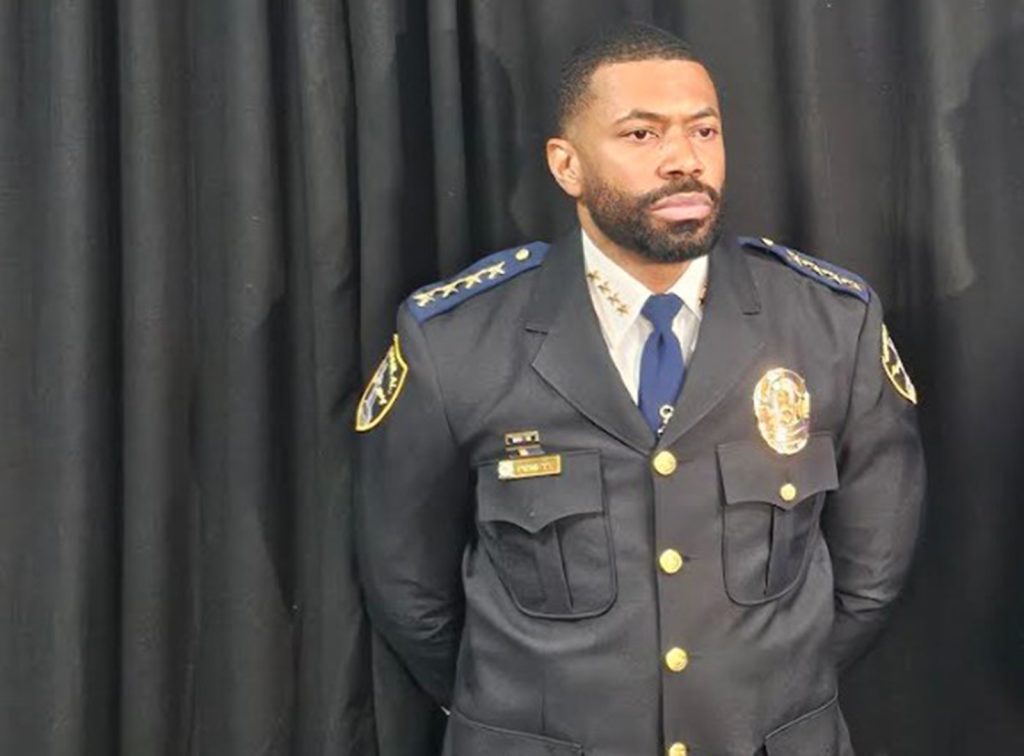
Pickett also pointed to the “utility captains” who are in place.
“We want to have more leadership during the evening and busiest hours —that’s on the weekends after 5 p.m.,” he said. “Traditionally, the police department has the least amount of leadership during the evening and nighttime hours on the weekends. So, I’m transitioning this thing to where we have leadership during the busiest times, when officers need that guidance, when there’s a lot more going on. … They need to be where the problem is. If we have an area, a certain precinct, where there’s an issue that’s developing, we want to put that captain there during that time … you’re flexible. You can go wherever the issue is at whatever time that shift is going on.”
Birmingham Born and Raised
There’s another aspect of the job that Pickett said will always be important for him.
“I tell folks I would not be an effective police chief in China, in India, in some of these other countries because I don’t understand all of the culture, the community, the people,” he said. “But I do understand Birmingham. That definitely helps with how you deal with people. You understand what makes people uncomfortable. You understand what their concerns are as it relates to dealing with police. Growing up in the city, I know how it feels to have a police car pull up in certain communities. I know how it feels to have to talk to a detective or be seen talking to a police officer in your community.
“I understand the snitch culture, understand how to better meet people where they are so you can get the information you need [without] compromising their safety or compromising their relationships with other people in the community. There’s a time and a place to talk to folks when something is sensitive in nature. Being from a community helps you understand those nuances a whole lot better, and when people are comfortable, they’re more willing to open up.”
And that’s just not him, the chief said — that’s the entire department.
“We’re talking a 56 percent reduction in homicides, and just past the halfway point of the year our clearance rate is up to 81 percent. So, right now, we are winning in law enforcement,” he said. “When you’re winning, you get momentum, and I believe our officers are feeling it. They are enthusiastic about coming to work. They’re enthusiastic about getting out of that car, engaging individuals. … They have that energy, they feel empowered, and I think we’re seeing those results.”