By Michael Sznajderman | For The Birmingham Times
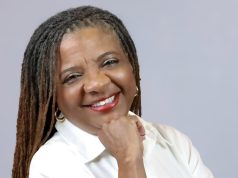
From frustration emerged the latest creative project from T. Marie King, an Emmy and NAACP Image Award-nominated film producer, director of Youth Pathways and Experiences at Jones Valley Teaching Farm.
King, a sought-after facilitator in the social justice space, worked behind the scenes to try to reconcile members of Birmingham’s Black and Jewish communities following a 2018 incident related to an award by the Birmingham Civil Rights Institute to activist and Magic City native Angela Davis. The episode opened a rift between two communities that often worked together on human rights issues. Ultimately, King said she was disappointed in how the conversations between the two groups progressed.
The creative said she’s often observed the challenge of getting people with differing views to truly open up with each other and find understanding. It was especially difficult, she said, following the 2020 murder of George Floyd, after a white officer, pinned his knee on or close to the 46-year-old Black man’s neck for about nine and a half minutes.
“The long answer is, I’ve been facilitating difficult conversations for about 10 years now and I’ve watched how people get stuck … almost paralyzingly. I know it’s human nature to center ourselves, and often we don’t take the time to center others and see others’ perspectives.”
Her frustration led her to step back from facilitating and explore ways for “people to engage in a more internal conversation – through artistic expression.”
Late last year, while working on a project that involved pulling historic quotes by Dr. Martin Luther King Jr., she began to consider: what would it have been like if the famed civil rights leader – who came to Birmingham in 1963 to help break the back of segregation – had sat down with the city’s most prominent rabbi at that time, Milton Grafman, and the two embarked in a truly honest and heartfelt dialogue?
How Long Not Long
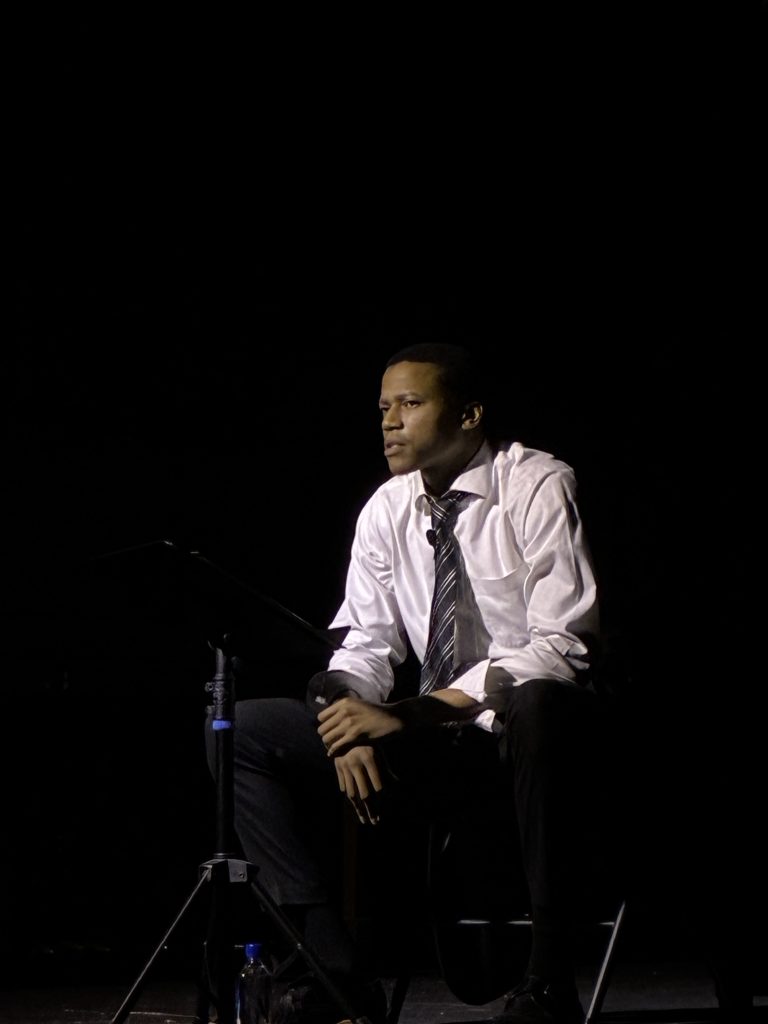
As a result, comes a new, one-act play – How Long Not Long – in which T. Marie King imagines that conversation between Dr. King and Rabbi Grafman. In early June the work received its first staged reading in front of a sold-out house at Woodlawn Theatre.
Grafman, leader of Temple Emanu-El, Birmingham’s largest Jewish congregation, was among the group of faith leaders who, in spring 1963, signed an open letter to King, expressing opposition to the street protests led by Dr. King, the Rev. Fred Shuttlesworth and other civil rights leaders who were intent on dismantling the city’s Jim Crow laws. King, who had been arrested, read the faith leaders’ letter behind bars and responded with what would become known as his “Letter from Birmingham Jail” – arguably one of the most powerful pieces of human rights rhetoric of the 20th century.
King’s letter was a devastating rebuke to Grafman and the other faith leaders who believed the protests were counterproductive to bringing about positive change. After King’s letter became public, Grafman began receiving hate mail from pro-integration progressives from across the country, including Jews. The irony was, Grafman was a progressive who for years had been quietly working behind the scenes in Birmingham for civil rights.
Indeed, Grafman and those same ministers had previously published an open letter to newly installed Gov. George Wallace, criticizing Wallace’s infamous “segregation now, segregation tomorrow, segregation forever” inaugural speech. That letter was published before Dr. King came to Birmingham.
After the horrific murder of four little girls in the bombing of Sixteenth Street Baptist Church in September 1963, Grafman became more vocal in the human rights space. In a famous sermon on the Jewish New Year, just days after the bombing, Grafman rebuked his own congregation for failing to do more to support equality during those turbulent times. But long after Dr. King’s assassination in 1968, Grafman was still trying to explain the position he took during the 1963 protests. Grafman died in 1995.
“I wondered to myself what a conversation could have been like between the two, if they had ever sat down and shared their perspectives with one another?” T. Marie King said.
Out of those musings T. Marie King created “How Long Not Long.” For the conversation, she borrowed language directly from the writings of both Dr. King and Rabbi Grafman, adding authenticity to their exchange. She and director Shronda Major also added to the two-man performance recorded music – both contemporary and from the early 1960s – to enhance the audience experience.
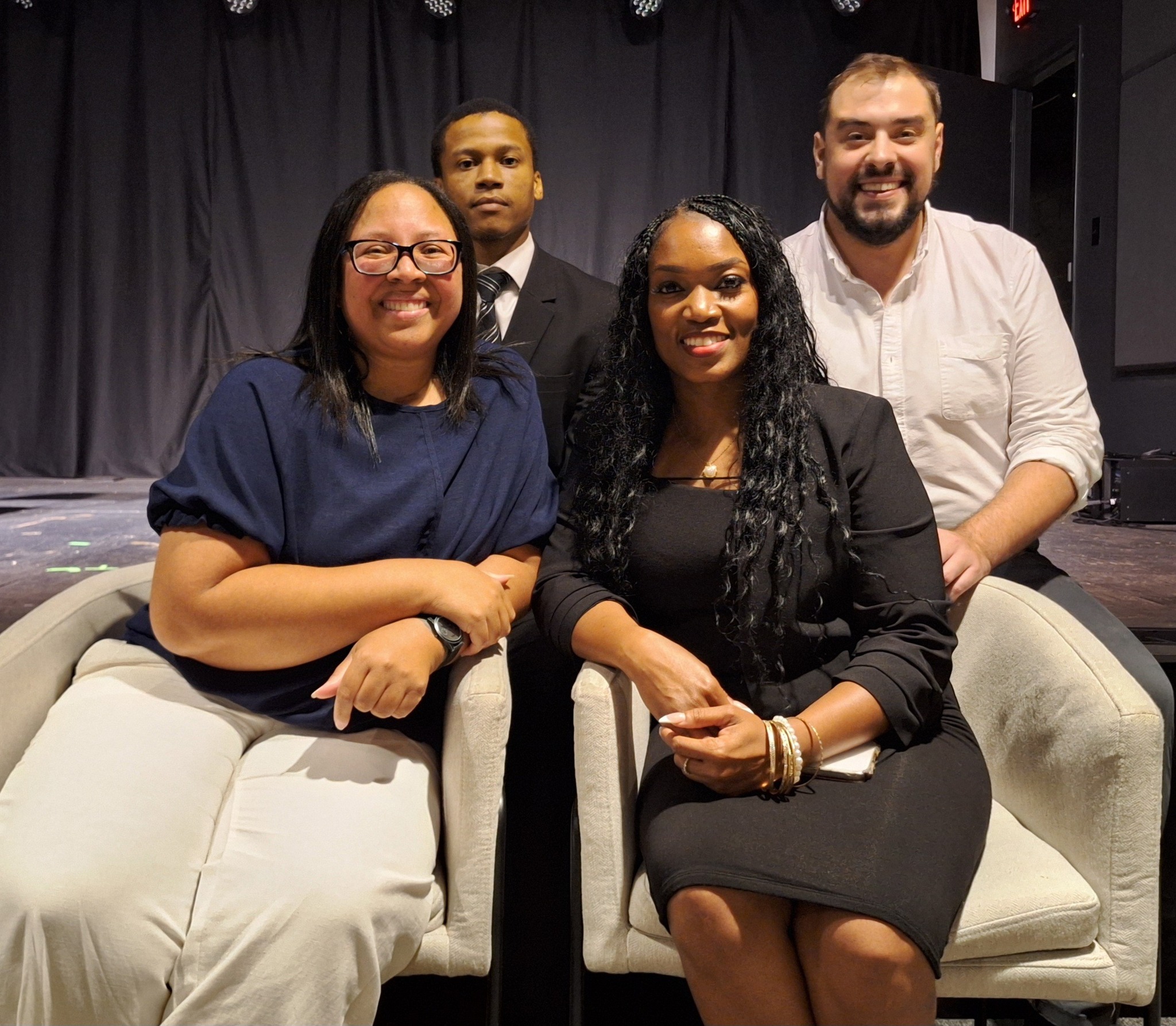
The reading of the play was followed by a panel discussion featuring prominent members of Birmingham’s Black and Jewish communities plus the two actors who played Grafman and King: well-known Birmingham singer and performer Caleb Clark, and Tuskegee native and Alabama State University graduate Muhammed Ali. Their performances and the subsequent discussion sparked a standing ovation and calls for further conversations between the two communities – both of which have faced oppression and bigotry over centuries.
“Perspectives, Baggage and Experiences”
“What I’ve learned in my years of racial and social justice work is … we all come into community with our own perspectives, baggage and experiences,” T. Marie King wrote in a note to those attending the staged reading. “These things shape how we engage with one another. Sometimes we show up loving and helpful, sometimes apprehensive and judgmental. And sometimes, self-preservation takes the front seat. But at the core of all of those responses is a shared human desire, to be seen, valued, and cared for.
“We often look back at our fathers and mothers and see their missteps, failing to understand the complexity of their times. Even worse, we assess their choices through the lens of our current experience, forgetting the pressures, fears, and unknowns they faced.
“How Long Not Long grew from my curiosity – what might have been said if Rabbi Grafman and Dr. Martin Luther King Jr. sat across from each other in 1963 and had the kind of honest, vulnerable exchange that history never gave them space for.”
The passionately positive response to the night’s performance and conversation was gratifying to T. Marie King, a Birmingham native and producer of the Emmy-nominated 2022 documentary, “Shuttlesworth.”
“I can’t really put it into words,” she said. “I was overwhelmed… people actually showed up and seemed to be very engaged.”
She said several individuals have suggested she take the play on the road, to houses of worship and area schools and colleges.
“I don’t know where it goes from here… I was so focused on making sure everything went right – that people hit their cues … It was like, let’s see if this is something.
“It’s one thing to put words on a page and another thing to see whether it resonates.”
She said resources would have to be secured to fully produce the play and take it on tour.
She said she hoped the play helps people understand that “we often are not seeing each other’s perspectives. And even if you understand someone else’s perspective, it doesn’t necessarily bring you to a resolution. Like the Rabbi and Dr. King.
That lack of resolution is clear in the final words of the play, when Dr. King says to Grafman: “Stand with me my brother.” And Grafman responds, “I believe I am.”
“People love fairy tale endings,” T. Marie King said. “But in their case, they didn’t resolve anything.
“My hope is that people will read this play and start to see things from a different perspective, and be willing to further the conversation,” she added. “Not necessarily to resolve things but be willing to be open.
“For me, the whole project is about empathy, and perspective, and listening. That’s what I hope people walked away with.”