Times staff report
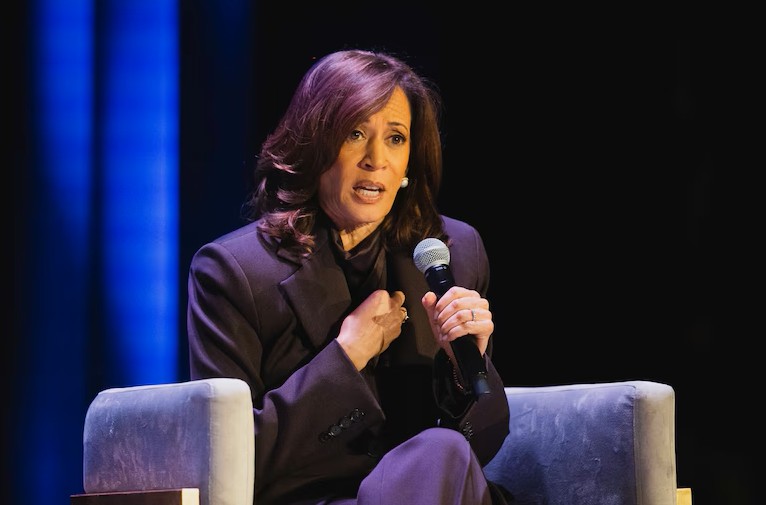
Kamala Harris met a welcoming crowd inside the Alabama Theatre on Friday during the Birmingham stop of her book tour for her new memoir, “107 Days,” a tell-all about her 2024 presidential campaign.
The former Vice President and Democratic 2024 nominee was met with applause and cheers as she took the stage to discuss her historically short campaign, the emotional toll of her defeat and her hopes for the country’s future.
Harris is on a tour of 18 U.S. cities to promote her book in which she provides readers with an inside look at the race for the presidency. The book, co-written by Geraldine Brooks, chronicles her time running for president before she was defeated by President Donald Trump.
Following President Joe Biden’s withdrawal from the race in July 2024, Harris became the Democratic Party’s nominee.
“There was an incredible optimism and a feeling about the potential of our country. And dare I say joy,” she said. “We didn’t really have enough time for enough people to know that’s part of what I stand for.”
Referring often to “the individual” the White House Harris said she grieved after her unsuccessful run for president because I knew what was going to happen,” Harris said.
“We cannot allow that individual in the White House or the people around him or this circumstance in any way dampen our sense of what is possible,” she said.
On stage Friday, Harris reflected on both the highlights and challenges of her presidential campaign, telling the audience that a third of the country voted for the Trump administration, a third supported her campaign, and the remaining portion didn’t vote at all.
Onstage, Harris described a “reversal” of the Civil Rights Movement. She lamented that the Supreme Court could eliminate Section 2 of the Voting Rights Act, which protects political district boundaries drawn to ensure minority communities can elect candidates of their choice.
Without that law, nonwhite representation –- especially Black representation in the South –- could diminish considerably, from Congress to local school boards and municipal councils.
“We’ve got work to do,” she said repeatedly. “Keep fighting.”