By Javacia Harris Bowser | For the Birmingham Times
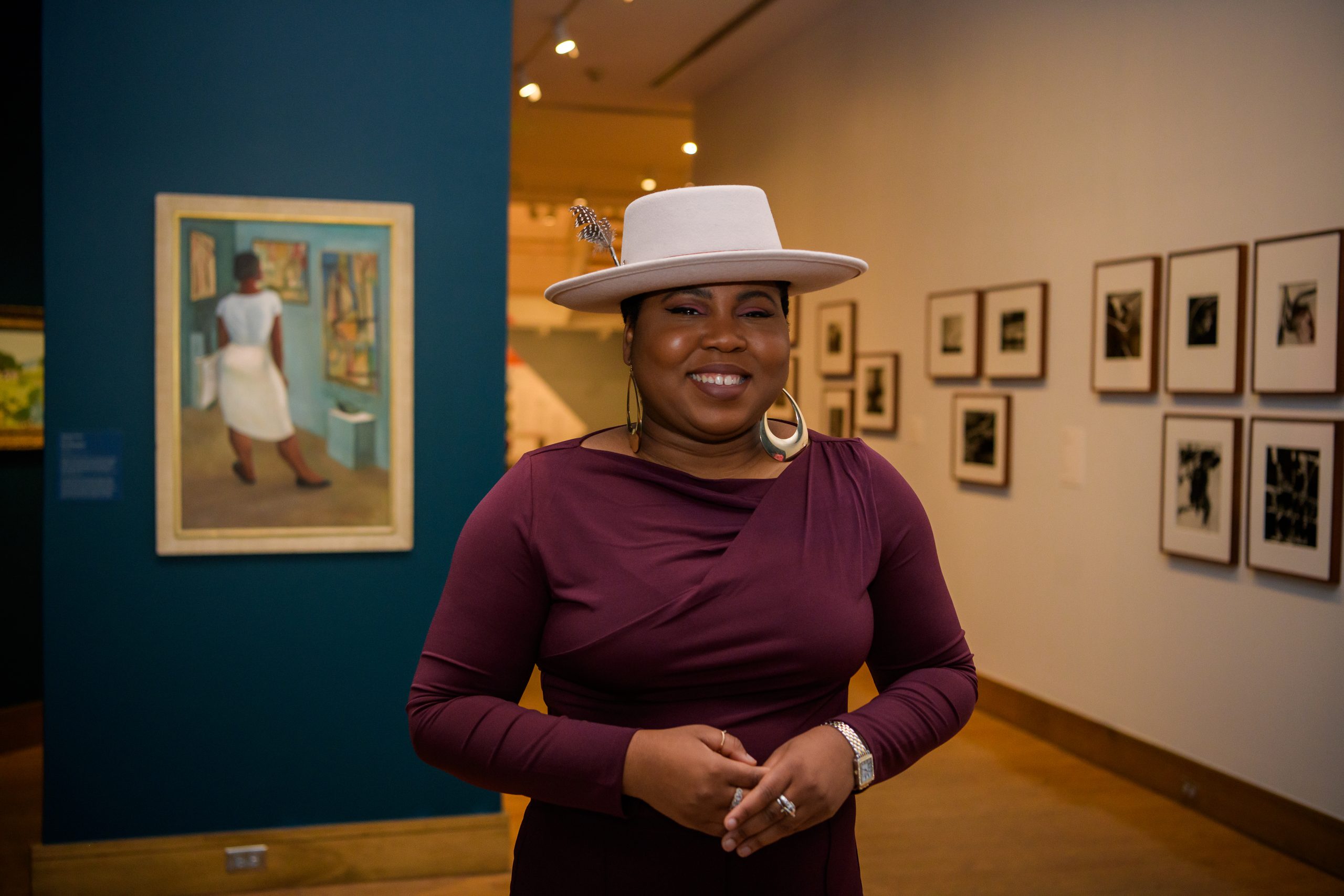
At the end of the year, Ashley M. Jones’ time as Alabama’s youngest and first Black poet laureate will come to a close. Over the past four years, Jones has boldly stepped into her role as the state’s ambassador for poetry and helped put both poetry and Alabama in the national spotlight.
One of the most notable moments of her tenure, which began Jan. 1, 2022, was a live interview on ABC’s “Good Morning America.”
“I will never get over that,” she told The Birmingham Times. “I truly thought they were kidding when they emailed me.”
Jones, now 35, was featured in a Secret deodorant commercial in which she discussed the importance of women speaking out and emphasized that Black women deserved to be loved. She was also featured on Alabama Public Television (APT), the state’s Public Broadcasting Service (PBS) affiliate.
“To make it on PBS, I’m good for the rest of my life,” Jones said.
Poetry for the People
Jones’ focus, however, has always been on bringing poetry to the people. During her time as poet laureate, she’s led workshops across the state and beyond.
“They’re not always writing groups,” she said. “I’ve spoken to seminary students, businesspeople, children, older people, all kinds of people. And I bring the same energy to every group.”
Jones also established the Alabama Poetry Delegation (APD), a leadership and service project that empowered five Alabama-based poets to create events and programming for its multi-county regions.
“It’s amazing just to understand that poetry can do so much in people’s lives,” Jones said. “It’s not just on the page.”
Poetry on the Page
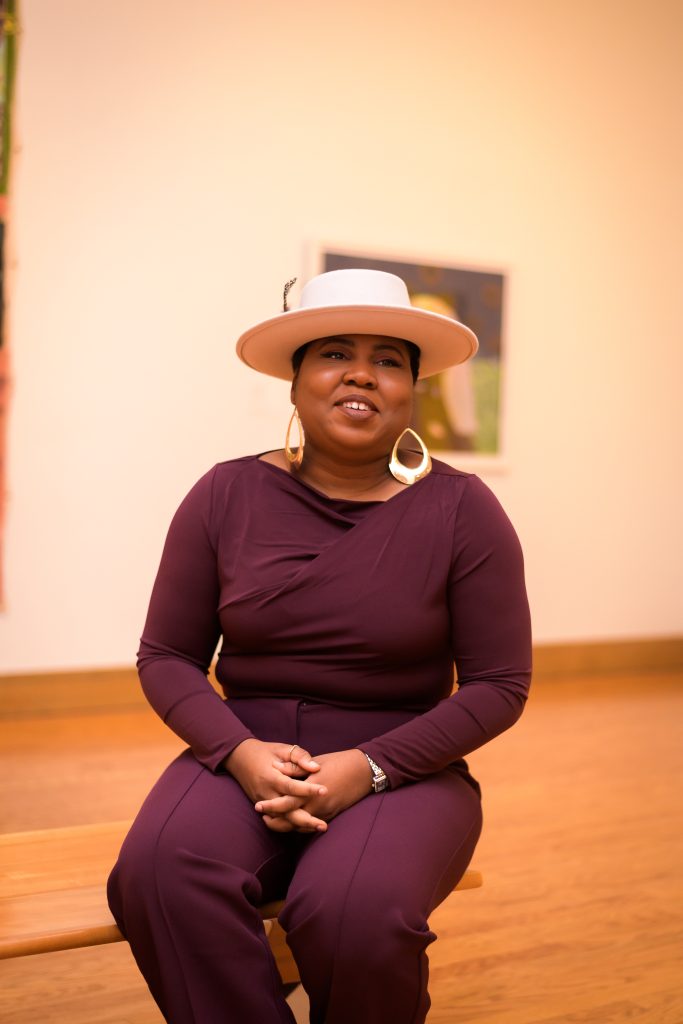
Despite being busy as poet laureate, Jones has composed and performed original work at major events, such as 2022 Birmingham World Games. Also during her tenure, she published two poetry collections—“Reparations Now!” and most recently “Lullaby for the Grieving,” which explores the grief of losing her father and the political grief of being a Black woman in the South.
And she’s juggled all of this while being both a teacher and a student. Formerly a creative writing instructor at the Alabama School of Fine Arts, Jones is currently the Associate Director of the University Honors Program at the University of Alabama at Birmingham (UAB) and a Ph.D. student in English at Old Dominion University in Norfolk, Virginia.
Now, as the end of her tenure approaches, Jones is looking forward to Alabama’s incoming poet laureate, Jacqueline Allen Trimble of Montgomery, who will take the title in January 2026.
“I really feel like she is the poet we need for this moment,” Jones said of Trimble. “She is unapologetic. She is straight up—full honesty, full compassion, the smartest person ever—and she’s been such an example to me for as long as I’ve known her.”
Jones in Her Own Words
In her final days as Alabama’s poet laureate, Jones sat down with The Birmingham Times to reflect on the past four years and to discuss what’s next for this poet of the people.
The Birmingham Times (BT): As you look back over the past four years, what makes you most proud?
Ashley M. Jones (AMJ): I have remained myself the entire time. When I learned that I was the first person of color and the youngest person, I felt very nervous that I was going to let people down and that just being weird little old me was not going to be enough for people.
Being a first is an insane experience that I never thought I would have, and I’m obviously proud to have broken the barrier, but I wish somebody else had done it 50 years ago.
I was very anxious that maybe I wouldn’t measure up to the expectations people had of me, but I remembered that people chose me because I was me. There was not this other version of me that people thought I was.
Also, having so much attention on you is a very strange experience. I could see how somebody could change or lose sight of the reason for it all. Having a national profile, which I’m grateful for, it could be easy for me to turn my back on my actual home, but it’s been really exciting for me to keep Alabama squarely in my view. No matter where I am, I’m always going to remember this place and bring us wherever I’m going.
 BT: What picture of Alabama do you hope to paint with your poems?
AMJ: Hopefully a real one. I don’t think we have to play pretend about what is happening or what has happened. So, I hope that with my poems I can show that Alabama is a beautiful place but not a blameless place. We can appreciate all of the good stuff that’s here—our families, the trees, the fruits, the grass, all of that. And we can understand that people who live here have done some crazy stuff to other people, and that’s the picture I’m always trying to paint. We are just like every other state in the United States. We are not different or worse somehow.
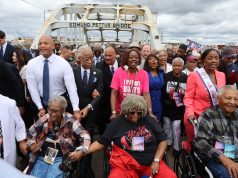
And there’s so much goodness in this state. We have such a great history of revolution. In [my latest] book, I write about John Lewis and Bryan Stevenson. We can’t condemn this state completely because that would mean we’re condemning them and what they stood for and stand for. [Born near Troy, Alabama, Lewis served in the U.S. House of Representatives for Georgia’s 5th congressional district from 1987 until his death in 2020. Stevenson is the founder of the Equal Justice Initiative (EJI), an organization based in Montgomery, Alabama, that provides representation to individuals who have been denied fair trials.]
I want people to know that not everybody in Alabama thinks the same. I hope people can see this place for what it actually is, instead of what they need it to be to feel better about themselves.
BT: What advice would you give to artists and arts organizations facing funding cuts?
AMJ: This is a time when we have to lean on each other, and I don’t just mean financially. We all have to be willing to be advocates right now. There are still resources out there. They may not be the ones we’re used to getting, but we do have to put ourselves out there a little bit and see what there is. … We also have to talk to each other and see how we can pool those resources. My biggest advice, honestly, for people who are scrambling, is to find community.
BT: What’s next for you?
AMJ: I have another book coming out in April. This is my first prose book. It’s called “What the Mirror Said: The Necessity of Black Women in Poetry.” It combines personal essay with close reading. There’s something for the academic types and something for the non-academic types. I explore nine Black women poets who’ve influenced my life in person or on page or both.
I want to finish my degree, hopefully in the next five years. I want to keep teaching and writing. And I want to get married, have babies, and learn how to rest.
Follow the next chapter of Ashley M. Jones’ journey at ashleymjonespoetry.com or on Instagram at @cityofawoman.