
The Birmingham Times
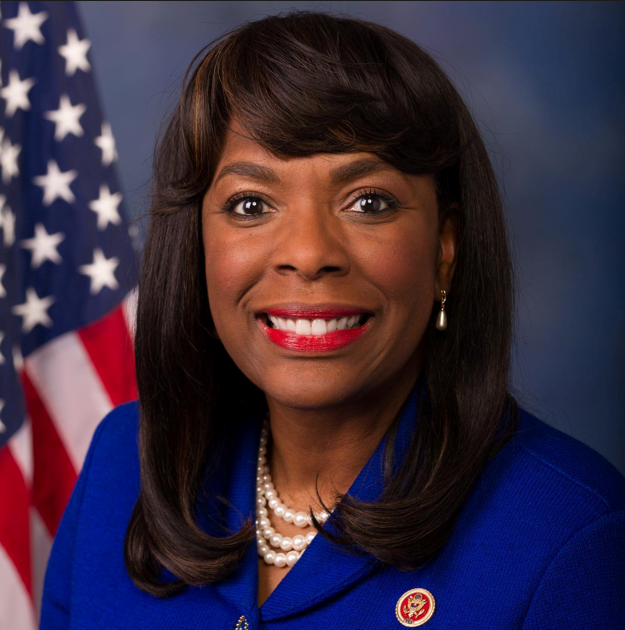
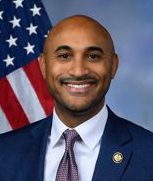
U.S. Reps. Terri A. Sewell (AL-07) and Shomari C. Figures (AL-02) on Monday sent a letter to University of Alabama President Dr. Peter Mohler calling on the University to restore two student-run publications that were recently suspended ostensibly for state and federal compliance. Sewell and Figures requested a meeting with university leadership to discuss their concerns.
The University this month announced to staff of student-run publications Alice Magazine and Nineteen Fifty-Six that the magazines would be suspended, effective immediately, in compliance with federal regulations.
In their decision, UA officials cited a memo released by U.S. Attorney General Pam Bondi this summer claiming that DEI initiatives can be considered discriminatory and may be in violation of federal anti-discrimination laws.
Sewell and Figures wrote in part, “The discontinuation of Nineteen Fifty-Six and [Alice] is not merely a procedural decision; it is a decision with profound implications for free speech, academic freedom, and the University’s stated commitment to fostering an inclusive campus environment. This decision undermines the significant progress made by the University over the last six decades towards fostering a welcoming and inclusive campus environment for all students.”
The lawmakers continued, “We are particularly alarmed by the suggestion that these publications functioned as a “proxy” for discrimination. They did not. They serve as vehicles for student storytelling, creativity, and scholarship, not for the advantage or disadvantage of any one group. Treating them as proxies for discrimination represents a dangerous slippery slope. If student expression can be deemed impermissible simply because it reflects the experiences of women, African American students, or other underrepresented groups, what comes next?”
Alice Magazine, which celebrated its 10th year this month, describes itself as “a fashion and wellness magazine,” on its website.
“Our mission is to help students learn how to feel comfortable in their journey of navigating college life during this transition from teen to adult years,” the site reads.
“It is so disheartening to know that so many of us have put so much hard work into these magazines that are now being censored,” Gabrielle Gunter, editor-in-chief of Alice Magazine, told student news outlet The Crimson White.
1956, which was established in 2020, describes itself as “a student-run magazine focused on Black culture, Black excellence, and Black student experiences at The University of Alabama.”
Read the full letter from Sewell and Figures here and below:
President Mohler:
As Members of Congress representing the State of Alabama and as proud supporters of the University of Alabama, we write to express our deep concern regarding The University’s decision to discontinue the student-run publications Nineteen Fifty-Six and [alice] because of compliance with the guidance in a July 29 memo from U.S. Attorney General Pam Bondi. Given the seriousness of this matter, we request a meeting at your earliest convenience to discuss the decision and the steps needed to restore Nineteen Fifty-Six and [alice] as student-run publications.
The discontinuation of Nineteen Fifty-Six and [alice] is not merely a procedural decision; it is a decision with profound implications for free speech, academic freedom, and the University’s stated commitment to fostering an inclusive campus environment. This decision undermines the significant progress made by the University over the last six decades towards fostering a welcoming and inclusive campus environment for all students. While we fully understand the fear and uncertainty caused by the unprecedented pressure and threats to public universities the Trump Administration is applying to institutions across the country—including threats to limit or cancel federal funds—we believe the University’s interpretation of the July 29th guidance sets a troubling precedent. It sends a message to students and faculty, regardless of intention, about where the University stands on protecting free speech for certain students and the lengths to which the University will go to appease the Trump Administration in their efforts to stifle diverse voices and differing opinions on college campuses.
We are particularly alarmed by the suggestion that these publications functioned as a “proxy” for discrimination. They did not. They serve as vehicles for student storytelling, creativity, and scholarship, not for the advantage or disadvantage of any one group. Treating them as proxies for discrimination represents a dangerous slippery slope. If student expression can be deemed impermissible simply because it reflects the experiences of women, African American students, or other underrepresented groups, what comes next? Will African American Studies, Women’s Studies, or other academic programs be subjected to similar scrutiny? How far is the University willing to go in the name of “compliance” with the Trump Administration’s agenda?
The University’s pledge to replace these two magazines with a single, consolidated publication intended to “reflect all students’ perspectives” is not an adequate solution. While we appreciate efforts to promote unity by combining distinct voices into a single publication, this action dilutes and diminishes the culture, contributions, and personal experiences of women and Black students, over half of your campus student population.
We believe deeply that universities play a vital role in preparing students to thrive wherever they choose to go upon graduation. Rather than fostering an environment where all students can share, understand, and learn from diverse perspectives, the University’s decision signals those perspectives are unwelcome, unworthy and somehow threaten and undermine the experience of other students.
We look forward to the opportunity to meet with you. We hope to better understand the University’s interpretation of the guidance and how those interpretations can be aligned with the fundamental principles of free expression, academic integrity, and student empowerment. We look forward to your prompt response and to working together to ensure that the University is a place where all students are valued, supported, and heard.