

By Matt Windsor | UAB News
Three faculty members in UAB’s J. Frank Barefield, Jr. Department of Criminal Justice have joined forces to give bright undergraduates the opportunity to get real-world experience while serving the surrounding community.
The Community Solutions Collaborative brings together UAB labs focused on digital forensics, law and data science “to serve the City of Birmingham,” said Jeffery T. Walker, Ph.D., University Professor and J. Frank Barefield, Jr. Endowed Chair in Communities and Crime in UAB’s J. Frank Barefield, Jr. Department of Criminal Justice.
“We really want to capitalize on our location to offer students a unique learning experience,” said Laura McLester, teaching assistant professor and Digital Forensics coordinator in the Criminal Justice department.
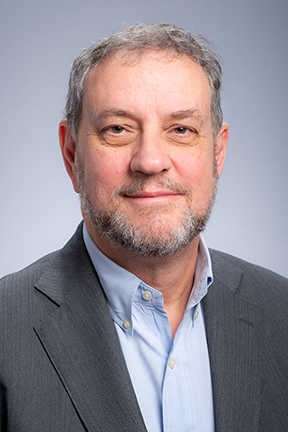
The Praxis Legal Lab is run by Brandon Blankenship, J.D., teaching assistant professor and Pre-Law director in the department.
“This is a service-learning lab where students are paired with community partners to support thriving in Birmingham,” Blankenship said. One example is helping a community group file a Freedom of Information Act request with a government department. “The student works with a lawyer to learn how to do that, so they are gaining a skill and getting real-world data for real-world partners,” Blankenship said.
Blankenship is currently working with a student in UAB’s Genetics and Genomic Sciences bachelor’s program who is writing an honors thesis “on the intersection of genetics and law,” he said. Another ongoing partnership involves students’ working with the Jefferson County District Attorney’s Office on cold-case investigations.
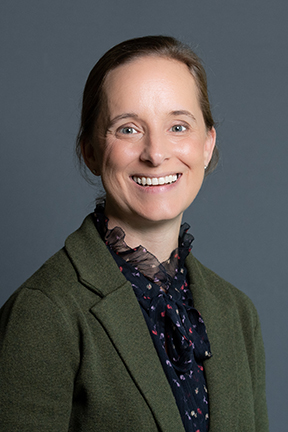
Walker’s Dragon Scales Integrated Data Lab brings together a range of disciplines, from data science to computational physics and geospatial analysis, to understand, predict and prevent problems.
“There is so much data in this world, and it operates in silos,” Walker said. But bringing all that data together creates massive datasets that can be problematic to interpret, especially for understaffed community groups.
Walker and his students are analyzing and summarizing survey responses from communities and combining them with external data sources to surface actionable information. They also are working with community partners such as Woodlawn United, which is implementing a number of initiatives through the national Purpose Built Communities program. “We are trying to build a model of what has worked there that we can use for the entire city,” Walker said.
McLester’s Dragon Eye Learning Lab focuses on training students in digital investigation skills. “It is a place where they can come to do hands-on practice, collaborate with each other and learn from each other,” she said.
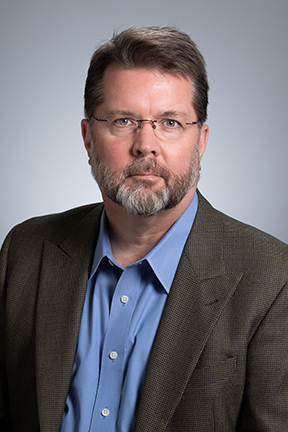
McLester has also built a partnership with Ed Farm, an initiative that works with teachers in K–12 schools to provide technologies and tech-focused curricula.
“We said, ‘What do you need? How can we partner with you?’” McLester said. That contact led to several of McLester’s digital forensics students’ going to speak to middle school classrooms in Birmingham City Schools about digital forensics careers and technologies. McLester would like to bring in teachers to the Dragon Eye Lab “and give them a workshop of skills they can teach in their classrooms,” she said.
The Community Solutions Collaborative is three different labs with different themes, “but it’s all in the same direction,” Walker said. “We are all working under the same community-driven philosophy while giving our students hands-on experience that matters to that community.”
Students in the labs are a mix of majors and schools, including undergraduates as well as graduate students, Walker said: “Anyone who is interested in getting experience and helping the city thrive, we are interested in them.”
Learn more about the Community Solutions Collaborative at sites.uab.edu/communitysolutions.