First of Three Parts
By Mia Watkins | For the Birmingham Times
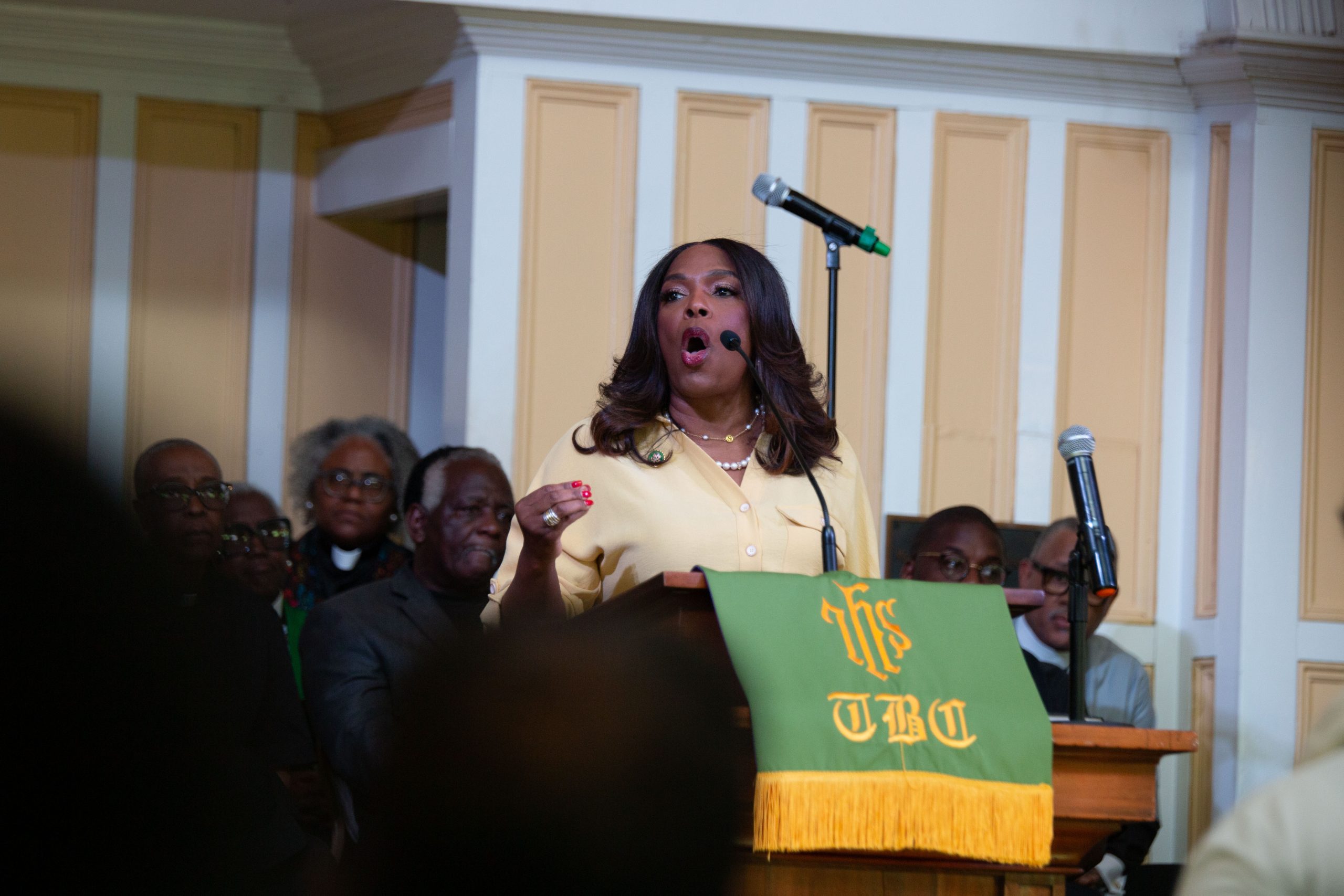
There was a time when U.S. Representative Terri Sewell didn’t think stepping into the political arena was for her, even though being of service to others was a top priority. Her trajectory changed after a conversation during a Bloody Sunday commemoration event in her hometown of Selma in 2008. Before he addressed the crowd, future President Barack Obama asked her a simple question.
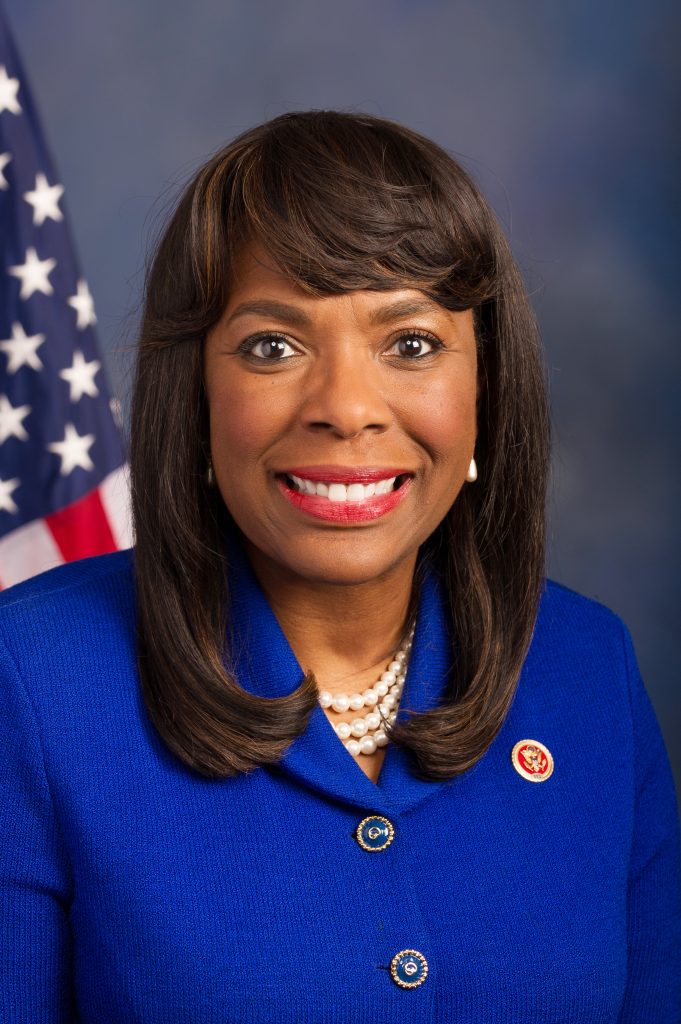
“Right before he spoke, we had lunch in my pastor’s office,” she told the Birmingham Times. “It was me, and it was Artur Davis (Sewell’s predecessor). Artur said something like, ‘You know, man, if you get to be president of the United States, I’m going to run for governor of the state of Alabama. So Barack looks at me and goes, ‘So, Sewell, what are you going to do?’”
She told them she would help them raise funds, but she wasn’t considering ever running for office. After listening to his speech, however, she realized that she could make the most impact by serving the people of her district.
“I knew in my heart that the people of Alabama’s 7th congressional district, if they got a chance to know me for me and learn my heart, they would see in me the reason why the older generation marched and fought and what they wanted their children to become,” she said.
A daughter of Selma
Sewell is a shining example of what’s possible for young people in her hometown and district.
She was raised by her father, Andrew A. Sewell, a high school basketball coach, and her mother, Nancy Gardner Sewell, a high school librarian and the first Black woman to serve on the Selma City Council. She said she always felt rooted in her community and in a family that valued education, faith and hard work.
“I grew up in a family that took public service very seriously,” she said. “My mom was one of eight children of a Baptist preacher and a sharecropper in Lowndes County. My dad was a third-generation [Selma native]. His mom was a seamstress and cleaned houses. They were the first in their families to go off to college.”
Growing up, she was a Girl Scout Brownie and was a member of the debate team, all activities that enriched her and informed her ultimate purpose as a public servant. She was also active in her mother’s campaign as a middle school student, which gave her a preview of a life in politics as a first, long before she became the first Black woman elected to Congress from Alabama.
“I was her first campaign manager when she ran for city council,” Sewell recalled. “I came up with the flyers, and I helped distribute the flyers. My mom was an amazing role model. I never ever thought that women shouldn’t be or couldn’t be elected officials. I understood the importance and the role of women in civil rights and voting rights.”
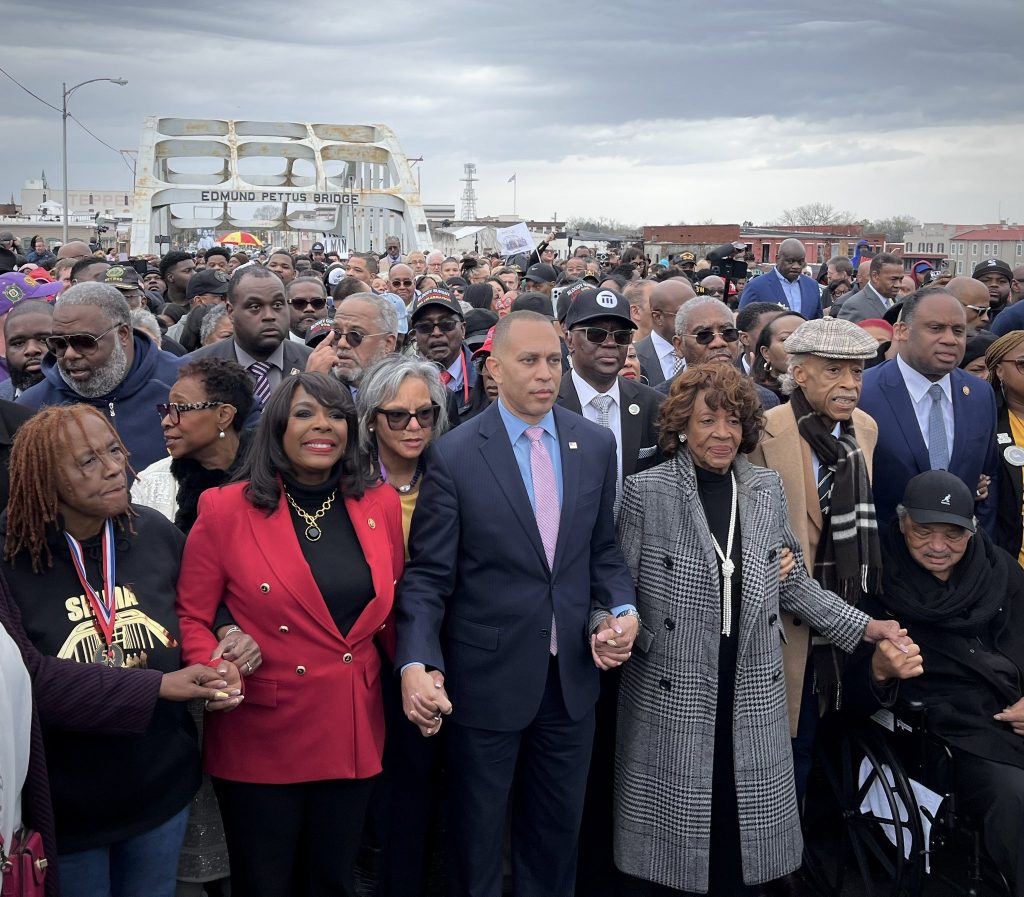
Her exposure to fighting for civil rights began early in a town known as ground zero for Bloody Sunday, a 1965 march from Selma to Montgomery where civil rights protestors such as John Lewis and Hosea Williams were violently attacked by law enforcement at the Edmund Pettus Bridge, spurring increased support for legislation such as the Voting Rights Act.
“Year after year, they would come back to reenact Bloody Sunday and march across that bridge one more time,” she said of the legacy. “I grew up with a healthy sense of the purpose of Selma, the importance of Selma to the movement. At the same time, that bridge was a portal to get home and see my mama when I was off traveling and in school.”
‘An Ambassador of My Hometown’
She would go on to call John Lewis a mentor and a colleague, and it all started in Selma.
“I don’t know if you believe in divine intervention, but I absolutely do,” she said. “I think that God’s hand works in so many different ways. I was very connected to my hometown, always, and am an ambassador of my hometown.”
Sewell said she didn’t realize what she didn’t have growing up until leaving her community.
“I came from a family that I didn’t realize until I went to Princeton was po’—as in you couldn’t afford the ‘o’ or the ‘r’— compared to my fellow students,” she said. “I didn’t realize that I was rich in other things, not money. The household was a household that believed in going to church every Sunday and being involved. I just felt very blessed to have grown up in a community where, yes, my parents were educators, so they instilled in me the importance of giving back, the importance of working hard. All the things they instilled in me were reinforced by a whole community of people in Selma.”
Sewell said she always led with her Selma roots, even after she went from being the first Black valedictorian at Selma High School to Princeton University—a transition that proved difficult. During those times, she clung to the words of her community to help her adjust.
“It was the voice of the folks who helped nurture me, my social studies teacher telling me that I was her best writer, or Ms. Johnson telling me that I was the best reader; those were the voices in my head,” she said. “I never ever thought that I was stupid if I didn’t know something. I always thought that they just didn’t teach it to me; if you taught it to me, I’d get it, and I’d get it better than you. That’s what they told me, and I believed them. Don’t ever underestimate the power of nurturing and the power of people’s voices.”
Meeting her future
While at Princeton, Sewell also found another cheerleader in her assigned big sister, Michelle Robinson, also known as former First Lady Michelle Obama.
Years later, Michelle Obama would later come down to check on Sewell in the aftermath of the April 27, 2011, tornadoes as her husband toured the wreckage.
“I’ve been able to leverage my life experiences and people that I’ve met along the way through education,” she said. “My roommate at Oxford was Lisa Cook, the first Black woman governor of the Federal Reserve. Who was sitting behind her when she was up for confirmation on the Senate side? Me, because that’s my girl. The same is true with Susan Rice, former U.S. ambassador to the United Nations.”
Sewell interned for former Sen. Richard Shelby as an undergrad. At the time, he was serving as a Democrat before switching to the Republican party and becoming the longest-serving senator from Alabama. The experience would unintentionally serve as a glimmer into her future.
“I never forgot my last day interning with Shelby,” she said. “He would take all the interns out to what I now know as the member dining room. That last day, I remember thinking to myself that I was very appreciative for the experience, but I think I could do that and I could do it better.”
Sewell would also go on to study abroad as a Marshall Scholar at St. Hilda’s College, Oxford University. She then earned her law degree from another Ivy League institution, this time Harvard University. Her law school classmate was future president, Barack Obama.
“People always talk about education being the great equalizer; well, my life is a living testament of that,” she said. “How else but through education could a little Black girl from Selma go to Princeton, Oxford and Harvard Law School?”
Throughout it all, she said she learned the greatest lesson, one of common humanity.
“People are people,” she said. “It made me realize that we all have more in common than that divides us, be it by race or nationality. That exposure to different cultures and different people from all over the world…I learned more at Oxford over a pint of beer at a local pub than I did in a classroom. Those beers were with such an eclectic group of friends from Singapore, from India, and I had an opportunity to see another way of life.”
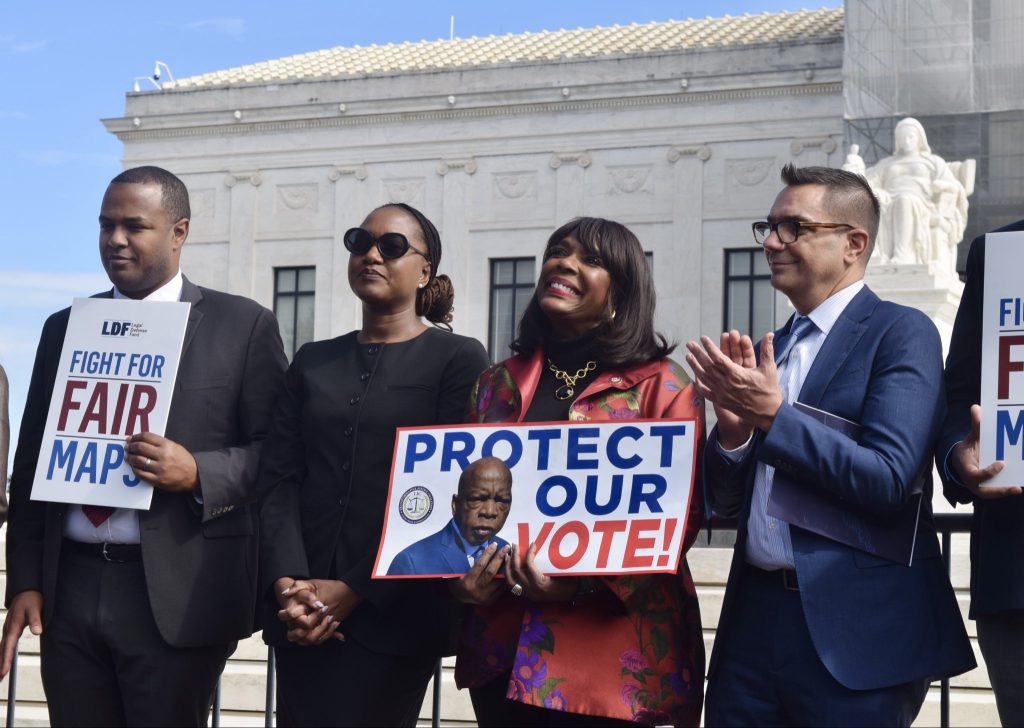
Committted to Civil Rights
After graduating, Sewell worked as a law clerk for former Chief Judge U.W. Clemon in Birmingham.
“I saw a very well-educated, articulate and committed to civil rights young lady,” Chief Judge Clemon said of his time with Sewell as his clerk. “She was one of my very best clerks. She was always able to spot the legal issue, do the legal research and make the appropriate, recommended disposition of the issue.”
Clemon said he thought that Sewell had a bright future and would later encourage her when she decided to run for her congressional seat. Clemon was not only her mentor, but he also became like a second father to Sewell.
“I thought she would be an exceptional lawyer, and she would succeed in whatever she decided to do,” he said.
Sewell later moved to New York to work at Davis Polk & Wardwell with fellow Congresswoman Kirsten Gillibrand. She returned to Alabama to work with Maynard Nexson, where she became the first Black woman partner at the firm. She came back home after her father had a massive stroke.
“My parents needed me, the only girl and the oldest, to step up and send myself home,” she said. “My mom gave up being on the city council, she gave up on her Reading is Fundamental programs she was doing, she gave up all the things that she wanted to do to take care of my dad at home. I knew in my heart that if the people of Selma knew my mama and daddy needed help, they would rally around to help them.”
Leading through connection
The lesson of rallying around those in need would prove an important one when she began her time in Congress. She made it a point to get to know her colleagues across the aisle to get things done for her constituents.
“Being the lone Democrat, I try to get to know my colleagues as people,” she said. “We had an opportunity to do that because the Alabama delegation meets once a month. It was an opportunity to break bread and fellowship with people that I would otherwise not have gotten to know as people. I think it’s harder to say no to me when I’ve watched your children grow up, and I go to your daughter’s wedding.”
She said those meetings led to her planting the seed for economic development projects for her district and bringing more than $11.5 billion in federal grants to the Birmingham area and Alabama’s Black Belt.
“I purposefully tried to figure out what the connection to Alabama’s 7th District was to every member of our delegation,” she said. “For Shelby, he’s from the 7th congressional district, for Sessions, he grew up in Wilcox County. The same was true for Joe Bonner, who represented Mobile. I made those connections as a way of showing our commonality. Every lunch that I went to for at least the first two years, I would say, ‘You know a rising tide lifts all boats. Alabama should give the next big economic development project to my district.’”
Eventually, her colleagues began listening. The Golden Dragon expansion, worth $150 million, subsequently came to Wilcox County and provided 300 jobs.
“This stuff doesn’t just happen through legislation,” she said. “It happens through relationships. If I’ve learned anything through Congress, it’s that relationships matter. It’s served Alabama well to have Republicans and Democrats represent us in Washington.”
That bipartisanship is something that she says is missed currently on Capitol Hill, citing points of contention like the fight to fund Homeland Security, where Democrats want to reform U.S. Immigration and Customs Enforcement and Border Patrol.
“These people are killing folks, they’re setting up detention centers that are inhumane, why would I give more money to that?” she said.
The chasm is making it hard to get things done in Congress, according to Sewell.
“The tribalism, we’re in such a stalemate now,” she said. “Everything is more polarizing, and it’s becoming increasingly more polarizing every term that I serve. I do believe we’ve lost along the way a lot of the people that I did a lot of bipartisan building with. They chose to leave instead of fighting back. I think that right now, Trump has such a hold on the Republican party that if you’re a moderate Republican, you’re constantly hitting your head up against the wall. People know right from wrong. I think that publicly, their political fates are so tied to being one of his supporters that it becomes untenable.”
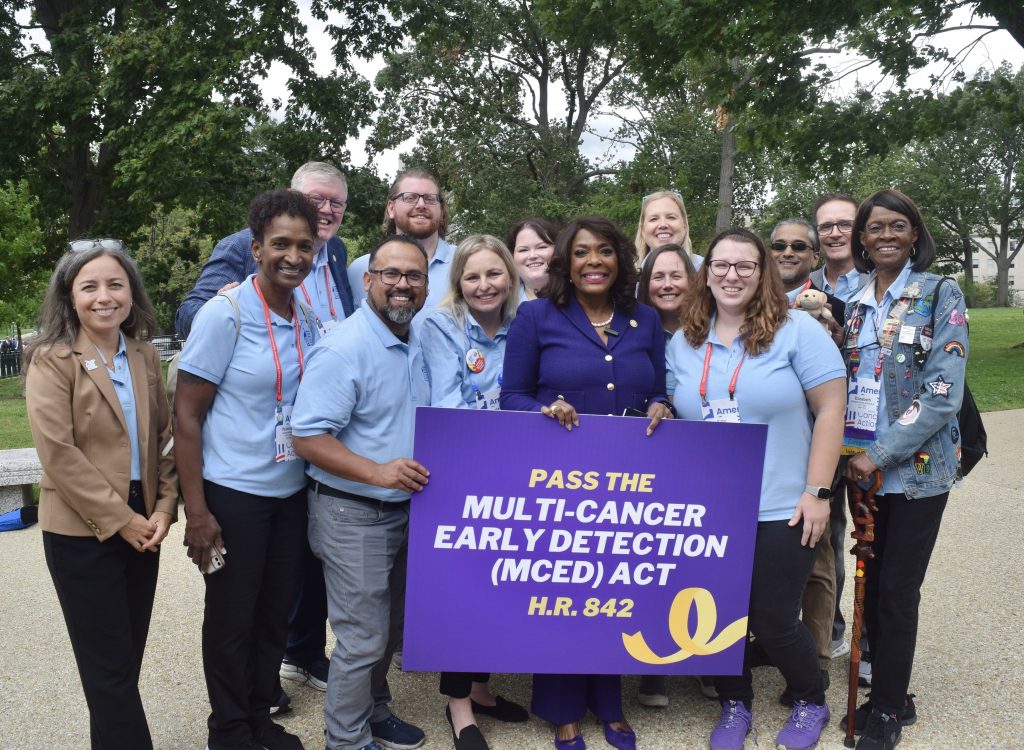
Serious Work
During her tenure, she has co-sponsored bills such as the John R. Lewis Voting Rights Act, which would update the Voting Rights Act of 1965. She also set her aims on changing how politics currently work by co-sponsoring the STOCK Act that prevents insider trading among elected officials and was signed into law in 2012. She also co-sponsored the Student Non-Discrimination Act, which though not signed into law, would have protected LGBTQIA students from bullying and discrimination.
She’s also developed a paid internship program through her office, something she calls a full-circle moment after facing financial challenges during her own congressional internship. She’s spearheaded workforce development in her district by hosting an annual job fair and job readiness workshops for constituents.
Sewell holds leadership positions in the Congressional Black Caucus and the New Democrat Coalition. She’s also the ranking member of the Committee of Oversight for the House Committee of Ways and Means, the second Black woman to do so.
Alabama State Senator Merika Coleman first met Sewell in 2007 during the campaign to elect Obama. During his administration, they worked on projects such as securing national landmark status for Birmingham’s Civil Rights District.
Now that they’re both elected officials, they work together on issues facing Alabamians. They also lean on each other in an increasingly divided political landscape.
“She is a person that I look to, but also we can talk to each other in a safe space and express our frustrations, throw ideas around,” Coleman said. “I definitely value that personal relationship that we’ve had through the years, to not only talk about issues and frustrations, but also just triumphs of being Black elected women leaders in the state of Alabama.”
On a personal note, she said Sewell has done things like write letters of recommendation for her daughter when she was headed to college. She was also there for Coleman when she lost her husband, Derrick Richardson, in 2020. Richardson previously served as Sewell’s communications director.
“She personally came to the hospital to see him… and they talked and laughed,” Coleman said. “I will never ever forget her for that. I love her for that.”
Coleman said that despite the serious work Sewell does, her bright personality shines through.
“She is so much fun,” she said. “The work that we both do is very serious work, but she is such a fun person, a jokester, but also, good God Almighty, when she supports you and loves you, she will go to the moon and back for you.”
Continuing a legacy
Sewell doesn’t take it lightly that she has been the first of many during her lifetime.
“It’s OK to be the first if you’re not the last,” she said. “Those of us who are blessed enough to stand on the shoulders of people who couldn’t, it’s never lost on me that I get to walk the halls of Congress and be Alabama’s first Black congresswoman because four little Black girls were killed in a church and didn’t get to fulfill their life dreams. Every day, I have to figure out how I can make life better for my folks.”