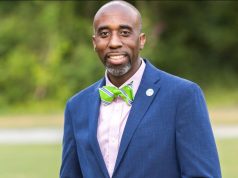

By Sym Posey | The Birmingham Times
For Birmingham City Schools Superintendent Mark Sullivan, the district’s annual state report card isn’t simply a letter grade.
It’s a reflection of thousands of daily decisions happening inside classrooms, hallways and homes across Birmingham.
From teachers analyzing student data before the first bell rings to principals celebrating small academic victories, Sullivan says the district’s push toward earning its first-ever “B” on the Alabama State Department of Education’s report card is less about chasing a score and more about changing the trajectory of students’ lives.
“The work is about teaching children to a high standard every day,” Sullivan said. “People are always looking for a silver bullet in education, but there really isn’t one. It’s about hard work. It’s about making sure every child receives quality instruction every single day.”
The district appears to be moving in that direction. After earning its highest score ever on the state’s accountability report card, Birmingham City Schools is now positioning itself to achieve another milestone — a “B” rating, something the district has never accomplished under Alabama’s current accountability system.
Last school year, Birmingham City Schools earned a 77, its highest overall score to date. District leaders believe the latest scores, expected later this year, will show even more growth.

For Sullivan, the significance extends beyond the number itself. Nearly 87 percent of Birmingham City Schools students meet the federal definition of poverty, while the district serves a predominantly African American student population. Those demographics often shape public perception, Sullivan said, but should never determine expectations.
“What it says is regardless of what ZIP code you’re born into, every child can achieve, and they can achieve at high levels,” Sullivan said.
That belief has become the foundation for a district-wide strategy centered on stronger instruction, consistent curriculum, expanded student supports and accountability at every level.
Building consistency across classrooms
Rather than relying on one major initiative, Birmingham City Schools has spent the past several years strengthening the basics. District officials standardized curriculum frameworks, expanded teacher professional development and invested heavily in instructional coaching to ensure students receive grade-level instruction regardless of which school they attend.
The district has also increased opportunities for early childhood education, opening a new pre-kindergarten center at Loveman Village after launching another at the Martha Gaskin building last year. Students with exceptional needs are expected to benefit from a new therapeutic learning center, while older students will soon have expanded access to career training through a proposed $40 million Career Technical Education Center.
Together, Sullivan said, those investments are designed to create a seamless pipeline — from early learning through graduation — that prepares students for life after high school.
“Our goal is not just to get kids to the twelfth grade,” Sullivan said. “Our goal is to make sure when they graduate that they can be successful when they leave us.”
District leaders describe that vision through what they call the “Four Es.”
Every graduate should leave Birmingham City Schools prepared to be:
- Enrolled in college,
- Enlisted in military service,
- An Entrepreneur, or
- Employed in a career that provides financial stability.
Whether students pursue higher education through Birmingham Promise scholarships, military service, skilled trades or business ownership, Sullivan said success should not be measured by a single pathway. Instead, success means every student graduates with options.

Addressing barriers beyond academics
Academic instruction represents only one piece of Birmingham City Schools’ strategy. District leaders acknowledge that students cannot learn effectively if basic needs remain unmet.
Several years ago, Birmingham City Schools reported chronic absenteeism nearing 29 percent. Today, district officials say that number has been reduced to approximately 14 percent, a change Sullivan credits to a shift in philosophy.
Instead of viewing attendance solely as a discipline issue, the district began asking a different question: Why aren’t students coming to school?
The answers often extended beyond the classroom. Some families were experiencing homelessness. Others lacked reliable transportation or access to clean clothing. Some students were living in weekly hotels or moving between relatives’ homes.
Rather than punishing those circumstances, Birmingham City Schools expanded partnerships with community organizations to remove barriers. Working alongside the Jefferson County District Attorney’s Office through its Helping Families initiative and collaborating with the Housing Authority of the Birmingham District, the district began connecting families with wraparound services while recognizing students with strong attendance each month.
Just as important, Sullivan said, schools focused on becoming places students genuinely wanted to attend.
“You have to make school a place where children want to go,” he said. “When you eliminate barriers and provide quality instruction, you start seeing kids come to school.”
Preparing students for a changing world
While strengthening literacy and mathematics remains central to Birmingham City Schools’ academic plan, district leaders are also preparing students for a future increasingly shaped by technology.
Artificial intelligence is beginning to make its way into classrooms across the district. Teachers and administrators have participated in professional development focused on using AI responsibly, and schools are exploring ways to incorporate the technology into instruction while teaching students how to use it safely and ethically.
“We’ve been doing a lot of training for teachers and administrators on AI,” said Dr. Jerry Davenport, the former principal of Hayes K-8 School who will serve as principal of Wenonah High School this year. “We’re trying to incorporate that into the classroom and have our kids use it safely as part of instruction.”
Rather than replacing teachers, district leaders view AI as another instructional tool—one designed to enhance learning while preparing students for careers that will increasingly rely on emerging technologies.

A library designed for discovery
Inside Hayes K-8, one of the district’s newest learning spaces offers a glimpse of that future.
The school’s Ed Farm innovation library is far more than a traditional media center. Flexible seating areas invite students to curl up with a book. LEGO stations encourage collaborative problem-solving. Dedicated reading nooks provide quiet places for independent learning, while an adjoining media lab allows students to explore digital storytelling, music production and video creation.
The space reflects a broader shift in how Birmingham City Schools views learning—not simply as memorizing information, but as creating opportunities for curiosity and creativity to flourish.
“Our students are very excited,” Sullivan said. “They have books, LEGO stations, places where they can read independently, and right next door they have opportunities to create beats and record.”
The district plans to build on those opportunities with student-produced morning announcements recorded in the media lab.
Rather than relying on the traditional intercom, students will eventually create daily broadcasts that classmates can watch from their classrooms—a project Sullivan says will strengthen communication skills while giving students hands-on experience with digital media.
“All of that’s going to be made possible through what Ed Farm has provided for us,” he said.
One Birmingham
For both Sullivan and Davenport, the district’s progress is deeply personal.
Neither views Birmingham City Schools simply as an employer. Both are products of the district. Sullivan attended Wiggins Elementary School before graduating from Woodlawn High School. After earning his degree from Alabama A&M University, he returned to Birmingham as a substitute teacher and has spent more than three decades serving the district in various roles.
Davenport graduated from George Washington Carver High School before attending Alabama State University. Over the past eight years, he has served students at Huffman High School, Wenonah High School and Hayes K-8.
Their families’ roots in Birmingham City Schools run just as deep.
Sullivan’s mother, aunt, uncle and other relatives all worked within the district—as teachers, cafeteria workers and custodians. Davenport said education has long been a family tradition, with relatives serving in schools across Birmingham.
That shared history shapes the way they view their work today.
“It’s one Birmingham,” Davenport said. “The strategies that work here are already forming at Wenonah because we all serve the same kids. We all have the same goals.”
Sullivan echoed that sentiment, saying the educators who invested in him decades ago inspired his commitment to the next generation.
“I would not be sitting here if it were not for the teachers, the administrators and the opportunities I received in Birmingham City Schools,” he said. “I have an obligation to pass that on to the next generation.”
That obligation, district leaders say, extends beyond improving a single report card.
While earning Birmingham City Schools’ first “B” would represent a historic milestone, they insist the letter itself is only one measure of success. The real goal is ensuring every student leaves the district equipped to succeed.
And if district leaders are right, the work happening inside classrooms today could reshape not only next year’s report card, but Birmingham’s future for years to come.

More than a letter grade
For all the attention surrounding Birmingham City Schools’ pursuit of its first “B” on the Alabama State Department of Education report card, district leaders are quick to point out that the score is not the finish line. If anything, they say, it is simply evidence that the district is moving in the right direction.
Birmingham City Schools has centered its long-term strategy on preparing students for life after high school.
Students pursuing higher education can benefit from opportunities such as the Birmingham Promise scholarship program, while those interested in military service have access to robust Junior ROTC programs and new partnerships, including an upcoming collaboration with the U.S. Coast Guard.
Students with entrepreneurial ambitions are gaining exposure through career academies and finance programs that teach business fundamentals while encouraging innovation. Sullivan noted that many students are already operating small businesses—from hairstyling to content creation — and schools are helping them develop the financial literacy and business skills needed to turn those talents into careers.
For students who envision a future in the skilled trades, Birmingham City Schools is making one of its largest investments yet.
The district is preparing to construct a new Career Technical Education (CTE) Center, a facility designed to provide students with hands-on training in high-demand industries. The center will expand opportunities for certifications and workforce preparation in fields such as welding, plumbing, electrical work and other technical careers.
For Sullivan, the investment recognizes that success looks different for every student.
“Some students don’t want to attend a four-year university,” he said. “But they still deserve opportunities that allow them to provide for their families and build a middle-class lifestyle.”
That same philosophy extends to the district’s youngest learners.
Recognizing that academic achievement begins long before elementary school, Birmingham City Schools has continued expanding access to early childhood education through new pre-kindergarten centers, including one recently opened at Loveman Village.
District leaders say those investments are designed to give students a stronger academic foundation before they ever enter kindergarten.
Combined with expanded support for students with exceptional needs through a new therapeutic learning center, the district’s initiatives reflect an effort to strengthen every stage of a student’s educational journey — from early childhood through graduation.

Changing the narrative
For decades, conversations surrounding urban school districts have often focused on deficits — low test scores, declining enrollment or socioeconomic challenges.
Sullivan hopes Birmingham City Schools’ story begins to shift.
He also refuses to allow demographics to define expectations.
Instead, he hopes the district becomes known for innovation, opportunity and academic excellence.
Five years from now, Sullivan said, he wants Birmingham City Schools to be the first choice for families considering where to educate their children.
“I want people to say Birmingham City Schools is an outstanding school system,” he said. “When families move to Birmingham, I want them to believe we have everything their child needs to be successful.”
That vision is one shared by educators across the district. Whether it’s a principal celebrating a student’s growth on a benchmark assessment, a teacher redesigning a lesson based on classroom data or a student recording morning announcements inside an innovation lab, each effort contributes to a larger goal.
District leaders know earning a “B” would represent a historic achievement.
But they also understand that sustaining success will require continued investment in people, partnerships and purpose.
For educators like Sullivan and Davenport, the work carries an added sense of responsibility because they once sat in the very classrooms they now oversee.
They know firsthand what Birmingham City Schools made possible in their own lives. Now, they hope today’s students leave with even more opportunities than they had.
“We have an obligation to pass that on to the next generation,” Sullivan said.
A district still reaching higher
The district’s pursuit of its first “B” represents more than an accountability benchmark. It reflects years of rebuilding instructional practices, expanding early learning, investing in technology, reducing chronic absenteeism, strengthening career pathways and ensuring students receive the support they need both inside and outside the classroom.
There is still work to do. Academic gains must continue. Achievement gaps must continue to narrow. Teachers must remain supported, and students must continue receiving rigorous instruction and meaningful opportunities.
But district leaders believe the momentum is real.
And while the next state report card will reveal whether Birmingham City Schools has reached its long-awaited milestone, Sullivan insists the district’s greatest accomplishment won’t be found in a letter grade. It will be measured by the students who leave Birmingham City Schools prepared not only to graduate, but to thrive.