By Monique Jones | For the Birmingham Times
Birmingham’s film scene is growing exponentially. Over the past 30 years, Birmingham and the greater Jefferson County area have been home to several productions, including Space Jam, Borat, 42 and many others. New Hollywood films such as The Rivals of Amziah King, starring Matthew McConaughey, and, most recently, The Girlfriend, starring Glenn Howerton, Meghann Fahy, and Rosario Dawson, have all filmed within the city limits.
The Oscars have also recognized Alabama filmmakers. Birmingham-born Daniel Scheinert, better known as part of the Daniels, who directed Everything Everywhere All at Once, is one such filmmaker, as are The Alabama Solution producers/journalists Beth Shelburne and Andrew Jarecki, who reside in Birmingham and Hoover, respectively.
But while Birmingham is catching Hollywood’s eye, let’s not forget the local filmmakers who are the backbone of the city’s film community. We spoke to five local emerging filmmakers who are expanding Birmingham’s film scene while calling on it to create more access for upcoming creators.
Je’Don Holloway-Talley
Je’Don Holloway-Talley may be an Inglewood, California, native, but she’s become an integral part of the Birmingham film scene. In an email interview, she said writing has always been a creative outlet for her. Filmmaking was a “natural extension” of that.
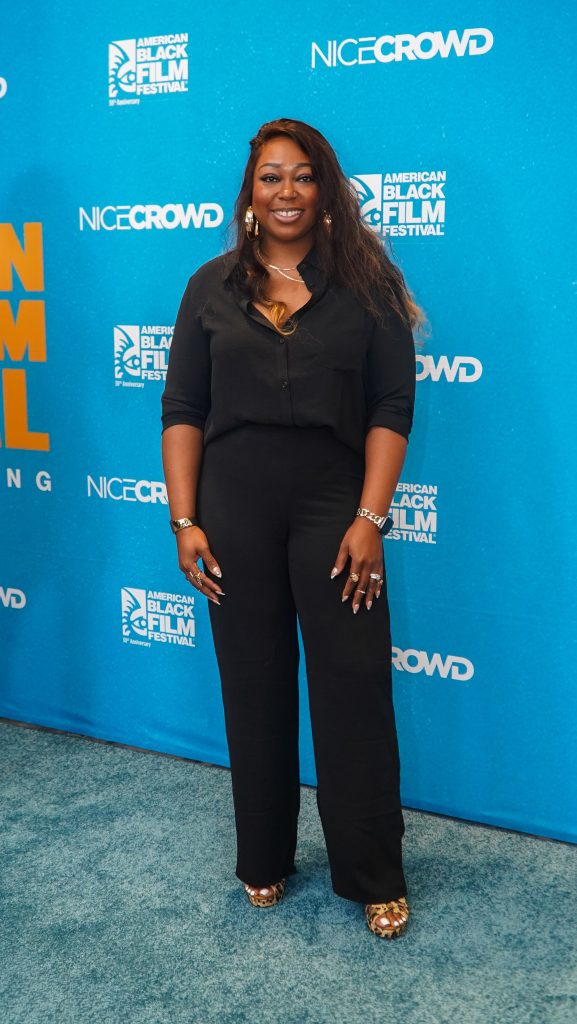
“As a senior in high school, I got a camcorder for Christmas and immediately started filming everything,” she wrote. “Home videos, pretend music videos with my cousins, even behind-the-scenes footage of my older brother and his friends recording music. I was drawn to visual storytelling long before I realized it could become a career.”
Around the same time she got her camcorder as a teenager, she said she began having “incredibly vivid, cinematic dreams that played out like fully developed movies. Those dreams made me realize how much I loved stories that could be seen as much as they could be told.”
The Lawson State graduate recently premiered a rom-com, Funny Feelings, at the American Black Film Festival (ABFF) in Miami, Florida. She said that seeing the film she wrote screen at ABFF “was incredible.”
“It was my first time seeing the final cut as well, so to a certain degree, I was experiencing it with fresh eyes just as the audience was,” she wrote. “It was fascinating to see the actors’ interpretations of their characters, and it was amazing to see how well the comedy landed with the audience, and to see and hear some of my favorite lines and scenes play out. I had also never seen my work play on the big screen before, so that was mind-blowing in and of itself. And to see my name in the opening credits twice was an absolute dream come true. …[I]t was very surreal.”
Holloway-Talley describes the Birmingham filmmaking industry as “growing and becoming more and more robust with the evolution of technology and access.”
“With the growth of independent filmmakers taking agency to bring their own creations to life, the community and landscape is definitely evolving. You have filmmakers making shorts, and getting into making vertical series, which is the new wave,” she wrote.
She called out filmmakers Marcus January, Dez Wilson, Solomon Williams and Ron Brown as some of the city’s “visionaries.” She also described how Ron Brown of Pivot Motion Pictures created Birmingham’s first film distribution company, Pivotal Distribution, to help filmmakers get better access to streaming platforms.
Holloway-Talley wrote that Birmingham’s filmmaking advantage is that the city is full of driven creators, describing many as “self-taught geniuses” who taught themselves directing and producing. She wrote that they are also community-minded.
“We seek community, we link up and we create magic,” she said. “We network. We go to industry events in the city and other major cities to expand our network. Many of us are not gatekeepers either. When it’s genuine and the connections are real and we see each other as people and not opportunities, we reach back and pull the next one up when we can.”
DeSean Motley
UAB narrative filmmaking graduate DeSean Motley said his interest in storytelling began as a young child when he would draw and write his own comic books. But when he got older, he decided to major in psychology to follow in his mother’s footsteps as a therapist. But he quickly realized that career wasn’t for him.
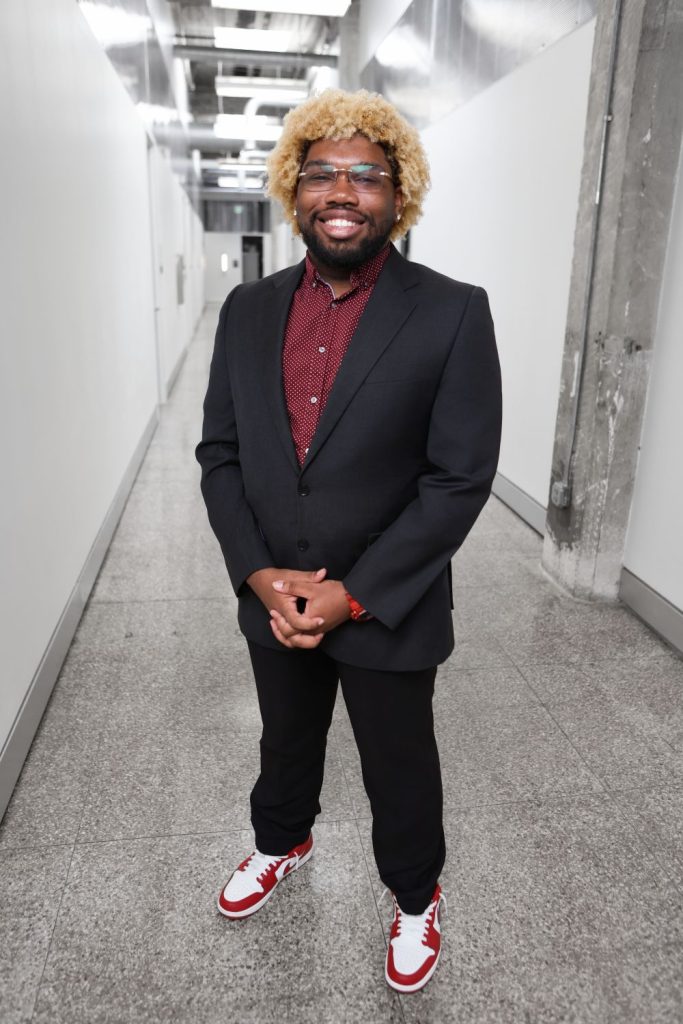
“I hated it,” he said. Then COVID happened. As a result, Motley started making videos around his home and realized filmmaking was for him.
“I’ve always seen things in motion; in my head, when I imagine things, it’s never a still image. It’s always in motion. That’s why I didn’t really mesh with painting and drawing…because it was still.”
Once he switched majors, he accepted what he thought was his future — living as a happy but “broke artist.” But after he started reaching out to Birmingham’s film community, he began to get his footing and found a pathway towards a career in filmmaking.
Motley, who serves as the film office manager for Create Birmingham, called the scene collaborative. He contrasted that to New York City, Atlanta, and Los Angeles, where he said: “everybody’s in competition with each other.”
“But in Birmingham, it’s not that culture,” he said. “A lot of us are happy for each other to get a job, or if I can’t do a job, I’m always down to refer a friend. It’s not that kind of gatekeepy kind of community. … Everybody knows each other, and everybody wants each other to succeed. So I think that’s what we’re doing right.”
However, despite the community being welcoming, Motley said that there still needs to be more access for aspiring filmmakers, especially minority and female filmmakers.
“I think in the professional scene, one thing that I’ve heard a lot…is that it could be a little bit of a white man’s club, especially being a Black filmmaker in Birmingham,” said Motley.
“I don’t think there’s a lot of prejudice in it,” he continued. But he did say that he thinks the lack of diversity stems from Birmingham schools not investing in film programs.
“There are a lot of really good Black filmmakers working in Birmingham right now,” he said. “But I do think that at the agency level, there’s not a lot of our people in that, and I know that’s one thing that a lot of agencies and film companies are working to change. I hear that they want more diversity on their teams. … Again, we are very inclusive, nobody’s turning away [anyone] based on race or anything, but we could work a little bit harder to try to get more diverse crews in Birmingham.”
Motley said that access to film camps and film programs could also ease the financial barrier to entry for Black aspiring filmmakers. Another way he said Alabama is working on making filmmaking more accessible is through the state legislature. Motley said that Alabama’s film office is releasing new legislation to lower incentive budgets so small filmmakers can get more help for less of a price tag.
T. Marie King
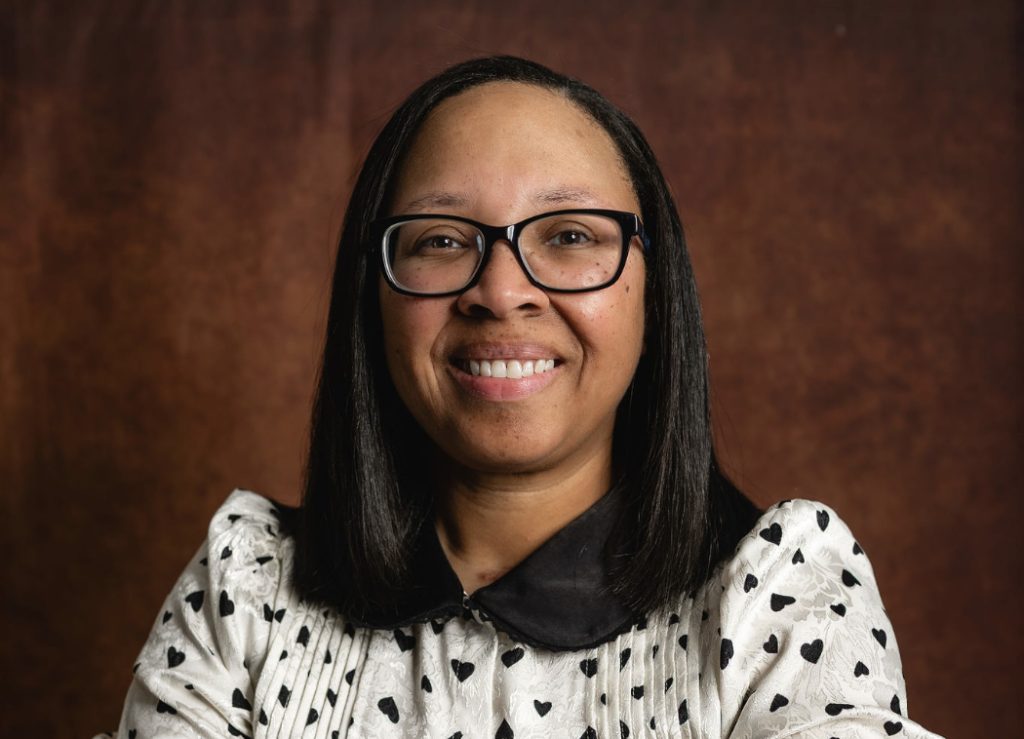
T. Marie King, Birmingham native and producer of Southeast Emmy-nominated documentary Shuttlesworth, knew she wanted to make films since she was eight years old. But in the ’90s, she said, “You either studied communications and did news or radio. There was no film space in Birmingham or Alabama at that time.”
After a Disney internship and a stint in Atlanta, King moved back home, started working at the Sidewalk Film Festival and made friends with Alabama Public Television (APT). Fast forward to 2019, APT called King to ask her to produce the documentary about civil rights leader Rev. Fred Shuttlesworth.
“For your first feature doc out of the gate to do that well is like, no pressure to follow up, right?” she joked, while explaining that not only did a Children’s March participant commend her film, but the Shuttlesworth family was also happy with the documentary. “It meant a lot, especially because I’ve met so many people traveling with the film who were from Birmingham.”
However, King wants more access to funding for local filmmakers. A few years ago, she made a short film by paying for it out of pocket.
“I think we have a very supportive community, and I love seeing folks showing up to people’s screenings, even if they’re doing it all on their own. Even when I was with Sidewalk leading the Black Lens programming, and you have somebody local who did something, folks will really show up for them. …And I think these local filmmakers, Black filmmakers, want to do more things. It’s just the funding that becomes the barrier.”
King said she is encouraged by what is happening on the state level. But there’s still a long way to go.
“I like where it’s going. I still think it’s siloed,” she said regarding the potential tax incentives and other financial help.
“I still don’t think it’s open to everybody, because it’s not widely known, you know? So then I wonder about the up-and-coming folks who may not necessarily be trying to be a film director, but they might want to be a cinematographer, or a production assistant. Where are they finding out about these opportunities?” she said. “…And then I consider myself, having a good ear of what’s happening around me, and I’ve heard about stuff that I had no clue was even coming to the city. So it concerns me. Who is that for?
“We have so much amazing talent. I feel like sometimes it’s like a big secret in our city [regarding] the amazing talent because I have friends in this city who have been nominated for [and won] Emmys,” King added. “I also think that our talent is not as celebrated for their accomplishments either. And that’s why you have people who start to feel as though they are not being seen and then they look to other cities like Atlanta, Los Angeles, New York, and say, ‘Do I need to take my talent somewhere else?’ I’d be lying if I said I hadn’t had those same thoughts.”
c.j. Davison
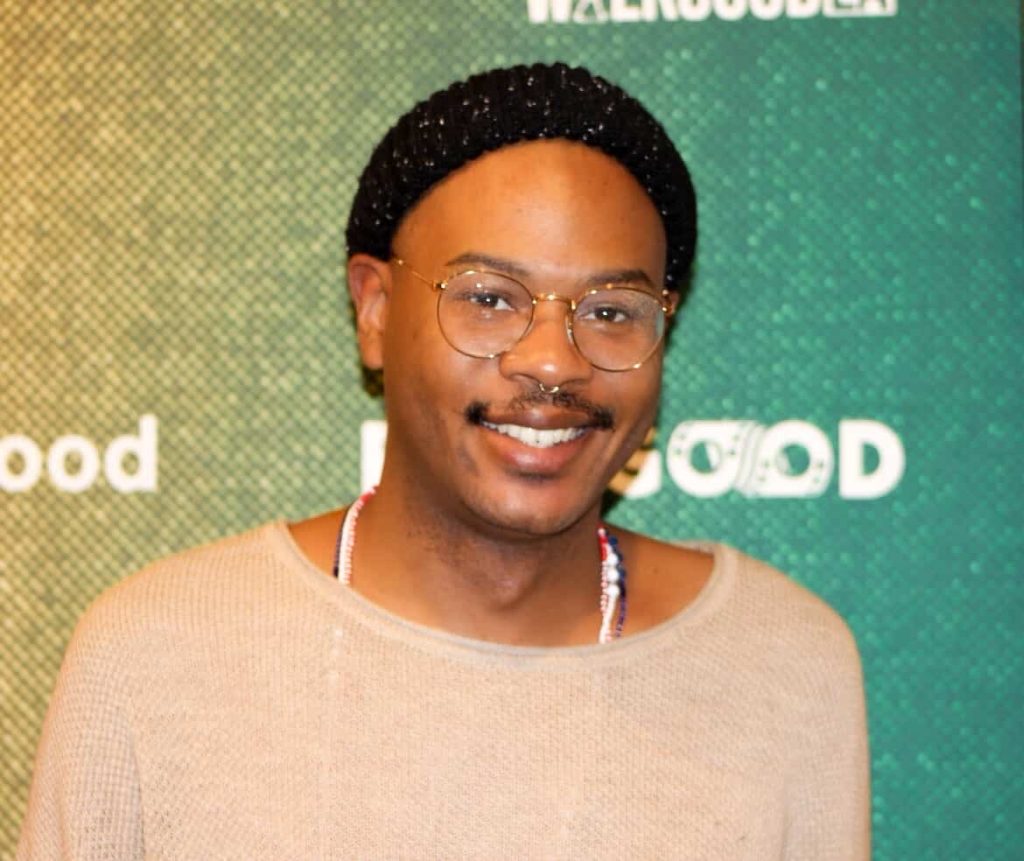
Filmmaker c.j. Davison moved from Birmingham to Brooklyn, N.Y., two years ago. But Birmingham is still their home.
They said they started as an actor in the early 2000s, but moved on to indie film production, including producing their own web series in Birmingham called Twenty Something. Similar to King, Davison funded the production from their own pocket. But the experience helped them realize their interest in writing and directing.
Davison said Birmingham’s film scene offers “plentiful” spaces to experience film and grow your skillset, such as the Sidewalk Film Festival.
“I can remember when Sidewalk was a punky little festival to now being what I feel like is the premier southeastern theater festival in the country,” they said. “I just have huge admiration for them. They’ve championed myself and a lot of my friends with their Black Lens program…and also their grant.”
Davison is one of Sidewalk’s grant recipients, and they said it not only helped them in their career, but also let them see how Sidewalk allocates its resources–and to whom.
“I definitely have to champion Sidewalk, especially [Sidewalk’s director of education and outreach] Jessica Chriesman, who has been a huge champion of my work,” they said.
However, even with the local film industry’s growth, Davison still feels Birmingham has hurdles to jump over before it can have the proper foundation for filmmakers so they don’t have to consider leaving the city.
“I find the scene to be gatekept, but really enriching, and I think that there’s a lot of opportunity. [But] I think the professional environment is more gatekept and it’s run by some [type of] industrial complex,” they said. “These are the people that are coming outside of Birmingham [to produce films] because it’s economical for them to be here. …You can get a bang for your buck in Birmingham for what you couldn’t get in Atlanta or LA or New York because you couldn’t afford it.
“I really want to see more Birminghamians on these jobs when Netflix or a studio comes in,” they added. “Because very oftentimes, with entry-level positions like production assistants, they’re bringing in their own people.
“I do think if you want to do filmmaking specifically, at some point you have to get out,” they said. “You can still live in Birmingham, but you’re gonna have to travel because there are only going to be [but so many] jobs in Birmingham every year anyway, and are you the person they’re going to call for the specific thing that you do? Or do they have somebody else already?
Davison’s passion for creating pipelines for creators in Birmingham has led them to work with performing arts collective The Flourish, creating a Birmingham-to-New York artist residency.
“When I talk about pipelines, I mean: how do we put the people in the position to do the thing and give them the money and resources to do it? Because I didn’t have that,” they said. “It was really hard, and I’m so grateful that people are really nice.”

Erika Wade
Erika Wade‘s basis in filmmaking started at the Alabama School of Fine Arts (ASFA), where she majored in creative writing. She liked writing spoken word pieces others could perform, but when she took a screenwriting class, she realized she could do even more.
“I knew people wrote the things that we saw on film and TV, but I didn’t see that [role] as a job until I was introduced to it,” she said.
After gaining an MFA from the Savannah College of Art and Design in Savannah, GA, Wade moved to Los Angeles to pitch to and ghostwrite for major Hollywood studios.
After moving back to Birmingham, Wade created documentaries, such as shorts about the city and its colorful residents and a documentary about Southern Danceworks’ performance Baldwin: A Letter to My Nephew. Another film, Knowing, was created through the Southern Exposure film fellowship program and in partnership with the Alabama Poetry Delegation.
“It was so cool because it was the first time that I actually got to sit in the director’s chair for a professional film,” she said.
Wade’s relationship with Birmingham is evident in her work.
“I just love Birmingham,” she said. “Specifically growing up between Fairfield and Dolomite and Pratt City and Ensley, I was trying to write Birmingham-esque scripts when I was still in LA. …When I moved back…I knew that people down here were doing good work because that’s just been the history of the city. If you’re tapped into the art scene, you actually know that the arts are alive and people are doing everything that they say on the news we’re not.”
Wade, also a Southeast Emmy Award-winning voice actress, now teaches film at ASFA, helping high school filmmakers learn about the industry.
“Birmingham has a very prominent and exciting independent filmmaking scene. It also has a more celebrated scene of big productions from outside of the city coming to film here,” she said. “I really caution people when all they know about film in the city is the big names, the big actors, the big studios who come here to shoot, because there are people that are creating some top-notch work here.
Wade also said that if producers want Birmingham filmmakers, they have to seek them out.
“Film Birmingham collects a directory of filmmakers in Alabama and in the city of Birmingham, so that’s one way,” she said. “And a lot of our events are free or accessible to the public. Go to film festivals. A lot of people are following and supporting Sidewalk in a big way.”
She also implores Birmingham film fans to support their favorite directors in other ways, such as visiting their websites, retweeting or sharing the director’s work or crowdfunding campaigns, and donating if you have the means.
“Five dollars will go a long way for a film,” she said. “That’s half of somebody’s dinner for the night. There are a lot of cool, tangible, and accessible ways to support the arts here and to support filmmakers.”
Birmingham’s film future
Birmingham’s filmmakers are constantly working to add to the growth and depth of the city’s film community. For instance, Wade, who runs Glenda’s Baby Productions, is working on her first feature project, a psychological thriller about a woman who is battling generational curses and mental illness. She was also recently named as part of the jury for the 2026 Sidewalk Film Festival.
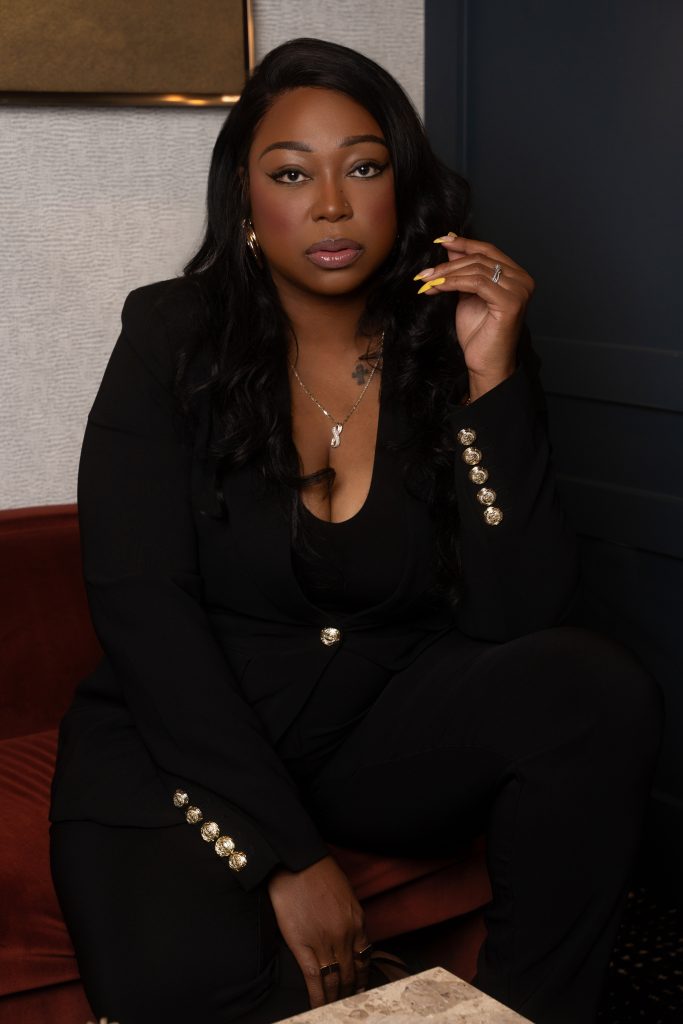
Holloway-Talley creates video for businesses in Birmingham while also working on her film career. She is writing and producing an upcoming film for Pivot Motion Pictures, a Birmingham-based independent film company, which will go into production later this year. She is also developing new concepts and building relationships with potential local collaborators.
Davison is working on a set of documentary shorts called The Seed Series following Black and brown queer organizers across the country. Their first two, Seeds of Liberation and Seeds of Transformation, are available to watch on Davison’s website. They are also producing a documentary short with playwright Donja R. Love and filmmaker Brandon Nick called Dirty, which focuses on the stigma around HIV status. They are also writing a TV pilot set in a future in which people with HIV are exploited after the American government realizes their blood is the cure to a plague. They manage their production company, My Black Job Productions.
King’s latest short film, The Before, just finished its festival run. The film focused on an alternate future in which school integration is an issue, but Black people are the majority population of the country. She is currently in pre-production on another narrative short, a currently untitled story focusing on Black women’s health. The film is set for a 2027 release. King produces through her company, T.M.K. Media.
And Motley, who runs DMot Productions, is working with King as an executive producer on a short film by a student from the Birmingham Film Camp, an organization Motley credits with bringing more young filmmakers into the community. He is also directing a short film called Inversion. His latest film, Good Friends, is set for an August release.
With so many upcoming projects headed to film lovers, Birmingham’s film scene is in good hands with these local filmmakers.