
By Sym Posey | For The Birmingham Times
As the lights came up following a screening of the documentary “The Alabama Solution,” the room was heavy with emotion. In the quiet, some audience members could be heard crying
For many in attendance, it was their first time seeing the film — an unflinching look inside Alabama’s prison system and the violence, neglect and systemic failures that have drawn scrutiny from federal investigators and human rights advocates.
Documentary co-producer Beth Shelburne stepped to the microphone and acknowledged what everyone in the room seemed to be feeling.
 “Sometimes it’s nice to just sit for a moment, take a few deep breaths after what we just watched,” Shelburne said. “Raise your hand if that was the first time you’ve seen the film.”
Hands went up across the room.
“Okay, wow,” she said. “So, I know it’s a lot. It’s a whole lot.”
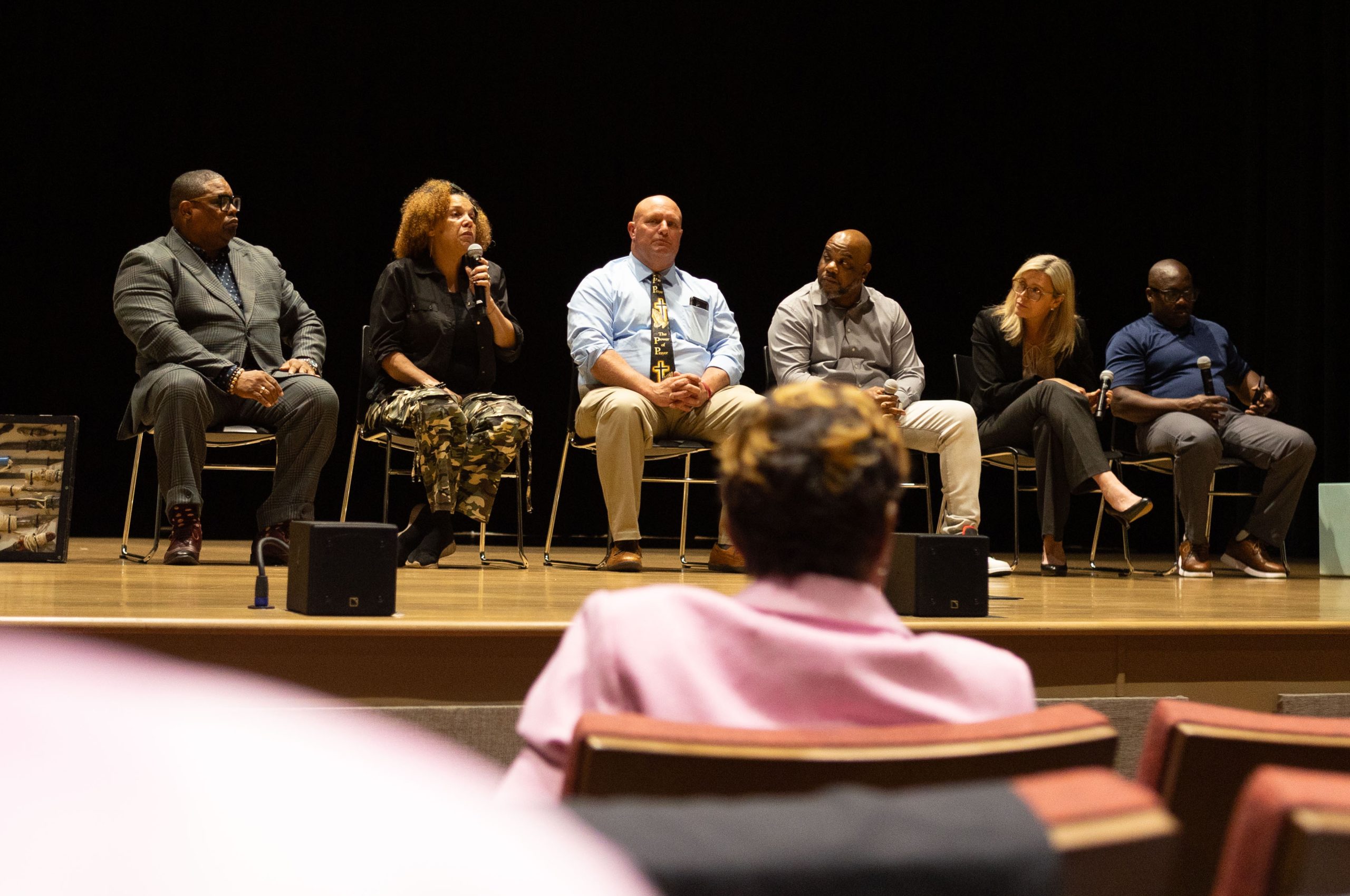
The screening — held in Birmingham at the Carver Theatre and followed by a panel discussion featuring people directly impacted by the system depicted in the film — became more than a movie night. It turned into a deeply personal conversation about incarceration in Alabama and what must change.
The documentary has drawn national attention and is currently nominated for Best Documentary at the Academy Awards. But the screening in Birmingham was not just about watching a film. It was about confronting a crisis that many panelists said the public can no longer ignore.
Shelburne said the project began as reporting years earlier but grew into something far bigger.
“I started covering the prison system when I was a reporter in 2012, and I really felt like I was just shouting into the canyon,” she told the audience. “So, the fact that this film is out in the world and people are talking about it everywhere — that’s progress.”
Even so, she said real change has been slow.
“Progress is really, really slow,” she said. “But part of the progress is actually all of us being here in this room together talking about this.”
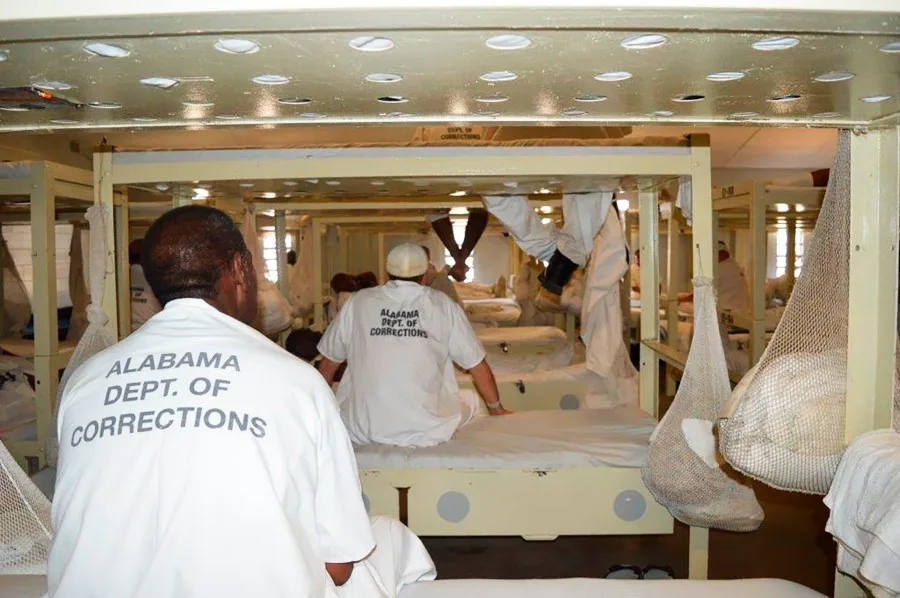
The documentary chronicles years of reporting on a prison system that advocates say is overcrowded and dangerous. During the making of the film, Shelburne said researchers documented staggering numbers.
“Fifteen hundred people died during the making of the film,” she said. “We have a database of all of them and what we learned about how and why they died, because the prison system does not publish that.”
The findings paint a grim picture.
“It’s the highest prison mortality rate in the country,” Shelburne said. “Alabama is number one — and not in a good way.”
Several people who appeared in the film joined Shelburne for the discussion, including Danny Dandridge, who was incarcerated during filming.
“This journey started for me while in prison,” Dandridge said. “I was at St. Clair with the brothers who started the movement of the Free Alabama Movement.”
Now home for nearly three years, he said his focus has shifted to rebuilding and helping others do the same.
“I created and started my own nonprofit,” he said. “It’s based on youth development… and I help guys that are coming home from prison. I’m just giving back every day, embracing being home.”
Former correctional officer Stacy George also spoke about what he witnessed during more than a decade working in Alabama prisons.
“I started in 2009 as a correctional officer… and I left in 2022,” he said. “I saw a lot of things.”
He now travels around the state advocating for reforms.
“There are some good officers in there,” he said. “But the bad ones outweigh and dictate a lot of things in the prison.”
Shelburne noted that violence inside prisons should never be normalized.
“There is a way to run prisons where you’re not beating people,” she said. “It should not be expected that that’s part of the experience. It’s certainly not part of the sentence.”
Few voices during the evening carried the emotional weight of Cookie Garner, a Birmingham advocate whose sons have been incarcerated in Alabama prisons.
“I want us to stop calling them inmates,” Garner said. “They are our loved ones.”
Garner described harsh conditions that she said families witness firsthand.
“The only thing that’s mandatory is 23 hours in a cell and one hour of sunlight,” she said. “Most of the time they never get that.”
She also shared the story of her son being violently assaulted while incarcerated.
“He can’t see out of his eye,” she said. “His ribs were bruised, his wrists bruised from the handcuffs. The guard hit him in the eye with a radio.”
Garner said solitary confinement had lasting effects on her son’s mental health.
“Solitary does a number,” she said. “My son was in solitary for a long time.”
Her advocacy now includes pushing for better medical and mental health care inside prisons and changes to sentencing laws.
“My oldest child went to prison at 17,” she said. “He is now 40 years old. So, we have to start changing laws and looking at what’s happening.”
Faith leader Pastor Kris Erskine urged churches and community organizations to take a more active role.
“I’ve been going to a prison every week since 2014,” Erskine said.
He challenged churches to confront the issue directly.
“Ask your congregation how many have been incarcerated or have someone close to them incarcerated,” he said. “Watch their hands go up.”
Erskine said prison outreach should be seen as a moral obligation.
“This is not prison mission — this is prison ministry,” he said.
The panel closed with a call for audience members to turn emotion into advocacy.
Birmingham City Councilor LaTonya Tate urged attendees to support organizations already working on prison reform and to push lawmakers to act.
“Get involved with nonprofit organizations that are doing this work today,” Tate said. “Storytelling is powerful — but you also have to change laws.”
She encouraged the crowd to stay engaged beyond the screening.
“You’ve got to write your legislators,” she said. “You’ve got to organize. You’ve got to put pressure on people.”
Real change, she said, will require citizens to show up and demand it.
“I’m going to charge every person in this room to show up in Montgomery,” Tate said. “Because that’s the only way things are going to change.”
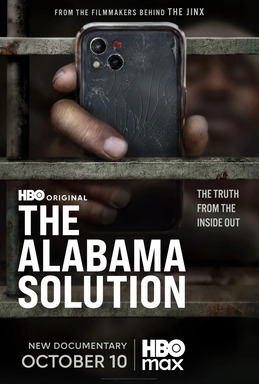
The Alabama Solution is currently available for viewing on HBO Max.