By Sym Posey | The Birmingham Times
On any given day, inside the Birmingham Business Resource Center, the work doesn’t announce itself. It hums.
A phone call about a loan application. A quiet conversation about a business plan that isn’t quite there yet. Someone walking in with an idea — and walking out with direction.
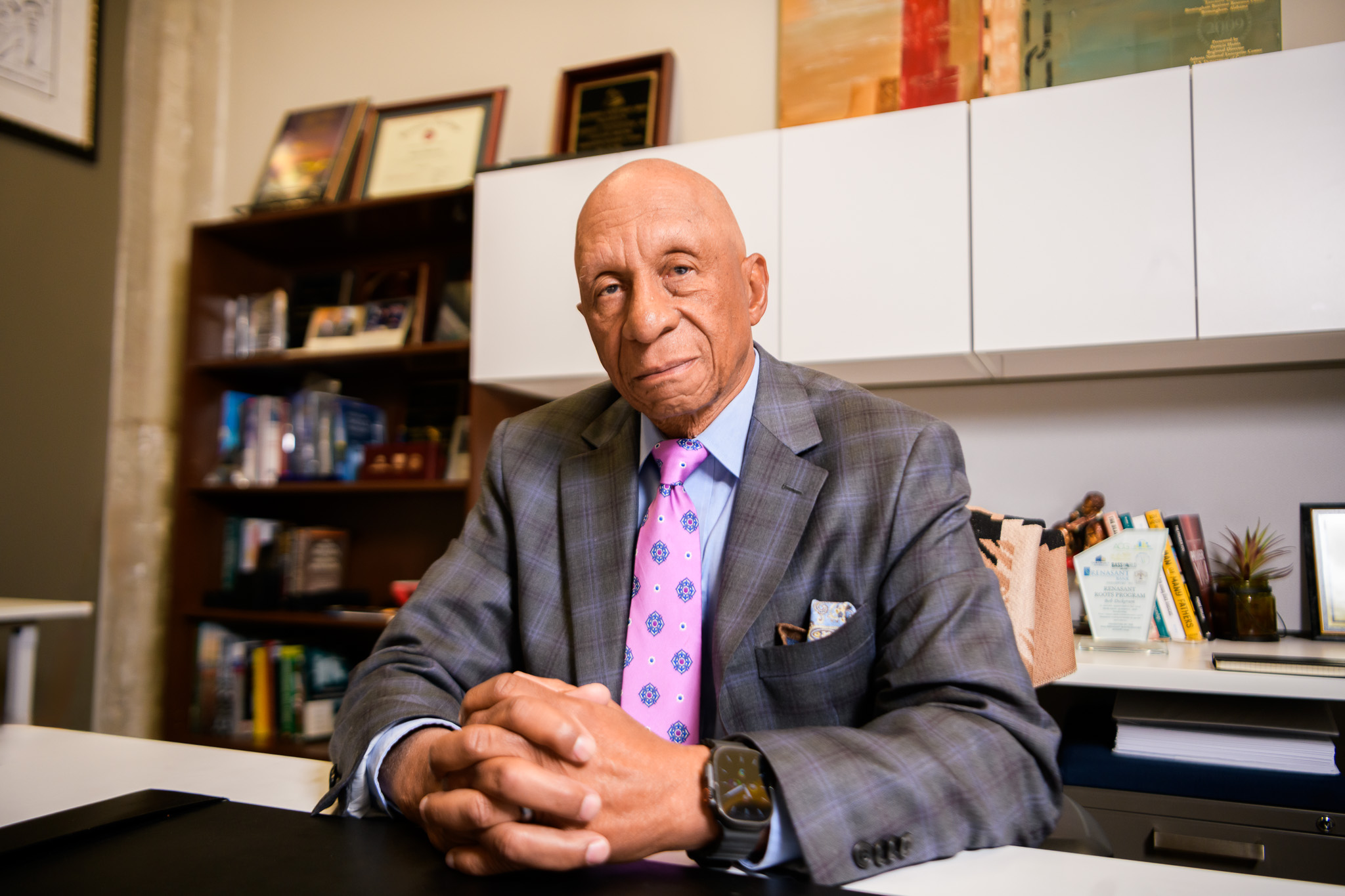
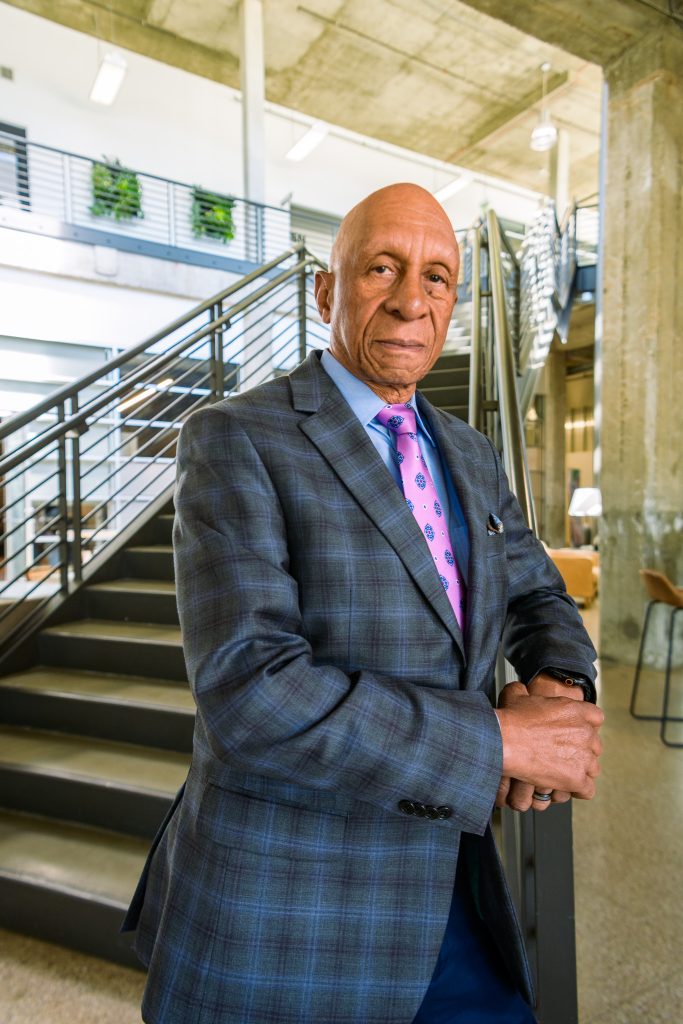
And somewhere in between all of that is Robert “Bob” Dickerson Jr, doing what he’s done for most of his life: showing up and figuring out how to help. Not for recognition. Not for headlines. Just because, as he puts it, “that’s what I do.”
“I like what I’m doing,” Dickerson said. “It doesn’t feel like work.”
At 73, after more than 50 years in banking and economic development, he still comes into the office most days. Still takes meetings. Still answers questions. Still pushes.
For him, there is always more to do.
Before the Title, There Was the Work
Long before he became a fixture in Birmingham’s business community, Dickerson was a young banker trying to find his place in an industry that didn’t always make room.
He started in 1973.
“I was, like, the third Black bank officer in Birmingham,” he said.
By 21, he was already making loan decisions — an opportunity that came with both responsibility and reality. What he noticed early on was who was showing up.
“All the Black folks were coming to me,” he said. “They were coming from all over… and I was happy about that.”
He built relationships. He built trust. And he built a reputation for fairness in a system where that wasn’t always guaranteed. But he also saw the limits.
“I always knew I was doing something the institution needed,” he said. “But when it came time to advance… that wasn’t available.”
Even as his portfolio grew, even as his performance spoke for itself, Dickerson ran into barriers that had nothing to do with ability.
“I was doing a really good job,” he said. “But sometimes racial attitudes will ignore your good because of what you look like.”
That reality didn’t stop him — but it shaped him.
It sharpened his understanding of what access really means — and what it costs when people don’t have it.
Seeing the Gap — and Refusing to Ignore It
As the years went on, Dickerson’s work in banking expanded. He organized bankers. He worked on Community Reinvestment Act efforts.
“I took on a contract with the City of Birmingham, working with banks around Community Reinvestment Act activities and projects,” Dickerson said. “We actually hold banks accountable for our communities. Being connected to the Community Reinvestment Act… allows me to give back to community. If we’re able to influence policy and influence behavior on behalf of the community, then the community benefits more.”
He began connecting the dots between institutions and communities. And what he saw became clearer.
“There were things I thought we should try,” he said. “But my banks would never do it.”
The ideas were there. The need was there. The will — at least in the places he worked — was not.
At the same time, Birmingham was beginning to shift. Leaders in the city were talking more intentionally about economic development, equity and doing more for businesses that had historically been overlooked. Dickerson leaned in.
“I thought it needed to be done,” he said.
Working alongside city leadership, including then-Mayor Richard Arrington Jr., he helped shape a new approach — one that would eventually become the Birmingham Business Resource Center.
When it launched in 1996, the goal was clear: meet business owners where they are — and give them what they need.
‘More Than Just the Loan’
From the beginning, Dickerson knew the work had to go deeper than funding.
“What I learned at banking was lending,” he said. “But businesses needed more than just the loan.”
They needed preparation.
“They needed counseling and coaching,” he said. “They needed to be prepared to even apply for the loan. They certainly needed to be prepared to run the business.”
That philosophy still defines the BBRC today.
Dickerson breaks it down simply.
First: capacity.
“You’ve got to have a really good understanding of what you’re doing,” he said. “You’ve got to have a plan… the knowledge and skills… or you’ve got to get them from somebody.”
Second: capital.
The BBRC helps business owners not only access funding, but understand it — what they qualify for, what terms to expect, and how to position themselves before they ever walk into a bank.
“We can tell them, ‘This is what you’re going to hear when you go,’” he said.
And third — what he calls the most important piece: sales.
“Nothing happens until somebody sells something,” Dickerson said. “If they don’t sell, then it’s all for nothing.”
It’s a message he repeats often — not because it sounds good, but because he’s seen what happens when it’s ignored.
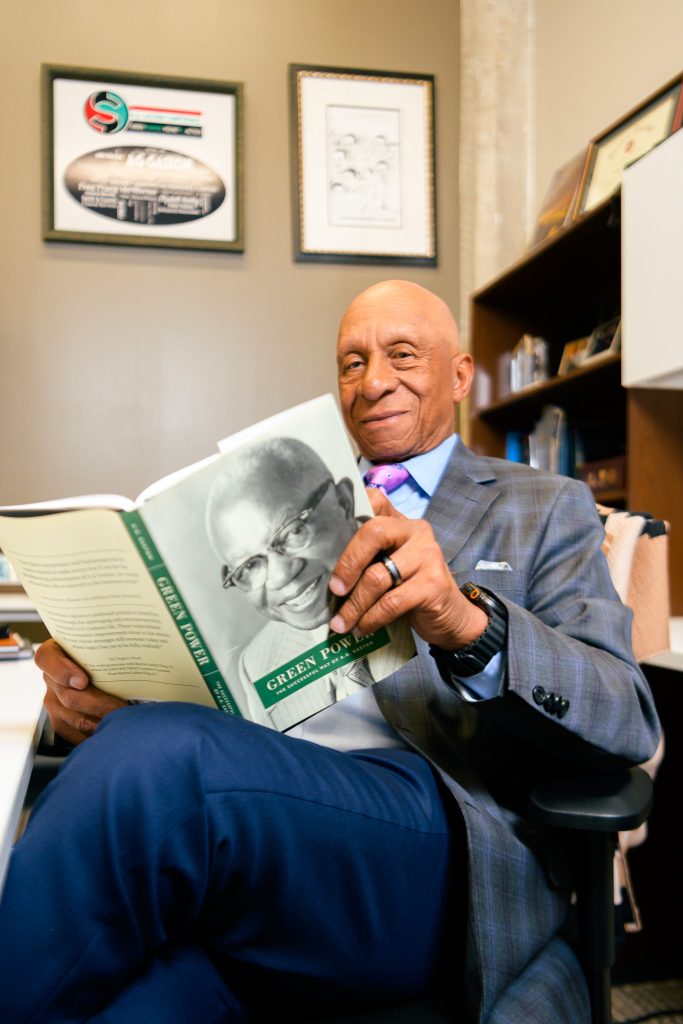
Where It Comes From
Dickerson’s sense of purpose didn’t start in banking. It started at home.
Raised in Roosevelt City during the Civil Rights era, he grew up in a household where community wasn’t just discussed — it was practiced.
His mother, Mildred Dickerson, led civic meetings. His father, Robert Dickerson, coached and guided. And as children, he and his two siblings were right there.
“We had to go to those meetings,” he said. “And we had to sit there and be quiet.”
But in that quiet, something took root.
“When you’re quiet, you hear,” he said.
He heard conversations about change. About responsibility. About lifting people up.
“I think we absorbed it,” he said. “Because all of us now have that same attitude — that the highest position in life is serving other people.”
A Vision That Won’t Let Go
After spending some time working in Atlanta, Georgia, Dickerson moved back to Birmingham in 1984 with a vision of what the city could become.
“Thriving communities. Thriving neighborhoods,” he said. “Less blight. Building more than tearing down.”
He believed Birmingham could be more than a symbol of its past — that it could lead the future.
“I envisioned Birmingham leveraging its position as the epicenter of the Civil Rights Movement,” he said, “to be the epicenter of economic opportunity.”
He pauses.
“We still might,” he said. “But we haven’t yet.”
And if that vision is going to be realized, he believes the path is clear.
“As go Black people, so goes Birmingham,” he said. “We’ve got to make the Black community stronger economically and more viable.”
Ophelia Cox, a Birmingham entrepreneur, credits Dickerson and the Birmingham Business Resource Center (BBRC) with helping expand her business by opening doors that would have otherwise been difficult to access.
“Bob is just well versed in sort of everything financial to businesses and willing to assist businesses to access resources,” Cox said, noting that over the years he has helped her make key connections and even referred her to bankers. While she says there wasn’t one single defining moment, Cox emphasized the cumulative impact of being connected to the BBRC.
“Just being in Bob’s ecosystem, you get to be exposed to various programs and make significant connections,” she explained. “You’re exposed to a lot more than you would be traveling this entrepreneurial space alone.”
Cox added that Dickerson’s influence extends beyond finances, highlighting the importance of trust and credibility.
“He speaks for your credibility… people just know that you are capable, trustworthy… just being in the ecosystem,” she said, underscoring how the BBRC continues to strengthen and support Black-owned businesses throughout Birmingham.
A Billion Dollars — and the Stories Behind It
Not long ago, the BBRC reached a milestone: more than $1 billion in small business loans facilitated across Alabama. For many organizations, that number would be the headline. For Dickerson, it’s just part of the story.
“That’s not theoretical stuff,” he said. “That’s execution.”
What matters more are the people behind the numbers — the entrepreneurs who found a way forward when options were limited.
“There are situations where we are the only opportunity that these companies would have,” he said.
And sometimes, the impact comes back to him in unexpected ways.
“Somebody will walk up to me that I don’t even remember,” he said, smiling. “And they’ll say, ‘You helped me.’”
He pauses.
“And especially when they say, ‘You helped me when nobody else would.’”
That, he says, is what stays with him.
The Work Is Harder Now
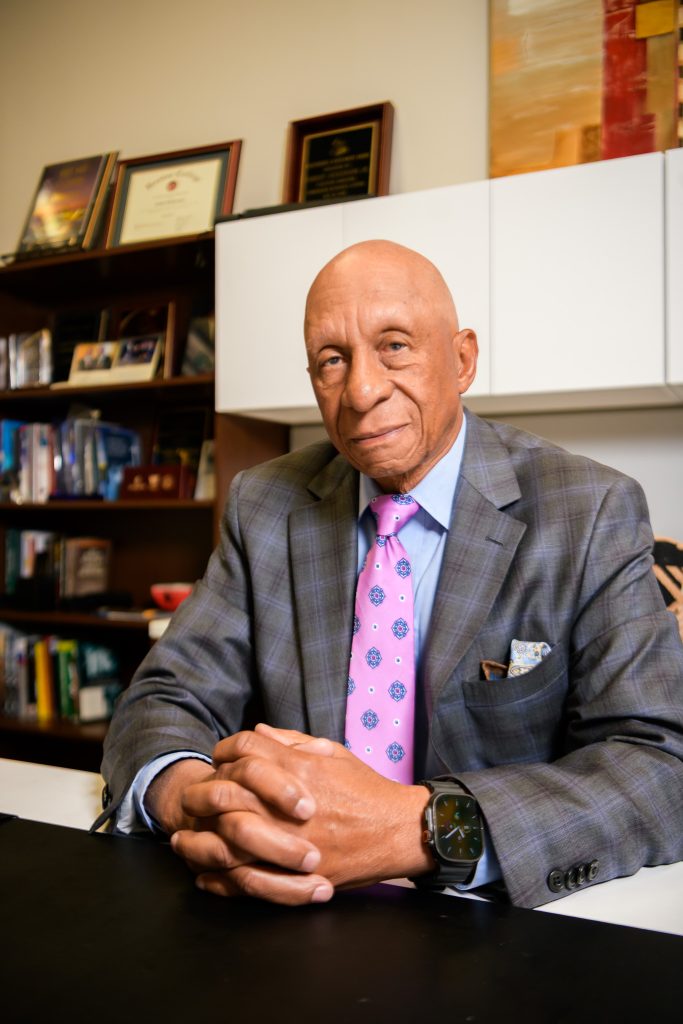
After nearly three decades leading the BBRC, Dickerson has seen progress.
But he’s also seen how fragile that progress can be.
“We’ve made some progress,” he said. “But now we’re in a position where we’ve got to protect it.”
And that’s not easy. Today, the challenges look different — but no less real.
“There are some folks that don’t even want you to use the word ‘minority’ anymore,” he said. “If you say you’ve got a program to help Black businesses… that can be a problem.”
At the same time, the economic gaps remain.
“We’re still in survival mode,” he said. “And when you’re surviving, it’s difficult to scale.”
Even the momentum can feel uncertain.
“I would love to say we’ve got a lot of momentum,” he said. “But I don’t feel that every day when I come to work.”
Still, he keeps coming.
Because he knows what’s at stake.
Still Showing Up
These days, Dickerson’s life includes family — his children, his six grandchildren, and moments that pull him away from the office.
But not for long because the work is still there. And so is he. Every day, he approaches it the same way.
“You’ve got to get up and make it happen,” he said. “Every day.”
He doesn’t expect perfection.
“You’re not going to be 100 every day,” he said. “But if you hit 70, then you’ve got to come back and make it up.”
That mindset — steady, disciplined, committed — has carried him through decades of change, challenge and impact.
And it continues to define a life’s work that has never really been about titles or recognition. Just purpose. Just consistency. Just helping people — over and over again.
For Dickerson, that’s more than a mission. It’s who he is.