

Birmingham area students discuss leadership; life altering trip to D.C.
Hillary Clinton makes history as America’s first female presidential nominee

Michelle Obama gives rousing speech at the Democratic National Convention

Michael Jordan pens essay against police brutality

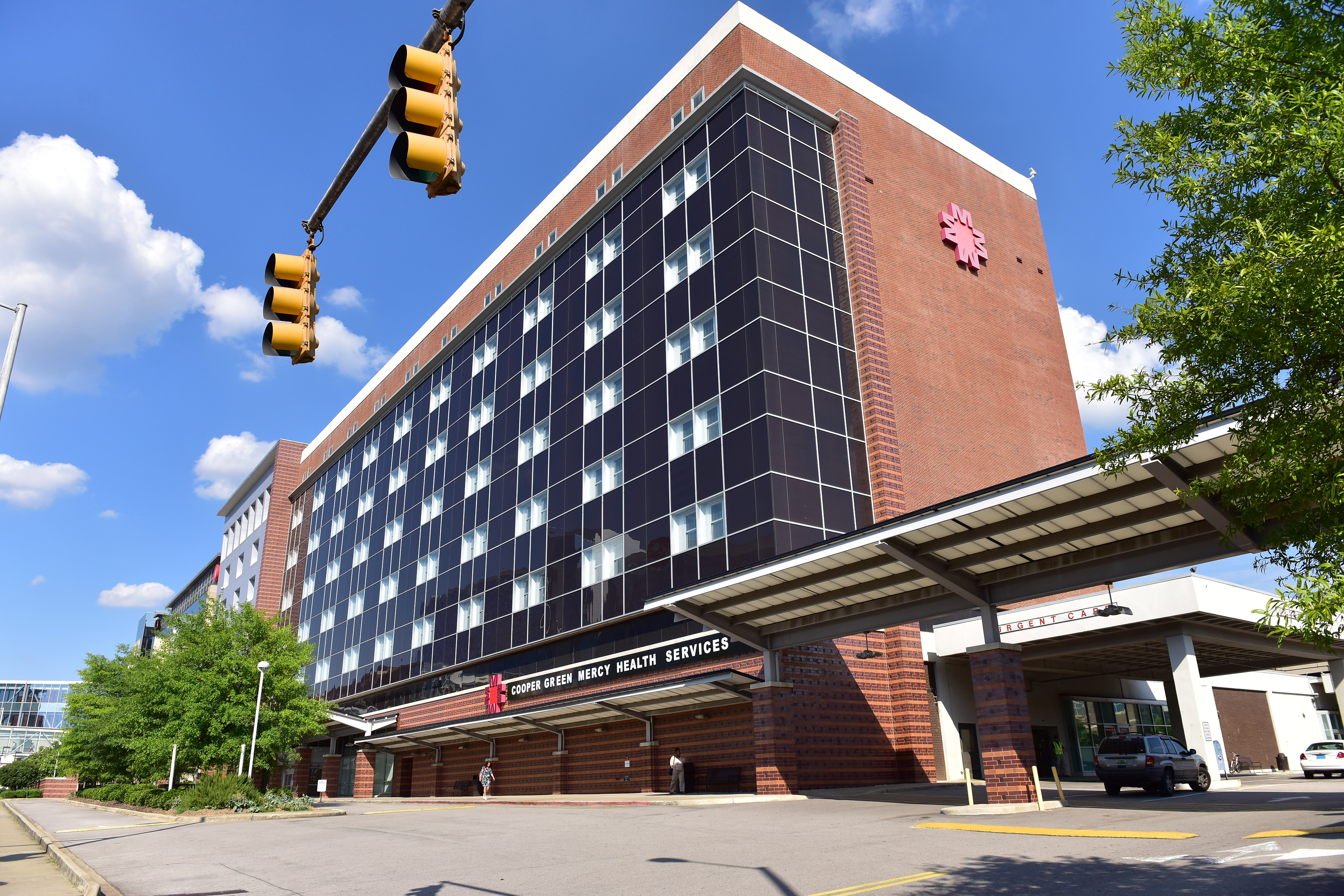
Cooper Green Mercy Health Services Continues to Make Full Recovery
By Eboné Parks
The Birmingham Times
Count Tony Petelos among those who have an affinity for Cooper Green Mercy Health Services. The chief executive officer of Jefferson County was at the Sixth Avenue South facility one day several years ago when he wasn’t feeling well.
“I was there for a meeting, and I wasn’t feeling right,” Petelos recalled. “I went to the urgent care, and the doctor said, ‘You need to go see your urologist.’ I went to see my doctor, and he diagnosed me with bladder cancer. I’m not afraid to go to Cooper Green. It’s a well-run organization,” said Petelos, who has made a full recovery.
He’s not the only person pleased with facility. Stories like Petelos’s have been repeated by a number of patients, including Maralyn Mosley, a longtime patient who had been a vocal and frequent critic of the Jefferson County Commission’s decision to downsize Cooper Green Mercy Hospital.
“I think we are moving in the right direction,” Mosley said. “Cooper Green has added new, much-needed services to its clinics. And it seems that the patient count, the census, is picking up. People are coming back.”
Mosley said she is encouraged to see that the clinic now provides podiatric, geriatric, and orthopedic services, as well as several new internists.
Once a 319-bed inpatient hospital, Cooper Green Mercy transitioned to a medical-service clinic after a majority of the Jefferson County Commission voted to close the inpatient care unit and emergency room in August 2012. On Jan. 1, 2013, Cooper Green Hospital closed and began operating as an urgent care center with primary clinics.
Closing the inpatient care unit and emergency room was painful, but it was the right thing to do, said Roger McCullough, chief executive officer of Cooper Green.
“When you come to Cooper Green, you not only get comprehensive health care, but you truly get world-class health care,” he said. “I can’t imagine why people go anywhere else. We’re doing everything.”
Jefferson County Commission President Jimmie Stephens, who was among the majority on the commission that voted for the downsizing, said he has been pleased by the turnaround.
“The key has been sound management practices with a focus on improving patient care,” he said. “The key is enhancing patient care, and coupling that with the desire and ability to improve each individual’s quality of life.”
Starting Over
Along with Stephens, commissioners David Carrington and Joe Knight voted to downsize the hospital; commissioners Sandra Little Brown and George Bowman voted against the move.
Then known as Mercy Hospital, Cooper Green opened in October 1972. The Alabama state legislature in 1965 designated a portion of sales and liquor taxes collected in Jefferson County for indigent care. Those funds were used to build and operate the hospital and provide medical care for county residents who were unable to pay.
The social and cultural significance of Cooper Green made the county-owned facility one of the most sensitive issues for elected state and local officials. The decision to make changes caused tumult across the metro area and led to protests by community activists and some local politicians.
In 2013, Cooper Green Mercy Health Services (CGMHS) began operating as a full-service ambulatory care facility that includes both primary and specialty care, as well as urgent care, laboratory services, radiology, a pharmacy, and other services—all in a single location. In addition, there is an onsite pharmacy, a podiatrist, and an eye clinic.
“The only services we don’t provide are transplants,” McCullough said. “Any other medical services anyone needs, they have it when they walk in the door.”
Cooper Green is “one of few indigent facilities that are affiliated with a world-class academic medical center,” he added. “If the very poorest person in Jefferson County walks through the door, they have access to full range of comprehensive services.”
Cooper Green has a partnership with the University of Alabama at Birmingham (UAB) that is second to none, McCullough said.
“Through our partnership with UAB, we try to manage the best, high-quality primary care to keep patients from needing the more expensive specialties,” he said.
According to McCullough, 65 percent of the clinic’s population is considered indigent; the other 35 percent have Medicare, Medicaid, Blue Cross Blue Shield, or other insurance coverage. Currently, 15 primary care providers and 30 specialists work with CGMHS, mainly on a part-time basis.
The Transition
When the hospital was downsized, many doctors left and the facility faced a number of challenges, McCullough said.
“It wasn’t just doctors who left. Patients left, too,” he said. “Probably the hardest thing we had to deal with was trying to convince the public that Cooper Green was still open.”
And there were other problems.
“We lost our capacity to see patients, which resulted in very long wait times,” he said. “That never bodes well, particularly with [indigent patients], because there really is a more chronically ill population, so they really need quicker access to services.”
The wait time for some patients had been as long as 17 weeks in some instances. That’s down to six weeks or less, say hospital officials. If a patient has an acute situation, they are seen in less than six weeks.
Mosley said she doesn’t have to wait long to see her doctor now.
“For a long time it was tough, but it has gotten better,” she said. “You had such a long wait between appointments. It’s much better now because there are more doctors on staff.”
Looking Forward
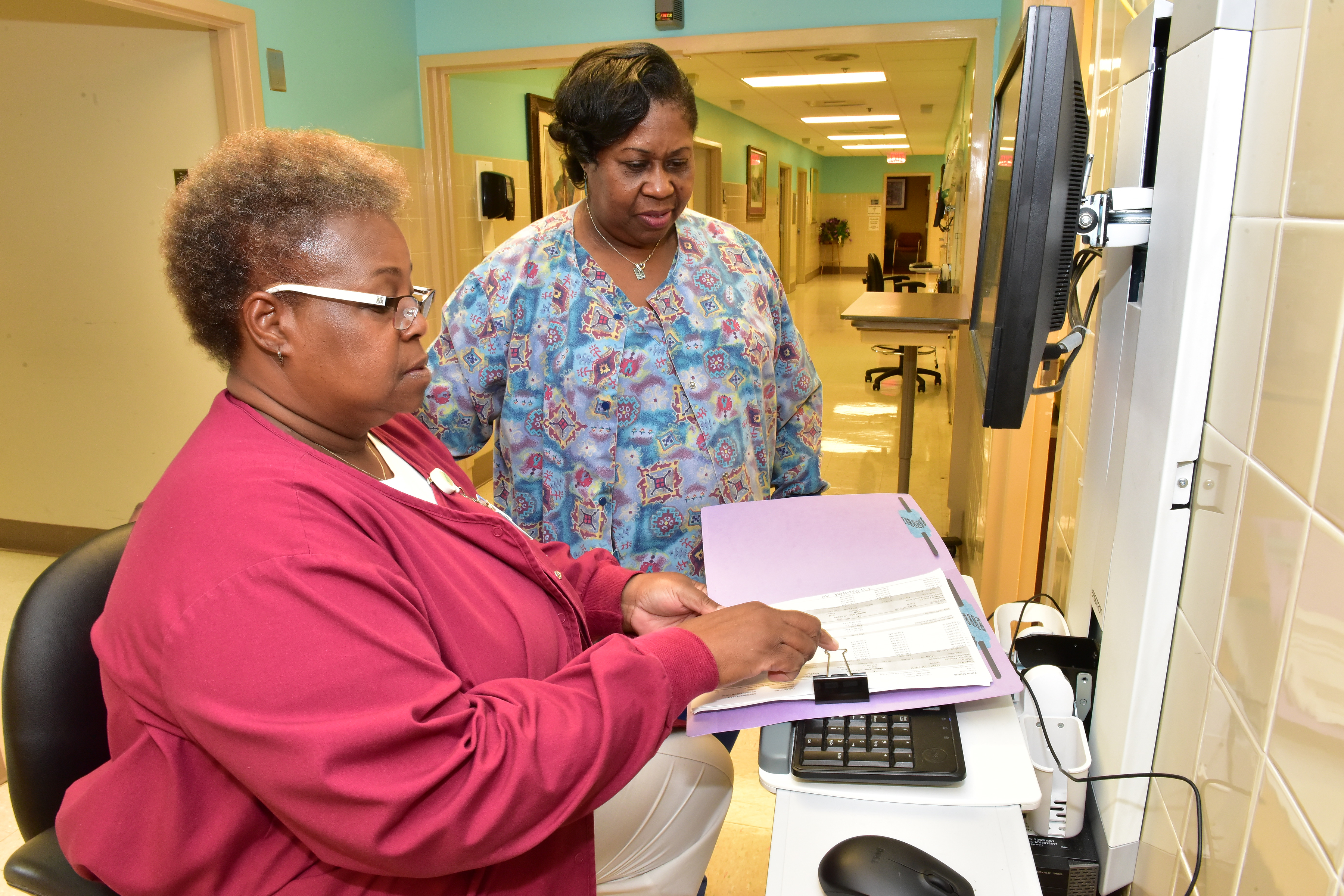
Cooper Green has about 62,000 patient visits a year, approximately 200 to 250 patients on a daily basis. The facility has added a number of new medical specialties, and the number of primary care providers has increased—along with the number of patients.
“Probably the most difficult thing to manage now is the increase in the volume of patients. In the last two months, we’ve had 1,000 new patients,” McCullough said.
Still, however, some officials have concerns.
“Even though the quality of health care is much better and less costly than it was when the hospital was open, the current facility is inefficient, outdated, and in need of major capital infusions,” said Commissioner Carrington.
McCullough said hospital officials are investing in the facility.
They have ordered radiology equipment, including state-of-the-art CT scanners, digital mammography, and ultrasounds, he said. And they are in the process of buying new chemotherapy chairs for the oncology unit. Several million dollars are being spent on the latest equipment.
Before the transition, the hospital hadn’t made an investment in its equipment infrastructure in more than two decades, McCullough said. Now, there has even been talk about building an entirely new clinic on the site of the parking deck next to Cooper Green on Sixth Avenue.
High Expectations
Stephens said the commission will make whatever investments are needed to provide top-notch care.
“Our goal is to offer each person in Jefferson County world-class health care,” he said. “This was the original mission of Cooper Green, and we pledge to continue the effort to return to that mission and improve the quality of life for its patients. It is our duty and responsibility. Our citizens should expect no less.”
What Jefferson County Commissioners Are Now Saying About Cooper Green Mercy Health Services

A bitterly divided Jefferson County Commission voted in August 2012 to downsize Cooper Green Mercy Hospital. It was a decision that led to rancor both on the commission and in some areas of the Birmingham metro area.
Republicans Jimmie Stephens, David Carrington, and Joe Knight voted to downsize the facility; Democrats Sandra Little Brown and George Bowman voted against the move.
Nearly four years after the controversial vote, many now say improvements have been made.
Members of the five-member commission were recently asked about Cooper Green Mercy Health Services, which began operating on Jan. 1, 2013, as an urgent care center with primary clinics.
How do you feel about where the facility is now and the services it provides?
Stephens: The recent success is, indeed, the intended outcome desired of the commission, and I pray helps to restore relations with the Cooper Green community. It is time for a new beginning, a fresh start. I pledge to work with my fellow commissioners to build upon this foundation and expand the quality of care throughout our community. Our goal is to offer each person in Jefferson County world-class health care. This was the original mission of Cooper Green.
Brown: I feel that we are moving in the right direction. All clinics are functioning, services have been added, the skill sets have been upgraded, and the public is responding positively. We have partnered with several area hospitals for inpatient care, and our patients have been satisfied with the care they have received.
Carrington: Even though the quality of health care is much better and less costly than it was when the hospital was open, the current facility is inefficient, outdated, and in need of major capital infusions.
Knight: Overall, I feel good about what is going on within Cooper Green Mercy Health Services. We continue to see a rise in the enrollment for care and expect these number to continue to rise. We have seen a reduction in some areas as far as the wait time for getting an appointment with a physician. We are still attempting to expand services into the community by opening medical home clinics, where our citizens can seek needed medical care without having to make the sometimes rigorous trip downtown. We also are operating within the budget, whereas in prior years Cooper Green ran over-budget by millions each year.
Bowman: I always have and still believe that the Health Care Authority model [used in several cities across the U.S.] would be the best fit for Cooper Green Mercy. It would provide streamlined, cost-effective services for patients, which was the intention of the legislature when Cooper Green Mercy Hospital was first established. There are future plans for Cooper Green Health Services in the areas of expanding services and increasing the community footprint to include clinics within the neighborhoods. My mission has always been and will always be to provide the best services to the citizens of Jefferson County, medical and otherwise.
Do you believe the indigent population in Jefferson County receiving high-quality, affordable medical care?
Stephens: Yes. We are dedicated to improving the quality of care now and in the future, and we will commit the resources needed to make that happen. This commission has sent a message to indigent patients—they matter.
Brown: We have partnered with several hospitals in the area, such as Princeton Baptist Medical Center, which offers comprehensive services in our community, and the University of Alabama at Birmingham (UAB), the third largest public hospital in the country by the number of beds.
Carrington: Cooper Green’s patients surely are receiving high-quality, affordable health care. But I’m concerned about the time it takes patients to see some specialists, as well as the limited access to primary health care clinics throughout the county.
Knight: The indigent population is receiving high-quality health care. In my mind, there has never been a question about the quality of care patients receive. Our physicians, nurses, and staff are professionals, and they treat each patient with care and compassion, no matter what their lot in life. The care is affordable for those who enroll in our program, and we encourage each citizen to seek our help in receiving excellent-quality health care.
Bowman: I do believe that our partner hospitals are providing high-quality care for our residents. Today, we are operating as Cooper Green Mercy Health Services, and I believe the staff has worked diligently to make this transition more palatable for the patients of the Health Services Clinic. The partnerships that have been established with local hospitals have proven beneficial in areas of concern that I expressed, such as location; easier access to public transportation; and, most importantly, a focus on treating patients with dignity and respect.
Hillary’s Team in Alabama ready for next week’s Democratic Convention

By Ebone’ Parks
The Birmingham Times
“I believe in her. I believe she’s a great leader. I believe she possesses the skill set to lead our country,” said Randall Woodfin, the Alabama State Director for “Hillary for America”.
Woodfin and other members of Hillary for America and preparing for the Democratic National Convention next week at the Wells Fargo Center in Philadelphia. According to Woodfin, the convention is a chance to do two things: talk about platform issues as it relates to Democrats and officially nominate Clinton as president.
“Within that, she is able to share her vision with the country . . . and how she will preside over our country,” said Woodfin, a local attorney and member of the Birmingham Board of Education.
Woodfin says the convention will “give us a chance to fire up the base and be ready to hit the ground as it relates to getting out votes” after the convention.
The teams’ everyday activities are based around organizing and political engagement, he said. Organizing includes recruiting, training and activating volunteers; getting them involved in the campaigns in their cities or counties across Alabama and staying in contact with members of the state party and state leadership.
The objective is to make sure supporters do everything they can to activate and motivate people to support the Democratic nominee, he said.
“I believe she possesses the skill set to lead our country,” Woodfin said. “I believe she’s overly prepared as far domestic and foreign issues. I like the whole part of her being very practical and being able to get things done and solve issues.”
Woodfin said Hillary has maintained a steady lead in the polls because of her vision, campaign platform and the way she connects with families. Many also believe and know that she will fight for them, he said. Even before Barack Obama was elected president, Clinton supported healthcare, education and equal rights issues, Woodfin said.
“I think what you have is not only a continuation of moving things in a positive direction, but you then have somebody in her own right who will be able to make history as well as continue to tackle some of our issues in a very practical way,” he said.
He added, “We will continue to see her fight for and expand on the last 8 years as it relates to championing education, making sure our economy works for everyone, fixing America infrastructure and keeping our homeland safe.”
Chair of Alabama Minority GOP: ‘Trump will win by a landslide’