Home Blog Page 1177

‘A rainbow formed in the sky . . . an answer to God’s promise’
0


By Marie A. Sutton

For The Birmingham Times
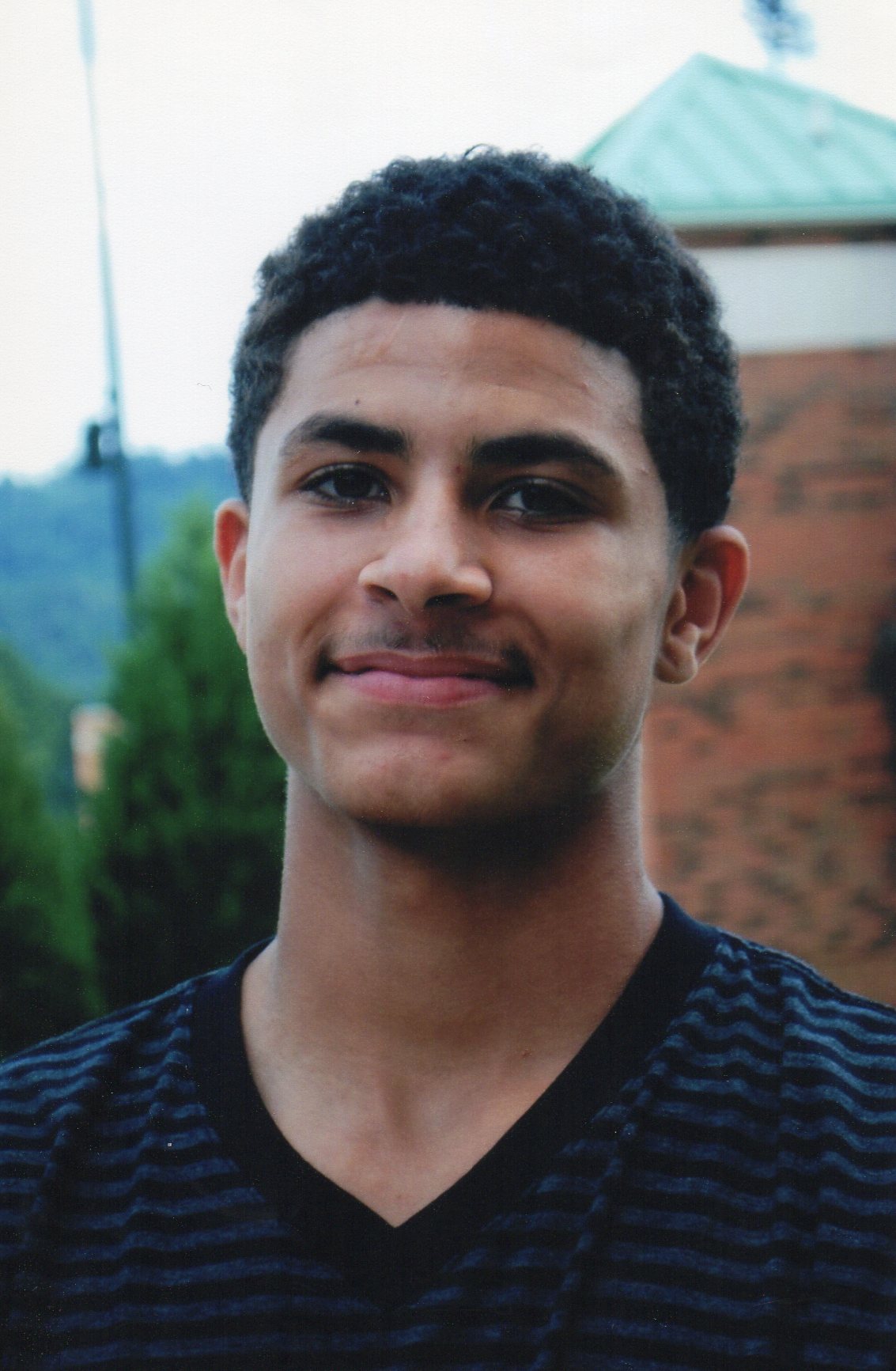


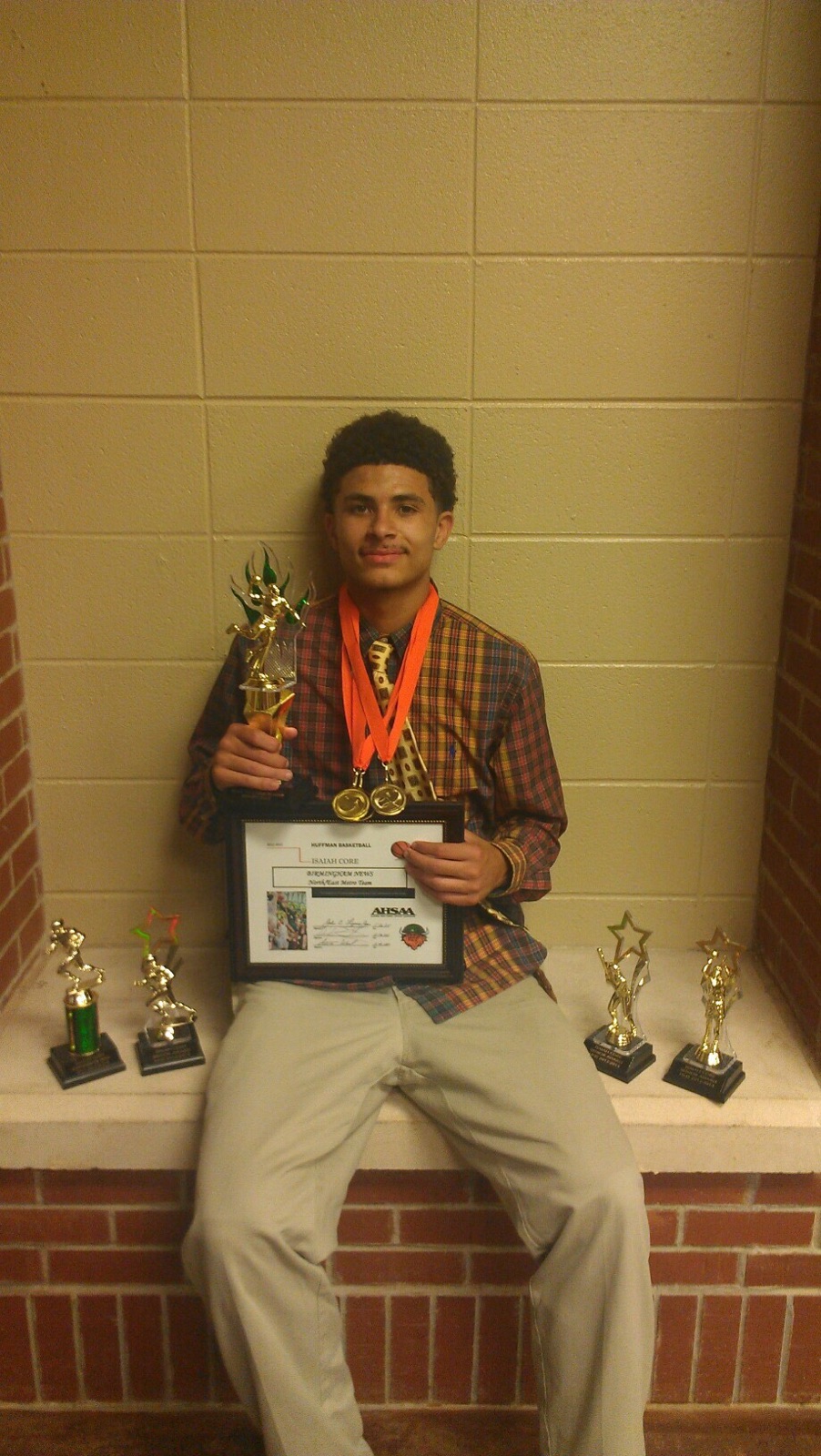
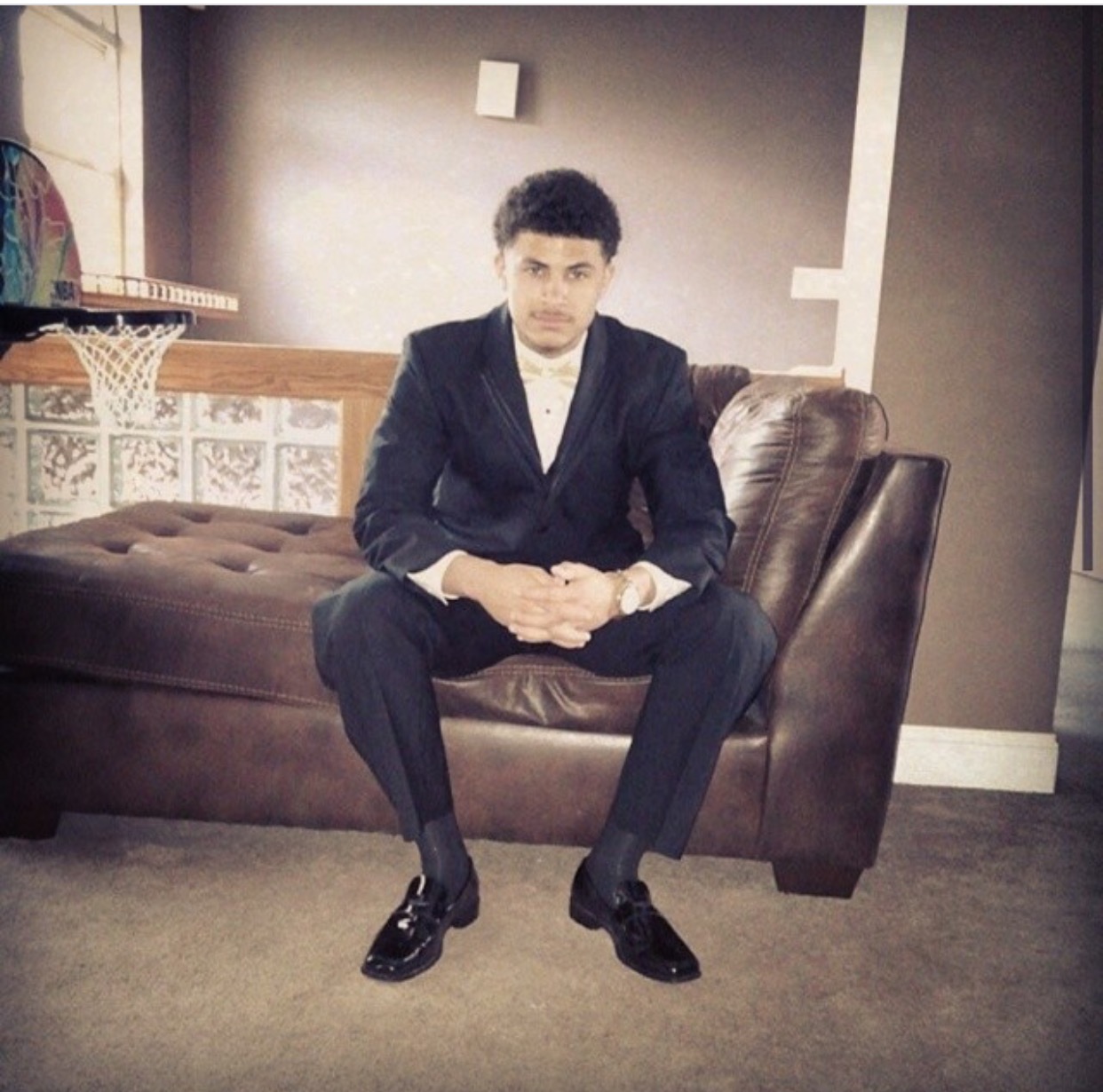
Isaiah Core, 20, was shot by a Shelby County Sheriff deputy June 22 following a police chase in the early morning hours. He played basketball, baseball, and football at Huffman High School. (PROVIDED PHOTOS)

The promise

Around 8 in the morning, 42-year-old Brandy Core got two troubling phone calls back to back. Friends told her that an email alert had gone out about a police car chase involving two men, one of which was her son, Isaiah. Not only that, one of the men was dead.

“It can’t be Isaiah,” said the Educational Talent Search office manager at Jefferson State Community College. “God had given me a promise that Isaiah will save many lives.”

She knew that her 20-year-old son had some troubles within the last year – smoking weed and “stupid stuff,” she said. But she felt that it was temporary, that he was having a “spiritual battle.” Isaiah had been a star athlete and academic champion since age six. He always addressed his elders with a prompt “yes sir” and “no sir.” He had been a youth leader at his church. Plus, she had a promise from God.

Core immediately thought of the other boy in the car, fearing the worst for him. “I called a friend of mine and said, ‘We need to pray for this boy’s mother.”

But the mother who would need prayer would be her. The “boy” who died was Isaiah.

According to the Shelby County Sherriff’s office, on the morning of June 22, Isaiah and another man were in a 2001 Lincoln Navigator at an apartment complex near the U.S. 280 corridor. Deputies noticed the “suspicious vehicle” being driven by Core’s son. The men fled, which initiated a police chase that continued until Oporto Blvd. near I-20.

The vehicle came to a stop and then, reportedly, “made a life-threatening attempt to injure officers with the vehicle.” At 2:55 a.m., a deputy shot Isaiah. The passenger was not harmed, but upon a search, the car was determined to be stolen as was a gun that was found inside. The young man who had been with Isaiah was later charged with receiving stolen property first degree. Isaiah, however, was taken to UAB Hospital and pronounced dead at 3:15 a.m.

All of this didn’t make sense to Core – at first.

“But God had promised me,” she said, a week later while sitting in her Trussville home. Countless pictures of Isaiah and his sister, Gabrielle, cover the walls, and shelves upon shelves display a number of shiny trophies and accolades.

Isaiahpix2

“When you think about a whole life, nothing led up to make you think this would happen,” Core said. “Yeah, he did stupid stuff, but my baby was a good guy. He was handsome and smart. It should not have resulted in death.”

“Man-Man”

Isaiah Core III was born on July 20, 1995, weighing 9 lbs. 1 oz. When his mother, who was married to Isaiah’s father at the time, saw her whopping baby boy she said, “You look just like a man.” From then on, she, and everyone who knew him, called him “Man-Man.”

Isaiah, who loved hot wings and hot Cheetos, played basketball, baseball and football and “excelled in all three,” his mother said. “He could play any position. He always made all-star and always made AAU.”
 

Isaiahpix4

“He was one of a kind,” said Steve Ward, head basketball coach at Huffman High School. “He was the first kid I ever had that excelled in the classroom and on the court. He was special.”

Isaiah was a Scholar-Athlete of the Week and was Huffman’s football quarterback and a guard for the basketball team. His senior year, he was awarded a total of $1.2 million in scholarships and earned the nickname “Million Dollar Man.”

“He helped my program turn a corner with his academics and his leadership,” Ward said. “He was the ideal kid and did everything right.”

And he could dance, too.

Local performing artist Darius Dowdell, 22, met Isaiah when the two were at Clay Chalkville High School. They would do the “regulating” dance together, which was popular at the time.

“I was supposed to be one of the best,” Dowdell said. “I taught him regulator moves. He was always smiling.”

David McGreal, former LaGrange University Associate Head Men’s Basketball Coach, remembers Isaiah’s smile, too. He was trying to recruit the young man, but when he found out that Isaiah had a scholarship to be a quarterback at another university, he thought his chances were bleak. But Isaiah told McGreal that his heart was on the basketball court and agreed to come to LaGrange.

“We needed to get him,” McGreal said. “He was extremely talented.”

With a score of 28 on the ACT, Isaiah’s was the highest of all the recruits in the five years McGreal had been recruiting at the university, he said.

“And he was funny, a jokester,” he said. “Never disrespectful, always ‘yes sir, no sir.’ Whether he agreed or disagreed, he’d do it. He was coachable, not a bad kid.”

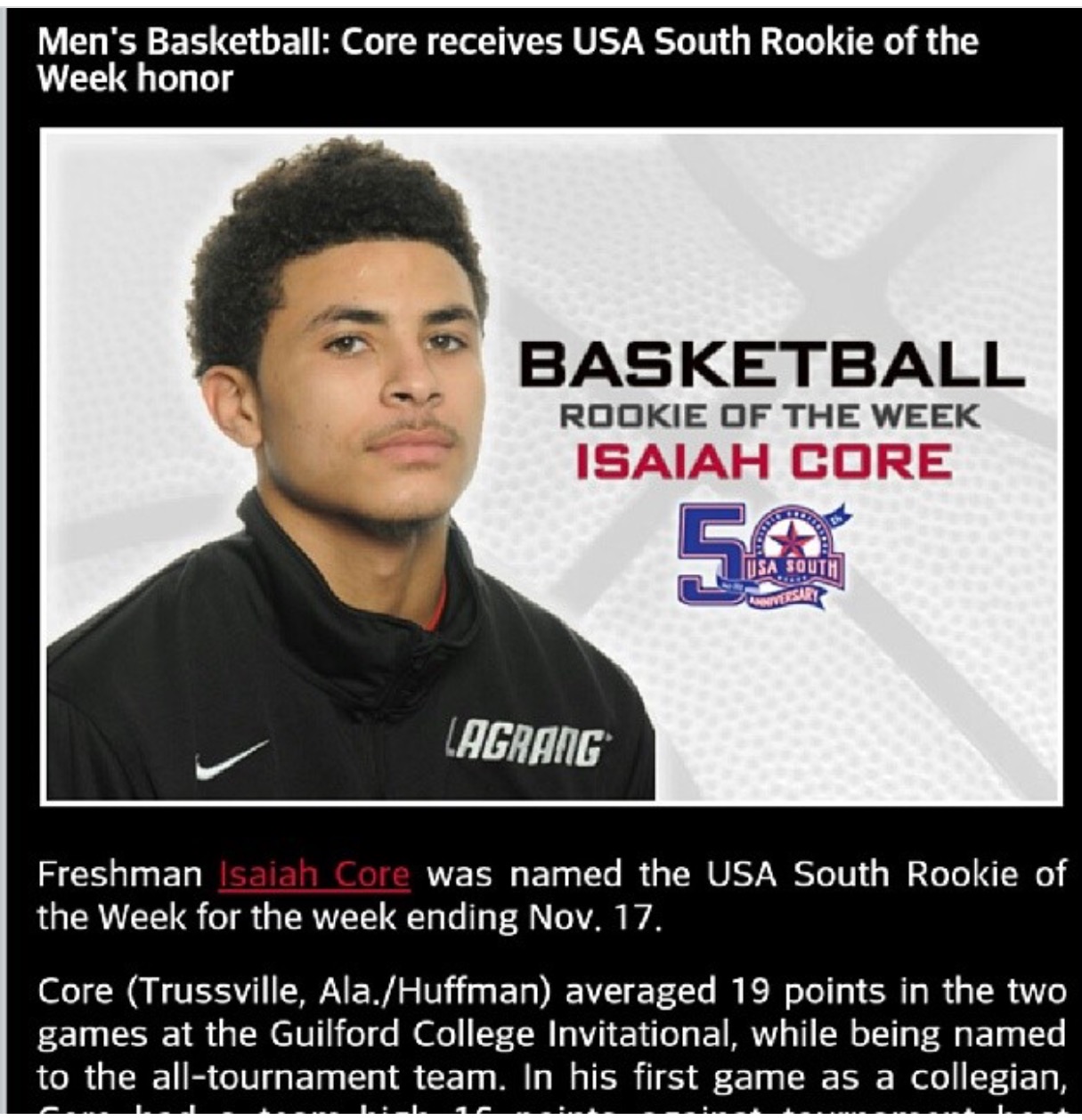
While at LaGrange, Isaiah quickly made an impact. He was named USA South Rookie of the Week as well as LaGrange College Athlete of the Week for averaging 19 points per game.

Months later, though, his grades slipped by a fraction of point below the minimum requirement. Although he got his grades back up and was on the team that brought the school its first conference championship, Isaiah decided to leave.

“That was bittersweet” McGreal said. “I hated to see him go.”

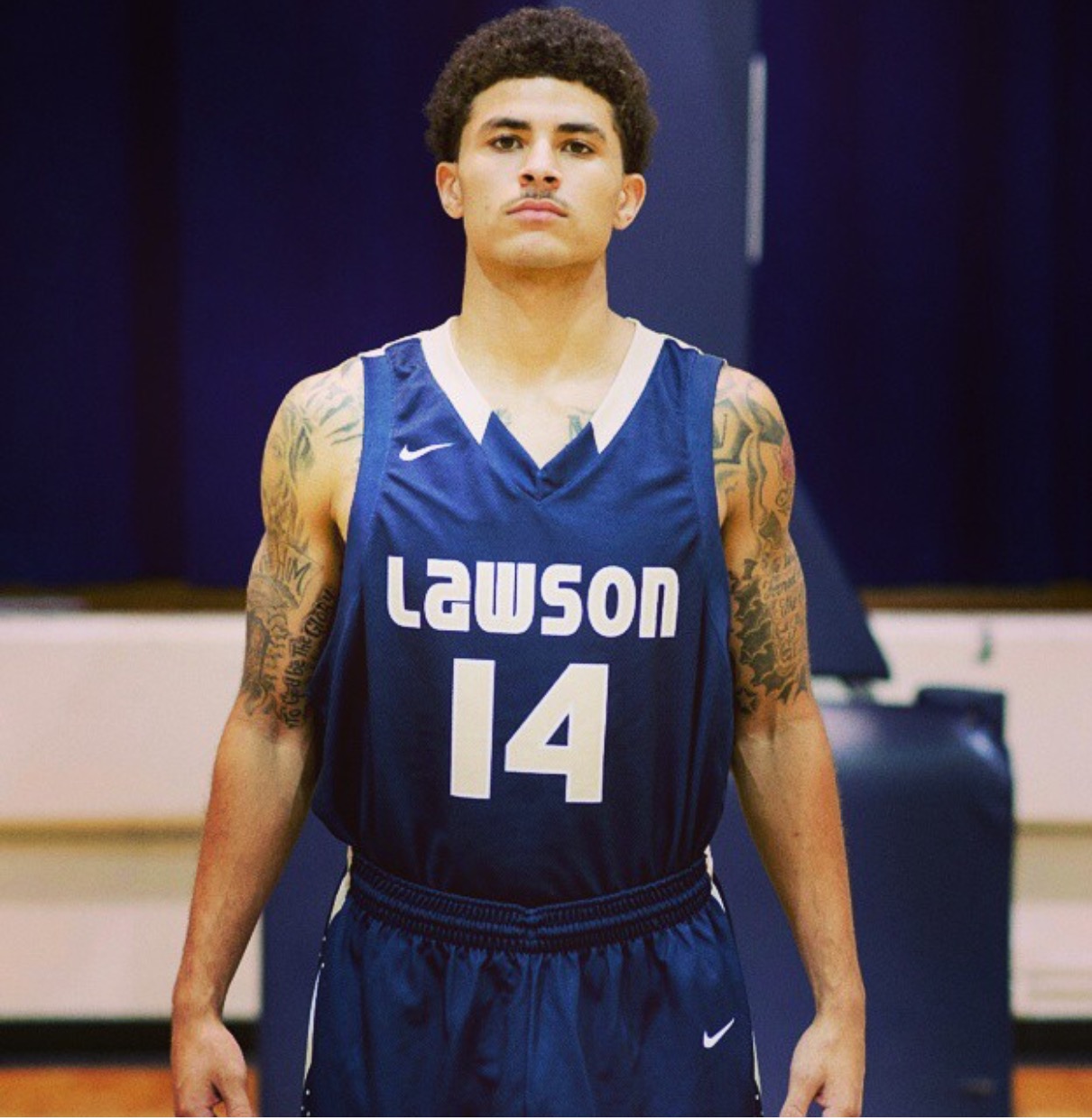
After returning to Birmingham, he enrolled at Lawson State Community College and majored in general studies. While there, he worked in the college president’s office for the administrative assistant.
Isaiahpix3


He graduated and got a full scholarship to Miles College although his tenure there was short-lived. When he decided to come home, Core gave him two weeks to find a job. He did, working for a moving company. But then, he was in a motorcycle accident that tore his knee.

“Isaiah played sports all through the years and was active his whole life,” she said. “This was the first time he wasn’t playing sports. When you are so used to being busy. The idle mind is the devils’ workshop.”

Once he recovered, he was different, Core said. He would sleep away from the house for a few days and then come back. She told him that was unacceptable.

“Trying to show him tough love,” she remembered. “He was wrestling with what he should do and those streets.”

“Brandy did a great job raising him,” Ward said. “He was trying to find himself. I believe he was one or two decisions away from getting on track.”

But Core continued to hold fast to a promise God had given her about Isaiah. And, a prophet she respected told her not to worry, “that God has your son in the palm of His hands.”

The last time

On Monday, June 21, Isaiah stopped by Jeff State to meet with a career counselor. He updated his resume because he had a job interview with Cracker Barrel. While there, he stopped to see his mother.

“We talked about an hour,” she said. “I told him, ‘Isaiah whatever God has got to do to get you He is going to do it. You need to stop running from Him. You can’t live in the world and expect him to do what he wants to do with you.”

“Ma, I love the Lord and He loves me,” he told her. “I talk to Him and He talks to me.”

That was their last conversation.

A day later, she was being taken to a back room at UAB Hospital. The trauma surgeon explained that she tried to revive Core’s son but could not. Later, she was staring at her son’s lifeless body.

“He was dead seven hours before I knew,” Core said, noting that he even had an autopsy. “I don’t appreciate it because I would have donated all of his organs.”

When news spread, the community was reeling, she said.

“I was devastated,” Ward said. “I’m been coaching 13 to 14 years and have lost three kids. This one hit me. We were really close.”

“That was the last thing I thought would have happened,” McGreal said, choking up. “He’ll always have a place in our hearts.”

Dowdell refused to belief it at first, he said. It wasn’t until he started seeing the news on social media that it hit him.

“This is not something he would do,” referring to the incident. “That wasn’t his fruit. He was silly, goofy guy. He was trying to get himself together”

He and his brother wrote and recorded a song for Isaiah called “What’s Goin On” and posted it to YouTube. It has more than 1,000 views.

Do you see what’s goin’ on right now? (What’s goin’ on?)

I turn my back there goes another body, officer.

Please don’t say another word, cause it’s already hard for me.

Hoop dreams, now he can’t even ball with me…
Isaiahpix5

The Sunday after his death, all the mothers from the teams Isaiah played on through the years hosted a vigil at Huffman Ball Park. Hundreds of people came to pray. Afterwards, a rainbow formed in the sky. To Core, that meant an answer to God’s promise to her.

At Isaiah’s June 28 funeral at New Rising Star Baptist Church, a thousand people packed the sanctuary with standing room only. Core listed off dozens of dignitaries and people who came from various states to pay respects, from his middle school principal, high school principal, coaches from little league baseball, football, Clay Chalkville High School and LaGrange.

During an emotional service, 40 people walked to the altar and committed their life to Christ, Core said. And, outside the church, a crowd of hundreds began an impromptu prayer.

“Just like the Lord said,” Core remarked, “Isaiah was going to save many lives. I didn’t think he was going to answer it this way, “but our ways are not his ways.”

Huffman’s Ward plans to host a preseason intramural game in honor of Isaiah for freshman and sophomores. It will be called the Core Invitational and will raise funds for scholarships.

“I know what type of kid he was,” Ward said. “He was a first class kid, a class act.”
 

Taking it personally: Young black men speak out on police brutality

0
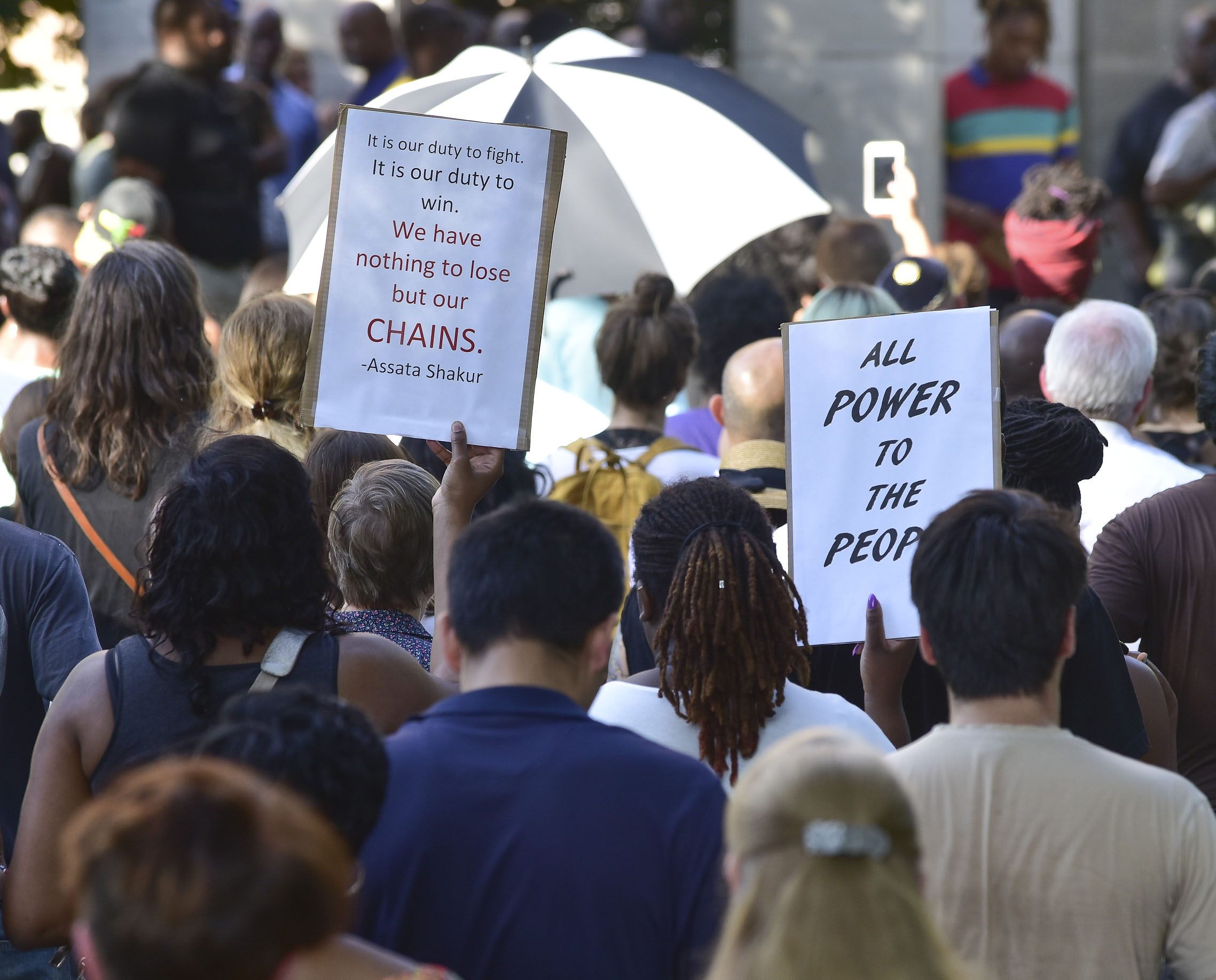
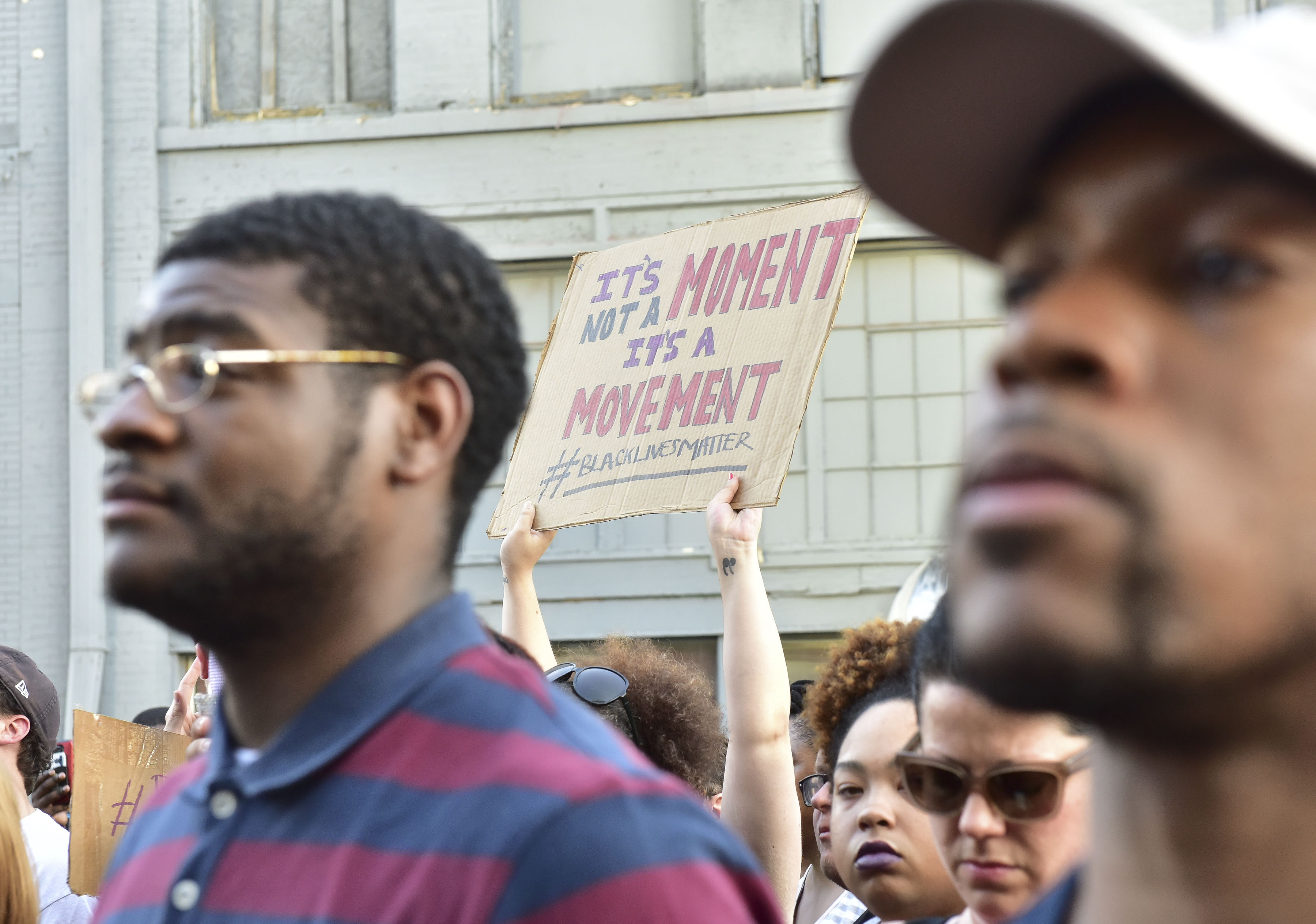
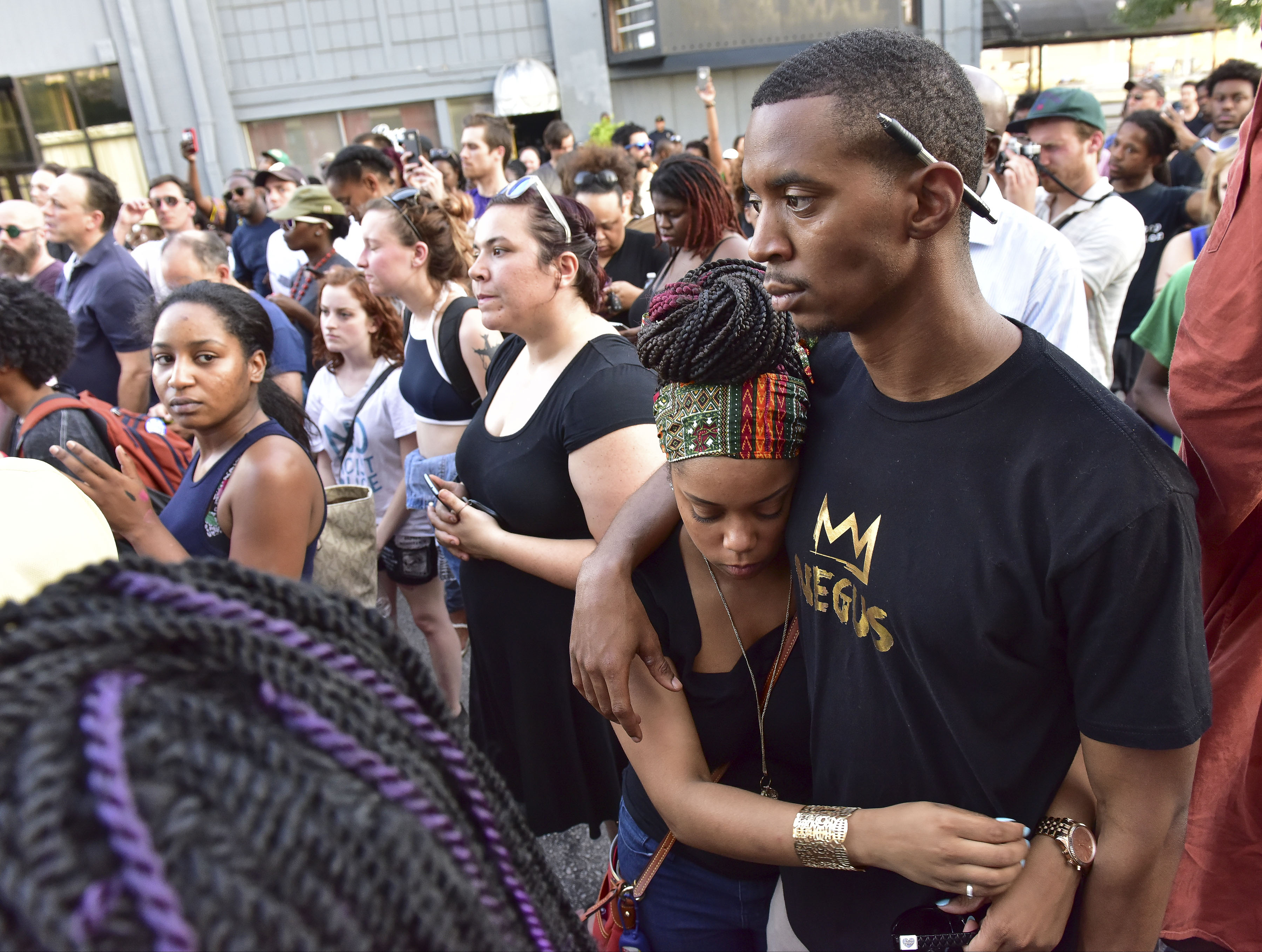
Brittany Powell hugs Brad Harper during a rally in front of Birmingham Police Headquarters. A solidarity protest and march held at Kelly Ingram Park saw hundreds of people listen to speakers, chant and march to Birmingham Police Headquarters. (Frank Couch / The Birmingham Times)
By Ariel Worthy
The Birmingham Times
Brittany Powell hugs Brad Harper during a rally in front of Birmingham Police Headquarters. A solidarity protest and march held at Kelly Ingram Park saw hundreds of people listen to speakers, chant and march to Birmingham Police Headquarters. (Frank Couch / The Birmingham Times)

Black America took it personally.

Video footage of Alton Sterling being shot in the chest by police officers in Baton Rouge and video of Philando Castile slumped over after being shot four times in his car and taking his last breaths in front of his girlfriend and her 4-year-old daughter went viral on social media.

Celebrities like Zendaya, Jay-Z, Jesse Williams, Katy Perry and Beyoncé, who came under fire earlier this year for her video Formation and who was accused of being anti-police, made statements about the killings of Sterling and Castile.

“We are sick and tired of the killings of young men and women in our communities,” Beyoncé said in a statement on her website. “… we don’t need sympathy. We need everyone to respect our lives.”

The recent shootings sparked a discussion that is taken very seriously in the black community: how to interact with the police.

Desensitized

Jason Henry.
Jason Henry said he does not want his children to grow up and fear the police. (Ariel Worthy/Birmingham Times)


During a series of interviews last week, young black males in the Birmingham area said the police shootings left them numb.

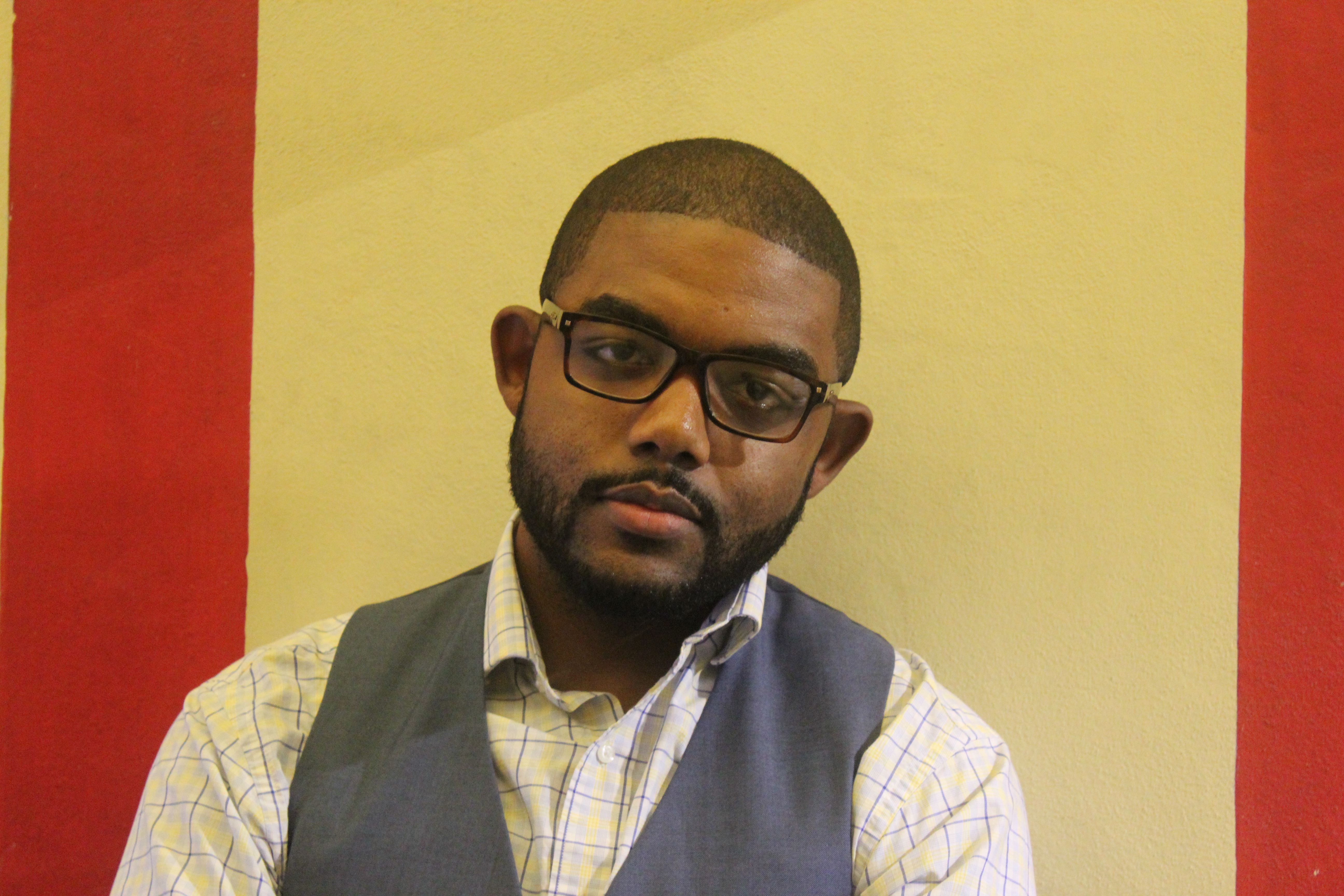
“I’ve always known how to act around a police officer,” said Jason Henry, 32, a millennial, who grew up in Bessemer and now lives in McCalla. “I know how to be respectful, but if he views me through a lens of hate, there’s nothing I can do about how he might react to me.”

Henry, who has a 3-year-old son and 6-year-old daughter, said he does not want his children to fear the police.

“I would be hurt if my son feared [the police],” Henry said. “My wife and I don’t teach our children to fear them, but there hasn’t been a generation of black people in this country that didn’t have to grow up with some type of fear of authority. Whether slavery, Jim Crow, sending scores of black men and women to prison in the ‘90s; there has always been some sort of fear inserted into our psyche.”

When he saw the videos of Sterling and Castile, he was completely shocked, Henry said.

“I think that people of color are getting to the point where they’re getting beat over the head with this every year,” he said.

Distrust

Chris Ruffin.
Chris Ruffin said the killings that have happened over the years between law enforcement and blacks have made him distrust the police. (Ariel Worthy/Birmingham Times)

Henry said he thinks the Dallas shooting, which left five officers dead, is not the boiling point.

“It seems to me that it’s bubbling up to something that I think the rest of America may not be ready for. I don’t think that it’s boiled over, because if it did we’d have a Watts, LA riot situation on our hands,” he said.

Seeing so many black men killed by police and having negative experiences with law enforcement have made him less empathetic to the police, Henry said.

“I’ve had a gun in my face from a police officer before,” he said. “I didn’t feel it was warranted, but he (the officer) did. I’ve been pulled over for a tail light that wasn’t out.”

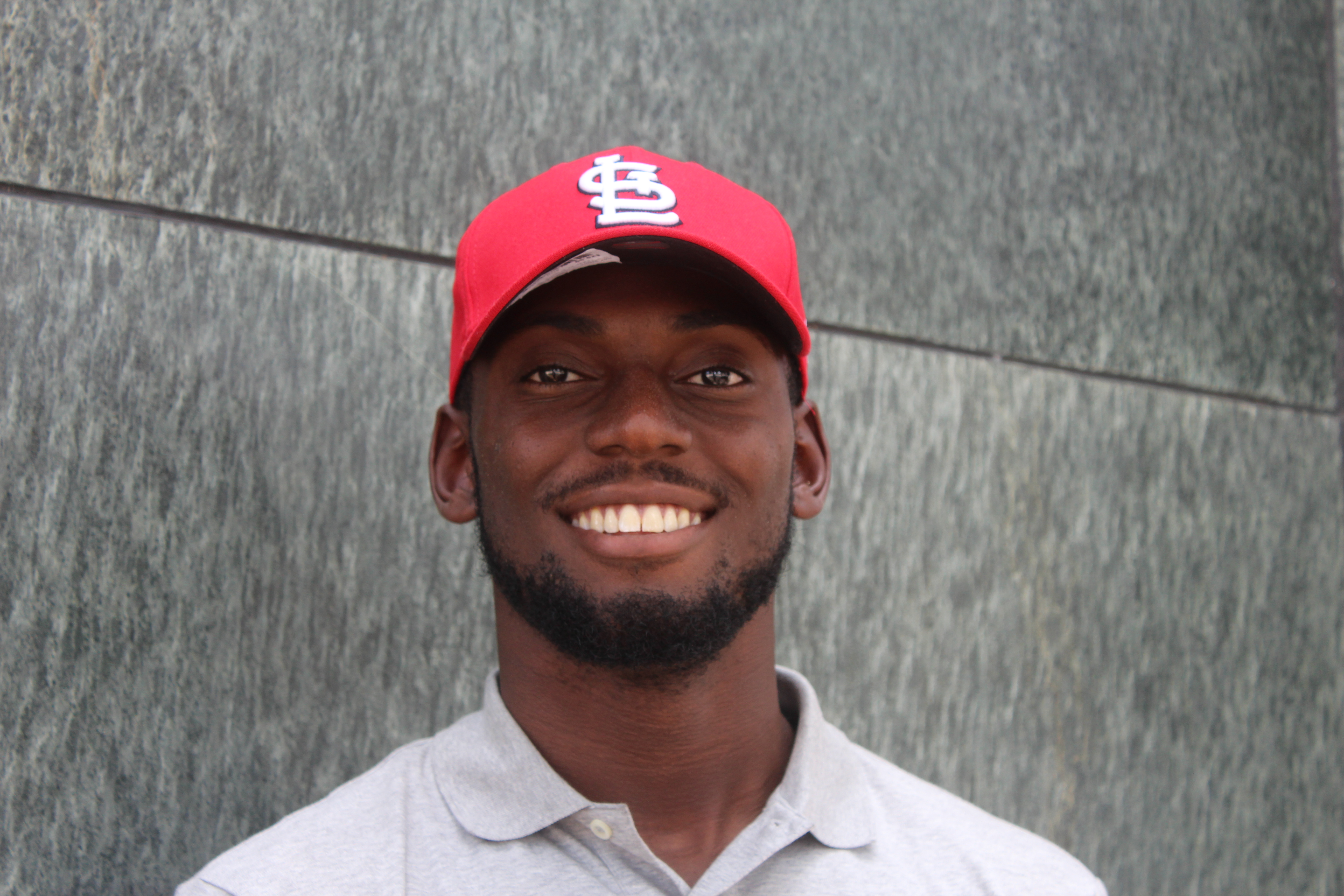
Chris Ruffin, 22, a Birmingham area millennial, said he’s never been a fan of law enforcement.

“I don’t think they’re all bad, but I feel like some of them abuse their authority and they don’t have the proper training . . . a lot of people in law enforcement get into that position because they want to have power against someone else. And they see their uniform as a form of control.”

Ruffin said he believes the distrust between blacks and law enforcement stems from “a lot of people in general are afraid of black people”. “I feel like some cops are really scared for their lives when they come in contact with an African American.”

Ruffin said when he saw the recent videos of Sterling and Castile he was numb to the shooting.

“When Trayvon Martin got killed (in 2013) it really hit home to me because we were around the same age, but now it’s like ‘I expected something like that to happen,’” he said.

Sharing the videos on social media is a slippery slope, Ruffin said. “I don’t feel like people are sharing it because they actually want justice; they’re showing it out of emotion. I don’t feel like it’s very sincere.”

Privileges

Trey Lee.
Trey Lee said he thinks it is important to show the videos because of the reality of them. (Ariel Worthy/Birmingham Times)

Trey Lee, a 24-year-old track coach at Spain Park, said he believes the videos need to be shared.

“Yes, it’s showing a man being killed, but people need to see the reality of what’s going on,” he said. “I think what’s sad is the people who see that and say, ‘It’s okay; he had a criminal background, and he had violent tendencies.’”

That is by definition a logical fallacy, Lee said.  “It’s an attack on the person, not the topic at hand, and usually when they are attacking the person they have already lost the argument.”

Lee, who grew up in a wealthy suburban neighborhood, said he has privileges not afforded to some others.

“If I can admit that just living somewhere different and going to a school that I’m zoned for affords me certain privileges, I don’t understand how people who are born into a society that is strongly favored can sit and say that they are not privileged,” he said.

In light of the recent shootings innocent black people are forced to be complacent, Lee said. “I’m not just talking about the law. I’m talking about being complacent to the tune of ‘I won’t say anything, so please don’t kill me.’”

Brad Harper, 24, of Fairfield, who attended Friday’s protest rally at Kelly Ingram Park in downtown Birmingham, said he is torn about police.

“Some type of training has to come with being a police officer on a psychological level,” he said. “These officers who are committing these crimes, in my opinion, have some type of stigma about black people.”

Harper said he has a friend who is also a police officer. “I know it has been a hard week for him being both a black man and an officer of the law.”

‘Thin line’

Brad Harper with his girlfriend Brittany Powell listen to speakers at the rally. A solidarity protest and march held at Kelly Ingram Park saw hundreds of people listen to speakers, chant and march to Birmingham Police Headquarters. (Frank Couch / The Birmingham Times)
Brad Harper with his fiancée Brittany Powell listen to speakers at the rally. A solidarity protest and march held at Kelly Ingram Park saw hundreds of people listen to speakers, chant and march to Birmingham Police Headquarters. (Frank Couch / The Birmingham Times)

Birmingham Police Chief A.C. Roper, a 31-year veteran of law enforcement, said he understands the “thin line” of being a black man who is a police officer.

“I think we have so many officers walking a thin line who . . . grew up on what some call the wrong side of the tracks so we understand that feeling when a police car drives by or when you’re pulled over. We understand that part, but . . . I also understand the nature of the work that we do. We have got to do a better job of showing our communities that we are human behind the badge. That we are not robots. That we have feelings. We have families.”

Harper said there needs to be a town hall meeting between the black community and law enforcement.

“Community officials could hold meetings to have the people get their concerns actually heard,” Harper said.

Harper said he does not think this will change anything.

“I thought adding body cameras would change things,” Harper said. “I don’t know what could be done anymore. A police getting sent home on paid administrative leave isn’t helping, though. Take away their pay.”

Harper said he thinks it’s important for black people to equip themselves with the knowledge of the law.

“No one can take that from you,” Harper said. “Having that type of information on your side can curb the issues from escalating. If it would prevent this from happening again, I’m not sure, but having the knowledge of your rights is the best thing you could do.”

Still complying and being respectful is key, he said.

“You’re at their mercy, just do what you have to do to see another day,” Harper said.

What Black Lives Matter Can Learn from the Civil Rights Movement

6
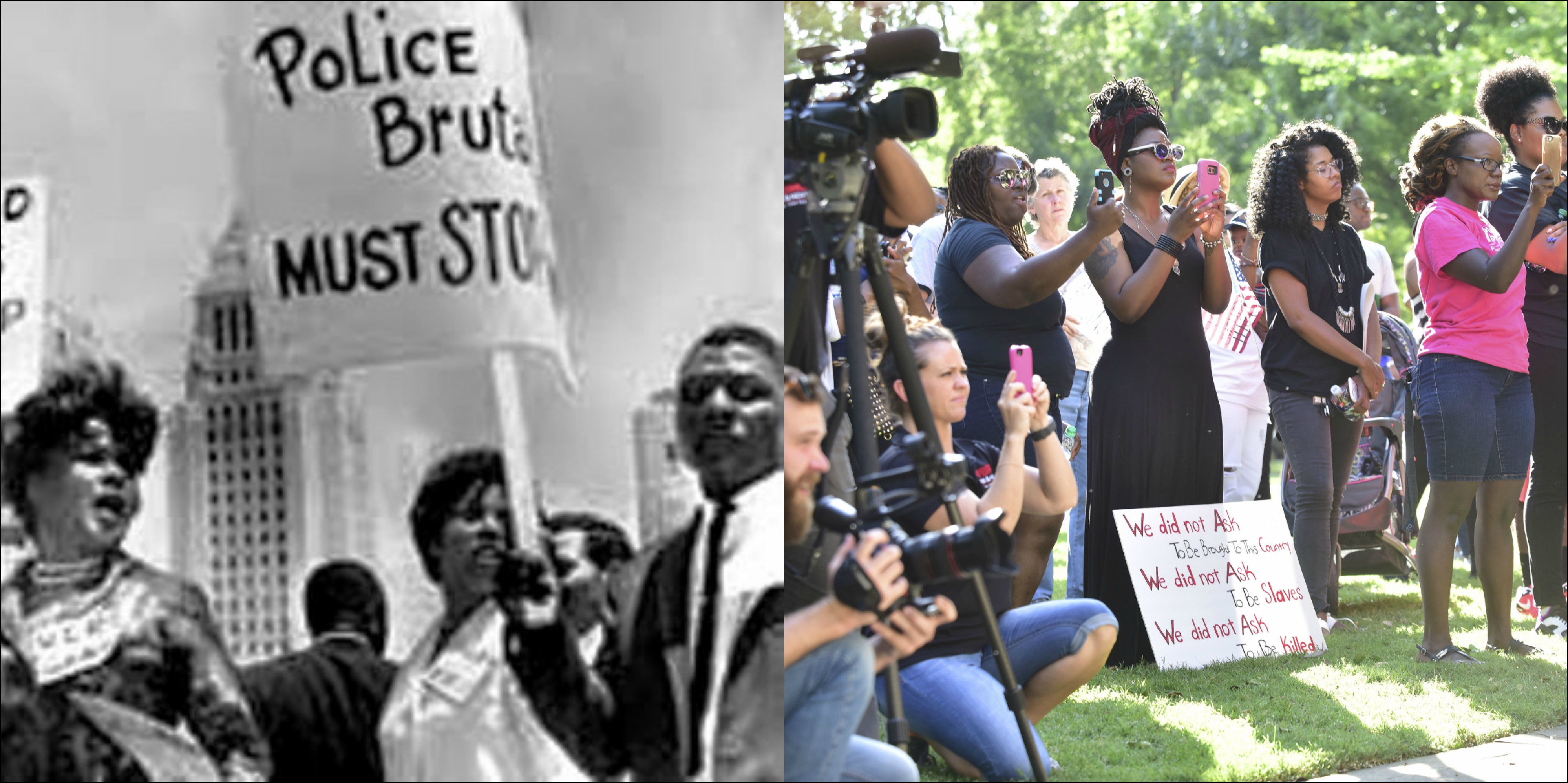
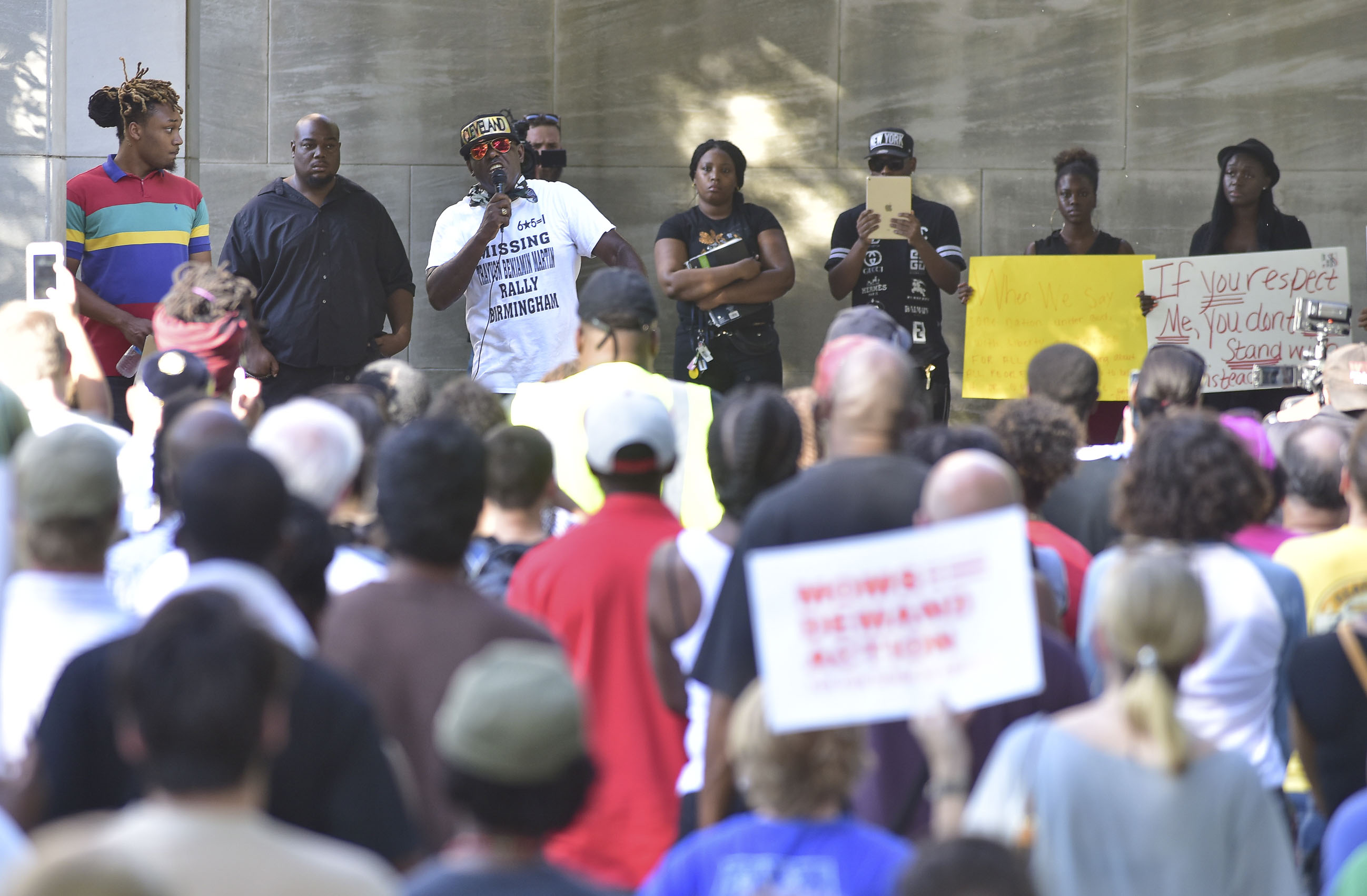
A solidarity protest and march held at Kelly Ingram Park saw hundreds of people listen to speakers, chant and march to Birmingham Police Headquarters. (Frank Couch / The Birmingham Times)


By Barnett Wright

The Birmingham Times

BeFunky Collage

Core activists of the Black Lives Matter (BLM) movement are quick to remind people that the current wave of protests are “not your grandmamma’s civil rights movement”—and that may be a problem.

To its credit, BLM has hundreds of thousands of supporters, including President Barack Obama, who has defended the movement and the right of activists to demonstrate in cities across the United States.

“One of the great things about America is that individual citizens and groups of citizens can petition their government, can protest, can speak truth to power,” Obama told reporters last week. “That is sometimes messy and controversial, but because of that ability to protest and engage in free speech, America over time has gotten better. We’ve all benefited from that.”

Protesters hold signs up at a brief rally in front of the Birmingham Police Headquarters. A solidarity protest and march held at Kelly Ingram Park saw hundreds of people listen to speakers, chant and march to Birmingham Police Headquarters. (Frank Couch / The Birmingham Times)

BLM has been at the forefront of demonstrations since it was founded in 2012, after black teenager Trayvon Martin was killed in Florida. The movement gained national attention about two years later when Michael Brown, an unarmed black teenager, was shot to death by a police officer in Ferguson, Mo. Since then, the group has protested following the deaths of Sandra Bland in Texas; Freddie Gray in Maryland; Eric Garner in New York, and several others.

Well-Defined Goals

But many, including some blacks, have questioned the group’s goals.

Barbara Reynolds, a 1960s civil rights activist, wrote last year in a Washington Post article: “Without a clear strategy and well-defined goals, BLM could soon crash and burn out.”

Business mogul Oprah Winfrey said, “What I’m looking for is some kind of leadership to come out of this to say, ‘This is what we want. This is what has to change. These are the steps we need to take to make these changes. And this is what we’re willing to do to get it.’”

Winfrey became the target of tweets from young activists, who denounced her as elitist and “out of touch.”

But Winfrey had a point, according to those familiar with the civil rights movement, which led to landmark civil rights legislation in 1964 and 1965.

“In our movement, we were not only spiritual, we were thoughtful,” said former U.S. Ambassador to the United Nations Andrew Young, who served as a lieutenant to the Rev. Dr. Martin Luther King Jr. during the civil rights demonstrations.

“The reason our campaigns for change were successful in Montgomery and Birmingham was because they were undergirded by boycotts. We didn’t burn down any businesses. I don’t see that discipline here. We also trained people not to get angry because we knew that our minds, not our emotions, were our most powerful weapons. We knew—to lose your wits was to lose your life.”

Leadership

Frank Matthews talks to the crowd. A solidarity protest and march held at Kelly Ingram Park saw hundreds of people listen to speakers, chant and march to Birmingham Police Headquarters. (Frank Couch / The Birmingham Times)

Unquestionably, King was the leader of the civil rights movement. No single person appears to have emerged as leader of BLM, but members of the group say it’s a misconception to believe the group is leaderless.

“Many Americans of all races are enamored with Martin Luther King as a symbol of leadership and what real movements look like,” they write on their website. “But the Movement for Black Lives, another name for the BLM movement, recognizes many flaws with this model. … In those old models, leadership favored the old over the young, attempted to silence gay and lesbian leadership, and did not recognize the leadership possibilities of transgender people at all. Finally, a movement with a singular leader or a few visible leaders is vulnerable because those leaders can be easily identified, harassed, and killed, as was the case with Dr. King. By having a leader-full movement, BLM addresses many of these concerns.”

Another major factor in the success of the civil rights movement was its well-defined strategy of nonviolence, which everyone followed.

King insisted on nonviolence in the face of brutality. When a bomb exploded at the 16th Street Baptist Church in Birmingham during Sunday school classes, killing four young girls and injuring 23 others, many blacks wanted to retaliate—among them, Illinois Congressman Bobby Rush, who was a member of the Black Panther Party for Self-Defense in the 1960s.

“I thought Dr. King was too milquetoast, too passive,” Rush said. “I didn’t understand the power of nonviolence, so I didn’t adhere to his philosophy and turned the other cheek.”

Ben Jealous, former president of the National Association for the Advancement of Colored People (NAACP), the nation’s oldest civil rights organization, said the nonviolent campaign won American hearts and minds.

“The movement was moving toward a crescendo that we would see in 1964 and 1965, when landmark civil rights legislation was passed,” he said.

Setback

A solidarity protest and march held at Kelly Ingram Park saw hundreds of people listen to speakers, chant and march to Birmingham Police Headquarters. (Frank Couch / The Birmingham Times)

The vast majority of BLM protests have been peaceful. But in the aftermath of the deaths of two unarmed blacks in Baton Rouge and Falcon Heights at the hands of police, the group seemed to suffer an apparent setback when a sniper killed five white officers in Dallas at the end of a peaceful protest against deadly police-involved shootings of black men.

The suspected gunman, Michael Xavier Johnson, told police before he was killed that he was upset about the recent police shootings of two black men—Alton Sterling in Baton Rouge, La., and Philando Castile in Falcon Heights, Minn.—and wanted to kill white people, especially officers, according to Dallas Police Chief David Brown.

Critics immediately condemned BLM. New York Police Department Commissioner Bill Bratton said in a radio interview that BLM protesters should stop “yelling and screaming” at cops about police brutality because it “accomplishes nothing.”

Others find value in the movement. Fredrick C. Harris, professor of political science and director of the Center on African American Politics and Society at Columbia University, wrote in Dissent magazine that the BLM protests have not only put police reform on the policy agenda but also demanded that American society reconsider how it values black lives.

“The police brutality and killings are not, to be sure, new; the emerging movement against them, however, is. The upsurge in antiracist organizing is a break from what we normally consider black activism in the United States,” he wrote.

Organizers of the BLM movement took to Twitter to decry the murders of the police officers.

“#BlackLivesMatter advocates dignity, justice, and freedom. Not murder,” the organization tweeted on July 8, following the Dallas shootings.

President Obama, speaking this week at a memorial service for the five police officers who were killed, said, “When anyone, no matter how good their intentions may be, paints all police as biased or bigoted, we undermine those officers we depend on for our safety.


“And as for those who use rhetoric suggesting harm to police, even if they don’t act on it themselves, well, they not only make the jobs of police officers even more dangerous, but they do a disservice to the very cause of justice that they claim to promote.”

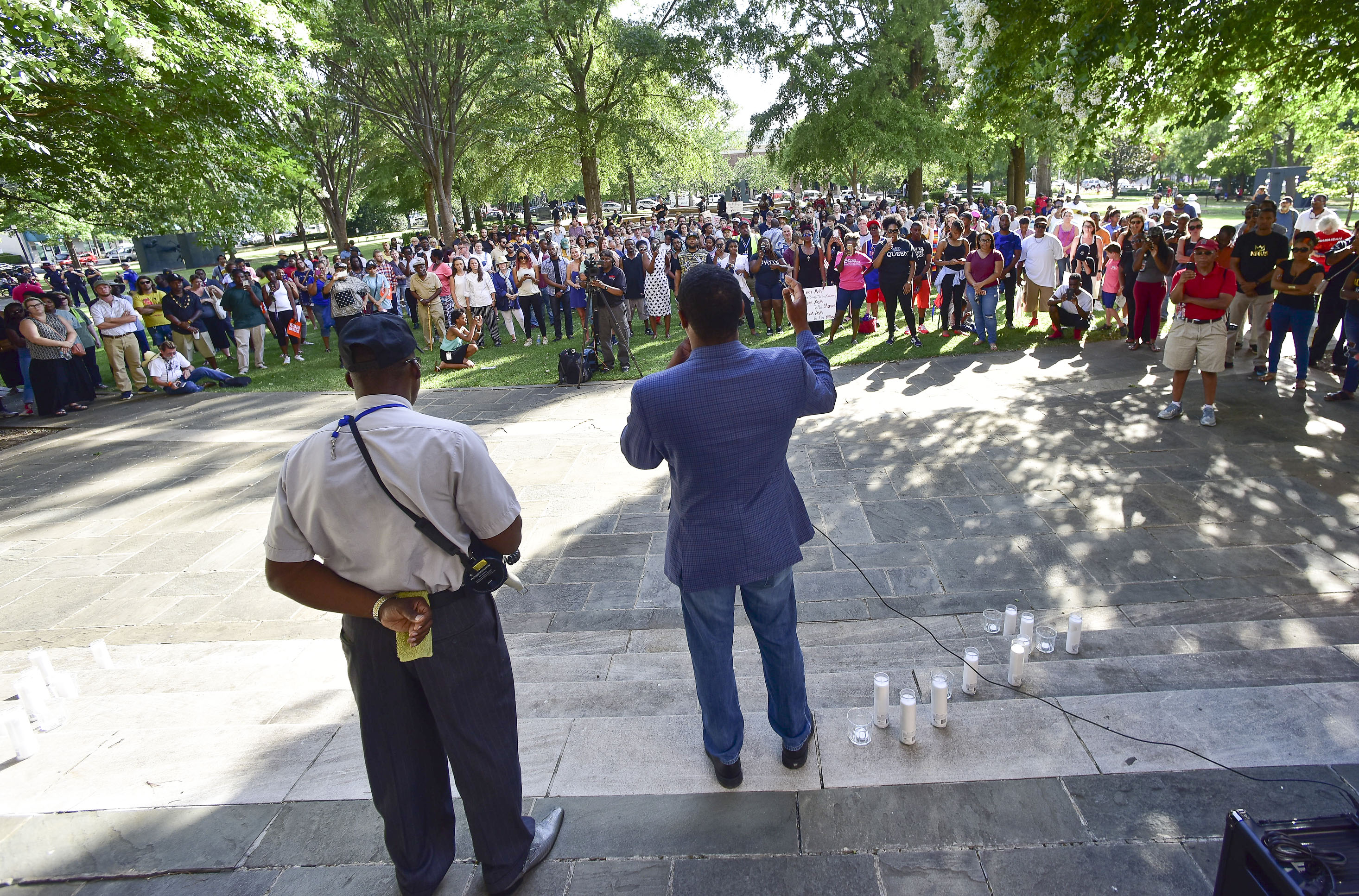
Birmingham City Council President Jonathan Austin speaks to the crowd. A solidarity protest and march held at Kelly Ingram Park saw hundreds of people listen to speakers, chant and march to Birmingham Police Headquarters. (Frank Couch / The Birmingham Times)

BCRI’s Ahmad Ward: Speaking honestly and enthusiastically about justice and equality

0
By Ariel Worthy
The Birmingham Times
Ahmadpix
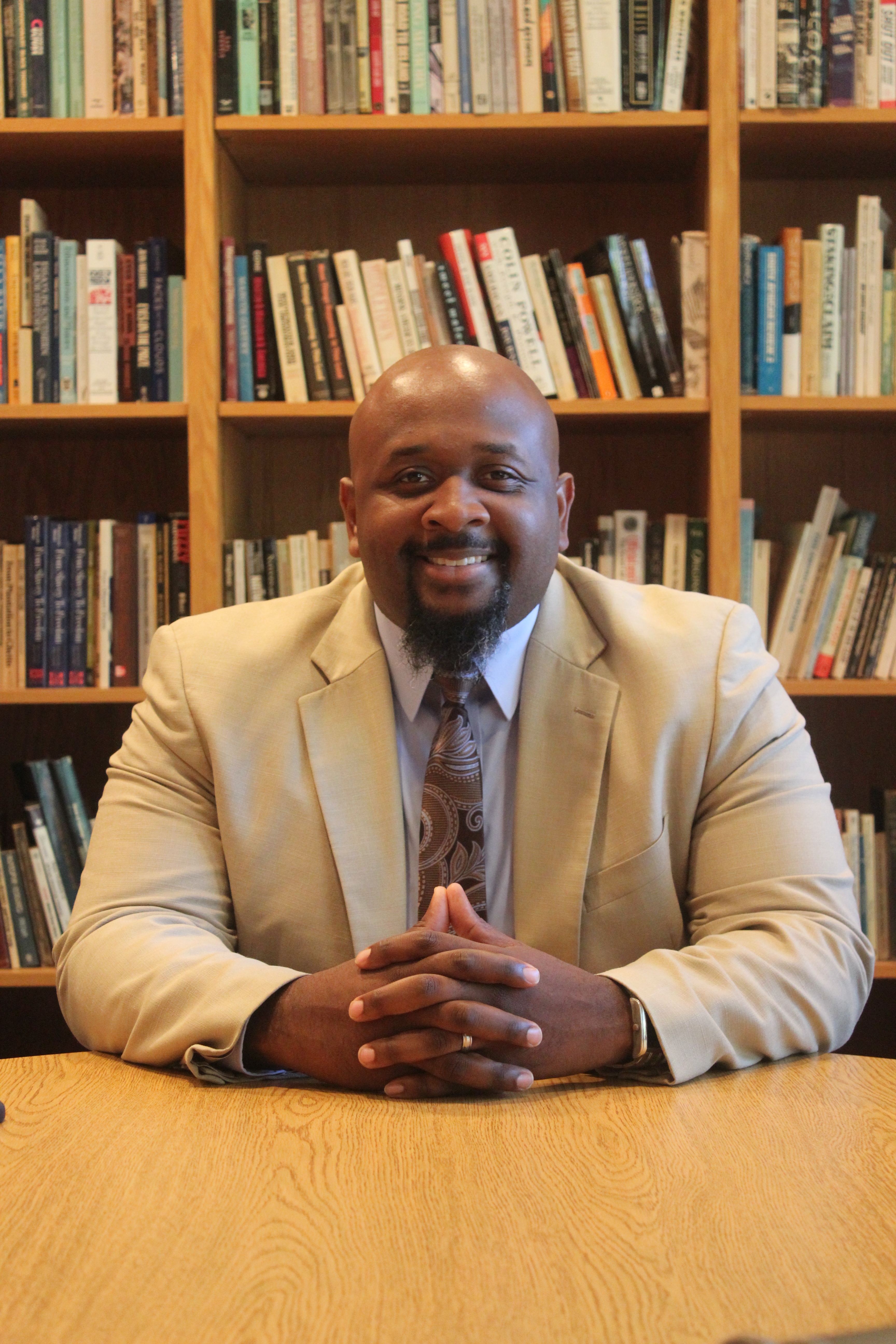
Ahmad Ward (PHOTO PROVIDED)


Ahmad Ward recalled explaining racism to his oldest daughter when she was 8 years old. “This white wide receiver named Riley Cooper said [the n word], and they caught him on camera saying it,” Ward said, “My daughter asked, ‘Daddy, what’s a racist?’ I thought, ‘Man, I haven’t talked with you about that yet?’” That inspired a topic for TEDx Birmingham, a local nonprofit, dedicated to finding ideas and sparking conversations that lead to a better city. “It was awesome,” Ward said. “We need to have honest conversations about race; it was kind of quiet in there. It was in-your-face, but it has to be. We’re talking about the same things we’ve been talking about for decades.”

Ward is the Vice President of Education and Exhibitions at the Birmingham Civil Rights Institute. Originally from Elizabeth City, North Carolina, Ward moved to Birmingham after being offered the job 17 years ago.

Ward has been married to his wife, Dafina, for 11 years. “I met her here at work,” he said. “I worked with her mother.” Last year the couple hosted Birmingham Black Marriage Day. “We were promoting healthy family relationships and solid family structures,” Ward said. “We had a renewal ceremony, about 20 couples joined us; we want to show that healthy relationships are an option. Brothers have a tendency to live longer if they are married.” They are hoping to pick it up again next year.

Speaking with Ward, his enthusiasm about justice and equality radiates through him. His passion, he said, comes from simply being a black man. His honestly is welcomed now more than ever given the police shootings of two unarmed black men in separate instances last week and the subsequent conversations about race following the shooting deaths of five white police officers in Dallas. “My experience as a black man in this country is different,” Ward, 41, said. “It has to be acknowledged because I’m dealing with being the number one suspect within a three-mile radius any time something pops off, and I don’t even have to fit the proper description.”

There was a time when Ward said he would debate with people about social issues in this country, but now he says he doesn’t sugarcoat anything. “I had a group of white teenagers come in and I gave them the most honest responses,” Ward said. “We talked about redlining, G.I. bills; I threw it all on the table. There’s no reason to baby people; we can’t do that anymore.” Talking with more strong-headed people than none, there have been a few lightbulb moments.

“I did an interview with MSNBC in April,” Ward said. “As soon as I finished a middle aged white man sent me an email and said he respected my opinion and that he felt like he learned more about what black people are facing, and that I opened his eyes to a lot of things going on; he was a conservative white man. I thought that was really cool.”

When he is not at work, he is working with Caring Men and Caring Women Inc. “It’s kind of like Big Brothers, Big Sisters; it’s a mentorship for kids in Bessemer,” Ward said. “It’s for kids in Bessemer Middle School.” His favorite thing to do is to be goofy with his daughters, Masani Ashiya and Aminah Elon, and post videos online. “We remixed Ante Up by M.O.P., we did Candy Up,” Ward said laughing. “I deal with a lot of heavy stuff so it’s a good way to deviate from all of it.”

The BCRI’s 25th anniversary is next year, so Ward is preparing for next year and beyond. “We’re doing a lot of blow out events, and the year after is the 55th anniversary for the Letter from the Birmingham Jail, March on Washington, Children’s crusade, church bombing, and it will be a lot going on that year as well.” Over the years the BCRI has brought in a variety of exhibitions, but his favorite is an exhibit from 2013 — “Marching On.”

“It was about the children’s crusade,” he remembered. “You would come in and we built a classroom inside the gallery and you would walk out of the classroom like you were going to go march. You could see the background of how you would go marching. We had chained fences in front of certain places, like swimming pools. We would take them to jail, and pose questions. We had people who actually lived through it help us with it.”

Piper Davis Baseball Tournament draws teams from Puerto Rico; the Bahamas

0


By Ebone’ Parks

The Birmingham Times

baseballpix1

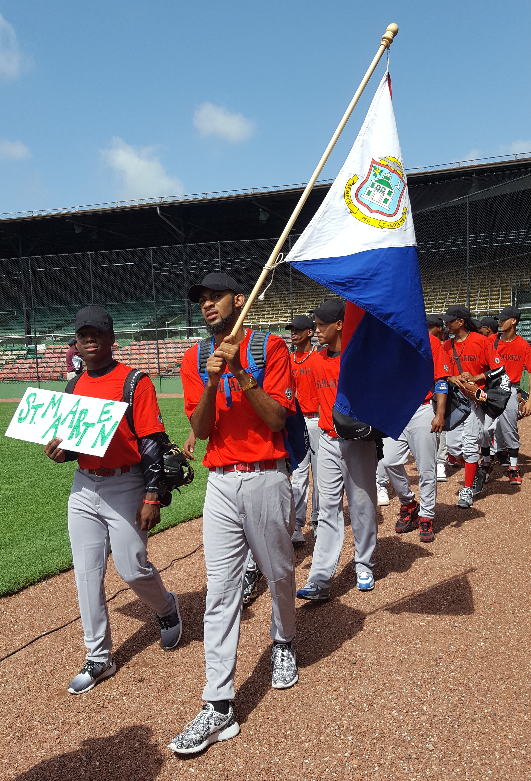
The Piper Davis Youth Baseball League hosted its opening ceremony Tuesday for the second annual inner city tournament at historic Rickwood Field with teams from as near as Georgia and Florida and as far as Puerto Rico and the Bahamas.

As many as 1,200 players are participating from ages 8 to 22.

Piper Davis Youth Baseball League was founded in 1992 in Birmingham by Fred Plump to bring baseball back into the inner city and honor blacks who played in the Negro Leagues. The league is named after Lorenzo “Piper” Davis, a trailblazer in the Negro Baseball League who once played for the Birmingham Black Barons.

Plump, who is the Executive Director, said the objective of the league “is to get our inner city children off the street, teach them something that’s a better way of life other than gangbanging; teach them to play baseball, and let them understand the real reason of a good education.”

Teams from Washington, D.C., Michigan and Puerto Rico are also in Birmingham for the five-day event.

Delegate for St. Maarten Island, Jeffrey Richardson said he was excited to have his squad in Alabama for the first time.

“We have to put some time into getting to our kids, making them feel valuable, letting them know that baseball can change your life around, letting them know if they really put their minds to it and be dedicated, committed, and disciplined, they’ll be able to make a career in baseball,” Richardson said.

Coaches discussed the importance of the sport and watching players develop.

“You see how the kids actually grow, not only on the baseball field but as people. We’re lacking a lot of leadership nowadays and I enjoy seeing what they become after they go through the program,” said Jorge Roque, head coach for the Piper Davis Louisiana team.

Tim Boyd, coach of the Birmingham Police Athletic Team said, “It’s nothing like seeing a young kid grow up to be a man … each year a kid gets stronger, faster from what I’ve seen. It’s just a growth process,” he said.

Jaih Andrews, a rising freshman at Ramsay High School is one of Boyd’s players. He enjoys baseball because he “likes to play with his friends.” His favorite team is the Atlanta Braves and one day he hopes to make it in Major League Baseball, he said.

baseballpix2

PA Announcer Keith Mims said baseball is particularly important in the inner city because the game has been on a downward trend in urban neighborhoods for many decades.

“I commend Coach Fred Plump for all of his efforts in trying to bring back baseball to the inner city because many of our kids are only interested in basketball and football in a lot of cases,” Mims said.

The tournament continues through Saturday, July 16.

Verizon donates $20K to domestic violence prevention in Jefferson County

0


By Ariel Worthy

The Birmingham Times


IMG_3691

Domestic violence is a growing problem in Jefferson County. Fortunately, so is one of the solutions.

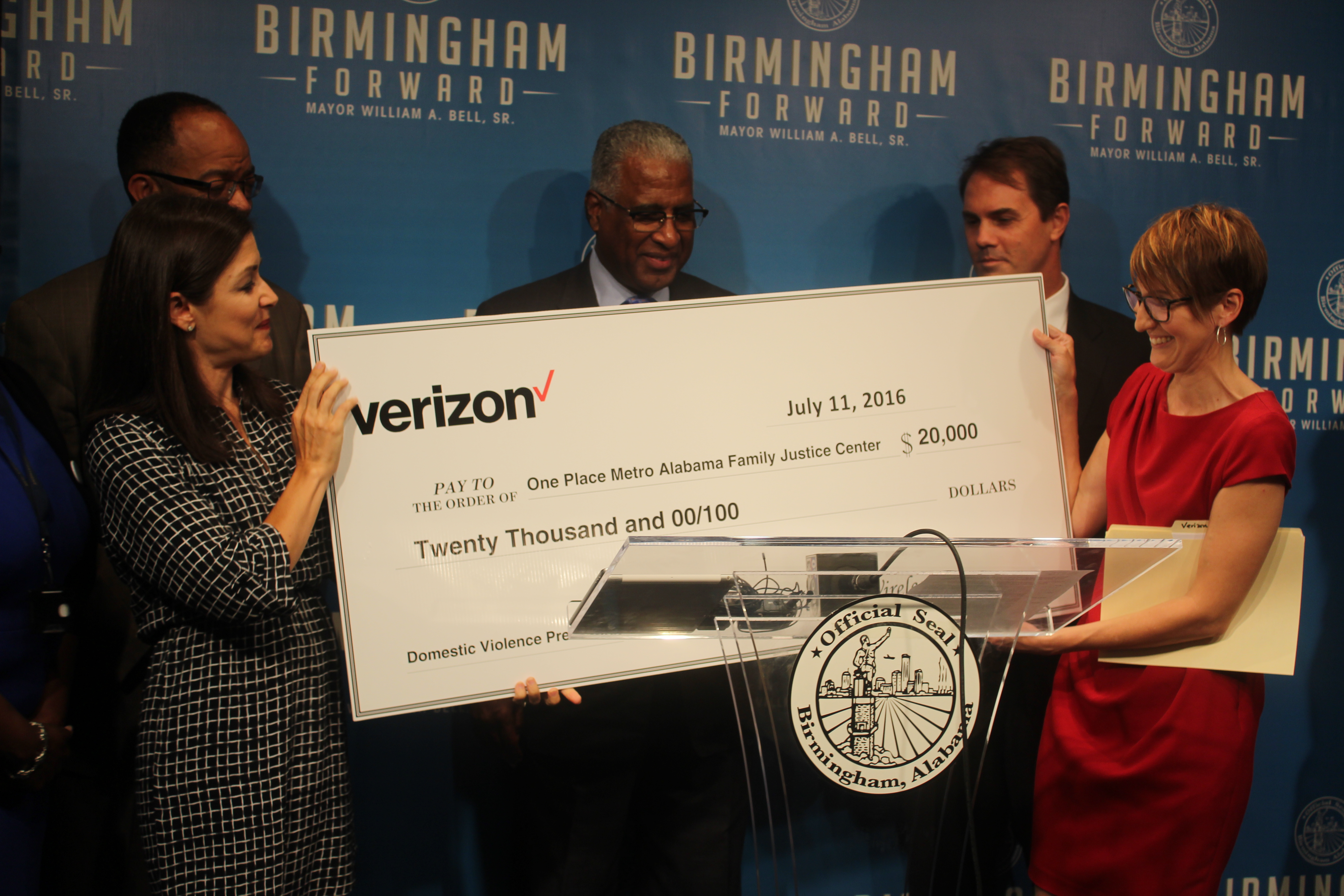
Verizon Wireless this week presented $20,000 to One Place Metro Alabama Family Justice Center to help with staff support, working on a new website, travel to national conferences and materials to get out information about the One Place, which helps with domestic violence prevention.

“So much of what we have been able to do in this community is because of Verizon,” Allison Dearing, executive director at the Family Justice Center said.

“Verizon has had a long-standing commitment to domestic violence awareness and prevention via our HopeLine program,” said Kate Jay, Verizon spokesperson.

The HopeLine program connects survivors of domestic violence to vital resources and fund organizations nationwide. Since the launch in 2001, the HopeLine has collected 12 million calls and helped award $7 million in cash grants to domestic violence organizations.

“A lot of people think, ‘How can I make a difference?’ You can clean out your drawers, you can donate those old phones in any condition and with any carrier,” Jay said. “Those are turned into support for victims.”

The donations go into the local communities, and can be made at any local retail store.

The Family Justice Center will open its newly renovated building on 14th Ave. South between late summer and early fall. For now it is located in the District Attorney’s Office.

For more information about the Family Justice Center log on to www.oneplacebirmingham.com or call 205-325-5252 ext. 4740. Their hours are Monday-Thursday 9 a.m. – 4p.m.


YWCA to Host Training Workshop on Race and Racism

In response to recent events across the country, YWCA Central Alabama will host Face to Face with Race, a workshop designed to empower leaders to start conversations about racism and current events. The event is open to the public and set for Thursday, July 21, 2016 from 11 a.m. to 1 p.m. at the YWCA, 309 23rd Street North in downtown Birmingham.

Leaders from the nonprofit, civic, political, academic, faith-based and corporate worlds will participate in interactive and informative exercises during the gathering with a goal of fostering conversations, responding to questions, building bridges and bridging gaps in the workplace and beyond.

“As the nation mourns the loss of Alton Sterling, Philando Castile and five Dallas police officers, it is our hope that leaders will leave this workshop with the tools necessary to support their employees and counterparts by engaging in productive dialogue about race and racism,” said Rebecca Harkless, coordinator of social justice programs for the YWCA.

Cost for the limited seating gathering is $20, which includes lunch and resources to take away and share. Reservations are required and must be made by July 19. Cash and check payments will be received at the door.

For information or to reserve your spot, contact Rebecca Harkless at rharkless@ywcabham.org, 205.322.-9922 ext. 184 or 205.381.0915.


Cease Fire Birmingham announces partnership with Housing Authority


Cease Fire Birmingham, a group of clergy and community organizations, working to heal, strengthen and educate the family while combating gun violence and homicides in the Birmingham area with partner with the City of Birmingham and the Birmingham Housing Authority to expand its reach.

Pastor Steve Green Sr. of More Than Conquerors Faith Church said the last day of activities will be held at Elyton Village.

The Cease Fire rally at Elyton Village is scheduled for Saturday Aug. 13 at 10 a.m. This is the first time the church has partnered with the Housing Authority of the Birmingham District, according to organizers. Green asked HABD President/CEO Michael Lundy to partner by allowing use of the agency’s facilities for rallies and community service activities.

Birmingham Police Chief A.C. Roper, City Councilwoman Sheila Tyson and State Sen. Rodger Smitherman were among the two dozen partners gathered at Birmingham City Hall Tuesday as Green announced plans to re-launch the Cease Fire Program.

Green said the idea occurred before the recent spate of national violence involving police and communities, but was in response to rising violent crime in Birmingham. Nevertheless, called said the timing divinely inspired.

“It’s a great thing for our city,” Roper said. “It’s a great conglomerate of people who are committed to our community. You can never underestimate the power of a group of committed people.”

“Everyone is at the table,” Tyson said. “We’ve got to get them when they are young. We are listening to them, and they can see the results. We’ve got every organization sitting at the table. We’re speaking with the same voice and we’re coming up with solutions.”

We need to respect life, all lives, and seek God

0


By Sandra Little Brown

I would like to express my heartfelt sympathy as well as condolences to the families of those killed and injured in the recent shootings which occurred in Louisiana, Texas and Minnesota.

I also wish a speedy recovery to those who were injured. And to all the rest of us this is not the time to be pointing fingers nor seeking revenge but rather we should be seeking God. We all should step back, take a deep breath, and refresh. It is not the time to escalate, but to de-escalate. We all need to respect life, all lives.

To the families of the deceased, my heart goes out to you. May God give you the strength to sustain yourselves. In so doing, please remind your kids to be prepared that one day they may find themselves stopped by a law enforcement officer. Listen to the officer and comply with his or her request. Make sure the officer knows if you are reaching for ID and auto documentation to avoid the perception that you are reaching for anything other than your ID.

Always strive to keep your hands where they can be seen. This should make your experience less confrontational. When visibility is bad, turn on your inside lights so that the officer can clearly see what you are doing inside of your vehicle.

To the families of the police officers who were assaulted and killed, my heart equally goes out to you for giving the ultimate sacrifice as your love one has. And to those injured, I also wish you a speedy recovery. I personally thank each of you for going out daily putting your life on the line to protect and serve me and others. I thank your family for sharing in the danger of possibly losing their love one or having to cope with you getting injured in the course of your work.

To everyone else, though we as a society have been relegated to this divisive position in life, black vs white, Democrat vs Republican, straight vs LGBT, and on and on, I submit to you that we are all more alike than we are different, but since we all can’t seem to talk it out, let’s try talking to God to seek an answer.


Sandra Little Brown is president Pro Tempore of the Jefferson County (AL) Commission. Birmingham Voices is a forum to provide commentary and opinions.

Baptist Health opens new multispecialty clinic with UAB Medicine

0


By Jim Bakken

UAB News

Baptpix

Baptist Health has partnered with the UAB Health System to open the UAB Medicine Multispecialty Clinic at Baptist Medical Center South. The clinic will initially offer four much-needed specialties, including urology, gastroenterology, endocrinology and rheumatology.

The clinic will open Aug. 1 and will be located on the first and second floors of the UAB School of Medicine building (formerly the MCI building) on the campus of Baptist Medical Center South.

The clinic will house 10 new physicians who have been recruited by Baptist Health. All are highly trained medical specialists and will offer cutting-edge services and provide new surgical procedures and treatments not currently offered in our area.

“We look forward to extending the important mission of UAB Medicine to help more patients access world-class health care across Alabama,” said UAB Health System CEO Will Ferniany. “Closer proximity to care can improve health and quality of life, and this partnership will bring important specialties closer to those in and around Montgomery.”

Residents of central Alabama will no longer be forced to travel outside the area for medical services due to the overwhelming need, limited access and few similar specialists in the area. These new physicians will increase access to specialty care in a convenient, centralized location that will lead to earlier diagnosis and treatment of disease. In addition, patients will have access to clinical trials and research activities being performed at UAB that they otherwise may not have access to.

“We are excited to combine our medical experience and commitment to excellence with UAB’s highly skilled and qualified health care professionals as we work together to continue to raise the bar for top-quality medical care,” said Russell Tyner, president and CEO of Baptist Health. “I feel confident this will allow our organization to continue to meet its mission of providing the highest level of quality care to the residents of central Alabama while allowing Baptist Health to meet the growing need for health care services and expanding our services to those who matter most — our patients.”

Baptist Health has been an affiliate of the UAB Health System since 2005 and has partnered with UAB throughout the past four decades to support the UAB Internal Medicine Residency Program and, most recently, the addition of the UAB School of Medicine Montgomery Regional Campus at Baptist South. The clinic will be owned and operated by Baptist Health. UAB Health Services Foundation will employ the 10 UAB faculty physicians, several of whom will begin seeing patients in early August.

To learn more about the UAB Medicine Multispecialty Clinic and physicians, please visit www.UABMedicine-Baptist.com.

Harriet Tubman’s Underground Railroad Offers Living History on Maryland’s Eastern Shore

0
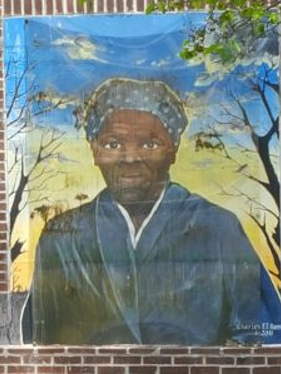
Mural of Tubman on Maryland's Eastern Shore.


By Michael H. Cottman

Urban News Service


Mural of Tubman on Maryland's Eastern Shore.
Mural of Tubman on Maryland’s Eastern Shore.

“I never ran my train off the track, and I never lost a passenger.”

–Harriet Tubman

CAMBRIDGE, Maryland — Joe Manokey stood along a stretch of the Underground Railroad and spoke proudly about his legendary distant cousin, Harriet Tubman.

“Our family has always pushed to get Harriet Tubman more recognition,” said Manokey, 45, who was born in Dorchester County where Tubman became a famous abolitionist. “The Moses of Her People” helped more than 70 families and friends escape slavery through her Underground Railroad.

“Harriet Tubman led black people to freedom, but she was also a spy for the Union Army, a nurse, a cook and a scout,” Manokey said.

“She is an important part of history,” said Manokey. “And she is important to me as a member of my family.”

Manokey pointed to a walkway on the Harriet Tubman Underground Railroad Byway, a 125-mile driving tour across Dorchester and Caroline counties, dotted with 35 historical sites.

Manokey said that his family is honored that Tubman’s image soon will appear on the $20 bill.

Treasury Secretary Jack Lew announced in April that Tubman would replace slave owner Andrew Jackson on the $20 bill. This would make Tubman the first woman in more than a century — and the first African-American woman — to appear on U.S. paper currency.

The revised bill’s 2020 arrival will coincide with the centennial of women’s suffrage.

But not everyone is cheering. U.S. Rep. Steve King (R–Iowa) tried to block Treasury’s plan, but the Republican-led House Rules Committee killed his measure on June 21.

Joe Manokey, a distant cousin of Harriett Tubman (MICHAEL COTTMAN PHOTOS, URBAN NEWS SERVICE)

King’s office did not respond to repeated requests to explain his opposition to the Tubman $20.

“It’s not about Harriet Tubman, it’s about keeping the picture on the $20,” King said to Politico website. “Why would you want to change that? I am a conservative. I like to keep what we have.”

“This is a divisive proposal on the part of the president, and mine’s unifying,” King said. “It says just don’t change anything.”

The Treasury has no cost estimate for the Tubman $20, saying the expense will depend largely on security improvements and new accessibility features for the visually impaired.

Inspiration

Meanwhile, Cambridge resident Adrian Holmes — a co-owner of Liv Again, an upscale store featuring diverse art, novel furniture and home décor — said Tubman inspires women.

Adrian Holmes, co-worker of Liv Again, in Cambridge, Md.

“Harriet Tubman being featured on the $20 bill makes her more attainable,” Holmes said. “She’s not a mystery woman from the past. Everywhere she went, she made a difference. Everywhere she went, she impacted her community, and that is inspiring.”

The road to Emancipation is well documented. Driving through Dorchester County on the Eastern Shore, tourists can visit the 17-acre Harriet Tubman Underground Railroad State Park and Visitor Center. The grand opening, next March 10, will unveil a memorial garden, walking paths and more.

The Byway’s 35 marked sites include Long Wharf in Cambridge, where slave ships offloaded enslaved black people who were sold along the waterfront; Malone’s Church in Madison, where free and enslaved black people gathered; and Joseph Stewart’s Canal, where enslaved blacks dug a seven-mile canal through the thick marsh on Taylors Island between 1810 and 1832. These enslaved Africans were the property of the affluent Stewart family. Tubman toiled in Joseph Stewart’s home and fields.

Though they celebrate Tubman’s profound contributions to America, many black residents in Cambridge say an undercurrent of racial tension has festered for decades along Maryland’s scenic, slow-and-easy Eastern Shore.

Fortitude

A street sign for Harriet Tubman Birth Place on Maryland's Eastern Shore.
A street sign for Harriet Tubman Birth Place on Maryland’s Eastern Shore.

Jermaine Anderson, 42, co-owner of Liv Again, wants Tubman’s new-found national recognition to encourage more openness among Cambridge residents.

“I’m hoping it will spark a discussion about race relations here,” said Anderson, who grew up in Cambridge.

“Cambridge is a racially divided city, and the Harriet Tubman Park and the Tubman $20 bill present a better opportunity to talk about race.”

Cambridge has a long history of racial friction. Black residents protested against discrimination and advocated for civil rights. The city suffered race riots in 1963 and ‘67. Buildings burned, shots rang out and blacks clashed with police. Then-U.S. Attorney General Robert F. Kennedy invited Cambridge community leaders, both black and white, to Washington, D.C. in 1963 to stop the violence.

Meanwhile, Donald Pinder, president of the Harriet Tubman Organization, Inc., said Tubman’s museum in Cambridge is a testament to her fortitude.

Asked if the recent Tubman publicity will encourage Dorchester County to engage in candid discussions about race relations, Pinder paused.

“What people will say publicly is different from what people will say privately,” Pinder said. “Sometimes the truth never com

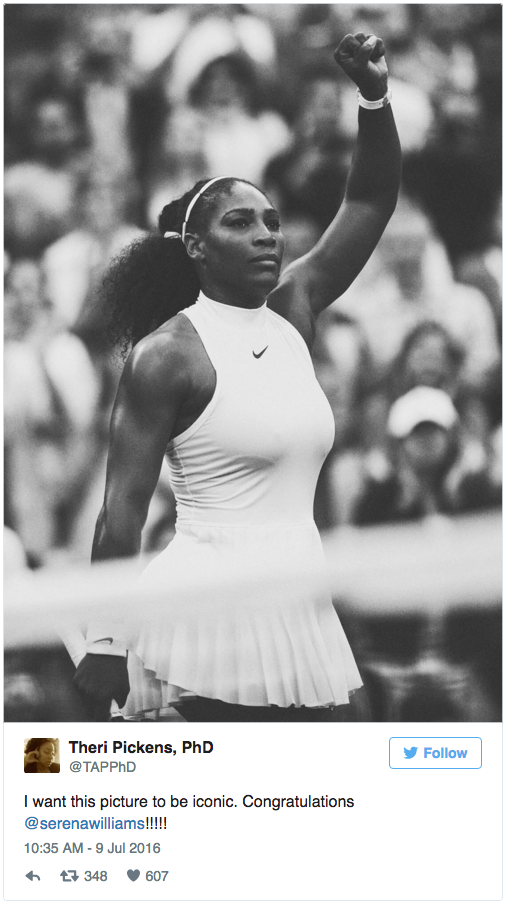
With Her 22nd Grand Slam, Serena Williams Is Still On A Mission

0

Sunny Cadwallader

©2016, The Shadow League

GettyImages-545689120

Still Striving, Seeking and Chasing, She is Writing her Own History


You can try to contain her. You can try to help her. You can even root for her failure.

But, you can’t stop a woman on a mission.

Serena Williams was on a mission. She’s been on a mission since her youth. The desire to be the best, to be #1.

1


Twenty-two proved to be a formidable opponent for her. She had been chasing 22 since July 2015, when she last won Wimbledon. Each time she was at 22’s door, she knocked, but 22 would not open. Not in New York. Not in Melbourne. Not in Paris.

Now, here was Williams in London. One year later, ready for 22’s challenge. Only this time, Williams didn’t knock. She kicked 22’s door open and charged on through.

Serena is the 2016 Wimbledon Ladies’ Singles champion. It is Grand Slam title number 22 for Williams, tying her with the great Steffi Graf. Williams defeated Germany’s Angelique Kerber in a highly competitive straight set match, 7-5, 6-3.

This is the same Kerber that Williams lost to in Melbourne at the Australian Open earlier this year, 4-6, 6-3, 4-6. Although Williams didn’t play especially well, Melbourne was Kerber’s announcement to the tennis world that she was a force to be reckoned with. She outplayed Williams in Australia. It was a reminder for Williams that she had more work to do.

Australia, and subsequently Paris at the French Open, where she lost to Garbiñe Muguruza in the final, was also a reminder to us that the mission to number 22 was still very much within her grasp. We saw the toll 2015 took on Williams mentally and emotionally.


For full story…  TheShadowLeague.com

(photo credit: Getty Images)

This story originally appeared on TheShadowLeague.com, a site dedicated to journalistically sound sports coverage with a cultural perspective that insightfully informs sports fans worldwide.