Home Blog Page 1193

From music to fashion
0
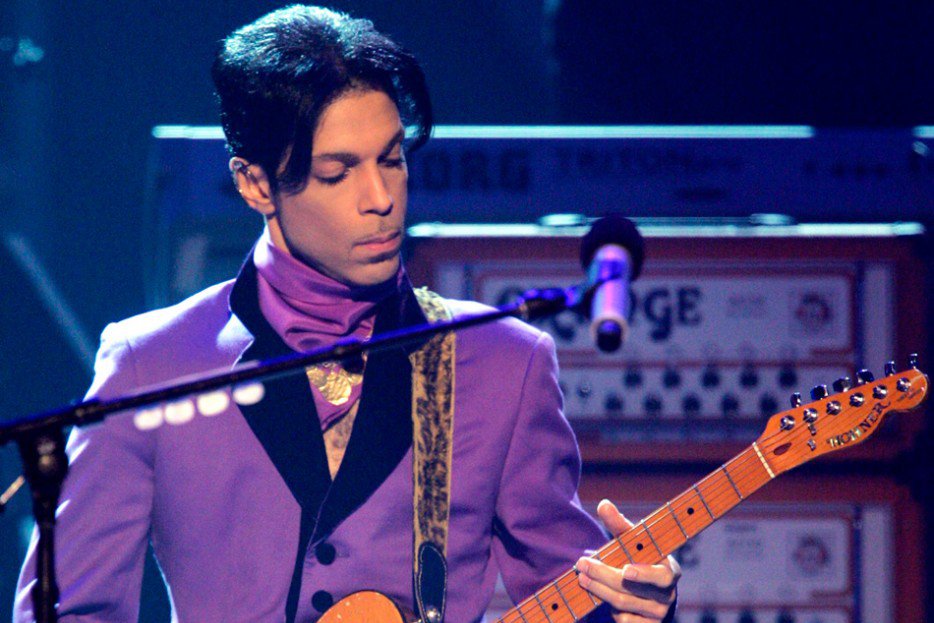
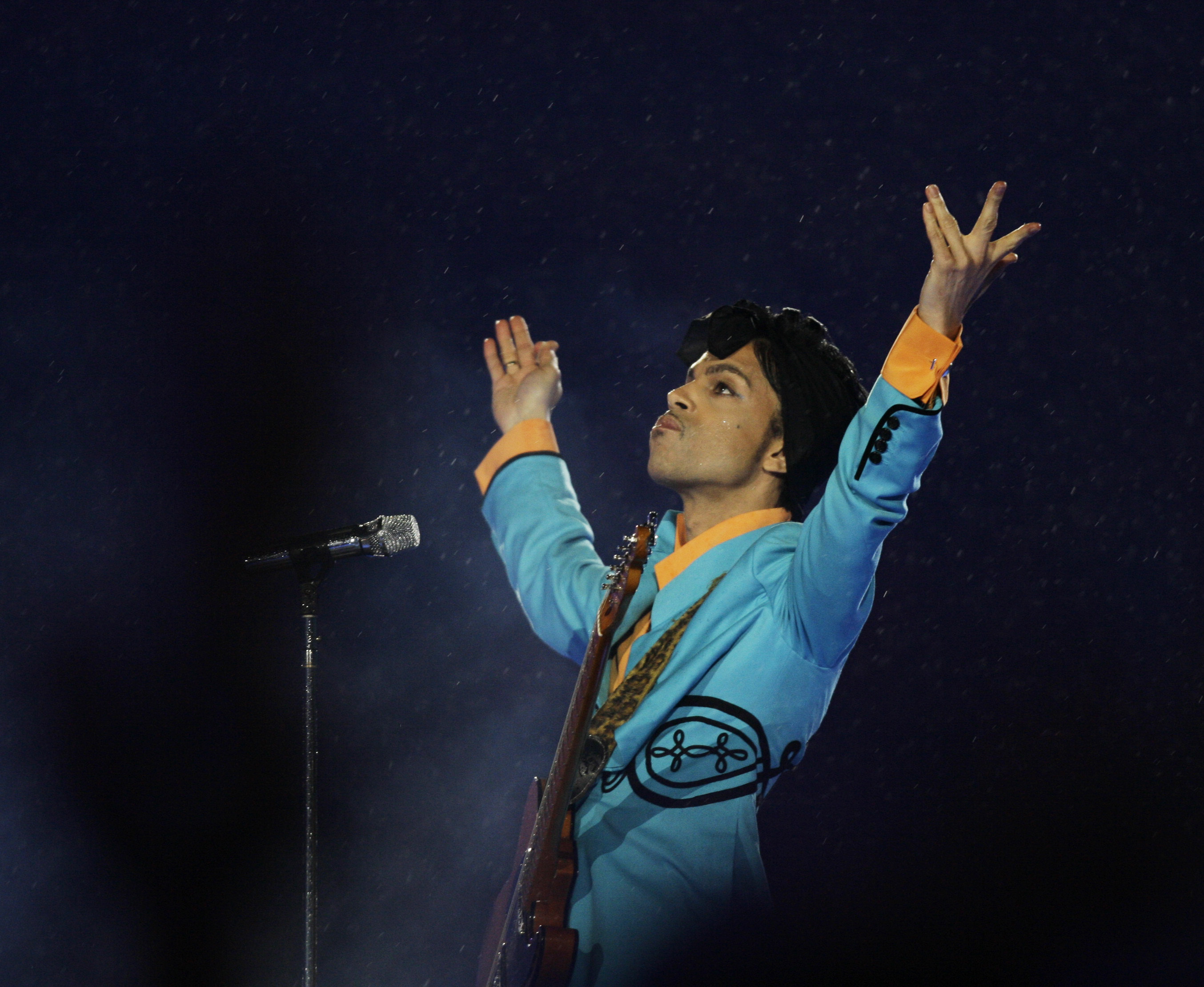
Prince photo: In this Feb. 4, 2007, file photo, Prince performs during the halftime show at Super Bowl XLI at Dolphin Stadium in Miami. In an industry where collaborations with other artists and credits are negotiated as heavily as world treaties, Prince followed only one credo when it came to working with others: the love of the music. Prince died Thursday, April 21, 2016, at his home outside Minneapolis. (AP Photo/Alex Brandon, File)

The colorful and eternal impact of
Prince, David Bowie and Maurice White

By Ariel Worthy

Times staff writer

Prince photo: In this Feb. 4, 2007, file photo, Prince performs during the halftime show at Super Bowl XLI at Dolphin Stadium in Miami. In an industry where collaborations with other artists and credits are negotiated as heavily as world treaties, Prince followed only one credo when it came to working with others: the love of the music. Prince died Thursday, April 21, 2016, at his home outside Minneapolis. (AP Photo/Alex Brandon, File)

  Not many people can be recognized by a simple color, but when music-lovers see the color purple they instantly think of Prince.

 The world was devastated when the heart-wrenching news dropped that seven-time Grammy winner Prince had died last week. He was 57.

 The year 2016 is only four months in and has already lost three musicians that impacted the music world greatly: Prince, Maurice White of Earth, Wind, and Fire, who passed in February and David Bowie, who passed in January.

 Each artist had distinctive sounds and impacted the future of their genres. Each made fashion statements in their own way and each were multi-instrumentalists.

Purple Rain

 To say Prince was a rockstar, would be too easy. He touched people all over the world, no matter what race. But through it all he still knew who he was.

  He often spoke his mind, a characteristic that people loved. Whether it was shading at other celebrities, or being honest about issues in the world, Prince never held back.

  At the 2015 Grammy’s he took the stage in a shiny orange outfit, with an equally shiny silver cane and a perfectly coiffed afro. The people took to the internet to give him the nickname “Baby Carrot” and “tha gawd.”

  His message – and facial expressions- were clear, though.

  “Albums still matter. Like books and black lives, albums still matter,” he said before announcing Album of the Year winner Beck.

 Places like Birmingham City Hall, the Mercedes-Benz Superdome in New Orleans, the Lowry Ave. Bridge in Minneapolis – Prince’s hometown – all lit purple to honor him. Even NASA tweeted a picture of a purple nebula in honor of the 57 year old icon.

 Prince was regarded as a sex symbol for his androgynous and fluid sexuality. His audacious styles, such as ruffle blouses, high heel shoes, and makeup were fashion statements that many people did not second guess.

 “I find freedom sexy,” he said in a 1996 interview with NME. “You wake up every day and feel like you can do anything.”

 After the icon’s death last week, many people took to Twitter to tell stories of how Prince inspired them. GQ editor Mark Anthony Green was one those.

 “Thanks to Purple Rain, I can feel confident while flirting with the prettiest girl in the room, even though my pants are tighter than hers,” Green said. “Prince was royalty, and royalty isn’t affected by petty things like stigmas.”

  When it came to his music and performing, he was just as bold as he was with his clothes.

 Not many men could pull off sitting in a bathtub in the middle of the stage and inviting his fans to take a bath with him, but on his Purple Rain Tour in 1984-1985 Prince did. And no one dared to question him.

  On his first few albums, Prince played nearly all of the instruments, including 27 instruments on his debut album. Among them were different types of bass, drums, keyboards and synthesizers. It was said that Prince had so much unreleased music, that they could release an album every year for the next century.

 He was constantly working.

 In a 1990 interview with Rolling Stone, he said, “When they [the band] were sleeping, I was jamming. When they woke up, I had another groove.”

 Prince wasn’t the only hard-working, bold music icon that the world lost this year.
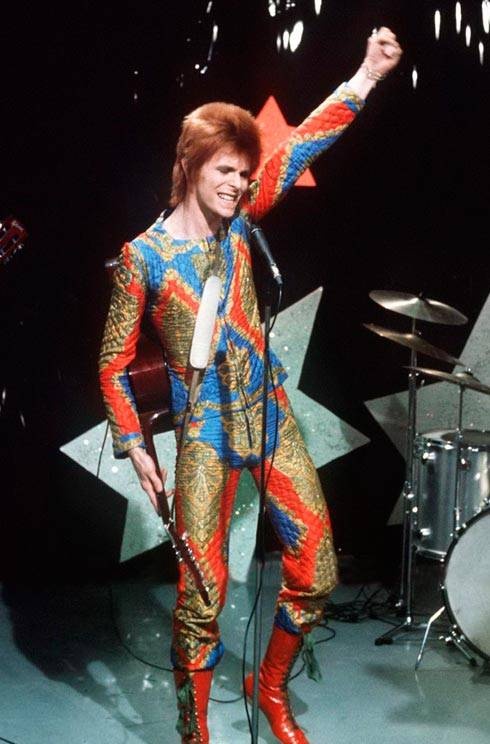
David Bowie, "Ziggy Stardust"
David Bowie, “Ziggy Stardust”

Ziggy Stardust

 People around the globe were shocked when they got the news that David Bowie had died from liver cancer.

Much like Prince, the singer/songwriter/actor/producer was sexually ambiguous was not afraid to “go there” with his wardrobe. Similar to Prince, the Grammy Award winner influenced different genres from rock music.

While albums like The Rise and Fall of Ziggy Stardust and the Spiders From Mars and Aladdin Sane focus more on glam rock, there were songs like Space Oddity that had a folk-inspired sound. Albums like Hunky Dory had a folk/jazz theme in some of the songs.

 He, too, played a number of instruments including the harmonica, saxophone, stylophone, viola, cello, drums and percussion. Celebrities of all genres reacted to his death similarly.

“David Bowie was a true innovator, a true creative. May he rest in peace. #RIPDavidBowie,” producer/rapper Pharrell Williams said.

“What a[n] honor, what a soul. David Bowie, Spirit of Gold. RIP.” rapper Kendrick Lamar posted.

 Even Kanye gave his condolences. “David Bowie was one of my most important inspirations, so fearless, so creative, he gave us magic for a lifetime.”

Shining Star

 After the world mourned the loss of Bowie, the reminiscence began again a few weeks later with the news of the death of Earth, Wind & Fire icon Maurice White, who died from the effects of Parkinson’s disease, which he had been diagnosed with in the late 1980s.

 Besides being a staple at every black family gathering (cookouts, family reunions, wedding receptions, and mom and dad just pulling out the records of (to “show you what real music is”) EWF – whose hits included “Shining Star”, “Reasons”, “That’s The Way of the World” and “September” – influenced a number of musicians, and were sampled in works of countless rappers. Those rappers include Jay-Z, Missy Elliot, Big Pun, Tupac, Nas and A Tribe Called Quest (ATCQ).

 Rapper Q-Tip of (ATCQ) often spoke on his love for EWF, and after White died, he left a message about the producer/singer on Twitter.

“D— all of my Heroes are moving on…. EWF was the blueprint for tribe … R.I.P. To the genius that was Maurice White.”

 Much like Prince and Bowie, White also dabbled in unique instruments, like the thumb piano, and collaborated with a number of celebrities, including Jennifer Holliday, Chaka Khan, Angie Stone, Kirk Franklin and Ledisi.

 White -who also had a Grammy for Earth, Wind & Fire’s “Got to Get You into My Life”- was before Prince’s time, so when it came to wearing tight pants and still being secure in his masculinity, White beat the Artist to it.

 In an article about Maurice White on TheRoot.com, author Dhiraj Naseen said, “Stage presence was EWF’s hallmark, and White never disappointed – kickin’, runnin’, jumpin’, all while rockin’ pants so tight, it looked as if tailors had to sew them on.”

Pratt City Commemorates Five Years Since Devastating Tornadoes

0


By Barnett Wright

Times staff writer


The Rev. T.L. Lewis, pastor of Bethel Baptist Church in Pratt City, vividly remembers the destructive tornado that hit his community five years ago, tearing through a wide swath of homes and buildings, including his church.

“The devastation was at a level we had never ever seen before. It was like, and this is putting it mildly, a bomb had gone off,” Lewis recalled on Wednesday—the fifth anniversary of the April 27, 2011, tornadoes.

On that day, more than 60 tornadoes tore through Alabama, leaving 254 dead and more than 16,000 homeowners in need of assistance.

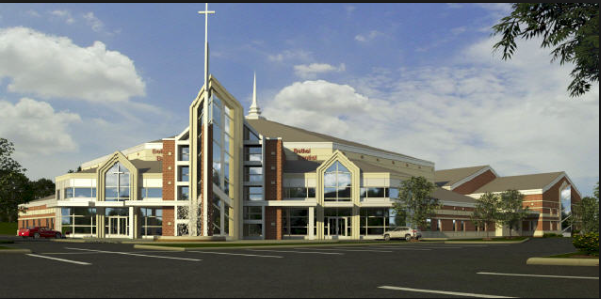
On that day, Bethel Baptist was leveled, knocked to its foundation—but not for long. The church was rebuilt from the ground up.

Today, the congregation worships in an $8 million facility that is nearly double the size of the old building, going from 44,000 to 70,000 square feet, with a sanctuary that seats 1,800.

A commemorative worship service was held at Bethel Baptist Church on Wednesday. On Saturday, April 30, 2016, a commemorative festival will be held from at the Howze-Sanford Recreation Center in Pratt City.

On a Mission

Following the devastation five years ago, Lewis’s congregation immediately went to work—on more than just rebuilding. Even though their church home had suffered major damage, Bethel Baptist’s members embarked on a mission to help others.

“When the tornado hit, our first premonition was not to build a building back. Our first premonition was to make sure that those people who had become homeless would not become helpless,” Lewis said. “Our church building became secondary. All the years I served as pastor, we have reminded our members that the church is not property, the church is people. And if you don’t affect the lives of people, you won’t have much of a church.”

The Bible teaches several lessons about perseverance, Lewis said.

“If God can trust you with the trouble, the least you are going to come out of it with is double,” he said. “The biblical record shows people who God trusted with trouble. I believe the most familiar individual in the scriptures was a fellow from a place called Uz; his name was Job. Job lost everything he had. When you get to the climax of the story, you learn that everything Job lost, God gave it back to him double.”

Out of the Storm …

That has been true for Pratt City years later, Lewis believes.

“Out of that storm came more than a rainbow,” he said. “For many, a pot of gold came out of that storm because they have been able to build better, bigger, and more beautiful than what they had.”

Birmingham officials are also helping via the Super Block concept. Tom Leader Studio, the design firm behind Railroad Park, has been enlisted to craft and create space for existing and new residents of Pratt City.

Paramount to the project: a world-class park and community center. The site will serve as a city green, or front yard, and civic gathering space that provides the framework for new housing construction in the area.

“Railroad Park was the catalyst for the development we now see in that area,” said Birmingham Mayor William Bell. “By using the same overall concept and the same team that developed Railroad Park, we are hopeful that will have the same transformative impact in this neighborhood. What the park and community center ultimately become will be based on the needs and desires of the residents and stakeholders of the area.”

It is anticipated that the park and community center will share the same Super Block as the community’s existing library. This project, along with the construction of new integrated housing, will create a solid fabric that will continue to stitch Pratt City back together.


Healthcare and medicine change for minorities throughout the years?

0

What are ways you have seen healthcare and medicine change for minorities throughout the years?

When you talk about health disparities.

He is the new director of the NIH. They do research on what is or what isn’t a drug. He was going through some of the things that researchers are starting to look at. As a researcher you look at those answers.

With health disparities there was time about 10 years ago that we learned about health disparities. some people didn’t have the same treatment as others.

Some african americans have hypertension, the things for aa aren’t controlled as much. We are able to identify what is different in other situations. more aa have renal failure, kidney disease. their blood pressure is not as controlled. you see the differences in different populations.

One of the things that we can do to eliminate them are increase access to care. With the AFC more people are insured. we’ve increased about half the people who didn’t’ have it before. They should improve these health disparities. we still don’t have people who have access to care. It’s easier in cities but if you go in the rural community you can have insurance card but not access to a hospital. many small hospitals have closed. That’s part of the access to care. that impacted the outcome.

Some things happen are institutional racism. There are so many different layers of it. it may be that you come in and have some cultural or financial or socioeconomic things. Different habits in different cultures. it may not be that you didn’t take the pill, but are you doing the same thing? There is biological differences in medical diseases. Sickle cell is more common in blacks. what that tells the doctors is that you need to be more aware of the differences in areas. and test for it. If you have a community that has high blood pressure. You need to specifically check for those areas.

How have people justified race-based medicines if, biologically, race does not exist?

Can those instances be denounced?

How would you advise people to fight racial gaps when it comes to healthcare?

Treat people more personalized to have better results. To have a healthier society.

We’re doing health policy research. what policy can we put in place. how can we fight for them/ If they have mre places to walk how would we help them? if they have more access to healthy foods would people be healthier? Encourage people to stop smoking. smoking kills yet some places may not prevent people from smoking. we can encourage people to live healthier lives. our health outcomes are poorer than others. we are at the bottom of healthiest ranked states. We smoke more, our cigarette taxes are lower. As a region we don’t exercise as much as others. when people see it changes their life outcomes

We’re consistently low in those ranking

we need to expand medicaid so people can access healthcare. So many more people could qualify but the state has chosen not to take ACA so a lot of people who could have that card don’t have access to it.

Thousands of ALabama citizens who could have insurance don’t.

America’s health ranking. each state is ranked by the healthy things.

UAB doctor uses talents to give gift of sight to those in Kenya and Alabama

0

By Adam Pope

UAB News

sightpix1
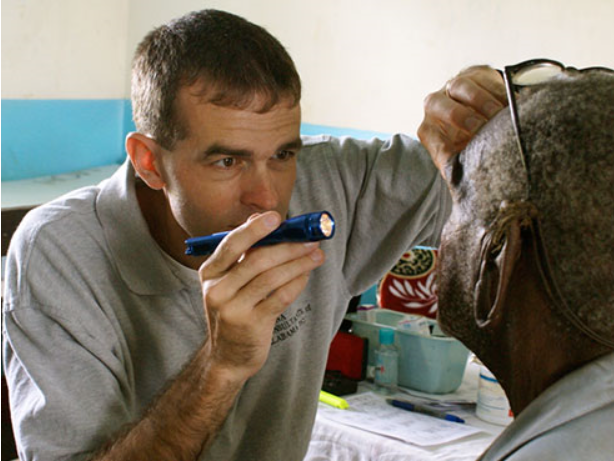
Since 2006, Ben Roberts, M.D., and his family have served as medical missionaries at Tenwek Hospital in Bomet, Kenya.

 How far would you travel to help someone see? For Ben Roberts, M.D., that answer is simple — Kenya.

 Since 2006, Roberts and his family have served as medical missionaries at Tenwek Hospital in Bomet, Kenya. The Roberts family lives there for four years, then spends one year in the United States. Back in Alabama now, in August they begin their third stint in Kenya.

 Roberts graduated from the UAB School of Medicine and did residency training in the Department of Ophthalmology. He began working as a staff vitreoretinal surgeon at Retina Consultants of Alabama following completion of his fellowship training in 2005. RCA is located in UAB’s Callahan Eye Hospital. During his fourth year as a medical student, Roberts did a rotation at Tenwek.

sightpix4
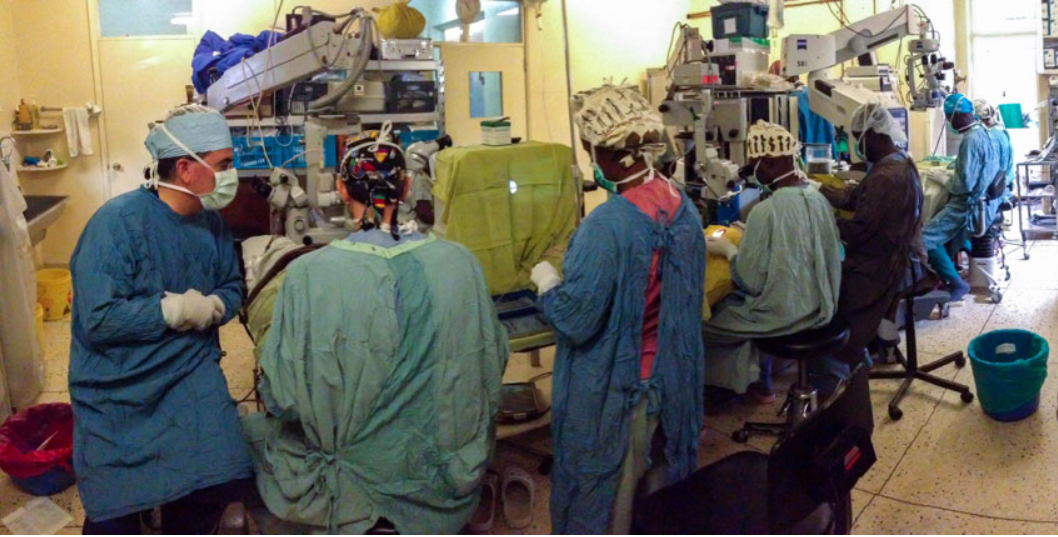
“His team of physician’s assistants, nurses and local volunteers sees approximately 16,000 patients per year and performs 2,600 surgeries…”

 “My wife and I knew after a month of being there that it was where we wanted to be,” Roberts said.

 Tenwek Hospital, one of the largest mission hospitals in Africa, was founded in 1937 by World Gospel Mission missionaries and has since grown to be a leading provider of quality health care and medical education in western Kenya. It is a nonprofit hospital functioning under the leadership of Africa Gospel Church in partnership with World Gospel Mission. Tenwek is a 300-bed teaching hospital with a wide range of surgical, medical, maternity and pediatric services. It provides primary health care to 600,000 people within a 32-kilometer radius and serves as a referral center for a much larger region.

Challenging, but rewarding

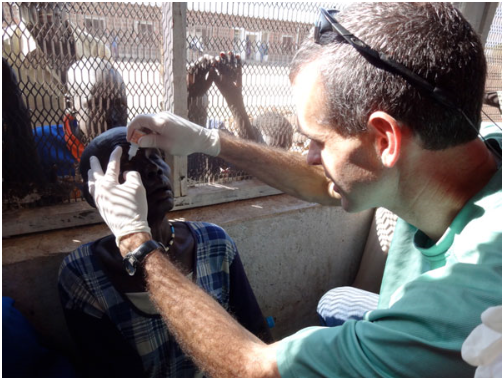
 When Roberts performs surgery, he does so with few resources and a small staff. His team of physician’s assistants, nurses and local volunteers sees approximately 16,000 patients per year and performs 2,600 surgeries. Many are cataract surgeries; but he also performs glaucoma, retina, cornea, plastic and pediatric eye surgeries. One of the major challenges he faces is the lack of supplies at Tenwek.

 “Tenwek is a very resource-limited place. For example, we have to re-sterilize instruments and reuse them,” Roberts said. “We get most of our supplies from India because it is cheaper. I couldn’t provide retina care if people at Callahan Eye Hospital and UAB didn’t save supplies to send us as well.”

sightpix3
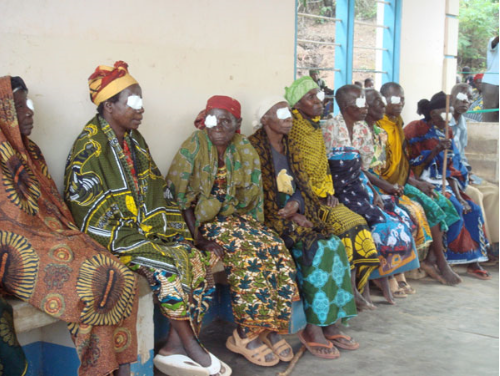
“Mondays are typically busy clinic days, according to Roberts, because most patients are walk-ups and there are long lines of people waiting to be seen…”

 Mondays are typically busy clinic days, according to Roberts, because most patients are walk-ups and there are long lines of people waiting to be seen. Patients are screened, and those who have serious conditions are immediately admitted. Surgeries are performed Tuesday through Wednesday, and Fridays are reserved for mostly post-operation clinics.

 According to the World Health Organization, approximately 90 percent of visually impaired people live in developing countries like Kenya.

 Because of the lack of eye care in Kenya, Roberts says he has seen things there that doctors usually don’t see in the United States.

 “People in that environment will sit at home and stay blind if it isn’t life-threatening,” Roberts said.

 To remedy that, a few times a year, Roberts will take his team out into rural areas or neighboring South Sudan for a one-week traveling clinic performing 400 to 500 cataract surgeries.

By faith, not by sight

 Roberts says his faith is the biggest driving force behind what he does. Since Tenwek is a Christian mission hospital, he says people know there is something different when they walk through the doors.

 “It’s our desire to bring the best care we can, but we’re trusting Jesus to heal these people’s lives,” he said. “We treat. Jesus heals.”

 Roberts says he and his team share stories from the Bible about restoration of vision and healing.

 “Doing cataract surgery — a routine procedure in the States — and restoring someone’s vision is very rewarding,” Roberts said. “We get patients from Kenya and Sudan who are literally led to our clinics by their seeing-eye grandchildren. You do an operation, and you change their life.”

A helping hand

 Roberts and his wife, Jenny, and sons, Luke, Nate and Isaac, spend a year back in Alabama between their four-year stints in Kenya. While in Birmingham, Roberts serves as a surgeon with RCA.

 “I’m very thankful to RCA and UAB for letting me work while I’m in the country,” he said.

 While World Gospel Mission sponsors Roberts and his family while in Kenya, he says many churches, both local and statewide, also provide support, including Briarwood Presbyterian Church and Shades Mountain Baptist Church in Birmingham.

 The Alabama Eye Bank has also supported Roberts and Tenwek since 2010, when he and his fellow surgeons began performing corneal transplants. Tissue was needed because there is no viable eye bank in Kenya.

 “The Alabama Eye Bank has been incredible,” he said. “They’ll ship me corneas within three or four days, and we’re able to offer those services to the people there.”

sightpix2
“It has just been a real blessing from God. There are always challenges, but the work we get to do has so many positive ramifications for so many people…”

 The Andalusia, Alabama, native, his wife and three children will return to Kenya in August, and while they will always be from Alabama, they now consider Kenya to be home.

 “We’ve been back in Alabama for almost eight months, and we’re looking forward to our return to Kenya,” he said. “It has just been a real blessing from God. There are always challenges, but the work we get to do has so many positive ramifications for so many people.”

Slave mural to stay in courthouse; will be covered by ‘roll-up’ device

0

By Barnett Wright

Times staff writer

 A Jefferson County committee on Tuesday voted to cover what some say are offensive courthouse murals with a “retractable roll-up mechanism.”

 The full Jefferson County Commission must vote on the recommendation of the 17-member mural committee, which was formed in November after complaints about a slave mural in the courthouse lobby.

 The mural committee issued a statement that said, “the insensitive nature of the murals is offensive to many viewers, but they play a part in the civil rights history of this county.

 “The Committee recommends that the murals remain in their place, but that they be covered with a retractable roll-up mechanism that will allow the murals to be available for all interested viewers.”

 The committee added that “the entire area of the murals should be interpreted to reflect the contemporary history of Jefferson County.”

 County commissioners Sandra Little Brown and Joe Knight steered the committee which was made up of community members and civic leaders who were formed to determine what to do with the murals, which include one of slaves picking cotton in a field and another of black men working in a furnace.

Project Search Birmingham to hold graduation ceremony May 9

0
searchpix
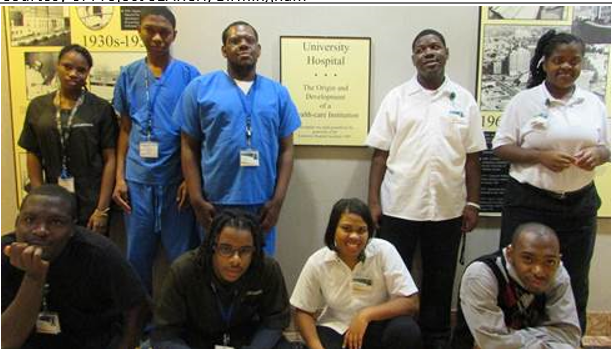
“The progress and achievements of the 2016 graduating class were rewarding for members of The Project SEARCH staff, which included instructor Rolonda Williams and job coaches Alex Faust and Faustina Williams…”

Project Search Birmingham will hold a graduation ceremony on Monday, May 9 in Margaret Cameron Spain Auditorium at UAB.

 Project Search is a one-year school-to-work program for students with disabilities in their last year of high school. The program seeks students who are highly motivated to pursue competitive employment in the community.

 The progress and achievements of the 2016 graduating class were rewarding for members of The Project SEARCH staff, which included instructor Rolonda Williams and job coaches Alex Faust and Faustina Williams.

 “It is an honor to celebrate our interns, all of whom came to us as high school seniors and – within just one year of training –have gained an understanding of appropriate work behaviors and ethics in the workplace,” the team says. “Even though our participants have completed the Project SEARCH curriculum, they continue to prove that they are determined and independent, as well as capable of meeting and exceeding any expectations set before them.”

 Students gain independence, maturity, self-esteem, work-based instruction, coaching and feedback.

Students participate in up to three internships at host sites to explore possible career paths. UAB Hospital Internship sites include environmental services; materials management; facilities and patient transport.

 Each student works with an instructor, two job coaches, his/her family members and a rehabilitation counselor to create an employment goal and to support the student during the transition to the working environment.

 “The program not only improves the quality of life for people with disabilities but also seeks to change how others view people with disabilities when hiring for nontraditional and complex roles,” say staff members. “Upon completion of Project SEARCH, interns reveal their ‘abilities’ instead of their ‘dis’-abilities.”

The Truth About the Birmingham City Council

0
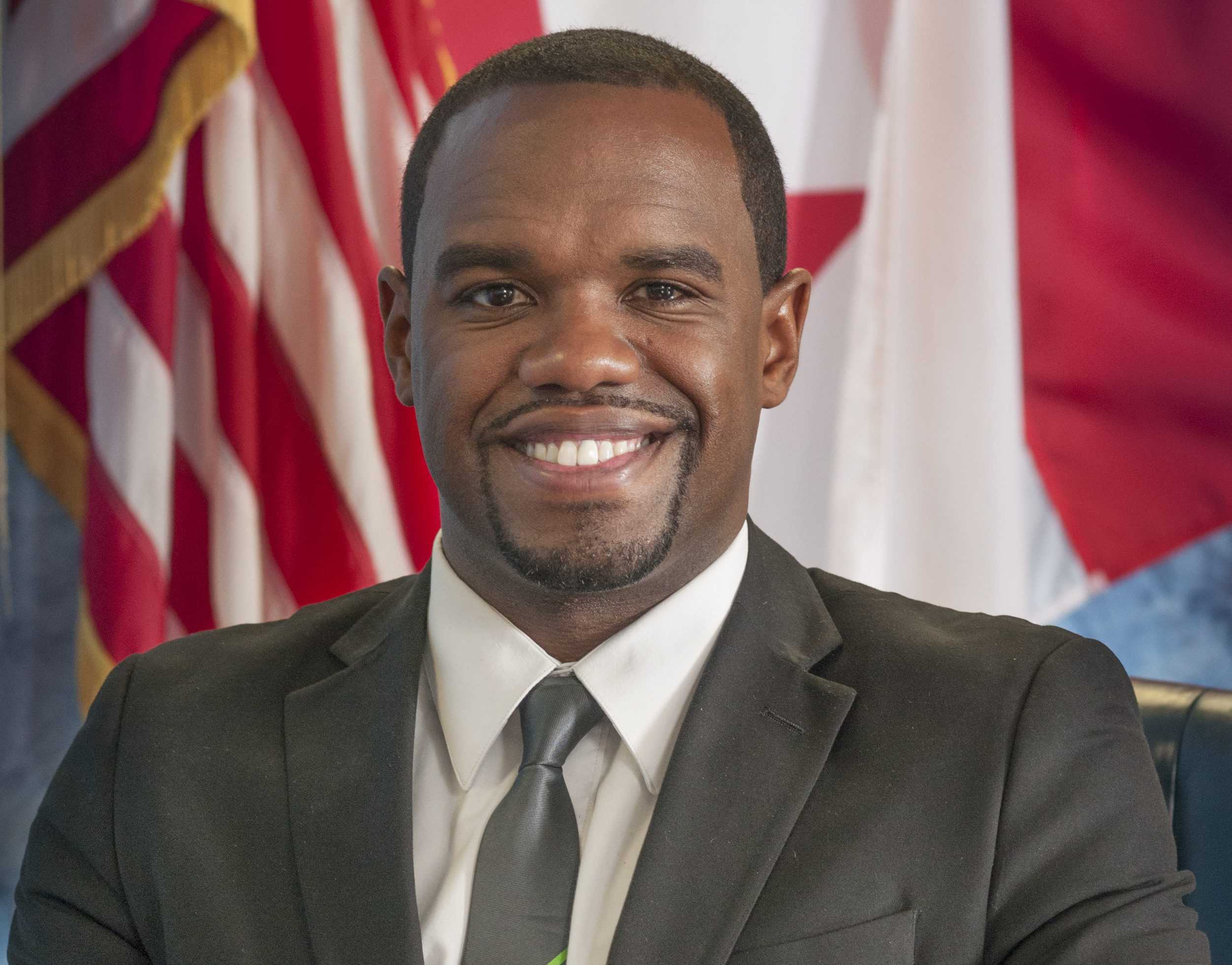
City Council President Johnathan Austin

By Johnathan Austin

Over the last few months, the Birmingham City Council has been subjected to some very harsh criticisms, and has had our collective work as the city’s Legislative branch of government demonized by fellow elected officials, local leaders, respected members of the community and members of the media. While it is par for the course when you’re a public official entrusted with the oversight of billions of dollars in taxpayers’ money, the fodder has been malicious on many accounts and peppered with so many self-serving untruths by some of these same individuals. The good work this City Council has done, and will continue to do, on behalf of the citizens, has been wholly and unfairly mischaracterized on several fronts. However, this will not deter us from continuing to do what is best for the largest and most progressive city in the state.

Since 2013, my colleagues and I have been steadfast in our collective goal to push Mayor William Bell and his administrative staff to clean up blighted neighborhoods and revitalize communities all over Birmingham. The responsibility of ensuring that overgrown lots and city-owned property is well maintained lies solely in the Mayor’s wheelhouse. It was this Council that, after years of being stonewalled, worked in conjunction with the Mayor’s office to have the public nuisance and eyesore known as Larkway Gardens permanently demolished. We delivered on our promise to have Uber on our streets, and have worked tirelessly to enhance the relationship between the City and UAB. Our work in Montgomery and Washington, D.C. has yielded several “wins” for Birmingham that include securing a $20 million federal grant to improve local public transit and strengthening our relationship with the U.S. Department of Labor, which fully continues to support this Council’s goal to raise the local minimum wage. Just last year, the Council took a monumental and unprecedented move when we declared we would not pass the City’s budget if it did not include a clear plan and funding to clean up and revitalize our neighborhoods. Considered a “bold move” by many, we simply were doing exactly what we were elected to do: act on the reasonable requests of the citizens.

The level of cooperation that this Council has shown to the Mayor is unprecedented in Birmingham. Yet, it is not always reciprocated by the Mayor. It is this Council that has voted to approve more than 6,000 different items that the Mayor has placed before us on the City Council agenda, and only denying two items. However, the Mayor flat out refuses to sign off on legislation and contracts that the Council approves regarding Council business, which continues to hurt our neighborhoods. Because of the Mayor’s actions, there are contractors doing work on behalf of the City that are not being paid, even though their contracts have been voted on and approved by this Council.

The mischaracterization that this Council is difficult to work with, that this Council doesn’t support the Mayor and the Administration, that this Council wants to strip the Mayor of his ability to lead and make decisions, that this Council is not about the business of the city or the people who live in it, couldn’t be further from the truth.

The truth is each of us were elected by our constituents to represent them on issues that they care about. The truth is we take our roles as stewards of the public’s money very seriously. The truth is the proposed changes to the Mayor-Council Act, which clearly lays out the roles and responsibilities of the Mayor and Council alike, are an unnecessary power grab that, if passed, will set a precedence diminishing the sanctity of democracy, not only in Birmingham, but across the state of Alabama. The truth is even as we continue to face an unprecedented attack from members of the Jefferson County Legislative Delegation, attempting to orchestrate a state takeover of Birmingham, we will continue to be steadfast in our collective goal of improving the quality of life for the citizens of Birmingham and making our beloved city a beacon of progress, inclusion, unity and access that we can all be proud of. The truth is the legacy of this Council will show that we were transformational, much to the chagrin of some, and we took bold and appropriate steps to shift the paradigm in City government and continue to protect and revitalize our long forgotten neighborhoods.

Johnathan F. Austin is President of the Birmingham City Council

Who Can We Blame?

0

By Mahari A. McTier

I read an article last month by John Archibald of the Birmingham News that piqued my interest to look deeper into his points. I have to say that I often disagree with the comments of Mr. Archibald, but his comments in this article are true about the lack of black business cultivation in the City of Birmingham.

Here is an excerpt from his article titled “Birmingham’s failure was not ‘gentrification’”:

Birmingham’s biggest failure, since the Civil Rights era, has been its inability to cultivate black businesses.

Seven out of 10 residents in the city of Birmingham are black, and about half the businesses in the city – not counting publicly traded companies – have black owners.

But it’s an illusion.

Because even though the number of black-owned businesses has grown, they still account for only about 2 percent of all sales in Birmingham.

Two percent. Or two cents on the dollar.

Think of that. The city charges twice that in sales tax alone.

And while the total number of black-owned firms is a respectable number, 61 percent of them have no paid employees. Black-owned businesses with paid workers account for only about 8 percent of all companies in Birmingham.

Of course there is frustration.

Think about this. Blacks make up 73 percent of Birmingham’s population and Asians make up 1 percent. Yet sales by black businesses and Asian businesses are virtually the same. There is less than a percentage point difference.

While white-owned business in Birmingham on average top $1 million in sales, black-owned businesses averaged $34,270, or about 60 percent of the national average, according to a 2012 Census Bureau survey of business owners.

Archibald concludes his article by saying that Blacks should have anger, but not at those who would improve a decaying city. Basically he’s saying that ‘gentrification’ is not the problem and Blacks need to stop blaming the problems on this. Gentrification is defined as the buying and renovation of houses and stores in deteriorated urban neighborhoods by upper- or middle- income families or individuals, thus improving property values but often displacing low income families and small businesses.

Before I give my thoughts on the article, let me address these appalling statistics. The reality is this, numbers don’t lie. It makes me sick on the stomach to see how pitifully black businesses are performing in comparison to our white counterparts. Blacks are 73 percent of the population and black businesses make up just 2 percent of sales. It’s hard for me to digest this, when I see politicians fighting for power over who is going to be in charge. In charge of what, is where my mind goes. Part of the fight has been over board appointments. Yes, to be honest government contracts have been the only way many black businesses have made a few crumbs over the years. But as Archibald pointed out, the problem with boards in Birmingham that have contracting power is they box black businesses into being ‘minority firms’, which results in small fees that are not enough to build capacity. So if you are a firm that seeks to be a lead contractor, the chances are small to none. As I stated in a previous article, we give away our economic empowerment power at the government level and auto demote ourselves to a minority role in a City that is majority black. I just don’t get it.

The problem is not just government, there are many systemic issues that make it challenging for black businesses to grow, like lack of access to capital. Blacks are three times more likely to be declined for a loan than whites and it’s definitely harder for blacks to get money to start a business.

In conclusion, there are a lot of things that we can do to better our financial status in this city. Remember, he who has the gold holds the real power and everyone else are just pawns in the game. Some of them include: support our black businesses, get government to not look at black businesses as inferior which leads to crumbs in contracts, create a real economic agenda that works for everyone at the government level, and stop blaming others for what we can do for ourselves. We are 73 percent of the population, remember. So who can we blame?

(Mahari A. McTier is a Financial Advisor with Tier 1 Advisors, LLC and can be contacted at 205-379-1052 or via email at mahari@tier1advisorsllc.com)

Prince family, friends bid a loving goodbye to pop icon

0

JEFF BAENEN and KEVIN BURBACH

Associated Press


MINNEAPOLIS (AP) — Some of Prince’s “most beloved” family, friends and musicians celebrated his life in a small, private service on Saturday after his remains had been cremated.

His publicist Yvette Noel-Schure said in a statement that the 57-year-old music superstar’s family and friends gathered “in a private, beautiful ceremony” to say a loving goodbye.

The statement did not say where the service was held, but friends such as percussionist Sheila E. and bassist Larry Graham were seen Saturday entering Prince’s suburban Minneapolis estate, Paisley Park. Prince’s sister Tyka Nelson and brother-in-law Maurice Phillips also were seen on the grounds, as were catering trucks.

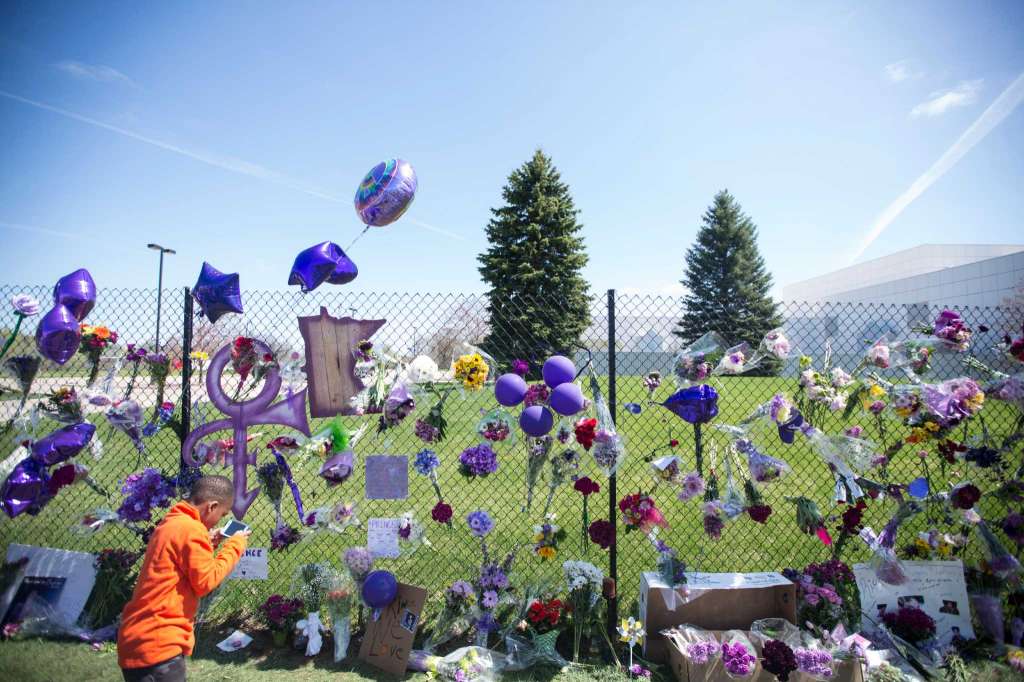
Hundreds of fans were gathered outside the estate, where a security fence was covered with purple balloons, flowers, signs and more honoring Prince, who both lived and recorded there. People emerged from the estate and handed out round purple boxes to some fans. Each box contained a handout with a color photo of the late musician and a black T-shirt with “3121” printed on it in white — the numbers were the title of a Prince album.

1024x1024
“Hundreds of fans were gathered outside the estate, where a security fence was covered with purple balloons, flowers, signs and more honoring Prince, who both lived and recorded there…”


Prince was found unresponsive in an elevator Thursday at Paisley Park, and an autopsy was done Friday. But authorities have not released a cause of death and have said results could take days or weeks.

The publicist’s brief statement repeated that the cause of Prince’s death was unknown, and said autopsy results wouldn’t be received for at least four weeks.

The statement said the “final storage” of Prince’s remains would be private and that a musical celebration would be held at a future date.

“We ask for your blessings and prayers of comfort for his family and close friends at this time,” the statement said.

Prince was last seen alive by an acquaintance who dropped him off at Paisley Park at 8 p.m. Wednesday, according to Carver County Sheriff Jim Olson. The “Purple Rain” star, born Prince Rogers Nelson, was found by staff members who went to the compound in Chanhassen, about 20 miles outside Minneapolis, the next morning when they couldn’t reach him by phone.

Emergency crews who answered the 911 call could not revive Prince, the sheriff said.

Celebrity website TMZ, citing unidentified sources, has reported that Prince was treated for an overdose of the powerful painkiller Percocet while traveling home from concerts in Atlanta last week. The site said his plane made an emergency landing April 15 in Moline, Illinois, where he was briefly hospitalized.

Fans captured Prince's final concert in Atlanta. (Courtesy of Twitter)
Fans captured Prince’s final concert in Atlanta. (Courtesy of Twitter)

Representatives for Prince have not responded to requests from The Associated Press for comment on the reports of the emergency landing and overdose treatment, and Saturday’s statement from his publicist did not address them.

Olson, the sheriff, and a medical examiner’s office spokeswoman declined Friday to say whether prescription drugs were taken from the home after his death. Olson did say emergency workers did not administer Narcan, a drug they carry to counteract overdoses, when they responded to Paisley Park.

Prince’s death came two weeks after he canceled concerts in Atlanta, saying he wasn’t feeling well. He played a pair of makeup shows April 14 in that city, apologizing to the crowd shortly after coming on stage.

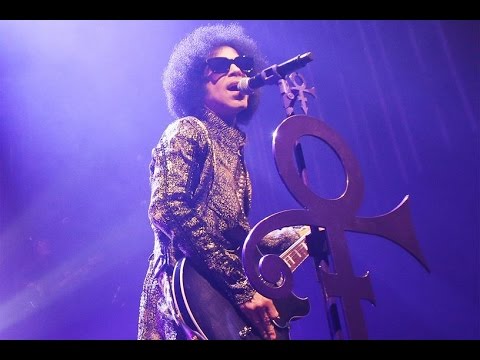
Prince's- Purple Rain Last ever performance in Atlanta ( Courtesy to Youtube)
Prince’s- Purple Rain Last ever performance in Atlanta ( Courtesy to Youtube)

Early in the first show, he briefly disappeared from the stage without explanation. After about a minute he returned and apologized, saying he didn’t realize how emotional the songs could be. He played the rest of the show without incident and performed three encores.

In the later show, he coughed a few times, though the show was again energetic.

Then came the reported emergency landing en route to Minnesota. The night after that, Prince hosted a dance party at Paisley Park, where some fans said he looked fine and seemed irked by reports of an illness. Prince didn’t play except to tap out a few notes on a piano, and lingered only for a few minutes before disappearing.

Prince was slated to perform two shows earlier this week at the Fox Theatre in St. Louis but canceled last week because of health concerns.

Sheila E. has told the AP that Prince had physical issues from performing, citing hip and knee problems that she said came from years of jumping off risers and stage speakers in heels. But she said she hadn’t talked directly with him in several months.


Pop superstar Prince dies at his Minnesota home

0

By NEKESA MUMBI MOODY and HILLEL ITALIE and JEFF BAENEN


CHANHASSEN, Minn. (AP) — Pop superstar Prince, widely acclaimed as one of the most inventive and influential musicians of his era with hits including “Little Red Corvette,” ”Let’s Go Crazy” and “When Doves Cry,” was found dead at his home on Thursday in suburban Minneapolis, according to his publicist. He was 57.

His publicist, Yvette Noel-Schure, told The Associated Press that the music icon died at his home in Chanhassen. No details were immediately released.

The singer, songwriter, arranger and instrumentalist broke through in the late 1970s with the hits “Why You Wanna Treat Me So Bad?” and “I Wanna Be Your Lover,” and soared over the following decade with such albums as “1999” and “Purple Rain.” The title song from “1999” includes one of the most widely quoted refrains of popular culture: “Tonight I’m gonna party like it’s 1999.”

maxresdefault
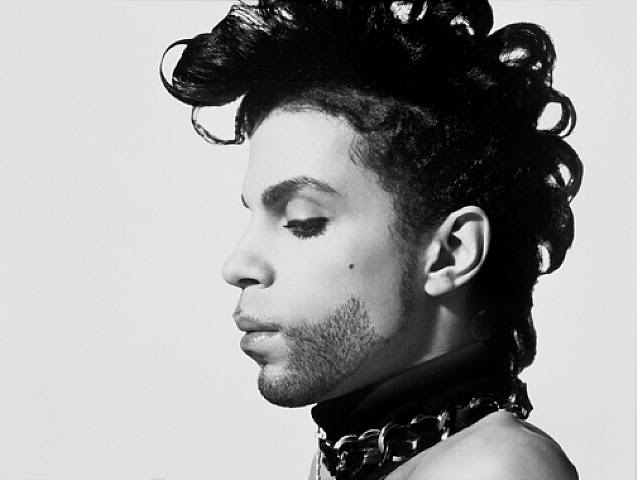
The singer, songwriter, arranger and instrumentalist broke through in the late 1970s with the hits “Why You Wanna Treat Me So Bad?” and “I Wanna Be Your Lover,” and soared over the following decade with such albums as “1999” and “Purple Rain.”


The Minneapolis native, born Prince Rogers Nelson, stood just 5 feet, 2 inches tall, and seemed to summon the most original and compelling sounds at will, whether playing guitar in a flamboyant style that openly drew upon Jimi Hendrix, switching his vocals from a nasally scream to an erotic falsetto or turning out album after album of stunningly original material. Among his other notable releases: “Sign O’ the Times,” ”Graffiti Bridge” and “The Black Album.”

He was also fiercely protective of his independence, battling his record company over control of his material and even his name. Prince once wrote “slave” on his face in protest of not owning his work and famously battled and then departed his label, Warner Bros., before returning a few years ago.

“What’s happening now is the position that I’ve always wanted to be in,” Prince told the AP in 2014. “I was just trying to get here.”

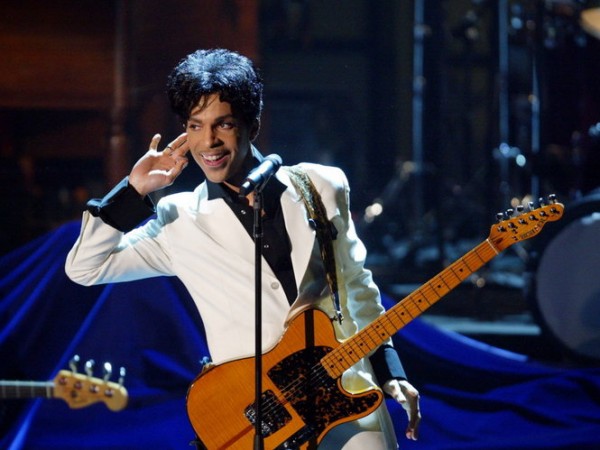
In 2004, Prince was inducted into the Rock and Roll Hall of Fame, which hailed him as a musical and social trailblazer.

17637558-standard
In 2004, Prince was inducted into the Rock and Roll Hall of Fame….


“He rewrote the rulebook, forging a synthesis of black funk and white rock that served as a blueprint for cutting-edge music in the Eighties,” reads the Hall’s dedication. “Prince made dance music that rocked and rock music that had a bristling, funky backbone. From the beginning, Prince and his music were androgynous, sly, sexy and provocative.”

Rarely lacking in confidence, Price effortlessly absorbed the music of others and made it sound like Prince, whether the James Brown guitar riff on “Kiss” or the Beatle-esque, psychedelic pop of “Raspberry Beret.”

He also proved a source of hits for others, from Sinead O’Connor’s “Nothing Compares 2 U” to Cyndi Lauper’s “When You Were Mine.” He also wrote “Manic Monday” for the Bangles

Prince had been touring and recording right up until his death, releasing four albums in the last 18 months, including two on the Tidal streaming service last year. He performed in Atlanta last week as part of his “Piano and a Microphone” tour, a stripped down show that has featured a mix of his hits like “Purple Rain” or “Little Red Corvette” and some B-sides from his extensive library.

Prince debuted the intimate format at his Paisley Park studios in January, treating fans to a performance that was personal and was both playful and emotional at times.

The musician had seemed to be shedding his reclusive reputation. He hosted several late-night jam sessions where he serenaded Madonna, celebrated the Minnesota Lynx’s WNBA championship and showcased his latest protege, singer Judith Hill.

Ever surprising, he announced on stage in New York City last month that he was writing his memoir. “The Beautiful Ones” was expected to be released in the fall of 2017 by publishing house Spiegel & Grau. The publishing house has not yet commented on status of book, but a press release about the memoir says: “Prince will take readers on an unconventional and poetic journey through his life and creative work.” It says the book will include stories about Prince’s music and “the family that shaped him and the people, places, and ideas that fired his creative imagination.”

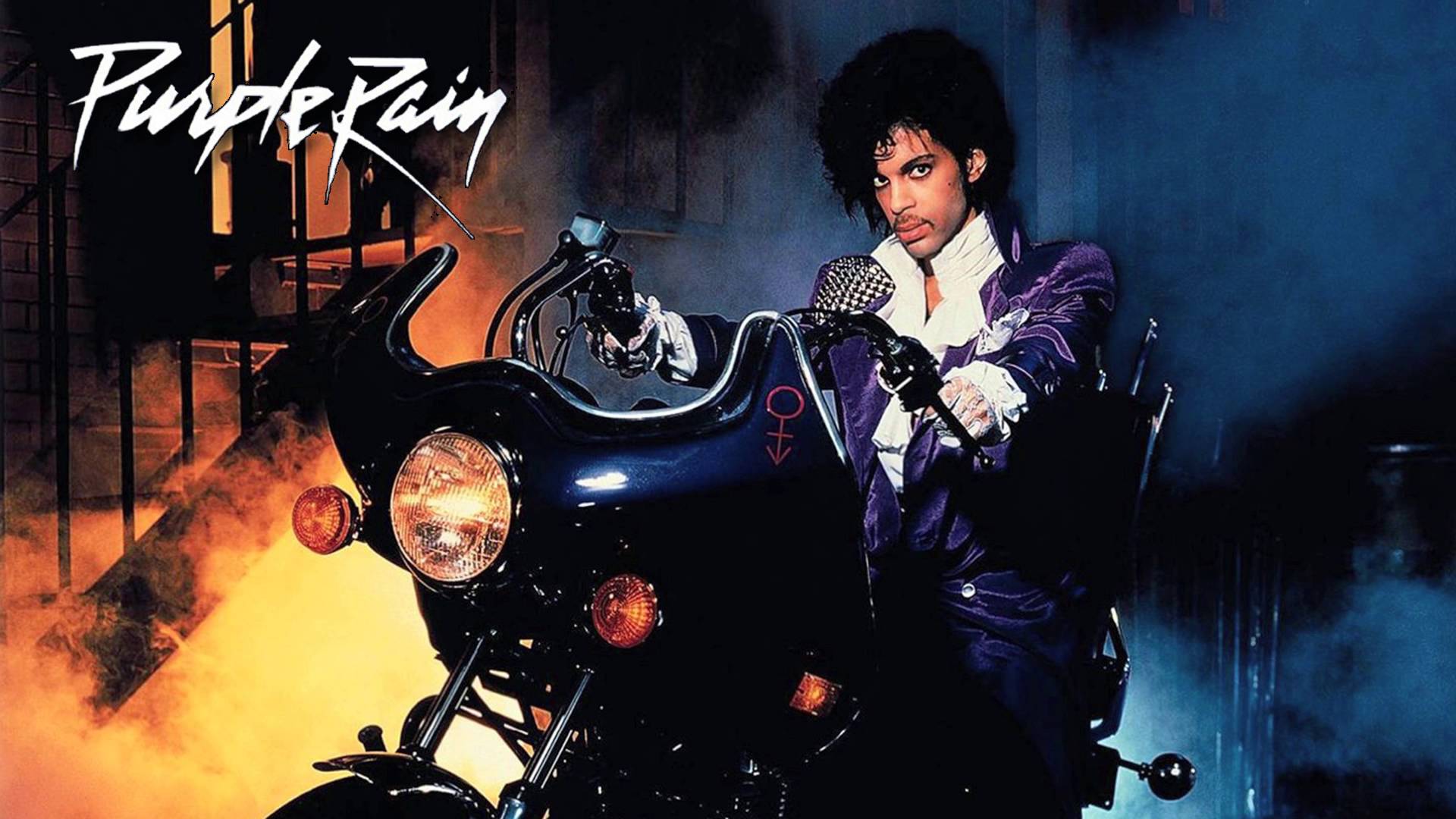
A small group of fans quickly gathered in the rain Thursday outside his music studio, Paisley Park, where Prince’s gold records are on the walls and the purple motorcycle he rode in his 1984 breakout movie, “Purple Rain,” is on display. The white building surrounded by a fence is about 20 miles southwest of Minneapolis.

Steven Scott, 32, of Eden Prairie, said he was at Paisley Park last Saturday for Prince’s dance party. He called Prince “a beautiful person” whose message was that people should love one another.

“He brought people together for the right reasons,” Scott said.

(courtesy photo credit: google search, and YouTube)