Home Blog Page 1212

Black Bigotry in America

0

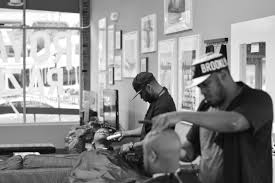
Barbershop Talk

by Pete Stone

A bigot is an intolerant person that is fanatically devoted to their own group and are intolerant of those who differ.

The divisive nature that too many of us have creates dissension and disunity in our way of life and we pass these feelings on to our children, which perpetuates bigotry in Black society. I am a strong believer in the Willie Lynch process of The Making of a Slave that white people used on the captive African. I suggest that those of you who don’t know about The Making of a Slave by Willie Lynch look it up and read it again and again. I have always felt that we Black people in America were tampered with in some manner even before I learned of Willie Lynch.

This man created a method of Black bigotry that is in effect today. He put the African slaves in groups and used their differences such as the old vs the young Black males and the young Black males vs. the old Black males. He used the dark skinned slaves vs the light skinned slaves; the female vs the male and the male vs the female. He had the white servants and overseers distrust all Blacks. He guaranteed his plan, if used intensely for one year, the slaves themselves would remain perpetually distrustful.

The Willie Lynch method is still in effect today, in my opinion.

Now I am not asking you to believe this because I said it. I am asking you to study to show your own self-approval.

Contact me at (205) 243-8644.

The 2016 American Gospel Quartet Convention Celebrated its 25th Gathering in Birmingham

0

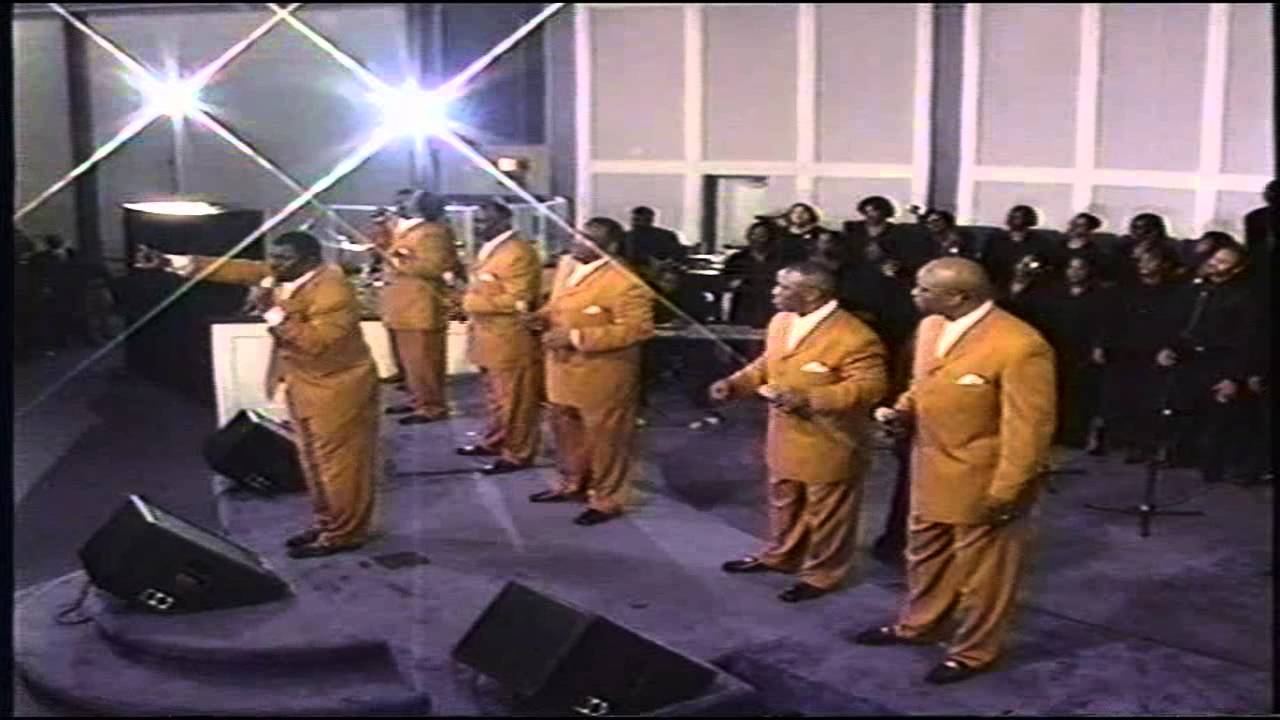
Quartet and Traditional Singers gathered in Birmingham, Alabama on January 21-22 for the 25th Annual American Gospel Quartet Convention. The two-day conference was held al the Christ Temple Deliverance Church (2512 Avenue D Ensley, Birmingham, AL 35218) and included music seminars, concerts, awards ceremonies, networking and Bible ministry.

The AGQC was founded by George W. Stewart as a medium to refocus the Gospel quartets back to their spiritual foundation and to preserve the genre’s rich history. Stewart reflects,”God spoke to me and said, ‘If I can get the quartets saved I will save the world through them.’ And for all these years we have been on a mission with a team of great people to let the world know that this great music is the foundation of most modern music.”

Several groups and individuals were honored during the 2016 ACQC as attendees gathered under the theme ” Press Sure Towards the Prize of the High Mark” (Philippians 3:14). The Hall of Fame inductees were The Bolton Brothers, The Christianaires and Lemonia Boyd, The AGQC also paid tribute to the Twenty-Five Most Influential Singers, the Twenty-Five Most Influential Musicians and the Twenty-Five Most Influential Contributors to the Quartet Music Genre. Two other prestigious awards included The Dorothy Love Coates Living Legend Award (Doc McKenzie) and the Joe Ligon Lifetime Achievement Award (Bishop Darrell McFadden).

Representatives of the Jefferson County Sound were saluted for their commitment to continue to carry the sound. The honored groups included the Delta Aires, The Four Eagles, The Pillars and The Friendly Four (Selma, AL).

The morning sessions began at 9 a.m. and the nightly concerts began at 6:30 p.m. All events were free to the public.

For more information on the AGQ Convention go the www.agqconvention.ning.com or contact George W. Stewart, (205) 798-4093.

2016 Acura ILX

0

2016 Acura ILX

By Frank S. Washington

DETROIT – Acura is quietly on a quest to reassert itself in the luxury car market. The company has always produced technologically advanced yet simple cars and crossovers. And of late, it is introducing products that line up nicely with its prime competitors, other Asian luxury brands.

A couple of calendar years ago Acura introduced its ILX sport sedan. The model was supposed to nab younger buyers and create a more appetizing doorway into the brand. By most accounts, it succeeded. But one model does not make a turnaround.

While more sophisticated products are undoubtedly in the pipeline, Acura is wasting little time. It has upgraded the 2016 ILX. The exterior styling has been freshened, the car has a new direct injection four cylinder engine, a new eight-speed dual clutch transmission and more trim packages.

The new 2.4-liter four cylinder engine made 201 horsepower and 180 pound-feet of torque. Coupled with the eight-speed dual clutch transmission, the 2016 Acura ILX had an EPA fuel rating of 25 mpg in the city, 36 mpg on the highway and 29 mpg combine.

The engine was relatively quiet, acceleration was pretty good and the midrange pickup was sufficient. The car had a MacPherson strut front suspension with reactive dampers and a multilink suspension in the rear with reactive dampers.

This setup gave the ILX a light ride without feeling floaty. The car’s suspension seemed to bottom out when going over bumps but it really didn’t. That was just the articulation in the suspension. It was a light riding suspension that adjusted quickly to road conditions. Ventilated 12.3-inch brakes in the front and 11.1 solid rear disc brakes in the rear provided plenty of stopping power.

Inside was a cloth interior with patterned seats. It was understated and to the point. The car had dual information screens. One embedded in the dash provided real time fuel consumption amongst its information. The other was a more traditional screen with infotainment goodies and the navigation screen.

We gave a lift to a friend who happened to be at 6’7”, maybe taller. He got in the front seat without too much bending but we doubt that he could have gotten in the back seats. It was cramped for a near six footer. The doorway was tight and sitting up straight brought our head into contact with the headliner. Though legroom was okay.

Our test vehicle had LED taillights as well as LED headlights. It had heated power door mirrors, a moonroof and heated front seats as well as a smart key. It had tire sealant with inflator kit in place of a spare tire. That was certainly different.

Front passengers had power seats that were heated. The ILX had a rearview camera with cross traffic alert and satellite radio. The navigation system was part of the Tech Package. It included voice controls, real time traffic alert, a premium sound system, dual zone climate controls and a hard disc drive.

The test car also featured the Acurawatch Plus Package. Included were adaptive cruise control, collision mitigation braking, road departure warning, forward collision warning, lane keeping assistance and lane departure warning.

Aluminum brake pedals, 18-inch alloy wheels, sport seats with luxury suede inserts, fog lights, all-season tires and a rear decklid spoiler were part of the A-Spec Package.

The cost for all this equipment and car was a surprisingly reasonable $34,890. Add the $920 freight charge and the total came to $35,810. The best way to increase market share is a quality product at a reasonable price. Acura seems to have learned that equation with the 2016 ILX.

Frank S. Washington is editor of AboutThatCar.com.

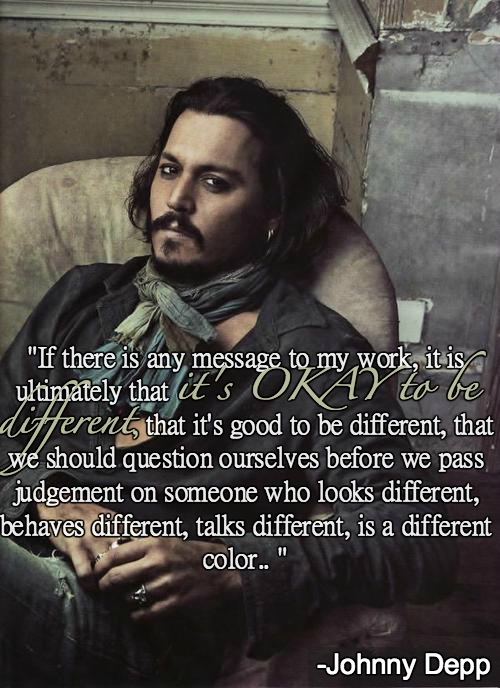
Daily Quote ♛January 29, 2016♛

0

Inspirational Message

tumblr_412Rpc1qz4rgp

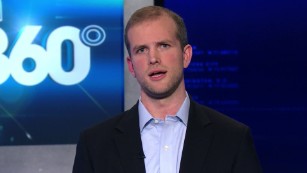
American released by Iran: They told me I was never going to leave

0

(CNN)It only took an hour.

Matthew Trevithick stepped out of the dorm where he was staying in Tehran and was on his way to buy a plane ticket back home when three people approached him from an unmarked Hyundai Sonata.

They asked if he was Matthew. When he said yes, they put him in the car and headed straight for Iran’s notorious Evin prison.

“Within an hour of standing on the street,” he said in an interview with CNN’s Anderson Cooper, “I’m sitting in an interrogation cell in the second floor of a specific building used by the intelligence services in Iran.”

He said the first thing interrogators asked was if he knew Jason Rezaian — the Washington Post journalist who, at the time, had already spent more than a year in an Iranian prison.

“I said of course, the whole world knows Jason Rezaian. Everybody knows that name,” Trevithick recounted. “He said he’s never leaving and neither are you.”

Freed

Trevithick, who was detained for 41 days, was one of five Americans that Iran released earlier this month.

The other four — Rezaian, Marine veteran Amir Hekmati, Christian pastor Saeed Abedini and Nosratollah Khosravi-Roodsari — were freed as part of a prisoner swap negotiated between the two countries.

The announcement of their releases came the same day that the International Atomic Energy Agency, the United Nations’ nuclear watchdog, announced Iran was in compliance with a July deal to restrict its nuclear program.

Iranian Foreign Minister Mohammad Javad Zarif told CNN’s Christiane Amanpour that although he believes those detained had “committed acts that were illegal,” he’s happy that the U.S. and Iran could reach an agreement.

“I think it was an important achievement that we all made together,” he said.

Trevithick went to Iran in September to study Farsi, according to a statement from his family.

He arrived back in Boston on January 17, his stepmother said.

Accusations

Trevithick said that he was charged with personally trying to overthrow the Iranian government. Authorities also accused him of having access to bank accounts containing millions of dollars and knowing the locations of weapons caches that had secretly been planted around the country in preparation for a coup.

After he denied the charges, he was placed in solitary confinement for 29 days.

The room, he said, had a thin carpet covering the concrete floor.

It was about six-by-seven feet with a ceiling that ranged from 8 to twelve feet high — small enough for him to touch three sides at any time, he said.

There was neither a bed nor a pillow.

“That becomes your home. That is home.”

Despite spending nearly a month in solitary (something he thought was standard operating procedure after about a month), Trevithick said the scariest part of his ordeal was the final two hours before he was released.

It started when he was “violently” pulled from his cell and rushed to the prison’s basement.

“I could not believe, even spending 41 days there, could not believe what I was looking at,” he said. “I’m looking at a pitch black room with a single spotlight pointed at a chair with an ultra-high definition camera.”

A man walked in and stood behind a white sheet. The man running the camera is wearing a surgical mask.

“They say Matthew, Matt, this is your last chance. Admit why you are here. Admit that you are here to overthrow the government.”

The interrogators gave him a few minutes alone to contemplate what he was going to do.

When they came back, he said he looked straight into the camera and told them, “I’ve said everything I have to say.”

Though he said he was proud of his defiance, part of him also worried he had made a mistake.

“They kept saying, well, you’ve made a very bad decision,” he said.

Next, he said they threw him against the wall. Several minutes later he was rushed back to his cell, where lunch was waiting, and then was told to gather his belongings.

“You only collect all your things in Evin if you are leaving or if you’re being relocated,” he said.

He walked down the hallway, about 10 paces from his cell.

“I stop. My heart’s racing. My inner critic is louder than ever — great, Matt, now you’re about to reap what you’ve sown,” Trevithick told CNN.

To the left, the door towards the exit.

To the right, “deeper into the prison, towards solitary confinement cells and God knows what else,” he said.

“And oddly enough, they said turn left.”

American freed by Iran feels ‘born again’

  • originally seen on CNN.com

TRUMP LOOKS TO GRAB ATTENTION AS GOP RIVALS DEBATE

0

Donald Trump
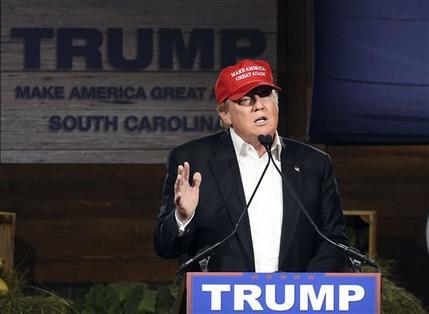
Republican presidential candidate Donald Trump speaks during a campaign stop on Wednesday, Jan. 27, 2016, in Gilbert, S.C. (AP Photo/Rainier Ehrhardt)


DES MOINES, Iowa (AP) — Republican presidential candidates take the debate stage Thursday night absent their front-runner, Donald Trump, who will instead seek to starve his rivals of attention at a critical juncture in the campaign by holding a competing event of his own.

Trump’s abrupt decision to boycott the final debate before Monday’s Iowa caucuses has added a new layer of uncertainty to a race that has defied political convention. He cited “unfair” treatment from debate host Fox News as his reason for skipping the contest and holding a rally instead.

“I don’t like being taken advantage of,” Trump said in an interview Wednesday on Fox, signaling he wasn’t boycotting the highly rated network completely.

Other GOP candidates saw Trump’s move as a welcome opportunity to emerge from the long shadow the billionaire has cast over the race, while also hoping it might damage his standing with Iowa voters.

“I think it’ll hurt him that he’s not showing up in the Iowa debate four days before the Iowa caucuses,” former Florida Gov. Jeb Bush told CNN.

Florida Sen. Marco Rubio said Republicans “don’t have time for these kinds of distractions.”

Trump has led the Republican race nationally for months, to the surprise of many. In Iowa, however, polls suggest he’s locked in a tight race with Texas Sen. Ted Cruz, a favorite of the conservatives and evangelical Christians who hold significant sway in the state’s Republican caucuses.

Given Trump’s unpredictable nature, some campaigns were preparing for the possibility he could reverse course and take the stage in Des Moines after all. Still, Trump moved forward with plans to host a rally just a few miles away that his campaign said would raise money for wounded warriors.

On Thursday, he announced the launch of a new website for collecting donations to veterans ahead of the event. The link, which he posted on Twitter, includes the seal of the Donald J. Trump Foundation, and a form for contributions.

With Fox carrying the debate, other cable channels were likely to show Trump’s event, stealing away at least some viewers who would have otherwise watched the contest.

“I think it’s typical Trump,” said Don Kass, chairman of Iowa’s Plymouth County GOP. “He’s betting on him making a bigger splash.”

While earlier debates have been instrumental in the rise and fall of several GOP candidates, they have had minimal apparent impact on Trump’s standing. He’s preferred to make his case to potential voters in national television interviews and on Twitter, and has often faded into the background in the debates.

Trump’s absence was likely to turn attention to Cruz, a firebrand conservative disdained by many in his party, and Rubio, who is hoping a third-place finish in Iowa could help him establish himself as the choice of more traditional Republicans.

Others on the debate stage will have their eye on New Hampshire, where they’re hoping a strong showing in the Feb. 9 primary will jumpstart their White House hopes. Bush, Ohio Gov. John Kasich and New Jersey Gov. Chris Christie have all devoted the bulk of their campaign resources to New Hampshire.

Also on the main debate stage Thursday: retired neurosurgeon Ben Carson, who has a loyal following in Iowa, and Kentucky Sen. Rand Paul, who was relegated to the undercard event in the last debate.

Trump’s Fox feud dates back to the first Republican primary debate, when moderator Megyn Kelly took the billionaire business mogul to task over derogatory statements he’d made in the past toward women. Trump threatened to boycott Thursday’s debate if Fox stuck with plans for Kelly to moderate again, but said it was a sarcastic statement from the network that was the final straw.

That statement said the leaders of Iran and Russia “both intend to treat Donald Trump unfairly when they meet with him if he becomes president” and that “Trump has his own secret plan to replace the Cabinet with his Twitter followers to see if he should even go to those meetings.”

Trump and his campaign manager slammed the statement as taunting and juvenile.

Meanwhile, a new $1 million political advertisement says that Trump can’t be trusted, even on his signature issue of getting tough on illegal immigrants.

The ad seeks to undermine Trump’s tough talk about building a wall on the Mexican border. It goes on to assert that his real estate development company relies on illegal immigrants for cheap labor, pointing out a $1 million fine the Trump Organization paid for employing illegal immigrants in the construction of the Trump Tower in New York.

The commercial, which is set to begin airing Friday in Iowa and also will soon debut in New Hampshire, is sponsored by Our Principles, an anti-Trump super political action committee led by Katie Packer, a former aide to 2012 GOP nominee Mitt Romney.

Associated Press writers Steve Peoples, Jill Colvin and Julie Bykowicz contributed to this report.

Follow Julie Pace at http://twitter.com/jpaceDC

© 2016 The Associated Press. All rights reserved. This material may not be published, broadcast, rewritten or redistributed. Learn more about our Privacy Policy and Terms of Use.

Daily Quote ♛January 28, 2016♛

0


Inspirational Message

72449b

Wentz, FCS counterparts trying to make NFL impression

0
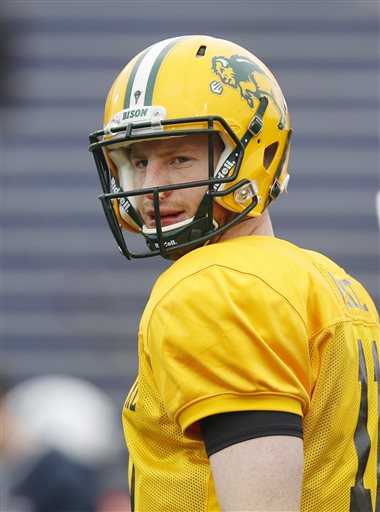
Carson Wentz
North Dakota State quarterback Carson Wentz of (11) looks on during drills of an NCAA college football practice for the Senior Bowl, Wednesday, Jan. 27, 2016, at Ladd–Peebles Stadium, in Mobile, Ala. (AP Photo/Brynn Anderson)

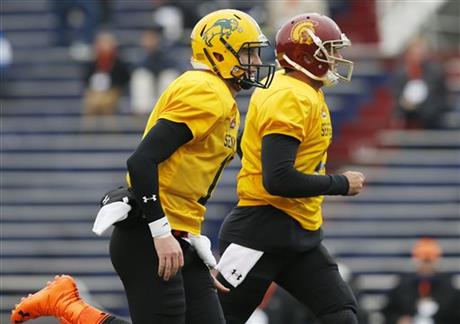
MOBILE, Ala. (AP) — Those NFL executives who couldn’t make the trek to North Dakota to check out Carson Wentz in college are now getting a close-up view of the player in the mix to be the first quarterback drafted.

The former North Dakota State star is the most prominent of a number of FCS products trying to make an impression on NFL teams throughout this week at the Senior Bowl.

They’ll be lining up against guys who played at programs like Alabama and Ohio State all week, with pro coaches, scouts and executives watching closely.

“I think a lot of the small-school guys come in here with a little chip on their shoulder, something to prove,” Wentz said. It’s “just exciting to finally get out there and face these guys.”

The 6-foot-5, 233-pound Wentz might be the top prospect at the Senior Bowl after returning from a broken wrist to lead North Dakota State to its fifth straight national title.

Bison teammate offensive lineman Joe Haeg is also trying to show NFL teams ahead of Saturday’s game that he can play at that level. From William & Mary defensive back DeAndre Houston-Carson to Southeast Missouri wide receiver Paul McRoberts and Harvard offensive tackle Cole Toner, they’re finally on a level playing field with those FBS guys.

Wentz is vying with California’s Jared Goff and Memphis’s Paxton Lynch to be the first quarterback selected. He returned from a broken right wrist, sustained on Oct. 17, to lead North Dakota State to a win over Jacksonville State in the championship game.

Wentz isn’t trying to carve a reputation among NFL types but live up to it.

“Yes, he was scouted in the fall but Fargo, North Dakota is a tough place to get to,” said Senior Bowl executive director Phil Savage, a former Cleveland general manager. “There were probably a handful of (general managers) that made it out there.

“But to be on this stage in front of this many people, I mean this can be almost a coming out party for him: OK, this is who Carson Wentz is, this isn’t just a rumor or hearsay or talk.”

The other guys from FCS schools face similar challenges, even if they’re not being scrutinized quite so closely as a potential first-round quarterback.

Some were undersized or late bloomers who were barely recruited by major colleges or not at all. Wentz grew from a 5-8, 125-pound beanpole as a high school freshman in Bismarck, North Dakota and didn’t play quarterback as a junior because of an injury.

“In North Dakota, it’s hard to get found in general, let alone missing a junior year,” Wentz said. “I came in my senior year at 6-5 and 200 pounds and kind of came out of nowhere.”

Teammate Haeg was only recruited by Division II schools, but opted to walk on at North Dakota State. He’s packed on about 80 pounds since his freshman year and gone from not being able to bench-press 225 pounds to lifting 380.

“I would definitely say there’s a lot of people that kind of look down on FCS players because obviously there’s a lot of great players at the FBS level,” Haeg said. “But also there’s a lot of great players that are overlooked at the FCS level.

“When we get on the field, it doesn’t matter where you’re from. We’re all on the same practice field. We’re all out there competing.”

McRoberts is the first Southeast Missouri player to make it to the Senior Bowl. He got a few recruiting letters but no scholarship offers from bigger schools coming from a small school program.

“It was kind of the same deal, me not playing against anybody, they didn’t want to take a chance on me,” McRoberts said. “That’s kind of how I was my whole life.”

Dallas Cowboys coach Jason Garrett, who’s leading the North team, said seeing how FCS players fare against bigger-school products is part of the evaluation process.

“Obviously those guys have had a lot of success or they wouldn’t be here in this game, but seeing them compete against guys from the programs at the highest level is important,” Garrett said.

If there’s any shortage of confidence from Wentz and his FCS counterparts, it’s not evident off the field.

“The biggest question mark obviously is going to be, can he play at this speed, can he play against this talent?” Wentz said. “I think I’m going to prove that. By the end of the week everyone’s going to no longer question that, and I’m excited to prove it.”


APNEWSBREAK: RACIAL DISPARITIES SEEN IN POLICE STUN GUN USE

0

Police Stun Guns
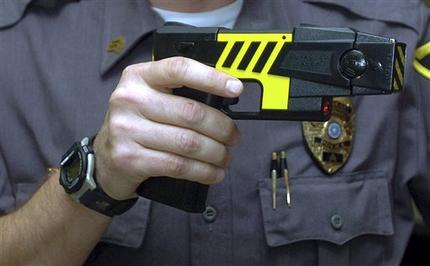
FILE – In this Oct. 28, 2004 file photo, an officer holds a stun gun used by his police department in a Farmington, Conn. Police across Connecticut disproportionately fired stun guns at blacks and Hispanics in 2015 while whites were the main beneficiaries when officers only threatened to use the weapons, according to preliminary data from the nation’s first accounting by a state of law enforcement stun gun use. State officials cautioned against making quick conclusions about the figures, saying they have just begun to analyze them after the Jan. 15, 2016 deadline for police departments to submit the reports. Civil liberties advocates also said the data appear to show racial disparities on the surface, but more analysis is needed. (AP Photo/Bob Child, File)


HARTFORD, Conn. (AP) — Connecticut officers who drew their stun guns on the job last year were more likely to fire when the suspect was black or Hispanic, according to a first-of-its-kind set of statistics that could stoke the nation’s debate over race and police use of force.

The raw, preliminary data was obtained by The Associated Press ahead of an official analysis expected in the coming weeks. While police and state officials cautioned against passing judgment until then, at least one criminal justice expert said he would not be surprised to see similar findings elsewhere around the country.

Some civil rights groups said the statistics confirm what they suspected for years.

“We feel we’re vindicated,” said Scot X. Esdaile, president of the Connecticut State Conference of NAACP Branches. “The NAACP has huge issues with how law enforcement use Tasers in communities across our state. We get a lot of complaints.”

State and municipal police in Connecticut reported a total of 641 incidents involving stun guns last year: 437 actual firings and 204 instances in which officers threatened to use their weapon but held their fire, according to the data.

Officers were more likely to hold their fire when the suspect was white.

They fired their stun guns 60 percent of the time in confrontations involving whites, 80 percent of the time in those involving blacks and 69 percent of the time in those involving Hispanics.

The figures come as police across the U.S. face heavy scrutiny over their use of deadly force against blacks. Although stun guns have been billed as non-lethal alternatives to firearms, they have resulted in deaths, and reliable information on how police use them has been lacking.

A 2014 law made Connecticut the first state to require all police departments to report every instance in which an officer discharges or threatens to use a stun gun. The NAACP and American Civil Liberties Union pushed for the legislation after the 2011 death of 26-year-old Marcus Brown, a handcuffed black man who was shot with a stun gun in the back of a Waterbury police cruiser.

Researchers at Central Connecticut State University are reviewing the data and will issue an analysis, perhaps by the end of February.

Although data from other states isn’t available, it would not be surprising if similar findings were found in other parts of the country, said Eugene O’Donnell, a lecturer at the John Jay College of Criminal Justice at the City University of New York.

“It is not surprising because the police occupy the front line of a criminal justice system that is designed to target minorities,” O’Donnell said. “Because of the design of the system, the police end up in more fraught situations with minorities since their adversarial interactions are so heavily overlaid in poorer places and poorer and working-class people.”

Of those who were shocked with stun guns in Connecticut in 2015, 43 percent were white, 35 percent black and 21 percent Hispanic. Thirty percent of the people involved in the more than 600 incidents studied were black and 21 percent were Hispanic.

Connecticut’s population of 3.6 million is 11.5 percent black, 15 percent Hispanic and 81 percent white, according to the Census Bureau. (The percentages add up to more than 100 percent because Hispanics can be counted in both the white and black categories.)

State and police officials noted that many of the stun gun incidents happened in urban areas, where minority populations are higher. Those include Hartford, New Haven and Bridgeport.

The figures don’t include data from several smaller towns that have yet to submit reports.

State officials and others cautioned that while the data appear to show racial disparities, deeper examination if needed.

“It seems like in the cases where it was threatened but not used, there were far more white people involved,” said Michael Lawlor, Connecticut undersecretary for criminal justice policy and planning. “Why that is and whether there is some other explanation, we’re going to go through the data and try to figure it out.”

Amnesty International has reported that at least 540 people in the U.S. died after being shocked with stun guns from 2001 to 2012. In Connecticut, 17 people have died since 2005, according to the ACLU.

David McGuire, legislative and policy director for the Connecticut ACLU, called the new statistics alarming.

“I think this data will be helpful for policymakers and police chiefs in Connecticut to get a handle on the issue,” he said.

Steve Tuttle, a vice president at Taser International Inc. in Scottsdale, Arizona, a leading maker of stun guns, said it is too early to draw conclusions about the Connecticut data. He said the numbers need to be evaluated with other data, including arrest rates and what offenses spurred stun gun use.

Similarly, Norwalk Police Chief Thomas Kulhawik cautioned: “The officers don’t pick and choose who’s going to resist arrest or flee.”

Tuttle wrote in an email to the AP that when used properly, a Taser is a highly effective way to “halt violent situations that pose a safety risk to an officer, suspect or innocent citizens.”

© 2016 The Associated Press. All rights reserved. This material may not be published, broadcast, rewritten or redistributed. Learn more about our Privacy Policy and Terms of Use.


AUTHORITIES SURROUND NATURE PRESERVE AFTER ARRESTS, SHOOTING

0

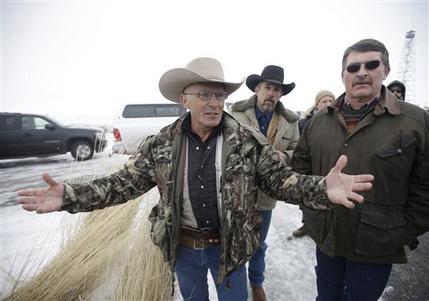
BURNS, Ore. (AP) — The Oregon nature preserve being occupied by an armed anti-government group was surrounded by law-enforcement agents Wednesday, a day after one of the occupiers was killed by officers during a traffic stop and eight others, including group leader Ammon Bundy, were arrested.

The confrontation came amid increasing calls for authorities to take action against Bundy for the illegal occupation of the Malheur National Wildlife Refuge, which was seized by the group on Jan. 2 in a bid to force the government to turn federal lands over to local officials.

The traffic stop was supposed to bring a peaceful resolution to the situation but ended badly, Harney County Sheriff Dave Ward said, expressing disappointment.

“Multiple law enforcement agencies put a lot of work putting together the best tactical plan they could to take these guys down peacefully,” Ward said at a news conference Wednesday.

The death didn’t have to happen, he said.

Details of the fatal encounter were sparse. It occurred as Bundy and his followers were heading to a community meeting late Tuesday afternoon in the town of John Day, about 70 miles north of Burns.

Arianna Finicum Brown confirmed that her father, Arizona rancher Robert “LaVoy” Finicum, was the man killed, the Oregonian reported. The 55-year-old was a frequent and public presence at the refuge, often speaking for the group at news conferences.

It was unclear what led to the shooting, or if Finicum or any of the other ranchers exchanged gunfire with officers. Authorities would not say how many shots were fired.

“This is where I’m going to breathe my last breath, whether I’m 90, 95 or 55,” Finicum told The Associated Press on Jan. 5. ” … I’m going to not spend my days in a cell.”

The FBI and Oregon State Police would say only that the dead man was wanted by federal authorities. They said no more specifics would be released pending formal identification by the medical examiner.

Greg Bretzing, special agent in charge for the FBI in Oregon, said authorities took a deliberate and measured response to the occupiers and tried to conduct the traffic stop safely and away from local residents.

The armed activists were given ample opportunity to leave the refuge peacefully and have their grievances heard through legal means, he said.

“They chose, instead, to threaten the very America they profess to love, with violence, intimidation and criminal acts,” Bretzing said.

He and the sheriff urged the remaining group members to leave.

“This has been tearing our community apart. It’s time for everybody in this illegal occupation to move on,” Ward said. “There doesn’t have to be bloodshed in our community.”

Jason Patrick, one of the leaders of the occupation, told Oregon Public Broadcasting that five or six group members remained inside the refuge.

For weeks, law-enforcement vehicles have been noticeably absent from the roads around the refuge. On Wednesday, however, marked law-enforcement cars were parked throughout the region. The FBI and state police said they were setting up checkpoints and only allowing ranchers who own property in specific areas to pass.

“If the people on the refuge want to leave, they are free to do so through the checkpoints, where they will be identified,” Bretzing said.

About 13 miles from the refuge headquarters, a sign warned drivers to turn around because a roadblock is ahead. Reporters and others who approached the vehicles blocking the road were met by FBI agents wearing camouflage body armor and helmets and carrying assault rifles. A spike strip, designed to puncture tires, was laid across the pavement just beyond the roadblock.

Police and news media have converged on the nearby town of Burns, where most hotels are booked to capacity.

Brand Thornton, one of Bundy’s supporters, said he left the refuge Monday and was not sure what those remaining would do.

“The entire leadership is gone,” he told the AP in a telephone interview. “I wouldn’t blame any of them for leaving.”

Thornton called the arrests “a dirty trick” by law enforcement.

In addition to Ammon Bundy, those arrested were: his brother Ryan Bundy, 43; Brian Cavalier, 44; Shawna Cox, 59; and Ryan Payne, 32 – apprehended during the traffic stop on U.S. Highway 395 Tuesday afternoon. Authorities said two others – Joseph Donald O’Shaughnessy, 45, and Peter Santilli, 50 – were arrested separately in Burns, while FBI agents in Arizona arrested another, Jon Eric Ritzheimer, 32.

Each will face a federal felony charge of conspiracy to impede officers of the United States from discharging their official duties through the use of force, intimidation or threats, authorities said.

Law enforcement previously had taken a hands-off approach, reflecting lessons learned during bloody standoffs at Waco, Texas, and Ruby Ridge, Idaho, during the 1990s.

Many residents of Harney County, where the refuge is located, have been among those demanding that Bundy leave. Many sympathize with his criticism of federal land management policies but opposed the refuge takeover.

“I am pleased that the FBI has listened to the concerns of the local community and responded to the illegal activity occurring in Harney County by outside extremists,” Oregon Sen. Jeff Merkley said in a statement.

The Bundys are the sons of Nevada rancher Cliven Bundy, who was involved in a high-profile 2014 standoff with the government over grazing rights.

The group, which has included people from as far away as Michigan, calls itself Citizens for Constitutional Freedom. It came to the frozen high desert of eastern Oregon to decry what it calls onerous federal land restrictions and to object to the prison sentences of two local ranchers convicted of setting fires.

Associated Press writers Rebecca Boone in Boise, Idaho, Gene Johnson and Lisa Baumann in Seattle and Terrence Petty and Kristena Hansen in Portland, Oregon, contributed to this report.

© 2016 The Associated Press. All rights reserved. This material may not be published, broadcast, rewritten or redistributed. Learn more about our Privacy Policy and Terms of Use.