Home Blog Page 1257

Time Will Tell if Furling the Rebel Flag Means Deeper Change

0

71c645aa5575492e872267ecbdf7e61b-4020f218e28e4e5dab3d7c3efadd2582-6

By ALLEN G. BREED and JAY REEVES
Associated Press
BIRMINGHAM, Ala. – Across the South, Confederate symbols are toppling, teetering or at least getting critical new looks. But is it a sign of real change in a region known for fiercely defending its complex traditions, or simply the work of frightened politicians and nervous corporate bean counters scrambling for cover in the wake of another white-on-Black atrocity?
Probably a bit of both, says author Tracy Thompson. “But, so what?”
“I’m sure there’s a lot of expedient backtracking going on,” said Thompson, who wrote “The New Mind of the South.” “If it’s going in the right direction, who cares?”
One who does care is the Rev. Joseph Darby – a longtime friend of Clementa Pinckney, one of nine slain during a Bible study at a Black church in Charleston, South Carolina. And he thinks it’s a bit premature to declare this a new “New South,” as some commentators have suggested.
“Taking down those flags is not that big a deal,” he said of Gov. Nikki Haley’s call to remove the Confederate battle flag from the statehouse lawn and Alabama Gov. Robert Bentley’s order Wednesday to take down four rebel banners from a memorial at his Capitol. Some citizens have long taken offense to the flags, which they associate with racial conflict.
“There are a few other things on the agenda,” Darby said, including improving public education and equal justice. But Darby, who has been fighting since 1999 to bring down the Confederate flag, said, “I think it’s a first step that hopefully will lead to real change. If nothing else changes, it’ll ultimately be cosmetic.”
Still, even skeptics like Darby have to concede that the speed and geographic spread with which these developments have occurred are nothing short of historic. Governors in Virginia and North Carolina say the battle flag should come off specialty license plates; Georgia has stopped issuing the plates, and a bill to do the same was introduced by a Tennessee legislator; Arkansas-based Wal-Mart vowed to stop selling all Confederate gear.
“I’m looking for snow in South Carolina any day now,” Darby deadpanned as the temperatures hovered near triple digits.
“One of the ways the South changes is through embarrassment, or through some incident,” said Ferrel Guillory, an expert on Southern culture at the University of North Carolina at Chapel Hill.
The June 17 massacre at Charleston’s Emanuel African Methodist Episcopal Church, allegedly by a self-described white supremacist named Dylann Roof, was just such an incident.
“Something dramatic happened – something tragic that stunned people,” said Guillory, director of UNC’s Program on Public Life. “And it’s got them to move.”
But people said the same things in 1955, when 14-year-old Emmett Till was kidnapped, tortured, shot and tossed into a Mississippi river with a cotton gin motor around his neck.
They said it again in 1963, when a Ku Klux Klan bomb tore through Birmingham’s Sixteenth Street Baptist Church, killing four Black girls on a Sunday morning.
Yes, those crimes helped galvanize the civil rights movement and paved the way for the Civil Rights and Voting Rights acts. But challenges to Jim Crow also prompted states like South Carolina to hoist the Confederate battle flag atop their Capitol domes in defiance, said James C. Cobb, a professor of history at the University of Georgia.
“There were plenty of white Southerners all during the civil rights movement who knew deep down that supporting what was going on – not only supporting racial discrimination, but supporting violence and the kinds of forms of resistance that white Southerners were putting up – was wrong,” said Cobb, author of the book “Away Down South,” about the region’s identity. “But they kept eyeing each other, hoping that somebody else would be the one to make the first move. And so it took forever and ever and ever for that to happen.”
In his less cynical moments, Cobb hopes that Alabama’s Bentley and South Carolina’s Haley were just watching the tectonic shifts happening in the South and “were just waiting for this crack to widen a little bit so they could step through it.” Outside business investments across the region may influence how some Southern leaders see old symbols now. After the flags came down at his order, Bentley announced a new Google facility in Alabama and commented that a flag was “not worth a job.”
“Economic interests…, political interests and … the moral imperative were all kind of pushing in the right direction,” Cobb said.
Demographic shifts have also brought change. A century ago, when the KKK was reborn and Jim Crow laws reigned, virtually all Southerners were born, lived and died in the same state. In 1900, Census figures show, the populations of each Southern state were at least 90 percent native, and in several it was more than 95 percent. By 2010, only 56 percent of the 115 million people living in the region were actually born in their state of residence – far fewer than in the Northeast or Midwest. The influx of Northern transplants and remigration of Blacks who’d fled to the Rust Belt helped President Obama win once solidly Republican states such as North Carolina in 2008, though he narrowly lost there four years later.
Across the South, many elected offices are now held by Backs.
In addition, said Thompson, the author, younger Southerners often see things differently. “I don’t think the younger generation has been spoon-fed the `Lost Cause’ narrative the same way people even of my generation were,” she said.
When she moved to the South from Chicago 28 years ago, Pat Perkins wasn’t sure what to expect, given the region’s history of racial tensions. The Black nurse has been pleasantly surprised.
“Grown (white) men and little boys said `yes ma’am’ to me, which I never expected… I’m accepted,” said the Yazoo City, Mississippi, resident, who was in Birmingham last week chaperoning a group of Girl Scouts to the city’s civil rights museum.
Eric Varnell has spent about half of the past 40 years living on the streets of Birmingham. He said there’s real change in the number of whites and Blacks he sees walking and talking amicably. “I never used to see that,” the 59-year-old white man said.
The Rev. Jesse Jackson also noted how Blacks and whites united in the aftermath of the church shooting, telling The Associated Press that it is “really time for a new South.”
“This was the most traumatic hit since Dr. Martin Luther King was killed 50 years ago. This could be a defining moment for the American dream for all its people,” Jackson said.
“I think the DNA of the South is changing,” said Thompson, referring to the legacy of strict racial divisions in law and custom. She grew up attending all-white schools in suburban Atlanta and her book is a kind of reboot of  “The Mind of the South,” W.J. Cash’s classic 1941 study of the legally segregated region.
For proof of that change, Guillory said one need look no further than the floor of the South Carolina Senate, where on Tuesday Paul Thurmond, the son of Dixiecrat presidential candidate and U.S. Sen. Strom Thurmond, called for the battle flag’s removal.
“It is time to acknowledge our past, atone for our sins and work towards a better future,” said Thurmond. Noting that many Confederate soldiers were fighting to preserve slavery, he added, “I am not proud of THIS heritage.”
Beth Summers keeps a battle flag that once flew over the statehouse dome in a frame beside a sword an ancestor carried during the Civil War. But as a public symbol, the standard is tainted, the 51-year-old Charleston native said.
“We know the true heritage of it, but it’s got a bad name now,” said Summers, who attended the first post-massacre service at Emanuel and joined in a unity march. “It’s just over the years it’s just grown to be a `redneck flag.”’
But people like Mike Williams, state adjutant of the Alabama division of the Sons of Confederate Veterans, remain unpersuaded.
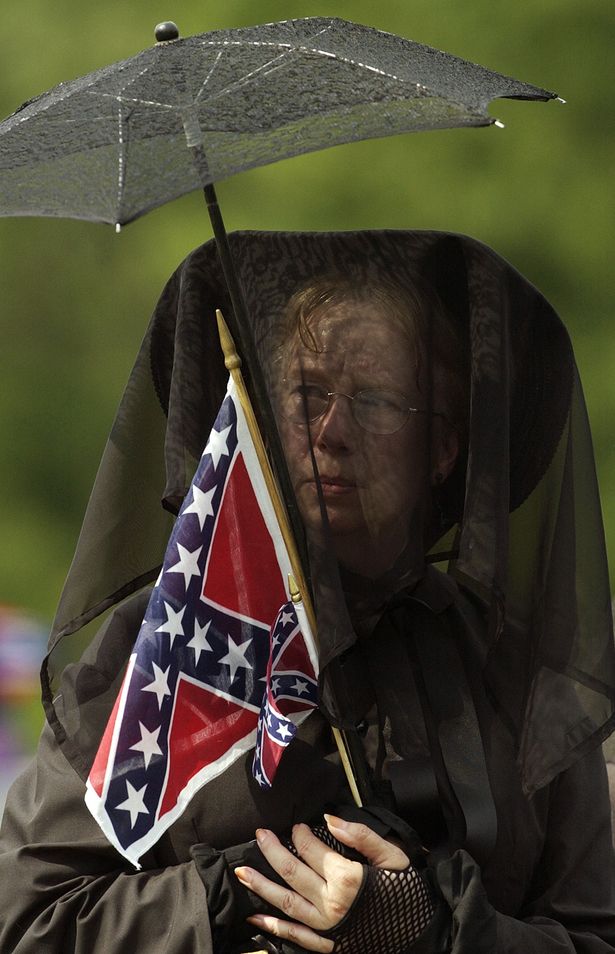
“The Confederacy is going to live on,” Williams said as he carried the St. Andrew’s Cross banner outside the Capitol in Montgomery. “The blood is going to live on. Nobody can take that. You can hide it. You can do whatever you want to it.”
As a historian, Ted Ownby is loath to make too much of recent events. For now, he’s of two minds – one hopeful, one cynical.
“I’m hoping that it’s part of … a deeper change and not just … a change for this moment or for this coming election,” said Ownby, director of the Center for the Study of Southern Culture at the University of Mississippi. “That’s me at my most optimistic.”
South Carolina legislators have voted to debate removing the flag from its place of honor on the statehouse grounds. But it’s not down yet. (Although the flag was taken down briefly by a protester who climbed the flagpole and was then arrested, it was soon raised again by workers.)
“I don’t think we need to be handing out huge medals to Haley and others who are sort of following suit,” said Cobb. ” In the context of the South’s history, I suppose it’s a watershed. But it would have been easier to celebrate it as a watershed 20 or 30 years ago.”
If nothing else, Guillory – whose school recently rechristened a building named for a former KKK leader – said removing the flags from the seats of government is “eliminating a source of distraction in the political system… But it’s not the final turning point either.”
For the Rev. Joseph Lowery, who’s had that battle flag thrust in his face too many times to count, its removal would be something wondrous.
Lowery, who co-founded the Southern Christian Leadership Conference with King, said he always knew the flag would come down. He just wasn’t sure he’d live to see it.
“I never thought I’d see a Black president,” he said from his home in Atlanta. “But I have. And God has so willed it.”
Like Thompson, the 93-year-old activist doesn’t “give a rap” what motivations are behind all this, “as long as it changes.”
“That’s how progress is,” he said. “In the air. It’s in the wind.”

Breed reported from Raleigh, N.C.; Reeves reported from Birmingham. Also contributing to this story were AP Writer Jonathan Drew in Charleston and AP Video Journalist Alex Sanz in Montgomery.
New Orleans Scandal Involves Judge, Prominent Lawyer and Businesswoman Facing Federal Charges

0

NEW ORLEANS SCANDALlisacrinel-660
By Tonya Pendleton, BlackAmericaWeb.com

A scandal in New Orleans has the city riveted as a prominent lawyer, his wife, a Federal judge and a businesswoman who is head of the one of the city’s popular Black Mardi Gras organization and facing federal charges, are involved in what looks like a love triangle.
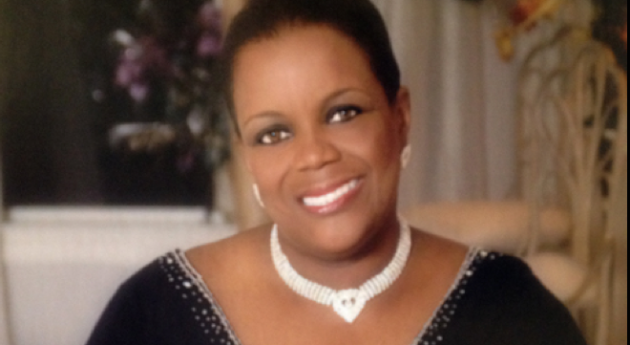
Lisa Crinel (pictured) a New Orleans businesswoman is suing her former lover, Clarence Roby, who is married to the Federal judge, U.S. Magistrate Judge Karen Wells Roby who signed off on federal search warrants for Crinel, who was represented by Roby in a case alleging that she stole $30 million from Medicare through her business, Abide Home Health Services.
NOLA.com reports:
Crinel’s lawsuit restates facts that Crinel’s current lawyers have used to try and suppress evidence obtained in a March 2014 search of the headquarters of her Abide Home Health Services in eastern New Orleans.
Crinel and Roby carried on “an intimate, romantic relationship” for about 12 months, starting in September 2013, according to her lawsuit. In January, she also hired him to serve as her lawyer as she negotiated the purchase of another business.
On March 24, 2014, the couple were together at Crinel’s house “until late in the evening as their romantic relationship continued,” the lawsuit states. The next day, federal agents raided Abide’s headquarters.
In motions filed in the federal case, Crinel’s lawyers claim that Karen Wells Roby signed off on the warrants used in the search, and have suggested the judge was aware of her husband’s affair with Crinel, and may even have driven past Abide’s offices while investigators were carting out files.
After the raid, Crinel’s lawsuit says Roby told her he could continue to serve as her lawyer despite their romantic relationship, and even though his wife had approved search warrants. Crinel’s lawsuit accuses him of violation professional codes for attorneys and committing “legal malpractice.”
“Mr. Roby never informed Ms. Crinel that it was a conflict of interest for him to represent her and her company while carrying on an extramarital affair with her… or to represent her in matters related to a search warrant that was signed by his wife,” the lawsuit states.
Crinel, who had more than $1 million in assets seized by investigators during the search, seeks compensation for any losses that result from Roby’s alleged malpractice. The lawsuit names Roby’s law firm and an unnamed insurance company as co-defendants.
In court records, federal prosecutors said they weren’t aware Roby and Crinel were carrying on an affair, or even that Roby was Crinel’s lawyer, when they brought their search warrant to Judge Roby in March 2014. Investigators did tell the judge that her husband served on a charitable board with one of the targets of the investigation. Judge Roby told them she could handle the warrant so long as her husband didn’t represent the target of the warrant.
Prosecutors say they became aware of the Roby-Crinel affair after reviewing records seized during the search, but that what they found shows that Roby took pains to hide the affair from his wife.
In court records, federal prosecutors refer to numerous personal emails between Crinel and Clarence Roby that “discuss an intimate relationship, Judge Roby, and many details of their physical and emotional relationship,” and that a cooperating witness told them after the search that said Crinel called Roby “her boo.”
But Roby comes off as more discreet in the exchanges, prosecutors said. In messages, Crinel complains that Roby won’t make their relationship more public, writing “we can’t stay locked up in this house,” and that she wants to go on dates even if “we have to drive to BR or Slidell sometimes.”
In the two-page message, Crinel also gripes that Roby doesn’t call her during the day or make contact with her the morning after their trysts, prosecutors said. Roby’s two-sentence reply came 12 hours later, prosecutors noted. He asked Crinel to send her messages to his personal email, not his business account.
“Nothing about this email suggests that Clarence Roby or Crinel actively flaunted their affair,” prosecutors wrote.
Crinel’s case is not the first time Judge Roby’s marriage has complicated her work on the federal bench. In 2008, Judge Roby recused herself from dozens of criminal and civil cases involving the federal government, after her husband’s client, former state Sen. Derrick Shepherd, entered a plea deal with federal prosecutors.

Car Wash & BBQ: H.C.C. Youth & Young Adults Ministry *July 11, 2015*

0

11692998_987339347957333_1318511523_n

Information above: Car Wash & BBQ event held by the H.C.C. Youth and Young Adults Ministry located at Advance Auto Parts (Tarrant City) 1701 Pinson Vally Pkwy, Birmingham, Al 35217. Saturday July 11,2015 from 9am to 3pm. Come get your CAR washed and your EAT on while supporting the YOUTH! Cars: $7, SUV/Vans: $10. Hotdogs: $1, Hamburgers: $2, and Beverages: $1.

President Obama Honors Outstanding Mathematics and Science Teachers

0

WASHINGTON, DC — President Obama today named 108 mathematics and science teachers as recipients of the prestigious Presidential Award for Excellence in Mathematics and Science Teaching. This year’s awardees represent all 50 states, the District of Columbia, Puerto Rico, U.S. Territories, and the Department of Defense Education Activity schools. The educators will receive their awards at a Washington, DC, event later this summer.

The Presidential Award for Excellence in Mathematics and Science Teaching is awarded annually to outstanding K-12 science and mathematics teachers from across the country. The winners are selected by a panel of distinguished scientists, mathematicians, and educators following an initial selection process done at the state level. Each year the award alternates between teachers teaching kindergarten through 6th grade and those teaching 7th through 12th grades. The awardees named today teach 7th through 12th grade.

Winners of this Presidential honor receive a $10,000 award from the National Science Foundation to be used at their discretion. They also are invited to Washington, DC, for an awards ceremony, as well educational and celebratory events, and visits with members of the Administration.

“These teachers are shaping America’s success through their passion for math and science,” President Obama said. “Their leadership and commitment empower our children to think critically and creatively about science, technology, engineering, and math. The work these teachers are doing in our classrooms today will help ensure that America stays on the cutting edge tomorrow.”

President Obama is strengthening education in science, technology, engineering, and math (STEM) fields in order to fully harness the promise our Nation’s students. Investing in exemplary teachers like these awardees is vital to inspiring the next generation of explorers and innovators. That’s why President Obama launched the “Educate to Innovate” campaign, which has garnered more than $1 billion in financial and in-kind support for STEM programs. It is also why the President has called for preparing 100,000 excellent science and mathematics teachers over the next decade, leading to the creation of “100kin10,” a coalition of leading corporations, philanthropies, universities, service organizations, and others working to train and retain STEM teachers across the Nation. In addition, the President’s proposed STEM Master Teacher Corps aims to leverage the expertise of some of our nation’s best and brightest teachers in science and mathematics to elevate the teaching of these subjects nationwide.

The recipients of the Presidential Award for Excellence in Mathematics and Science Teaching are listed below, by state.

To learn more about these extraordinary teachers, please visit: https://recognition.paemst.org

Alabama
Marla Hines, Vestavia Hills High School
Sarah Lowman, Tanner High School

Alaska
Tasha Barnes, Wendler Middle School
Russell Walker, Romig Middle School

Arizona
Shannon Mann, Osborn Middle School
Marni Landry, Paradise Valley High School

Arkansas
Brian Leonard, Lake Hamilton High School
Amanda Jones, Poyen High School

California
Marianne Chowning-Dray, Eastside College Preparatory School
Scott Holloway, Westlake High School

Colorado
Kirstin Oseth, Cheyenne Mountain Junior High School
Mark Paricio, Smoky Hill High School

Connecticut
Jacqueline Corricelli, Conard High School
Joshua Steffenson, Glastonbury High School

Delaware
Kristin Carmen, Sussex Technical High School
Christopher Havrilla, Woodbridge High School

District of Columbia
Aris Pangilinan, Benjamin Banneker Academic High School
Florentia Spires, The Howard University Middle School of Mathematics and Science

Department of Defense Education Activity
Ryan Goodfellow, Vilseck American High School
Jennifer Wilson, Andersen Middle School

Florida
Robin O’Brien, Seminole Ridge Community High School
Carlos Montero, Dr. Michael M. Krop Senior High School

Georgia
Valerie Jones, Ron Clark Academy
Pauline Henry, Luke Garrett Middle School

Hawaii
Amy Yonashiro, ‘Iolani School
Erin Flynn, Sacred Hearts Academy

Idaho
Ramey Uriarte, Heritage Middle School
Melyssa Ferro, Syringa Middle School

Illinois
Darshan Jain, Adlai E. Stevenson High School
Rebecca Vieyra, Cary-Grove High School

Indiana
Melissa Colonis, Lafayette Tecumseh Junior High School
Liviu Haiducu, Avon Advanced Learning Center

Iowa
Allysen Lovstuen, Decorah High School
Brian Reece, Central Academy

Kansas
Patrick Flynn, Olathe East High School
Jeremi Wonch, Indian Trail Middle School

Kentucky
Robyn Morris, East Oldham Middle School
Andrew Kemp, Louisville Male High School

Louisiana
Lerri Cockrell, David Thibodaux STEM Magnet Academy
Michael Simoneaux, Dutchtown High School

Maine
William O’Brien, Camden Hills Regional High School
Lisa McLellan, Windham High School

Maryland
Julie Harp, Easton High School
James Schafer, Montgomery Blair High School

Massachusetts
Suzanne Kubik, Middleboro High School
Susannah Cowden, Roxbury Preparatory Charter School

Michigan
Luke Wilcox, East Kentwood High School
Walter Erhardt, Battle Creek Area Mathematics and Science Center

Minnesota
Leif Carlson, Jefferson Community School
Peter Bohacek, Henry Sibley High School

Mississippi
Jenny Simmons, Saltillo High School
Betsy Sullivan, Madison Central High School

Missouri
Ruth Knop, Parkway West Senior High School
Kathleen Dwyer, Maplewood Richmond Heights High School

Montana
Daniel Bartsch, Billings Senior High School
David McDonald, Sidney High School

Nebraska
Shelby Aaberg, Scottsbluff High School
Angela Bergman, Westside High School

Nevada
Carrie Hair, Darrell C. Swope Middle School – Gifted and Talented Magnet
Jan Hrindo, Incline Middle School

New Hampshire
Stephanie Burke, West Running Brook Middle School
Jennifer Deenik, Souhegan High School

New Jersey
Kathleen Carter, North Hunterdon High School
Michael Lawrence, West Orange High School

New Mexico
Marco Martínez-Leandro, Highland High School
Karen Temple-Beamish, Albuquerque Academy

New York
Patrick Honner, Brooklyn Technical High School
Chance Nalley, Horace Mann School

North Carolina
Julie Riggins, East Forsyth High School
Jeffrey Milbourne, North Carolina School of Science and Mathematics

North Dakota
Cynthia Nelson, Grand Forks Central High School
Scott Johnson, Century High School

Ohio
Karma Vince, McCord Junior High School
Christopher Monsour, Columbian High School

Oklahoma
Mark Thomas, Stillwater High School
Sarah Vann, Owasso Eighth Grade Center

Oregon
Mona Schraer, Grant High School
Bradford Hill, Southridge High School

Pennsylvania
Susan Higley, Hughesville Junior/Senior High School
Derrick Wood, Conestoga High School

Puerto Rico
Eric Figueroa, University Gardens High School
Maria Vicenty, Central High School of Visual Arts

Rhode Island
Michelle Way DaSilva, Kickemuit Middle School
Erin Escher, Portsmouth Middle School

South Carolina
Brooke Lance, Lakeside Middle School
Joseph Parker, McCants Middle School

South Dakota
Lindsey Brewer, Huron High School
Janet Wagner, Bon Homme School

Tennessee
Micahel Brown, Montgomery Central High School
Pierre Jackson, Middle College High School

Texas
Jessica Caviness, Coppell High School
Michalle McCallister, Robert G. Cole Middle and High school

U.S. Territories
Nneka Howard-Sibilly, Charlotte Amalie High School
Shamika Williams-Henley, Ivanna Eudora Kean High School

Utah
Nathan Auck, Horizonte Instruction and Training Center
Andrew Neilson, Logan High School

Vermont
Susan Abrams, Montpelier High School
Stewart Williamson, Peoples Academy High School

Virginia
Melanie Pruett, Bailey Bridge Middle School
Anne Moore, Robious Middle School

Washington
Michael Conklin, University High School
Gretel von Bargen, Skyline High School

West Virginia
Pete Karpyk, Weir High School
Eric Kincaid, Morgantown High School

Wisconsin
Corey Andreasen, North High School
Scott Hertting, Neenah High School

Wyoming
Kim Parfitt, Cheyenne Central High School
Thomas Smith, Dean Morgan Junior High School

Local Resident Named to Dean’s List at Dickinson College

0

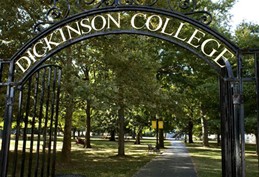
CARLISLE, Pa. – Brindon Tyler Sutton, a rising junior economics and Spanish major at Dickinson College in Carlisle, Pa., has been named to the dean’s list for the spring 2015 semester. A graduate of The Altamont School, he is the son of Brian and Christina Sutton of Pinson, Ala.
All students earning a position on the dean’s list, a recognition of academic excellence, must have a grade point average of 3.7 or above on a 4.0 GPA scale for the semester.
Dickinson College, located in historic Carlisle, Pa., was chartered in 1783. The private, national liberal-arts college is home to 2,400 students from all-around the nation and the globe. The college is recognized nationally for its focus on global education – both at home and abroad, and its commitment to teaching students about sustainability – across the curriculum, campus, community and around the world. www.dickinson.edu.

FCA US Powers STEM Pipeline with Diverse Talent

0

AUBURN HILLS, Mich. /PRNewswire/ — FCA US LLC has been named a “Top Supporter” of engineering programs at the nation’s Historically Black Colleges and Universities (HBCUs) for the fourth consecutive year, according to U.S. Black Engineer & Information Technology (USBE&IT) magazine.
In making its final selection, USBE&IT considered input from the deans of the nation’s 14 accredited HBCUs and from members of the corporate-academic alliance, Advancing Minorities’ Interest in Engineering. Each year, the magazine selects corporate, government and nonprofit organizations that provide the most support to HBCUs.The “Top Supporter” list has been in existence for 11 years.
“FCA US is honored to be recognized for our commitment to the nation’s Historically Black Colleges and Universities, which are a great source of science, technology, engineering and math (STEM) talent,” said Georgette Borrego Dulworth, Head of Diversity – FCA US. “Identifying and recruiting diverse talent with world-class skills is imperative to our Company’s and our nation’s continued competitiveness and success.”
Powering the STEM Talent Pipeline    
 Reflecting its strong commitment to developing a diverse workforce, FCA US invests in a wide variety of education and training initiatives to help students – especially women and underrepresented minorities – obtain the technical skills in STEM disciplines. For example, over the past several decades, the FCA Foundation – the company’s charitable arm – has invested more than $2.1 million to support FIRST (For Inspiration and Recognition of Science and Technology) robotics teams across the United States and Canada.
FCA US is also committed to active support of organizations that nurture the academic and professional development of diverse technical leaders, including:
•    American Indian Science & Engineering Society
•    Florida International University – Engineers on Wheels
•    National Association of Hispanic MBAs
•    National Black MBA Association
•    SAE International
•    Society of Hispanic Professional Engineers
•    Society of Women Engineers

Employees at FCA US have consistently received important technical professional recognition from various diversity organizations, including Black Engineer of the Year, Women of Color, Great Minds in STEM,U.S. Black Engineer & Information Technology, and others.
“We are consistently finding many organizations that are doing their fair share in building the STEM pipeline,” said Tyrone Taborn, editor in chief of USBE&IT magazine. “Black students and professionals want to know what these organizations are doing for their colleges because they want to work for employers that are committed to their community.”
In February, four FCA US engineers were recognized at the annual Black Engineer of the Year event, which included several Modern Day Technology Leader awards, given each year to young engineers who have provided a significant contribution to their field. This past fall, 10 FCA US women captured awards for excellence in managerial leadership or as technology rising stars at the annual Women of Color STEM Conference. These awards underscore the Company’s commitment to develop the talents of diverse employees and to promote careers in STEM.
In addition, FCA US continues to be an active supporter of organizations such as the National Black MBA Association and National Association of Hispanic MBAs to recruit talented MBA candidates from the nation’s leading business schools for the Company’s finance and leadership development programs.

Bank Of America, Wells Fargo Donate to Charleston Victims Fund

0

By Eurweb.com

According to the Charlotte Observer, Bank of America has given $100,000 to the victims of the June 17 Charleston shooting and to a Charleston African American history museum which is set to open in 2017.
“Our thoughts and prayers are with the families and we hope this support will help those impacted as we mourn this tragedy,” said Kim Wilkerson, South Carolina president, Bank of America, which did not issue a press release about it.
The Observer report says half of BOA’s donation will go to the Low Country Ministries – Reverend Pinckney Fund, which provides support to the families of the shooting victims at the Mother Emanuel AME Church. The massacre left nine dead, including the late Rev. Clementa Pinckney, whose namesake fund also supports his ministries.
The other half of the bank’s donation will go to the new International African American Museum, which will tell the history of African Americans of Charleston and the rest of the U.S. and “serve as a new place of healing for the community.” It will open in 2017.
Additionally, this week, San Francisco-based Wells Fargo Bank, which operates its largest employment hub in Charlotte, also said it has committed $100,000 to the Pinckney fund.

Love Moor to Drop “Blu Polka Dots” EP This Month

0

LoveMoor
By Ariel Worthy

There are many different types of artists in Birmingham. From painting to singing and everything in between, the Magic City is a vessel of creative talent.
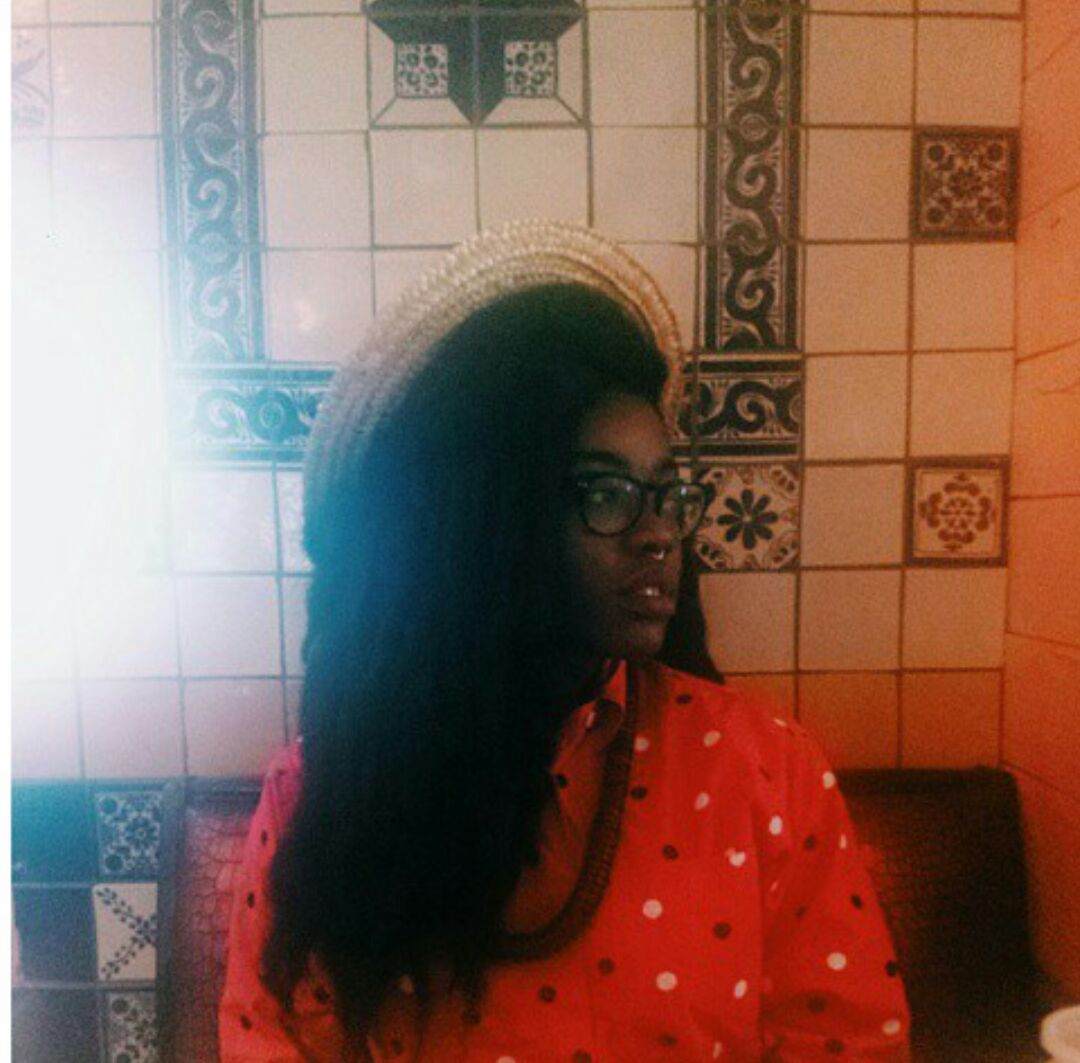
Love Moor, 24, is one of the many artists in Birmingham whose bright future can be seen early.
To call Moor a starry-eyed singer with big dreams does not suffice; Moor is going to make it.
Her voice sounds all too familiar. Not in a plagiarism, cliché way, but with the raspiness of Amy Winehouse and with the subtlety and calmness of Corinne Bailey Rae.
Moor, who was born in New York and raised in Miami, says Birmingham is where she became a woman.
Moor has been around music since birth. Her mother, who is Antiguan, came to America to be a singer. Her father was a DJ.
“I was on stage at age two,” Moor recalled.
She recalled being on stage pretending to DJ, like her father, at a young age.
“If I wasn’t a singer, I’d probably be a famous DJ or something,” Moor said.
Moor’s EP, Blu Polka Dots will premiere on July 14.

Describe your musical style: In general it’s more R&B, but an alternative style, with just a tiddle bit of island in it.

What got you into music?: I was born into it. My mom came to America to be a singer; and my dad was a DJ. So it’s just part of me. I was on stage at two.

Who would you say inspires you musically?: As far as present day music, I’m not thrilled with a lot of music, but I do like Sza, Marian Mareba (a Montgomery native) people like that. I’m really into Lauryn Hill, Amy Winehouse, and Bob Marley. I love him.

What is your purpose for singing?: It’s just life. My content of my music is through life experience. If I wasn’t doing it I feel like it would be like, “Why isn’t she singing?”

When do you know you are satisfied with your music?: I don’t think it’s ever a perfection thing; there’s no perfection to it. I go back and I’ll listen to what I’ve done and get excited about it. I’m like, “Hey, I did that.”

What should we expect from your EP?: It’s really raw. I don’t like to sing about material things; some of my work might open people’s eyes. I want them to receive my testimonials the way they need to because it’s a pretty decent reflection of my emotions. Every song illustrates an emotion or insecurity I’ve had; that’s what the blue polka dots represent. It’s not meant to be a downer, but it’s to bring the music to life.

Moor’s EP, Blu Polka Dot will drop on July 14, with a release party at Frames on the Green that same day.
 Tickets are $7 at the door.

Mapping Out Our Neighborhood’s Future: Birmingham City Council Looking at Next Steps Needed as They Submit Their Requests for the 2016 Budget

0

BIRMINGHAM, Ala. – The requests have been made, and Birmingham City Councilors have heard the concerns. Residents are asking that as city leaders work to put a new budget in place, they refocus their efforts on the core of it all…neighborhoods. After hosting four budget tours as a part of an educational series on learning how the budget works, Councilors were able to gather input from residents on what they felt should be the focus for city leaders as they look to continue to move the City forward.
“We’ve heard loud and clear the concerns that our constituents have and we will make good on our commitments to our neighborhoods. For some time now our focus has been on growing Birmingham, and looking at ways to bring new development to our City. If you ride downtown now, you’ll see that we definitely accomplished that feat,” said Council President Johnathan Austin. “Now with that success, we agree that it’s time to re-shift our focus to neighborhoods, and we plan to do just that.”
That focus on neighborhoods will include added investment to the beautification of those communities including but not limited too, cutting overgrown lots, tearing down abandoned homes, and paving more streets in our communities. A big part of the refocus on neighborhoods will also include outlining a detailed strategic plan that will allow the Council to not only plan for the future, but to also have a guide by which they can measure success. In a memo that has been sent to Mayor Bell and his administration, the Council is requesting that they collaboratively work to layout this strategic plan.
“In reviewing the budget, we fall short of exacting a strategy to address the neighborhoods, transportation, education, employees, and our maintenance needs that will propel this city forward,” said President Austin. “There are many components to each of these categories and there needs to be a strategic plan brought forth as to how we are going to fulfill our commitment to make Birmingham a premiere City—best in its class.”
The Council has begun their formal work sessions to collectively speak to the issues of concern. The second budget work session recently took place Monday, June 29th, and more are scheduled for the coming weeks. The Council is requesting that the Mayor and his staff work collaboratively with them to ensure that all inquiries surrounding the budget are addressed in a timely manner so that this process will not be further delayed.

South Carolina Attorney Charged with Fraud and Money Laundering in UA Sorority House Furnishing Scheme

0

BIRMINGHAM – Federal authorities on Monday arrested a South Carolina attorney on fraud and money laundering charges as part of a scheme that involved submitting false invoices for furnishings and equipment for a University of Alabama sorority house and receiving payment without providing the furnishings and equipment, announced U.S. Attorney Joyce White Vance, U.S. Secret Service Special Agent in Charge Craig Caldwell, and U.S. Postal Inspection Service Inspector in Charge Keith Morris.
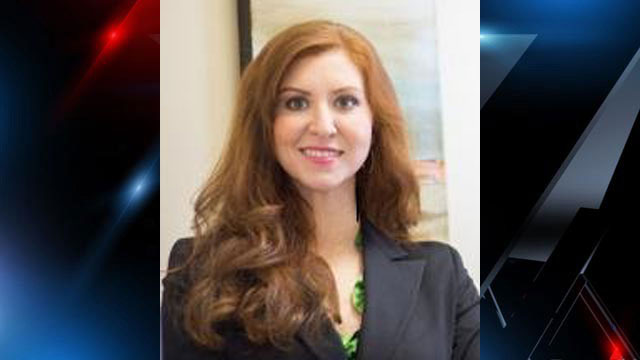
An eight-count indictment returned by a federal grand jury last week charges Jennifer Elizabeth Meehan, 38, with wire fraud, bank fraud and money laundering. According to the indictment filed in U.S. District Court, Meehan used interstate electronic communication to submit fraudulent invoices totaling about $95,000 to Greek Resource Services, a contract company that handles the finances for fraternities and sororities at UA. Meehan was in charge of furnishing the newly constructed Gamma Phi Beta sorority house between September 2013 and March 2015.
The indictment also charges Meehan with executing a bank fraud scheme involving about $375,000, in which Meehan opened an account at First Citizens Bank under a fraudulent business name and then submitted additional fraudulent invoices to Greek Resource Services. GRS then gave Meehan two checks totaling about $375,000, which she deposited into the newly opened First Citizens account.
Meehan, a former member of Gamma Phi Beta at Alabama, was acting in her position as president of the House Corporation Board of the Epsilon Lambda Chapter of Gamma Phi Beta Sorority in an unpaid, volunteer capacity during the course of the fraud, according to the indictment.
Meehan is charged with money laundering for, on four separate occasions, wiring more than $10,000 gained through the bank and wire fraud into accounts she owned.
Meehan could face a maximum penalty of 30 years in prison and a $250,000 fine if convicted of the mail fraud.
The U.S. Secret Service and the U.S. Postal Inspection Service investigated the case, which Assistant U.S. Attorney David H. Estes is prosecuting.

The public is reminded that an indictment contains only charges. A defendant is presumed innocent unless and until proven guilty.