Home Blog Page 1292

Ask not what Birmingham can do for you – ask what you can do for Birmingham

0

Fellow Birminghamians: Ask not what Birmingham can do for you – ask what you can do for Birmingham

How can we rebirth our communities? First, we must consider asset mapping as a tool to ignite not only the human capital that lives in the community, but also the economic, land use, environmental, transportation, social, and religious infrastructure that is the heartbeat of the community.
For years, communities have struggled with not having enough to sustain the neighborhood. Memories of the vibrant neighborhood 20 years ago have diminished. One of the best ways to sustain a community is for the human capital to pull together their resources and talents to invest in their own community. A human capital example is if teachers, artists, health, construction, attorneys, urban planners, safety, and financial professionals provide pro bono services to help maintain the core of the community. Oftentimes, people with these professional backgrounds are looking for meaningful ways to volunteer. Wouldn’t it be great for the professionals to all channel their talents for a common cause to improve their community ?
Diverse professionals unifying for one cause would make a change in the community.
One way to create a structure is to start a nonprofit organization to help beautify the neighborhood, to revitalize the housing stock and improve the local amenities. The nonprofit status would allow a group of professionals to apply for grants and receive tax write-off donations. All of this can start by simply having a conversation and engaging people to get involved.
We all can contribute to leaving the world better than the way we found it, in order to achieve true sustainability. Sometimes all it takes it just asking people to share their talent and gifts. This model could be replicated all over the nation, and our communities would look drastically different.
President John F. Kennedy stated in his Inaugural address January 20, 1961: “Ask not what your country can do for you – ask what you can do for your country.” I have concluded that communities must empower themselves. Slade has worked with communities to help them strategically plan how to empower themselves from within.

L’Tryce Slade, MRP, JD
Managing Director of Slade
www.sladellc.com
https://www.facebook.com/pages/Slade-Land-Use-Environmental-and-Transportation-Planning-LLC/246496148701?ref=hl

Three Phrases That Will Tell You About Your Relationship

0

The Way I See It
by Hollis Wormsby, Jr.
Three Phrases That Will Tell You About Your Relationship
The Valentine’s Day season is upon us, and it is time that we all find creative ways to express our love. Or so the calendar says. I have never been a big fan of Valentine’s Day, to me it is one of the most superficial days of the year. Ok now on command, all of you go out to a store and buy a bunch of stuff that says I love you. This simply does not work for me.
But to the extent it is here. let us make good use of its presence. I would like to offer a few words of advice to young couples who might be struggling as we approach this Valentine’s Day season. Note these words are not for married couples or for couples who are sharing in the raising of children. These words are for people in a relationship where the decision to be long term has not yet been made.
There are three phrases that I believe can make a tremendous difference when a couple is going through a rough time. The phrases are: I am sorry; I appreciate you; and what can I do to make it better.
Let’s look at these one at a time.
If you have done something to hurt someone the first step in getting past it, is to look at that person and meaningfully say that you are sorry. I don’t mean one of those, “I am sorry you feel that way about it” type of apologies. To me that type of apology is worse than no apology, because the real inference is they have done nothing wrong, they are not sorry for what they did, they are sorry for the way you feel about it. If you want the relationship to go forward have the self-esteem to truly step up to the plate and own your action. Try saying, “I am sorry. I know what I did hurt you, and that was not my intent. I would like a chance to make it up to you.” And I would add, to those of you who have not made the commitment, if you cannot do this, you probably don’t really want to be with this person.
The next phrase is, “I appreciate you.” Most of us, when we get mad at someone, want to do everything we can to make them feel like nothing. We will use phrases, like you are the worst whatever, ever. This is not an engaging strategy, it is a turn for the other person’s defensive strategy. And the sad thing about being in a relationship with someone is we know what their red buttons are, and how to get to them. When we face challenges in relationships that are worth saving we have to overcome the desire to strike the first blow, and move to a place of communicating. Your mate may have faults, and you may be able to describe them, but they must also have something that you appreciate that attracted you to them in the first place. So in bad times, even if you have to discuss what is wrong, always remember to take the time to let the other person know, that I may be upset but I still appreciate you and what you do. Remember a relationship is not just about whatever made you mad, it is also about what made you get together in the first place.
And finally, when we are angry at someone we often get to the point of what I call ultimatum arguing. Ultimatum arguing is where after you have told a person how worthless they are, you give them one last chance to save the relationship by doing everything your way. So the relationship becomes a one way street, your partner can change who they are and become what you want, or go to hell. I believe that a better approach is to say to the person here are the problems we have and here is what I am willing to do to try and do better. This leaves the other person a more dignified place to look for compromise from.
For those of you who have children together, in the absence of abuse or violence I think you have to ask yourself this question. It is already true that only about 20 percent of Black children are being raised in two parent households. Do you want your children to be a part of the 80 percent? If you care enough to say no, then you put yourself second and stay there and take care of your children. The moral of this story is forever is a long time, choose wisely.
And that is also the moral of the story for young couples reading this that have not yet made the commitment and that might be experiencing some difficulties. Please do not let some flowers and some candy, allow you to ease on down the road and pretend your relationship will be alright. Go through the three phrases above with each other and you will either find new ground to build on, or discover that maybe separate grounds may be in order.
Or at least that’s the way I see it.
For those of you reading this on my Facebook page here are two music links that add context to this column. First of all for my young unmarried readers, here is a link to a Millie Jackson classic, “If You’re Not Back in Love By Monday.” And for my married readers that might be going through some travails on this Valentine’s Day season, here is an old Johnnie Taylor classic, “It’s Cheaper to Keep Her.” Happy Valentine’s Day one and all.
Millie Jackson, Back in Love By Monday
https://www.youtube.com/watch?v=MxA92NBYu1Q
Johnnie Taylor, Cheaper to Keep Her
https://www.youtube.com/watch?v=MxA92NBYu1Q
(Do you have a question or comment on this column? Look me up on Facebook/HollisWormsby or email me at hjwormsby@aol.com.)

People Who Cheat on Their Income Taxes

0

People Who Cheat on Their Income Taxes

It is that time of year. The tax man cometh! The deadline for filing income taxes is only a few weeks away.
Most people will dutifully calculate their taxes and grudgingly (most taxpayers are not cheerful givers!) remit them to the federal and state governments. As President Reagan once famously quipped, the taxpayer is “someone who is working for the federal government but doesn’t have to take the civil service examination.”
It should be noted that most people pay their full taxes. Some do this out of integrity, defined as doing the right thing when no one is looking. Others do this because they fear the consequences of getting caught.
This does not mean that we should not attempt to minimize taxes due. It makes sense for everyone to take full advantage of all legitimate deductions to which they are entitled.
But recent estimates from the Tax Foundation and the Pew Trust reveal that 1.6 million taxpayers will willfully cheat on their taxes. Many of them believe this is not wrong. And this is underscored by the December report published by the IRS Oversight Board.
The study found that 12 percent of respondents thought it was acceptable to cheat as long as it was “a little here or a little there.” One in four in the group – 3 percent of total respondents – stated that is was all right to cheat “as much as possible.”
The vast majority of Americans, 86 percent, stated that it was not acceptable to cheat on taxes. When asked to list the major factor in not cheating, they responded that personal integrity, the belief in doing the right thing, fostered their belief.
In another section of the questionnaire, the Oversight Board queried respondents as to their concerns about the tax system. Most pointed primarily to the belief that higher-income taxpayers and corporations were not paying their fair share of taxes. In fact, 97 percent thought it was important or very important for the IRS to take appropriate action to ensure that both groups pay their share of the tax burden.
That reform of the system, both individual and corporate, is desperately needed is painfully aware to each of us on April 15. But this does not justify blatant tax cheating.

From Selma to Shelby: Fifty Years Later

0

From Selma to Shelby: Fifty Years Later

By Dr. Wayman B. Shiver, Jr.

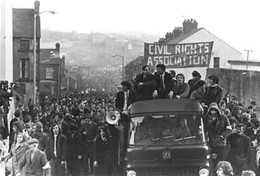
Symbolically, “Bloody Sunday” was the people’s statement of demand for the right of all citizens to vote. However, fifty years after the pain and bloodshed at Pettus Bridge in Selma Alabama, a Supreme Court ruling negated an action, the preclearance requirement of the 1965 Voting Rights Act. Civil rights advocates were stunned when the United States Supreme Court rendered this decision on June 25, 2013. Some citizen thought that the U.S. Constitution was unassailable, but with a five to four vote the justices changed fifty years of progress.
On that historical Sunday in 1965, people of all colors and all walks of life showed their courage and determination to claim what was already theirs. Thus, when five members of the highest court of the land affirmed the contentions of the Shelby County attorneys that there was no need for preclearance, there was an audible gasp of disbelief. Again, there was good reason to doubt the protection of the U.S. Constitution when it becomes a question about our rights and protections. It also seems unlikely that the welfare of the citizens of all persuasions is the overarching factor insuring the integrity of Congressional laws and the Constitution.
The political history of the southern states does not suggest that the majority of local and state governments can be trusted to do what is morally right or just. Therefore, some legal provisions must be available to prevent political officials against deciding to devise mechanism that may have the potential for planning to insure that voting outcomes are favorable to social and political ideologies.
Perhaps the rigorous constitutional scholarship exhibited by the Shelby County attorneys accounts for the regrettable fact that the U.S. Supreme Court justices struck down Section 5 of the 1965 Voting Rights Act. In doing so, the key provision requiring preclearance prior to making any changes in established voting procedures was removed. Five of the Supreme Court justices concurred with Shelby County plaintiffs. In a decision of this magnitude, a 5 – 4 vote seems inadequate to trust the attorneys’ scholarship without question. Their conclusion may not be infallible. Likewise, the justices’ conclusion seems to be less than morally defensible given the political history relative to voting in the United States, especially in the Southern section of the country. At present, new provisions have been made that have the potential of deterring some citizens from voting. The gutting of the 1965 Voting Rights Act by striking down Section 5 will allow many local and state governments the time and opportunity to return to their former tactics designed specifically to control the outcomes of elections.
Since 1965, the tendency to gentrify urban areas, to develop housing communities and to reallocate the use of land have occurred at an alarming speed. In a matter of a few years, entire areas have gone from one extreme to another relative to the redistribution of identified populations. The effects are often reflected at the ballot box.
Arguably, voting is the linchpin and the anchor of American democracy as the ardent practice of voting determines who operates government processes. As shown in the 2008 and 2012 presidential elections, large numbers of committed voters can change the course of action. Although local elections are critical in a number of ways, many voters choose to vote in presidential elections only. Nonetheless, voting in all local, state and national elections is important as the demographic profile of the nation continues to change.
Increased racial and ethnic diversity changes the established order. There is no secret about gerrymandering and the act of redistricting voting lines. The coalescing of groups can influence election outcomes. The 2013 Supreme Court decision removing the preclearance provision does not guarantee that deliberate interference might not occur in the future. It depends upon the issues and the candidates.
The 5 – 4 vote also suggests that the judiciary needs an overhaul. In the opinion of this writer, the entire system of appointing and selecting justices needs serious scrutiny. For the purposes of this treatise, I contend that decisions that overturn Congressional Law need to be unanimous. Furthermore, I contend that, as is commonly believed, laws that benefit minorities directly seem to fall at the slightest suggestion.
For years, minorities have made much needed stride in office holding and jobs. The trajectory of the journey from Selma to the actual passage of the 1965 Voting Rights Act was fought with many battles and obstacles. Now, fifty years after the Voting Rights Act was passed, Americans, especially African-Americans, have come full circle. Curtailment of the preclearance provision may aid and abet conservatives to revert to tactics used in days of old. There is an urgent need for civil right activists to provide oversight of elections. One sure way to influence the outcome of elections is to encourage all eligible voters to vote in all elections. Also, the voters need to be familiar with the background of each candidate.

An Open Letter to Faith and Politics Institute Concerning Bloody Sunday

0

An Open Letter to Faith and Politics Institute Concerning Bloody Sunday

Dear Faith and Politics:
I appreciate your bringing a group of congresspersons and other dignitaries each year to Selma and other places in Alabama for Bloody Sunday and related events. Every person in a leadership position ought to have this experience so that they may better understand how the right to vote was forged with blood and lost lives and suffering and sacrifice and struggle. Thank you for exposing these dignitaries to this historic and sacred struggle. We welcome you and all. We are especially glad that President Barack Obama is coming for we also invited him and the First Family.
Faith and Politics, I am extremely concerned. I considered writing you on several occasions but held back. However, after Representative John Lewis talked to a reporter, who then contacted me, I had to write. Other leaders of the Bridge Crossing Jubilee have written you in years past, but you never answered a single letter. I do not expect an answer to this letter, so I am making it an open letter.
The Commemoration of the 50th Anniversary of Bloody Sunday is a once-in-a-lifetime event. It should be a time of great unity, but you have shattered that possibility. The great challenges to the right to vote also demand unity. These challenges include the gutting of Section 5 of the Voting Rights Act; the wave of voter photo ID laws, which are modern-day poll taxes; the proof of citizenship laws, which are modern-day literacy tests; and the many and varied other schemes that suppress and deny the right to vote. We should be united, but your actions divide us.
This Commemoration must be more than a celebration. Many workshops and other activities were scheduled for Saturday, March 7th, to forge a more effective effort to restore the Voting Rights Act and expand voting rights generally. Your actions disrupted these critical work sessions.
The reporter I mentioned, Mary Orndorff Troyan, said one of the reasons you wanted a march on Saturday was to ensure that it was a “dignified” march. Faith and Politics, the Bloody Sunday March has been reenacted each year since the seventies. No one has ever said that it was not dignified. Was the Bloody Sunday March not dignified when President Bill Clinton came to Selma in 2000, as a sitting president, for the 35th Anniversary of Bloody Sunday? Was the March not dignified when President Barack Obama came as Senator Obama to Selma on Bloody Sunday in 2007? Was the March not dignified when Vice President Joe Biden came in 2013?
Over the years, many leaders have come to Selma on their own to participate in this sacred pilgrimage – not seeking glory or status. These include members of the Kennedy family, other prominent political and social leaders, and many more. Were the Marches not dignified when these leaders made the pilgrimage to participate in the Bloody Sunday March? Your actions cannot be about the dignity of Bloody Sunday, for if they were, you would not be having another march on a day other than Bloody Sunday.
I recall that some years ago Faith and Politics asked representatives of the Bridge Crossing Jubilee to come to Washington, D.C. to meet. You paid for their tickets, hotel rooms and other expenses, and they came. You proposed taking over the Bridge Crossing Jubilee. In response, we proposed that Faith and Politics co-sponsor the Bridge Crossing Jubilee along with the National Voting Rights Museum, SCLC (Southern Christian Leadership Conference) and other organizations. You said that you would only be a sponsor if you could be the sole sponsor. You conveyed the impression that we were not competent, and that is why you had to do it by yourself. This was not about faith or service or competence. It was about power and politics – and control.
Even though we are volunteers, those of us who have led the Commemoration of Bloody Sunday for 40-plus years have been competent enough not only to accomplish the event each year, but to grow it into the largest Civil Rights Event in the country and, according to a national publication, one of the 100 greatest national tourist events. Your actions do not seem to be about competence but about control, power and politics.
The reporter told me that Congressman John Lewis said that certain unnamed national leaders tried to get into the front lines last year. One of those leaders was SCLC National President Charles Steele. I want to remind you that SCLC was the sole sponsor of the original Bloody Sunday March in 1965 and has been a co-sponsor of the Bloody Sunday March Reenactments since the seventies. The President of this organization certainly has a right to be among those on the front lines. SCLC President Steele told me that last year Faith and Politics tried to stop him and his wife Annette from getting on the front lines. When they entered the lines anyway, Congressman Lewis pointed his finger and said, “This will not happen again. I will get another venue next year.” Now we see what that venue is.
I am sorry to say that the issue of who will be among those on the front lines has recently become a bone of contention. Faith and Politics has insisted that only members of the Faith and Politics delegation be on the front lines. We have insisted that some of the nearly 600 other individuals who were also on the Bridge on Bloody Sunday in 1965 be included. In 2013 when Vice President Biden was here, Faith and Politics wanted to allot only 30 places for survivors of Bloody Sunday with 270 places for members of their delegation, including congressional staff members. When an agreement was worked out that it would be half and half, Faith and Politics then had the Secret Service give virtually every place to members of the Faith and Politics delegation. It seems that you value status, power and money far more than you value blood, sacrifice, struggle and history.
Commemoration of Bloody Sunday is big enough for everyone. It has grown from a few of us crossing the Edmund Pettus Bridge on the afternoon of Bloody Sunday in the 70’s to about 50 events over five days each year. Your actions do not seem to be about dignity or competence but about power and politics and control.
In the 17 or so years that Faith and Politics has been coming to the Bridge Crossing Jubilee, not once have you organized a March or contributed in any way. You raise millions of dollars by claiming to sponsor the Bloody Sunday March but never paid for even a chair, a porto-toilet, water or anything else. You never organized other people to come if they were not in your delegation. You just show up and insist on privilege even though you refused to be a co-sponsor because you could not be the sole sponsor. This is about your privilege and power.
Bloody Sunday is about sacredness, sacrifice and struggle.
It appears to me that Faith and Politics has set out to not only diminish but to destroy Bloody Sunday. You not only scheduled another march on Saturday in Selma but you scheduled a march and rally in Montgomery on Sunday during the afternoon when the sacred Bloody Sunday March takes place in Selma. It would have been so simple to hold your events in Montgomery on Saturday and join the events in Selma on Sunday. However, the arrogance of power has caused you to try to diminish the sacred Bloody Sunday March and Commemoration and change history.
Faith and Politics, you are not even representative of the struggle. From viewing your web page earlier this year, the makeup of your Board appears to be 14 whites and two African Americans, including the Chief of Staff of Congressman John Lewis, who is a member emeritus. This is the organization that insisted on being the sole sponsor of the Bridge Crossing Jubilee and the Bloody Sunday events. This is the organization that is insisting on moving Bloody Sunday to Saturday after 40-plus years of commemoration on Sunday. This is the organization that has not contributed anything to organizing these events over the years. Sadly, I do not see the exercise of faith in your actions but only the force of power and politics.
I hope that you will reflect on the facts I have shared in this open letter and on the history of Bloody Sunday from 1965 to the present. It took great faith and courage for all of those nearly 600 people to face the great dangers that awaited them at the Edmund Pettus Bridge in order to fight for the right to vote. It will require great faith and courage today to restore these same rights that were won in 1965 only to be lost in 2013 [Supreme Court decision].
Sincerely,
Hank Sanders, Alabama State Senator


Magic City Chapter of the National Forum for Black Public Administrators

0

arrington-middlejpg-725921b2954b5dbc visiting Arrington Middle School during National Mentoring Month

“Several members of the Magic City Chapter of the National Forum for Black Public Administrators made a visit to Arrington Middle School as part of National Mentoring Month. The NFBPA Members volunteered their time and talked to several classes about their professions and why it’s important to give back to our communities. Students participated in public speaking exercises and say they really enjoyed the presentations.  The staff at Arrington was also grateful to receive toiletries and other supplies donated by NFBPA and community partners. Principal Anthony Moss says having the presence of volunteers who care really makes a difference.”

African Americans Love Wireless, Hate Taxes

0

smb-wireless-network_1160-100052356-gallery

(NAPSM)—When it comes to being able to work, go to school, raise children or live their lives, the majority of African Americans say wireless service is a vital tool.
According to a recent survey by MyWireless.org, 95 percent of African Americans continue to be satisfied with their wireless service and consider it essential to their everyday lives.
Like most wireless consumers, African Americans believe adding new regulations would unnecessarily make their wireless service more expensive. The vast majority support the Wireless Tax Fairness Act, which would place a five-year freeze on any new taxes and fees from state or local governments on wireless service. Instead, respondents said they believe the tax rate on wireless service should be the same or less than the taxes they pay on other general goods and services, which is an average of 7 percent. Unfortunately, over the past decade, wireless services have been taxed at a rate four times faster than the rate imposed by state and local governments on other taxable goods and services.
In addition, most oppose adding a tax on their Internet access, especially since 83 percent of African American consumers said their smartphones have Internet service. African Americans, together with other wireless users, are asking their legislators to make Internet access permanently tax-free. Since 1998, Americans’ access to the Internet has been tax-free, and saved users more than $34.4 billion. Considering the unfair taxes on wireless users already imposed by state and local governments, it’s important Internet access remains tax-free.
More key points from the survey:
• 93 percent considered Internet service as an essential service in their everyday life
• 89 percent considered their wireless service as an essential service in their everyday life.
• 69 percent said they use a wireless device for things related to work, school or personal
management.
• 69 percent said they would be at a disadvantage without their wireless device and service for daily
activities related to work, school or personal management.

Learn More – You can find the entire survey at www.mywireless.org/media-center/data-center/2014-african-american-consumer-survey/.

JURAN’S 50th Anniversary Celebration

0

Jurans-50th-Wedding-Anniversary-e1423075738292
 
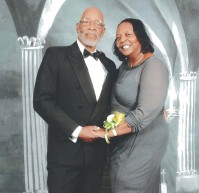
Inell and Willie Juran celebrated a special ‘day of days.’  Here are a few words of thanks from them…
Lord, thank you for blessing us with this wonderful day, a day that we have never seen before and a day that we will never see again.
We want to thank our three lovely children, Raul Juran, Michael Juran and Katrice Juran for giving us such an amazing Happy 50th Anniversary Celebration.
We would also like to thank the guests for sharing in this special occasion. A job well done, which made us very happy and proud.

Thanks so much,
Yours,
Inell and Willie

John Paul Taylor: Life Beyond Your Struggles

0

photo (3)

John Paul Taylor did not have a fairy tale start in life.  He was one of seven children to come from the tumultuous union of Sarah Taylor and Roosevelt Taylor, Sr.  John Paul does not have many memories of his father, who worked in the Steel Industry but was rarely around in his life. He would in fact end up spending much of his youth in and out of foster homes, along with his younger siblings.
John Paul says of that time in his life, ”It was hard. You felt bad sometimes at having to live like you did while you saw other kids you went to school with, with real homes, and mamas and daddies that cared about them. That was how I became introduced to poetry. I was young and beginning to express anger and a counselor encouraged me to write what I was thinking, and I began to do so. But even though I wrote throughout my high school years, it was not until I was in college that I had the courage to actually share my words in public.”  But still John Paul credits his early years of writing in silence as being a part of how he survived those difficult years in his life.
As a child of the foster care system John Paul also talked about the impact he has seen in others who aged out of the foster care system at 18 and were then left to try to find their way in life on their own with no support system. He says that was not the case for him as his older siblings kept in contact with him and helped him prepare his application for admission to UAB and also helped him with his financial aid applications.
John Paul speaks of his relationships with his siblings and his pride in their accomplishments with a sense of sincerity that cannot be mistaken. His oldest brother Roosevelt Senior is a retired military Veteran. His sister Mary, is a teacher at Wenonah High School. His sister Carol Ann is an entrepreneur.  His brother Bruce, is a Doctor of Internal Medicine. His sister Angela is a traveling nurse. And his youngest brother, James Taylor is a high school counselor.
John Paul says  that when he looks at his own life, and when he looks at the lives of his siblings in spite of the challenges of their beginnings, that he sees it for all of them as a kind of life after the struggle statement.
If you know John Paul at all you know that his struggles to be a part of his own children’s lives have been a part of what defines him.
Obviously we can find context for why he has fought so hard when we look back through the mirror of his own struggles. But according to John Paul even the battle to fight for a place in the lives of his own children came with a definite measure of frustration.
“A lot of times in the beginning when I would go to places like DHR to fight for custody or even at times just visitation rights, I would be treated like my interest in my children was some kind of hustle, or some kind of effort to avoid child support, or get back at the mom. It was frustrating having to get past that stereotype.”
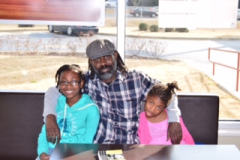
But today is a different day for John Paul the father, as he now has full legal custody of his youngest daughter, Maya and shared custody of his daughter Gwen. He says of what that means to him,” After growing up with my dad not being there, and having to go through the whole foster care experience, it means everything to me as a man and a father, to have the chance to be here for my girls. To be able to show them love, and to be able to help them to grow into positive, whole adults, that is my world in a nutshell.”
John Paul is also one the founders of the Real Life Poets. He says of how the group got started, “It was me, Obeah, and a brother named David Harbrough, who passed away during the time. We were doing readings and talking about doing other things in the community, when David died. After David died, Obeah and I just sort of started doing things in the community in his memory. We started out doing open mike events in the community, but instead of paying to get in we would ask that they bring food items.  And then we would take the food items and have a monthly community meal. I think a coat drive may have been our next project.” Here we are years later and John Paul and the Real Life Poets continue to provide community outreach, and continue their efforts to bring arts to  the youth in our community.
As he looks to the future John Paul  notes that, “With the Real Life Poets we are beginning to have more exposure on a national and international level. Through the organizations that we have affiliated and the conferences we have participated in, I can see us having a voice in the effort at a national level to better teach our culture to our youth. I love that!”

Museum Appoints Miles College Intern

0

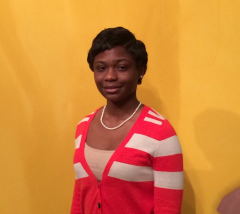
Lindsay George
BIRMINGHAM, Ala. – The Birmingham Museum of Art is proud to announce Lindsay George as the recipient of the Thomas N. Carruthers, Jr.- Miles College Internship.
The Carruthers, a paid internship awarded to a Miles College student every spring, provides a semester-long exposure to many career paths available within art museums, including public relations, marketing, development, education, event planning, and curatorial departments.
“The Association of Art Museum Directors and the United Negro College Fund first conceived this internship as a technique to open the door more fully and intentionally for African American students to engage with the nation’s art museums,” says Gail Andrews, the Birmingham Museum of Art’s R. Hugh Daniel Director. “We are pleased to have Lindsay George as our Carruthers Intern this spring, and we look forward to strengthening relationships with the Miles College students, faculty, and staff.”
Lindsay George is a senior at Miles College majoring in communications with a specialization in public relations and journalism. She is a Presidential Scholar, Senior Class President, and a member of the National Communication Association Honor Society, Lambda Pi Eta.
As the Carruthers Intern, George is responsible for working with Museum staff to organize and market the second annual Miles College Night at the Museum. The special evening aligns with the college’s Spring Arts Week in April, which is a celebration of the humanities through the arts. Last year, 365 students, faculty, and staff attended the inaugural event, and it was a spectacular evening with music, food, art activities, and spoken-word poetry.
“I am very grateful for the internship opportunity at the Birmingham Museum of Art because the valuable, hands-on experience gives insight to the various skills that are needed to plan a large, special event,” says George. “As a graduating senior, I am excited to pay it forward by planning the event for my Miles College family.”