Home Blog Page 1335

Birmingham Civil Rights Institute Announces Events  for Dr. Martin Luther King, Jr. Holiday Weekend Celebration
0

BCRIBCRI will be open on Mondays from January 19-February 23, 2015

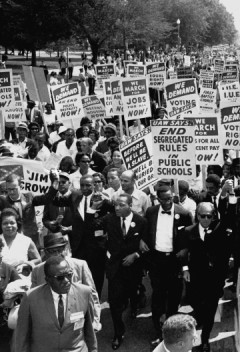
January 8, 2015–The Birmingham Civil Rights Institute (BCRI) announces the following events to commemorate the life of Dr. Martin Luther King, Jr:

January 13-February 22, 2015
Below the Surface, a new exhibition featuring 12 works of art by Carol White will be displayed in BCRI’s Odessa Woolfolk Gallery.   Below the Surface is a compilation of White’s multiple approaches to art-making, her perspectives about human relationships and the many ways she has used materials. From pastels to acrylic paint, Carol White has created statements about human commonalities and traditional symbols found throughout the world. Call 205-328-9696 x 234 for more information.

January 18, 2015: 3 p.m.
Reflect and Rejoice:  A Community Tribute to Dr. Martin L. King, Jr.  a musical gala presented by BCRI, The Alabama Symphony Orchestra and The Alys Stephens Center. Michael Morgan conducts this special performance with Fox 6’s Jeh Jeh Pruitt hosting, young cello phenom Malik Kofi, Roderick George’s tenor voice, and featuring the soaring voices of The Aeolians of Oakwood University and the Lockhart Dance Theatre Youth Ensemble. For tickets, call 205-979-2787 or go to www.alabamasymphony.org.

January 19-February 22, 2015
7 Visions of a King and Magic City:  Field of Dreams
These two exhibits will be displayed in the Milestones Gallery and are sponsored by Huffman High School art teacher, Susan Pearson.  The works are done by Huffman students from both 2014 and 2015.  7 Visions of a King highlights seven iconic images of Dr. Martin Luther King Jr. drawn by seven male students from Huffman High School.  Magic City:  Field of Dreams highlights iconic images in Birmingham sports history. Call 205-328-9696 x 234 for more information.

January 19, 2015: 7:30 a.m.
Dr. Martin Luther King, Jr. Unity Breakfast, Birmingham Jefferson Convention Complex (BJCC)–Tanner Colby, author of Some of my Best Friends are Black, is the keynote speaker for 2015.  Call Operation New Birmingham for information at 205- 324-8796.

January 19, 2015: 9 am
BCRI opens to the public, free admission–until 5 p.m.  Call  205- 328-9696 ext. 234 for more information.

January 19, 2015: 1 p.m.     
“SCLC Rally and Program,” Sixteenth Street Baptist Church.  Call 205-521-9402 for more information.

Deadline Approaching for Family Rosary’s 2015 “Try Prayer! It Works!” Contest

0

tryprayer2014National competition encourages children to express faith through Art, Poetry and Prose

EASTON, Mass. – It’s time to submit entries for the 2015 “Try Prayer! It Works!” Contest. The deadline for this national competition encouraging children to express their faith through art, poetry and prose is Feb. 1, 2015.
In this national competition sponsored by Family Rosary, children participate in an inspiring faith experience.  The “Try Prayer! It Works!” Contest is open to students in kindergarten through 12th grade. The national competition attracts more than 1,000 finalist entries from approximately 22,000 participants nationwide. Children and teens from Catholic schools, parishes, home schooling, and other Catholic organizations use their talent to convey their beliefs.
This year’s theme, “Being about the work of my Father,” focuses on obedience and faithfulness. The participants will reflect on and express how they listen to God and how they do the work that God calls them to do, thereby living out the Fifth Joyful Mystery of the Rosary, The Finding of the Child Jesus in the Temple.
“Following God’s direction is never easy but it’s always important. Like Jesus, we must listen with our heart and follow the path that is laid before us,” said Father Willy Raymond, C.S.C., President of Holy Cross Family Ministries. “The ‘Try Prayer! It Works!’ Contest this year will help children understand more deeply how they can model their lives after Christ through His example for us in the Fifth Joyful Mystery of the Rosary.”
The “Try Prayer! It Works!” Contest asks entrants to use creativity to depict their faith. Children in grades K-12 enrolled in a Catholic school, religious education program, parish, home school or other organization are eligible to participate. For details or to download an application, go to www.FamilyRosary.org/TryPrayer. All entries must be postmarked by Feb. 2, 2015. Questions? Call Holy Cross Family Ministries at 800-299-PRAY (7729).
Family Rosary was founded in 1942 by Servant of God Patrick Peyton, also known as the “Rosary Priest,” to help families pray together. Father Peyton, and the ministry, are known by two powerful and memorable sayings: “The Family That Prays Together Stays Together” and “A World at Prayer is a World at Peace.” Father Peyton was one of the most influential American Catholic priests of the 20th century, using the entertainment industry to further his mission of family Rosary prayer in honor of Mary and her son Jesus.
In the spirit of its founder, Servant of God Patrick Peyton, Holy Cross Family Ministries serves Jesus Christ and His church by promoting and supporting the spiritual well-being of the family. Faithful to Mary, the Mother of God, the Family Rosary, a member ministry, encourages family prayer, especially the Rosary. For more information, call 800-299-PRAY (7729) or visit www.Family Rosary.org.

Holy Cross Family Ministries is sponsored by the Congregation of Holy Cross.www.HolyCrossUSA.org.

Black Inventors of Today

6

Lonnie Johnson
lonniej supersoakerBorn: Marietta, Georgia  Oct. 6, 1949
Invention: Super Soaker Water Gun
The super soaker was a water gun that had a large reservoir that you could fill with lots of water – which gave kids endless amounts of fun.
Lonnie Johnson (born October 6, 1949) is best known as the inventor of the Super Soaker water gun. The top selling toy in the United States in 1991 and 1992, over 40 million Super Soakers have generated over $200 million in sales since 1990. Today, many websites are devoted to them. 
 Johnson is president and founder of Johnson Research and Development Co., Inc., a technology development company, and its spin – off companies, Excellatron Solid State, LLC; Johnson Electro-Mechanical Systems, LLC; and Johnson Real Estate Investments, LLC. 
 Articles on Lonnie Johnson have appeared in numerous publications including Time Magazine, the New York Times, and Inventor’s Digest. Johnson serves on the Board of Directors of the Georgia Alliance for Children, an organization which serves as an informed and influential voice to protect the rights and interests of Georgia’s less fortunate children. He is a Board member of the Hank Aaron Chasing the Dream Foundation, and has served on the Board of Directors of the Commonwealth National Bank. 
 In his hometown of Marietta, Georgia, February 25, 1994 was declared “Lonnie G. Johnson Day” in his honor.

Earl Lucas
earl_lucas_lg fordBorn: Dallas, Texas  1970 –
Invention: Designer
Earl Lucas is a designer for Ford Motor Company
Earl Lucas (1970- ), was born in Dallas, Texas. He went to Booker T. Washington High School and was in the arts program. Initially, he was interested in the 3-D process of making jewelry with metal at the College for Creative Studies in Detroit, Michigan. Two years into the program, he switched from a crafts major to industrial design. However, he liked the field of transportation. In college, he and some of his classmates designed a van to transport elderly riders. That job led to a job designing car seats, panels for doors, and headliners for an auto supplier. Then he really got a dream job in Texas designing planes owned by the wealthy Sultan of Brunei. In the sultan’s planes, he used real gold, platinum, and all kinds of precious jewels. As a design manager for Ford, Lucas works with three or four car designers. Black Enterprise magazine notes that he is one of 25 to 30 African-American car designers in the world.

Black Wall Street: (Past, Present, and Future)

0

EDT McTierBy Mahari A. McTier

As an Entrepreneur and Financial Advisor, I am always intrigued by the economic history, past, present, and future, of Black America. Our history is strong and profound, but when recorded we rarely hear the names of African-American individuals or organizations that made outstanding contributions to the world of business and finance, or amassed enormous amounts of wealth. We read book after book about our achievements during the Civil Rights Movement, our contributions to art and literature, and our roles during the industrial revolution, but rarely do we read about the financial greats that we can hail as iconic role models for our youth who are aspiring to be future business leaders.
February is Black History Month. How many Black History Month speeches will be given by kids about Madam C. J. Walker, one of the first wealthy African-American women in our country, A.G. Gaston, the multi-millionaire business man from Birmingham, Alabama who helped finance the Civil Rights Movement, or Robert Church Sr., who was born a slave and by the end of his life was the first Black millionaire of the south? A better job must be done in the documentation of this history.
Let me take you on a short journey into our economic history. This journey is a story that has been rarely documented and told, but needs to be shared with the world as a beacon of light and hope for our future.
When you hear “Wall Street” you think of the financial center of the world in New York City or the ‘80s movie starring Michael Douglas. Did you know that there was a street and district in the early 1900s that was dubbed the “The Black Wall Street”?
The Greenwood Avenue District of Tulsa, Oklahoma was an exemplar of what a motivated African-American community could accomplish. It was populated by successful African-American families, businesses, hospitals and churches. The best description of Black Wall Street would be to compare it to a mini-Beverly Hills. It was the epitome of Black success and wealth in the early 1900s, and it proved that African-Americans could create a successful community infrastructure. That’s what Black Wall Street was all about.
The area encompassed over 600 businesses and 36 square blocks with a population of 15,000 African-Americans. Students wore suits and ties to school on Black Wall Street because of strong morals and respect they were taught as small children.
You had many doctors, lawyers, and business owners in this community. Physicians owned medical schools on Greenwood Avenue. There were 21 restaurants and two movie theaters.  There were only two airports in the state of Oklahoma, yet six Blacks owned  their own planes.  There was a banker in town who had a wife named California Taylor. Her father owned the largest cotton gin west of the Mississippi River. When she shopped, she would take a cruise to Paris every three months to have her clothes made. The community was mind-blowing.
One of the foundations of the community was to educate every child. Everyone looked out for each other, believed in nepotism and doing business with their fellow brother in the community first.
The dollar circulated 100 times, sometimes taking a year for the currency to leave the community.
Black Wall Street met its demise on June 1, 1921. The fall was led by the lower economic Europeans jealousy of the thriving African-American community. On this day a war broke out in Tulsa.
A young Black man was accused of attempting to rape a white woman on an elevator, a rumor flew through the community and a lynch party was formed. At the courthouse steps, where the man was lynched, a battle began between the Black defense party and the white mob. The Blacks fought hard, but were overwhelmed by the Ku Klux Klan and the National Guard. The battle spread throughout Black Wall Street. The riot was not caused by anything Black or white. It was caused by jealousy.
Black homes were set on afire. They were determined to teach the Blacks a lesson. Black Wall Street and that community was obliterated. More than 10,000 Black people were left homeless.  More than 3000 African-Americans were killed. Bodies were dumped in the Arkansas River and others were burned at mass gravesites.
There are so many lessons for us to learn from this community about business and finance, having self-pride, and the power of unity. Think about it and be inspired.

What is the current financial state of Black America?  Let’s look at some facts.

•    29.4% of Black households have a zero or negative net-worth.  Average net-worth of African-Americans is $6000 and $88,000 for whites.
•    More than 50% of all African Americans are not invested in the stock market.
•    Median wealth of white households is 10 times that of African-Americans.
•    2 out of 5 African-American households don’t have enough assets to last 3 months if they suffer a major interruption of income.

I could go on and on sharing statistics. As a Financial Advisor I have worked with many individuals over the years seeking to first educate, then to assist them with making smart money decisions. This is where it starts, education and doing better because we know better.
When looking at the current and future state of Black America through the eyes of a finance professional, I see many things that alarm me. I see that African-Americans are not adequately saving for retirement, are under-insured, investing over-conservatively, and don’t have or intend to develop a financial plan. If we don’t make some drastic behavioral changes in the present, we’re going to continue spiraling downward into the future.
We must first start with the individual. We have to change our mind-sets and mentalities before any significant changes will be made among African-Americans as it relates to wealth building.  In order for our Black businesses to survive we must support them and our Black businesses must be committed to providing quality service, hiring qualified African-Americans, and giving back to the community. The Black Wall Street is a perfect example of where we must get back.  We must become as self-sufficient as possible, raise our kids to be respectful, have a strong spiritual foundation, and build legacies that will last for generations. We can no longer afford starting over with every generation. Let’s all make a commitment today that we will create a Black Wall Street in our community and take control of our financial lives.
I don’t find pleasure in identifying the problem. I find peace and joy when being a part of the solution.  Through education, discipline, and a collective effort, we can again be the Black Wall Street of Tulsa, Oklahoma!

(Mahari A. McTier is a Financial Advisors with Tier 1 Advisors, LLC and can be reached at maharimctier.tier1@gmail.com.)

A. G. Gaston Motel

0

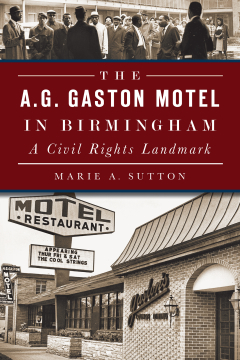
PPT AG GASTON MOTEL BOOK COVERMarie Sutton (1)It was our first-class motel owned and operated by one of our people. —a local resident at the opening of the motel

Traveling throughout the South during the 1950s was hazardous for African Americans. There were precious few hotels and restaurants that opened their doors to minorities, and fewer still had accommodations above the bare minimum, to say nothing of the racism and violence that followed. But in Birmingham, Black entrepreneur and eventual millionaire A.G. Gaston created a first-class motel and lounge for African Americans that became a symbol of pride of his community. It served as the headquarters for Birmingham’s civil rights movement and became a revolving door for famous entertainers, activists, politicians and other pillars of the national Black community. Author Marie Sutton chronicles the fascinating story of the motel and how it became a refuge during a time when African Americans could find none.

The A.G. Gaston Motel in Birmingham
By Marie A. Sutton
ISBN: 978.1.62619.595.0
$19.99; 128 pp.
Available as an e-book
Available wherever books are sold

About the Author:

Marie A. Sutton is an award-winning freelance writer with a passion for immortalizing the African American experience. She has worked as a journalist, communications professor, radio talk show host and blogger. She is currently the director of student media at the University of Alabama at Birmingham. She lives in Birmingham, Alabama, with her devoted husband, James, and two beautiful children, Simone and Stephen.

Marin Luther King, Jr. Black History Quotes

0

You must be willing to suffer the anger of the opponent, and yet not return anger. No matter how emotional your opponents are, you must remain calm.
Martin Luther King, Jr., Stride Toward Freedom, 1958

I can never be what I ought to be until you are what you ought to be. You can never be what you ought to be until I am what I ought to be.
Martin Luther King, Jr., “The American Dream” speech given at Lincoln University, Oxford, Penn. June 6, 1961

Change does not roll in on the wheels of inevitability, but comes through continuous struggle. And so we must straighten our backs and work for our freedom. A man can’t ride you unless your back is bent.
Martin Luther King, Jr., “The Death of Evil upon the Seashore,’ sermon given at the Cathedral of St. John the Divine, New York City, 17 May 1956

When a people are mired in oppression, they realize deliverance only when they have accumulated the power to enforce change.
Martin Luther King, Jr., in “Martin Luther King Defines Black Power,” New York Times Magazine, June 11, 1967

The choice is no longer between violence and nonviolence; it is either nonviolence and nonexistence.
Martin Luther King, Jr., “The American Dream,” speech given at Lincoln University, Oxford, Penn., June 6, 1961

We have developed an underclass in this nation. And unless this underclass is made a working class, we are going to continue to have problems.
Martin Luther King, Jr., speech given at Poor People’s Campaign, Memphis, Tennessee, March 1968

Man dies when he refuses to stand up for that which is right. A man dies when he refuses to take a stand for that which is true.
Martin Luther King, Jr. 1965

Structures of evil do not crumble by passive waiting. If history teaches anything, it is that evil is recalcitrant and determined, and never voluntarily relinquishes its hold short of an almost fanatical resistance.
Martin Luther King, Jr., Where Do We Go From Here? 1968

Our freedom was not won a century ago, and it is not won today; but some small part of it is in our hands, and we are marching no longer by ones and twos but in legions of thousands, convinced it cannot be denied by any human force.
Martin Luther King, Jr. c. 1967

Rev. Fred Shuttlesworth – Gone But Not Forgotten

0
Fred Shuttlesworth was a key figure in the Civil Rights Movement.

Fred Shuttlesworth Born on March 18, 1922, in Mount Meigs, Alabama, Fred Shuttlesworth was a Baptist minister and one of the South’s most prominent Civil Rights leaders. He worked closely with Dr. Martin Luther King Jr., co-founding the SCLC and organizing direct-action protests in Birmingham, refusing to waver even after multiple attacks. Also a community activist in Cincinnati, he died on October 5, 2011.
Born Freddie Lee Robinson to a large clan that eventually moved to Birmingham when he was a toddler, Robinson took the surname Shuttlesworth from his stepfather, William, who had married his mother Alberta and worked as a farmer and coal miner.
Graduating valedictorian from his high school, Fred Shuttlesworth worked assorted jobs before finding his calling to the pulpit, studying at the ministerial institution Selma University and earning his B.A. in 1951, later earning his B.S. from Alabama State College.
Shuttlesworth became pastor of Birmingham’s Bethel Baptist Church in 1953. After the Brown v. Board of Education ruling, he was further inspired to actively participate in the growing Civil Rights Movement. He called for the hiring of African-American police officers and, with the outlawing of the NAACP in his home state, Shuttlesworth established the Alabama Christian Movement for Human Rights in 1956.
He also co-founded the Southern Christian Leadership Conference with other leaders, including Martin Luther King Jr. and Bayard Rustin. Shuttlesworth, with King and fellow minister Ralph D. Abernathy, would later be seen as one of the movement’s “Big Three.”
After the desegregation of Montgomery busses due to the citywide boycott inspired by Rosa Parks, Shuttlesworth was organizing efforts in his city to implement bus desegregation as well when his residence was bombed on Christmas, with the pastor inside. He nonetheless steadfastly proceeded with plans; later, when he and his wife took their daughter to integrate a white school, the couple were brutally attacked by a Ku Klux Klan mob.
Shuttlesworth held fast to his firm belief in direct action and was a key leader throughout the history of the movement, though he had relocated to Cincinnati in the early 1960s and hence routinely travelled back to the South. After the May 14, 1961, attacks on the Freedom Riders, Shuttlesworth provided refuge for the activists, with outreach made to Attorney General Robert Kennedy for assistance. He also convinced Dr. King to have Birmingham become a focal point of the movement and organized well-documented youth-driven marches and protests, in which he was badly hurt at one point in 1963. And Shuttlesworth was an organizer of the 1965 Selma to Montgomery voting rights march.
Shuttlesworth was arrested many, many times over the course of his activism, yet in later interviews would talk about the power of his faith in sustaining him.
Shuttlesworth established the Greater New Light Baptist Church in the middle of the 1960s in Cincinnati. Fast forward to the 1980s, and he founded another organization, the Shuttlesworth Housing Foundation, providing grants for home ownership.
In the new millennium, Shuttlesworth received the Presidential Citizens Medal from Bill Clinton in 2001, with the Birmingham-Shuttlesworth International Airport named in his honor in 2008. Shuttlesworth also became president of the SCLC mid-decade, though he soon left due to disagreements with the internal workings of the organization.
In 2007, Fred Shuttlesworth moved back to Birmingham, where died at the age of 89. The minister at one point had thought he wouldn’t live to see 40, dwelling in the Deep South during tumult. He was survived by Sephira Bailey, his second wife, and a large family. An award-winning 1999 biography on Shuttlesworth—A Fire You Can’t Put Out—was penned by Andrew M. Manis.

Little Known Black History Fact: Zora Neale Hurston

0

Zora Neale HurstonBy D.L. Chandler
BlackAmericaWeb.com

 
Zora Neale Hurston was a novelist, folklorist and anthropologist most famous for her 1937 novel, Their Eyes Were Watching God. Hurston’s path to prominence came by way of hardship and savvy ingenuity, helping her become one of the most beloved literary figures of all time.
Born on January 7 in 1891, in Notasulga, Alabama, to parents who were former slaves. Her parents uprooted the family and moved to Eatonville, Fla., one of the earliest all-Black incorporated townships.
After the death of her mother in 1904, Hurston lived with several family members until she was sent off to boarding school in Jacksonville.
Facing a variety of hardships while working odd jobs, Hurston eventually moved to Baltimore in a bid to change her fortunes. Although she was 26 at the time, Hurston said she was 10 years younger to attend the free Morgan College, which was the high school portion of Morgan State University.
After graduating, Hurston entered Howard University and earned an associate’s degree. It was then Hurston had some of her earliest works printed in the school’s newspaper.
From there, she entered Barnard College in New York on a scholarship, graduating with a degree in anthropology in 1928 and continuing her anthropology studies at Columbia University for the next few years.
Hurston’s interest in folklore, especially in the Caribbean and her native Florida helped her become became a fixture of the Harlem Renaissance movement. Her research on African-American colloquial language and folklore is valued to this day.
She counted Langston Hughes, Countee Cullen and other great scribes as her friends. Her apartment became a popular hangout for the Renaissance writers and artists. Hurston married twice. Both marriages ended abruptly. In 1934, Hurston released her first novel, Jonah’s Gourd Vine. Two years later, she received a Guggenheim fellowship and worked on anthropological research in Haiti and Jamaica.
While writing her best known work, Their Eyes Were Watching God, Hurston studied voodoo. In 1942, Hurston released her autobiography Dust Tracks On A Road. Though it was critically acclaimed, Hurston began to fall out of the limelight.
In 1948, she was unjustly accused of molesting a 10-year-old boy, but the scandal of the crime torpedoed her career. She continued to write until the last years of her life, but much of her work failed to reach publication.
Hurston died poor and alone on January 28, 1960. Hurston’s work enjoyed a revival thanks to author Alice Walker, who wrote about the novelist in a 1975 essay for Ms. Magazine. Walker counted Hurston as an influence, and pushed for new editions of her older works such as her short stories and essays.
Hurston was also an inspiration to Ralph Ellison and Toni Morrison, among other Black writers and her legacy continues to influence Black writers to this day.

Black History Poems

0

POEMSBy Tupac Shakur

Sometimes when I’m alone
I Cry,
Cause I am on my own.
The tears I cry are bitter and warm.
They flow with life but take no form
I Cry because my heart is torn.
I find it difficult to carry on.
If I had an ear to confide in,
I would cry among my treasured friend,
but who do you know that stops that long,
to help another carry on.
The world moves fast and it would rather pass by.
Then to stop and see what makes one cry,
so painful and sad.
And sometimes.

I Cry
and no one cares about why.

Life Doesn’t Frighten Me At All
By Maya Angelou

Shadows on the wall
Noises down the hall
Life doesn’t frighten me at all

Bad dogs barking loud
Big ghosts in a cloud
Life doesn’t frighten me at all

Mean old Mother Goose
Lions on the loose
They don’t frighten me at all

Dragons breathing flame
On my counterpane
That doesn’t frighten me at all.

I go boo
Make them shoo
I make fun
Way they run
I won’t cry
So they fly
I just smile
They go wild

Life doesn’t frighten me at all.

Tough guys fight
All alone at night
Life doesn’t frighten me at all.

Panthers in the park
Strangers in the dark
No, they don’t frighten me at all.

That new classroom where
Boys all pull my hair
(Kissy little girls
With their hair in curls)
They don’t frighten me at all.

Don’t show me frogs and snakes
And listen for my scream,
If I’m afraid at all
It’s only in my dreams.

I’ve got a magic charm
That I keep up my sleeve
I can walk the ocean floor
And never have to breathe.

Life doesn’t frighten me at all
Not at all
Not at all.

Life doesn’t frighten me at all.

Daybreak In Alabama
By Langston Hughes

When I get to be a composer
I’m gonna write me some music about
Daybreak in Alabama
And I’m gonna put the purtiest songs in it
Rising out of the ground like a swamp mist
And falling out of heaven like soft dew.
I’m gonna put some tall tall trees in it
And the scent of pine needles
And the smell of red clay after rain
And long red necks
And poppy colored faces
And big brown arms
And the field daisy eyes
Of black and white black white black people
And I’m gonna put white hands
And black hands and brown and yellow hands
And red clay earth hands in it
Touching everybody with kind fingers
And touching each other natural as dew
In that dawn of music when I
Get to be a composer
And write about daybreak
In Alabama.

DeBoraha Akin Townson, Black Rodeo

0

DeBoraha TownsonBy D.L. Chandler
Special To The Times

 
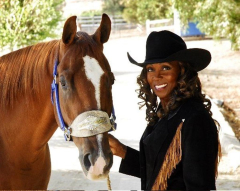
DeBoraha Akin-Townson is carrying on the tradition of the rodeo, which has deep roots among many Black and Native American people in the Midwest and South. Ms. Akin-Townson made history in 1990 by becoming the first Black cowgirl to compete in the International Professional Rodeo Finals in 1990.
Akin-Townson, 56, is a native of Rockford, Ill. and is also of Native American heritage. Although she has been barrel racing since a little girl, she became interested in joining the professional ranks after attending an event in California in 1980.
Akin-Townson quickly rose in the sport, winning notable events and becoming the 1989 International Professional Rodeo Association (IPRA) Western Region Champion.
Akin-Townson is also the only Black woman to compete with a professional card in the WPRA (Women’s Professional Rodeo Association) at PRCA rodeos throughout the United States, according to most accounts.
There isn’t a lot of press on Akin-Townson, but in a 2013 interview she revealed that among her influences was Black and Native American South Dakota rodeo clown and civil rights activist, Lynn “Smokey” Hart. Hart was instrumental in making Martin Luther King, Jr.’s birthday a national holiday in his home state.
Among the many big wins Akin-Townson has racked up are the five-time Bill Picket Invitational All-Around Cowgirl, six time Bill Picket Invitational Barrel Racing Champion, 2003 California State Fair Lifetime Achievement Award and 2010 California Silver Lining Champion.
Akin-Townson still works as a horse-racing instructor, according to comments on a YouTube video featuring her racing. She has also passed down her love of the rodeo to her daughter, Dawn, and her son, Lee. Akin-Townson is married to Stewart Townson.