Home Blog Page 1334

2015 Beetle Convertible TDI: One Stylish VW

0

Cheryl Volkswagen Reviewby Cheryl Eldridge

The 2015 Volkswagen Convertible TDI is definitely a keeper.
The Beetle has come a long way and there is no turning back. The engineers have defined the true meaning of the Beetle with its classic yet refined appearance.
I have always been an avid lover of the Volkswagen and while test driving, it took me back to my childhood days.
My mother owned a manual ’80s Beetle and I enjoyed watching her shift gears and enjoyed the loud noisy engine at the time.
However, the Beetle has reached adulthood and has heads turning.
My tester was very sexy, coated in toffee brown metallic exterior with beige leatherette interior loaded  for $31,015.
Gas Mileage is still great with 30 mpg in the city and 40 mpg on the highway and with the new gas prices decrease, there’s no reason this diesel gas powered vehicle should be on empty, regardless of how many errand runs that are accomplished.
For the 2015 Volkswagen Beetle, the optional 2.0-liter diesel engine gets 10 additional horsepower, yet also delivers a slight increase in fuel economy. A new trim level called the Beetle Classic enters the lineup, and all but the base Beetle now comes standard with a rearview camera. Unfortunately, my package didn’t include the rearview camera.
The 2015 Volkswagen Beetle is a four-passenger, two-door hatchback available in coupe and convertible body styles with three basic trim levels that correspond to the available engines: 1.8T, R-Line and TDI.
The Beetle comes standard with 17-inch alloy all-season wheels, heated windshield-washer nozzles, heated mirrors, full power accessories, automatic air-conditioning, cruise control, a leather-wrapped tilt-and-telescoping steering wheel, heated and height-adjustable front seats, leatherette (premium vinyl) upholstery, Bluetooth phone and audio connectivity and an eight-speaker sound system with a CD player, an iPod interface and an auxiliary audio jack.
My tester, the convertible Beetle TDI includes the 1.8T’s standard equipment along with chrome exterior accents, keyless ignition and entry, dual-zone automatic climate control, satellite radio, a touchscreen audio interface and a performance gauge package. As an option, it also offers the optional Sunroof, Sound and Navigation package.
The standard engine for the front-wheel-drive 2015 VW Beetle is a 1.8-liter turbocharged four-cylinder (1.8T) that produces 170 horsepower and 184 pound feet of torque. The 1.8T is paired with a five-speed manual transmission on the coupe as standard, and a six-speed automatic transmission is optional. The 1.8T convertible comes only with the automatic. For the coupe, EPA- estimated fuel economy with the 1.8T stands at 28 mpg combined (25 city/33 highway) paired to the automatic and 27 mpg combined (24/33) with the five-speed manual. Opt for the convertible where you can only get the 1.8T with an automatic transmission and estimates fall to 26 mpg combined (24/32). During Edmunds performance testing, a convertible Beetle 1.8T accelerated from zero to 60 mph in 7.6 seconds, which is a good time for the segment.
Under the hood of the Beetle TDI is a turbocharged 2.0-liter diesel four-cylinder with 150 hp and 236 lb-ft of torque. As with the R-Line, buyers can choose between a six-speed manual and a six-speed DSG. Regardless of transmission choice, fuel economy estimates stand at an impressive 34 mpg combined (31/41) for the coupe and the convertible.
On the Safety Side, the Volkswagen Beetle comes standard with traction and stability control, antilock disc brakes, front side airbags, side curtain airbags and Volkswagen’s Car-Net telematics system. Car-Net bundles crash notification, roadside assistance, stolen vehicle location, remote door unlocking and geo-fencing (which allows parents to set boundaries for teenage drivers).
In government crash tests, the Beetle coupe received five out of five stars for overall crash protection, with four stars awarded for total frontal protection and five stars for total side-impact protection. The Insurance Institute for Highway Safety (IIHS) gave the coupe its top “Good” rating in its moderate-overlap frontal-offset, side-impact and roof-strength tests. In IIHS’s small-overlap frontal-offset test, the Beetle scored a rating of “Marginal,” the second lowest rating. The seat and head restraints were rated “Good” for whiplash protection in rear-end impacts.
During Edmunds testing, a convertible Beetle 1.8T came to a stop from 60 mph in 124 feet, which is about average for the segment.
Get inside the 2015 VW Beetle, which gets plenty of inspiration from the original flower-power model, but it still includes the same features, controls and construction as other modern Volkswagens. This translates to a pretty classy passenger environment. The trim that runs across the dash and doors can be color-keyed to the exterior just as in old Bugs, while the R-Line gets secondary dash-top gauges and available two-tone seats.
The optional navigation system is easy to use, though its small screen limits usefulness. The premium Fender sound system, on the other hand, is well- worth the extra cost and provides impressive sound quality.
Despite its seemingly low roof line, the Beetle still provides plenty of room for tall drivers, and most people will find the front seats pretty comfortable. The rear seat also has a lot of headroom. Legroom in back is fairly tight, but it’s still a little more than what you’ll get from most rivals.
The Beetle coupe has 15.4 cubic feet of cargo space in the trunk, though the convertible cuts maximum cargo capacity to just 7.1 cubic feet. That is around 1-2 cubic feet more than the Fiat 500 convertible or the Mini Cooper convertible, but loading luggage or other items can be difficult because of the Beetle convertible’s awkward, upright trunk opening. Fold the rear seats flat in the Beetle coupe and you’ll have about 30 cubic feet of cargo space to work with.
For the convertible, the power soft top folds down in about 10 seconds and it can be operated at speeds up to 31 mph. Problematically, though, when the top is folded down, it sits on top of the rear deck lid and rear visibility is limited.
Unfortunately due to winter’s fury, I was unable to put the top down and enjoy the convertible side, it was simply too cold.

Until next week, drive safe, buckle up, don’t text and drive, it’s the law.

Classifieds

0

ClassifiedsEmployment

THE CITY OF TALLADEGA IS TAKING APPLICATIONS FOR THE FOLLOWING POSITIONS WITHIN THE CITY SERVICE.

GRADE IV WATER TREATMENT PLANT OPERATOR

An application, job requirements, and salary information may be obtained at the City of Talladega Water Department.  Applications will be accepted through Friday, January 23, 2015 until 4:00 P.M.  Written examination will be given on Tuesday January 27, 2015 at 10 a.m. and Thursday January 29, 2015 at 4 p.m. at the Talladega Water Department.  Position is subject to Civil Service Rules.  Applications and job descriptions are also available at talladega.com.  Background Check and drug screening required.  EOE
BT01/15/15
___________
Summit Media,LLC

Position: Staff Accountant
Resume Deadline: January 28, 2015

SummitMedia LLC Birmingham is seeking a Staff Accountant for their Birmingham Radio stations.
Responsibilities include:
Prepare general ledger entries by maintaining records and files; reconciling accounts.
Assistance with month, quarter and year-end closings.
Assistance with Financial Statement preparation and analysis.
Budget and forecasting.
Various monthly and ad hoc financial reports.
Other duties as assigned by management.

The ideal candidate must have a Bachelor of Science in Accounting and at least two years of Accounting experience.

If interested in applying for this position, please forward a resume to SummitMedia LLC Birmingham Attn: Amber Freeman, 2700 Corporate Drive, Suite 115, Birmingham, Alabama 35242, or forward electronically to Amber.freeman@summitmediacorp.com
NO PHONE CALLS PLEASE!

It is the policy of Summitmedia LLC to provide equal employment opportunity to all qualified individuals without regard to their race, color, religion, national origin, age, or sex in all personnel actions including recruitment, evaluation, selection, promotion, compensation, training, and termination.

Discrimination because of race, color, religion, national origin, age, or sex is prohibited. If you believe you have been the victim of discrimination, you may notify the Federal Communications Commission, the Equal Employment Opportunity Commission, or other appropriate agency.
BT01/15/15
_______
Summit tMedia,LLC

Position: Accounts Receivable Specialist
Resume Deadline: January 28, 2015
Department: G&A
Stations: Birmingham
Positions: Available: One

SummitMedia, LLC Birmingham is seeking an Accounts Receivable Specialist for their Birmingham Office.

Responsibilities include:
Maintain up-to-date Accounts Receivable system
Generate and send out invoices
Allocate payments
Research and resolve payment discrepancies
Follow established procedures for processing receipts, cash etc.
Investigate and resolve customer queries
Process adjustments
Other duties as assigned by management

Qualifications:
College degree preferred
1-3 years accounts receivable and general accounting experience
Self-motivated
Detail oriented
Good communication skills

If interested in applying for this position, please forward a resume to SummitMedia LLC Birmingham Attn: Amber Freeman, 2700 Corporate Drive, Suite 115, Birmingham, Alabama 35242, or forward electronically to Brandi.sharit@summitmediacorp.com.
NO PHONE CALLS, PLEASE!

It is the policy of SummitMedia, LLC to provide equal employment opportunity to all qualified individuals without regard to their race, color, religion, national origin, age, or sex in all personnel actions including recruitment, evaluation, selection, promotion, compensation, training, and termination.

Discrimination because of race, color, religion, national origin, age, or sex is prohibited. If you believe you have been the victim of discrimination, you may notify the Federal Communications Commission, the Equal Employment Opportunity Commission, or other appropriate agency.
BT01/15/15
________________
AUTOMOBILE

2005 Chevy Silverado
Fully loaded Black
Crew cab , Leather
steering wheel control
Call Sam at
205-815-6454

2012 Dodge Charger
Factory Powertrain
Warranty Low miles
Call Ladarious
205-380-0593

Ford Fusion
15 to choose from
Managers special
Call Sam at
205-815-6454

2008 Chevy Cobalt
Leather, sunroof
White, alloy rims
Gas saver Call
Ladarious at
205-380-0593

2010 Scion T.C.
5 speed Low miles
Sunroof, Silver
Call Sam at
205-815-6454

BT01/15/15
________________________
LEGAL

THE FAIRFIELD ALABAMA HOUSING AUTHORITY (FAHA)
INVITATION FOR BIDS (IFB)
FOR MODERNIZATION
OF 2 UNITS/ 1 BUILDING AT MATTIE GILL JACKSON GARDENS

Fairfield Alabama Housing Authority is seeking proposals from highly qualified and insured individuals or firms, to complete a modernization of 2 units/ 1 building located at Mattie Gill Jackson Gardens (AL 10-2), Fairfield, AL 35064 funded under the Capital Fund Program until 2:00 p.m. (Central Time) on January 20, 2015 at the central office of the Authority, 6704 Avenue D, Fairfield, AL 35064 at which time and place all bids will be publicly opened and read aloud. Bids must be submitted in a sealed envelope, clearly marked MOD to Mattie Gill Jackson Gardens (AL 10-2).
A Pre-Bid Conference followed by an on -site inspection of the premises, will be held on January 13, 2015 at 11:00 AM at the central office of the Authority. Contractors are highly encouraged to attend the pre- bid meeting, but attendance is not mandatory.
The Fairfield Alabama Housing Authority reserves the right to reject any or all bids to waive any informality in the bidding.
The Fairfield Alabama Housing Authority reserves the right to retain 10% of payment during the work performance. Proposals will be received until January 20, 2015 at 2:00pm.

By submission of a proposal, the bidder agrees, if its proposal is accepted, to enter into a contract with the Housing Authority in the form included in the contract documents to complete all work as specified or indicated in the contract documents for the contract price and within the contract time indicated. The bidder further accepts all of the terms and conditions of the RFB. All packages should be submitted to:
(NO ELECTRONIC SUBMISSION OF PROPOSED PACKAGES)

Fairfield Alabama Housing Authority 6704 Ave D
Fairfield, AL 35064 Attn: Executive Director
seady@fairfieldha.org

Contact Information: To receive the IFB documents with full requirements please contact Account Payable Specialist 205-923-8017 ext 220.
BT01/15/15

__________________

Birmingham City Schools
Request for Proposal
Enterprise Document Solutions

Birmingham City Schools’ is seeking proposals for the acquisition of an Enterprise Document Solution System for the school district. The objective of this Request for Proposal is to create a strategic partnership with a Multi-function Device (MFD) manufacturer and their authorized reseller and service provider and/or Value-added-Reseller (VAR) to deliver necessary equipment and services for enterprise document services. Multi-Function Devices (MFD) should be capable of printing, scanning, copying and faxing. The Enterprise Document Solution shall deliver full time and onsite ongoing turnkey top-to-bottom support services (covering hardware, software and supplies) for a fully managed printing solution.

Proposals are due Monday, January 19, 2015 at 11:00 a.m. CDT. A non-mandatory Pre-Proposal Conference is scheduled for 10:00 a.m. CDT, Tuesday, January 13, 2015 at the address indicated below. Please submit questions to Edward McMullen, Director of Purchasing, no later than 2:00 p.m. CDT, Thursday, January 8, 2015.

Please contact Birmingham City School’s Purchasing Department to request a copy of the RFP at (205) 231-4885 or emcmullen@bhm.k12.al.us or download a copy from BCS website @ www.bhm.k12.al.us.

Edward McMullen
Director of Purchasing
Birmingham City Schools
Central Office
2015 Park Place, North
Birmingham, Alabama    35203

Birmingham City Schools reserves the right to reject any or all proposals and to waive formalities and technical errors if, in Birmingham City School’s judgment, the best interest of Birmingham City Schools will thereby be promoted.
BT01/15/15
_______________
INVITATION FOR BIDS

The Jefferson County Commission will receive bids for the Midfield Community Center Renovations Project #CDBG12-03F-M02-MCC  at Room 270 of the Jefferson County Courthouse until 9:00 a.m. local time on the 27th  day of January, 2015, at which time and place all bids will be publicly opened and read aloud.

Any bid to be delivered by hand or mail prior to the above time or at a different place shall be at the full risk of the bidder.  Such bids may be delivered or mailed to the Jefferson County Office of Community & Economic Development, at 716 Richard Arrington Jr. Blvd N, Suite A-430, Birmingham, Alabama 35203.  If for any reason such bid does not reach Room 270 of the Jefferson County Courthouse prior to the opening, it may be rejected.  No bids shall be accepted after the time stated for receipt of bids.  This requirement shall not be waived.

All bids must be submitted on bid forms furnished, or copy thereof, and must be in a sealed envelope.  The outside of the envelope should contain the following:

(1) “SEALED BID”; (2) “DO NOT OPEN”; (3) PROJECT NAME AND NUMBER;          (4) PROJECT OFFICER: “FELICIA SMITH”; (5) CONTRACTOR’S NAME AND ADDRESS
(6) ALABAMA LICENSE NUMBER; (7) CONTRACTOR’S DUNS NUMBER

Bids are invited upon the work as follows:

Addition of a Men’s and Women’s restroom to the rear of the existing Community Center.  There are also minor refurbishments to the existing exercise room and minor life/safety work in the existing gymnasium.

Bids must be accompanied by a certified check or bank draft payable to the order of Jefferson County, Alabama negotiable U.S. Government Bonds (at par value) or a satisfactory Bid Bond executed by the bidder and an acceptable surety, in the amount equal to five percent (5%) of the total of the bid amount but not to exceed $10,000.00, for the Midfield Community Center Renovations Project #CDBG12-03F-M02-MCC. The bid security is to become the property of the owner in the event that: (1) the bidder fails to meet any of the qualifications required in the bid specifications stated herein; (2) the bidder misrepresents or falsifies any information required to be provided by the owner; (3) for any reason that the bidder fails to qualify, causing his bid to be withdrawn or rejected and such withdrawal or rejection results in delay or substantial additional expense to the owner; (4) the contract and bond are not executed within the time set forth, as liquidated damages for the delay and additional expense of the owner caused thereby.

Bid documents are on file and will be available for examination at the JEFFERSON COUNTY OFFICE OF COMMUNITY & Economic DEVELOPMENT, 716 Richard Arrington Jr. Blvd N, Suite A-430, Birmingham, Alabama 35203; and the BIRMINGHAM CONSTRUCTION INDUSTRY AUTHORITY, 601 37th Street South, Birmingham, AL 35222
The bid package may be obtained by depositing $100.00_ with Thompson Architecture, Inc., 2913 Cahaba Road, Birmingham, AL 35223
for each set of documents so obtained.  Such deposit will be refunded in full on the first set issued to each general contract bidder submitting a bonafide bid, upon return of documents in good condition within ten days of bid date.  Other sets for general contractors, and sets for subcontractors and dealers, may be obtained with the same deposit, which will be refunded as above, less cost of printing, reproduction, handling and distribution of the contract documents.

Bidders are advised that submitted bids bind the bidders to the “Bid Conditions Setting Forth Affirmative Action Requirements for all Non‑Exempt Federal and Federally‑assisted Construction Contracts to be awarded in Jefferson, Shelby and Walker Counties, Alabama, “also known as the Birmingham Hometown Plan.

Attention is called to the fact that not less than the minimum salaries and wages as set forth in the contract documents must be paid on this project, and that the contractor must ensure that employees and applicants for employment are not discriminated against because of their race, color, sex, age, religion, national origin, disability, or veteran status.

All bidders be advised that this contract is subject to Section 3 of the Housing and Urban Development act of 1968, as amended, (12 USC l701U) which if it is in excess of $100,000, requires that to the “greatest extent feasible”, opportunities for training and employment be given lower income residents of the project area and contracts for work in connection with the project be awarded to business concerns which are: (1) 51 percent or more owned by section 3 residents; or (2) Whose permanent, full-time employees include persons, at least 30 percent of whom are currently section 3 residents, or within three years of the date of first employment with the business concern were section 3 residents; or (3) That provides evidence of commitment to subcontract in excess of 25 percent of the dollar award of all subcontracts to be awarded to business concerns that meet the qualifications set forth in paragraphs (1) or (2) in this definition of “section 3 business concern.”

All bidders must be licensed by the State of Alabama Licensing Board of General Contractors, as required by Chapter 8 of Title 34 of the Code of Alabama 1975 as amended.

The Jefferson County Commission reserves the right to reject any or all bids or to waive any informalities in the bidding.

This project will be funded in its entirety (100%) with Federal Community Development Block Grant Funds.

No Bid may be withdrawn for a period of sixty (60) days from the date of the opening of bids to allow the Jefferson County Commission to review the bids and investigate the qualifications of bidders, prior to awarding the contract.
BT01/15/15
____________


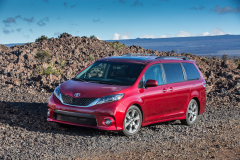
2015 Toyota Sienna

0

2015 Toyota SiennaBy Frank S. Washington

PONTE VEDRA, Fla. – Minivans are a tough sell. They might be the lone vehicle in the market that consumers buy because they have to – not because they want one. And usually, it takes a second child to force the purchase.
With the advent of crossover vehicles, minivan sales have been on the decline for years. They’ve dropped by almost two-thirds since 2000. A number of manufacturers, Ford and General Motors amongst them have left the segment. Still, it is sizable with sales hovering around 500,000 annually.
Toyota retuned its Sienna minivan and for 2015, the third generation of the van had a little more swagger. They updated the grille, redesigned the headlights and the taillights, and gave it LED daytime running lights.
One of the advantages that the Sienna held was that it was the only minivan that had all-wheel-drive. The feature returns for 2015, but alas it just wasn’t working correctly on our test vehicle. To be fair, these were pre-production models that we were test driving and there was a whir that sounded like it was coming from the transfer case.
But that is what pre-production vehicles are for, to discover what’s not right, where the problem is, what is causing it and what is the fix for the problem.
Still, the Sienna was unimpeded in terms of driving dynamics on the short drive routes here. Powered by a 3.5-liter V6 that made 266 horsepower and 245 pound-feet of torque, the 2015 Toyota Sienna got around the streets here very well. The six-speed automatic transmission was smooth and gear shifts were almost imperceptible.
The interior had been upgraded. There was a soft touch dash and it had a sweeping vertical flow. It was almost concaved. There was some French stitching. Chrome and satin (read silver plastic) trim have been added to the interior and the instrument layout was new.
Minivans are all about children. And two features to improve their riding experience and their behavior have been added to the 2015 Toyota Sienna. It now has a dual view Blu Ray rear seat entertainment system to enhance videos, cartoons, movies etc.
And to make sure young riders maintain a reasonable decorum, the Sienna is now equipped with what Toyota called Drive Easy Speak. The automaker described it as “Using the microphone from the Sienna’s voice-command multi-media system, Driver Easy Speak conveys your voice through the audio system’s rear speakers.” In other words, it is an intercom system aimed at the kids.
Toyota employed a number of refinements to enhance the Sienna’s ride. There were 142 more spot welds to increase rigidity. The Sienna now has wide angle fog lamps as well as a standard backup camera. And the automaker retuned the shocks and shock absorbers for a better ride. Our test vehicle felt like it was gliding along the streets of this community.
Toyota said the 2015 Sienna starts at $28,600 for the L grade and tops out at $46,150 for the Limited Premium all-wheel-drive (AWD) trim line.

Frank S. Washington is editor of AboutThatCar.com.

January is Nation Radon Action Month

0

What is Radon   Radon gas is becoming more of a widespread problem in the United States. In the U.S., one in 15 homes are affected by elevated radon levels. Radon cannot be seen, it has no scent, and is colorless. Radon invades homes and buildings through foundation cracks and openings and even directly through concrete.
Radon gas is considered a carcinogen that comes from decayed radium and uranium in the soil. It is the #1 cause of lung cancer in non-smokers and causes people that do smoke greater chance of being diagnosed with lung cancer when exposed to this deadly gas. The EPA suggests levels of 4 (pCi/L) picocuries and above be addressed. Levels of 4 pCi/L is equivalent to eight cigarettes a day or 250 chest x-rays per year. World Health Organization (WHO) states that 3 percent and 14 percent of lung cancer cases are caused by Radon, and suggests people take action against levels higher than 2.7 pCi/L.
 The purpose of National Radon Action Month is to educate people about the health risks of radon, learning about radon gas itself, and also to inform everyone how to test their homes for radon and what actions need to be taken if there are high levels of radon present. Radon is a problem that affects millions of homes, daycares, schools, and buildings across the country. This is the time to get informed in order to stay safe and healthy in the place you spend most of your time. Check with your local health department and home improvement store for radon test kits. Visit www.RadonMonth.org for more information.

Famous Black Quotes

0

Mohammed Ali1. I am America. I am the part you won’t recognize. But get used to me. Black, confident, cocky; my name, not yours; my religion, not yours; my goals, my own; get used to me.
— Muhammad Ali The Greatest (1975)

2. Bringing the gifts that my ancestors gave, I am the dream and the hope of the slave. I rise, I rise, I rise.
— Maya Angelou “Still I rise,” And Still I Rise (1978)

3. Racism is not an excuse to not do the best you can.
— Arthur Ashe quoted in Sports Illustrated

4. Just like you can buy grades of silk, you can buy grades of justice.
— Ray Charles

5. The past is a ghost, the future a dream. All we ever have is now.
– Bill Cosby

6. There is no Negro problem. The problem is whether the American people have loyalty enough, honor enough, patriotism enough, to live up to their own constitution…
— Frederick Douglass

7. You can be up to your boobies in white satin, with gardenias in your hair and no sugar cane for miles, but you can still be working on a plantation.
— Billie Holiday

8. Greatness occurs when your children love you, when your critics respect you and when you have peace of mind.
— Quincy Jones

9. Do not call for Black power or green power. Call for brain power.
— Barbara Jordan

10. Almost always, the creative dedicated minority has made the world better.
– Dr. Martin Luther King, Jr.

11. The battles that count aren’t the ones for gold medals. The struggles within yourself – the invisible, inevitable battles inside all of us – that’s where it’s at.
— Jesse Owens, Blackthink (1970)

12. I have learned over the years that when one’s mind is made up, this diminshes fear.
— Rosa Parks

13. Have a vision. Be demanding.
— Colin Powell

14. Be Black, shine, aim high.
— Leontyne Price

15. God gives nothing to those who keep their arms crossed.
— African Proverb

16. Freedom is never given; it is won.
A. Philip Randolph in keynote speech given at the Second National Negro Congress in 1937

17. When I found I had crossed that line, [on her first escape from slavery, 1845] I looked at my hands to see if I was the same person. There was such a glory over everything.
— Harriet Tubman

18. Black people have always been America’s wilderness in search of a promised land.
– Cornel West, Race Matters
19. Success is to be measured not so much by the position that one has reached in life as by the obstacles which he has overcome while trying to succeed.
— Booker T. Washington

20. Yes we can.
– Barack Obama, 45th President of the United States

Martin Luther King Jr. A Giant’s Life

0

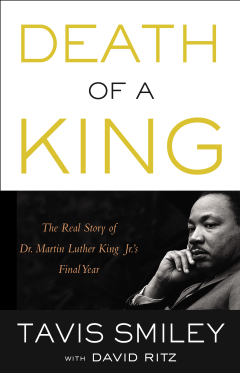
Smiley_Death of a KingYou must be willing to suffer the anger of the opponent, and yet not return anger. No matter how emotional your opponents are, you must remain calm.
Martin Luther King, Jr., Stride Toward Freedom, 1958
(compiled by Cheryl Eldridge)

Martin Luther King Jr. (1929-1968) was a Baptist minister and social activist who played a key role in the American civil rights movement from the mid-1950s until his assassination in 1968. Inspired by advocates of nonviolence such as Mahatma Gandhi, King sought equality for African Americans, the economically disadvantaged and victims of injustice through peaceful protest. He was the driving force behind watershed events such as the Montgomery Bus Boycott and the March on Washington, which helped bring about such landmark legislation as the Civil Rights Act of 1964 and the Voting Rights Act of 1965. King was awarded the Nobel Peace Prize in 1964 and is remembered each year on Martin Luther King Jr. Day, a U.S. federal holiday since 1986.
King Jr.: Early Years and Family
The second child of Martin Luther King Sr. (1899-1984), a pastor, and Alberta Williams King (1904-1974), a former schoolteacher, Martin Luther King Jr. was born in Atlanta, Georgia, on January 15, 1929. Along with his older sister, the future Christine King Farris (born 1927), and younger brother, Alfred Daniel Williams King (1930-1969), he grew up in the city’s Sweet Auburn neighborhood, then home to some of the most prominent and prosperous African Americans in the country.
Did You Know?
The final section of Martin Luther King Jr.’s eloquent and iconic “I Have a Dream” speech is believed to have been largely improvised.
A gifted student, King attended segregated public schools and at the age of 15 was admitted to Morehouse College, the alma mater of both his father and maternal grandfather, where he studied medicine and law. Although he had not intended to follow in his father’s footsteps by joining the ministry, he changed his mind under the mentorship of Morehouse’s president, Dr. Benjamin Mays, an influential theologian and outspoken advocate for racial equality. After graduating in 1948, King entered Crozer Theological Seminary in Pennsylvania, where he earned a Bachelor of Divinity degree, won a prestigious fellowship and was elected president of his predominantly white senior class.
King then enrolled in a graduate program at Boston University, completing his coursework in 1953 and earning a doctorate in systematic theology two years later. While in Boston he met Coretta Scott (1927-2006), a young singer from  Alabama who was studying at the New England Conservatory of Music. The couple wed in 1953 and settled in Montgomery, Alabama, where King became pastor of the Dexter Avenue Baptist Church. They had four children: Yolanda Denise King (1955-2007), Martin Luther King III (born 1957), Dexter Scott King (born 1961) and Bernice Albertine King (born 1963).
Martin Luther King Jr. and the Montgomery Bus Boycott
The King family had been living in Montgomery for less than a year when the highly segregated city became the epicenter of the burgeoning struggle for civil rights in America, galvanized by the landmark Brown v.Board of Education of Topeka decision of 1954. On December 1, 1955, Rosa Parks (1913-2005), secretary of the local National Association for the Advancement of Colored People chapter, refused to give up her seat to a white passenger on a Montgomery bus and was arrested. Activists coordinated a bus boycott that would continue for 381 days, placing a severe economic strain on the public transit system and downtown business owners. They chose Martin Luther King Jr. as the protest’s leader and official spokesman.
By the time the Supreme Court ruled segregated seating on public buses unconstitutional in November 1956, King, heavily influenced by Mahatma Gandhi (1869-1948) and the activist Bayard Rustin (1912-1987), had entered the national spotlight as an inspirational proponent of organized, nonviolent resistance. (He had also become a target for white supremacists, who firebombed his family home that January.) Emboldened by the boycott’s success, in 1957 he and other civil rights activists – most of them fellow ministers – founded the Southern Christian Leadership Conference (SCLC), a group committed to achieving full equality for African Americans through nonviolence. (Its motto was “Not one hair of one head of one person should be harmed.”) He would remain at the helm of this influential organization until his death.
King and the Southern Christian Leadership Conference
In his role as SCLC president, Martin Luther King Jr. traveled across the country and around the world, giving lectures on nonviolent protest and civil rights as well as meeting with religious figures, activists and political leaders. (During a month-long trip to India in 1959, he had the opportunity to meet Gandhi, the man he described in his autobiography as “the guiding light of our technique of nonviolent social change.”) King also authored several books and articles during this time.
In 1960 King and his family moved to Atlanta, his native city, where he joined his father as co-pastor of the Ebenezer Baptist Church. This new position did not stop King and his SCLC colleagues from becoming key players in many of the most significant civil rights battles of the 1960s. Their philosophy of nonviolence was put to a particularly severe test during the Birmingham campaign of 1963, in which activists used a boycott, sit-ins and marches to protest segregation, unfair hiring practices and other injustices in one of America’s most racially divided cities. Arrested for his involvement on April 12, King penned the civil rights manifesto known as the “Letter from Birmingham Jail,” an eloquent defense of civil disobedience addressed to a group of white clergymen who had criticized his tactics.
King Marches for Freedom
Later that year, Martin Luther King Jr. worked with a number of civil rights and religious groups to organize the March on Washington for Jobs and Freedom, a peaceful political rally designed to shed light on the injustices African Americans continued to face across the country. Held on August 28 and attended by some 200,000 to 300,000 participants, the event is widely regarded as a watershed moment in the history of the American civil rights movement and a factor in the passage of the Civil Rights Act of 1964.
The march culminated in King’s most famous address, known as the “I Have a Dream” speech, a spirited call for peace and equality that many consider a masterpiece of rhetoric. Standing on the steps of the Lincoln Memorial – a monument to the president who a century earlier had brought down the institution of slavery in the United States – he shared his vision of a future in which “this nation will rise up and live out the true meaning of its creed: ‘We hold these truths to be self-evident, that all men are created equal.’” The speech and march cemented King’s reputation at home and abroad; later that year he was named Man of the Year by TIME magazine and in 1964 became the youngest person ever awarded the Nobel Peace Prize.
In the spring of 1965, King’s elevated profile drew international attention to the violence that erupted between white segregationists and peaceful demonstrators in Selma, Alabama, where the SCLC and Student Nonviolent Coordinating Committee (SNCC) had organized a voter registration campaign. Captured on television, the brutal scene outraged many Americans and inspired supporters from across the country to gather in Selma and take part in a march to Montgomery led by King and supported by President Lyndon Johnson (1908-1973), who sent in federal troops to keep the peace. That August, Congress passed the Voting Rights Act, which guaranteed the right to vote – first awarded by the 15th Amendment – to all African Americans.
Martin Luther King Jr.’s Final Years and Assassination
The events in Selma deepened a growing rift between Martin Luther King Jr. and young radicals who repudiated his nonviolent methods and commitment to working within the established political framework. As more militant Black leaders such as Stokley Carmichael (1941-1998) rose to prominence, King broadened the scope of his activism to address issues such as the Vietnam War  and poverty among Americans of all races. In 1967, King and the SCLC embarked on an ambitious program known as the Poor People’s Campaign, which was to include a massive march on the capital.
On the evening of April 4, 1968, King was fatally shot while standing on the balcony of a motel in Memphis, where he had traveled to support a sanitation workers’ strike. In the wake of his death, a wave of riots swept major cities across the country, while President Johnson declared a national day of mourning. James Earl Ray (1928-1998), an escaped convict and known racist, pleaded guilty to the murder and was sentenced to 99 years in prison. (He later recanted his confession and gained some unlikely advocates, including members of the King family, before his death in 1998.)
After years of campaigning by activists, members of Congress and Coretta Scott King, among others, in 1983 President Ronald Reagan (1911-2004) signed a bill creating a U.S. federal holiday in honor of King. Observed on the third Monday of January, it was first celebrated in 1986.

2015 MLK Unity Breakfast Organizers Say “It’s Time to Break Silence”

0

MLK BreaskfastBIRMINGHAM, Ala. – In the midst of nationwide discussions about race in America, the MLK Unity Breakfast Committee, led by the CAC (Community Affairs Committee) announced its theme and keynote speaker for the 29th Annual Dr. Martin Luther King, Jr. Unity Breakfast held on Monday, January 19, 2015 at 7:30 a.m. at the Birmingham-Jefferson Convention Center in recognition of the National Holiday bearing the name of the slain civil rights leader.
“We chose the theme ‘A Time To Break Silence’ based on Dr. King’s speech given exactly one year prior to his assassination,” said Unity Breakfast Chairman, Scott Douglas, who also serves as Executive Director for Greater Birmingham Ministries. “It seems that the new generation is beginning to find its voice in speaking about issues related to race. Our event theme should remind us of the historic courage of Dr. King while challenging us to speak out about injustices we encounter in current times.”
Birmingham’s Annual Unity Breakfast hosts between 1,500 and 2,000 attendees each year, including a mix of leaders from the public and private sectors. Each year, the Unity Breakfast Committee, comprised of five civil rights and social justice organizations, provides scholarship funds for area high school students who submit essays based on the featured theme.
The featured speaker of the breakfast will be Birmingham native and former Saturday Night Live writer and comedic biographer, Tanner Colby.
“Tanner Colby has proven his ability to talk, comfortably, about integration in America, a topic too many people find uncomfortable,” said U.S. Attorney Joyce White Vance. “Birmingham is fortunate to be able to bring this accomplished author home to address the Dr. Martin Luther King, Jr. Unity Breakfast and help us break the silence and openly discuss issues that remain. Birmingham remains the preeminent example of peaceful resolution to challenging issues affecting diverse communities. The ‘Birmingham example’ is as relevant today as it was forty years ago.”
Colby, a New York Times bestselling author, was nominated for the Carnegie Medal for Excellence in Non-Fiction for his book, Some of my Best Friends are Black: The Strange Story of Integration of America. Colby has also written and co-written biographies about Michael Jackson, Chris Farley and Jim Belushi.
The book, Some of my Best Friends are Black, will be the centerpiece of a city-wide community dialogue project held in mid-February in partnership with Ensley-based The Bethesda Life Center with support from the office of Joyce Vance, the U.S. Attorney for the Northern District of Alabama. Details of the book project will be announced at the breakfast.
“Tanner Colby is a thought-provoking writer and speaker,” says The Bethesda Life Center CEO, Bettina Byrd-Giles. “We look forward to partnering with U.S. Attorney Joyce Vance, the CAC, and civic leaders to lead a city-wide discussion about race relations in the Birmingham area.”
In addition to the featured speaker and the city-wide book discussion, attendees will see three high school students receive cash scholarships for their essays submitted on the theme: ‘A Time To Break Silence.’
The 2015 MLK Unity Breakfast is supported by top sponsors, the City of Birmingham and AL.com/The Birmingham News. Corporate tables are $500; Individual seats are $30. For interest in being a sponsor, purchasing a table, then contact Meredith Dale at unity@relaxitshandled.com or leave a message at (205) 419-7085.

Lift Every Voice and Sing

0

Lift Every VoiceFrom Wikipedia, the free encyclopedia

“Lift Every Voice and Sing” — often referred to as “Black American National Anthem”— is a song written as a poem by James Weldon Johnson (1871–1938) in 1899 and set to music by his brother  John Rosamond Johnson (1873–1954) in 1900. It is also the name of one of the authorized hymnals in the Episcopal church.
History
“Lift Every Voice and Sing” was publicly performed first as a poem as part of a celebration of Lincoln’s Birthday on February 12, 1900, by 500 school children at the segregated Stanton School. Its principal, James Weldon Johnson , wrote the words to introduce its honored guest Booker T. Washington. The poem was set to music soon after by Johnson’s brother John in 1900.
In 1939, Augusta Savage received a commission from the World’s Fair and created a 16-foot plaster sculpture called Lift Ev’ry Voice and Sing which was destroyed by bulldozers at the close of the fair.
In Maya Angelou’s 1969 autobiography, I Know Why the Caged Bird Sings, the song is sung by the audience and students at Maya’s eighth grade graduation, after a white school official dashes the educational aspirations of her class.
In 1990, singer Melba Moore  released a modern rendition of the song, which she recorded along with others including R&B artists Stephanie Mills, Anita Baker, Dionne Warwick, Bobby Brown, Stevie Wonder, Jeffrey Osborne and Howard Hewitt; and gospel artists BeBe & CeCe Winans, Take 6 and The Clark Sisters, after which, “Lift Ev’ry Voice and Sing” was entered into the Congressional Record by Del. Walter Fauntroy (D-DC).
In 2008, jazz singer Rene Marie was asked to perform the national anthem at a civic event in Denver, Colorado, where she caused a controversy by substituting the words of “Lift Every Voice and Sing” into the song. This arrangement of the words of “Lift Every Voice and Sing” with the melody of “The Star Spangled Banner” became part of the titular suite on her 2011 CD release, “The Voice of My Beautiful Country.”
On January 20, 2009, the Rev. Joseph Lowery, who was formerly president of the Southern Christian Leadership Conference, used a near-verbatim recitation of the song’s third stanza to begin his benediction at the inauguration ceremony for President Barack Obama.
Lyrics
Lift every voice and sing

Till earth and heaven ring,

Ring with the harmonies of Liberty;

Let our rejoicing rise

High as the listening skies,

Let it resound loud as the rolling sea.

Sing a song full of the faith that the dark past has taught us,

Sing a song full of the hope that the present has brought us,

Facing the rising sun of our new day begun

Let us march on till victory is won.


Stony the road we trod,

Bitter the chastening rod,

Felt in the days when hope unborn had died;

Yet with a steady beat,

Have not our weary feet

Come to the place for which our fathers sighed?

We have come over a way that with tears has been watered,

We have come, treading our path through the blood of the slaughtered,

Out from the gloomy past,

Till now we stand at last

Where the white gleam of our bright star is cast.


God of our weary years,

God of our silent tears,

Thou who has brought us thus far on the way;

Thou who has by Thy might Led us into the light,

Keep us forever in the path, we pray.

Lest our feet stray from the places,our God, where we met Thee,

Lest, our hearts drunk with the wine of the world, we forget Thee;

Shadowed beneath Thy hand,

May we forever stand.

True to our God,

True to our native land.

Selma Civil Rights March Still Vivid

0
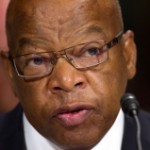
Rep. John Lewis

From Staff Reports

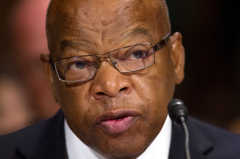
Forty-nine years after John Lewis and other marchers tried to cross the Edmund Pettus Bridge in Selma, Alabama, memories of “Bloody Sunday” are still vivid in his mind. It was one of the defining moments of the civil rights era.
“We were beaten, tear gassed, trampled and chased by men on horseback,” said Lewis, a civil rights activist and Democratic congressman from Georgia.
Lewis — portrayed by the actor Stephan James in the historical drama “Selma” — told The Associated Press the film is “very powerful.”
“Selma,” directed by Ava DuVernay, is based on the 1965 marches in Alabama led by the Rev. Dr. Martin Luther King, Jr.
Lewis says the film’s release now is fitting after protests over events in Ferguson, Missouri, and elsewhere.
According to ˆThe Detroit News”, As the movie “Selma” goes into wider release this week, veteran Detroiters will be reminded of a link our city has to the violent events of March 1965 in Selma, Alabama.
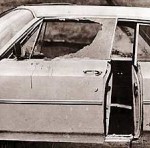
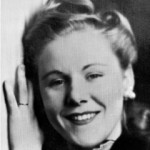
Viola Gregg Liuzzo, 39, a Detroit mother of five, was one of three people killed in Selma during voting rights demonstrations. Liuzzo was shot and killed March 25, 1965, by Ku Klux Klansmen on a desolate stretch of U.S. 80 as she drove Leroy Moton, a Black demonstrator, back to Montgomery.
“Selma,” tells the story of those violent weeks when the Rev. Martin Luther King Jr. helped lead a push for federal action protecting Black voting rights in one of the most racist counties in Alabama.
Liuzzo’s daughter, Mary Liuzzo Lilleboe, was disappointed at first when she heard that her mother’s story isn’t highlighted in the film. “You become hypersensitive to the details, you want everything to be perfect about your loved one, but it’s never going to be that,” said Lilleboe, 66, an Oregon resident.
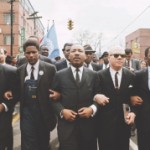
Marchers including the Rev. Martin Luther King Jr. and wife Coretta, center, during the five day, 50 mile march for voting rights from Selma to Montgomery, Alabama, March 1965. (Photo: The Detroit News archives)
Her mother would have told her to keep her eye on the big picture.
“My mother would not have been concerned about credit or somebody knowing that she was even part of it,” Lillieboe said. “What she cared about was that people were being helped.”
And because of “Selma,” younger generations will find out what went on there. Lilleboe is also pleased that King is the lead character in a feature film, for the first time ever. “Can you believe that?” she said.
Lilleboe’s sister, Sally Liuzzo, lives in Tennessee and runs a Facebook page, “Viola Liuzzo Civil Rights Martyr,” in tribute to their mother. In just a week after the movie’s initial release and the airing of an Oprah Winfrey “Selma” special Sunday, it added 180 new likes, and the number rises every day.
Before Liuzzo was murdered, two others were killed in or near Selma: Jimmie Lee Jackson, a Black civil rights worker shot by state troopers, and James Reeb, a white Unitarian minister beaten to death March 11 after leaving a restaurant.
Their murders are shown in the film; Liuzzo’s is not. Liuzzo is portrayed in the film by actress Tara Ochs, and she is first seen sitting with her husband in a modest living room, recoiling in horror at the images on TV of Selma marchers being beaten and tear-gassed on “Bloody Sunday.”
Ochs isn’t identified at first as Liuzzo, but she gets a lot of face time in the film. She’s also seen helping volunteers, and then marching along U.S. 80. At the end of the film, there is text under her image identifying her as Viola Liuzzo, murdered by the KKK as she drove a demonstrator home.
Although she has no lines in “Selma,” Ochs is a magnetic presence as Liuzzo.
“I have no doubt that the very simple but powerful way that (director) Ava (DuVernay) included Viola in the story will be the catalyst for many people finally recognizing and appreciating this incredible woman,” Ochs wrote The News in an email. “It speaks volumes that the struggle for civil rights was felt in Detroit as well at that time, and not just in the South. That’s a powerful message for today, don’t you think? Sometimes we Southerners feel that this struggle is all our fault, and all our fight. But as Mrs. Liuzzo said: ‘It’s everybody’s fight.’ ”
Ochs will meet with Liuzzo’s adult children in Selma in March, at a 50th anniversary commemoration.
When the events at Selma started, Liuzzo was a student at Wayne State, where she was studying sociology. The thrice-married Detroiter was feisty and outspoken. She was always picking up stray animals and pointing out injustice to her five children, Sally, 6; Tony, 10; Tommy, 14; Mary 17, and Penny, 18.
She was born in Pennsylvania, but grew up in Tennessee, where she saw the effect of Jim Crow laws firsthand, before moving to Detroit. “How would you feel if you never saw a white Santa Claus or a pretty white girl on a magazine cover?” she would ask her children.
Some vestiges of her Southern background that remained were her cooking, and the fact that she liked to go barefoot — Liuzzo shucked her shoes in the Selma march.
She loved classical music, and studying with friends at the family house on Marlowe in northwest Detroit. When she heard about her friends’ plans to go to Selma after King’s call for action, she told husband Anthony that she hoped he’d understand, and left March 16 in her 1963 Oldsmobile.
After her murder, Anthony, a business agent for Teamsters Local 247, spoke to The Detroit News about his wife. King called three times that day, the president four times, as the shattered family absorbed the shock.
“She was a champion of the underdog,” Liuzzo said. “She thought people’s rights were being violated in Selma and she had to do something about it in her own way. That was her downfall. Many times I had told her, ‘One of these days, the humanitarian things you do are going to backfire. And she would answer, ‘Man is man no matter who or what he is.’ ”
Oldest daughter, Penny Liuzzo, then 18, said: “Mother felt there was too much talk and not enough action, and she wanted to do something.”
Liuzzo and her Wayne State friends weren’t the only Michiganians who went to Selma. A delegation of 22 Metro Detroit religious leaders left for the embattled Southern city, including Protestant, Catholic, Jewish and Eastern Orthodox leaders. U.S. Reps. John Conyers and Charles Diggs flew down from Washington, D.C.
Downtown Detroit was the site of a sympathy march March 9, led by Gov. George Romney and Detroit Mayor Jerome P. Cavanagh that drew more than 4,000, including Rosa Parks.
The news of Liuzzo’s death was front-page news in Detroit. Teamsters president James R. Hoffa had her body flown back to Detroit, and Teamsters guarded the Liuzzo home around the clock, as their wives cooked and cleaned.
The years after Liuzzo’s death were difficult for her family. Her children were harassed at school in Detroit, and a cross was burned on the family’s lawn. There was a smear campaign against Liuzzo, with charges that she had gone south to consort with other men, stories that were eventually traced to FBI director J. Edgar Hoover.
Soon after Liuzzo’s murder, director Hoover admitted that an FBI informant, Gary Thomas Rowe, was among the Klansmen in the car who shot and killed her. Rowe identified the three other Klansmen to authorities, but they were acquitted of Liuzzo’s murder. (Rowe was granted immunity).
The Klansmen were convicted of violating her civil rights in a federal trial. Rowe disappeared into the witness protection program, and died in 1998. A lawsuit the Liuzzo family brought against the FBI and Rowe for his role in Liuzzo’s murder was dismissed in 1983 by U.S. District Judge Charles Joiner.
Was her sacrifice worth it? For Americans already sickened by the civil rights violence, the death of two white northerners gave what had been happening to generations of Blacks a visceral impact. The passage of the Voting Rights Act, a long shot previously, gained momentum. President Lyndon Johnson signed the bill into law in August.
Lilleboe believes it was worth it, even to her grieving family.
“I think all of us would say that our lives have been really rich, we’ve gotten a lot by being my mother’s children,” said Lilleboe. “One of the most damaging things that people said to us was that our mother didn’t love us, or she wouldn’t have gone down there. But the love I have received from people because I am my mother’s daughter, that’s helped, because it was absolutely the way I experienced my mother’s love.”
swhitall@detroitnews.com

A Selma timeline
Feb. 26, 1965: Jimmie Lee Jackson is killed by an Alabama state trooper in a cafe, after he took part in a voting rights march in Marion, Alabama, near Selma.
March 7: “Bloody Sunday,” the march from Selma to Montgomery, Alabama, organized by the Rev. Martin Luther King Jr., but led by others in his absence. State troopers attacked the marchers on the Edmund Pettus Bridge. The violent images disturbed many, including President Lyndon B. Johnson.
March 9: King resolves to try to march again, and does, although he has been forbidden to by a federal judge. After state troopers step aside for the marchers, King decides it could be a trap, and turns back to Selma.
March 11: Boston minister James Reeb, who had traveled to Selma to take part in the voting rights marches, dies after being clubbed on the head by an attacker. He had been set upon by white supremacists after leaving a restaurant.
March 15: Johnson introduces a bill to Congress that would become known as the Voting Rights Act of 1965.
March 25: Detroiter Viola Liuzzo is gunned down by Ku Klux Klansmen in her car on U.S. 80, just hours after taking part in the march on Montgomery from Selma. She is driving a Black demonstrator, Leroy Moton, home.
Aug. 6: The Voting Rights Act of 1965 is signed into law by Johnson.

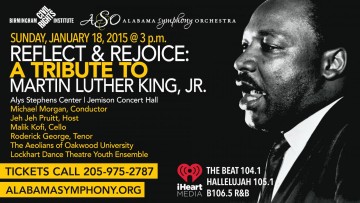
Alabama Symphony Orchestra Celebrates MLK, Jr. and Presents “Reflect & Rejoice:  A Tribute to Martin Luther King, Jr.”

0

Reflect and Rejoice BIRMINGHAM, Ala. – Sunday, January 18,  at 3 p.m. – Alys Stephens Center, Jemison Concert Hall – Join the Alabama Symphony Orchestra in our yearly concert celebrating the legacy and leadership of Dr. Martin Luther King, Jr. and the Civil Rights Movement. “Reflect & Rejoice:  A Tribute to Martin Luther King, Jr.” Michael Morgan of the Oakland East Bay Symphony conducts this special performance with host Jeh Jeh Pruitt, young cello phonon Malik Kofi, Roderick George’s tenor voice, and featuring the soaring voices of The Aeolians of Oakwood University and the Lockhart Dance Theatre Youth Ensemble.
Tickets are $9- $24 and can be purchased online: www.alabamasymphony.org, or by calling the Alys Stephens Ticketing Center at 205-975-2787.
This concert is a partnership with the Birmingham Civil Rights Institute and media partner, IHeart Radio. The program is made possible through grants from the Alabama State Council on the Arts and the City of Birmingham.