Home Blog Page 1337

Ferguson Grand Juror Sues to be Allowed to Talk About Case

0

Ferguson policeBy JIM SALTER
Associated Press
ST. LOUIS – A member of the grand jury that declined to indict a Ferguson police officer in the shooting death of 18-year-old Michael Brown contends in a lawsuit filed Monday that the prosecutor in the case has wrongly implied that all 12 jurors believed there was no evidence to support charges.
The American Civil Liberties Union filed the lawsuit on behalf of the unnamed juror, who wants to be allowed to talk publicly about the case but could face charges for doing so because of a lifetime gag order. The juror also says he or she came away with the impression that evidence was presented differently than in other cases, with the insinuation that Brown, not Officer Darren Wilson, was the wrongdoer. No grand jurors have spoken publicly about the case.
Brown, who was Black, was unarmed when he was fatally shot after an Aug. 9 confrontation with Wilson, who is white. The shooting in the St. Louis suburb led to widespread unrest, including some protests that resulted in local business being burned and looted. Protests again turned violent Nov. 24, when St. Louis County prosecutor Bob McCulloch publicly announced that the grand jury investigating the case had decided there wasn’t enough evidence to indict Wilson. Wilson has since resigned from the department.
“In Plaintiff’s view, the current information available about the grand jurors’ views is not entirely accurate – especially the implication that all grand jurors believed that there was no support for any charges,” the lawsuit says.
The suit was filed against McCulloch, who oversaw the investigation, because his office would be responsible for bringing charges against the juror. McCulloch’s spokesman, Ed Magee, said his office had not seen the lawsuit and declined immediate comment.
“Right now there are only 12 people who can’t talk about the evidence out there,” ACLU attorney Tony Rothert said. “The people who know the most – those 12 people are sworn to secrecy. What (the grand juror) wants is to be able to be part of the conversation.”
The suit also contends that legal standards in the case were discussed in a “muddled” and “untimely” manner. Jurors could have charged Wilson with murder or manslaughter, but nine of 12 would have needed to agree.
The suit does not seek to allow grand jurors in all Missouri cases to be free to discuss proceedings. But it argues that the Ferguson case was unique, and that allowing the juror to speak would be valuable to the national debate about race and police tactics that followed the shooting.
“The rules of secrecy must yield because this is a highly unusual circumstance,” Rothert said. “The First Amendment prevents the state from imposing a lifetime gag order in cases where the prosecuting attorney has purported to be transparent.”
After the decision was announced, McCulloch took the unusual step of releasing thousands of pages of witness testimony provided in secret to the grand jury. Grand jurors usually hear a condensed version of evidence that might be presented at trial, but the Ferguson grand jury heard more extensive testimony.
The panel – which included nine white and three Black members – met on 25 separate days over three months, hearing more than 70 hours of testimony from about 60 witnesses, some of whom provided inconsistent versions of events. McCulloch acknowledged in a radio interview last month that some of the witnesses obviously lied to the grand jury.
Rothert said the grand jury convened in May and heard hundreds of other cases before devoting its attention to the Wilson case in August. The suit contends that McCulloch’s office handled the Wilson case far differently than the others, with ” a stronger focus on the victim.”
Jim Cohen, associate professor at Fordham University Law School and a grand jury expert, said the lawsuit will add to concerns about how the case was handled.
“Believe me, there’s already more than a fair amount of skepticism about whether this process was fair, notwithstanding Mr. McCulloch’s cynical attempt to pretend that it was fair,” Cohen said.
Cohen believes the juror has a strong argument in the lawsuit.
“This matter has been discussed by virtually everybody in the universe with the exception of any person actually subjected to the presentation of evidence,” he said.

EEOC Finds Phillipsburg School District Violated Anti-Religious Discrimination Law

0

eeoc-logoLiberty Institute applauds decision of U.S. Equal Employment Opportunity Commission

PHILLIPSBURG, N..J. – Liberty Institute on behalf of its client Walt Tutka, the former Phillipsburg School District school teacher unjustly fired for providing a Bible to a student, applauds the U.S. Equal Employment Opportunity Commission’s (EEOC) determination on the merits finding that “there is reasonable cause to believe that Respondent [the Phillipsburg School District] has discriminated against Charging Party [Mr. Tutka] on the basis of religion and retaliation.” Further, the EEOC orders the school district to join with Tutka and itself to find an “acceptable conciliation agreement” to eliminate its unlawful employment practices, or face other court enforced alternatives.
“The EEOC thoroughly investigated this matter and found that Walt Tutka is a victim of religious discrimination and retaliation and should receive justice,” said Hiram Sasser, Director of Litigation for Liberty Institute.
Mr. Tutka said, “I am so thankful that the EEOC has sided with me after finally reviewing my case, and I look forward to a positive resolution with the school district that allows me to return to serving our nation’s most valuable resource, our students.”
On January 14, 2013, the Philipsburg School District terminated substitute teacher Walt Tutka after he handed a Bible to a student. Mr. Tutka told a student in line, “The first shall be last and the last shall be first.” When the student repeatedly asked Mr. Tutka where the phrase was from, he pulled out his pocket Bible and showed the student the text. After further questioning, Mr. Tutka gave the student his own copy on Oct. 15, 2012, and his last day to substitute in Phillipsburg School District was three days later. After retaining the services of Liberty Institute on April 10, 2013, Mr. Tutka filed a charge of religious discrimination with EEOC relating to his termination by Phillipsburg School District.
Liberty Institute is a nonprofit legal group dedicated to defending and restoring religious liberty across America — in our schools, for our churches and throughout the public arena. Liberty’s vision is to reestablish religious liberty in accordance with the principles of our Founding Fathers. For information, visit www.LibertyInstitute.org.

One Man’s Opinion

0
Dr. Jesse J. Lewis, Sr.

by Jesse J. Lewis, Sr.

This article should be everybody’s New Year Resolution. Down through the years the City of Birmingham has fought a lot of battles. In addition to refighting the Civil War, we also changed Birmingham from a coal mining town to a financial and medical research center. Birmingham is not only being looked at by major corporations from other cities, but world-wide. The door of opportunity has opened. It is now time for us to walk through the door. Here are some things we can do that require very little finance and lots of hard work.

Priority No. 1, is to fix our educational system. The timing is good because we are in the process of choosing the next superintendent. He/she must bring a different vision to the table. That vision should be academic excellence in every category needed to achieve excellence. Our school system should be designed so that in after pre-school, every kid who enters the first grade should have knowledge of a foreign language and one musical instrument. By the time they are in the third grade they should be accomplished in one musical instrument and have a working knowledge of one foreign language. The school system should open all year long so that there is special schooling for those who excel and those students, like me, who do not learn fast.
Would you believe that the District of Columbia has turned their school system around, so much so they are now in the Top Ten school systems in America? Incidentally, the superintendent they fired started all of this. Presently, enrollment is up from private and charter schools moving into the public schools. We don’t need to reinvent the wheel; just look at what the Top Five school systems are doing and do that, whatever it is.

Priority No. 2, build a multi-purpose facility with seating capacity of at least 35,000 that can be used for all sports. Along with this we need a Five-Star hotel to be built in the Uptown District. Someone may say, we just built one, but we need to build another one.

Priority No. 3, fix The Fourth Avenue District. It would be an easy fix. This area served as the business, social and cultural center for Blacks with activities similar to those in the predominately white districts. The businesses located in the area included barber and beauty shops, mortuaries, saloons, restaurants, theaters, photographic studios and motels. These Black businesses and their successors continued to do well throughout the ’60s. We have more to offer on Fourth Avenue than Beale Street in Memphis, Tennessee. If I recall correctly, Beale Street has one blues joint and one B-B-Que joint, and they are packed every night.
The key to rebuilding Fourth Avenue is the Masonic Temple. Everything is in place. The Black business district was not only “alive” during the daylight hours but “thrived” throughout the night. Friday and Saturday nights, the streets were filled with crowds of people visiting bars or just out for a stroll. Live entertainment made the district “the place to be.” Performers such as Duke Ellington, Lucky Millender, Claude Hopkins, Jimmy Lunceford, Sonny Blount (Sun Ra), Fess Whatley (Southland Greatest Swing Band) and Louis Armstrong were known to frequent the Masonic Temple. Not only was the Masonic Temple used for entertainment, it housed Black professional offices and was the state headquarters for the Masons and Order of Eastern Stars.

Priority No. 4, building a sports mecca. All we have to do is put the Park & Recreation Board, Birmingham Housing Authority, and the City Board of Education together and utilize all the property that they own together, which includes Legion Field and the Crossplex, to turn out the best baseball and soccer players, basketball players, football players, golfers, swimmers and tennis stars.
It’s hard to believe that as athletic as Black people are, we have only one well-known Black professional male golfer and not one known female. My guess would be that there is not a white school in the SEC that has a tennis star, swimmer, golfer or soccer player and very few baseball players enrolled.

Priority No. 5, creating a downtown outlet mall. We have a lot of empty store buildings in downtown. It would be easy to take a five block square and build a shopping Center. In this five block square, there should be no traffic except for buses. All around the square there should be free parking and free bus rides if you shop in the district. Buses should run every five minutes to and from the mall.

I would like to add that we cannot afford  to break any laws. No robbing, stealing and killing each other. The jail house and prison systems are packed with African-American women and men.

The Poor Can Save Capitalism

0

EDT McTierBy  Mahari A. McTier

I recently read a book by John Hope Bryant, Founder and CEO of Operation Hope, titled ‘How The Poor Can Save Capitalism’, and he successfully makes his case that the poor can save capitalism.  It was the most unique and radically outside the box analysis of the current state of capitalism. He cleverly made his point in a simplistic way that was not convoluted with economic statistics, academic theory, or philosophical rhetoric. The book is simply practical in its delivery.
The book was about saving America. All of America. Not Black folks or Asians, Latino, or Native American folks. It’s not about white folks. It’s about all of us. The reality is this, whether you are Black, white, red, brown, or yellow, increasingly everyone just wants to see more green – U.S. currency, that is.
I think it’s fair to start by defining poverty according to John Hope Bryant. The HOPE Doctrine on Poverty says that there are three things that define poverty and struggle more than any set of financial numbers ever could: self-confidence, self-esteem, and belief in oneself; role models and environment; aspirations and opportunity. Or lack of these things. It is my opinion that most people don’t decide when they start the journey of life that they want to be poor. The face of poverty is not always who we think. The myth is that only low income people are poor or suffer the consequences of poverty. America has millions of people living with a sense of staggering uncertainty. These aren’t just the poor. I call them the nearly poor, the almost poor, the could be poor, and the temporarily poor. This class of Americans could range from a homeless man on 4th Avenue to a midlevel manager making $50,000 a year. They are one paycheck away from losing everything. They are constantly choosing which bill they will pay this month, or calling Alabama Power to ask if they can put a little on it. America must understand that these people keep our country going.
Statistics show that the bottom 80 percent of the American workforce spends 90 percent of its income, whereas the wealthiest 1 percent spends only 49 percent.  Ordinary Americans are the fuel in our tanks, and if Wall Street, banks, and large corporations are going to survive, they need this segment of the economy to become more economically strong and stable. This means that America must expand opportunity through well-paying jobs and small businesses, along with financial inclusion and financial literacy.
There is a group that believes that trickle-down economics is the answer. Trickle-down economics means that if you provide tax breaks and incentives to the top (rich), economic prosperity will flow down to the bottom. It never works the way it is scripted. If I have $100 million and I receive a tax-break that nets me an additional $5 million, what am I going to do?  Go to the local Walmart and spend it?  No, I am most likely going to pile it on top of my other millions and not put it back into the economy. But when you economically empower and financially educate the bottom of the pyramid you will be building a stronger capitalistic system because they will spend and put it back into the economy. Sounds simple, but trying to get Washington to understand this simple concept is like talking to a brick wall and expecting it to talk back.
The answer sounds simplistic in theory, but there is work that must be done on the parts of everyone for this to work. The wealthy must understand, accept, and implement strategies that will empower the bottom. Even if their motives are selfish, it doesn’t matter, everyone will win. The poor must understand that this system is not about handouts or a transfer of wealth.  With this opportunity will come hard work, no-excuses, and a commitment to financial literacy.

(Mahari A. McTier is a Financial Advisor with Tier 1 Advisors, LLC and can be reached at maharimctier.tier1@gmail.com.)

No Jury, No Trial, No Justice – An Indictment of the U.S. Justice System

0

No Jury, No TrialBy Verla Wiley
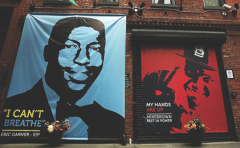
NATIONWIDE(BlackNews.com) – Like Michael Brown and Eric Garner, I am African American. The circumstances involving the deaths of these two young men are horrendous as are the unconscionable efforts made to avoid a proper hearing in each case. Unfortunately, Brown and Garner made the ultimate sacrifice in a system that is deeply flawed. Instead of utilizing the more open and transparent public preliminary hearing process, secret grand juries failed to indict the police officer responsible for the shooting death of 18-year-old Michael Brown in Ferguson, Missouri, and the officer in Staten Island, New York, for the choke hold death of 43-year-old Eric Garner. Since the deaths of these African American men and others, people across the country have been protesting against racial profiling, excessive police force and the failure of the criminal justice system to hold those responsible, accountable for their actions.
For the last 15 years, I have also been denied the right to a public trial by jury. I’’ve been forced to file three consecutive separate, but related civil rights complaints (1999-2014), because of the denial by the courts to rule in favor of my 7th Amendment right to a jury trial in any of the cases.
In May 2005, I retired after thirty-nine years of service from the Broadcasting Board of Governors, (BBG) as an International Radio Broadcaster in the Africa Division of the Voice of America, the largest BBG network. I continued my service after retirement as a union volunteer vice president with the American Federation of Government Employees (AFGE Local 1812). I have now been associated with the BBG for over 45 years.
Like the police officers, the BBG is known for the harsh treatment of its people. For the last 10 years, the BBG has ranked at or near the bottom in surveys conducted by the Office of Personnel Management (OPM), as one of the worst-managed agencies in the federal government.
On December 5, 2011, I filed a Pro Se, “Complaint and Demand for Jury Trial”, a personal civil rights lawsuit in the U.S. District Court. My complaint alleged discriminatory and retaliatory treatment, as well as constitutional violations of my First Amendment right to freedom of speech and assembly, Fourth Amendment right to be free of unreasonable searches, Fourteenth Amendment right to equal protection of the law, and Seventh Amendment right to a jury trial. At the center of the discriminatory treatment were several measures designed to restrict my access and nullify my rights, including my right to exercise my personal choice to work in the field of advocacy work.
Just as the Brown and Garner cases were diverted to a grand jury instead of a public jury trial, my civil rights lawsuit was redirected to an administrative process by Judge Robert Wilkins via the Federal Labor Relations Authority (FLRA). The case centers around a restrictive Black-Codes-like “Building Access” policy the BBG created especially to implement against me. “Black Codes” were laws passed by southern states in the 1860’s after the Civil War, restricting African Americans’’ freedoms. I am the only retiree, (African American), that the policy was rigidly enforced against; the policy did not apply to Caucasian union retirees, who were similarly situated.
The Complaint included a litany of discriminatory, retaliatory and harassing actions with the intent to restrict my movement around the building. In March 2006, the BBG terminated the agreement that allowed retired union officials unfettered access into the Cohen Building. I am the only retiree who could no longer use the retired identification badge to gain entry into the building… I was forced to daily sign in as a visitor and be photographed… be escorted at all times, even to the restroom and cafeteria… subjected to invasive body searches of a sexual nature… required to complete security forms designated only for prospective employees… followed around the Cohen Building by security guards… deemed a “security risk”… and placed under surveillance, inside and outside the Cohen Building. When these BBG actions did not discourage me from coming into the building, an unsigned memo titled “Building Access” dated August 24, 2004, outlining the above restrictions was given only to me.
A hearing was held on July 22, 2013, and I expected Judge Wilkins to set a trial date since the BBG did not address my allegations. Instead, the judge issued an ORDER for the parties to address several FLRA cases researched by the court to establish whether I could file an Unfair Labor Practice (ULP) charge as a non-employee. The judge ignored the Federal Service Labor-Management Relations Statutes (FSLMRS), which cover employees only. I told the court that I am not an employee of the union nor the BBG. The union could not file a ULP because I am not in the bargaining unit nor can I file as a union official on my own behalf. The court was the only avenue I had to address my personal lawsuit.
Judge Wilkins told me that the cases he researched allowed me to file a ULP charge as a non-employee. However, none of the cases he researched were filed with the FLRA by a non-employee representative, therefore, the case review exercise did nothing to disprove my position or strengthen the argument for dismissal of my case. One case Judge Wilkins used to dismiss my lawsuit, National Treasury Employees Union (NTEU) v. Social Security Administration (D.C. Circuit 1992), was invalidated by the AFGE Assistant General Counsel who helped litigate the case. The General Counsel pointed out that the case had nothing to do with discussing the rights of non-employees to enter onto agency premises, but instead involved the labor union, NTEU, the charging party in the ULP charge.
Hearing transcripts indicate there was no intention of reviewing my case in a light favorable to me. When asked about my status by Judge Wilkins, BBG Counsel agreed with me and argued several times that under the Collective Bargaining Agreement and 5 U.S.C. 7116, Ms. Wiley had no rights, and that a ULP can only be pursued by a union or a current employee. Judge Wilkins continued to ask leading questions until the BBG reversed its position stating the Agency believes that Ms. Wiley does have standing to file its complaint, but the agency would respond that it is not a ULP.
The Brown grand jury hearing transcripts show that prosecutors asked police officer Darren Wilson leading questions designed to strengthen his self-defense claim. A prosecutor told Wilson, “You felt like your life was in jeopardy,” followed by, “And use of deadly force was justified at that point, in your opinion?” The transcripts also show that prosecutors did not ask for an indictment regarding Wilson. Instead, they acted as Wilson’’s defense attorney and challenged witnesses who contradicted the police officer’’s testimony.
The evidence shows that my case is not an unfair labor practice nor union grievance issue. It is “personal animus” against an African American for advocacy work, and perpetuated in a way that effectively disguises that motive in a cloak of “internal security” that complicates the situation. I describe the situation as D.A.W.W.B. – Doing Advocacy Work While Black.” United States Attorney General Eric Holder recently gave a speech at Morgan State University about “racial inequality” and the recent public episodes of racial bigotry in which he said that it should not obscure the greater damage done by more systemic forms of prejudice and discrimination. The Attorney General warned that if we concentrate on that, “we are likely to miss the more hidden, and the more troubling reality behind the headlines.”
The Constitution provides that no person shall be deprived of life, liberty, and pursuit of happiness, without due process of law. Judge Wilkins now joins a chorus of court judges who have used the 7th Amendment as a Sword of Damocles above my head. My pursuit of a jury trial began in Chief Judge Thomas Hogan’’s court in April 1999. It has been an expensive, costly endeavor. The Complaint, including filings with the Court of Appeals and Supreme Court, lasted for almost 10 years (1999-2008), before it was closed without a jury trial. The racial/sex discrimination case was re-opened in March 2014, to address a Transcript Redaction Notice.
In 2009, the discrimination and retaliation continued. I filed a Freedom of Information Act (FOIA) lawsuit in Judge Ellen Segal Huvelle’s courtroom. Documents confirm that the BBG considers me a “security risk.” I sought more documents to find out the underlying reason/s why, so that I can address the allegations. Judge Huvelle eventually granted summary judgment to the BBG, however, my lawyer, who is Caucasian, collected attorney fees, which is unusual when the client does not prevail. (2009-2010)
On September 16, 2013, Judge Wilkins granted summary judgment to the BBG and once again I was denied a jury trial (2011-2014). There were nine counts. Count 7 was dismissed with prejudice for lack of jurisdiction. The remaining 8 constitutional counts were dismissed without prejudice for failing to exhaust administrative remedies. Instead of recognizing the constitutional issues in my personal lawsuit, the court reduced the matter to that of an administrative practice which is completely violative of its judicial responsibility under Article III. Filing a ULP would have been untimely and irrelevant to my right to seek redress from the District Court for blatant and indefensible violations of my constitutionally-protected rights. On August 29, 2014, I filed a “Complaint of Judicial Misconduct” against Judge Wilkins, who, after three years serving as U.S. District Court Judge, was appointed on January 15, 2014, to the U.S. Court of Appeals for the District of Columbia Circuit. The July and September 2013 transcripts show what I believe to be unethical behavior; that the court acted as judge, jury and co-counsel for the defense. I made a request to the Judicial Council of the District of Columbia Circuit to investigate my allegations as well as the relevance and authenticity of the cases Judge Wilkins used to dismiss my case on a technicality for failure to exhaust administrative remedies.
My experiences over the years as a civil rights and union activist taught me that the courts, attorneys and the BBG have used various techniques to prevent citizens from obtaining justice because they are African American or minorities who stand up for their rights, as well as advocates like myself who protect the rights of all people. My advocacy work not only caused the removal of abusive BBG managers throughout the years, but encounters with self-serving attorneys caused me to dismiss them for misrepresentation and misconduct; one attorney was eventually disbarred, another had to reimburse for missed deadlines and non-appearance at hearings, two others tried to force inadequate settlements; and yet another redirected the focus of my allegations on race and sex discrimination, and the case was dismissed.
With regard to my current 2011 Complaint, I subsequently filed an appeal on October 10, 2013. The Court of Appeals not only upheld the District Court’’s decision, but denied my requests for an Oral or En Banc hearing. In July 2014, the court issued the dismissal based on my submissions to the court, which is a violation of my First Amendment right to be heard. Several questions having direct relevance based on the errors of the District Court were presented to the appeals court who ignored the issues and did not honor its legal requirement to provide comprehensive and conclusive description about each question or error presented.
A review of my attempts for the last 15 years to obtain due process reveal that the Jim Crow laws of the past are still alive today within the halls of justice. The right to a public jury trial is recognized as a fundamental civil right under Article III of the United States Constitution. Yet, the manipulation of the justice system that works to ensure that justice for all is denied, serves to reduce the words “EQUAL JUSTICE UNDER THE LAW” that appear above the United States Supreme Court Building to mere rhetoric, and reinforces the belief concerning the exclusion of justice for people of color. The 15 years that I have waited for fair exercise of my 7th Amendment right to a jury trial, and unencumbered exercise to the fundamental right to life, liberty and pursuit of happiness, serves to erode the premise of those words etched along the highest court in the United States.
In an amicus brief filed by the Black Women Lawyer’s Association of Greater Chicago, Inc., (Grutter v. Bollinger) regarding the University of Michigan and racial preferences, they point out that “The Supreme Court itself had a major role in framing the issues and shaping the impact of race in this country through its decision in Dred Scott v. Sandford, and Plessy v. Ferguson, among others. As those cases demonstrate, not even this court was immune from discriminating against African Americans in this country. Therefore, it comes as no surprise that no segment of American society has been immune from the legacy of discrimination that began with the institution of slavery and continues today in other forms.”
Understanding our Black History is what helped me through these painful years. I have experienced what it feels like to be detained as the legacy of slavery and the Black Codes-like policy in its implementation restricted my movement in the Cohen Building of the Broadcasting Board of Governors where the union office is located. My Caucasian colleagues were never exposed to demeaning security searches conducted pursuant to a “policy” that opened the door to sexually harassing contact with my person. They did not have to continually consider the looming threat that I had to fear in terms of security following me around the building and the possibility of being taken out in a humiliating fashion for failing to obtain an escort. Fear of the possibility of being unceremoniously escorted out of the building still haunts me, and has caused me to reduce my trips to the Cohen Building. Instead, I often remain at home and participate in union meetings via telephone conference, and communicate with employees via email and telephone about any negative situation they may be facing.
The Cohen Building itself embodies a piece of American history dating back to the segregation era. There are many restrooms located in close proximity to each other. The larger restrooms once carried a sign on the door, “WHITE ONLY” and the smaller restrooms read, “COLORED ONLY.” The signs have been taken down. But I am being told in this day and age that I cannot go to either restroom without an escort.
My only infraction of the rules was that I tried to help somebody, and in doing so the situation escalated into a matter of “national security.” The evidence shows that the courts displayed dishonesty and improper motives when all of my lawsuits were dismissed without giving a jury the opportunity to hear my valid civil rights and constitutional claims.
Dorian Johnson was given the opportunity to be heard, but his eyewitness account was not believed in the Brown grand jury proceedings. Mr. Johnson was at the scene and saw his friend, Michael Brown, gunned down. He provided testimony rebutting police officer, Darren Wilson’’s claim that he was defending his life against a deranged aggressor. A review of Black History and the justice system in this country bears witness to the fact that the court system is more likely to believe the testimony of a white person more so than a Black person. Wilson was allowed to give four hours of self-serving testimony at the grand jury proceedings to support his self-defense claims.
If the prosecuting attorneys had filed charges against the police officers in the Brown, Garner and other similar cases, a preliminary hearing would have occurred and steps would have been taken to protect the rights of all who were involved. What the public saw in these situations was the criminal justice system at its worst.
As the voices from the past speak out to us, we have to keep fighting, we have to keep marching, protecting and protesting, because who will save us, but us.
HANDS UP! DON’T SHOOT! I CAN’T BREATHE!
Verla Wiley is a Civil Rights & Union Advocate. She can be reached at 301-538-1945 or vmwiley@aol.com.


Senate Sketches

0

hank_sandersby Senator Hank Sanders

We forget that young people are powerful in so many ways. They change things culturally. They change things socially. They change things economically.  They change things educationally.  They change things technologically. We forget that young people are powerful in changing things.
The many ways young people change things are far too numerous to explore in this Sketches. Therefore, I want to review just one front on which young people profoundly changed things.  I know that Dr. King is given the credit for changes wrought during the American Civil Rights Movement. And he deserves great credit but not all or most of the credit. We forget that it was young people who were truly on the front lines in changing things.
Let’s start in 1955. We hear about Dr. Martin Luther King, Jr. We hear about Mrs. Rosa Parks. We hear about their roles in the Montgomery Bus Boycott. But it was a 15-year-old girl who set the stage for Rosa Parks, Dr. King and others. Her name was Claudette Colvin. When the bus driver ordered her to get up from her seat so a white man could sit down, Claudette refused. She was dragged off the bus, arrested and eventually adjudged as a juvenile delinquent. However, Claudette subsequently became a member of Mrs. Parks’ NAACP Youth Group, and her “sit down experience” on the bus deeply touched Mrs. Parks. It moved  her to action. If Claudette Colvin had not stood up by sitting down, we may never have heard of Rosa Parks or Martin Luther King, Jr. We forget that young people are powerful.
Bruce Boynton of Selma was still a teen in 1958 when he took a stand. He was on his way home from Howard University Law School when he insisted on being served at the bus station’s only lunch counter in Virginia which was for White only.  He was arrested and jailed.  He filed a lawsuit, Boynton v. Virginia, which went all the way to the U.S. Supreme Court.  The Court ruled that it was unconstitutional to segregate interstate passengers and transportation facilities. Boynton’s actions inspired the Freedom Riders Movement to test whether the U.S. Supreme Court’s decision really meant anything or was just another piece of paper. We forget that young people are powerful in changing things.
Four college students sat down at the Woolworth Lunch Counter in Greensboro, North Carolina in 1960, seeking to be served like whites. They were David Richmond, Joseph McNeil, Ezell Blair, Jr. (Jibreel Khazan) and Franklin McCain. When they were not served, they refused to leave. It became known as a sit in and ignited a movement. The actions by these four men inspired others to sit in at various locations across the South. This was another take off on what Bruce Boynton had done in 1958. We forget that young people are powerful in changing things.
Unlike the young people in other places, the young people in Nashville, Tennessee had guidance and training from Jim Lawson. However, the young people were the real moving force in the Nashville Movement. Leaders such as Diane Nash provided leadership not only during the Nashville Movement but across the South. We forget that young people are powerful in changing things.
In Birmingham, the movement appeared to be on its deathbed. Then public school students came to the rescue by the thousands. Without these students facing dogs, fire hoses, Bull Connor and other challenges, we may not have had the Civil Rights Act of 1964, which insured public accommodations for African Americans across the country. We forget that young people are powerful in changing things.
The Student Non-Violent Coordinating Committee (SNCC) was a moving force across the South. They went where others feared to tread, including Selma, Alabama. It was students such as Bernard Lafayette, who took the Selma Movement to the next level. Since Dr. King never went anyplace that other people were not already in movement, except for the work of the young people, he may never have come to Selma. It was young people who moved the masses of adults, including teachers, to march. Of course, this does not take anything away from Mrs. Amelia Boynton Robinson and other members of the Courageous Eight. However, the roles of youth get lost in the narratives of history. Without the youth of Selma, we may not have a Voting Rights Act. We forget that young people are powerful in changing things.
I personally recall my participation in the Voting Rights Movement. We were moving to the rhythm of our own spirits. No adults decided for us. I also recall that youth moved separately in the tracking movement in Selma in the early 1990s. It was young people who decided to occupy Selma High School. We adults did not know about it until it had happened. There are so many more examples: the Dream Defenders who occupied the Governor’s office in Florida; the Dreamers in the Immigration Movement; the young people in the current Justice Movement spurred on by the deaths of Trayvon Martin, Jordan Davis, Michael Brown, Eric Garner and others.
I have watched Alecha Irby of Selma organize marches in support of Trayvon Martin, get arrested in the State Capitol working for the expansion of Medicaid, and lead protests in the Birmingham area in the Black Lives Matter Movement. We must never forget that young people are powerful in changing things.
EPILOGUE – Too often we talk about young people. It is usually negative. We forget that young people are powerful forces for positive change. We forget that they move to the rhythm of their own spirits.

Fracking

0

Lytrce Slade  How society uses materials and dispose of materials basically affects our environmental and economic future. This leads me to the topic of fracking. Oftentimes we do not think about where we get our natural gas. Fracking starts with a bore hole drilled thousands of feet below ground, cutting through many geological layers and aquifers, that are a few hundred feet below the surface.
Proponents claim that fracking has created jobs and lowered natural gas prices. More production of oil and shale resources means lower prices. Oil prices will lower for cars and heating the home. From my urban planning view, as gas prices go down, the more urban sprawl may occur. Also, you will begin to see larger vehicles being purchased. As a consumer of gas for driving my automobile, it is encouraging to see gas prices go down.
Proponents for fracking say that it creates substantial economic benefits for jobs. For instance, jobs resulting from fracking are people working in the manufacturing, shipping, and laborer field to name a few. Another benefit from fracking is an increase in tax revenue. When tax revenue increases there is a direct impact on economic growth.
Opponents say, fracking could pose risks to the environment and health through air pollution and contributing to global warming emissions. They are concerned with potential contamination of drinking water in wells. Proponents claim this concern can be eliminated by making sure that the well you drill to pump the water and chemicals through the shale to fracture it and release the gas is sealed properly.
Opponents say that property damage could result from drilling. Some claim that there are earthquakes from the deep-well injections of the wastewater into the gas-producing shale.
I encourage further research that would lead to creating a balance between the economic benefits and the environmental safety challenges. This goal to achieve balance is one of the largest challenges in improving our environment. In order to examine balance, we must conduct a cost-benefit analysis. This analysis offers a way of achieving superior environmental results at a lower overall cost to society than other available approaches.
I leave you with the premise that further studies are needed on fracking to ensure that we leave the environment better than the way we found it for the next generation. We, as consumers, should be mindful of how we use natural gas materials such as gasoline because it affects our environmental and economic future. We must be better stewards.

L’Tryce Slade, MRP, JD
Slade, LLC
www.sladellc.com

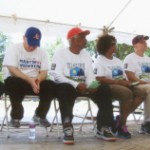
9th Annual Creek Society Fall Village Creek Clean-up with Renew our Rivers Honoring Mr. Richard S. Woodruff

0
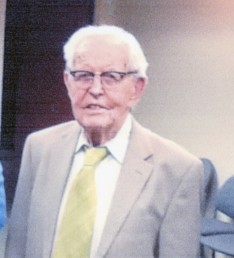
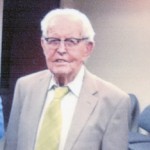
Mr. Richard S. Woodruff

This year (September 18-20, 2014) was like no other Fall Village Creek Clean-up. Village Creek Society dedicated this, their 9th
Annual Fall Village Creek clean-up to our Technical Director and Director of Finance, Mr. Richard S. Woodruff,
who is a living legend at 101 years of age. He has worked pro bono for 20 of those years with Dr. Mable B.
Anderson on the Village Creek Society Projects. As a Hydro Engineer, he knew how to control the flooding of
Village Creek: (1) Eliminate the erosion of the Creek Banks into the Creek which makes the Creek less deep, by
using Gabion Walls, (2) Replace the Avenue F. Bridge in Ensley that has 12 concrete support piers with a new
single span concrete bridge that has no piers and (3) Relocate the 3ft. diameter Sewer Pipe that is 5 ft. above
the Creek waters to under the Creek.
Until funds can be generated for the flood control situations, Village Creek Society holds a Spring and Fall Clean-up in Moro Park Ensley and South Pratt communities. Mr. Woodruff has worked with Village Creek Society in producing a design for a walking and jogging Trail along Village Creek. When the City did not accept his design, he located how Shades Creek obtained funds for their trail and worked with Village Creek Society and the  City in obtaining funds from the same source. Through the constant efforts
of Village Creek Society, the Trail is at the point of Bids. With Mr. Woodruff’s input on the Executive Board and
the Advisory Board, Village Creek waters and banks are making the area a Learning Laboratory for high schools
to bring their science classes for hands-on-learning.
For the 9th Fall Annual Village Creek Clean up, all of the partners that work with Village Creek Society the two annual Clean ups were asks to sit on the platform at the Finale as VCS Dignitaries and bring a short message honoring Mr. Woodruff. Judge Patricia Stephens was the MC. A DVD was made of this event and can be obtained through Village Creek Society Office.
Mrs. Joyce Ladd sang a medley of songs from “know the Plan”. Included in this medley is “His Eye is on
the Sparrow”, Mr. Woodruff’s favorite song.
Mr. Perry McMiller served as Village Creek Society Grand Marshal for the 9th Annual Village Creek
Clean-up and Advisory Board member, Mrs. Angene Coleman, drove the Grand Marshal to the different clean-up
sites.
This year’s turnout of volunteers for all three days total was 294. The volunteers removed 5.03 tons of
debris and items from the grounds and in the creek at the Ensley and South Pratt area. The decreased amount
of tons removed this year is an indication that the clean-ups are making a difference.
Village Creek Society’s partners who donated and participated in the 9th Annual Fall Village Clean-
up are: Alabama Power Renew Our Rivers, Vulcan Material Company,  Birmingham Public Works Department,
Birmingham Fire and Rescue Service, Jefferson County, City of Birmingham Department of Planning,
Engineering and Permits, Storm Water Management, Birmingham Park and Recreation Board, Birmingham
Police Department, Ensley and South Pratt Communities, Jefferson County Sheriff Department and several
organizations, high schools and colleges.

UAB announces action plan to improve process, communication

0

Ray WattsBIRMINGHAM, Ala. – Yesterday,  UAB President Ray L. Watts announced an action plan targeted at improving dialogue among administration, faculty, students, alumni and the community about the university’s next steps in the strategic planning process.
Watts spent much of December meeting with leaders from the student body, faculty, alumni, administration and the community, listening to concerns. More meetings have been scheduled, and many more will continue to take place in the short- and long-term.
“I regret how we handled the Athletic Department announcement,” Watts said. “I want to make sure there is a real mechanism for sharing and addressing questions and concerns and, more importantly, gaining insights into the best way to move UAB forward.”
The resulting action plan encourages input and opens up new formats for dialogue. It includes the formation of four task forces — to be led by faculty and administrative leaders — to study a number of the priority issues that have been shared with Watts in recent discussions.

·      Vice President of Human Resources Alesia Jones will work closely with the faculty senate and lead a task force studying employee benefits.
·      Interim Athletic Director Shannon Ealy will chair a task force made up of students, alumni, athletes and others focused on how to best engage and build support for programs so they can compete for championships.
·      Provost Linda Lucas will lead the task force on improving shared governance across the campus.
·      Assistant Vice President of Student Life Andy Marsch will chair a task force of student leaders addressing how to engage students in decisions affecting campus life, facilities, programs, housing and other areas.
Additional task forces are also being formed to guide candidate searches and hiring for several high-profile vacancies. Students, faculty, staff, alumni and community leaders will be involved in the search for UAB’s next athletic director.
Community and government leaders will play a critical role as UAB enhances opportunities for inclusion and collaboration. For that reason, Clay Ryan of Maynard, Cooper & Gale will work with the university on educational and governance issues, as well as strategic planning initiatives, to advance important dialogues beyond UAB’s campus.
The university also has enlisted Birmingham’s Direct Communications to help communicate and support the important dialogue that will lead the strategic direction of the campus.
UAB Forward, a public website launched today as part of Watts’ action plan, will provide the platform for updates, enabling readers to provide input and learn about the great things UAB faculty, staff, students, alumni and partners are doing — every day — to support UAB’s mission.
“We have important work ahead of us to continue to move UAB forward,” Watts said. “This experience has created an opportunity for us to learn to work more effectively together and continue to change UAB for the better.”

Two Serra Nissan Managers Charged in Loan Fraud Conspiracy

0

Crime BIRMINGHAM – Federal prosecutors today charged two former managers at Serra Nissan in connection with a conspiracy at the Birmingham car dealership to boost loan approvals and car sales fraudulently, announced U.S. Attorney Joyce White Vance, IRS Criminal Investigation Special Agent in Charge Veronica Hyman-Pillot and FBI Special Agent in Charge Richard D. Schwein Jr.
The U.S. Attorney’s Office filed a three-count information in U.S. District Court charging former Serra Nissan sales manager Gerald R. Shepard, 56, of Pinson, with conspiracy, bank fraud and subscribing to a false tax return. The U.S. Attorney filed a separate two-count information charging Jeffrey R. Green, 33, of Porterdale, Ga., a former Serra Nissan finance manager, with conspiracy and failure to file an individual tax return. A federal grand jury indicted Shepard on similar charges in August, but he has agreed to plead guilty to the charges filed today. The government agrees to dismiss the August indictment when Shepard is sentenced on the new charges.
“These defendants are charged with conspiring to defraud customers and financial institutions who trusted the dealership to provide truthful information during the vehicle financing process,” Vance said.
“Car-buyers who trusted this dealership to honestly handle their vehicle financing and financial institutions that provided loans through the dealership all became victims of fraud perpetrated to increase vehicle sales,” Schwein said. “The public can expect that the FBI will continue to aggressively investigate loan fraud to protect consumers and the nation’s financial system.”
“The charges against these two defendants clearly illustrate that all individuals who engage in these types of illegal activities will be held accountable for their actions,” Hyman-Pillot said. “These defendants not only manipulated the system and falsified documents with the intention of increasing profits at the expense of others; they also ignored the federal tax laws with regards to their own personal income tax returns.”
Prosecutors charged both Shepard and Green with conspiring with others at the dealership, between August 2010 and October 2013, to defraud financial institutions and Serra Nissan customers by submitting false information to lenders to increase vehicle sales in order to boost personal profits.
The information filed against Shepard also charges him with submitting a false tax return for 2012. The information against Green charges him with failing to file his Individual Income Tax Return with the IRS for tax year 2012.
The charges against these Serra Nissan managers follow federal charges earlier this year against six other sales managers, finance managers and salesmen at Serra Nissan, including Abdul Islam Mughal, D. Scott Burton, Michael J. Wilkinson, Dwight A. Perry, Terry W. Henderson, Jr., and Roland W. Riley. Mughal, 48, of Trussville, pleaded guilty in July to conspiring with other Serra Nissan salesmen and managers to sell more cars by falsifying loan documents in order to defraud customers and financial institutions. Mughal also pleaded guilty to one count of bank fraud for submitting falsified loan documents to financial institutions between January 2012 and October 2013. Mughal is scheduled for sentencing May 21, 2015. The charges against Burton, Wilkinson, Perry, Henderson, and Riley are pending and that case is scheduled for trial March 16, 2015.
According to the charges against Shepard and Green, they and other members of the conspiracy participated in various means to carry out their fraud and obtain auto loans that, otherwise, would not have been approved. Those means included the following:

•    Creating or altering documents to submit to financial institutions to show inflated income for prospective buyers.
•    Directing finance managers and salesmen to submit fraudulent documents to financial institutions to misrepresent proof of a customer’s residency.
•    Listing accessories not actually included on a vehicle so a financial institution would increase its loan amount. The defendants and others had a financial incentive to increase a loan amount in order to increase commissions paid to certain employees.
•    Presenting straw buyers, who could qualify for a loan, to financial institutions when the actual buyer could not qualify.

The defendants and others also defrauded customers and financial institutions by quoting a customer an inflated monthly vehicle loan payment so that a finance manager could add a warranty and gap insurance without the customer realizing it, according to the indictment.
The maximum penalty for the conspiracy count is five years in prison and a $250,000 fine. The maximum penalty for bank fraud is 30 years in prison and a $1 million fine. The maximum penalty for subscribing to a false tax return is three years in prison and a $100,000 fine. The maximum penalty for failing to file an individual tax return is one year in prison and a $25,000 fine.
The IRS and the FBI investigated the case, which Assistant U.S. Attorneys Amanda S. Wick and Robin B. Mark are prosecuting.

The public is reminded that an information contains only charges. Defendants are presumed innocent unless and until proven guilty.

*****

Pedestrian Killed

The Birmingham Police Department needs your assistance. On January 3, 2015, a pedestrian was walking along Ishkooda Rd when he was struck by an unknown vehicle. The vehicle type that struck the victim is suspected to be either a 2000-2006 Chevy Avalanche or Chevy 2500-3500 4×4 pickup with possible front end damage. The estimated time of occurrence is around 9:50p.m. If anyone has any information on this crime we are asking they call Crime Stoppers or they can call 205-254-6555 from the hours of 8a.m. – 5p.m. Reference case #2015-001953.