Home Blog Page 1353

Four Tips to Begin Healing Your Life

0

heal-your-life‘There is always a way through’ emotional trauma,
 says one who’s on the journey’
Neglect. Abuse. Divorce. Addiction. These are just a few of the life experiences that can leave children emotionally bruised or worse, causing some to develop dysfunctional outlooks and behaviors that condemn them to perpetual self-victimization as adults.
“We not only perpetuate, but also protect the obstacles that stand in the way of our healing and happiness,” says Marta Maranda. “But there is always a way through, no matter what your situation.”
The author of “What It Looks Like,” (http://martamaranda.com/, a new memoir detailing her own journey of healing, Maranda says she continued to use the defense mechanisms she developed in response to childhood trauma far into adulthood, which only served to block healthy emotional growth.
“As an adult decades after the initial abuse, I was still surrounding myself with similar trauma, and still reacting in the same ways to the trauma, even though those childhood survival tools no longer served me. Basically, the only one keeping me stuck in a dysfunctional and unfulfilling life was me.”
Maranda says she didn’t realize she played a part in her own dysfunction until the treatment of a family member for substance abuse caused her to think differently.
“I don’t drink, use drugs, or have a sexual dysfunction. I’ve never even had a cup of coffee in my life,” she says. “So it was easy to look at everyone else as the cause of my problems.
“But during family therapy sessions, I finally realized that there are two dysfunctional people in an unhealthy relationship, and there is an entire dysfunctional family in an unhealthy family system.”
Maranda became a rarity: sober and voluntarily, she admitted herself into a five-week residential treatment center. That’s where her healing began.
“But I’m not done,” she says. “Healing involves tearing down all those dysfunctional coping mechanisms – fear, anger, denial, justification – and rebuilding your life piece by piece. I still have to do the work every day.”
She offers these tips for others whose past trauma has resulted in self-destructive thought and behavior patterns, such as a willingness to remain in unhealthy relationships or an over-reliance on comforts like food, drugs, or alcohol to soothe painful emotions.
•  Look inward for reasons, not outward for blame.

It’s easy to find other people or situations to blame for your problems. Even if the initial trauma was inflicted when you were at your most vulnerable, and by someone you should have been able to trust, at some point you have to take responsibility for your own life. “How are you contributing to the dysfunction in your life?” Maranda asks. “The decision to remain stuck in a dysfunctional life is yours. The responsibility to move forward toward healing and happiness is also yours.”
•  If you’ve done it, admit it.


Look fearlessly at the wrong you’ve done, at the pain you’ve inflicted on yourself and others through your own dysfunctional behavior, and admit it. “Only by owning it can you change it,” Maranda says. “And only through change can you heal.” Likewise, look kindly and with humility at the good you’ve done. Own all that is valuable about you, and build upon it.
•  Information, not shame.


The lessons of healing always come with a choice: information or shame? If you are doing your healing work properly –meaning completely breaking down every defense mechanism you’ve built to keep yourself blind to your own dysfunctional behavior – the realizations that you’ve caused others harm, pain, or even extreme damage will come. But eventually you have to choose between continuing to feel shamed, which leads to feelings of worthlessness and hopelessness, or accepting the realizations as the information necessary to repair your life. “Much like a doctor needs to objectively understand what’s broken to diagnose a problem, so do you need to look objectively at your dysfunction and its consequences to heal it,” Maranda says. “Then use your healthy guilt feelings, not shame, as a reminder of what you can’t do again.”
•  Build a support system.

No one’s said it better than Einstein: You can’t fix a problem with the same broken mind that created it. Left to their own devices, many people who are convinced they need to change will still seek out environments that support their dysfunctions rather than strengthen their healing. “Change is hard, and healing isn’t always comfortable,” Maranda says. “That’s why people often find their way back to what they know, even if what they know is destructive or deadly.” Building a support system of people – whether family or friends, or from a therapeutic or spiritual community – whose perspectives get you out of your comfort zone and away from the dysfunction you know is essential for healing.

Most Retirees Need to Take Required Retirement Plan Distributions by December 31

0

Retirees WASHINGTON — The Internal Revenue Service is reminding taxpayers born before July 1, 1944, that they generally must receive payments from their individual retirement arrangements (IRAs) and workplace retirement plans by Dec. 31.
Known as required minimum distributions (RMDs), these payments normally must be made by the end of 2014. But a special rule allows first-year recipients of these payments, those who reached age 70½ during 2014, to wait until as late as April 1, 2015 to receive their first RMDs. This means that those born after June 30, 1943 and before July 1, 1944 are eligible for this special rule. Though payments made to these taxpayers in early 2015 can be counted toward their 2014 RMD, they are still taxable in 2015.
The required distribution rules apply to owners of traditional IRAs but not Roth IRAs while the original owner is alive. They also apply to participants in various workplace retirement plans, including 401(k), 403(b) and 457(b) plans.
An IRA trustee must either report the amount of the RMD to the IRA owner or offer to calculate it for the owner. Often, the trustee shows the RMD amount on Form 5498 in Box 12b. For a 2014 RMD, this amount was on the 2013 Form 5498 normally issued to the owner during January 2014.
The special April 1 deadline only applies to the RMD for the first year. For all subsequent years, the RMD must be made by Dec. 31. So, for example, a taxpayer who turned 70½ in 2013 (born after June 30, 1942 and before July 1, 1943) and received the first required payment on April 1, 2014 must still receive the second RMD by Dec. 31, 2014.
The RMD for 2014 is based on the taxpayer’s life expectancy on Dec. 31, 2014, and their account balance on Dec. 31, 2013. The trustee reports the year-end account value to the IRA owner on Form 5498 in Box 5. Use the online worksheets on IRS.gov or find worksheets and life expectancy tables to make this computation in the Appendices to Publication 590.
For most taxpayers, the RMD is based on Table 111 (Uniform Lifetime) in the IRS publication on IRAs. So for a taxpayer who turned 72 in 2014, the required distribution would be based on a life expectancy of 25.6 years. A separate table, Table 11, applies to a taxpayer whose spouse is more than 10 years younger and is the taxpayer’s only beneficiary.
Though the RMD rules are mandatory for all owners of traditional IRAs and participants in workplace retirement plans, some people in workplace plans can wait longer to receive their RMDs. Usually, employees who are still working can, if their plan allows, wait until April 1 of the year after they retire to start receiving these distributions. See Tax on Excess Accumulations in Publication 575. Employees of public schools and certain tax-exempt organizations with 403(b) plan accruals before 1987 should check with their employer, plan administrator or provider to see how to treat these accruals.
Find more information on RMDs, including answers to frequently asked questions on IRS.gov.

Babies and HIV

0

HIVIn 2013, 2,300 babies were born with HIV in the region, down from 10,700 in 2001

  WASHINGTON, D.C. (PAHO/WHO) — The number of babies born with HIV in Latin America and the Caribbean declined by 78 percent between 2001 and 2013, according to a new report from the Pan American Health Organization/World Health Organization (PAHO/WHO) and the United Nations Children’s Fund (UNICEF). The report, Elimination of Mother-to-Child Transmission of HIV and Congenital Syphilis in the Americas, takes stock of progress in the region’s countries toward the elimination of mother-to-child transmission of HIV and syphilis.
  Using data from PAHO, UNICEF and UNAIDS, the report estimates that 10,700 babies were born with HIV in Latin America and the Caribbean in 2001. By 2013, the number had declined 78 percent to just over 2,300, representing around 5 percent of all babies born in the region to mothers with HIV. The countries and territories of Latin America and the Caribbean have set the collective goal of reducing that proportion to less than 2 percent by 2015. So far, nine countries and territories have reached that goal: Anguilla, Barbados, Canada, Cuba, Jamaica, Montserrat, Puerto Rico, Saint Kitts and Nevis, and the United States.
  “Ensuring that all children in the Americas are born HIV-free is possible, and countries have already made progress toward that goal,” said Massimo Ghidinelli, chief of PAHO/WHO’s HIV/AIDS, Sexually Transmitted Infections, and Hepatitis Unit. “We need a final push to ensure that 100 percent of pregnant women have access to sexual and reproductive health services, including HIV testing and antiretroviral treatment, which can save their lives and reduce the chances of transmitting the virus to their babies.”
  In 2013, 87 percent of the 11 million women who gave birth in Latin America and the Caribbean attended at least four prenatal visits, a benchmark for adequate prenatal care. An estimated 74 percent had access to HIV testing and counseling – up from 62 percent in 2010 – and 93 percent of HIV-positive mothers-to-be received antiretroviral treatment, a significant increase over the 59 percent who received treatment in 2010 and only two percentage points short of the target for 2015.
  “The region of the Americas has strong health systems, and many women are accessing prenatal care not just once but four times,” said Chewe Luo, UNICEF’s top expert on HIV. She cited the integration of HIV testing into health systems as another success story in the Americas, but said gaps remain in providing prenatal services for adolescent girls. 

Progress toward elimination of congenital syphilis
  The countries of Latin America and the Caribbean made more modest progress toward the elimination of mother-to-child transmission of syphilis, which can be prevented through early detection and treatment of affected women. Fifteen out of a total of 50 countries and territories in the region have achieved the goal of no more than one in 2,000 babies being born with syphilis, the target set for 2015.
  Among women who received prenatal care in reporting countries, more than 80 percent were tested for syphilis. This level of coverage has been stable since 2011 but falls short of the target coverage rate of 95 percent.
  Very few countries report data on the number of pregnant women who have syphilis and are receiving treatment. Among the countries that do, the proportion varies from 13 percent to 100 percent with seven countries and territories reporting that 95 percent or more of pregnant women with syphilis received treatment in 2013.
  The report notes that further progress in reducing mother-to-child transmission of syphilis will require improvements in early access to prenatal care, increased use of rapid syphilis testing – a simple procedure that can be performed on site – and better follow-up for women who test positive.
  Ghidinelli said PAHO/WHO will redouble its efforts to mobilize resources to help countries eliminate mother-to-child transmission of HIV and syphilis.
  PAHO, founded in 1902, is the oldest international public health organization in the world. It works with its member countries to improve the health and the quality of life of the people of the Americas. It also serves as the Regional Office for the Americas of WHO.

*Source: Elimination of Mother-to-Child Transmission of HIV and Congenital Syphilis in the Americas, based on data from PAHO, UNICEF and UNAIDS.

Baptist Health System Signs Letter of Intent with Tenet Healthcare

0

Baptist Health SystemCompanies begin exclusive non-binding discussions to form new joint venture to provide care in central Alabama

BIRMINGHAM, Ala. – Baptist Health System has announced that it has signed an exclusive, non-binding Letter of Intent (LOI) with a subsidiary of Tenet Healthcare Corporation, the parent company of Brookwood Medical Center, to form a new, jointly-owned company that will include all Baptist Health System hospitals, Brookwood Medical Center, and their related businesses. The parties have initiated an exploratory period of due diligence, which is intended to result in a definitive agreement.
The new company would unite Baptist Health System’s four hospitals – Citizens Baptist Medical Center, Princeton Baptist Medical Center, Shelby Baptist Medical Center and Walker Baptist Medical Center – with Tenet’s Brookwood Medical Center. Together, the new system would have more than 1,700 licensed beds and include 77 primary and specialty care clinics, approximately 7,300 employees and approximately 1,500 affiliated physicians.
The partnership would build upon the strengths of both Baptist Health System and Brookwood Medical Center, and give the expanded healthcare network access to a sustainable source of capital and the possibility of significant investments in new equipment, facility upgrades and strategic initiatives in the future, creating meaningful opportunities for innovations in care delivery.
“We are excited to engage in an exclusive dialogue about developing a joint venture with Tenet Healthcare,” said Keith Parrott, CEO of Baptist Health System. “A primary reason to enter into a partnership with Tenet is its track record partnering with and growing faith-based institutions and allowing them to continue operating with a faith-based mission and focus. At the same time, Tenet can offer resources such as sustainable access to capital, a strong history of operating well-run hospitals and access to its existing purchasing contracts. This potential partnership represents an opportunity to strengthen our collective efforts and enhance healthcare across central Alabama while preserving and honoring the Baptist name, maintaining our Christian values, and supporting our faith-based approach to healthcare.”
“Tenet sees great benefit in a partnership with Baptist Health System’s dedicated group of health professionals,” said Garry Gause, chief executive officer, Southern Region at Tenet Healthcare. “This proposed partnership offers the opportunity to improve healthcare delivery to communities throughout central Alabama while preserving the remarkable legacies of Baptist Health System and Brookwood Medical Center. The new organization will enable our institutions to better navigate the changing landscape of healthcare today, and to meet the growing demands for quality care in Alabama tomorrow.”
Once a final definitive agreement is reached, the new joint venture could be formed as early as next spring. The parties do not plan to provide additional details until such time as a definitive agreement is reached.

Next Steps Uncertain For Women with Dense Breasts

0

breastdensityapBy LAURAN NEERGAARD, AP Medical Writer

WASHINGTON  — More women are learning their breasts are so dense that it’s more difficult for mammograms to spot cancer. But new research suggests automatically giving them an extra test isn’t necessarily the solution.
Screening isn’t the only concern. Women whose breast tissue is very dense have a greater risk of developing breast cancer than women whose breasts contain more fatty tissue.
Laws in 19 states require women to be told if they have dense breasts after a mammogram, with Missouri’s and Massachusetts’ requirements taking effect in January. Similar legislation has been introduced in Congress.
What’s not clear is what a woman who’s told her breasts are dense should do next, if anything. Some of the laws suggest extra screening may be in order.
Not so fast, a team of scientists reported Monday. They modeled what would happen if women with dense breasts routinely received an ultrasound exam after every mammogram, and calculated such a policy would cost a lot, in extra tests and false alarms, for a small benefit.
For every 10,000 women who got supplemental screening between the ages of 50 and 74, three to four breast cancer deaths would be prevented — but 3,500 cancer-free women would undergo needless biopsies, the study concluded.
“Not everybody with dense breasts is going to get cancer. There are people with dense breasts that are not at high risk,” explained study co-author Dr. Karla Kerlikowske of the University of California, San Francisco, who has long studied density.
Among the questions: How to tell which women really are at high risk, and how to better examine that group.
“We need to investigate alternative screening strategies for women with dense breasts,” added epidemiologist Brian Sprague of the University of Vermont Cancer Center, who led the research published in the journal Annals of Internal Medicine.
Topping that list: Scientists are beginning to study if a newer tool, 3-D mammograms, might get around the density problem by essentially viewing breast tissue from more angles.
Meanwhile, Sprague said his study could help women consider the trade-offs as they decide for themselves whether to pursue an ultrasound.
About 40 percent of women getting mammograms have dense breasts, either fairly widespread density or extremely dense tissue. Fatty tissue appears dark on the breast X-rays. Dense tissue — milk-producing and connective tissue — appears white. So do potentially cancerous spots, meaning they can blend in.
Mammogram reports to doctors have long included information about breast density. But it wasn’t routinely shared with women until some cancer survivors, outraged at not knowing, began spurring state disclosure laws starting in Connecticut in 2009. The advocacy group that started the movement tracks the laws at http://www.areyoudense.org.
What’s a woman to make of the information?
Monday’s study “reaffirms that we don’t know exactly what the right thing to do is when a woman has dense breasts,” said Dr. Otis Brawley, chief medical officer for the American Cancer Society.
Simply finding more tumors won’t necessarily save lives, cautioned Brawley, who worries that “we’re legislating something that we don’t totally understand.”
The American College of Obstetricians and Gynecologists doesn’t recommend routine additional testing in women who have no symptoms or other risk factors.
UCSF’s Kerlikowske said the real issue in deciding whether any woman needs extra screening — from an ultrasound to a more expensive MRI — is her overall risk of breast cancer.
Her team helped create an online risk calculator — https://tools.bcsc.org/BSC5yearRisk/. Plug in age, breast density, if a close relative had breast cancer and a few other details. Putting the risk in perspective, the calculator compares the woman’s chance of developing breast cancer over the next five years with that of an average woman the same age.
But to answer, you have to know just how dense your breasts are.
Radiologists divide density levels into four categories: Almost completely fatty, scattered areas of density, fairly widespread density and the less common extremely dense. There’s no standard way to measure, cautioned the cancer society’s Brawley. And those mailed notifications don’t always give the woman’s category, even though the cancer risk is highest for extremely dense tissue.
Density tends to decrease with age, so a woman’s risk will change over time, Kerlikowske said. It also can reflect some other long-known risk factors, she added. Someone who had children very young probably will have fattier breasts by mammography age than a woman whose first birth was in her 30s.

Celebrate Healthy Eating During the Holidays

0

Celebrating Healthy EatingBy Ramon P. Llamas, MPH, CHES, Men’s Health Network

They’re finally here, the holidays, and we all know what that means: first there was Thanksgiving, now Christmas and then New Year’s.
Fun with the family, office parties or stores offering candy and other seasonal favorites — who can resist? Emotions are elevated, hopes are high and the temptation of tasty treats adds yet another dimension to the season: concern over holiday weight gain. While eating lots of good food is both expected and encouraged during these special times, excessive indulgence can create problems later.
The holidays don’t have to be synonymous with weight gain, especially if you approach them with a sound game plan that addresses three factors to gaining weight: nutrition, fitness and stress management. Here is a holiday eating game plan that you can follow before you find yourself making yet again another New Year’s resolution to lose unwanted pounds.

Pre-game tips
Don’t skip meals – especially breakfast — in anticipation of eating larger holiday meals later on. Research shows people who eat a healthy breakfast tend to consume fewer calories during the day.
Have a pre-meal. Don’t go to a holiday gathering on an empty stomach. Snack on fruits or vegetables before heading out the door. This will give you a slight feeling of being full, which will help prevent overeating later.
Plan ahead. Have a plan for self-control, especially when it comes to your most tempting treats. Think ahead about the sights, sounds, aromas and feelings that trigger your personal patterns of overeating, and then make plans to combat these beforehand so they don’t become overwhelming. Practicing awareness and mindful eating helps reduce the potential for excessive indulgence.
Manage stress. Spark People highlights a few effective ways to manage stress in various settings. http://www.sparkpeople.com/resource/wellness_articles.asp?id=479
Go for healthier alternatives. If you’re preparing or helping to prepare holiday meals, consider using the Smartphone apps, Healthy in a Hurry or Substitutions, to tap into health-conscious alternatives. http://mashable.com/2013/12/01/healthy-diet-apps

Once you are in the game
Drink lots of water. Sipping on a glass of cold water or ice throughout the event helps keep you feeling full and staves off the dehydration that comes from eating too many high-sugar, high-salt goodies. In fact, dehydration can actually mimic hunger, tempting you to eat more when you should really be drinking more water.
Practice portion control. It’s nice to dig in to your favorite holiday treats. However, the extra effort required later to work off the calories — or worse, the gaining of unwanted body fat from eating too much — should be reminders for portion control. So, eat what you want, just keep your portions reasonable, chew food slowly and keep return trips to a minimum. The Smartphone app, MyFitnessPal, is a useful tool to keep and stay on track. http://www.myfitnesspal.com
Size matters! The bigger the plate you are eating from, the more food you are likely to eat. Use smaller plates at the buffet line as they can help with portion control. There is something about seeing an empty plate that helps us feel satisfied whether the container is large or small. That’s why using smaller plates is so effective.
Eat food because you’re hungry, not because it’s there. Make a deliberate decision to control so-called recreational eating. Eat with your appetite, not with your eyes. Examine what’s available, and then decide what you really want.
Eat slowly. The stomach needs about 20 minutes to tell the brain that it’s feeling full. But when food is gulped down, by the time the stomach sends its fullness signal to the brain, you’ve probably already eaten too much food and too many calories. Fill up your plate, eat slowly and then put the brakes on for a while so that your stomach can send its fullness signal to your brain. For a little more help, try using the Smartphone app, Eat Slower, to set a pace that encourages mindful eating practices. http://www.cnn.com/2014/04/30/health/healthy-eating-apps
Veg out on veggies. Filling up on healthy, low-calorie, high-fiber vegetables instead of high-fat, high-sugar, high-salt and high-caffeine treats will make you feel full without the drawbacks of dehydration, nervousness, weight gain and overeating.
Share the holiday spirit – and your food. Save calories by splitting treats with another person.
Enjoy yourself. They don’t call it “the most wonderful time of the year” for nothing! But rather than focusing on food, allow yourself to enjoy the personal relationships, meaning of the season, personal reflections, renewed spiritual dedication, holiday games, fun and memories you’re blessed to have.
Additionally, remember that healthy eating is only half the battle. You also need to stay physically active. Try these easy steps to burn more holiday calories:

Maintain or slightly increase your regular exercise program. This will help decrease your appetite, keep your metabolism high and give you a little caloric leeway for those sweet treats.
When shopping for holiday gifts, park furthest away from the shopping entrance.
Always take the stairs instead of the elevator.
Take a walk after a heavy meal. As tempting as laying on the couch afterward may be, taking a short walk instead will actually help your body digest your food.

Remember the key to winning is a good defense. Following this game plan for healthy eating will help you maintain good physical and mental health while celebrating with friends and family. Happy holidays!

About Men’s Health Network:
Men’s Health Network is a national nonprofit organization whose mission is to reach men, boys and their families where they live, work, play and pray with health prevention messages and tools, screening programs, educational materials, advocacy opportunities and patient navigation. Learn more about MHN at menshealthnetwork.org and follow them on Twitter https://twitter.com/MensHlthNetwork and Facebook https://www.facebook.com/menshealthnetwork

About the Author:
Ramon Paolo Llamas received a B.S. in Biological Sciences with a minor in Biomedical Engineering from the University of California, Irvine and an MPH with an emphasis in Health Education and Promotion from the Keck School of Medicine at the University of Southern California.  He has worked in a variety of settings in the public health and healthcare fields since 2005.

Narconon

0

narconon-logoNarconon would like to remind families that the use of addicting drugs is on the rise, take steps to protect your family from drug use. If you know anyone who is struggling with drug addiction get them the help they need.

Call for a free brochure on the signs of addiction for all drugs. Narconon also offers free screenings and referrals.  800-431-1754 or DrugAbuseSolution.com.

ADDICTION COUNSELING

Narconon can help you take steps to overcome addiction in your family. Call today for free screenings or referrals.  800-431-1754

2014 Kwanzaa Schedule

0

KwanzaaFriday, December 26, 6p.m. Z’s Take Out Restaurant – 104 17th Street North  
UMOJA (UNITY) To Strive for and to maintain unity in the family, community, nation and race. (205) 250-6288/ (205) 356-6417

Saturday, December 27, 6p.m. Shebet’s Boutique – 2209 3rd Avenue North
KUJICHAGULIA (Self-Determination) To define ourselves, name ourselves and speak for ourselves. (205) 862-4959/ (205) 356-6417

Sunday, December 29, 3p.m. Five Points West Library – 4812 Avenue W
UJIMA (Collective Work and Responsibility) To build and maintain our Community together and make our Brother’s and Sister’s problems our problems and to solve them together. (205) 226-4013/ (205) 529-1182

Monday, December 29, 6p.m. Sardis Missionary Baptist Church – 1615 4th Court West
UJAMAA ( Cooperative Economics) To build and maintain our own stores, shops, and other businesses and to profit from them together. (205) 356-6417

Tuesday, December 30 6p.m. Powderly Public Library – 3301 Jefferson Ave. SW
NIA (Purpose) To make our collective vocation the building and developing of our Community in order to restore our People to their traditional greatness.
(205) 925-6178/ (205) 356-6417

*Wednesday, December 31 6p.m. JCCEO – 300 8th Avenue W/ Feast nite, bring non pork dish
KUUMBA (Creativity) To do always as much as We can, in the way We can, in order to leave the Community more beautiful and beneficial than We inherited.
(205) 356-6417

**Thursday, January 1, 2015 Milk ‘n’ Cookies 3200 27th Street North
IMANI (Faith) To believe with all our heart in our People, our Parents, our Leaders and the righteousness and victory of our struggle.

Bring * non pork dish/ Wednesday (Feast nite) African Drummers Welcome!
**Bring cookies/beverage on Thursday, January 1st.

OWN: Oprah Winfrey Network Announces Month-Long Celebration in January Honoring Civil Rights Legends

0

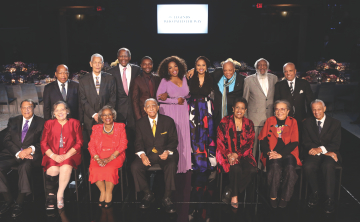
Civil Rights Honorees LOS ANGELES – OWN: Oprah Winfrey Network has announced a month-long celebration in January honoring civil rights legends who paved the way as we approach the 50th anniversary of the historic Selma to Montgomery marches led by Dr. Martin Luther King, Jr. that changed the trajectory of America forever.
The network will air the star-studded television event “Oprah Winfrey Presents: Legends Who Paved The Way” (Sunday, January 18 at 9 p.m. ET/PT) where Oprah Winfrey hosts a gala of events honoring some of the legendary men and extraordinary women of the civil rights movement, the arts and entertainment who made history and redefined what was possible for us all. Honorees include Ambassador Andrew Young, Berry Gordy, Jr., Rev. C.T. Vivian, Diane Nash, Dick Gregory, Rev. Jesse Jackson Sr., Congressman John Lewis, Rev. Joseph Lowery, Juanita Jones Abernathy, Julian Bond, Marian Wright Edelman, Myrlie Evers-Williams, Quincy Jones, Sidney Poitier and Harry Belafonte.
On January 4 at 9 p.m. ET/PT, Oprah sits down for a special episode of her popular series “Oprah Prime” celebrating the life of Dr. King and the Selma marches 50 years later.  The episode features an in-depth conversation with the star of the upcoming film “Selma,” acclaimed actor David Oyelowo who portrays Dr. Martin Luther King, Jr., along with the film’s award-winning director Ava DuVernay. The episode will also feature stories of those who were impacted by the march and their reflections today on that time in American history.
The month of special programming begins on New Year’s Day as NBC News correspondent Tamron Hall hosts “Race on The Oprah Winfrey Show with Tamron Hall” (Thursday, January 1 at 10 p.m. ET/PT) which highlights those trailblazing “Oprah” show episodes that elicited shocking audience responses and sparked opportunities for growth towards greater connection, empathy and healing.
Other special programming airing throughout the month include special episodes of “Oprah: Where Are They Now?” (Thursday, January 1 at 9 p.m. ET/PT) which spotlights memorable civil rights newsmakers and “Oprah’s Master Class” (Sunday, January 4 at 10 p.m. ET/PT) featuring powerful firsthand accounts from iconic “masters” such as Berry Gordy, Jr., Cicely Tyson, Dr. Maya Angelou, Diahann Carroll and many more.
In addition, the world television premiere of the OWN original documentary “Light Girls” will air on Monday, January 19 at 9 p.m. ET/PT featuring an in-depth look into colorism and the untold stories of lighter-skinned women around the globe. The documentary features interviews with notable celebrities including Russell Simmons, Soledad O’Brien, Diahann Carroll, India Arie, Iyanla Vanzant, Michaela Angela Davis, Kym Whitley, Salli Richardson-Whitfield and more.

Schedule:
*all times Eastern

THURSDAY, JANUARY 1
9 p.m.          “Oprah: Where Are They Now? Civil Rights Special”
10 p.m.          “Race On The Oprah Winfrey Show with Tamron Hall”

SUNDAY, JANUARY 4
9 p.m.          “Oprah Prime: Celebrating Dr. King and The Selma Marches 50 Years Later”
10 p.m.          “Oprah’s Master Class: Civil Rights Special”

SUNDAY, JANUARY 18
9 p.m.          “Oprah Winfrey Presents: Legends Who Paved The Way”

MONDAY, JANUARY 19
9 p.m.          “Light Girls”

Detailed show description below:

“Oprah: Where Are They Now? Civil Rights Special”
(Thursday, January 1 at 9 p.m. ET/PT)
Oprah Winfrey interviews Ruby Bridges who, at 6 years old, became a hero and civil rights pioneer as one of the first Black children to integrate into an all-white New Orleans elementary school in 1960. From Harpo Studios in Chicago, Oprah takes a look back at the most historic moments on “The Oprah Winfrey Show” covering civil rights and race relations. These iconic episodes include memorable cultural lessons, eliciting opportunities for growth towards greater connection, empathy and healing. Moments include an update with diversity expert Jane Elliott who conducted a secret discrimination exercise, treating blue-eyed and brown-eyed “Oprah” audience members differently, which resulted in shocking reactions. Then, in the summer of 1992, long-simmering racial tensions came to a head when white police officers were acquitted of the brutal beating of Rodney King. While the riots continued, the “Oprah” show went to Los Angeles for a town hall discussion that got heated. Today, a follow up with an audience member who was in support of the looting at that time. Also, O.J. Simpson’s former Prosecuting Attorney, Christopher Darden on race relations and his life after the “Trial of the Century.”

Imani Entertainment Group Acquires Film Rights For ‘True To The Game’ And ‘Dutch’

0

Imani Entertainment BEVERLY HILLS, Calif. /PRNewswire/ — Music mogul and entrepreneur Manny Halley (CEO of Imani Entertainment Group) has acquired the rights to New York Times Best Selling Author Teri Woods’ cult urban classic books, “True To the Game” and “Dutch”. Halley and Woods will team up to produce and bring both novels to the big screen.
“True To the Game”, which has sold over 2 million copies worldwide, is a tumultuous love story set in the late 1980s centering around the lives of protagonists Gena, a young girl from Philly thrown into the rapid streets of Harlem, New York, and Quadir, a slick talking native New Yorker on a rise to street stardom. Young and in love, the pair ultimately risk it all to stay “true to the game”.
“Dutch” tells the story of a complex cat-and-mouse game between New Jersey crime boss James Bernard Jr., known on the street as Dutch, and District Attorney Anthony Jacobs. As Dutch and his crime organization takeover the city’s lucrative heroine trade, DA Jacobs is determined to end their violent reign. With a sudden twist of events, DA Jacobs discovers his job is more than he bargained for.
“‘True To the Game’ and ‘Dutch’ are pioneering bodies of work that have solidified their place in the history books. Fans worldwide have been awaiting the creation of films for both books for a very long time, and we’re thrilled to bring them to life,” Halley explains. “To date, both novels have sold millions worldwide, and the timeless stories are very relevant still today.”
Woods and Halley have already begun assembling an accomplished team of film/TV industry veterans to bring the urban classics to life. Nia Hill, who most recently directed the Cannes Award Winning Film “Color My Mind: The Diagnosis”, wrote the script for “True To the Game” and is set to direct the film. Hill is also the Executive Producer of the award winning gospel competition “Sunday Best,” and the feature films “The Seat Filler” and “Ride Or Die.”
Leah Daniels-Butler (CSA) has signed on as Casting Director for “True To the Game”. She has previously casted for the Academy Nominated films “The Butler”, “Precious”, and “ATL”, as well as Fox’s newest television series, “Empire.”
“True To the Game” and “Dutch” are set to begin filming in 2015.