Home Blog Page 1377

Be Thankful

0

???????????????????????????????????????????????????????????????????????????????????????????????by Jerry Kingery
From The Bible

Make a joyful noise unto the LORD, all ye lands.
Serve the LORD with gladness: come before his presence with singing.
Know ye that the LORD he is God: it is he that hath made us, and not we ourselves; we are his people, and the sheep of his pasture.
Enter into his gates with thanksgiving, and into his courts with praise: be thankful
unto him, and bless his name.
For the LORD is good; his mercy is everlasting; and his truth endureth to all generations,
I will sing of mercy and judgment: unto thee, O LORD, will I sing.
I will behave myself wisely in a perfect way. O when wilt thou come unto me? I will walk within my house with a perfect heart.
I will set no wicked thing before mine eyes: I hate the work of them that turn aside; it shall not cleave to me.
Hear my prayer, O LORD, and let my cry come unto thee.
Hide not thy face from me in the day when I am in trouble; incline thine ear unto me: in the day when I call answer me speedily.
I said, O my God, take me not away in the midst of my days: thy years are throughout all generations.
Of old hast thou laid the foundation of the earth: and the heavens are the work of thy hands. They shall perish, but thou shalt endure: yea, all of them shall wax old like a garment; as a vesture shalt thou change them, and they shall be changed:
But thou art the same, and thy years shall have no end.
Bless the LORD, O my soul: and all that is within me, bless his holy name.
Bless the LORD, O my soul, and forget not all his benefits:
Who forgiveth all thine iniquities; who healeth all thy diseases;
Who redeemeth thy life from destruction; who crowneth thee with lovingkindness and tender mercies;
Who satisfieth thy mouth with good things; so that thy youtth is renewed like the eagle’s.

from Psalms 100 – 103

For a free Scripture packet, please write From the Bible, BIBLE FOUNDATION PO Box 908, Newberg, Oregon 97132; email:bf@bf.org.

Reactions to the Michael Brown Grand Jury Verdict

0

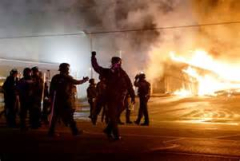
Ferguson RiotsStatement by NNPA President, Dr. Benjamin F. Chavis, Jr. on Grand Jury Decision in Ferguson, MO about the Killing of Michael Brown

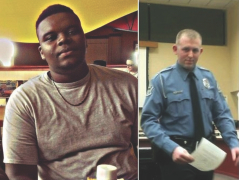
Today’s announcement that the Grand Jury decided not to indict Ferguson, MO Police Officer Darren Wilson who killed unarmed 18 year-old Michael Brown in August 2014 is yet another systematic and tragic slap in the face of equal justice in the United States.  On behalf of the National Newspaper Publishers Association (NNPA), today our prayers and solidarity are first resolutely with the parents and family of young Michael Brown as well as concern for everyone in the Black American community and all people of good will in St. Louis County, Missouri.   I have personally spoken directly to two of our NNPA member publishers who publish in the St. Louis area: Donald M. Suggs of the St. Louis American and Michael C. Williams of the St. Louis Metro Sentinel.  We discussed the tense situation in Ferguson.  We are the “Voice of the Black Community” and the NNPA will not be silent or rest until there is justice in the Michael Brown case and other cases of racially-motivated police killings and violence in our communities across the nation.

STATEMENT
CONGRESSMAN CHARLES RANGEL
http://rangel.house.gov (@cbrangel)

“Let’s remember the courage of #Mandela & #MLK who taught us to overcome hate with LOVE. #FergusonDecision” -@cbrangel

WASHINGTON, D.C. – Congressman Charles B. Rangel issued the following statement after a grand jury in St. Louis reached a decision in the shooting of Michael Brown in Ferguson, Missouri:

“While I share the disappointment and sadness felt by millions of people across America in the decision made by the grand jury in St. Louis County not to indict Officer Darren Wilson, I hope we can honor the memory of Michel Brown through peaceful protests and peaceful dialogue, instead of anger and violence.
It is tragic that our country still suffers from vestiges of injustice and racial discrimination. However, it is during times of turbulence when we must remain stronger and resilient to promote unity and healing within our communities. We must remember the courage of Nelson Mandela and Rev. Dr. Martin Luther King, Jr., who taught us to rise above bitterness and hate with understanding and love.
My thoughts and prayers go out to the Brown family, as we endeavor to overcome the great pain, suffering and division in our communities across the nation.”
# # #
Councilwoman Sheila Tyson, president of the Alabama Chapter of National Action Network, on the Ferguson Grand Jury Verdict:

“Oscar Grant, Kimani Gray, Kendrec McCade, Amadou Diallo, Timothy Stansberry Jr., Sean Bell, Aaron Campbell, Victor Seen, Trayvon Martin, Alonzo Ashley, and now Michael Brown. These are a handful of the unarmed, African-American men who have been killed by police officers—all of whom faced minimal consequences for their actions.

In fact, 5 unarmed African-American men have been killed by police officers in the last month. I join many citizens in wondering: what will it take for this country to recognize that African-American men have a target on their backs, and that police officers have been given a license to kill at their discretion?

It’s tragic that I even have to ask this question in 2014. It’s tragic for my little grand-baby, for the starry-eyed children I read to earlier this week, and for Americans of all colors and ethnicities that make a daily contribution to a positive and equitable society. But the reality is clear: young African-American men—no matter their education, background, or upbringing—are at risk. And there is no coming back from death.”

“Before I say anything else, I want to be clear that not all police officers are bad. I choose to believe that most of them go to work, and do a satisfactory job. I also want to be clear that under no circumstance is violence, rioting, and looting the answer…but as Dr. King so eloquently stated, ‘Our lives begin to end the day we become silent about things that matter.'”

“The truth is that Michael Brown deserved his day in court for his alleged actions, just like Darren Wilson. But that opportunity was taken away from him, just like it has been taken away from so many other young and defenseless African-American men.

What the media doesn’t tell us is that theft, fights, and drug-use happens in Mountain Brook and Vestavia, just like it does in West End and Ensley. In Beverly Hills, just like in Compton. In swanky Manhattan business offices, just like the Marcy Projects in Brooklyn. The crimes are the same, but once you insert people’s biases and prejudices into the picture, the law of second chances and ‘slaps on the wrist’ are inequitably applied.”

“I, for one, refuse to remain silent about it. Today, soft talk just won’t do. People keep saying that we need to “learn” from this, but that simply isn’t good enough. You cannot teach people what they refuse to see: the life of the African-American male does not hold the same value as the life of his counterpart. Not anywhere…not even in the most powerful country on the planet. Remember: ‘Our lives begin to end the day we become silent about things that matter.'”

“I’m urging citizens to express their anger, disappointment, and fears in a productive and positive manner. It’s time to peacefully protest. It’s time to call your Congressmen and Congresswomen, your Senators, your state representatives, and your City Councilors. It’s time to share your outrage through the power of words. It’s time to join your brothers and sisters—black, white, brown, and yellow—in peaceful protest of this injustice. It’s time to use the education that Dr. King and countless other civil rights leaders fought for us to have. It’s time to speak truth to power.”

No Indictment for Wilson!!!!

0

From Staff  and Wire Reports

Once again history repeats itself.
Officer Darren Wilson will not be charged in the shooting death of 18-year-old teenager Michael Brown, reports CNN.
The Brown family lawyer, Benjamin Crump, was informed that there would be no indictment moments before the official announcement. He told reporters that “The jury was not inclined to indict on any charges.”
Brown was shot on August 9, 2014 in Ferguson, Missouri after an altercation with Wilson. According to reports, Brown and a friend were walking in the street when Wilson ordered the two teenagers to get out of the street.
Reportedly, Brown and Wilson engaged in a physical altercation through the window of the police vehicle which led to Wilson’s gun firing a shot either accidentally or as a result of the struggle.
Both teenagers fled the scene, however, Brown was pursued by Wilson and was subsequently shot six times by the officer. The circumstances surrounding the shooting vary depending on the witness, but it’s been reported that Brown was either surrendering to Wilson when he was shot or moving towards Wilson.
The National LGBTQ Task Force describes the grand jury’s decision not to indict Ferguson, Missouri officer Darren Wilson in the death of Michael Brown as “shocking and painful for millions.”
“People across this nation feel angry and outraged by this decision. Justice has been denied today to the parents of Michael Brown, the community of Ferguson, and an entire nation that continues to battle with racially motivated homicides and violence targeting Black and brown males. No one should ever live in fear of walking down a street in their neighborhood and being killed by a police officer—the very officials who are meant to protect not take our lives.
“As Americans, we have a moral obligation to speak up and stand up against injustice. All lives matter! Anyone who takes someone’s life must be brought to justice. We cannot allow the murders of young Black men such as Michael Brown or Trayvon Martin to continue.
“Our thoughts and prayers remain with the family of Michael Brown and the entire community of Ferguson. We will continue to stand with Ferguson — a community that has mobilized to protest excessive use of force by local authorities, organized to shed light on the ongoing racial profiling by police, built coalitions to challenge the lack of transparency and accountability by local officials and transform a system and a community.
“And while we thank the U.S. Attorney General’s office for monitoring the situation in Ferguson, we still have our work cut out for us. We will continue working with the Justice Department to bring cultural competency to local police and pushing Congress to pass the ‘End Racial Profiling Act.’ Together, we must also redouble our efforts in advocating for reform in the criminal justice system and to end racial profiling by police.
“While this decision is shocking and painful for millions, we can’t let our heartbreak diminish our collective resolve to achieve freedom, justice and equality — and to do it deliberatively and peacefully.”—-Rev. Darlene Nipper, Deputy Executive Director, National LGBTQ Task Force.
The National LGBTQ Task Force, as the nation’s oldest national LGBTQ advocacy organization, has worked tirelessly to end racial inequalities and harmful practices by police—such as the “stop and frisk” policy in New York City.
Statement from Cornell William Brooks, NAACP President and CEO:
“The NAACP stands with citizens and communities who are deeply disappointed that the grand jury did not indict Darren Wilson for the tragic death of Michael Brown, Jr. We stand committed to continue our fight against racial profiling, police brutality and the militarization of local authorities. The death of Michael Brown and actions by the Ferguson Police Department is a distressing symptom of the untested and overaggressive policing culture that has become commonplace in communities of color all across the country.   We will remain steadfast in our fight to pass the End Racial Profiling federal legislation.  And we stand in solidarity with peaceful protesters and uphold that their civil rights not be violated as both demonstrators and authorities observe the “rules of engagement.”  The grand jury’s decision does not mean a crime was not committed in Ferguson, Missouri, nor does it mean we are done fighting for Michael Brown, Jr. At this difficult hour, we commend the courage and commitment of Michael Brown’s family, as well as local and national coalition partners.”
Statement of Sherrilyn Ifill, President and Director-Counsel of the NAACP Legal Defense and Educational Fund, Inc., the nation’s first civil rights law organization:
“We are deeply disappointed by the grand jury’s failure to indict police officer Darren Wilson for the fatal shooting of unarmed teenager Michael Brown. The tragedy of Mr. Brown’s death at the hands of Officer Wilson, as well as the overwrought, often unconstitutional, and overly-militarized response to protests in Ferguson are harsh and painful reminders of the work that we all must undertake to fulfill America’s promises of racial equality and justice.
We urge the United States Department of Justice to move forward expeditiously with its investigation of Michael Brown’s death and of the Ferguson police department and to leverage its considerable authority to help put an end to police violence nationwide.
The failure to indict Darren Wilson reflects structural, systemic problems that cannot be fixed without empowered communities of color that have the ability to hold institutions accountable. We call for sustained community-based organizing around the nation to counter police brutality against communities of color.
Police violence against African Americans not only undermines the integrity of law enforcement, but also lends credence to the pervasive perception that African-American lives are not worthy of protection. We will continue to support efforts that seek justice for Mr. Brown; positively transform the culture and character of the Ferguson Police Department; and end discriminatory police practices across the country.”
Statement of Vincent Southerland, Senior Counsel, NAACP Legal Defense and Educational Fund, Inc., the nation’s first civil rights law organization:
“African Americans continue to be killed and brutalized by law enforcement at alarming rates. This summer, Eric Garner was choked to death by New York City Police Officer Daniel Pantaleo while pleading for his life. Jonathan Crawford was shot dead in an Ohio Wal-Mart for holding a toy gun that was for sale. Marlene Pinnock was brutally beaten by a California Highway Patrol officer during a stop on the side of a California freeway. Countless others have been unjustifiably beaten, tasered, shot, verbally abused, and traumatized by the police in their communities.
It is time to bring the cycle of police violence against African Americans to an end. LDF has asked the United States Department of Justice to deploy its full authority to stop this tragic cycle by reviewing police-involved killings and beatings of African Americans nationwide, incentivizing training on racial bias and the police use of force, prosecuting police officers and departments that violate civil rights laws, and encouraging greater oversight of police officers.
These national efforts, however, can only be successful when the voices of those in communities suffering under the yoke of police violence are translated into substantive changes that reaffirm the value of African American lives. Through sustained community organizing, public education, and continued advocacy, we must all work together to ensure that Michael Brown’s death was not in vain.”
A letter from the NAACP Legal Defense and Educational Fund to the Department of Justice .
The NAACP Legal Defense and Educational Fund, Inc. (LDF) is the country’s first and foremost civil rights legal advocacy organization. Founded in 1940 under the leadership of Thurgood Marshall, LDF’s mission has always been transformative: to achieve racial justice, equality, and an inclusive society.
LDF has been a separate organization from the NAACP since 1957. If our name needs to be shortened, please refer to us as NAACP Legal Defense Fund” or “Legal Defense Fund,” not “NAACP.”

Boy, 12, with Fake Gun Shot Dead by Police in Cleveland

0

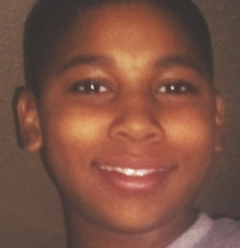
Fake GunCLEVELAND (AP) — A 12-year-old boy shot by police after grabbing what turned out to be a replica gun died from his wounds Sunday, a day after officers responded to a 911 call about someone waving a “probably fake” gun at a playground.
Deputy Chief Ed Tomba said one officer fired twice after the boy pulled the fake weapon — which was lacking the orange safety indicator usually found on the muzzle — from his waistband but had not pointed it at police. The boy did not make any verbal threats but grabbed the replica handgun after being told to raise his hands, Tomba said.
“That’s when the officer fired,” he said.
The Cuyahoga County medical examiner identified the boy as Tamir Rice. An attorney for his family, Timothy Kucharski, said the boy went to the park with friends Saturday afternoon, but he did not know the details of what led to the shooting.
“I don’t want to make a rush to judgment,” he said.
The police department is investigating the shooting and both officers involved have been placed on administrative leave, which is standard procedure. The county prosecutor’s office also is investigating.
Kucharski said he wants to talk to witnesses himself and get more facts.
“We’re ultimately going to find out what happened,” Kucharski said.
Police said the weapon was an “airsoft” type replica that resembled a semi-automatic handgun. The orange safety indicator had been removed, police said.
A man who called 911 told dispatchers the boy was on a swing set and pointing a pistol that was “probably fake” and scaring everyone.
The caller said the boy was pulling the gun in and out of his pants.
“I don’t know if it’s real or not,” the caller said.
Jeff Follmer, president of the Cleveland Police Patrolmen’s Association, said the officers were not told the caller thought the gun might be fake.
The officer called to the playground outside a city recreation center saw the pistol sitting on a table or bench, and watched the boy grab it and put it in his waistband, Follmer said.
Cleveland police have been under increased scrutiny during the last few years. The U.S. Justice Department has been conducting an investigation of their pursuit and use of force practices.
Federal officials said in March 2013 that their investigation would go beyond a high-profile car chase that ended with officers firing 137 shots and two deaths.
Last week, it was announced that relatives of the two people killed in the 2012 chase will split a $3 million settlement from the city of Cleveland.
The families filed a lawsuit after 43-year-old Timothy Russell and 30-year-old Malissa Williams were killed by police after a 20-mile pursuit that involved 62 police cruisers and more than 100 officers. Six police officers involved in the chase were indicted by a Cuyahoga County grand jury.
The department changed its pursuit policy after the chase, limiting when and how long patrol cars can chase suspects.

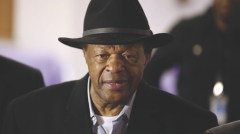
Former DC Mayor Marion Barry Dies at 78

0

Marion BarryBy BEN NUCKOLS, Associated Press

WASHINGTON — Divisive and flamboyant, maddening and beloved, Marion Barry outshone every politician in the 40-year history of District of Columbia self-rule. But for many, his legacy was not defined by the accomplishments and failures of his four terms as mayor and long service on the D.C. Council.
Instead, Barry will be remembered for a single night in a downtown Washington hotel room and the grainy video that showed him lighting a crack pipe in the company of a much-younger woman. When FBI agents burst in, he referred to her with an expletive. She “set me up,” Barry said.
Barry died Sunday at 78. His family said in statement that Barry died shortly after midnight at the United Medical Center, after having been released from Howard University Hospital on Saturday. No cause of death was given, but his spokeswoman LaToya Foster said he collapsed outside his home.
Speaking at a 4 a.m. press conference at United Medical Center, the city’s mayor-elect Muriel Bowser called Barry an “inspiration to so many people and a fighter for people.”
“Mr. Barry, I can say this, lived up until the minute the way he wanted to live,” said Bowser, who had served with Barry on the D.C. Council.
The year was 1990, and crack cocaine had exploded in the district, turning it into the nation’s murder capital. In his third term, the man known as the “Mayor for Life” became a symbol of a foundering city.
Federal authorities had been investigating him for years for his alleged ties to drug suspects, and while he denied using drugs, his late-night partying was taking a toll on his job performance.
The arrest and subsequent conviction — a jury deadlocked on most counts, convicting him of a single count of drug possession — was a turning point for Barry. He had been elected to his first term as mayor in 1978 with broad support from across the city. With his good looks, charisma and background in the civil rights movement, he was embraced as the dynamic leader the city’s young government needed. The Washington Post endorsed him in each of his first three mayoral runs, although the 1986 endorsement was unenthusiastic.
Barry’s six-month term in federal prison was hardly the end of his political career. But it forever changed how it was perceived. To some, he was a pariah and an embarrassment. But to many district residents, particularly lower-income Blacks, he was still a hero, someone unfairly persecuted for personal failures.
Barry returned to the D.C. Council in 1992, representing the poorest of the city’s eight wards. Two years later, he won his fourth and final term as mayor. The electorate was starkly divided along racial lines, and Barry advised those who had not supported his candidacy to “get over it.”
“Marion Barry changed America with his unmitigated gall to stand up in the ashes of where he had fallen and come back to win,” poet Maya Angelou said in 1999.
Barry’s triumph, though, was short-lived. In 1995, with the city flirting with bankruptcy from years of bloated, unaccountable government, much of it under Barry, Congress stripped him of much of his power and installed a financial control board. Barry held authority over little more than the city’s parks, libraries and community access cable TV station. He decided against seeking a fifth term.
Barry spent a few years working as a municipal bond consultant, but he couldn’t stay away from politics. In 2004, he returned to the council, again representing Ward 8, where he remained beloved. Many constituents still referred to him as “Mayor Barry,” and he was re-elected in 2008 and 2012.
Barry was born March 6, 1936, to Marion and Mattie Barry, in the small Mississippi delta town of Itta Bena, and was raised in Memphis, Tenn., after the death of his father, a sharecropper.
While an undergraduate at LeMoyne College (now LeMoyne-Owen College), Barry picked up the nickname “Shep” in reference to Soviet propagandist Dmitri Shepilov for his ardent support of the civil rights movement. Barry began using Shepilov as his middle name.
Barry did graduate work in chemistry at Fisk University in Nashville, Tenn., earning a master’s degree. He left school short of a doctorate to work in the civil rights movement.
His political rise began in 1960, when he became the first national chairman of the Student Non-Violent Coordinating Committee, which sent young people into the South to register Black voters and became known as one of the most militant civil rights groups of that era.
Barry’s work with the committee brought him to Washington, where he became immersed in local issues, joining boycotts of the bus system and leading rallies in support of the city’s fledgling home rule efforts.
In 1970, The Post wrote: “Four years ago widely considered a young Black Power Militant with almost no constituency, (Barry) has become a man who is listened to — if not fully accepted — on all sides.”
Barry’s activism propelled him into local politics, first as a member of the Board of Education and then in 1974 as a member of the first elected city council organized under home rule legislation.
In 1977, he was wounded by a shotgun blast in the Hanafi Muslim takeover of D.C.’s city hall. A young reporter was killed. The shooting was credited with strengthening him politically.
In 1978, he defeated incumbent Mayor Walter Washington — the city’s first home rule mayor — in the Democratic primary and went on to easily win the general election.
Barry’s early years in office were marked by improvement in many city services and a dramatic expansion of the government payroll, creating a thriving Black middle class in the nation’s capital. Barry established a summer jobs program that gave many young people their first work experience and earned him political capital.
In his second term, the district’s finances were rockier, and some of his appointees were caught up in corruption scandals.
The city’s drug-fueled decline mirrored Barry’s battles with his personal demons, leading to the infamous hotel room arrest on Jan. 19, 1990. The video of Barry was widely distributed to the media and made him infamous worldwide.
A few months after his arrest, long-time civil rights advocate and educator Roger Wilkins, a past supporter, wrote in The Post: “Marion Barry used the elders and lied to the young. He has manipulated thousands of others with his cynical use of charges of racism to defend his malodorous personal failures.”
Even after his comeback, controversy continued to dog Barry. Several times after his 1990 arrest, Barry sought treatment or counseling for problems with prescription medications or other substances. In 2002, he made an attempt to seek an at-large seat on the D.C. Council but abandoned his bid amid allegations of renewed illegal drug use.
In 2006, Barry was given three years of probation after pleading guilty to misdemeanor charges for failing to file tax returns from 1999 to 2004. As part of a plea bargain, he agreed to file future federal and local tax returns annually, a promise prosecutors later said he had failed to keep.
In 2010, he was censured by the council and stripped of his committee assignments for steering a government contract to a former girlfriend. The council censured him again in 2013 for accepting cash gifts from city contractors.
Barry played the role of elder statesman in his later years on the council, but he sometimes exasperated his colleagues with his wavering attention at meetings and frequent, rambling references to his tenure as mayor.
He suffered numerous health problems over the years. In addition to kidney failure, he survived prostate cancer, undergoing surgery in 1995 and a follow-up procedure in 2000. In late 2011, he underwent minor surgery on his urinary tract. In early 2014, he spent several weeks in hospitals and a rehabilitation center battling infections and related complications.
In a statement Sunday, current Mayor Vincent C. Gray expressed deep sadness after learning about Barry’s death. Gray spoke with Barry’s wife, Cora Masters Barry, late Saturday and shared his condolences and sympathies with her. The couple was long estranged but never divorced.
“Marion was not just a colleague but also was a friend with whom I shared many fond moments about governing the city,” Gray said. “He loved the District of Columbia and so many Washingtonians loved him.”
Mayor Gray said that he would work with Barry’s family and the Council to plan official ceremonies “worthy of a true statesman of the District of Columbia.”
Barry was married four times and is survived by his wife, Cora, and one son, Marion Christopher Barry.

Ruby Falls Debuts Christmas Underground

0


CHATTANOOGA, Tenn. Ruby Falls is excited to introduce its new holiday event, Christmas Underground opening December 1st! Adventurers can take this special passageway to a normally unseen part of the cave through December 23rd, every Monday – Friday from 3 p.m. to 8 p.m. and Saturdays and Sundays, noon to 8 p.m.
Experience this magical place where miners and elves play as they search for joystone, the gem that represents the spirit of Christmas! Encounter an ice cave, a wishing well, catch a view of the Northern Lights and journey through the Sugar Plum Fairy Village – all 26 stories underground! And meet Santa himself in the Ice Den! Kids receive joystone at the end of the Christmas Underground experience.
Carriage rides return as well, Fridays through Sundays from 3 p.m. to 7 p.m. To find out more info, visit www.rubyfalls.com/christmas or call 423-821-2544.
Ruby Falls is America’s deepest commercial cave and largest underground waterfall open for public viewing. It features a 145-foot waterfall located 1,120 feet beneath the surface of Lookout Mountain, near Chattanooga, Tennessee. LED lighting is used throughout the castle and waterfall. Ruby Falls is the first U.S. attraction to have received the dual Green Globe/Green Certification by Green Globe International, Inc.

One Man’s Opinion

0
Dr. Jesse J. Lewis, Sr.

Back Taxes of Al Sharpton
by Jesse J. Lewis, Sr.

Fox News is having a celebration. They are saying he should have a television show, or make public speeches for a fee. I am in favor of him working hard, making more money so he can pay his taxes. He admits that he owes the taxes and is paying on them.
The MSNBC host said in a press conference Wednesday that the  $4.5 million was the original figure to pay back in 2008, but that he has been making regular payments since then and the amount is now less.
The Times reported that Sharpton is still liable for personal federal tax liens of more than $3 million, and state tax liens of $777,657. His for-profit companies owe another $717,329 on state and federal tax liens.
Sharpton said, ” Every time there is a Sean Bell, or a Ferguson, or a Trayvon Martin, we go through my taxes.  It’s the same thing we announced in 2009. It’s the same thing we have been paying every month.”
I’m in no way justifying he should not pay taxes. What he should do is join the Republican Party and help them abolish the IRS, then he won’t owe any taxes.

How Many Republicans will Run for President in 2016

Peter King, U. S. Representative of New York; Michael Kinlaw, Conservative and Tea Party supporter; Josue LaRose, political organizer in Florida and Brian Russell, entrepreneur have already declared they are running.
At this point, almost every Republican Governor and U. S. Representative or Senator are potential candidates. Rick Perry the Texan governor, is most infamous for when he forgot the final federal agency he’d nix if he became president. Perry acknowledged the fact that his 2012 failures will shadow his political future, but he said he believes Americans would give him another chance if he decides to run again.
There’s Ben Carson, the Black physician, who believes that the smartest people in America are Jewish and white; with the dumbest being Blacks and Hispanics. My question to the Doctor is to which group does he belong?
Lindsey Graham, U. S. Senator from South Carolina; Sarah Palin, Former Governor of Alaska, Chris Christie, Governor of New Jersey; Jon Huntsman, Former Governor of Utah; Bobby Jindal, Governor of Louisiana; Rand Paul, U. S. Senator from Kentucky; Paul Ryan, U S. Representative from Wisconsin; Scott Brown, Former U. S. Senator from Massachusetts; Rick Santorum, Former U. S. Senator from Pennsylvania; Jeb Bush, Former Governor of Florida; Ted Cruz, U. S. Senator from Texas: Marco Rubio, U.S. Senator from Florida, Condoleezza Rice, Former U.S. Secretary of State, Scott Walker, Governor of Wisconsin and Mitt Romney, Former Governor of Massachusetts are some of your better known potential candidates who have not yet declared their candidacy.
My guess would be Mitt Romney will lead the pack. It will comes down to Mitt Romney and Hillary Clinton. If the Democrats had any sense, which has been proven they do not, they will go to a back room with all who want to run and select someone. Let the Republicans go throughout the primaries, killing off each other. Then the election will be a cinch for the Democrats to win.

The List Keeps Growing

According to the latest report, it is now up to 22 women. The stories of Cosby’s crimes have been  around for about a decade. In late October, Hannibal Burress bluntly attacked what he perceived as Cosby’s ‘smuggest old Black man public persona’ by saying, “Yeah, but you rape women, Bill Cosby, so turn the crazy down a couple of notches.”
Cosby has been mostly mum. A lawyer for Cosby has called the increasing number of claims of sexual assault against the legendary comedian ‘ridiculous’ and said the media should stop airing “unsubstantiated, fantastical stories.”
The accusations have taken their toll on Cosby’s earning and reputation. Netflix postponed a stand-up comedy special. NBC also decided against moving forward with a Cosby project. Finally, TV Land, quietly removed “The Cosby Show” from their lineup, and deleted the sitcom page from its website.
There are a few women saying if they knew Cosby was that potent they would like to be on his rape list.  Here is what’s amazing about this story. One woman said when she went into Cosby’s private dressing room, he gave her two pills and she does not remember what else happened. She also said she went back on three different occasions, took some of those same two pills and she still doesn’t know what happened.
There are always four sides to a story: your side, their side, the right side and the wrong side. I think that most sensible people would agree that of all these women everybody is not lying. But on the other side of the coin, most people would ask the question, why did you wait so long and where is the evidence? Why aren’t there police reports?
As much money as Bill Cosby has, and with his connections with lawyers and public relations folks, and all these people saying Bill Cosby raped them, it is clear whatever you have done in the past will come to light. You also have to be careful of coming to the forefront and accusing Bill Cosby of rape.
One Blogger wrote: Your reporting that at his performance he got a standing ovation from a predominately Black female audience. I don’t know exactly what to make of that however, I find it interesting that most of his victims seem to be white females. Disturbing in many ways.
I believe he can still draw a crowd.


email: jjlewis@birminghamtimes.com

The Way I See It

0

Hollis Wormsbyby Hollis Wormsby, Jr.
Latest Cosby Accusations Sign of Media Gone Wild
First off I have to insert the disclaimer that I am a lifetime Cosby fan.  As a little boy his albums were one of the delights of a relatively dull life, and I have followed his groundbreaking career and always admired his commitment to give back to where he came from. This would not give him a pass for rape if I felt he did it, but it does make it harder for me to believe he did what it is being said he did.
Rape is a very serious term, and if somebody had raped me, and I felt in my heart they had, there is no way in hell or heaven I would continue to have a cordial relationship with that person. And yet a common theme in each of these accusations is that the women claim that the events happened in multiple locations over multiple years. In order to believe in Cosby’s guilt you literally have to believe that 13 or 14 women, who in most cases either already had or were on the precipice of successful careers, repeatedly got on jet planes and flew to encounters with Cosby after he had previously raped them. This just doesn’t pass the smell test to me.
What also bothers me about the current presentation is that these claims have mostly been aired before, decades ago, and the only thing new about them now is the existence of TMZ and other crap sites that make a living mucking over the lowest denominator in the human spirit.
The most recent accusations are by former super model Janice Dickinson. Dickinson was at the height of an extraordinarily successful modeling career when the alleged trysts between her and Cosby occurred. What power would Cosby have had to impact her career in modeling? And even if you buy that he held power as her reason for not reporting, what is the reason for going back repeatedly for the same treatment? And what moral value did she place on the fact that she was hooking up with a man who had a wife and children.
There is no doubt that these troubling accusations will have an impact on the legacy of Bill Cosby, because even in the absence of believing the rape charges, we clearly see a pattern of self-indulgence and disrespect to his family. Does this take away his right to have opinions on the state of the community?
Well, let me ask it a different way. Jay Z, bless his heart, can rap about drug dealing, call women out their name, and sponsor some of the most vulgar rap artists in the world on his label and still attend events with the President of the United States. Rush Limbaugh has been convicted for drug abuse. Rock acts have been rumored to have done all kinds of things, but none are being held to the standard they are trying to hold the Cos to, for events that happened decades ago, and for which most of the accusers did not come forward at the time of the alleged events. I also believe there are some in our community who are happy to see him being taken down because he had nerve to have opinions about questionable lifestyles.
What I see evidence of so far is poor judgment and self-indulgence. I see evidence that Bill Cosby, no matter how much we might want him to be, is not Cliff Huxtable. But I believe he is still a man who during his distinguished career has chosen to use his wealth and his platform to help move the community forward. I see a man who has donated millions of dollars to Historically Black Colleges and Universities. I see a man who earned a PhD in education so that he could educate as well as entertain. I see a flawed great man, but I do not see a rapist, and for the media to imply otherwise, with no more evidence than they have, is asinine and irresponsible.
Or at least that’s the way I see it.
(Do you have a question or comment on this column?  Look me up on Facebook/HollisWormsby or email me at hjwormsby@aol.com.)

3 Reasons Why Blacks Can Call Whites “Crackas”

0

letters to the editorBy James Strong

Two remarks, recently, show how bitter sensitivities about race are in American society. Like lighter fluid, they fueled a controversy as old as humanity.
In an August 2013 interview with The Daily Beast, Rep. Charles Rangel, the venerable 84-year-old Congressman from New York, known for his acid tongue and outspokenness, called Tea Party movement followers “white crackers.”
In November 2014, commenting on the fire that ignited after that characterization, Rangel told Marc lamont Hill, host of the talk show HuffPost Live, “I thought [cracker] was a term of endearment. [The Tea Party is] so proud of their heritage and all of the things they believe in.” Later, during the interview, Rangel offered “a reluctant apology for offending anyone with the derogatory term.”
Then, also in November, Vinita Hegwood, a high school English teacher at Duncanville High School near Dallas, Texas, sent tweets from her personal Twitter account regarding the murder of Michael Brown in Ferguson, Missouri, and supporting the protests there.
Hegwood began receiving racist responses to her tweets, and she responded with tweets such as this: “Who the (expletive) made you dumb (expletive) crackers think I give a squat (expletive) about your opinions. #Ferguson Kill yourselves.” Later, she tweeted to someone else, “You exhibit nigga behavior, I’m a call you a nigga. You acting crackerish, I’m a call you a cracker.”
Subliminally, beneath the skin of these two incidences lies a molecule of hope that may never advance. Calling a white “cracka” is still the tale of Black America’s never-ending fight for future days, days when such language becomes an allergy if aligned with respect.
In the meantime, we must deal with reality, and we can see three reasons why Blacks have the right, like Rangel and Hegwood, to use the word cracka.
First, in a country bar in the South, say in Birmingham, Alabama, with country music blaring in the background, it’s not unusual during a bar fight for one of the white guys, just before throwing a bottle of Heineken beer at the other, to yell, ”I’m gonna crack your head with this bottle, cracka!”
Moreover, some well-known white comedians, such as Jeff Foxworthy, employ cracka jokes, as well as honky and redneck jokes, in their routines regularly. And white rapper Eminem has been known to call whites in his audience during concerts crackas.
So if whites are not offended at calling themselves crackas, why should Blacks be denied the right to call them crackas too?
Second, you can use the term cracka in various senses. For example, you can use cracka to refer to all whites, if you want to use it as a racial slur. You can use the term to insult whites, if you are vengeful or want to be funny.
And when walking down the street, you see a filthy white drunk lying next to a dumpster or a skinny white prostitute dizzy from snorting coke, instead of yelling “Get the hell outta here, you po’ white trash!”, you can demean them more kindly with “Get outta here, cracka!”
Third, some whites would not dare call a Black waitress in a Starbucks nigga to her face or call a Black police office “nigga cop” as he writes a traffic ticket. But in their apartments, while watching “Scandal” on TV with their friends or dancing at a night club frequented mostly by whites, “nigga” slithers easily from their throats, like slime.
Blacks, on the other hand, are slammed whether they call whites crackas while eating candy brittle in a closet or sitting on a cot in a motel. Those whites don’t want Blacks to experience the same privileges they have, though they have no problem dismissing Blacks as their equals in other ways.
Instead of seeking common ground with Blacks by sharing disgust for all forms of racism, they consider themselves friendly when they call Blacks niggas behind their backs. That’s why it’s so hypocritical to criticize Blacks for calling whites crackas.
Of course, some whites, and a few Blacks, might disagree with the pro-cracka argument. As such, as there are always two sides to the same coin, each reason mentioned above for Blacks calling whites crackas has a counter-argument. Some might construe the first reason as the fallacy of illicit process, because it assumes that acceptance of the term cracka by some whites means it’s acceptable to all whites.
Some might consider the second reason an example of the fallacy of equivocation, because several definitions or senses of cracka are provided that don’t seem to justify the use of the term. And others might see the third reason as an instance of faulty generalization, just because some whites show their racism in private.
Regardless, the argument as to whether Blacks have the right to call whites crackas rests on perspective.
If many whites refer to Blacks as niggas, why can’t Blacks refer to whites as crackas? If many whites are not offended at calling themselves crackas, why should Blacks be offended at calling them crackas?
Furthermore, if whites use the term cracka to refer to other whites, it’s okay. But if Blacks use the term to refer to whites, it’s not okay? What’s up with that?
Then, there’s this hard, concrete truth given by some whites: Just because Blacks may want to call each other niggas doesn’t mean we want Blacks to call us crackas.
As you can see, the language of racial slurs is the language of races at war. Polite language dies first, then courtesy bleeds to death from worry. And that’s why perspective is the heart of this conflict over the use of the word cracka.
What can we conclude? Well, squirrels don’t care whether the nuts they eat are cashews or almonds. Neither should Blacks about the term cracka, when properly used.

Copyright © 2014 by James Strong. All rights reserved. Reproduction or translation of this column, or any part of this column, without permission of the copyright owner is unlawful. Send your comments to strongpoints123@gmail.com.

FUNdraising Good Times

0

letters to the editorThe Wise Donor – Moving Beyond Emotion

It’s always good to give. To give from our hearts, according to our beliefs, and in line with our vision for the world we want to live in. There is a renewed emphasis now as we enter the giving season. You will notice more advertisements on television for national nonprofits with compelling images and music; more social media campaigns; more letters and cards coming via U.S. mail; more phone calls – from volunteers and paid solicitors; and more one-on-one conversations about giving.

Here are five things to help you make giving decisions that unite your heart and mind.

•    What are your giving priorities? What is important to you? Do you want to help end poverty? Increase access to the arts, childcare, affordable housing, or college education? What about curing cancer, improving neighborhood safety, supporting long-term social change, or teaching children to read? Are you committed to international aid that builds local economies or treats people with Ebola or HIV?

•    What types of organizations do you want to support? Local nonprofits? National or international agencies? Your church, synagogue, temple or mosque?  A community foundation, women’s foundation, giving circle, or Black united fund? Is it important to give to a recognized nonprofit, or are you comfortable giving directly to people you know make a difference, regardless of their formal structure?

•    How well do you know the organizations you give to? Which are registered charitable organizations? Which have a website with information? Is there anyone you can call to ask questions? Have you looked up the nonprofit at www.guidestar.org ? This website provides information including funds raised and use of funds (Form 990). Just type in their name.

•    What is your giving budget? How much can you give? How much do you want to give? Know your budget so you can respond to specific solicitations. Consider automatic contributions from your credit card or bank account. Do you want to continue these? Increase them? Decrease? Have you received acknowledgements for these gifts, or an update regarding the impact of your giving?

1.    Don’t fall prey to in-person or online peer pressure. Keep your giving joyous! Know who and what you want to support, and make your decisions accordingly. You are under no obligation to give to any organization, even if you gave before. Nor are you under an obligation to increase your gift. These are voluntary decisions. Take a moment to evaluate emotional appeals – especially online requests – to see if the actual work of the organization is in line with your priorities. Multiple small impulsive gifts add up over time: you may find you’re “over budget” or that your giving is not in line with what’s important to you.

Most importantly, look inside to see if your giving reflects what’s in your heart.

Copyright 2014 – Mel and Pearl Shaw
Mel and Pearl Shaw position nonprofits, colleges and universities for fundraising success. For help with your fundraising visit www.saadandshaw.com or call (901) 522-8727.