Home Blog Page 1384

Trustmark Awards $125,000 to Community Organizations

0

TrustmarkCompany Celebrates 125 Years of Service with Giving Initiative
Trustmark celebrated its 125th anniversary by announcing the results for the 125 Years of Giving initiative on Facebook. The initiative donated $125,000 total with $25,000 distributed among the five states in Trustmark’s footprint, which include Alabama, Florida, Mississippi, Tennessee and Texas. Three local nonprofit organizations in each market shared in a total of the $25,000.
“Supporting our communities has been a corporate philosophy for Trustmark since our company’s inception in 1889,” said Jerry Host, CEO of Trustmark. “Our 125 Years of Giving initiative was designed to help us continue that philosophy and to also provide the public an opportunity to help us celebrate our 125 years of service by being a part of the $125,000 gifting to community organizations in our markets.”
The public helped determine how much these selected nonprofit organizations received by “liking” the organization of their choice on Facebook. The level of donations given to each of the three organizations was determined by the number of “likes” received on the company’s Facebook page, www.facebook.com/TrustmarkBank. The organization with the most “likes” in each state received $15,000. The organization with the second most “likes” received $7,500, and with the third most “likes” received $2,500.
The results are by state, as follows:
Alabama
$15,000:  Children’s Harbor (738 likes)
$  7,500:   St. Mary’s Home (339 likes)
$  2,500:   Montgomery Area Non-Traditional Equestrians (MANE) (223 likes)
Florida
$15,000:  Emerald Coast Autism Center (839 likes)
$  7,500:  Covenant Hospice of the Emerald Coast (220 likes)
$  2,500:  Food 4 Kids Emerald Coast (56 likes)
Mississippi
$15,000:  Extra Table (833 likes)
$7,500:    Friends of Children’s Hospital (774 likes)
$2,500:    Regional Rehabilitation Center (291 likes)
Tennessee
$15,000:  SRVS (470 likes)
$  7,500:   Metropolitan Inter-Faith Association (MIFA) (377 likes)
$  2,500:   Mid-South Food Bank (203 likes)
Texas
$15,000:  Cade R. Alpard Foundation for Pediatric Liver Disease (223 likes)
$  7,500:   Northwest Assistance Ministries (159 likes)
$  2,500:   Operation Military Embrace (105 likes)
Trustmark Corporation is a diversified financial services company headquartered in Jackson, Mississippi, with more than 200 locations in Alabama, Florida, Mississippi, Tennessee and Texas. Trustmark provides banking, wealth management and insurance solutions through its subsidiaries, including Trustmark National Bank, Trustmark Investment Advisors, Inc. and Fisher Brown Bottrell Insurance, Inc. Visit www.trustmark.com for more information.

One Man’s Opinion

0
Dr. Jesse J. Lewis, Sr.

The Best Three First Downs Ever
by Jesse J. Lewis, Sr.

Unquestionably, Blake Sims, quarterback for the University of Alabama, made three first downs (two from running and one from passing), that are responsible for Alabama beating Mississippi State.
Several months ago, like most people, I believed that Blake Sims should have been the back-up quarterback behind Jake Coker, but today is a whole different story. The coaches at Alabama made the right decision. Blake Sims has performed greater than my expectation and a lot of people will agree.
Alabama is one of the few teams in the Southeastern Conference that has improved every week. This is what Auburn did last year. This year Auburn has gone backward every week. There’s a strong possibility that Auburn’s chances of losing two other games is beyond 50 percent; their chances of losing one game is 75 percent.
At Alabama, we hope and pray, that Missouri will win SEC East, instead of Georgia, especially if Clyde Gurley is not hurt.
Some people will say Alabama should return to the No. 1 position, because they beat Mississippi State, who were No. 1 at that time. I contend that Florida State should be No. 1 because Florida State is the only team that has not lost the first game.
My Top Four Teams are No. 1) Florida State, No. 2) Alabama, No. 3) Mississippi State, No. 4) Oregon. The ratings will be revealed on Tuesday and they may be different from this because I write my article on Monday.
The No. 1 quarterback in America is Jameis Winston of Florida State; No. 2 quarterback is Marcus Mariota, of the Oregon Ducks, No. 3 quarterback is Bo Wallace of Ole Miss and No. 4 is Blake Sims of Alabama.
Incidentally, there is no reason why Alabama cannot win their next two games to win the Southeastern Conference Championship. My guess would be they will be playing Florida State for the National Championship. Teamwise, Alabama is better then they are.

Bill Cosby, America’s TV Father, in the Spotlight

Nasty allegations have been haunting one of America’s most iconic comedians with a reputation for moral wholesomeness. For nine years, Bill Cosby has been accused of sexual assault by women who say they were the victims. According to Todd Leopold of CNN Entertainment, Cosby has repeatedly said that the allegations are untrue, and he has never been prosecuted. But since 2005, a handful of women have made the claim. This year, those accusations resurfaced, and on Monday, a seemingly harmless post to Cosby’s confirmed Twitter account turned them into a social media storm.
The incident allegedly occurred in 1985, 29 years ago, and brought up again in 2005 for media discussion. A couple of women said they just gave up and moved on with their lives.
In these types of issues I don’t choose sides. The question is what do they plan to accomplish? The statute of limitations has run out for prosecutions, it’s their word against his and there’s no reason why Bill Cosby should not make a statement to the media.
Anytime you make statements accusing someone of wrong doing, there is a certain part of the population who will believe you are guilty. My guess would be that Bill Cosby is not commenting on this story because he realizes that the more comments he makes the longer the media flare-up will continue. I am assuming his press people are informing him he should not attempt to defend against it in any way, because without him the shelf life of this story will be short.

What Will Happen in Ferguson?

All they have to do is follow the evidence. Stefanie Wheat, a white woman, married to a Black man with a child, stated: “I love Ferguson.”
Wheat understands that Ferguson is a tale of two cities. Her adopted hometown is made up of parks and gardens and historical homes; it’s a place where families are trying to come together to build a community that benefits everyone. She understands, too, that there are parts of the city in which another tale is unfolding: of impoverished young people who see no way out of their frustrations. She wishes more Black families would get involved in the community by volunteering or simply turning out to vote. I thoroughly agree with her on the voting; voting will not be able to bring Michael Brown back, but it could change the dynamics of the city for those citizens yet unborn.
According to Moni Basu of CNN, a tense Ferguson is awaiting a ruling by the St. Louis County grand jury on whether Officer Darren Wilson should stand trial in the fatal shooting of Michael Brown. Ferguson became a flashpoint for racial tension after the teen’s shooting; Brown,18, was Black, the officer is white. Street demonstrations and violence erupted, and heavily armed police came face to face with angry protesters demanding justice. Some predict that will be the case again when the grand jury’s decision is announced.
Jurors have until January, but the prosecutor’s office has said a decision could come in mid-November.

Obamacare is Open for Business

0

EDT McTierBy Mahari A. McTier

For anyone wanting health insurance for 2015 through Obamacare they must apply for coverage during the Open Enrollment period from November 15, 2014 to February 15, 2015.  The Marketplace provides affordable private health insurance with savings based on income. Plans cover essential health benefits, pre-existing conditions, and preventive care. The Marketplace application also doubles as an application for Medicaid and Children’s Health Insurance Program (CHIP) and if eligible could provide free insurance.
If you choose to go uninsured for 2015 the fine has been increased from that of 2014. The fee will be whichever is greater of these two, 2 percent of your income or $325 per adult and $162.50 per child.
The second Obamacare open-enrollment period is now underway and nine out of 10 uninsured Americans are still in the dark about the means through which they can receive coverage, according to a poll released by the Kaiser Family Foundation.
Researchers polled more than 1,500 people via phone earlier this month and found that two-thirds knew “only a little” or “nothing at all” about the Obamacare insurance exchanges where they can buy health plans. More than half of the respondents also said they didn’t know that subsidies were available to those with moderate or low incomes.
“The No. 1 barrier to enrollment continues to be lack of knowledge about financial help being available,” Maria Watkins, for Unified Brokers for ACA/Obamacare, a Birmingham-based Insurance Agency that helps Americans sign up for health insurance. “Our research shows that while the remaining uninsured may be harder to reach, they aren’t harder to convince once they know the facts. Many just don’t know what’s available or understand how affordable plans can be.”
A continuous effort this year will be made to educate individuals who are seeking to obtain affordable healthcare. This year, federal health care officials have shifted the focus to the subsidies available to consumers as part of an effort to alleviate concerns about insurance costs among middle and lower income Americans. Goals this year include renewing plans for those who signed up last year and enrolling 10 million uninsured people.
I encourage everyone to get educated, informed, and enrolled! There are several local resources that can assist you with your enrollment questions. One local resource is Unified Brokers for ACA/Obamacare (877-213-2400).

(Mahari A. McTier is a Financial Advisor with Tier 1 Advisors, LLC and can be reached at maharimctier.tier1@gmail.com.)

The Way I See It

0

Hollis Wormsbyby Hollis Wormsby, Jr.
What Are the Early Results of Low Voter Turnout?
According to most all accounts the voter turnout for the November 4th elections was the lowest in modern history, with estimates of voter turnout as low as 30 percent. In the wake of this unprecedented low turnout, Republicans recaptured  control of the Senate and expanded their lead in the House. But maybe even more important than their just taking control, Republican leaders have taken the election result as a mandate to impose a conservative agenda they say is what voters turned out for them for.
What are the initial proposals? They are almost stunning in their boldness and in their assault on the working middle class. Let’s take a quick look at some of the spending that they propose to cut under the guise of reforming entitlement spending.
The Republican budget proposed ending the Earned Income Tax Credit. This credit allows poor working people with children, to actually receive more in tax returns than they paid in taxes, thus the word credit. I believe it is one of the only tax credits that allows one to receive more of a tax return than you paid in actual taxes. This credit does not go to so called free loaders, as you have to work in order to qualify for it, but it does help put a few more dollars in the hands of some of the lowest paid working adults in this country.
The Republican budget proposed ending the Child Care Tax Credit.  This credit allows working families to recoup a small portion of what they pay in child care for their children. If you have ever had to pay child care you know that child care can quickly eat up almost all of a low-income working person’s check. This credit does not go to so called free loaders, it only goes to working families with children who use it to help put a few more dollars in their pockets.
The Republican budget proposed ending the mortgage interest deduction for all tax payers. While this cut would affect anyone paying a mortgage, obviously its impact would be the greatest on moderate income homeowners for whom their mortgage interest deduction is the largest single deduction they qualify for. No matter how you try to spin this it would in effect be a significant tax increase for most moderate income families, the very families that are least able to afford to pay more.
The Republican budget proposed yet again, significant cuts to Social Security and Medicaid.  They have been singing this song for so long, that even though I don’t like it, I feel more than capable of singing along. These proposed cuts are just wrong. I have older family members who are trying to live off of like $745 a month in Social Security benefits, cannot the Koch brothers with their $85 billion personal wealth, have just a little compassion for folks who have so little that they sometimes have to choose between buying food or buying their medicines?
And what do the Republicans plan to do with the savings they wring from the backs of the poorest in this nation? They are planning a $500 billion tax cut for corporations, because they are the job creators. Well okay, except the trouble with this logic is that in the last twenty years or more these same corporations have taken their tax cuts and tax savings and moved all of the manufacturing jobs to Asia. There is no reason for a logical person to believe differently this time, except the Koch brothers will spend millions telling you it is true, and some will be dumb enough to believe it.
For those in our community who chose to sit out this election, the bitter fruit is already in bloom. For those who voted and will experience the tsunami anyway, I feel for you, and the solution is not to sit around and complain, it is to do what the Tea Party did on the night after President Obama was first elected – and that is to start meeting about what we are going to do for the next election.
Or at least that’s the way I see it.
(Do you have a question or comment on this column? Look me up on Facebook/HollisWormsby or email me at hjwormsby@aol.com.)

Economic Growth in Birmingham

0

Shakir MuhammadBy Shakir Muhammad
Birmingham has more potential for economic growth and development than any big city in Alabama. Unfortunately too many small minds, big egos and backward thinking is keeping the city stagnated, locked in slow growth and a marginal player in the increasingly competitive Southeastern region. Birmingham has become a permanent satellite to Atlanta, Nashville and Memphis searching for a new identity in the post-civil rights era, while those leading pro-growth cities have continued to innovate, change and grow with the times. Birmingham is still a third rated city trying to keep pace with the region’s up and coming cities like Jackson, Little Rock and Knoxville.
However, with a little bit more imagination and strong leadership a whole lot of things could be a whole lot better for a whole lot of people. Certainly the city could take a giant leap forward if it would invest in more infrastructure development, pro sports and entertainment and supported the progressive leadership of Mayor William Bell. Birmingham must step up efforts and follow through on these key construction projects to maintain its competitive edge in the region.  1) Complete the northern Beltline;  2) Install a viable high speed light rail system;  3) Construct a brand new world class international airport;  4) Build an 80,000 seat dome stadium;  5) Purchase a NFL/MLB/NBA franchise to play in it;  6) Invite Tiger Woods to design a 72 hole major championship caliber golf course in the Metro-Birmingham area.
Incrementally this comprehensive pro-growth economic plan would be a win-win for the city, state and Metro-Birmingham’s rapidly expanding 1.052 million population. This plan would revitalize the regional economy, increase business activity and attract more people and sport fans into the downtown area. It would also reduce vehicular traffic and gridlock, spur more business development and mass mobilization of the people throughout the metro area. But more importantly this big job producing initiative would repatriate millions of dollars to the city, produce more tax revenue for the state and create thousands of high paying jobs for the people across every segment of the regional economy.

Increasing Gambling Isn’t the Answer to State Budget Woes

0

APIBy John Hill, Ph.D.| November 18, 2014

With spiraling mandatory spending and reduced tax revenues threatening to send one or both of the state’s budgets into proration, the options of raising additional income by establishing a compact with the Poarch Creek Indians or legalizing a state-sponsored lottery are on the minds of Alabama’s legislators.  Using the refrain of “let the people decide”–the same one used by former Governor Don Siegelman 15 years ago in an attempt to legalize a Georgia-style education lottery–elected officials from Goat Hill and the Governor’s Mansion who have historically been either neutral or opposed to such possibilities now see them as a way to generate revenue for the state.

Montgomery will need plenty of revenue to keep its essential services going in 2015 given that the gap in the state’s General Fund could be as large as $200 million. In addition to the possibility of gambling revenues helping close that gap, there is a patriotic attractiveness that comes with the idea of “keeping Alabama gambling dollars in Alabama.”  Likewise, gambling supporters suggest there is a sense of rightness that would come from extracting an annual toll from the Poarch Creeks in exchange for allowing them to expand their gambling operations in the state. Sanctioning either of these ideas, though, may not produce the long-term, stable economic benefits legislators are counting on.

First, gambling is not a “fix” for any state’s economy.  Despite the liberal use of “millions” (and even “billions” in some larger states) by gambling supporters to describe the monetary benefits of legalizing casinos or a lottery, the amount of tax revenue that legalized gambling provides to states is relatively small.  According to a 2010 report by the Rockefeller Institute, gambling-related revenues accounted for only 2.1% to 2.5% of total revenues between 1998 and 2009 for states with large-scale gambling.

Alabama should expect nothing different if it legalizes casinos or a lottery.  If a compact was established with the Poarch Creeks that gave the state 10% of the tribe’s casino revenues–which totaled $600 million in 2012–the $60 million that would be generated would pay for only 3.2% of the state’s $1.8 billion General Fund budget. If the money was earmarked for schools, it would amount to only one percent of the state’s Education Trust Fund, just enough to pay for 3.7 days of public education.

In the same way, lotteries add very little to the bottom line of most states.  According to the annual financial reports of lotteries in 2012, revenues from the average lottery covered about 3.6% of total state government expenditures. The actual benefit of lottery revenues offsetting essential state spending is even smaller than this, as several states earmark large amounts of lottery revenues to college scholarship programs and other beneficiaries not otherwise covered by their General Fund.

Second, gambling is not a stable source of revenue for states, as neither lotteries nor casinos are recession-proof.  From the beginning of the Great Recession in 2008 to 2012, the typical lottery state saw the amount of lottery-generated revenues transferred to the state decline for an average of two years, with sixteen states reporting declines for three or more years.  Similar losses in gambling-related tax revenue occurred in the same five-year period in the twenty states with either land-based, riverboat, or racetrack casinos, with seven states having yet to recover to their 2008 tax revenue levels. Moreover, because Alabama’s per-capita income is lower than the national average, fewer dollars could be expected to be played at gambling venues.

Even the Poarch Creeks admit they cannot expect to live off of gambling revenues forever.  In the words of Tim Martin, the President/CEO of the Creek Indian Enterprises Development Authority, “We work with the philosophy that gaming is going away–a little bit every day.” If the most adamant supporters of casino gambling in Alabama are diversifying in anticipation of the day that gambling revenue will end, why should the Legislature believe that legalized gambling will provide a steady source of income?

Finally, the market for large-scale gambling in the United States is already swamped.  With 95% of Americans already living in lottery states, and most living within a few hours’ drive of one or more of the 979 casinos scattered across the country, there is no reason tourists would come to Alabama to gamble.  Only local income will be captured.  Moreover, if casinos or a lottery were legalized to prevent Alabamians from gambling at venues in neighboring states, it would be an admission that it is Alabamians the gambling interests want to prey upon.

Advertising expanded gambling or a statewide lottery as a short-term solution for Alabama’s budget woes is disingenuous.  Any gambling revenues realized by the state would constitute only a fraction of what is needed to close the gap in next year’s budget, and then only if the economy continued to improve.  The conservative leadership in Montgomery which was solidly reelected only a few days ago should reject this attempt at a quick fix  and consider other measures that both reign in spending and cut unnecessary costs over the long term.

John Hill, Ph.D., is senior policy analyst for the Alabama Policy Institute (API), an independent non-partisan, non-profit research and education organization dedicated to the preservation of free markets, limited government and strong families. If you would like to speak with the author, please call (205) 870-9900 or email her at john@alabamapolicy.org.


Answers to Questions About the Ferguson Grand Jury

0

Michael Brown ST. LOUIS (AP) – A Missouri grand jury has been hearing evidence for months as it weighs whether to indict Ferguson police officer Darren Wilson in the Aug. 9 fatal shooting of Michael Brown, which was followed by sometimes violent protests. Some answers to common questions about the grand jury:
Q: What is the grand jury deciding?
A: The grand jury is considering whether there is enough evidence to charge Wilson with a crime and, if so, what that charge should be.
Q: How is the grand jury different from other juries?
A: The grand jury will determine only whether probable cause exists to indict Wilson, not whether he is guilty. If the jury indicts him, a separate trial jury will be seated to decide whether to convict or acquit him.
Q: When will the grand jury make a decision?
A: There is no specific date for a decision to be revealed. St. Louis County Prosecuting Attorney Bob McCulloch has said he expects grand jurors to reach a decision in mid- to late November. But the timing ultimately is up to the grand jury.
Q: How many people are on the grand jury and how were they selected?
A: The grand jury is composed of 12 people “selected at random from a fair cross-section of the citizens,” according to Missouri law. The jury is 75 percent white: six white men, three white women, two Black women and one Black man. St. Louis County overall is 70 percent white, but about two-thirds of Ferguson’s residents are Black. Brown was Black. The officer is white.
Q: Was the grand jury appointed for this specific case?
A: No. It was appointed for a four-month term. The grand jury had been hearing routine cases around the time Brown was killed and then turned its attention to the shooting.
The jury’s term was due to expire Sept. 10. That same day, county Judge Carolyn Whittington extended the term to Jan. 7 – the longest extension allowable by state law. The investigation was always expected to go longer than the typical grand jury term.
Q: How often do the grand jurors meet?
A: Their normal schedule has been to meet once a week.
Q: Who is inside the grand jury room?
A: The jury, a prosecutor and a witness. Grand jury proceedings are closed to the public.
Q: What happens when the grand jury convenes?
A: Prosecutors present evidence and summon witnesses to testify. A grand jury is a powerful tool for investigating crimes because witnesses must testify unless they invoke the 5th Amendment of the U.S. Constitution, which protects against self-incrimination.
Typically, grand jurors hear a condensed version of the evidence that might be presented at a trial. In the Ferguson case, grand jurors are receiving more extensive evidence and testimony.
Q: Who has testified to the grand jury?
A: The only witnesses known for certain to have testified are Wilson and Dr. Michael Baden, who performed a private autopsy on Brown on behalf of his family. But other witnesses and experts may also have appeared.
Q: What charges could be filed?
A: At the lower end is second-degree involuntary manslaughter, which is defined as acting with criminal negligence to cause a death. It is punishable by up to four years in prison.
First-degree involuntary manslaughter, defined as recklessly causing a death, is punishable by up to seven years in prison. Voluntary manslaughter, defined as causing a death “under the influence of sudden passion arising from adequate cause,” is punishable by five to 15 years in prison. Second-degree murder is defined as knowingly causing a death, or acting with the purpose of causing serious physical injury that ends up resulting in death. It is punishable by life in prison or a range of 10 to 30 years.
The most serious charge, first-degree murder, can be used only when someone knowingly causes a death after deliberation and is punishable by either life in prison or lethal injection.
Q: Do charges require a unanimous vote?
A: No. Consent from nine jurors is enough to file a charge in Missouri. The jury could also choose not to file any charges.
Q: Can jurors speak to the public?
A: No. Disclosing evidence, the name of a witness or an indictment can lead to a misdemeanor charge.
Q: What will be publicly disclosed when grand jurors reach a decision?
A: If Wilson is charged, the indictment will be made public, but the evidence will be kept secret for use at a trial. If Wilson is not indicted, McCulloch has said he will take the unusual step of releasing transcripts and audio recordings of the grand jury investigation.
Q: What preparations are being made?
A: Missouri Gov. Jay Nixon declared a state of emergency Monday and activated the National Guard. The governor said the Guard would assist state and local police as needed, in case there is civil unrest when the grand jury’s decision is announced.
Schools expect advance notice of an announcement to help ensure students can get home before any major disruptions from protests. Police have undergone training pertaining to protesters’ constitutional rights and have purchased more equipment, such as shields, helmets, smoke canisters and rubber bullets.

State of Emergency Ahead of Ruling on Ferguson Shooting

0

Missouri_Governor27_t_w600_h3000By Scott Malone

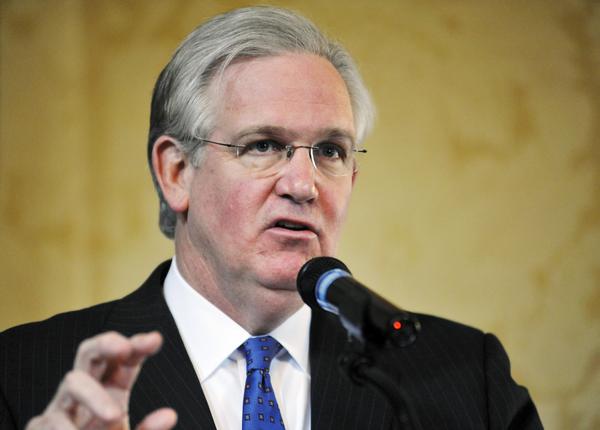
FERGUSON Mo. (Reuters) – Missouri’s governor declared a state of emergency on Monday and authorized the state’s National Guard to support police in case of violence after a grand jury decides whether to indict a white police officer who fatally shot an unarmed Black teenager.
“As part of our ongoing efforts to plan and be prepared for any contingency, it is necessary to have these resources in place in advance of any announcement of the grand jury’s decision,” Governor Jay Nixon said in a statement. The order also puts the St. Louis County Police Department, rather than police in Ferguson, Missouri, in charge of policing protests.
Residents of Ferguson, which saw weeks of sometimes violent protests following the Aug. 9 shooting death of 18-year-old Michael Brown, are braced for the possibility of more unrest, particularly if the grand jury decides not to criminally charge Ferguson police officer Darren Wilson.
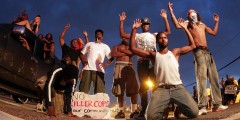
The past two days have seen protests around the area in anticipation of the grand jury’s report. Several dozen demonstrators took to the streets on Monday in Clayton, Missouri, where a grand jury is meeting.
“We want an indictment. The cops don’t like it,” the protesters chanted as they marched in freezing temperatures.
“Something about the way Mike Brown was killed started a fire in me that I can’t ignore,” said one of the demonstration’s organizers, Dhorbua Shakur, 24.
He said he had little sympathy for area residents who are tired of the demonstrations, which left some businesses in Ferguson burned out.
“They can turn this off and on with a TV screen. But this is my reality. This is my life,” Shakur said.
Decision Expected This Month
Some area schools have told parents they will dismiss students early when the decision comes and many businesses near the stretch of downtown that saw the worst rioting after Brown’s killing have boarded up their windows as a protective move.
Officials have said the grand jury’s decision is likely to come this month.
Video and audio published over the weekend by the St. Louis Post-Dispatch showed Wilson leaving the police station and returning to it hours after the shooting.
There are conflicting accounts of what happened, with some witnesses saying Brown had his hands up in surrender when he was shot and others describing a physical altercation between Brown and Wilson.
Many protesters expressed anger at word over the weekend that Wilson may be able to return to his job if he is not indicted, although local police said he would be fired immediately if charges are brought.
Protest organizers planned to demonstrate at the Ferguson Police Department when the grand jury’s decision comes back, and later at the county courthouse in Clayton.
Ferguson Mayor James Knowles expressed confidence on Monday in the city’s police department and its chief, Thomas Jackson.
“Right now, what we need is continuity in the police department and the chief has made tremendous relationships with a number of protesters and so I think that’s what those protesters want,” Knowles said. “The conversations we have been able to have with people have been very productive. … We need to have a mutual understanding before we can move forward.”
(Editing by Doina Chiacu and Peter Cooney)

Gun Sales Surge ahead of Jury’s Ferguson Decision

0

Police Shooting Missouri FundraisingBy ALAN SCHER ZAGIER, Associated Press

FERGUSON, Mo.— Some suburban St. Louis gun dealers have been doing brisk business, particularly among first-time buyers, as fearful residents await a grand jury’s decision on whether to indict the police officer who fatally shot Michael Brown.
Metro Shooting Supplies, in an area near the city’s main airport, reports selling two to three times more weapons than usual in recent weeks — an average of 30 to 50 guns each day — while the jury prepares to conclude its three-month review of the case that sparked looting and weeks of sometimes-violent protests in August.
“We’re selling everything that’s not nailed down,” owner Steven King said. “Police aren’t going to be able to protect every single individual. If you don’t prepare yourself and get ready for the worst, you have no one to blame but yourself.”
The store’s waiting list for private lessons and concealed-carry training classes extends into 2015.
Protest leaders say they are preparing for non-violent demonstrations after the grand jury’s decision is announced, but they also acknowledge the risk of more unrest if the panel decides not to issue criminal charges against Darren Wilson, the white officer who shot Brown, who was Black and unarmed.
Other gun dealers say their sales spikes are comparable to the increases seen soon after Brown’s death on Aug. 9.
“I’ve probably sold more guns this past month than all of last year,” said County Guns owner Adam Weinstein, who fended off looters last summer at his storefront on West Florissant Avenue, the roadway that was the scene of many nightly protests. Weinstein stood guard over his business with an assault rifle and pistol.
The store has since moved out of Ferguson — in part because of concerns about potential further violence.
First-time gun owners account for about 60 percent of his recent customers, King said. Among them is Dave Benne, who on Saturday purchased a Smith & Wesson handgun as shoppers swarmed the 8,600-square-foot showroom.
Benne said he’s considered buying a gun for some time, but the events in Ferguson, a town that borders his community of Florissant and shares a school district with its neighbor, were the decisive factor.
“Everyone else has one,” he said. “I figured I’d better too.”
The St. Louis County Police Department reports a sharp increase in the number of concealed-carry permits issued since Brown’s death compared with a year ago.
From May through July, the county issued fewer permits compared with 2013, records show. But from Aug. 1 through Nov. 12, officials issued 600 more permits, including more than twice as many in October as a year earlier. Fifty-three more permits were issued in the first eight business days of November than in all of November 2013.
Police spokesman Brian Schellman said “it would be naive” to say the increase has not been driven by concern over the grand jury decision.
The purchases are not limited to residents. The owner of an online business that sells tactical gear to law-enforcement agencies said his warehouse in the suburb of Chesterfield has been visited by Missouri state troopers and officers from the Department of Homeland Security assigned to help state and local police.
“None of us has ever seen anything quite like this before,” said Chad Weinman of Cat5 Commerce, which operates the website TacticalGear.com. “There is an uncertainty in the air that has my entire staff on edge. To say that St. Louis residents are concerned about what will transpire in the coming days is an understatement.”
At the Ferguson Wal-Mart, one of more than a dozen stores attacked the night after Brown’s death, managers have removed ammunition from shelves as a precaution.
The move to make the ammo less visible apparently did not deter customers. A manager said Monday that the store had sold most of its supply of bullets.

Florida Legislature to Congress and President:
“Abolish the IRS; End All Taxes on Income”

0

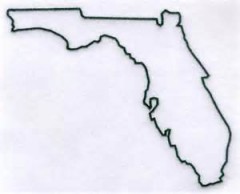
florida Congressional Democrats and Republicans are calling for “tax reform” in this lame duck session. Anticipating this, the Florida legislature sent a bold message to both parties earlier this year: Abolish the IRS and end the current Income Tax system.

Senate Memorial 118 expresses the will of the Florida House and Senate. It calls on members of Congress and the President to eliminate the following: “the personal income tax, the alternative minimum tax, the inheritance tax, the gift tax, the capital gains tax, the corporate income tax, the self-employment tax, and the employee and employer payroll tax.”
To replace all taxes on income, the Legislature called for a national retail sales tax; specifically, proposed legislation already before Congress in the forms of H.R. 25 and S.122, better known as the “FairTax®.” As written, the FairTax would raise the same amount of revenue for the federal government. It would also defund and eliminate the IRS over a three year phase out period.
After approval of several committees by near-unanimous vote, the proposal was adopted by the Florida Senate on March 20, and by the House on April 9. It was forwarded to Florida’s Secretary of State, who sent copies to the President, Vice President, and all members of the Florida delegation in Congress.
While states can’t make those in Washington, D.C., do anything, it is significant that leaders of the 4th most populous state would call for such sweeping changes. Also, as one of seven states that have no income tax, Florida is leading by example.
“The federal government, too, should have no taxes on income,” says Mark Gupton, Managing Director of the Florida FairTax Educational Association.“Under the FairTax we would be taxed on what we spend, not on what we earn.”
Without federal withholding, every worker would see a dramatic increase in take home pay.
To learn more about the FairTax and how you can help make it the law of the land, go to www.FairTax.org.for the national website. In Florida, visit www.flfairtax.org.