Home Blog Page 1426

National Coalition of 100 Black Women – Central Alabama Chapter, Inc.
0

NCBWCelebrates one year of service and announces the induction of 11 new members

The National Coalition of 100 Black Women – Central Alabama Chapter, Inc. was chartered on September 7, 2013, in Birmingham, Alabama. In keeping with its mission, the Chapter set out on a course of community service and advocacy for those persons in its service area who could most benefit from sustainable programming that may improve their lives.  The organization also advocates for those whose voices might otherwise go unheard.
In one short year, the fifty-two women who formed the Central Alabama Chapter of National Coalition of 100 Black Women, Inc. have impacted all areas of society – health and wellness, education, political advocacy, and the arts.
They made a notable presence throughout the community by co-sponsoring the stage reading of Four Little Girls by Christina Ham on September 15, 2013, in conjunction with the City’s celebration of the 50th Anniversary of the Civil Rights Movement, as well as through their various Chapter programs. These programs include, Jewlz of Wisdom Mentoring Program, Second Chance Teen Pregnancy Program, HBCU Collegiate Women’s Empowerment Conferences on the campuses of Stillman College, Talladega College and Miles College, a Health and Wellness Fair in the Black Belt, a World AIDS Day Educational Forum, a Voter Photo ID drive, and a national webcast of a Voter Education Panel Discussion that focused on modern-day voter discrimination. They were also proud supporters of the Miss Black USA Scholarship Pageant in December 2013.
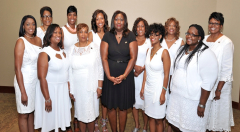
To continue this commitment to excellence, on August 3, 2014, in a private ceremony held at the Vulcan Park and Museum, the Chapter inducted from within its service area 11 professional African American women leaders with the same passion and zest to serve the community and operate in direct alignment with the Chapter’s mission.  The inductees were (front row L to R): Ms. Kameka Dorsey Cottrell, Mrs. Peggy Polk, Mrs. Bea Tatum, President (center), Ms. Lynnette Ross, Ms. LaDara Lee, (second row L to R ) Mrs. Kristi L. Oliver, Ms. Shirley Wilson,  Ms. Ruby Davis, Esq, Dr. TaShara King, Ms. Shelia Penn, Judge Brendette Brown Green, Ms. Clintonia Patterson.
In addition to beginning its second year of exemplary programming, The National Coalition of 100 Black Women – Central Alabama Chapter, Inc. is preparing for its inaugural Winter Wonderland Gala to be held December 5, 2014, at the Cahaba Grand Conference Center.  Poised as an introduction to the holiday season, the Gala will feature the nationally acclaimed, all-female group, Jazz in Pink, and dance music to keep party-goers on their feet all night.  An assortment of Spanish, Asian, and seafood inspired tapas will comprise the evening’s fare.  Admission is $125 per person or $1,250 for a table for 10.  To request an invitation, contact Adrienne Royster Bell at (205) 835-2074.

Go Pink, Honoring Breast Cancer Awareness Month with Council President Johnathan Austin! 

0

Breast Cancer AWarenessBIRMINGHAM, Ala. – Birmingham City Council President Johnathan F. Austin, is passionate about the overall growth within our communities especially as it relates to health and fitness. On Thursday October 23, he is taking his passion a “step” further as he presents the D2 Line Dancing by Desi Keith and the Magic City Ballers Dance Group by Luellen Lucas to District 5 at the “LINE DANCE FOR FITNESS” extravaganza at the Fountain Heights Recreation Center located at 1101 15th Avenue North, from 5:30 p.m. -7 p.m.
Come out and learn the latest line dances while burning calories and jamming to fitness. This event is FREE and open to the public. Instructors suggest that all participants wear comfortable clothes and rubber bottom shoes. Bottled water and refreshments will be provided.
For more information, please contact District 5 Chief of Staff Courtney Hunter at (205) 254-2679.

HBCU Connect Partners with Merck for Novel Approach to Health

0

HBCU ConnectAlliance will connect Black audience with targeted lifestyle and health information
COLUMBUS, OHIO (BlackNews.com) – HBCU Connect, the trusted source for community engagement and lifestyle information for the alumni of America’s Historically Black Colleges and Universities, recently announced a new partnership with innovative pharmaceutical company Merck. The alliance, which has just launched, will provide HBCU Connect’s educated African-American readership with targeted health and lifestyle information relevant to the Black community through a dedicated health and wellness microsite (www.hbcuconnect.com/merckengage).
The Health and Wellness microsite will include co-branded content relevant to HBCUconnect.com readers while providing a wealth of useful health information and simultaneously offering Merck a unique opportunity to engage this important customer segment. The partnership is designed to offer resources that can improve awareness and help better manage common health conditions prevalent in the African American community.
In addition to the microsite HBCUConnect.com members will have access to all of Merck’s consumer offers which include disease management, fitness tips, healthy eating, recipes, and coupon offers by accessing the comprehensive website at www.MerckEngage.com. MerckEngage.com offers health information, tips, and tools website visitors can rely on every day.
“Our readers are smart, conscious consumers and offer our partners a personal link to the most powerful movers and shakers in the African-American community,” says Will Moss, CEO of HBCU Connect. “We’re honored to partner with a corporation of such great stature and look forward to a beneficial business relationship that will benefit both of our institutions as well as our web site visitors.”

Kids, Flu and You: How to Prevent Viral Infection

0

Kids, Flu and You The start of a new school year brings excitement and anticipation of the year to come. Unfortunately, it also brings viruses (a type of germ) that can spread between children and cause sickness. Every year, 22 million school days are lost because of the common cold. Once a child is exposed to these germs, they can become infected by touching their eyes, mouth or nose. These infected children unknowingly continue to spread germs and infect more children. Viruses spread through the body quickly and cause sicknesses such as a cold and the flu. Antibiotics cannot treat these illnesses.
So what can parents do to minimize the risk of these viruses in children?
1- Prevent the spread of germs
“Helping to prevent the spread of germs and viruses is important in making sure that your child does not get sick,” said Brenda Vason, Manager of Infection Prevention and Control at Children’s of Alabama. Hand washing is the first line of defense. This simple practice protects against the spread of infectious germs. It is important that hand washing is performed properly to ensure that germs are scrubbed away.
To make sure your children are getting the most out of their wash:
•    Wash in warm water, but make sure that it isn’t too hot for little hands.
•    Use soap and lather for about 20 seconds. Make sure to get in between fingers and under the nails where germs like to hide.
•    Rinse and dry well with a clean towel.
Be sure that your children know to wash their hands before eating, after using the bathroom, after cleaning, after touching animals, after contact with someone who is sick, after sneezing or coughing or after being outside.
Getting a flu vaccination is another important way to keep from getting sick. The flu is a highly contagious virus of the respiratory tract. The flu vaccine does not cause the flu and keeps children and parents from getting sick. It is now recommended that everyone 6 months or older get the vaccine.

2- Be aware of signs and symptoms
Viral Infections can cause many symptoms that can differ from child to child. These symptoms can also change as the illness progresses.
Sometimes it can be difficult to determine if your child is experiencing a common cold or the flu. Typically flu symptoms present themselves suddenly and are more severe than a common cold. However, you should not brush these symptoms off. Symptoms, which normally begin about two days after contact with the virus, can include:
Fever ⋄ Chills⋄ Headache⋄ Muscle aches⋄ Dizziness⋄ Loss of appetite⋄ Tiredness
Cough ⋄ Sore throat⋄ Runny nose ⋄ Nausea or vomiting ⋄ Weakness⋄ Ear pain ⋄ Diarrhea

3- Know when to call the doctor
For the most part, these viral infections will go away on their own with a little rest and relaxation. However, there are some cases that require medical attention. You should call the doctor if your child:
Has flu symptoms ∙ Has a high fever or fever with a rash ∙ Has trouble breathing or rapid breathing ∙
Has bluish skin color ∙ Is not drinking enough fluids ∙ Seems very sleepy or lethargic ∙
Seems confused ∙ Has flu symptoms that get better, but then get worse

Children who are sick should stay home from school or daycare until their fever has been gone for at least 24 hours without the use of a fever reducing. For more information on this or other health and safety topics,visit www.childrensal.org.

What Sad Statistic Do More than 20 Percent of American Children Share?

0

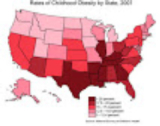
Obesity4 ways you can help alleviate the problem
While most Americans will worry about eating too much this holiday season, 16 million of our country’s children live in households that struggle to afford food, according to a 2012 report from the United States Department of Agriculture.
“We hear about ‘food insecurity’ quite a bit, especially after the 2008-09 economic crash, but I think most people don’t have a clear picture of what that means,” says Lois Brandt, a former Peace Corps volunteer and author of “Maddi’s Fridge,” (www.MaddisFridge.com), a children’s picture book that asks the question: what do you do if your best friend’s family doesn’t have enough food?
“Food insecurity means an empty refrigerator. Food insecurity means soda instead of milk. Food insecurity means a child coming to school hungry and unable to focus. Poverty may not look exactly the same in our country as it does in a war-torn region or a developing country, but it is affecting our children and their futures. Sometimes, working parents have to choose between rent and food, medicine and food, or gas and food.
Brandt suggests four things you can do to help prevent childhood hunger.
•  Support nonprofit organizations like Feeding America (www.FeedingAmerica.org).
Previously known as Second Harvest, Feeding America is a national network of food banks that feeds more that 37 million people through food pantries, soup kitchens and shelters. It’s the nation’s leading organization for countering hunger and educating the public about this crisis.
“Public awareness is important,” Brandt says. “Many people simply do not know that we’re surrounded every day by hungry children.”
•  Talk to your children about childhood hunger and how they can help.
“When I was a child I opened my best friend’s refrigerator to get a snack and was shocked to see it held almost nothing,” she says. “I didn’t know what to do.”
As an adult, Brandt says she’s amazed by the number of people who share with her their own stories of childhood food insecurity.
“Rather than sheltering your children from this sad fact of American life, talking to them about it can help nurture their compassion and empathy,” she says. “And there’s plenty they can do to help, from making posters to raise awareness, to organizing a food drive at school.”
Taking action teaches children that they do have the power and ability to change the world for the better.
•  Don’t make childhood hunger a political issue.
Of course, childhood hunger doesn’t exist in a vacuum; issues like welfare, minimum wage, income inequality and access to health care – all of which are heavily politicized – surround the problem. Whatever your take on these topics, realize that no matter the decisions a parent has made in his or her lifetime, children are innocent and have no control of their family’s circumstances.
•  Volunteer with your family at a shelter or food pantry during the busy holiday season.
While serving or cooking food for a holiday-themed meal at a shelter during Thanksgiving or Christmas does not solve the larger problem, it will affect every person whose life you touch that day. Your efforts and kind words can become a fond, lifelong memory for a child, or remind adults that others care and they’re not alone.
Volunteering also has personal benefits, not the least of which is knowing that, despite whatever problems you’re facing, you were able to help someone else.

Go Pink, Honoring Breast Cancer Awareness Month with Council President Johnathan Austin!  

0

BIRMINGHAM, Ala. – Birmingham City Council President Johnathan F. Austin, is passionate about the overall growth within our communities especially as it relates to health and fitness. On Thursday October 23, he is taking his passion a “step” further as he presents the D2 Line Dancing by Desi Keith and the Magic City Ballers Dance Group by Luellen Lucas to District 5 at the “LINE DANCE FOR FITNESS” extravaganza at the Fountain Heights Recreation Center located at 1101 15th Avenue North, from 5:30 p.m. -7 p.m.
Come out and learn the latest line dances while burning calories and jamming to fitness. This event is FREE and open to the public. Instructors suggest that all participants wear comfortable clothes and rubber bottom shoes. Bottled water and refreshments will be provided.
For more information, please contact District 5 Chief of Staff Courtney Hunter at (205) 254-2679.

American Diabetes Association Step Out: Walk to Stop Diabetes Event in Alabama Helps Local Community “Make the Link” Between Diabetes and Coronary Artery Disease

0

American DiabetesEducational campaign heightens awareness of leading cause of death in people with diabetes and encourages preventive action

ALABAMA  – In conjunction with the Make the Link! Diabetes, Heart Disease and Stroke initiative from the American Diabetes Association and sponsored by Medtronic, a “Step Out: Walk to Stop Diabetes” event on Saturday, November 1st in Birmingham at the University of Alabama will provide educational resources to participants about the link between diabetes and coronary artery disease (CAD).
Research shows that people with diabetes are at an increased risk for CAD and death rates are about two- to four-times higher than adults without diabetes. Caused by a buildup of fatty deposits, or plaque, in coronary arteries, CAD is the most common type of heart disease and the leading cause of death in the U.S., killing nearly 400,000 Americans annually.
“Diabetes and CAD represent two of the most common threats to Americans’ health today. That’s why we’re making a concerted effort with Medtronic to educate participants at our event in Birmingham and increase awareness so people can take the action needed to lead healthier lives,” said Aimee Johnson, executive director of the Association’s Birmingham office. “Walking is one way to lower the risk of diabetes and CAD. We strongly encourage people in Birmingham to gather friends, family and co-workers to walk at the event and raise funds to help change the future of diabetes. Together, we can stop diabetes, one step at a time.”
The educational resources include information on how to manage type 2 diabetes and CAD, reduce the risk for CAD, and make smart food choices. These materials will be available at the “Make the Link” table at the “Step Out: Walk to Stop Diabetes” event on Saturday, November 1st in Birmingham at 7:30a.m. They’re also available for download at
www.diabetesforecast.org/make-the-link.
For more information about the “Step Out: Walk to Stop Diabetes” event in Birmingham, please visit stepout.dabetes.org/.

American Red Cross and Sloss Fright Furnace present inaugural ‘Fright For Life’ blood drive

0

American Red Cross BIRMINGHAM, Ala.  — The American Red Cross and Sloss Fright Furnace have teamed up for a “hauntingly good” cause, helping provide blood for patients in need this fall. Starve a vampire this Halloween season, and join us if you dare at the “Fright for Life” blood drive. All presenting donors will receive one free ticket to Sloss Fright Furnace, a Red Cross T-shirt, and be entered to win a $5,000 visa gift card, courtesy of Suburban Propane. Donors have the option of donating at the “Fright for Life” blood drive at Sloss Furnace, the American Red Cross Birmingham Blood Donation Center located on Caldwell Trace, or the UAB Hospital Blood Donation Center located in the North Pavilion.

Fright for Life Blood Drive
Thursday, Oct. 16 and Friday, Oct. 17
5 to 10 p.m.
Sloss Furnace
20 32nd St. North
Birmingham, Ala. 35222

American Red Cross Caldwell Trace Blood Donation Center
Thursday, Oct. 16 and Friday, Oct. 17
7:30 a.m. to 3 p.m.
700 Caldwell Trace
Birmingham, Ala. 35242

UAB Hospital Blood Donation Center
Thursday, Oct. 16 and Friday, Oct. 17
10:30 a.m. to 4:30 p.m.
1802 6th Ave. South – North Pavilion 2390
Birmingham, Ala. 35233

To make an appointment to donate blood, eligible donors are encouraged to download the new Red Cross Blood Donor App from app stores or text BLOODAPP to 90999 to receive a download link, visit www.redcrossblood.org and enter sponsor code: FRIGHTFURNACE or call 1-800-RED CROSS (1-800-733-2767). Walk-in donors are welcome.
“We are thrilled to have a new partnership with Sloss Fright Furnace and the opportunity to give exciting rewards to our donors,” said Alicia Anger, external communications manager of the Alabama and Central Gulf Coast Blood Services Region. “The blood drive is a unique fit for the Halloween season, but it is also essential in our efforts to continue providing lifesaving blood to patients relying on the generosity of donors this fall.”
October is Liver Awareness Month. More than 6,000 liver transplants are performed each year in the U.S. Liver transplant patients may require in excess of 30 pints of blood during surgery. Volunteer donors are the only source of blood for those in need of transfusions during surgery. Giving blood is an easy way to make an impact in someone’s life.

How to donate blood
Simply download the American Red Cross Blood Donor App, visit redcrossblood.org or call 1-800-RED CROSS (1-800-733-2767) to make an appointment or for more information. All blood types are needed to ensure a reliable supply for patients. A blood donor card or driver’s license or two other forms of identification are required at check-in. Individuals who are 17 years of age (16 with parental consent in some states), weigh at least 110 pounds and are in generally good health may be eligible to donate blood. High school students and other donors 18 years of age and younger also have to meet certain height and weight requirements.

The American Red Cross shelters, feeds and provides emotional support to victims of disasters; supplies about 40 percent of the nation’s blood; teaches skills that save lives; provides international humanitarian aid; and supports military members and their families. The Red Cross is a not-for-profit organization that depends on volunteers and the generosity of the American public to perform its mission. For more information, please visit redcross.org or visit us on Twitter at @RedCross.

AARP: Three Things You Need to Know About  Medicare Open Enrollment

0

AARPDon’t miss the once-a-year opportunity to make changes to your Medicare plan

WASHINGTON, D.C.  – AARP encourages everyone with Medicare to take advantage of this year’s Medicare Open Enrollment period October 15th-December 7th to review their health and prescription drug plans for 2015. AARP wants people to know the Medicare plan changes that can be made, the four things to consider, and how to make changes.
“Whether you have original Medicare or a Medicare Advantage plan, don’t miss this seven-week window to make changes to your insurance coverage,” said Nicole Duritz, AARP Vice President, Health Education and Outreach. “If your health and prescription drug needs have changed, or your current plan has made changes, now is the time to make adjustments.”
During Medicare Open Enrollment, AARP recommends that people evaluate their current health and prescription drug coverage. This is the time to make adjustments based on changes in health status, income, lifestyle, or personal preference. For instance, people can add or switch their Medicare prescription drug coverage based on the specific medications they need. Others may want to change plans so that they can continue seeing their doctor or continue going to the same health care center.
Three Things To Know About Medicare Open Enrollment:

1. Main Changes You Can Make
Here are three changes you can make during open enrollment:
* Switch from one Medicare Advantage plan to another Medicare
Advantage plan
* Switch from one Medicare Prescription Drug Plan to another
Medicare Prescription Drug Plan
* Join a Medicare Prescription Drug Plan

2. Consider the “Four C’s”
AARP recommends that people consider the “Four C’s” when reviewing Medicare plan options:
* Cost – Compare monthly premiums, annual deductibles, co-pays,
and co-insurance.
* Coverage – Review the doctors and pharmacies included in the plan,
as well as prescription drugs and other services you need.
* Convenience – Look at the accessibility of doctors, pharmacies, and
services in the plans.
* Customer Service – Assess the quality of service a plan provides.
Quality ratings are available for most Medicare Advantage and
Medicare Part D prescription drug plans at www.medicare.gov/find-
   a-plan.

3. How to Make Medicare Plan Changes
People can make changes to their Medicare insurance plans during open enrollment by visiting the Medicare Plan Finder at www.medicare.gov/find-a-plan or by calling Medicare at 1-800- 633-4227. Medicare enrollees who want help understanding their options can contact The State Health Insurance Assistance Program (1-800-677-1116) for no-cost personalized health insurance counseling.

Other Helpful Resources
* Medicare Open Enrollment and You – Gives helpful information from AARP to make the most of your Medicare coverage.
* AARP Medicare Q & A Tool – Provides easy-to-understand answers about Medicare. (Available in Spanish at http://bit.ly/1vlSFsD.)
* Centers for Medicare & Medicaid Services – Provides comprehensive information about Medicare and Medicaid.
* State Health Insurance Assistance Program – Offers free personalized health insurance counseling.

October 2014 is Learning Disabilities Awareness Month

0

Disabilities Is your student’s calendar already out of control?  What about yours, as you try to manage daily schedules, homework and project assignments, test dates, extra-curricular activities and family responsibilities?
Well, imagine trying to juggle and balance it all if you have a learning disability; especially if it is complicated by Attention Deficit Disorder.
October is Learning Disabilities Awareness Month, and in recognition, Dr. Jade Carter, executive director of The Horizons School in Birmingham, is offering parents and families some tips to help regain control of their daily to-do list, as well as a realistic approach for the weekly schedule. In fact, Dr. Carter will outline an approach that does not  leave students or their families feeling so overwhelmed. She can address specific strategies that target student management skills and promote student accomplishments.
Learning difficulties can present themselves in many ways, but some of the most common include difficulty managing and prioritizing tasks and activities, participating in organized recreational and social activities, and managing time efficiently. The area of the brain where decisions are made, such as how and when to begin a task, homework, a school project or even a routine household chore,  may not be functioning efficiently or effectively.
This can leave students and parents feeling overwhelmed and defeated.
Dr. Jade Carter specializes in ways to improve learning, and time management and the ability to schedule play a critical role in a student’s success.  According to Dr. Carter, parents who suspect their child is having difficulties in these areas should contact their child’s teacher and discuss whether specialized testing would be appropriate.
The Horizons School serves young adults, ages 18-26, with learning disabilities, Autism and other handicapping conditions.  The only program of its kind in the Southeast, and one of just 15 in the nation, The Horizons School offers students the opportunity to learn life, social and career skills designed to teach them how to live independent, productive lives.

For more information, contact Anita Bosley at The Horizons School at 205-322-6606 or visit the website at www.horizonsschool.org.