Home Blog Page 1474

Lil Jimmy Reed performs for Barrett Elementary students

0

Lil JimmyBy Jessica Jones
Barrett Elementary School’s fourth and fifth grade students got a taste of the blues during a concert held in the school’s auditorium on May 19.
The students gathered in the school’s auditorium on a  Monday morning to hear Leon Atkins – better known as Lil Jimmy Reed, named after his idol Jimmy Reed – play popular tunes from Al Green and BB King, to name a few.
Francina Morales, the school’s music teacher, invited her friend of over 35 years to perform for the students as a way of exposing them to other genres of music.
“I think it’s important that they are well-rounded in music and they hear other types of music other than what they hear on the radio,” Morales said. “So I expose them to classical music, I expose them to jazz and I also expose them to what they like. They like rap. I expose them to that as long as there aren’t any bad words in it.”
“The blues is a part of our heritage, so that’s important for them,” she said. [They need] exposure so they know what’s out there in the world for them, not just in music but in everything, because life is more than just Eastlake and Woodlawn.”
Morales reunited with Atkins when she came across his page on Facebook and asked that he perform for the students. While they hadn’t seen each other in years, he accepted the invitation.
She also reached out to Kim Rafferty, District 2 Representative Birmingham City Council, who contributed to the cause by funding the event.
“She’s always happy to help with the local schools, especially when they’re bringing in local artists,” said Marcus O’Dell on behalf of Councilor Rafferty.
Before the concert, Morales said she talked with the students about blues music and played samples of Atkins’ music.
“The thing I liked about the concert was how the music sounded,” said Dredarrius, a student in Morales’ music class.
Another student commented that the concert made her a bit more open to the genre.
“I like that he showed me different types of music,” Jotiyashanae, said. “I’m not really into blues, but he made it interesting.”

Musical Notes

0

Musical NotesBy Esther Callens

Pure jazz with perfect swing – this is what to expect when listening to One Trip Out, the latest by the John A. Lewis Trio. Thoroughly modern with phenomenal compositions, pianist and composer John A. Lewis and company knows what real jazz is all about.
John A. Lewis, along with Lincoln Apeland and Merik Gillett, recognizes that with a trio, great music is a combined effort – a marriage of collaborated skilled.  This is why the tracks on One Trip Out, Lewis’ ninth recording, have been received with much applause. It is fantastic!
There are roughly 11 tracks on One Trip Out with two of these that are approximately one minute or under. The album opens with “Let’s Face It.” It has a fantastic upbeat tempo. This is followed by the title track in which the pace is amped up a few notches.  Performing up to the name “Sly Steps”, the trio really takes it to another level. Lewis and friends take their time with “The Grifter” as the measure slows while Lewis spots his amazing skills on the piano. One Trip Out is unquestionably a marvelous collection that will leave fans waiting for the next John A. Lewis Trio excursion.
John A. Lewis is a veteran when it comes to tickling the ivories as he has been performing for over 30 years. His father, John A. Lewis Sr., and his grandfather Howard Lewis, were promoters who managed such talents as Ray Charles, Etta James, Johnnie Taylor and numerous others. A graduate of Mountain View Junior College and Southern Methodist University, John A. Lewis studied under the tutelage of the eminent jazz educator, Dr. Thom Mason. Originally a trumpet player for numerous bands, John started playing piano and formed his own trio and composed his own music.
Album listing:  Let’s Face It; One Trip Out; A Faustian Occurrence; The Grifter; Sprang; Sixty Miles Short; Three Shades; Def Blue; Nice; Sly Steps; A Sisyphean Evdeavor.
Album Personnel:  John A. Lewis (piano); Lincoln Apeland (bass); Merik Gillett (drums).

Book News

0

Book NewsBy Esther Callens

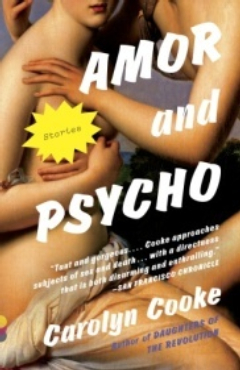
Carolyn Cooke takes it to the limits with her latest release. Amor and Psycho, its title, is a collection of short and peculiarly fascinating stories. Taking the imagination to places that are never visited, Amor and Psycho really lives up to its moniker.
The settings for these fables run the gamut – from the upscale district in Manhattan to the farmlands of California and any number of places that lie within or outside these boundaries. The only constant is the topics. Carolyn Cooke has a certain panache when it comes to writing about death, sex, violence, insanity and life’s idiosyncrasies that many will dare to think about, let alone speak upon. She does this with an edgy passion that’s riveting.
Psycho and Amor consists of 11 tales. The characters that Cooke created appear typical until you peel away the layers and then what’s left is beyond surprising.  Included among the titles are: She Bites (this definitely sheds a new light on what or shall I say who should be considered a pet?), The Snake (ironically – mix one part psychiatrist with a severe dose of commitment issues) and The Boundary (a very strange May- December relationship).  There is also the young writer and her boss – the eccentric millionaire pornographer, the young slam poet with ex-boyfriend that cuts his wrist, the castoff lover that finally gets booted and several others. Written in a profoundly witty manner, Carolyn Cooke is not afraid to expose a side seldom seen when dealing with issues that are seldom discussed.
Considered one of the best novels of 2011 was Carolyn Cooke’s Daughters of the Revolution. The PEN/Robert W. Bingham Prize, PEN/Hemingway Award finalist and others are a number of accolades she has amassed. Her short stories have appeared in numerous publications such as AGNI, The Best American Short Stories and The Paris Review. She teaches the MFA writing program at the Institute of Integral Studies in San Francisco. She makes California home.

Poet, author Maya Angelou dies at 86

19

maya1By ASSOCIATED PRESS

NEW YORK — Maya Angelou was gratified, but not surprised by her extraordinary fortune.
“I’m not modest,” she told The Associated Press in 2013. “I have no modesty. Modesty is a learned behavior. But I do pray for humility, because humility comes from the inside out.”
Her story awed millions. The young single mother who worked at strip clubs to earn a living later danced and sang on stages around the world. A Black woman born poor wrote and recited the most popular presidential inaugural poem in history. A childhood victim of rape, shamed into silence, eventually told her story through one of the most widely read memoirs of the past few decades.
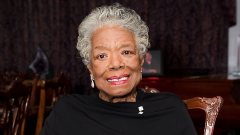
Angelou, a Renaissance woman and cultural pioneer, died Wednesday morning at her home in Winston-Salem, North Carolina, her son, Guy B. Johnson, said in a statement. The 86-year-old had been a professor of American studies at Wake Forest University since 1982.
“She lived a life as a teacher, activist, artist and human being. She was a warrior for equality, tolerance and peace,” Johnson said.
Angelou had been set to appear this week at the Major League Baseball Beacon Awards Luncheon, but canceled in recent days citing an unspecified illness.
Tall and regal, with a deep, majestic voice, she was unforgettable whether encountered through sight, sound or the printed word. She was an actress, singer and dancer in the 1950s and 1960s and broke through as an author in 1970 with “I Know Why the Caged Bird Sings,” which became standard (and occasionally censored) reading and made Angelou one of the first Black women to enjoy mainstream success. “Caged Bird” was the start of a multipart autobiography that continued through the decades and captured a life of hopeless obscurity and triumphant, kaleidoscopic fame.
The world was watching in 1993 when she read her cautiously hopeful “On the Pulse of the Morning” at President Bill Clinton’s first inauguration. Her confident performance openly delighted Clinton and made publishing history by making a poem a best-seller, if not a critical favorite. For President George W. Bush, she read another poem, “Amazing Peace,” at the 2005 Christmas tree lighting ceremony at the White House. Presidents honored her in return with a National Medal of Arts and the Presidential Medal of Freedom, the country’s highest civilian honor. In 2013, she received an honorary National Book Award.
She called herself a poet, in love with the “sound of language,” ”the music in language,” as she explained to The Associated Press in 2013. But she lived so many lives. She was a wonder to Toni Morrison, who marveled at Angelou’s freedom from inhibition, her willingness to celebrate her own achievements. She was a mentor to Oprah Winfrey, whom she befriended when Winfrey was still a local television reporter, and often appeared on her friend’s talk show program. She mastered several languages and published not just poetry, but advice books, cookbooks and children’s stories. She wrote music, plays and screenplays, received an Emmy nomination for her acting in “Roots,” and never lost her passion for dance, the art she considered closest to poetry.
“The line of the dancer: If you watch (Mikhail) Baryshnikov and you see that line, that’s what the poet tries for. The poet tries for the line, the balance,” she told The Associated Press in 2008, shortly before her 80th birthday.
Her very name as an adult was a reinvention. Angelou was born Marguerite Johnson in St. Louis and raised in Stamps, Ark., and San Francisco, moving back and forth between her parents and her grandmother. She was smart and fresh to the point of danger, packed off by her family to California after sassing a white store clerk in Arkansas. Other times, she didn’t speak at all: At age 7, she was raped by her mother’s boyfriend and didn’t talk for years. She learned by reading, and listening.
“I loved the poetry that was sung in the Black church: ‘Go down Moses, way down in Egypt’s land,'” she told the AP. “It just seemed to me the most wonderful way of talking. And ‘Deep River.’ Ooh! Even now it can catch me. And then I started reading, really reading, at about 7 1/2, because a woman in my town took me to the library, a Black school library. … And I read every book, even if I didn’t understand it.”
At age 9, she was writing poetry. By 17, she was a single mother. In her early 20s, she danced at a strip joint, ran a brothel, was married, and then divorced. But by her mid-20s, she was performing at the Purple Onion in San Francisco, where she shared billing with another future star, Phyllis Diller. She also spent a few days with Billie Holiday, who was kind enough to sing a lullaby to Angelou’s son, Guy, surly enough to heckle her off the stage and astute enough to tell her: “You’re going to be famous. But it won’t be for singing.”
After renaming herself Maya Angelou for the stage (“Maya” was a childhood nickname, “Angelou” a variation of her husband’s name), she toured in “Porgy and Bess” and Jean Genet’s “The Blacks” and danced with Alvin Ailey. She worked as a coordinator for the Southern Christian Leadership Conference, and lived for years in Egypt and Ghana, where she met Nelson Mandela, a longtime friend; and Malcolm X, to whom she remained close until his assassination, in 1965. Three years later, she was helping King organize the Poor People’s March in Memphis, Tenn., where the civil rights leader was slain on Angelou’s 40th birthday.
“Every year, on that day, Coretta and I would send each other flowers,” Angelou said of King’s widow, Coretta Scott King, who died in 2006.
Angelou was little known outside the theatrical community until “I Know Why the Caged Bird Sings,” which might not have happened if James Baldwin hadn’t persuaded Angelou, still grieving over King’s death, to attend a party at Jules Feiffer’s house. Feiffer was so taken by Angelou that he mentioned her to Random House editor Bob Loomis, who persuaded her to write a book by daring her into it, saying that it was “nearly impossible to write autobiography as literature.”
“Well, maybe I will try it,” Angelou responded. “I don’t know how it will turn out. But I can try.”
Angelou’s musical style was clear in a passage about boxing great Joe Louis’s defeat in 1936 against German fighter Max Schmeling:
“My race groaned,” she wrote. “It was our people falling. It was another lynching, yet another Black man hanging on a tree. One more woman ambushed and raped. A Black boy whipped and maimed. It was hounds on the trail of a man running through slimy swamps. … If Joe lost we were back in slavery and beyond help.”
Angelou’s memoir was occasionally attacked, for seemingly opposite reasons. In a 1999 essay in Harper’s, author Francine Prose criticized “Caged Bird” as “manipulative” melodrama. Meanwhile, Angelou’s passages about her rape and teen pregnancy have made it a perennial on the American Library Association’s list of works that draw complaints from parents and educators.
“‘I thought that it was a mild book. There’s no profanity,” Angelou told the AP. “It speaks about surviving, and it really doesn’t make ogres of many people. I was shocked to find there were people who really wanted it banned, and I still believe people who are against the book have never read the book.”
Angelou appeared on several TV programs, notably the groundbreaking 1977 miniseries “Roots.” She was nominated for a Tony Award in 1973 for her appearance in the play “Look Away.” She directed the film “Down in the Delta,” about a drug-wrecked woman who returns to the home of her ancestors in the Mississippi Delta. She won three Grammys for her spoken-word albums and in 2013 received an honorary National Book Award for her contributions to the literary community.
Back in the 1960s, Malcolm X had written to Angelou and praised her for her ability to communicate so directly, with her “feet firmly rooted on the ground.” In 2002, Angelou communicated in an unexpected way when she launched a line of greeting cards with industry giant Hallmark. Angelou admitted she was cool to the idea at first. Then she went to Loomis, her editor at Random House.
“I said, ‘I’m thinking about doing something with Hallmark,'” she recalled. “And he said, ‘You’re the people’s poet. You don’t want to trivialize yourself.’ So I said ‘OK’ and I hung up. And then I thought about it. And I thought, if I’m the people’s poet, then I ought to be in the people’s hands — and I hope in their hearts. So I thought, ‘Hmm, I’ll do it.'”
In North Carolina, she lived in an 18-room house and taught American Studies at Wake Forest University. She was also a member of the board of trustees for Bennett College, a private school for Black women in Greensboro. Angelou hosted a weekly satellite radio show for XM’s “Oprah & Friends” channel.
She remained close enough to the Clintons that in 2008 she supported Hillary Rodham Clinton’s candidacy over the ultimately successful run of the country’s first Black president, Barack Obama. But a few days before Obama’s inauguration, she was clearly overjoyed. She told the Arkansas Democrat-Gazette she would be watching it on television “somewhere between crying and praying and being grateful and laughing when I see faces I know.”
Active on the lecture circuit, she gave commencement speeches and addressed academic and corporate events across the country. Angelou received dozens of honorary degrees, and several elementary schools were named for her. As she approached her 80th birthday, she decided to study at the Missouri-based Unity Church, which advocates healing through prayer.
“I was in Miami and my son (Guy Johnson, her only child) was having his 10th operation on his spine. I felt really done in by the work I was doing, people who had expected things of me,” said Angelou, who then recalled a Unity church service she attended in Miami.
“The preacher came out — a young Black man, mostly a white church — and he came out and said, ‘I have only one question to ask, and that is, “Why have you decided to limit God?'” And I thought, ‘That’s exactly what I’ve been doing.’ So then he asked me to speak, and I got up and said, ‘Thank you, thank you, thank you, thank you, thank you, thank you.’ And I said it about 50 times, until the audience began saying it with me, ‘Thank you, THANK YOU!'”

JefCoEd’s two Gates Millenium Scholars

0
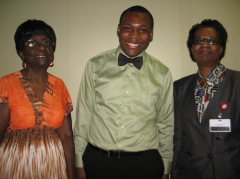
Will Fuller of Minor High School with his grandmother Mattie Fuller, at left, and his principal Dr. Juanita Inman Vann, right.


We are proud to honor our two Gates Millenium Scholars from JefCoEd Schools this year. The value of this prize sponsored by Bill and Melinda Gates is worth $600,000. All undergraduate and graduate and any Phd the student wants to pursue in any school is provided free to each of the 1,000 winners. The scholarship includes room, board, travel, and miscellaneous expenses.
John Blanding plans to attend Auburn University and then law school and hopes to be an attorney and later appointed a federal judge.  There were 52, 000 applicants and 1,000 fortunate winners nationwide.
Will Fuller wants to be a broadcast journalist with CNN and will attend Atlanta’s Clark University.
It is quite something and since the program’s inception in 2000, JefCoEd has had only six GMS scholars, including these two.

One Man’s Opinion

0
Dr. Jesse J. Lewis, Sr.

Voting June 3rd is a MUST
by Jesse J. Lewis, Sr.

There is no reason on God’s earth why Black people should not turn out to vote in abundance. For those of us who were reared in the ’50s, ’60s, ’70s, and ’80s, we realize what a difficult time we had exercising our right to vote even though we had been born in a country which coined the phrase, “land of the free.”
There are some groups of people spending a lot of time and a lot of financial resources to make sure you do not exercise your right to freedom. As a Black American you can not afford not to vote in any election. It doesn’t make any difference whether anyone in any group of people intentionally puts forth laws that would hinder the process. This should make you more determined.
The Birmingham Times does not endorse candidates. This is left up to the political organizations such as unions, the Democratic Party and the Republican Party. We just assume that you have enough sense to vote for a candidate  who represents your views. If a candidate has served in an office for four years and did not do anything to help his/her constituents, why would you think they will change in the next four years?
As always, usually when there is no national election, there is a low turn out. A low turn out, as a general rule, favors the incumbent. You can change this by having a high turn out and, if you do not like the incumbent, make some changes.
The heated races are going to be the Blacks’ County Commissioner race between George Bowman, Sandra Little Brown and several known candidates. There’s only one white Commissioner who has any opposition and his chances of winning are about 95 percent. Several State House seats have serious opposition. The most heated and controversial one is in District 60 between Juandalynn Givan and Arthur Shores Lee.

Candidates for 2014 Primary

Governor
Kevin Bass- D
Parker Griffin- D
Stacy Lee George- R
Bob Starkey- R

Lt. Governor
Stan Cooke –R
Kay Ivey- R

Secretary of State
Reese McKinney-R
John Merrill- R
Jim Palmer- R

State Auditor
Dale Peterson- R
Hobbie L. Sealy- R
Adam Thompson- R
Jim Zeigler- R

State Senate

Senate 17
Joe Cochran-R
Gayle H. Gear-R
Brett King- R
Jim Murphree-R
Adam Ritch-R
Jim Roberts- R
Shay Shelnutt- R

State Representative

House 14
Richard Baughn- R
Tim Wadsworth- R

House 16
Bobby Humphyres-R
Kyle South- R

House 43
John Bahakel- R
Cheryl Ciamarra- R
Doug Clark- R
Gina H. McDonald- R
Arnold Mooney- R
Don Murphy-R
Amie Beth Shaver- R

House 44
John Amari- R
Danny Garrett-R
Joe Freeman- R

House 46
Justin Barkley-R
Pamela Blackmore-Jenkins- R
David Faulkner- R
Steve French- R

House 47
David Wheeler-R
Jack Williams- R
Lawrence Conaway- D
Chris Cummings- D
Patricia A. Todd- D

House 55
Eric Major- D
Roderick “Rod” Scott- D

House 56
Louise Alexander- D
Lawrence McAdory- D

House 59
William A.Barnes- D
Chris Davis- D
Mary Moore- D

House 60
Juandalynn “LeLe” Givan- D
Arthur D. Shores Lee- D

Jefferson County Commission
Place 1
George Bowman- D
Earl Hilliard, Jr.- D
Roderick Royal- D

Jefferson County Commission
Place 2
Sandra Little Brown- D
Max Michael- D
Shelia Smoot- D
Shelia Tyson- D

U.S.Representative
District 6
Scott Beason- R
Will Brooke- R
Paul DeMarco-R
Chad Mathis- R
Gary Palmer- R
Tom Vigneulle- R

District 7
Tamara Harris Johnson- D
Terri Sewell- D

County Offices
Sheriff
Wallace Anger, Jr-D
Charles “Todd” Henderson-D

Tax Assessor
Joel Blankenship-R
Tony Ladu-R

Assistant Tax Assessor
Andrew Bennett-D
Charles R. Winston-D

Tax Collector
J. T. Smallwood-D
Jeanetta Bickerstaff-Miller-D

This article is not about who’s right or who’s wrong. It’s not about endorsing candidates. It’s about voter turn out. If it takes standing in line in the rain, sleet or snow, for 12 hours or more for Black people to vote, this is what we should do on every issue, regardless of how large or how small, if there is a voting taking place, we should be there to participate. We fought and died for this right. It would seem to me that it’s the older citizens’ job to educate the younger generation and make sure they get the message.
When you go to the polls to vote, the thought in your mind should be: “This one vote I am casting will make a difference.”

email: jjlewis@birminghamtimes.com

The Way I See It

0

Hollis Wormsbyby Hollis Wormsby, Jr.

Local Food Production Could Be Key to Healthy Local Economy
 
In just the past week there have been multiple stories on the liabilities we face in this country because so much of our food is now being imported from China. For those of us who are pet lovers we have heard for years that Chinese made pet treats had killed thousands of American family dogs. This past week the FDA finally acknowledged the truth of these assertions when they announced a ban on all pet treats made in China. Two of the nation’s largest pet store chains announced they had already stopped purchasing pet treats from China as a company policy even before the change.
I read an article last week that stated that 70 percent of the apple juice sold in America is processed in China, a land where arsenic levels are extremely high, but this apple juice is never subjected to American food standards because of some backdoor agreement that our corporate fathers were able to push through. Almost as disturbing in this article were the comments in there about the added preservatives that had to be added to food because of the need for longer shelf life for food processed through our corporate system. According to the article because of the added chemicals, and the need to heat fruit juice to a certain temperature in order to be able to store if for long  periods of time, all of the essential minerals are destroyed in the production process. Some are artificially added back in later, but that is a whole ‘nother story. In addition, so much sugar is added to the juices in these processes, that for folks concerned with diabetes a glass of many of these juices is more harmful than soda.
I will share this and then move on. The most amazing thing I discovered when I was following this story is that we are at the point where the American poultry industry, actually wants to slaughter chickens, freeze them whole, send them to China for processing and then ship them back to the U.S. for sale. This so they can make a penny or two more on the dollar.
Corporations focus on profit at the expense of food quality and quality of life in this case. I think there is a simple way to break their backs on this one, we need to go back to locally produced and sold food. There was a time when every town had a butcher, a dairy, local vegetable shops and the like. If orange juice was made locally all we would need would be oranges, squeezing equipment and bottling equipment. And then when you came into my orange juice shop I could give you fresh squeezed orange juice with all the real nutrients and no preservatives.  Not only that but I could create local jobs to make our local economy stronger.
As we create these new local businesses, we also need to change our procurement procedures locally to create a market for ourselves. Our local schools could contract to buy all of their juices and vegetables from our locally owned shops, giving them a base market to begin with. Corporations now sell food to our prison system, let’s alter our policies and set it up where our local corporations get priority for providing food and other services to our prisons and even our military.
It only seems impossible because we have been doing it the way we are for so long, but as Gil Scott Heron would say, come on back with me brothers and sisters to a time when. Local businesses mean local jobs. Local jobs mean less crime. Less crime means higher property values. Higher property values mean more revenue for the City. These are all good things and all things that will make this city more attractive to new residents while improving the quality of life for existing residents.  Or at least that’s the way I see it.

(Do you have a question or comment on this column?  Look me up on Facebook/HollisWormsby or email me at hjwormsby@aol.com)

Powdered Alcohol Presents a Serious Threat to Alabama

0
Rod Scott

Rod Scott photo 2Powdered alcohol is just the latest in a series of drugs that have posed a threat to Alabama. Along with synthetic marijuana and other products, Alabama is in danger, especially the children in our state. The Alabama Legislature must take action to prevent powdered alcohol from being accessible and causing more harm to our state and to our children.
The Alcohol and Tobacco Tax and Trade Bureau briefly granted approval to a new powdered form of alcohol earlier this month. Now, shortly a couple of weeks later, the agency withdrew its approval, saying the approval had been given in error. This was by far a terrible mistake.
This incident has brought the issue and legality of powdered alcohol to national media headlines and has parents and addiction experts and counselors across the nation worried. It is important that our state legislature take pre-emptive action before this dangerous product starts showing up in our local grocery and convenience stores.
It has come to my attention that many Alabamians are unaware of what powdered alcohol is and how it works. The product is not new and has been sold abroad since the early 1970s. However, it has never been sold or produced in the United States. Powdered alcohol works just like coffee or tea. There is a reason we haven’t had it and that reason has not changed.
We can no longer sugarcoat problems, especially not here in Alabama. Underage drinking does exist and it’s a battle we will continue to fight. Parents and groups across the country have come out in strong opposition of powdered alcohol. This product would be easy for those underage to obtain. It can be extremely dangerous, especially if one were to snort the powder rather than mixing it.
Companies that make the substance have warned that snorting their product can get a person drunk almost instantly. This alone could easily lead to abuse and overdosing, in addition to the countless amount of accidents and fatalities of innocent people this drug will cause. The chemicals used to turn the alcohol into a powder are some of the same elements found in our cabinets like detergents. Putting this into your body just isn’t healthy!
We still do not have answers to many questions. We do not know the long-term consequences of this drug or how ingesting it, without mixing it will affect the body. We do not know if it will cause toxicity in the blood or what effect it may have on vital organs. These questions still remain unanswered.
This drug will easily get into the hands of underage adults and teenagers. Powdered alcohol is easy to conceal which makes it easier to sneak it into places like schools, movie theaters, or sporting events. Today teachers are constantly having to check students’ containers from home to make sure the water bottle actually contains water and that the sweet tea is actually sweet tea. How far is this going to go? At one time, the website of the company that produces this powdered alcohol actually recommended sneaking it into concerts and sprinkling it on food!
For a company to suggest illegal actions makes me uneasy. If they are willing to endorse crimes, I’m worried that they may be just as irresponsible with their product itself. Clearly this company does not care about the safety of others or the danger they are willing to cause.
Adults can make their own choices. It is not up to me to legislate the choices of adults in our state. But this issue is not about letting grown-ups make their own choices. This is about public health and protecting our children and the people of our state.
This drug is a danger to the state of Alabama and to our children. Powdered alcohol is a dangerous substance that could potentially cause significant health problems, including addiction and overdosing. At the very least, the federal government needs to do more research before allowing this product to be sold in American stores.
I believe that powdered alcohol is a threat to Alabama. It is hard enough to keep our kids safe and to keep them in school, now this is just another substance parents and law enforcement across the state have to worry about.
Legislators must be proactive about this issue and by any means necessary fight to keep powdered alcohol out of Alabama.
Representative Rod Scott

The Southwestern Athletic Conference announces football and basketball championship attendance increase

0

SWAC FellowshipThe Toyota SWAC Football Championship and Basketball Tournament attendance increase following its move to Houston

BIRMINGHAM, Ala. – In the first year of moving its football championship and basketball tournament to Houston, the Southwestern Athletic Conference announced today that both events received a significant increase in attendance.

The football championship and basketball tournament combined, including events sponsored by the SWAC during the week, totaled 87,492 in attendance. The basketball tournament numbers increased 23 percent from the previous year reaching 45,390. The attendance from the tournament games totaled 33,836, receiving an increase of more than 12,000 from last year.

In regards to the economic impact on the Houston metropolitan area, the football championship game was estimated at $44 million and the basketball tournament at more than $3.5 million. Toyota became the title sponsor for the football championship game and basketball tournament in 2012.

The football championship game attendance jumped into the record books ranking third all time at 38,985. The attendance ranked 29 out of 44 NCAA Division I FBS and FCS combined conference championships and bowl games. For the FCS games attended across the nation in 2013, it ranked sixth overall, joining five other SWAC match ups listed in the top 12.

“We are excited about the increase in attendance, but we (SWAC) have to credit our fans for supporting our football championship and basketball tournament’s move to Houston,” said SWAC Commissioner Duer Sharp. “We believed moving the basketball tournament to the Toyota Center and relocating the football championship game to NRG Stadium (formerly Reliant Stadium), was in the best interest of our conference body, student-athletes and fans. We are anticipating more support next year as a result of our fans embracing the professional venues and their enthusiasm for SWAC championships.”

The SWAC finished number one in the FCS in average football attendance per game with 12,415 with a total of 682,841. The total includes conference member home games and HBCU Classics featuring league match ups.

The SWAC has now held the highest per game average in attendance overall for 34 of the last 35 years including eight consecutive. Alabama State and Alabama A&M’s match up in the Magic City Classic was first among FCS games attended in 2013 while Southern’s average home attendance (20,107) ranked first in the league and eighth nationally among mid-major schools.

A complete list of football attendance rankings among SWAC members, FCS games and FBS Bowl and Championship games are listed on www.swac.org.

Students graduate from Omicron Omega chapter’s 
Emerging Young Leaders program

0

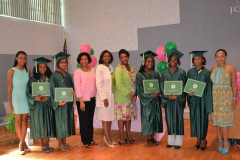
BIRMINGHAM, Ala. – Members of Omicron Omega Chapter, Alpha Kappa Alpha Sorority, Inc. (AKA) recently held a graduation for its Emerging Young Leaders (EYL) members at the Jefferson County Committee for Economic Development building. The graduates will transition from middle school to high school this summer. Dr. Gwendolyn Tilghman, President of Omicron Omega Chapter served as mistress of ceremony and Ms. Isis Jones of 98.7 FM Radio served as guest speaker. Ms. Jones delivered an inspiring message to the graduates, parents, and friends in attendance that included a reflection of her going through a very similar process as a middle school girl. AKA members from Samford University also led all EYL members in the Black Girls Rock! Pledge to motivate them.
Ahmya Blue from South Hampton School K-8, Tymiah Byers from Clay Chalkville Middle School, Tre’Onna Perryman from Irondale Middle School, Shelby Robinson from Thompson Middle School, Erryial Sanders from Rudd Middle School, and Alexis Walton from Huffman Middle School—all received graduation certificates and engraved tokens of appreciation.
In her final comments, Mrs. Marsha Savage, EYL Chairman, encouraged graduates with these final words of advice, “Remember that there are many ways to serve the common good. You should continue practicing the principles learned in EYL as you transition in to high school and be the change you wish to see in this world.”
A reception immediately followed the graduation ceremony consisting of a tomato and avocado salsa with chips, chicken salad croissants and wraps, tomato and cheese skewers, fresh fruit kabobs, club mini buns, cupcakes, and punch prepared by Ms. Angelia Strode.
Emerging Young Leaders (EYL) is a signature program of Alpha Kappa Alpha Sorority, Incorporated which focuses on the development of skills and talents of middle school girls (grades 6, 7, and 8) with the potential for becoming leaders within their local communities and beyond. The program is designed to provide leadership development, civic engagement, enhanced academic preparation, and character building.
Members of the EYL Committee are Jamie Dobbins, Co-chairman; Donna Turner, Delfreda Coleman, Fatima Carter, Ellise Washington, Linda Roberson, Chrystal Tolbert, Mamie Alexander, Demetrius Singleton, Sasha Willingham, Patricia Bowman, Theadora Fancher, Tineka Peoples, LaRonda Reese, Angela Day, Angelia Strode, Sarah Buie, Jana Williams, Dominique Lindsay, Stephanie Millsap, and Tonya Perry.
Omicron Omega Chapter of Alpha Kappa Alpha celebrates 90 years of service in 2014. The chapter was chartered in 1924 becoming the 15th chapter of the sorority. It also has the distinction of being the first graduate chapter to be chartered in the South Eastern Region. Omicron Omega has supported and provided charitable donations to organizations that include, but are not limited to, Children’s Hospital – Magic Moments and March of Dimes, The American Heart Association, Miles College, Sickle Cell Foundation, The American Diabetes Association, and United Negro College Fund. Collectively and individually, our members proudly volunteer and spend hundreds of hours impacting lives at Jessie’s Place, Greater Birmingham Ministries, Pathways and other programs. Our scholarship programs have benefitted hundreds of students in the Greater Birmingham community. Omicron Omega has oversight of five undergraduate chapters on various college and university campuses in Birmingham and surrounding areas.

Alpha Kappa Alpha is an international service organization that was founded on the campus of Howard University in Washington D.C. in 1908. It is the oldest Greek – lettered organization established by African-American college educated women. For more information about Omicron Omega Chapter or AKA visit www.akaomicronomega.com  or www.aka1908.org.