Home Blog Page 1509

A Foundation for Living
0
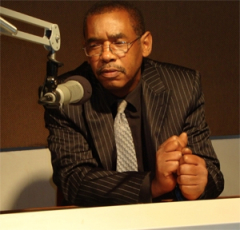
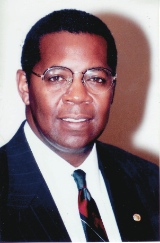
Rev. Reid
Rev. Reid
Rev. Reid

Casting Pearls Before Swine

A rich man accumulated so much gold that there was no place to keep it. He woke up one day and it had turned to dust. He went to a wise man and was told to take the dust to town and if somebody recognizes it as gold he would understand. He took trucks of the dust to town and people seeing these trucks thought the man crazy. A woman came who asked him, where he got so much gold? He asked the woman ’Can you see the gold here?’ She said ’Oh yes. He asked the woman what was her secret? She said it is only a question of associating with the right people who have eyes to see. The world as we see it can be hell or heaven. Gold can be dust or gold. It is only a question of who we allow into our life as we travel, especially as we move on a spiritual path. When we care so much about what others think that we change who we are to suit the world we are casting the pearls given to us by God before swine.
There are two reasons not to cast pearls before swine. One, because it is a waste of time and two, because it could result in our undoing.
One of the most important messages Jesus taught was to create a sacred environment when we are in communication with Him and that environment should include personal space. That is the space we set aside to receive blessings from the Lord. The problem is many of us who are on a spiritual path, allow people, places and things to come into our life and contaminate our external and internal sacred space. We surround ourselves with dust and expect gold. If you hang around a barbershop or beauty parlor long enough you are bound to get a haircut or hairdo.
Sometime we have to watch the places we go, the things we do and the people we allow into our life. But how exactly do we do this? Why should we not cast our pearls before swine? Let me share two ways. First it is a waste of time. The Bible says, “Do not give dogs what is sacred.” The dog was regarded as an unclean animal by the Jewish law. They represented the snarling, scoffing, opposition to the Word. It is generally understood that communicating God’s Word, and the truths of the Gospel is comparable to pearls and the effort to communicate it to a person who does not want to hear it is like preaching to the wall, or trying to force feed a child.  Many people have some of the traits of wild dogs. To try to instill Holy things into brutal minds set on not hearing it is like giving that which is Holy to dogs.
Another reason we should not cast our pearls before swine is because trying to force the Word on people who do not want it could result in our own undoing. Again the Bible says, “Do not throw your pearls to pigs.” The swine also were considered unclean in Jewish law and in some circles even today. They would have no use for pearls, and perhaps would rush upon those who scattered the pearls. So, too, there are people in this world so dull, thuggish and senseless, as to reject pearls of truth, justice and what is right. They are literally unlovable but not incapable of love.  It is our duty to help and to try to save others, but we must use common sense when people do not want to hear the truth.
Here is the point, we must follow Jesus in this matter. Jesus says, “If anyone will not welcome you or listen to your words, shake the dust off your feet when you leave that home or town.” To throw the sacred to those who do not want to hear and to live our life according to the world could cause us to die in sin. This can be avoided simply by trusting God to provide the spiritual increase in our life through prayer and meditation

A Quest to know God

0
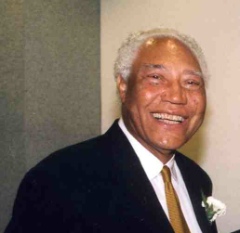
Ms. Henrietta Tripp
Ms. Henrietta Tripp
Ms. Henrietta Tripp

OMNIPRESENCE OF GOD
There seems to be a consensus that the Almighty God is at a certain location and He does not know what is going on over here, wherever over here is.
The reason for the puzzling statement is because many church service settings seems to be completely out of touch with the Author of the church, and His order of rendering service to Him of which He ordained. He, Jesus, is whom church is all about, and that is why everyone comes together to enjoy the presence of the Lord with one to another fellowshipping in love. If you never feel a touch from the Lord, why do you pretend to be going to church to worship the Lord among a people whose hearts should be set for worshipping Him, and Him alone. Jesus said He is not coming back for bricks and mortar, but a holy people without blemish, a set aside people, with prepared hearts to meet the Lord. [Ephesians 5:27]
God is everywhere simultaneously, and He said, “He neither slumbers – slumber means He never gets weary nor sleepy or tired [Psalm 121:4].” This tells me that the Lord is fully aware at all times, and He knows all about your thoughts and activities, night and day. What a big God we all have access to.
If you are His, meaning have accepted His Son Jesus into your heart, you have personal access to Him, because He lives in your heart, and if you have not accepted Jesus, and want Him to come and live in your heart too, just ask Him in, and tell Him you are sorry for all your sins. You see, He already knows all about you, and He is waiting at your heart’s door to be asked in. You see, He is quite a gentleman. You must ask Him into your heart. He is waiting for you, ASK HIM IN.
Hallelujah!  I LOVE HIM WITH ALL MY HEART. I try to please Jesus in all I do.  Do You Do That Too? Good.
www.thealmightyeyes.com

One Man’s Opinion

0
Dr. Jesse J. Lewis, Sr.

Minority, female TV owners disappearing
by Jesse J. Lewis, Sr.

Before I mention the study done three to four years ago by McGannon Communication Research Center, regarding female owners of TV stations, I would like to mention the fact that Leroy Galliard, Dr. James Montgomery, Oscar Hyde and myself were the owners of Channel 42 TV station for almost six months. This was the same group that founded the American National Bank. We were approved by the FCC and that depended on a background check and the dollar amount we had to put up for the purchase.
The money was in place and they had just finished the background checks. We had all passed the scrutiny. About 20 days before every aspect was supposed to be finalized, Oscar Hyde, who was the Chairman, was indicted and the rest is history regarding Channel 42.
The Federal Communications Commission (FCC) is poised to eliminate longstanding limits on media ownership. These changes could have a tremendous negative impact, especially on broadcast outlets owned by women and minorities. The pressures of consolidation and concentration brought on by bad decisions have crowded out minority owners, who tend to own just a single station and find it difficult to compete with their big-media counterparts for programming and advertising revenue.
The Third U.S. Circuit Court of Appeals chastised the FCC for ignoring the issue of female and minority ownership. But since 2003, the FCC has done very little to address the issue. The FCC has abdicated its responsibility to monitor and foster increased minority and female broadcast ownership. In fact, the Commission cannot account for the actual state of female and minority ownership.
This report provides the first complete assessment and analysis of female and minority ownership of full-power commercial broadcast television stations. The purpose of this study is to provide the public, Congress and the FCC with a complete understanding of the state of female and minority television ownership, as well as the potential impacts of changes to media ownership rules.

The findings of the study:
• Women comprise 51 percent of the entire U.S. population, but own a total of only 67 stations, or 4.97 percent of all stations.
• Minorities comprise 33 percent of the entire U.S. population, but own a total of only 44 stations, or 3.26 percent of all stations.
• Hispanics or Latinos comprise 14 percent of the entire U.S. population, but only own a total of 15 stations or 1.11 percent of all
stations.
• Blacks or African Americans comprise 14 percent of the entire U.S. Population, but only own a total of 16 stations, or 1.3 percent
of all stations.
• Asians comprise 4 percent of the entire U.S. population but only own a total of six stations, or 0.44 percent of all stations.
• Non-Hispanic White owners controlled 1,033 stations or 76.6 percent of all stations.

The state of female and minority ownership in the broadcast sector is even more shocking compared to other industries. While female and minority ownership has advanced in other sectors since the late 1990s, it has gotten worse in the broadcast industry.
• Women owned 28 percent of all non-farm businesses in 2002, but currently own less than 5 percent of commercial broadcast
television statins.
• Minorities owned 18 percent of all non-farm businesses in 2002, but currently own approximately 3 percent of commercial
broadcast television stations.
• In sectors such as transportation and health care, all minority groups own businesses at or near their proportion of the general
population. But in the TV broadcast sector, the two largest groups – African-Americans and Latinos – barely own 1 percent of
stations.
• The level of minority ownership in the general non-farm sector rose 23 percent from 1997 to 2002, however, from 1998 to 2006
the level of minority broadcast TV ownership dropped.

Our analysis suggests that minority-owned stations strive in more competitive, less concentrated markets. Even if the size of the market is held constant, markets with minority owners are significantly less concentrated than markets without minority owners. Though the national aggregate ownership data is telling, data at the local market level shows an even starker picture. Minorities are vastly under represented at the Designated Market Area (DMA) level, even in areas where minorities are the majority.
The FCC should seriously consider the effects on minority owners and viewers before it moves to enact policies that will lead to increased market concentration. The implications of this study should be clear: further industry consolidation will diminish the number of minority- and female-owned stations. If just a handful of female and minority-owned stations were lost to consolidation, these already anemic numbers would fall precipitously.

e-mail: jjlewis@birminghamtimes.com

The Way I See It


0

Hollis Wormsbyby Hollis Wormsby, Jr.
Easy Access to Bail Kissing Cousin to No Snitch Policy in Culture of Violence  
A couple of weeks ago I talked about the impact of the no snitch policy on the culture of violence that is too present in many of our communities. I appreciate the response to that column from many of you, even those who asked what culture of violence. This week I would add that the kissing cousin to the no snitch policy in the culture of violence is too easy and repeated access to bail.
In Montgomery this week Satarus Smith is charged with shooting a witness who was to testify against him in a murder case while he was out on bond. Key phrase – while he was out on bond for murder.  Smith shot the witness in the face but somehow was only charged with second degree assault, intimidating a witness and first degree robbery.  Surely he is now being held without bail, you would think, huh? Well actually not. He now has bond set at $225,000, which means if he can cut a deal with a bail bondsman he will be free and clear again. Of course he is not a danger to the community, he has only murdered one man and shot a witness.
Here in Birmingham the man who is alleged to have shot the teen at Railroad Park was released on bond within 24 hours of his arrest. A week later a court had to revoke his bond because he was found to be threatening and intimidating the only witness. Is it any wonder now that the only witness is said to be ready to recant their testimony.
The three boys who did the quintuple killing at Five Points West were out on bail for attempted murder and other charges at the time of the Five Points killings. They had established more than enough of a record to show they were a danger to the community, yet they were free on unsupervised bail at the time of what we hope will be their final heinous crime.
Another point to be made here is that in my opinion bail levels are set in such a way as to place a value on the life of the victim. Murder a police officer, your bail will be a million dollars. Murder a low income African American female and your bail is likely to be 30 to 60 thousand dollars. That is wrong. All life should be valued the same.  And if bail should be a million dollars if you kill a police officer it should also be a million dollars if you murder a poor Black woman.
Too many of us still look at bail as a civil right. We hold on to this mentality that we don’t want the man putting our boys in jail and keeping them there. Hello! We have a Black Mayor, a majority Black Council, a Black Police Chief and Black control over almost every element of this City. It is not the Man putting irresponsible people away, it is responsible people who want to live a decent life in this City that should be demanding that attitudes toward bail should be revisited.
Why is it that a meth lab in Hoover will get you bail set at half million dollars, and a murder in Birmingham can have bail as low as thirty thousand dollars? And who benefits from low bail but repeat offenders who seem to care about nothing but themselves?
I have been told that there is a standard bail schedule and that is why bail is so low in Birmingham, but that simply is not true. The standard schedule is suggested for other areas as well but in areas that are serious about reducing or eliminating crime, judges are encouraged to use their discretion to set bonds at levels that will keep criminals off the streets.
There is one corollary thing I have learned as I have looked at this issue over the years. Our jails and prisons are crowded and that is one excuse for releasing violent criminals. But at any given moment I would venture to claim that over 60 percent of the people in our jails and prisons are there for non-violent crimes. You have homeless people who spend months in jail because they cannot pay a fine, while you release a murderer in the community. I also think we need to prioritize who we use our jail space for. First priority should be for people who are a potential threat to the community.
So to summarize three steps that might help reduce the culture of violence would be: attack the no snitch policy; insist on higher bonds and bond restrictions for violent crimes; and prioritize our jail space for violent offenders.
Or at least that’s the way I see it.

Federal Race-Raters Dealt Major Court Defeat

0

David Almasi
dalmasi@nationalcenter.org or Judy Kent at (703) 759-7476 or jkent@nationalcenter.org

WASHINGTON, D.C. – In a case in which the Project 21 Black leadership network supported the defendant with a legal brief, an appeals court just delivered a stinging rebuke to the federal Equal Employment Opportunity Commission for highly unprofessional methodology in attempting to prove racial disparities in a company’s job applicant credit checks.
“We decided to weigh in on this case because the EEOC’s effort to expand the use of disparate impact analysis went far beyond having any logical nexus with discrimination,” said Project 21 Co-Chairman Horace Cooper, a former professor of constitutional law and former congressional leadership staffer. “Instead, such analysis would simply serve as a burdensome and costly barrier to job creation. When we found out about the bizarre ‘race-rating’ technique, we felt even more obligated to share our views. Today’s ruling vindicates our concerns.”
In the 6th Circuit Court of Appeals, a three-judge panel on April 9 unanimously ruled to exclude the findings of the government contractor General Information Services and the testimony of statistical analyst Kevin Murphy in the case of Equal Employment Opportunity Commission v. Kaplan Higher Education Corporation, et al. This affirms the decision of the U.S. District Court for the Northern District of Ohio and the summary judgment that ends the EEOC’s complaint against Kaplan.
In the opening paragraph of Judge Raymond Kethledge’s opinion, the jurist succinctly described the awkward nature of the EEOC’s complaint against Kaplan:

In this case the EEOC sued the defendants for using the same type of background check that the EEOC itself uses… [T]he EEOC runs credit checks on applicants for 84 of the agency’s 97 positions… For that practice, the EEOC sued Kaplan.

The EEOC alleged that Kaplan, a higher education provider that had experienced problems of financial improprieties among its employees and later hired several third-party vendors to perform credit checks on senior executive and other applicants who would be involved in financial matters, illegally created a disparate impact that negatively affected minority applicants. At issue in the case was the EEOC’s methodology of allowing contracted “race raters” who largely relied upon photos provided by state agencies that issue driver’s licenses. The photos were used to determine an applicant’s race. Companies doing the credit checks for Kaplan did not record applicants’ race.
“It defies logic that a federal agency would seek to punish a private company for instituting a widely-accepted business practice – especially since this agency engages in the same practice,” said Project 21 Co-Chairman Cherylyn LeBon Harley, a former senior counsel for the U.S. Senate Judiciary Committee. “This is an example of the lengths to which this presidency will go to advance their divisive agenda. It also highlights the importance of the courts as a rational body to counter these types of policies.”
The legal brief in to which Project 21 was a party, written by the Pacific Legal Foundation and also joined by the Cato Institute, Center for Equal Opportunity and Competitive Enterprise Institute, argued, in part:

[The EEOC’s] use of race raters directly contradicts its own directives. When the government refuses to rely on self-identification, it must resort to using so-called racial identifiers, and thus stereotypes and sweeping assumptions. By opting not to ask the individuals to identify themselves, EEOC unilaterally made itself the definer and decider of race. It is impossible to define race in such a simplistic way, stamp an individual with a racial classification and simultaneously treat them with dignity…

Equality before the law means that government will not categorize people based on unscientific, stereotypical criteria, and it allows each person to define himself or herself, and thrive as an individual.
Judge Kethledge called the lower court’s ruling “a meticulously reasoned opinion,” and concluded:

The EEOC brought this case on the basis of a homemade methodology, crafted by a witness with no particular expertise to craft it, accepted only by the witness himself. The district court did not abuse its discretion in excluding Murphy’s testimony.

“Frankly, after seeing the district court’s ruling, I was surprised that the EEOC would even pursue such an appeal. The unanimous ruling by the 6th Circuit demonstrates just how untenable the EEOC’s position was,” added Project 21’s Cooper. “Telling employers who haven’t asked or in any way inquired about the racial status of applicants that they cannot adopt simple, widely-used preventative measures to ensure that potential employees won’t engage in wrongdoing is unfair. Using government contractors to scour applications and get third parties to provide photos to guess the applicants’ race to show how it might constitute racially-biased disparate impact is just plain bizarre.”
Project 21 is currently involved in the U.S. Supreme Court race preferences case of Schuette v. Coalition to Defend Affirmative Action as well as Fisher v. University of Texas at Austin on remand from the Supreme Court to the 5th Circuit Court of Appeals. In the previous U.S. Supreme Court term, it was involved in Fisher v. University of Texas at Austin and the voting rights case of Shelby County, Alabama v. Holder.
Project 21 legal experts and other members of the organization have discussed these cases and others in media interviews in venues that include MSNBC, the Fox News Channel, HBO, Glenn Beck’s Blaze TV, the nationally-syndicated Jim Bohannon radio show, Florida Public Radio, the Christian Science Monitor, Reuters and many others.
Project 21, a leading voice of Black conservatives for over two decades, is sponsored by the National Center for Public Policy Research, a conservative, free-market, nonprofit think-tank established in 1982.

Contact David Almasi at dalmasi@nationalcenter.org or Judy Kent at jkent@nationalcenter.org

A Benchside Chat with Judge Tracie A. Todd

0

Tracie ToddCircuit Judge for the State of Alabama Tenth Judicial Circuit – Criminal Division

The American Legal System, since its inception, has been grounded in legal rules, theories and ideas that keep us subservient to its commandments, while at the same time creating a shroud of mystery for lawyers and laypeople alike. Even some of the most learned “legal eagles” find themselves wrestling with notions that sometimes seem contradicting but work well together for the common good. In our next few “chats,” we will explore the organizational structure of our court system, the role of the judge and the relationship of the court to the people.
In the United States, there are two quasi-autonomous court systems – the federal court system and the state court system. While both are parallel in a sense, there is a symbiotic relationship between the systems. Therefore, in the most simplistic terms, to understand one is to understand the other notwithstanding the constitutionally mandated departures.
The Alabama state court system mirrors the federal system in its organizational structure. The system is divided into three primary tiers – courts of limited jurisdiction, courts of general jurisdiction and courts of appellate jurisdiction. Each tier is comprised of varying sub-tiers with corresponding courts.
Courts of limited jurisdiction have authority over certain types of cases in each county of the state. This tier includes municipal, probate, small claims, juvenile, and district courts. Municipal courts are authorized to hear violations of municipal ordinances, misdemeanor criminal cases, and traffic offenses that were charged within its police jurisdiction. Probate courts are responsible for matters involving adoption, mental illness, wills, property, and estates. Small claims courts are responsible for civil cases where the amount in controversy does not exceed $3,000. Juvenile courts are authorized to hear civil and criminal matters relating to children under the age of 18, including juvenile delinquency and dependency. District courts have jurisdiction over criminal misdemeanor offenses and preliminary hearings for felony offenses. In civil matters, district courts have jurisdiction over matters where the amount in controversy exceeds $3,000, but does not exceed $10,000.
The second tier in the Alabama court system, courts of general jurisdiction, has authority over all criminal and civil matters. As it relates to criminal cases, this court has jurisdiction over criminal matters involving most felony prosecutions, and in certain instances misdemeanor and juvenile matters. On the civil side, this court has exclusive original jurisdiction over matters where the amount in controversy exceeds $10,000. This court also holds appellate jurisdiction over certain matters appealed from the courts of limited jurisdiction.
The courts of appellate jurisdiction are included in the third tier of our court system. There are three sub-tiers in this group – The Court of Civil Appeals, The Court of Criminal Appeals, and the Supreme Court of Alabama. These courts have the power of a hear appeals from lower courts, including the power to reverse or modify the lower court’s decision.
Join our next Benchside Chat – The Role of Judges.

New Inflation Measure for the Elderly?

0

Wayne Curtis  Senior citizens receiving Social Security benefits are concerned about their annual cost-of-living adjustments (COLAs). Studies indicate they are correct in asserting that the inflation measure used to calculate the COLA does not accurately reflect changes in their living expenses.
To provide background on the issue, COLA changes for Social Security recipients are pegged to an index known as the Index for Urban Wage Earners and Clerical Workers, or CPI-W.  It is a broad measure of the typical costs incurred by wage earners. Changes in the index are measured from the third quarter of one year to the third quarter of the succeeding year.
The Bureau of Labor Statistics (BLS), the government agency responsible for calculating the index, has found that consumption patterns for people 62 and older are different from those of younger individuals. Health care, for example, accounts for a larger share of expenditures for older people than for younger ones.
This is critical since Social Security constitutes more than 50 percent of the income of two-thirds of seniors. And for one-third of them, it accounts for 90 percent of total income.
In view of this, BLS for several years has published periodically an experimental CPI for the elderly, CPI-E.  The index, calculated for those who are 62 and older, includes expenditures for the types of goods and services senior use most often.
About two years ago, BLS researchers compared the CPI-E to other measures of inflation over the period December 1982-December 2011. The CPI-E rose at an annual rate of 3.1 percent over the 29-year period, compared with an annual rate of 2.9 percent for the CPI-W. This is primarily because of higher medical and housing costs for seniors relative to the general population.
The difference may seem insignificant. But using the average monthly Social Security income of $375 in 1982, the CPI-E would have resulted in an extra $50 per month for the average recipient by December 2011.
Recent studies seem to indicate the gap between the two measures may have closed somewhat. This is because of lower medical and housing costs.
From the standpoint of fairness, CPI-E is the most appropriate measure of changes in the cost of living for senior citizens. And it should be implemented immediately.

Wayne Curtis, Ph.D., is a former superintendent of Alabama banks and Troy University business school dean. He is retired from the board of directors of First United Security Bank.  Email him at wccurtis39@gmail.com

INSIDE THE STATEHOUSE

0
Steve Flowers
Steve Flowers
Steve Flowers

by Steve Flowers

A good many of you found last week’s historical column interesting. You seemed fascinated about the vast diversity regarding the folks who settled in South Alabama versus those who homesteaded North Alabama at the state’s origination.
You found it even more interesting how close the secession from the Union vote was in 1861 with the vote falling in line with regional sentiment with South Alabamians for and North Alabamians against secession. However, the most enthralling passage was my brief mention of Winston County and its legendary stand to secede from Alabama when Alabama seceded from the union. This bold anomaly really piqued your interest. Therefore, this week I will expound on the in-depth details of the story of the “Free State of Winston.”
Winston County is a quiet rural county of about 24,000 people. It is about 75 miles northwest of Birmingham. Its closest neighboring cities of any size are Jasper and Florence. It is nestled into the heart of Northwest Alabama. In fact the county newspaper in Haleyville is named the Northwest Alabamian.
Like many rural counties in our state, there are a lot more trees than people. The William Bankhead National Forest encompasses most of Winston County. The county was named for Alabama’s Gov. John Winston. He served two terms as governor from 1853 to 1857.
Winston was not from that neck of the woods. He was a slave-owner from Sumter County but a staunch Jacksonian Democrat who stood up to the railroad interests. With the election of Abraham Lincoln as president, the inevitable secessionist movement began. Lincoln’s platform as the newly minted Republican Party candidate was to abolish slavery.
South Carolina was the first state to secede. They were soon followed by Mississippi, Georgia, Alabama, Louisiana, Florida and Texas. Later Virginia, North Carolina, Tennessee and Arkansas left the Union. These southern states became the Confederate States of America.
Many reasons were given for seceding. However, the primary reason was that Lincoln planned to abolish slavery. The men who controlled these states’ political machinations did not want to give up their slaves.
On April 12, 1861 shots were fired on Fort Sumter in South Carolina. These shots were the beginning of the Civil War. Once the shots were fired, the last four states to join the Confederacy quickly seceded as well.
When Virginia seceded, their western mountainous counties had no intention of leaving the Union so they formed their own state of West Virginia and stayed with the Union. A similar occurrence was festering in Alabama. The folks of North Alabama were similar to the mountain people of West Virginia. They did not have plantation style farming. They were small yeoman farmers who cultivated their own 40 acres with one mule. In short, they did not own nor did they need slaves. Therefore, they felt like they did not have a dog in the fight.
These North Alabama counties did not care much about the slave issue nor secession. These folks in North Alabama had more in common with their neighbors and cousins to the north in Tennessee, which was the last state to leave the Union and join the Confederacy. These North Alabama hill farmers were very religious and extremely independent.
Winston County epitomized this independent virtue. The hill people of Winston County owned no slaves, worked their own fields, went to church and did not want to be bothered. When Alabama held its secession convention in 1861, Winston County voted overwhelmingly for a 22-year-old schoolteacher named Christopher Sheats to be their delegate. Sheats and Winston County refused to sign the secession document. The residents of Winston County were proud of Sheats. They were in approval. The independent people of Winston County were not going to be pushed around. They saw Alabama’s secession from the Union as their rationale to secede from Alabama.
The rest of Alabama and the Confederacy resented Winston County’s insubordination. However, the people of the Free State of Winston stood their ground. In July 1961, a meeting took place in Winston County at a place called Looney’s Tavern. They officially seceded from Alabama. However, the resolution was more of an act of neutrality. Winston County wanted more than anything to just be left alone. It was a call for neutrality where an estimated 3,000 people, almost the entire population of Winston County, attended the meeting.
Today, if you travel through Winston County and drive by the courthouse in the town of Double Springs, you will see a statue of a Civil War soldier, half Union and half Confederate, commemorating the county’s divided loyalties during the war. The legacy of the Free State of Winston lives on.

See you next week.

Steve Flowers is Alabama’s leading political columnist. His column appears weekly in 72 Alabama newspapers. Steve served 16 years in the state legislature. He may be reached at www.steveflowers.us.

Chris Rooter Plumbing, Inc. – The American Dream – Rendering the Best Service, the Best Materials and the Best Job

0

Chris Rooterby Charlene Holmes
Special to the Times

Mr. Christopher Roper’s skills are in great demand. As owner of Chris Rooter Plumbing, Inc. Mr. Roper has been using his Master Plumber and Gas Fitter skills for over 20 years. He is both an Alagasco and Alabama Power Certified Contractor.
He has contracts with the Birmingham Housing Authority, UAB, Jefferson County, Birmingham Water Works and Hickory Knoll Apartments in Homewood.
“I am very thankful for these contracts. It’s the Grace of God that has placed me where I am today,” Mr. Roper said.
The Crestwood, Alabama native and Woodlawn High School graduate said becoming a plumber was the farthest from his childhood dreams.
Mr. Roper expounded, “I was into music. I played the tuba in high school. I was going to attend Florida A&M on a band scholarship because that school had the best college marching band. Rick James, Parliament and the BarKays were a few of my favorite bands. I wanted to be in a band,get really good, go to Hollywood and live the glamorous life. Realistically, I wanted to major in Mechanical Engineering at Florida A&M, come home and get a job with AT&T.”
“But God had a different plan for me. And you know you must follow God’s plan,” Roper added.
Instead of attending Florida A&M, Mr. Roper said he enlisted in the Navy from 1983-1989 where he worked in Military Intelligence. “I interpreted Morse Code and radio signals. As a young supervisor of about 13 people, I was taught people managerial skills.”
Mr. Roper said after the Navy, he worked at Guzzler Manufacturing where he assisted mechanical engineers and foremen. Over the years, he said he worked for different companies such as Electronic Data Systems, AT&T, BellSouth, Unisys Corp., and finally Roto Rooter as a computer technologist, in electronic data systems and finally as a plumber.
“By then, I wanted to own my own business and work for myself. Mr. and Mrs. Charles and Mary Cheathem inspired me to go for it and become my own boss.”
He continued, “I could not get a business loan so I struggled and took money from the jobs that I had to pump money into my business.”
“I participated in UAB’s SCORE program that was taught by retired executives and learned  how to write a business plan, apply for a loan and get my business started. I wish SCORE were still around to help others contemplating starting a business,” he said.
Mr. Roper said he would advise future business owners to attend a trade school. “Get educated about the kind of business that you want to start. Focus on your credit, seed money, and cash flow.  Do not try to finance yourself. Pay for information and guidance about how to correctly set up and start your business. Seek professional financial counseling. Hire an accountant. Don’t spare any costs. Get information. Ask questions. Owning a business and paying yourself is much different from working for someone and having someone else do the payroll. With hard work, you can start your own business.”
He continued, “Be ethical.  Remember, good follows good. My parents, Mr. J.C. Roper and Mrs. Ruby Lee Roper instilled in me the necessity of being honest, ethical and treating customers as if they were my family or me. I believe in rendering the best service, using the best materials and performing an excellent, high quality job.”
Chris Rooter Plumbing is a midsized company consisting of  between 6-15 employees. “ We are here to provide residential, commercial plumbing repairs, sewer cleaning, sewer installs, gas piping, hot water heaters, kitchen and bathroom remodeling and jet and sewer camera services,  plumbing consultation  and estimates. We bring plumbing up to code, as well. If we cannot answer your questions, we will point you in the direction to get the answers.”
He continued, “We can get the job done. We have about five Master plumbers, dump trucks and electrical equipment. I am proud of my staff and their daily hard work and dedication over the years.”
Mr. Roper mentioned other people and companies that have assisted him over time. “I appreciate the Roper, Hawkins, Crum, Simpson and Bradford families for their help. I thank Ms. Naomi Truman at the Birmingham Housing Authority, Mr. Will Moore, Mr. Frank Pratt, Mr. Mac Underwood, Ms. Theresa Fernandez, Mr. Ed Travis, Mr. Raymond Childs, Birmingham Water Works, the Water Quality Department, UAB, Jefferson County, Mayor William Bell, Mr. Michael Bell, the Birmingham Construction Authority for Minority Contracts, Mr. and Mrs. Stephen and Robin Givens, Birmingham Police Chief A.C. Roper, Mr. Chris Thompson of CVS Plumbing, Mr. Charlie O’Brien of Wehby Plumbing, Master Plumbers, Mr. Marvin Powell and Mr. Paul Adams.”

What’s Happening At Talladega Superspeedway and in the motorsports industry with Gwen DeRu!

0

Talladega Randy HouserRandy Houser to Perform Saturday Night Infield Concert at Talladega Superspeedway during Aaron’s Dream Weekend

A big question from fans leading up to Talladega Superspeedway’s Aaron’s Dream Weekend (May 2-4) is, “Who is performing the Saturday Night Infield Concert?” NASCAR’s Most Competitive track is happy to announce today that it is none other than country music star Randy Houser.
In what has become a Talladega Superspeedway tradition with top music acts, the Saturday Night Concert on May 3 will feature Houser, whose powerhouse voice fits perfectly with Talladega Superspeedway, the biggest and baddest race track on the planet.
Houser’s songs like “Runnin’ Out of Moonlight” and “Goodnight Kiss” will have the intersection of Eastaboga and Talladega Boulevard rocking the party well into the night on Saturday, May 3. The best part about the concert is that admission is FREE with the purchase of a Sunday race ticket (to the Aaron’s 499).
“Having a performer the caliber of Randy Houser here at Talladega – given all he has accomplished as an artist – is something special for our fans,” said Talladega Superspeedway Chairman Grant Lynch.  “What a day we have in store for Saturday here at Talladega: two races, Knockout Coors Light Qualifying and, to cap it all off that evening, Randy Houser. And to see the concert live in person, you can’t beat the price – Free!”
Houser, a Mississippi native, grew up in a musical family and started playing in bands at the age of 13. After penning songs for other singers, such as hit track “Honky Tonk Badonkadonk,” Houser stepped out on his own and recorded two successful albums in Anything Goes and They Call Me Cadillac. His critically acclaimed latest album, How Country Feels out on Stoney Creek Records, houses his first radio No. 1 single in “How Country Feels” and features some of the best performances of his career. The album’s rich, expansive sound had Vince Gill calling Houser “one of the best in the new crop of country singer-songwriters.”
Saturday’s activities kick off at 10 a.m. with the ARCA Racing Series International Motorsports Hall of Fame 200, followed by “Knockout” group qualifying for the Aaron’s 499 NASCAR Sprint Cup race, and the start of the Aaron’s 312 NASCAR Nationwide Series event. The day will end in the evening, but the party will just be getting started with Houser on stage.
The most competitive racing in NASCAR combined with a mix of southern hospitality returns to Talladega Superspeedway May 2-4 for the Aaron’s Dream Weekend.  Experience the excitement as the superstars of NASCAR attempt to tackle the high-banks of ‘DEGA at 200 mph.  Secure your tickets at www.talladegasuperspeedway.com or by calling 877-Go2-DEGA.
This is more than a race…This is Talladega!