Home Blog Page 1573

Dunn Guilty of Everything But Killing Jordan Davis
0

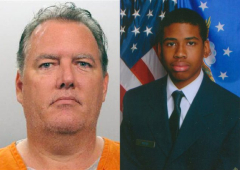
JACKSONVILLE, Fla. (AP) — A Florida jury’s inability to agree on a murder charge will give prosecutors and defensMichael Dunne attorneys fodder for their next moves in the case of a teen fatally shot after an argument over loud music.
Michael Dunn, a 47-year-old software developer, was convicted Saturday of attempted murder for shooting into a carful of teenagers after the argument but jurors couldn’t agree on the most serious charge of first-degree murder. A mistrial was declared on the murder charge.
State Attorney Angela Corey said her office would consider seeking a retrial of Dunn on a first-degree murder charge.
Meanwhile, defense attorney Cory Strolla said he plans to appeal based on several issues, including how the jury could reach guilty verdicts on four counts and deadlock on another.
Dunn was charged with fatally shooting 17-year-old Jordan Davis, of Marietta, Ga., in 2012 after the argument over loud music coming from the SUV occupied by Davis and three friends outside a Jacksonville convenience store. Dunn, who is white, had described the music to his fiancee as “thug music.” He claimed he acted in self-defense.
After more than 30 hours of deliberations over four days, the 12 jurors found Dunn guilty of three counts of attempted second-degree murder and a count of firing into an occupied car.
Earlier in the day, the panel said in a note to Judge Russell L. Healey that they couldn’t agree on the murder charge. They also had the option of convicting him of second-degree murder or manslaughter. The judge asked them to continue their work, and they went back to the deliberation room for two more hours before returning with a verdict.
“I’ve never seen a case where deliberations have gone on for this length of time,” Healey said afterward, praising the jurors. “They’ve embraced their civic duty, and they are to be commended for that.”
Jurors declined to talk to the media.
Dunn showed no emotion as the verdicts were read. Each attempted second-degree murder charge carries a maximum sentence of 30 years in prison, while the fourth charge he was convicted on carries a maximum of 15. A sentencing date will be set later.
Davis’ parents each left the courtroom in tears. Afterward his mother, Lucia McBath, expressed gratitude for the verdict. Sunday would have been the teen’s 19th birthday.
“We are so grateful for the truth,” McBath said. “We are so grateful that the jurors were able to understand the common sense of it all.”
Jurors heard testimony that Dunn, who has a concealed weapons permit, fired 10 shots, hitting the vehicle nine times. Davis was the only person hit.
Dunn, in claiming self-defense, testified that he thought he saw a firearm pointed at him from the SUV as the argument escalated. No weapon was found in the SUV.
Dunn also told jurors he feared for his life, perceiving “this was a clear and present danger.”
Prosecutors contended that Dunn opened fire because he felt disrespected by Davis. The teen made his friend turn the music back up after they initially turned it down at Dunn’s request. Dunn was parked in the spot next to the SUV outside the convenience store.
According to authorities, Dunn became enraged about the music and ensuing argument. One person walking out of the convenience store said he heard Dunn say, “You are not going to talk to me like that.”
Dunn testified he heard someone in the SUV shouting expletives and the word “cracker,” which is a derogatory term for white people.
“That defendant didn’t shoot into a carful of kids to save his life. He shot into it to save his pride,” Assistant State Attorney John Guy told the jury earlier in the week. “Jordan Davis didn’t have a weapon, he had a big mouth.”
The trial was Florida’s latest to raise questions about self-defense and race, coming six months after George Zimmerman was acquitted in the shooting of 17-year-old Trayvon Martin in Sanford, about 125 miles south of Jacksonville. The Dunn trial was prosecuted by the same State Attorney’s Office that handled the Zimmerman case.

Jury Finds Jordan Davis’ Killer Michael Dunn Guilty On Only 4 Of 5 Charges


Days after a jury declared a mistrial on the first degree murder  charge of killing Jordan Davis, Michael Dunn’s issues start to surface.
The UK Daily Mail reports that Dunn allegedly forced his ex-wife to join swingers clubs and sleep with random men for his enjoyment.
In addition, Dunn spent his time in jail allegedly ranting against Blacks and Hispanics, and even suggested that more people should arm themselves and kill them. All this while awaiting the verdict for his part in the suspected crime.
To further pile it on, the Daily Mail stated that Dunn aired out his feelings in a letter sent from jail to his daughter that if more were killed they might change their ‘thuggish’ behavior.
The discovery of Dunn’s issues come after the claims were made public following his acquittal after members of the jury admitted to not being able to agree on the first-degree murder charge Dunn faced for killing Davis.
Dunn’s acquittal, which occurred Sunday, has since sparked reaction among those who are upset with the outcome of the trial.
Davis, 17, was shot dead after Dunn confronted him at a gas station in Jacksonville, Fla. in November 2012. Dunn, who was angered by the loud rap music playing from the car Davis was in, approached the vehicle and told the people in the car to lower the volume. Dunn has maintained that he fired 10 shots in self-defense, saying he was threatened and fearing for his life. According to reports, Davis was unarmed and no gun was ever found in his SUV.
Despite the potential impact on the case, the newly revealed claims on Dunn were ruled inadmissible by the trial judge
The 12 jurors in the case deliberated for 30 hours before finding the 47-year-old Dunn guilty of three counts of second-degree attempted murder and one count of shooting into an occupied car. A mistrial was declared on the most serious count of first-degree murder.


Observe Black History Month by Visiting Kentucky’s Camp Nelson

0

Camp NelsonFRANKFORT, Ky. – Celebrated as Black History Month, February is a good time to explore Kentucky’s Camp Nelson Civil War Heritage Park. The 525-acre park 20 miles south of Lexington marks the site where more than 10,000 formerly enslaved African-American men trained as soldiers for the Union Army and thereby obtained freedom for themselves and thousands of family members.
Designated a National Historic Landmark just last month, Camp Nelson near Nicholasville in Jessamine County was established 150 years ago on a directive from President Abraham Lincoln, to play a critical role in the Union war effort as a supply depot, recruitment center and hospital facility. Camp Nelson is most significant as the nation’s largest recruitment and training center for African-American troops open today for visitation and interpretation.
The third-largest recruitment center for Black troops in the nation at the time, Camp Nelson also included a refugee camp to house the soldiers’ families and to provide schooling and medical care. At its peak, the camp sheltered more than 3,000 women and children, most of whom eventually attained their freedom here. However, several hundred of these family members died in November 1864 when the U.S. Army expelled the refugees from the camp in harsh weather, prompting a public outcry that resulted in re-establishment of the camp.
Central Kentucky’s picturesque landscape forms a backdrop for learning about Camp Nelson’s role in the Civil War. Explore more than five miles of trails, open daily from dawn to dusk, at your own pace. An interpretive center provides insight into life at the camp with artifacts and a video for view Tuesday through Saturday. At the adjacent Camp Nelson National Cemetery, you can wander among the graves of nearly 4,000 Union soldiers killed in Kentucky.
Plans are in the works for the 150th commemoration of the site with the anniversary of the enlistment and training of the first African-American men. The event will be held Sept. 6-7, 2014.
Camp Nelson is located six miles south of Nicholasville on U.S. 27. For more information call 859-881-5716 or visit www.campnelson.org.

For more things to do in Kentucky for Black History Month, visit www.kytourism.com/things_to_do/history_heritage/african_american_heritage.aspx.

An Artistic Makeover for the $100 Bill

0

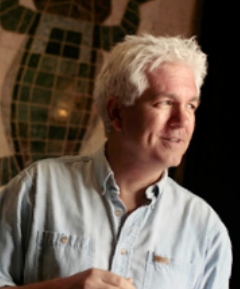
Brian_1 Brian_2By Cecilie Rohwedder

Brian Thompson’s latest artwork has taken 17 years to create. But when the piece is unveiled this fall, millions will see and touch it.
Mr. Thompson designs paper money at the Bureau of Engraving and Printing in Washington—most recently the new $100 bill, which started to circulate on Oct. 8.
The note will still feature Benjamin Franklin on its face and Philadelphia’s Independence Hall on its back. Much of the rest reflects Mr. Thompson’s choices: He wanted to give the bill more movement and an airier feel than “Benjamins” have now. And he hoped to evoke more U.S. history by adding well-known imagery, such as the Declaration of Independence—while incorporating new anticounterfeiting features.
“It’s like putting a puzzle together,” said Mr. Thompson on a recent morning at his drafting desk in the Bureau’s neoclassical building near the National Mall. “In a puzzle, you have to have each piece in the right place to get a whole picture.”
When finished, that picture will be among the most recognized across the globe. At the end of 2012, 8.6 billion $100 bills were in circulation, according to the Federal Reserve. Up to two-thirds of U.S. currency circulates abroad, and the $100 note is a favorite of foreign counterfeiters. That’s why on the door to Mr. Thompson’s studio is a red sign that says “High Security Area.” Underneath it, he has added a small poster. “Bank-note design is old-world craftsmanship,” it reads.
Just over a century ago, Theodore Roosevelt hired sculptor Augustus Saint-Gaudens to redesign currency; his work with gold coins is famous. But most designers haven’t been celebrities. A 43-year-old Washingtonian, Mr. Thompson started drawing in the third grade and went to a high school for the arts. In college, he apprenticed at the Bureau of Engraving and Printing. In 1989, he began to help redesign the $20 bill (which was issued four years later) and never left.
Mr. Thompson finds the size of paper currency a challenge: Only postage stamps, he jokes, have less space for artistic expression. The images must be easily recognizable, the colors vibrant and the numbers big enough to prevent confusion. His favorite bank-notes include those of Australia and South Africa, with their vivid, subtly blended colors. For inspiration, he looks to the fantastical engravings of M.C. Escher and the brilliantly detailed flowers of Georgia O’Keeffe.
Mr. Thompson started working on the new bill in 1996, after the current $100 note was issued. He began with a series of sketches. Because he wanted to include the Declaration of Independence, which Franklin signed, one sketch showed a wavelike scroll with a large quill. But in the end there wasn’t room for the scroll. Instead, the Declaration’s words fill the right side of the note.
The quill is paired with an inkwell that has an image of the Liberty Bell inside it. The bell doubles as a security mark, changing from green to copper, appearing and disappearing, depending on the angle of the light. In addition, Mr. Thompson incorporated the date of the declaration’s adoption, July 4, 1776. “That was the push, to really tell a story this time,” he said.
To add space and flow, Mr. Thompson thinned the black frame around the bill’s edges and eliminated the frame around Franklin’s portrait: “I wanted something more airy and free.” He also gave shoulders to Franklin, so that the viewer’s eye would move, in a continuous curve, from the lower left of the note to the security ribbon and historic symbols above on the right.
A committee with representatives of the Bureau of Engraving and Printing, the Fed, the U.S. Secret Service and the Treasury recommends the design to the secretary of the Treasury, who has the final say. It took 40 drafts to reach a final version.
The same panel advised on how to foil counterfeiters, a key aim of the redesign. Mr. Thompson said that the aesthetic challenge was to keep the necessary signatures, symbols and security marks from turning the bill into a piecemeal collage. “It’s a balancing act,” he said.

Prosecutors: Darren Sharper Drugged, Raped Two Women

0

Darren SharperLOS ANGELES (AP) — Prosecutors charged former NFL safety Darren Sharper on Friday with raping and drugging two women in California and disclosed he is under investigation in connection with five more drug-related rapes in three other states.
Sharper briefly appeared in Los Angeles Superior Court, where his arraignment was postponed until Feb. 20 at the request of his lawyers. They issued a statement saying he would be exonerated.
Prosecutors then filed a motion to increase Sharper’s bail to $10 million and outlined details of investigations involving him in Las Vegas, Tempe, Ariz., and New Orleans.
Sharper has not been charged in the other jurisdictions.
In the bail motion, Los Angeles County Investigator John Maccharella described a pattern in which the former football star met women at clubs or parties and lured them to a hotel room, where they were allegedly drugged and raped.
The motion says the incidents happened in the past five months, with two occurring within a day in Los Angeles and Las Vegas.
After conferring with police in other jurisdictions, Maccharella said in the bail motion that the first assault followed an event for New Orleans Saints football players on Sept. 22, 2013.
Maccharella said he was told a woman went to a New Orleans bar with Sharper, consumed an alcoholic beverage provided by him and blacked out. She awoke the next morning while being sexually assaulted, the bail motion stated, noting that an exam later showed Sharper’s DNA was present.
The Los Angeles charges were based on incidents on Oct. 30, 2013, and Jan. 14, 2014, beginning at a West Hollywood nightclub. Sharper allegedly met two women each time, invited them to a party then said he had to stop at his hotel.
In the October incident, each woman was given a shot of an alcoholic beverage before blacking out, and one later awoke to find the other being sexually assaulted, the charging documents state.
In January, a woman awoke and suspected she had been assaulted, the documents state.
Similar scenarios played out on Jan. 15 in Las Vegas and on Nov. 20, 2013, in Arizona, the bail motion states.
In Los Angeles, Sharper is facing two counts of rape by use of drugs, four counts of furnishing a controlled substance, and one count of possession of a controlled substance.
The complaint alleges the drugs involved were morphine and zolpidem, which is sold under the brand name Ambien.
Sharper was represented by prominent Los Angeles attorneys Blair Berk and Leonard Levine.
“We look forward to the true facts being revealed in this case,” Berk said after the brief court appearance. “And we are hopeful Mr. Sharper will be fully exonerated before this case is concluded.”
Sharper, 38, played in the NFL from 1997 to 2010, mostly with the Packers.
Sharper was arrested on Jan. 17. He was allowed to remain free on $200,000 bail and ordered to surrender his passport. He has not entered a plea.
Superior Court Judge Roberto Longoria did not immediately take up the bail motion.
Sharper’s lawyers refused to comment on the other investigations.
If convicted in the California case, Sharper could face more than 30 years in state prison.
Sharper was selected All-Pro six times and chosen for the Pro Bowl five times. He played in two Super Bowls, one with the Packers as a rookie and a second with the Saints.

One Man’s Opinion

0
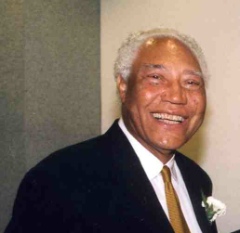
Dr. Jesse J. Lewis, Sr.

It should have been first-degree murder
by Jesse J. Lewis, Sr.

Michael Dunn, a white man who fatally shot Black teenager Jordan Davis for refusing to turn down his ‘thug music,’ may be going to prison for the rest of his life.
It’s not a real victory because the jury didn’t convict him for killing Jordan Davis. They convicted him for almost killing his three friends who were in the car with him. They found Dunn guilty of three counts of second-degree murder and one count of shooting deadly missiles. Each attempted murder count carries a minimum sentence of 20 years. Evidently, someone on the jury believed that Davis’ cursing at Dunn and arguing over the volume of his music equaled a serious enough risk to make Dunn reasonably fear for his life.
Dunn took it upon himself to drive up to a convenience store in Jacksonville, and even with a number of empty spaces available, decided to park next to the one vehicle full of young Black men playing some thumping hip-hop music. Rather than avoid the music he hated, he parked right next to it.
And when Davis didn’t submit to his wishes to turn it down, Dunn didn’t like it. They had words. He didn’t like that either. Michael Dunn was not going to be sassed by a Black kid. Dunn reached into his glove compartment, pulled out his 9 mm handgun and started shooting at Davis and his friends and killed him.
Anyone who watched any part of this story, who isn’t biased or prejudiced, would arrive at the conclusion that this was first-degree murder. What else could have been presented to the jury to help them see that this was cold-blooded murder? Imagine if you had been sitting in that car. By chance only one child was killed. Do you think if two or more had been killed that would have made the difference?
I’m hoping they really pursue trying Dunn again because this is the right thing to do. In the 21st century in America, no case should be decided by the color of your skin. In a court of law, fairness should be the rule. It will be interesting to know which juror did not want to convict on first-degree for killing Jordan Davis.

email: jjlewis@birminghamtimes.com

Independent Black Farmers

0

letters to the editorAlabama, Louisiana, Mississippi, Oklahoma, Kansas, Kentucky, Texas

Dear President Obama,
Sir, it is with pleasure that we write to you; however, the reason that forces us to
write to you is simply un-American! It is very clear of the struggle that we face
daily, the Independent Black Farmers not only need, but deserve a few minutes of your time.
Sir, the USDA must be estopped from this egregiously hateful,
discriminatory conduct. Mr. President just know that our very “LIVES” depend
heavily upon your shoulders. Sir, before all other issues (deficit, etc.) begin to
fill your schedule, please schedule a time to meet with us. Please DO NOT
allow the Independent Black Farmers to start another year facing these
feloniously criminal behaviors of the “USDA/The Last Plantation.”
We met with the House Judiciary Committee and they told us, “they know that
USDA (Vilsack), the OASCR (Dr. Joe Leonard) and the courts are not
following the law.”
Sir, only you can help us. For our children’s sake, please
meet with us.
“MAY GOD CONTINUE TO BLESS YOU, AMERICA AND ALL
AMERICANS.”
Respectfully yours,
The Independent Black Farmers
/s/Ferrell C. Oden
/s/Michael Stovall

The Good and Bad of the Dual Enrollment Bill

0

letters to the editor Expanding dual enrollment has been a goal for both Democrats and Republicans in the state legislature this year. Last week, we came one step closer to achieving that goal when the members of the State House of Representatives voted unanimously to pass a bill that will increase funding for dual enrollment by $10 million.
This is a big step in the right direction for the state of Alabama. Dual enrollment has been shown to increase the likelihood of a student completing their degree or certificate program. Dual enrollment also gives kids who otherwise might not ever be able to afford a college education a chance to get that education, with the help of additional scholarship money.
Democrats have always supported dual enrollment: we voted to increase funding for the program. But even though this bill does a lot of good, it also has some problems.
The first problem is this bill takes money away from other education needs. In order to pay for the increase in funding for dual enrollment, this particular bill creates as much as $5 million in tax credits that come out of the state’s education budget.
Instead of cutting the education budget by another $5 million, we could have just as easily have put $5 million in the dual enrollment program by eliminating the newly created liability insurance program for educators.
The taxpayer-funded liability insurance program is unnecessary for two reasons. First, educators already have liability coverage through their local school boards, their professional associations or, in many cases, both. They do not need a third source of liability coverage that is paid for with our tax dollars.
Second, this new program is unnecessary because the House has already passed a bill that provides statutory immunity for educators and state employees while performing their jobs, which was sponsored by Rep. Mike Jones, a Republican from Andalusia. With this immunity provision, there is no longer a need for additional liability coverage.
Aside from the fact that this dual enrollment bill unnecessarily takes $5 million out of our schools that could have easily been avoided, it also creates a new precedent that could cause problems in the future.
This bill allows companies and individuals to receive tax credits worth up to 50 percent of their donations to community college dual enrollment programs. As a result, these donors are basically getting to decide where their tax dollars go.
There is a reason that our tax dollars go into a collective pot and are then distributed throughout the state. If we could all choose where our tax dollars go then many important services would not get funded.
For example, would schools in small, rural counties be able to survive if no one but the people who lived there paid taxes for that school system? Would some smaller counties be able to have good, paved roads if they didn’t receive tax dollars paid by people in other counties? Good roads and quality schools grow our economy and benefit us all. But even if we choose to send our money to other counties how many of us could afford to send some to all 67 counties in Alabama? That is why our tax dollars go into one big pot and then get distributed where they are needed.
We should all have a say in how our tax dollars are spent; that is why we have elections and a government that works within a system of checks and balances. It is dangerous to set a precedent allowing a select group of people the ability to choose where their tax money goes.
This dual enrollment bill could have been better. We could have avoided the new cuts to our schools and the bad precedents that this bill has created. But, at the end of the day, Democrats and Republicans came together and found a way to put $10 million more dollars into our dual enrollment program. More money in our dual enrollment program means giving kids who otherwise wouldn’t have had the opportunity to go to college or get a technical certificate a chance to get that education, which is a very good thing.
Despite its flaws, this bill is still a victory for our children. I hope that our state will have more of these victories throughout this legislative session.
Rep. Craig Ford is a Democrat from Gadsden and the Minority Leader in the Alabama House of Representatives.

Not So Forgiving!!!

0

letters to the editor The other residents of Birmingham, Alabama might be so forgiving, but, NOT ME!
The truth of the matter is, and no one can change my mind, so Don’t even Try.
Governor, Robert Bentley, Mayor, William Bell, and Birmingham meteorologists screwed up! Birmingham residents where told there would be a light dusting of snow, if any, without complications. D–n did they miss the mark. Al Roker had warned everyone differently, but was ignored.
Suppose to be Governor!  Robert Bentley should just resign! It’s been clear for a very long time he cares nothing about the residents of Birmingham, and he showed us once agin when he allowed this city to be paralyzed for over 24 to 36 hours, because of snow.
William Bell! Yes I tried to call you too, and no answer. My only daughter, mother of three (3) and wife was stuck on 65 North for over 22 hours. I prayed all night, and Yes! God kept my child safe. Not our electeds! and to God I  owe the Praise. Thanks to her husband who also was stranded on 280 over 20 hours, who walked, to 65 where his wife was to get them both home safely and to their three children. Where was the National Guard? who should have been in place before the disasters, not after. No one saw them.
Our officials weren’t and didn’t prepare! Which is inexcusable and unforgettable. Obviously they are not qualified for the jobs that they were hired to do. They let the people of this city down and should be ashamed of themselves for the unnecessary sleepless day and night they caused mothers like me, as well as any family that had to worry about their loved ones stranded on the freeways that long.
To the officials – If you can’t and won’t do your jobs that we voted for you to do RESIGN! and let someone who knows what to do, in instances like this one; and let someone who knows how to prepare in advance for  an emergency. If you can’t and won’t, please for the sake of the residents of Birmingham STEP DOWN!!

DEBBIE K. AGEE
Birmingham, AL 35214

Preventing Future Security Breaches

0

Wayne Curtis  Millions of people have been affected by the massive data breach that occurred at Target and other merchants. And if future security breaches are not prevented, the problem will get worse.
The primary reason for the security breach lies in the credit card technology used in this country. The U.S. is far behind the rest of the world in this regard, employing 20th century technology against 21st century hackers.
Credit and debit cards rely on easy-to-copy magnetic strips on the back of each card.  The strip contains the cardholder’s name, account number, card expiration date, and a code.  When a card is swiped at a store, communication begins between the financial institutions of the cardholder and the store.
During this brief interval, as information flows through a communications network, an opportunity exists for hackers to capture it. Stolen data can be turned into phony cards and sold to others.
Within recent years, people in countries outside the United States carry cards that have their personal information in an embedded microchip rather than a magnetic strip. The chip-based technology is called Europay – Mastercard and Visa (EMV).
With EMV, the type of security breach that recently occurred in this nation is virtually impossible. The chips are hard to clone, reducing the likelihood of fraud.  And hacking into this type of system and creating a counterfeit card using similar technology is too complicated.
American card companies have been slow to adopt EMV technology.  Estimates are that only 10 to 15 million cards – less than 1 percent of the total in circulation –have this type of technology.
The primary reason for the lack of EMV cards is cost.  Credit card companies, financial institutions, and merchants are reluctant to spend the funds necessary to convert to the chip system. About 1.5 billion cards are being used by Americans.
According to industry sources, card companies plan to replace the magnetic strips with digital chips by October 2015. Once this occurs, they plan to change the rules regarding liability for fraudulent purchases caused by security breaches. The entity in the payment system – credit card company, bank, merchant — deemed to have the weakest security will be liable.
It would seem to be advantageous to adopt the chip technology as soon as possible.

Curtis, Ph.D., is a former superintendent of Alabama banks and Troy University business school dean. He is retired from the board of directors of First United Security Bank. Email him at wccurtis39@gmail.com.

Economic Opportunity is best served with Self-Determination

0

NO ExcusesDear Hilary O. Shelton,
Senior VP of Advocacy, Director of the Washington Bureau
NAACP:

Someone once said that if you want to get something done you should do it yourself.
African Americans have depended on others to provide us with jobs, housing, education, security and a plethora of other needs and wants. As a result, we have the highest unemployment rate, the worst graduation rate, the poorest housing, the least secure neighborhoods and the lowest asset base than any group of people in the United States.
The old method of depending on others to provide for us has failed. We need to provide for ourselves.
We can accomplish this by pooling our resources (currently at over 500 billion) and build our way out of poverty.
I have outlined how this can be done in my book “No Excuses – A Guide Out Of Poverty” found on Amazon.com.
Let us stop asking for help and start providing help.

Elie V. Parker
San Leandro, CA