Home Blog Page 1585

The Injustice File:  Sundown Towna

0

Keith BeauchampBy Esther Callens

Investigation Discovery’s “The Injustice Files” has launched a deep exploration into America’s sundown towns. Filmmaker and host Keith Beauchamp has travelled cross country to some of the communities that excluded African Americans and other ethnic groups (Hispanics, Jewish, etc.) from residing or even being in town after sundown.  This all new Black History Month special is set to premiere in a one hour special on Monday February 24 at 8 p.m./7c.
The prevalence of these sundown towns was so dominant that Victor H. Green (Harlem New York Postal Carrier and Civic Leader) published The Negro Motorist Green Book from 1936 to 1966.  In the Green Book (as it was so known) were listings of hotels, restaurants, beauty and barber shops, service stations, automotive garages and numerous other businesses that would service African American patrons.  Likewise, sundown towns were not indigenous to the south only as Green and Beauchamp found them to be all over the United States.
Beauchamp’s findings were shocking. He stated:
“When we set out to film The Injustice Files:  Sundown Towns, my objective was to challenge the opinion that sundown towns still exist in America today. Can African-Americans really travel wherever they please in this modern America?” He further states: “Now having visited communities that were historically known as sundown towns, I am left with the sense that rules may have changed by the book, but towns still exist where the social standard hasn’t been reset.”
Martinsville, Indiana is one of the towns Beauchamp and his crew went to investigate the case of Carol Jenkins. She was a 21-year-old, African American woman that was murdered one dark evening as she was going door to door in town selling encyclopedias. He also travelled to Vienna, Illinois and spoke with Dr. James Loewen, the author of Sundown Towns: A Hidden Dimension of American Racism. Also, Beauchamp interviewed Dr. David Hoxie and his experience of being an African American doctor whose practice was run out of Waverly, Ohio, a sundown town in 2004.
The Injustice Files: Sundown Town is produced for Investigation Discovery by Al Roker Entertainment.

SPEAKING OF SOAPS

0

tv-soap-operaBY MEREDITH COOPER

THE BOLD AND THE BEAUTIFUL
Eric felt pride in his family when Ridge made strides to get along better with Rick. Liam confronted Katie about her feelings for Ridge and attempted to convince her to act on them. Ridge assigned Carter a very important task outside of the usual Forrester Creations business. Donna confessed to Brooke about her re-emergence of feelings for an ex-lover. Despite Brooke’s persistence and honorable intentions, Katie was reluctant to grant her sister a considerable favor.  Quinn joyfully used Bill’s feelings for Brooke and disdain for Ridge to get under his skin. Still unsure about Quinn’s ulterior motives, Hope attempted to get more information from Wyatt about his mother. Ridge explained his history with Brooke to Maya and Carter. Liam reminded Katie that time was of the essence to let Ridge know that she wants to pursue a relationship with him. Katie thought that she would be hypocritical if she were to act on her feelings for her former brother-in-law. Rick put his past resentment towards Ridge aside for the sake of Brooke’s happiness. Bill contemplated making a grand gesture towards Brooke as a means to win her back. Katie was forced to come to terms with the sacrifice that she’s making in the name of family and honor.  Ridge voiced his gratitude for the current blessings in his life: love, his relationships and forgiveness. Liam became the voice of reason when Bill made threats to do something that he would later regret. Feeling that he had lost Brooke forever, Bill drowned his sorrows in a large bottle of scotch. Katie was given a pretty intense wakeup call about just how much she has fallen for Ridge. Brooke was determined to find out the reason behind Katie’s recent actions.
THIS WEEK: Donna makes a bold move when she plants a passionate kiss on an unsuspecting recipient. Bill is surprised to have found solace from his heartbreak in an unlikely source.

DAYS OF OUR LIVES
Theresa shocked Daniel by demanding that he sleep with her! Someone caught EJ and Abigail having a private conversation. Hope and Aiden started to warm up to each other – until Ciara inadvertently made things worse. Abigail informed Sami that she and EJ share a secret. A mysterious figure spied on Rafe and Jordan. JJ defeated Theresa once and for all. Jennifer took another step in moving on from Daniel. Nicole took a drastic step to ensure her future with Eric.  Later, Marlena grew suspicious of Nicole. Abigail confessed to EJ she can’t just walk away from him. Sonny and Gabi got into a heated fight when he accused her of throwing Kate and Sami under the bus. JJ finally admitted the truth to Jennifer! Sparks flew once again as Abigail fought to hang on to EJ. Brady and Eric had a bitter encounter. Brady later drowned his sorrows with Theresa.  Daniel defended Nicole to Marlena.
:
THIS WEEK: Someone’s watching Rafe and Jordan. Brady drowns his sorrows with Theresa.

GENERAL HOSPITAL
It’s the night of Valentine’s Day in Port Charles. Duke’s attempt to reconcile with Anna over their conflicting work ethics led to a passionate solution. Things heated up during Molly and TJ’s study-date, but she wanted to make their first time together a special moment. After Sonny warned Ava she had better not be double-crossing him, she and Morgan had planned a clandestine evening together. Meanwhile, Britt’s fairy tale romance might be about to crumble into pieces when Liz threatened her. Nikolas had the ultimate Valentine’s Day surprise for Britt, despite the confession she knew she must make. Liz grappled with feelings for her true love. Meanwhile, Franco fought for his life. When Patrick found out why Robin had been distancing herself from him and Emma, he gave her an ultimatum. Dante and Lulu were thrown for a loop. Felix wondered if he and Brad were on the same page. Morgan had a warning for Lucas about Julian’s true nature. As the feud between The Corinthos and The Jeromes heated up, the loyalty between Julian and Ava is severely tested. Unbeknownst to Robin, Patrick intended to take their predicament to Anna.  A confused Liz sought out advice for her quandary with Nikolas. An enamored Nikolas dismissed Britt’s concerns about Baby Ben. Lulu had plenty to worry about, including the whereabouts of her missing father.  Lucy realized she hadn’t seen her lover, Scott, since he went to the Institute to talk to Heather. An unexpected visitor put Nikolas in a compromising position. While Anna got to the bottom of the missing Luke and Scott, Tracy couldn’t help but notice Lucy’s keen interest in the situation. Just as Robin and Patrick thought they had a solution to their problem, an uninvited Victor showed up with a revelation of his own. An emboldened Liz hoped Nikolas would see things her way. Lulu was happy for Dante but had difficulty hiding her true feelings. Robin’s incredulous announcement left Emma in tears and Patrick bereft. Kiki lied to Michael about Franco and nearly destroyed his relationship with Morgan. She went to Silas and poured out her romantic woes. Sam was surprised then touched when Julian showed her a caring side of himself.
THIS WEEK: TJ hopes Molly is ready for his news about getting them a hotel room. Olivia wants to give sage advice to the young couple, but will they listen?

THE YOUNG AND THE RESTLESS
As the Gala got underway, Lily told Kelly that she arranged a blind date for her. When Lily described the man, Kelly mistakenly thought it’s Jack. Kelly chatted with Jack but told him she wasn’t looking for romance. A man named James introduced himself as Kelly’s blind date and Kelly realized the mistake she made and she apologized to Jack. Hilary took note of Kelly and Jack’s chemistry and was hit with a bit of jealousy. Stitch told Dylan that his wife had started divorce proceedings.  Chloe was surprised to see Chelsea at the benefit but asked her to stay. Nick and Sharon arrived with Faith who was excited to see that Summer had arrived as well.  Tyler took a phone call from Mariah and agreed to meet with her.  Colin told Cane that he didn’t think it would be long before everyone realized he has turned over a new leaf. Meanwhile, Lauren confronted Jill about her relationship with Colin. Jack convinced Chelsea to stick around for the auction. Tyler admitted to an upset Abby that he went to see Mariah. Sharon had another encounter with Cassie and asked if she’s seeing her because of the secret she’s keeping from Nick. Nick found Sharon and offered to bring her back home after he saw that she’s clearly shaken up. At the coffee house, Sharon admitted to Nick that she saw Cassie again. Nick wanted her to move up her next therapy appointment and vowed to help her through this. Across town, Avery and Dylan enjoyed a romantic evening together and celebrated their happiness without having to sneak around or worry about their pasts. Meanwhile, Ian found Summer at Crimson Lights with Faith and realized they’re Nikki’s grandchildren.
THIS WEEK: Summer tells Ian that she is ready for his help and agrees to a meeting with him.  Nick insists on staying at Sharon’s for the night.

Little Known Black History Fact: Church Hats

0

By Erica Taylor, The Tom Joyner Morning Show
Special to the Times

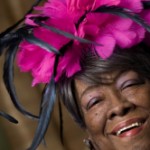
The earliest known traditional hats in history were worn in Thebes and seen on ancient Egyptian murals. Next there were Phrygian caps that were worn by the freed slaves in Rome, signifying their independence. As the centuries went by, the traditional use of hats worn by women in church is said to originate from the Apostle Paul’s words in 1st Corinthians 11:15, which says that women should cover their heads during worship. Black women have since embraced those words with elaborate church hats.
During and after slavery, Black women who worked as maids and servants broke away from their uniforms on Sunday and wore decorated hats to service. The hat, no matter what material it was made from, was adorned with ribbons, bows and flowers. It was the Black woman’s one day of individualism. Since then, church hats have gotten bigger and bolder.
One of America’s most famous milliners, or hat maker, is remembered in a new permanent collection by the Smithsonian National Museum of African American Culture. The work of Mae Reeves, a milliner to the elite Black women of the past, will have her shop re-created in the museum. During the 1940s and ’50s, Mae Reeves supplied original hat creations to Lena Horne, Ella Fitgerald, Eartha Kitt and Marian Anderson. Reeves is now 99 years old and her granddaughter, Donna Limerick, carries on the memory of her grandmother’s legacy by putting Reeve’s hats on display.
Women such as Vanilla Beane, age 94 and another East Coast milliner, kept her shop doors open for decades, Bené Millinery on Third Street NW. One of her most famous clients was the late Dr. Dorothy Height.
Black women and church hats were celebrated in the book “Crowns” (2000) by Michael Cunningham and Craig Murberry. The book tells the stories behind Black women and their hats,

Excerpt from Crowns:
Don’t wear a hat wider than your shoulders. Don’t wear a hat that is darker than your shoes. If your hat has feathers, make sure they are never bent or broken. Sequins don’t look good in the daytime. Easter hats should be white, cream or pastel — even if it’s still cold outside. For a look that is both elaborate and demure, try a chapel veil.
In 2002, an off-Broadway production of the book was released by playwright Regina Taylor.  The gospel musical celebrates the role of hats in Black southern culture.

Macy’s Salutes Culture-Defining Eras of Black Style in Celebration of Black History Month 2014

0

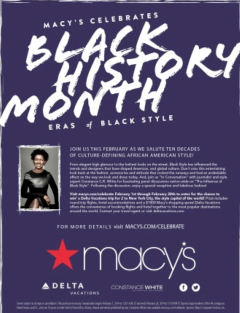
Macy's Black HistoryFamed fashion editor and style expert Constance White will lead panel discussions surrounding Black style along with fashion icons including supermodel Beverly Johnson and actress Tracee Ellis Ross as part of a nationwide Macy’s in-store event series

NEW YORK (BLACK PR WIRE) –This February, culture-defining trends take center stage as Macy’s examines the influence of Black style in celebration of Black History Month 2014. From the Harlem Renaissance to urban wear and high-fashion glamour, Black style has influenced popular culture for decades. Through special events and panel discussions at select Macy’s stores across the country, style experts and thought leaders, such as famed fashion editor Constance White, supermodel Beverly Johnson and actress Tracee Ellis Ross, will highlight the uniqueness of Black fashion and how many of these styles have been adopted, reinterpreted and reinvigorated by new generations, inspiring countless fashion-savvy ladies and gentlemen of today.
“As a retailer with more than 150 years of fashion history, Macy’s has seen the evolution of Black style firsthand and we are thrilled to examine and celebrate the style icons and trends that have defined generations, in honor of Black History Month,” said Martine Reardon, chief marketing officer for Macy’s. “As part of our annual celebration of the cultural and historical contributions made by African-Americans, these series of events will take a meaningful fashion journey through time, highlighting Black style influences past, present and future.”
For more than 15 years, Constance White has defined her legacy as a fashion reporter and style guru for women, especially African-American women. She has served as a fashion reporter for the “New York Times” and editor-in-chief of “Essence”. Now consulting editor for Silicon Valley start-up Ozy.com, White also made history as the first and only Black executive fashion editor at a major fashion magazine, “Elle.” With her new guest role as lead panelist at select Macy’s stores, White will share her insight into popular trends originating in the African-American community, current style leaders shaping the fashion landscape and her advice for pulling off some of the most popular trends seen on the sidewalk and the catwalk.
“Black culture has impacted style around the world from the rich Holland cloth of Nigeria to the cool turbans young women and men are wearing in every American city. It’s a style that’s rich, innovative and cool. I’m excited to join Macy’s in giving it its due,” said Constance White.
Macy’s Black History Month Celebration 2014 also coincides with the 40th anniversary of Beverly Johnson’s historic “VOGUE” cover. In August 1974, Beverly became the first Black model to grace the cover of the iconic magazine. This event broke the color barrier in the fashion world, forever changing the beauty ideal in the fashion world and paved the way for future Black women in the fashion industry. A long-time entrepreneur and hair and fashion influencer, the “New York Times” has named her to their “20th Century’s 100 Most Influential People in the Fashion Industry” list.
“I was very excited to learn that Macy’s is devoting a great deal of time and energy to the subject of Black style and how it influences pop culture,” Johnson commented. “Tracee Ellis Ross and Constance White always have something insightful and entertaining to offer, and I look forward to appearing with them.”
Following the panel discussion, Macy’s will host a reception for its customers along with an informal fashion show highlighting recreated trends from different style eras.

From Feb. 1-28, visit macys.com/celebrate to enter for a chance to win a Delta Vacations trip for two to New York City and a $1,000 Macy’s shopping spree. (Please visit www.macys.com/celebrate for complete entry rules or visit the event store for more information).

Mammy archetype

3

Mammy AchetypeHistory
The term “mammy” in the American Southland remained in widespread use through the early 1980s as a term of great respect for any Black women who took care of white children. In the South it is still not proper to refer to anyone as God Father or God Mother, as this is thought to be anti-Christian. Rather, the Southern people (both white and Black) use “Aunt” and “Uncle” to show respect for unrelated elders.
One of the earliest fictionalized versions of the mammy figure was Aunt Chloe in Harriet Beecher Stowe’s Uncle Tom’s Cabin (1852). As the mammy figure progressed into the 20th century, the persona was sacrificed to the demands of the white majority, who widely mythologized the figure. Even memoirs which describe the roles of mammies from the 1890s to the 1920s downplayed the mammy’s relationship with her family.
Characteristics
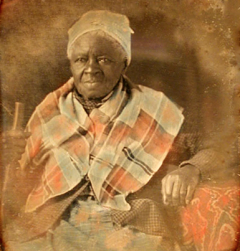
The mammy often had physical attributes that the Western culture would associate with masculinity. The mammy was usually a grossly overweight, large-breasted woman who is desexualized, maternal, and nonthreatening to white people but may be hostile towards men. Many of these characteristics were denied to African American female slaves but were generally attributed to the mammy.
The dress often reflected the status of her owner or employer. The mammy was usually neat and clean and wore attire that was suitable for her domestic duties. Sometimes a mammy considered herself to be “dressed up”, but that was usually just an addition of a bonnet and a silk velvet mantle, which probably belonged to her mistress. Sometimes she would even don a Sunday black silk.
Like most of the slaves at that time, the mammy was often illiterate though intelligent in her own sense. Among many of the slaves, there could have been a mammy who possessed the abilities to read and write, often taught to her by the children of the family for whom she worked. However, as intelligent as she might have been, most of her intelligence was a result of past experiences and conflicts. In particular, a mammy of an aristocratic family could be identified by her air of refinement.
When the mammy did not stay in the house of her master or was not busy attending to the needs of the master’s children, she would usually live in a cabin that was distinguished differently than the cabins of the other servants in either size or structure with her husband and children. Her cabin stood near the “big house”, or the master’s house but at a distance from the cabins of the other servants.
Although the duties were far less tiring and strenuous than those of the other servants, her hours were often long, leaving little time for her own leisure. It was not until the mammy had become too old for these duties that she would enjoy any home life of her own, since she was always preoccupied with the home life of her master. There was a flexibility about the mammy’s duties that distinguished her from just being an ordinary nurse or a wet nurse, even though there was a possibility that she could perform either of these tasks. In some of the more wealthy households, the mammy had assistants that would help her take care of the household’s children. These women were often much younger than the mammy herself.
The mammy, unlike the other servants, was usually not up for sale, and the children of the mammy would be kept in the same family for as long as possible, retaining the same relationships that the mammy had with the master.
Roles in plantation households
The role of the mammy in plantation households grew out of the roles of African American slaves on the plantation. African American servants played vital roles in the plantation household. The majority of these duties generally were related to caring for the children of the family, thus relieving the mistress of the house of all the drudgery work that is associated with child care. When the children had grown up and were able to take care of themselves properly, the mammy’s main role was to help the mistress with household tasks. As her years of service with the family increased, the mammy’s sphere of influence increased as well. She was next to the mistress in authority and had the ability to give orders to everybody in the house.
The mammy was often considered to be part of the family as much as its blood members were considered. Although she was considered of a lower status, she was still included in the inner circle. She has often been referred to as a “unique type of foster motherhood.” Aside from just tending to the needs of the children, the mammy was also responsible for teaching the proper etiquettes to them, such as addressing the elders on the plantation as “aunt” or “uncle”, as well as what was best to say on a particular occasion and what was not. The mammy was able to discipline their children whenever they performed something undesirable and was able to retain their respect towards her, even after the children had grown to adults.

SOUL FOOD

0

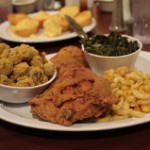
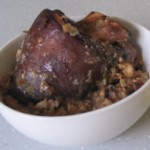
Soul food is a variety of cuisine popular in African-American culture. It is closely related to the cuisine of the Southern United States. The descriptive terminology may have originated in the mid-1960s, when soul was a common definer used to describe African-American culture (for example, soul music).
The term soul food became popular in the 1960s. The origins of soul food, however, are much older and can be traced back to Africa and to Europe, as well. Foods such as rice, sorghum (known by some Europeans as “guinea corn”), and okra — all common elements of West African cuisine — were introduced to the Americas as a result of the trans-Atlantic slave trade. They became dietary staples among enslaved Africans. They also comprise an important part of the cuisine of the American south, in general. Many culinary historians believe that in the beginning of the 14th century, around the time of early Euro-African exploration, European explorers brought their own food supplies and introduced them into local African diets. Foods such as corn and cassava from the Americas, turnips from Morocco, and cabbage from Portugal would play an important part in the history of African-American cooking.
When the Europeans began their African slave trade in the early 15th century, the diet of newly-enslaved Africans changed on the long journeys away from their homelands. It was during this time that some of the indigenous crops of Africa began showing up in the Americas.
European enslavers fed their captive workers as cheaply as possible, often with leftover/waste foods from the plantation, forcing slaves to make do with the ingredients at hand. In slave households, ‘vegetables’ consisted of the tops of turnips, beets, and dandelions. Soon, African-American slaves were cooking with new types of “greens”: collards, kale, cress, mustard, and pokeweed. They also developed recipes which used lard, cornmeal, and offal; discarded cuts of meat such as pigs’ feet, oxtail, ham hocks, pig ears, pork jowls, tripe, and skin. Cooks added onions, garlic, thyme, and bay leaf as flavor enhancers. Slave owners provided their slaves with the poor parts of the pig such as the small intestines: chitterlings were a dish of poor people in medieval England and the name was adopted by the African-Americans through their European slave owners to “chitlins”. Some African-American slaves supplemented their meager diets by gardening small plots given to them for growing their own vegetables; many engaged in subsistence fishing and hunting, which yielded wild game for the table. Foods such as raccoon, squirrel, opossum, turtle, and rabbit were, until the 1950s, very common fare among the then still predominantly rural and Southern African-American population.
Because it was illegal in many states for enslaved Africans to learn to read or write, soul food recipes and cooking techniques tended to be passed along orally, until after emancipation. The first soul food cookbook is attributed to Abby Fisher, entitled What Mrs. Fisher Knows About Old Southern Cooking and published in 1881. Good Things to Eat was published in 1911; the author, Rufus Estes, was a former slave who worked for the Pullman railway car service. Many other cookbooks were written by African Americans during that time, but as they were not widely distributed, most are now lost.
Since the mid-20th Century, many cookbooks highlighting soul food and African American foodways, compiled by African Americans, have been published and well received. Vertamae Grosvenor’s Vibration Cooking, or the Travel Notes of a Geechee Girl, originally published in 1970, focused on South Carolina “Lowcountry”/Geechee/Gullah cooking. Its focus on spontaneity in the kitchen—cooking by “vibration” rather than precisely measuring ingredients, as well as “making do” with ingredients on hand—captured the essence of traditional African American cooking techniques. The simple, healthful, basic ingredients of lowcountry cuisine, like shrimp, oysters, crab, fresh produce, rice and sweet potatoes, made it a bestseller.
At the center of Black American food celebrations is the value of sharing. Therefore, African American cookbooks often have a common theme of family and family gatherings. Usher boards and Women’s Day committees of various religious congregations large and small, and even public service and social welfare organizations such as the National Council of Negro Women (NCNW) have produced cookbooks to fund their operations and charitable enterprises. The NCNW produced its first cookbook, The Historical Cookbook of the American Negro, in 1958, and revived the practice in 1993, producing a popular series of cookbooks featuring recipes by famous African Americans, among them: The Black Family Reunion Cookbook (1991), Celebrating Our Mothers’ Kitchens: Treasured Memories and Tested Recipes (1994), and Mother Africa’s Table: A Chronicle of Celebration (1998). The NCNW also recently reissued The Historical Cookbook.
Celebrated traditional Southern chef and author Edna Lewis wrote a series of books between 1972 and 2003, including A Taste of Country Cooking (Alfred A. Knopf, 1976) where she weaves stories of her childhood in Freetown, Virginia into her recipes for “real Southern food.”
Another organization, the Chicago-based Real Men Charities, in existence since the 1980s, sponsors food-based charitable and educational programs and activities around the USA. As its primary annual, celebrity-studded fundraiser, Real Men Charities sponsors “Real Men Cook” events and programs in 15 cities nationwide, where African American men gather to present their best recipes—some original, others handed down for generations—for charity. The event is timed to coincide roughly with Juneteenth and Father’s Day and is promoted with the slogan “Every day is Family Day When Real Men Cook.” In 2004, Real Men rolled out its Sweet Potato Pound Cake Mix in select food retailers in several cities, and published a cookbook in 2005 titled Real Men Cook: Rites, Rituals and Recipes for Living. Proceeds from these enterprises help fund the organization’s varied operations and activities. And recently, Food Network personalities Pat and Gina Neely and Paula Deen have released cookbooks in the spirit of their restaurants and television franchises. A show based around former Ikette Robbie Montgomery and her soul food restaurant with clips of the food was shown on the OWN (Oprah Winfrey Network) at 9/8 c on Saturday nights.
Health concerns
Traditionally-prepared soul foods tend to be very high in starch, fat, sodium, cholesterol, and calories. In contemporary times, some traditional-style soul foods have been implicated in the abnormally high rates of high blood pressure (hypertension), diabetes, clogged arteries (atherosclerosis), stroke, and heart attack suffered by African-Americans – especially those living in the Southern and Central United States.
An important aspect of the preparation of soul food was the reuse of cooking lard. Because many cooks could not afford to buy new shortening to replace what they used, they would pour the liquefied cooking grease into a container. After cooling completely, the grease re-solidified and could be used again the next time the cook required lard.
With changing fashions and perceptions of “healthy” eating, some cooks may use preparation methods that differ from those of cooks who came before them: using liquid oil like vegetable oil or canola oil for frying and cooking; and, using smoked turkey instead of pork, for example. Changes in hog farming techniques have also resulted in drastically leaner pork, in the 21st and late 20th centuries. Some cooks have even adapted recipes to include vegetarian alternatives to traditional ingredients, including tofu and soy-based analogues. Critics and traditionalists have argued that attempts to make soul food healthier also make it less tasty, and even less culturally/ethnically authentic.
Isolated ingredients of a soul food diet do have pronounced health benefits. Collard and other greens are rich sources of several vitamins (including vitamin A, B6, folic acid or vitamin B9 and C), minerals (manganese, iron, calcium, and fiber, and small amounts of omega-3 fatty acids. They also contain a number of phytonutrients, which are thought to play a role in the prevention of ovarian and breast cancers. However, since traditional-style cooking of soul food vegetables requires high temperatures and/or long time periods, the water-soluble vitamins (e.g., Vitamins A and C) are either destroyed or leached out into the water in which it is cooked. Additionally, the high quantity of oils used in preparing such ingredients means the final product might contain only a small amount of vegetable relative to the total amount of calories per serving. Peas, rice, and legumes are excellent, inexpensive sources of protein; they also contain important vitamins, minerals, and fiber. Sweet potatoes are a tremendous source of beta carotene and trace minerals, and have come to be classified as an “anti-diabetic” food. Recent animal studies have shown that sweet potatoes, if consumed plain and in modest amounts, can stabilize blood sugar levels and lower insulin resistance.

Dunn Guilty of Everything But Killing Jordan Davis

0

JACKSONVILLE, Fla. (AP) — A Florida jury’s inability to agree on a murder charge will give prosecutors and defensMichael Dunne attorneys fodder for their next moves in the case of a teen fatally shot after an argument over loud music.
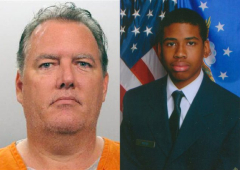
Michael Dunn, a 47-year-old software developer, was convicted Saturday of attempted murder for shooting into a carful of teenagers after the argument but jurors couldn’t agree on the most serious charge of first-degree murder. A mistrial was declared on the murder charge.
State Attorney Angela Corey said her office would consider seeking a retrial of Dunn on a first-degree murder charge.
Meanwhile, defense attorney Cory Strolla said he plans to appeal based on several issues, including how the jury could reach guilty verdicts on four counts and deadlock on another.
Dunn was charged with fatally shooting 17-year-old Jordan Davis, of Marietta, Ga., in 2012 after the argument over loud music coming from the SUV occupied by Davis and three friends outside a Jacksonville convenience store. Dunn, who is white, had described the music to his fiancee as “thug music.” He claimed he acted in self-defense.
After more than 30 hours of deliberations over four days, the 12 jurors found Dunn guilty of three counts of attempted second-degree murder and a count of firing into an occupied car.
Earlier in the day, the panel said in a note to Judge Russell L. Healey that they couldn’t agree on the murder charge. They also had the option of convicting him of second-degree murder or manslaughter. The judge asked them to continue their work, and they went back to the deliberation room for two more hours before returning with a verdict.
“I’ve never seen a case where deliberations have gone on for this length of time,” Healey said afterward, praising the jurors. “They’ve embraced their civic duty, and they are to be commended for that.”
Jurors declined to talk to the media.
Dunn showed no emotion as the verdicts were read. Each attempted second-degree murder charge carries a maximum sentence of 30 years in prison, while the fourth charge he was convicted on carries a maximum of 15. A sentencing date will be set later.
Davis’ parents each left the courtroom in tears. Afterward his mother, Lucia McBath, expressed gratitude for the verdict. Sunday would have been the teen’s 19th birthday.
“We are so grateful for the truth,” McBath said. “We are so grateful that the jurors were able to understand the common sense of it all.”
Jurors heard testimony that Dunn, who has a concealed weapons permit, fired 10 shots, hitting the vehicle nine times. Davis was the only person hit.
Dunn, in claiming self-defense, testified that he thought he saw a firearm pointed at him from the SUV as the argument escalated. No weapon was found in the SUV.
Dunn also told jurors he feared for his life, perceiving “this was a clear and present danger.”
Prosecutors contended that Dunn opened fire because he felt disrespected by Davis. The teen made his friend turn the music back up after they initially turned it down at Dunn’s request. Dunn was parked in the spot next to the SUV outside the convenience store.
According to authorities, Dunn became enraged about the music and ensuing argument. One person walking out of the convenience store said he heard Dunn say, “You are not going to talk to me like that.”
Dunn testified he heard someone in the SUV shouting expletives and the word “cracker,” which is a derogatory term for white people.
“That defendant didn’t shoot into a carful of kids to save his life. He shot into it to save his pride,” Assistant State Attorney John Guy told the jury earlier in the week. “Jordan Davis didn’t have a weapon, he had a big mouth.”
The trial was Florida’s latest to raise questions about self-defense and race, coming six months after George Zimmerman was acquitted in the shooting of 17-year-old Trayvon Martin in Sanford, about 125 miles south of Jacksonville. The Dunn trial was prosecuted by the same State Attorney’s Office that handled the Zimmerman case.

Jury Finds Jordan Davis’ Killer Michael Dunn Guilty On Only 4 Of 5 Charges


Days after a jury declared a mistrial on the first degree murder  charge of killing Jordan Davis, Michael Dunn’s issues start to surface.
The UK Daily Mail reports that Dunn allegedly forced his ex-wife to join swingers clubs and sleep with random men for his enjoyment.
In addition, Dunn spent his time in jail allegedly ranting against Blacks and Hispanics, and even suggested that more people should arm themselves and kill them. All this while awaiting the verdict for his part in the suspected crime.
To further pile it on, the Daily Mail stated that Dunn aired out his feelings in a letter sent from jail to his daughter that if more were killed they might change their ‘thuggish’ behavior.
The discovery of Dunn’s issues come after the claims were made public following his acquittal after members of the jury admitted to not being able to agree on the first-degree murder charge Dunn faced for killing Davis.
Dunn’s acquittal, which occurred Sunday, has since sparked reaction among those who are upset with the outcome of the trial.
Davis, 17, was shot dead after Dunn confronted him at a gas station in Jacksonville, Fla. in November 2012. Dunn, who was angered by the loud rap music playing from the car Davis was in, approached the vehicle and told the people in the car to lower the volume. Dunn has maintained that he fired 10 shots in self-defense, saying he was threatened and fearing for his life. According to reports, Davis was unarmed and no gun was ever found in his SUV.
Despite the potential impact on the case, the newly revealed claims on Dunn were ruled inadmissible by the trial judge
The 12 jurors in the case deliberated for 30 hours before finding the 47-year-old Dunn guilty of three counts of second-degree attempted murder and one count of shooting into an occupied car. A mistrial was declared on the most serious count of first-degree murder.

Observe Black History Month by Visiting Kentucky’s Camp Nelson

0

Camp NelsonFRANKFORT, Ky. – Celebrated as Black History Month, February is a good time to explore Kentucky’s Camp Nelson Civil War Heritage Park. The 525-acre park 20 miles south of Lexington marks the site where more than 10,000 formerly enslaved African-American men trained as soldiers for the Union Army and thereby obtained freedom for themselves and thousands of family members.
Designated a National Historic Landmark just last month, Camp Nelson near Nicholasville in Jessamine County was established 150 years ago on a directive from President Abraham Lincoln, to play a critical role in the Union war effort as a supply depot, recruitment center and hospital facility. Camp Nelson is most significant as the nation’s largest recruitment and training center for African-American troops open today for visitation and interpretation.
The third-largest recruitment center for Black troops in the nation at the time, Camp Nelson also included a refugee camp to house the soldiers’ families and to provide schooling and medical care. At its peak, the camp sheltered more than 3,000 women and children, most of whom eventually attained their freedom here. However, several hundred of these family members died in November 1864 when the U.S. Army expelled the refugees from the camp in harsh weather, prompting a public outcry that resulted in re-establishment of the camp.
Central Kentucky’s picturesque landscape forms a backdrop for learning about Camp Nelson’s role in the Civil War. Explore more than five miles of trails, open daily from dawn to dusk, at your own pace. An interpretive center provides insight into life at the camp with artifacts and a video for view Tuesday through Saturday. At the adjacent Camp Nelson National Cemetery, you can wander among the graves of nearly 4,000 Union soldiers killed in Kentucky.
Plans are in the works for the 150th commemoration of the site with the anniversary of the enlistment and training of the first African-American men. The event will be held Sept. 6-7, 2014.
Camp Nelson is located six miles south of Nicholasville on U.S. 27. For more information call 859-881-5716 or visit www.campnelson.org.

For more things to do in Kentucky for Black History Month, visit www.kytourism.com/things_to_do/history_heritage/african_american_heritage.aspx.

An Artistic Makeover for the $100 Bill

0

Brian_1 Brian_2By Cecilie Rohwedder

Brian Thompson’s latest artwork has taken 17 years to create. But when the piece is unveiled this fall, millions will see and touch it.
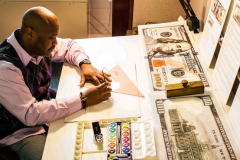
Mr. Thompson designs paper money at the Bureau of Engraving and Printing in Washington—most recently the new $100 bill, which started to circulate on Oct. 8.
The note will still feature Benjamin Franklin on its face and Philadelphia’s Independence Hall on its back. Much of the rest reflects Mr. Thompson’s choices: He wanted to give the bill more movement and an airier feel than “Benjamins” have now. And he hoped to evoke more U.S. history by adding well-known imagery, such as the Declaration of Independence—while incorporating new anticounterfeiting features.
“It’s like putting a puzzle together,” said Mr. Thompson on a recent morning at his drafting desk in the Bureau’s neoclassical building near the National Mall. “In a puzzle, you have to have each piece in the right place to get a whole picture.”
When finished, that picture will be among the most recognized across the globe. At the end of 2012, 8.6 billion $100 bills were in circulation, according to the Federal Reserve. Up to two-thirds of U.S. currency circulates abroad, and the $100 note is a favorite of foreign counterfeiters. That’s why on the door to Mr. Thompson’s studio is a red sign that says “High Security Area.” Underneath it, he has added a small poster. “Bank-note design is old-world craftsmanship,” it reads.
Just over a century ago, Theodore Roosevelt hired sculptor Augustus Saint-Gaudens to redesign currency; his work with gold coins is famous. But most designers haven’t been celebrities. A 43-year-old Washingtonian, Mr. Thompson started drawing in the third grade and went to a high school for the arts. In college, he apprenticed at the Bureau of Engraving and Printing. In 1989, he began to help redesign the $20 bill (which was issued four years later) and never left.
Mr. Thompson finds the size of paper currency a challenge: Only postage stamps, he jokes, have less space for artistic expression. The images must be easily recognizable, the colors vibrant and the numbers big enough to prevent confusion. His favorite bank-notes include those of Australia and South Africa, with their vivid, subtly blended colors. For inspiration, he looks to the fantastical engravings of M.C. Escher and the brilliantly detailed flowers of Georgia O’Keeffe.
Mr. Thompson started working on the new bill in 1996, after the current $100 note was issued. He began with a series of sketches. Because he wanted to include the Declaration of Independence, which Franklin signed, one sketch showed a wavelike scroll with a large quill. But in the end there wasn’t room for the scroll. Instead, the Declaration’s words fill the right side of the note.
The quill is paired with an inkwell that has an image of the Liberty Bell inside it. The bell doubles as a security mark, changing from green to copper, appearing and disappearing, depending on the angle of the light. In addition, Mr. Thompson incorporated the date of the declaration’s adoption, July 4, 1776. “That was the push, to really tell a story this time,” he said.
To add space and flow, Mr. Thompson thinned the black frame around the bill’s edges and eliminated the frame around Franklin’s portrait: “I wanted something more airy and free.” He also gave shoulders to Franklin, so that the viewer’s eye would move, in a continuous curve, from the lower left of the note to the security ribbon and historic symbols above on the right.
A committee with representatives of the Bureau of Engraving and Printing, the Fed, the U.S. Secret Service and the Treasury recommends the design to the secretary of the Treasury, who has the final say. It took 40 drafts to reach a final version.
The same panel advised on how to foil counterfeiters, a key aim of the redesign. Mr. Thompson said that the aesthetic challenge was to keep the necessary signatures, symbols and security marks from turning the bill into a piecemeal collage. “It’s a balancing act,” he said.

Prosecutors: Darren Sharper Drugged, Raped Two Women

0

Darren SharperLOS ANGELES (AP) — Prosecutors charged former NFL safety Darren Sharper on Friday with raping and drugging two women in California and disclosed he is under investigation in connection with five more drug-related rapes in three other states.
Sharper briefly appeared in Los Angeles Superior Court, where his arraignment was postponed until Feb. 20 at the request of his lawyers. They issued a statement saying he would be exonerated.
Prosecutors then filed a motion to increase Sharper’s bail to $10 million and outlined details of investigations involving him in Las Vegas, Tempe, Ariz., and New Orleans.
Sharper has not been charged in the other jurisdictions.
In the bail motion, Los Angeles County Investigator John Maccharella described a pattern in which the former football star met women at clubs or parties and lured them to a hotel room, where they were allegedly drugged and raped.
The motion says the incidents happened in the past five months, with two occurring within a day in Los Angeles and Las Vegas.
After conferring with police in other jurisdictions, Maccharella said in the bail motion that the first assault followed an event for New Orleans Saints football players on Sept. 22, 2013.
Maccharella said he was told a woman went to a New Orleans bar with Sharper, consumed an alcoholic beverage provided by him and blacked out. She awoke the next morning while being sexually assaulted, the bail motion stated, noting that an exam later showed Sharper’s DNA was present.
The Los Angeles charges were based on incidents on Oct. 30, 2013, and Jan. 14, 2014, beginning at a West Hollywood nightclub. Sharper allegedly met two women each time, invited them to a party then said he had to stop at his hotel.
In the October incident, each woman was given a shot of an alcoholic beverage before blacking out, and one later awoke to find the other being sexually assaulted, the charging documents state.
In January, a woman awoke and suspected she had been assaulted, the documents state.
Similar scenarios played out on Jan. 15 in Las Vegas and on Nov. 20, 2013, in Arizona, the bail motion states.
In Los Angeles, Sharper is facing two counts of rape by use of drugs, four counts of furnishing a controlled substance, and one count of possession of a controlled substance.
The complaint alleges the drugs involved were morphine and zolpidem, which is sold under the brand name Ambien.
Sharper was represented by prominent Los Angeles attorneys Blair Berk and Leonard Levine.
“We look forward to the true facts being revealed in this case,” Berk said after the brief court appearance. “And we are hopeful Mr. Sharper will be fully exonerated before this case is concluded.”
Sharper, 38, played in the NFL from 1997 to 2010, mostly with the Packers.
Sharper was arrested on Jan. 17. He was allowed to remain free on $200,000 bail and ordered to surrender his passport. He has not entered a plea.
Superior Court Judge Roberto Longoria did not immediately take up the bail motion.
Sharper’s lawyers refused to comment on the other investigations.
If convicted in the California case, Sharper could face more than 30 years in state prison.
Sharper was selected All-Pro six times and chosen for the Pro Bowl five times. He played in two Super Bowls, one with the Packers as a rookie and a second with the Saints.