Home Blog Page 1589

Local Young Lady Competes for the Miss Jr. Pre-Teen Birmingham/Montgomery Title


0

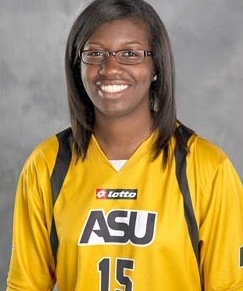
Keniya Smith of Birmingham was recently selected to participate in the 2014 Miss Jr. Pre-Teen Birmingham/Montgomery pageant competition that will take place on Sunday, February 9. Keniya learned of her acceptance into this year’s competition when the pageant announced their selections following interviewing in the local Birmingham/Montgomery area. Keniya submitted an application and took part in an interview session that was conducted by this year’s Birmingham/Montgomery Pageant Coordinator.
 Keniya will be competing for her share of thousands of dollars in prizes and specialty gifts that will be distributed to contestants. Keniya will be competing in the Miss Jr. Pre-Teen division, one of four divisions that will have young ladies the ages of 7 through 19 competing in modeling routines, which include casual wear and formal wear. Most importantly, Keniya will display her personality and interviewing skills while interviewing with this year’s Birmingham/Montgomery judging panel. Personality is the number one aspect that each contestant is judged on during all phases of competition.
 If Keniya were to win the title of Miss Jr. Pre-Teen Birmingham/Montgomery, she would represent Birmingham/Montgomery and the surrounding communities at the National Competition that will take place in Orlando, Florida. Over $30,000 in prizes and awards will be presented at the National Competition while each winner enjoys this expense paid trip of five nights and six days in Orlando, Florida.
 Community businesses, organizations, and private individuals will assist Keniya in participating in this year’s competition by becoming an official sponsor to her. Through sponsorship, each contestant receives all the necessary training, rehearsals, and financial support which will allow Keniya to become a very confident and well-prepared contestant in this year’s Birmingham/Montgomery Pageant.
 Any business, organization, or private individual who may be interested in becoming a sponsor to Keniya may contact the Miss Jr. Pre-Teen Birmingham/Montgomery pageant coordinator, at 1-877-403-6678.

The Lowdown on High Blood Pressure

0

High Blood Pressure (NAPSI)—According to the Centers for Disease Control and Prevention, about 68 million people—1 in 3 U.S. adults—have high blood pressure. Also known as hypertension, high blood pressure can lead to a stroke or heart attack. Fortunately, high blood pressure is a preventable and treatable risk factor for heart attack and stroke.
To help, Joseph Young, M.D., a Kaiser Permanente internal medicine physician and the clinical hypertension lead with The Permanente Medical Group, answers a few basic questions and offers advice on how to keep your blood pressure in check.
Q: Can you give a quick Blood Pressure 101?
A: Blood pressure is just the pressure of blood flowing inside the body’s blood vessels. The top number is the pressure when the heart pumps at its peak. The bottom number is the pressure when the heart is relaxing and filling back up with blood. An ideal blood pressure is 119/79 or lower.
Q: What is high blood pressure?
A: If your blood pressure is 140/90 or higher, you have high blood pressure, also known as hypertension. In the United States, 29 percent of the adult population, or roughly 70 million people, has high blood pressure. Weight, lack of physical activity, consuming too much salt or alcohol, stress, older age, genetics, family history and various diseases are contributing factors for high blood pressure. Fortunately, high blood pressure is preventable and treatable with a healthy lifestyle and a number of well-tolerated, once-daily medications.
Q: What are the main guidelines for healthy practices that can reduce risk?
A: Regular physical activity is very important and helps to lower blood pressure. Pick something you enjoy—that will make it easier to stick with it. It doesn’t have to be fancy. You could just walk briskly at least 150 minutes a week, for example. Limit salt intake, too, because salt causes fluid retention, which increases blood pressure. Cook with unprocessed fresh fruits, vegetables and lean sources of protein. Don’t drink too much alcohol and do quit smoking. Smoking does not increase blood pressure but smoking combined with high blood pressure or with any other risk factor is especially dangerous.
Q: What is the role of medication with high blood pressure?
A: Medications are very important for most people with high blood pressure. The medications we’ve used to treat high blood pressure have been around for decades. Over time, we’ve learned that combining medications in low doses works best and causes the fewest side effects. Today, most people with high blood pressure who need medications can control their condition with a once-a-day regimen with minor to no side effects.
Q: Do you have any parting words of advice?
A: High blood pressure in and of itself is just a number. We care about it because we know if the number is high, there is an increased risk of stroke and heart and kidney problems. If you have high blood pressure, have it checked regularly and have frequent adjustments made in your treatment regimen until it’s well controlled. If you don’t have a history of high blood pressure, it’s still best to have your blood pressure checked every two years.
A commitment to reduce hypertension, strokes and heart attacks:
Kaiser Permanente is recognized as a national leader in reducing and preventing heart attacks and strokes. Kaiser Permanente Colorado was recently hailed as a 2012 Million Hearts Hypertension Control Champion. In Northern California, 86 percent of Kaiser Permanente members with hypertension have their blood pressure under control compared to 50 percent nationally. For more information, visit www.kp.org. For questions or advice about a specific condition, consult with your physician.

7th Annual Ovarian Cycle Birmingham

0

Ovarian-Cycle-2012To register:  ovariancycle.kintera.org/birmingham

Ride to Change the Future®
Sunday Feb. 23, 2014
Event Location:
Levite Jewish Community Center
3960 Montclair Road
Birmingham, AL 35213

Event Time:
9 a.m. – 3 p.m.

Hosted by:
The Norma Livingston Ovarian Cancer Foundation
The Ovarian Cycle Birmingham Ride to Change the Future® is a 6-hour indoor cycling event dedicated to raising funds to support much-needed ovarian cancer research. 
Here’s how it works!

In order to participate in the event, participants must pay a $50 registration fee. (Survivors do not have to pay a registration fee to participate in the event.)

-Participants can register as individuals and ride for any increment
between 1 and 6 hours.

– Participants can register as part of a team and ride for any increment
between 1 and 6 hours.

– Fundraising minimums are $600 for 5-6 hours, $400 for 3-4 hours or
$200 for 1-2 hours.

Once you have registered, you will be given your own page to personalize and use for fundraising. 
 With the registration fee, you will receive an event t-shirt and gift bag loaded with goodies, plus an unforgettable day complete with food, refreshments, and other surprises in an energy-filled room packed with people riding for the cause! 
 FREE training rides will take place prior to the event, so you can build confidence and endurance for the final ride.
 Riders must raise the fundraising minimum required to participate PRIOR to the final ride.
 FREE training rides will take place prior to the event at the following times & places:

Saturday, Jan. 11 (1 hour) 8a.m. Sweat & Gears
Sunday Jan. 19th (2 hours)12:30-2:30 LJCC
Saturday, Jan.25 (2hours)8:30-10:30 Metro Fitness, Montgomery, Ala.
Saturday Jan. 25th (2 hours) 10:30-12:30 Hoover Rec
Sunday February 2nd (3 hours) 2-5p.m. Inspire Fitness
Sunday February 9th  (3 hours) 12:30-3:30 LJCC
Saturday February 15th (4 hours) 9:30-1:30 Gold’s Gym Vestavia
Sunday, February 16th  (2 hours)  3-5p.m. Metro Fitness, Montgomery Ala.

If you aren’t able to attend or are unable to ride, you can participate as a virtual rider to support the cause!
There is no registration fee and no fundraising minimum for virtual riders. Virtual riders will not have a bike reserved at the event. To sign up as a virtual rider, be sure to “Virtual Rider” when you register.
 To learn more about the Norma Livingston Ovarian Cancer Foundation please visit www.nlovca.org.

Tips For Keeping Your Child’s Visit to the Dentist a Safe One

0

Child Dentists (NAPSI)—While going to the dentist is vital because oral health affects overall health, parents should be aware of specific precautions to take to protect their children during visits to the dentist and orthodontist.
There are a number of infection control measures that should be standard in every office for every patient:
• Dental and orthodontic professionals should wash their hands and put on fresh gloves and a new mask before beginning work in the mouth.
• All single-use items should be disposed of. If offices reuse these items, they risk the possibility of spreading disease.
• After every patient, the treatment area and all equipment should be cleaned and disinfected with a hospital-grade disinfectant, not just household cleaner. Plastic barriers should cover as much equipment as possible.
There is equipment customized for kids that can create a safe and comfortable environment for junior patients. “One key to encouraging children’s participation at dental and orthodontic checkups is to make the experience more pleasant and less scary,” says Noel Brandon-Kelsch, a registered dental hygienist and the infection control columnist for RDH magazine. She suggests parents make a few simple requests of their dental and orthodontic professional:
• Request a disposable bib clip for your child. Metal bib clips are cold on the neck and can harbor bacteria. Researchers at Tufts University School of Dental Medicine and the Forsyth Institute found that 20 to 30 percent of bib clips still had bacteria on them even after being disinfected. The same study found that bib clips from orthodontic offices had 1½ to two times as many bacteria on them as clips from an endodontic dental clinic before disinfection. The researchers speculated that young patients might be more prone than older ones to touch the bib clip during treatment. A disposable bib clip is guaranteed to be bacteria-free.
• It’s imperative to make sure your child receives an X-ray apron with a built-in thyroid guard to use during X-rays. Although there is no specific research indicating a correlation between thyroid cancer and dental and orthodontic X-rays, according to the American Cancer Society, people who receive head or neck radiation treatments in childhood are at increased risk for thyroid cancer. Built-in thyroid collars are required to shield the thyroid from unnecessary radiation during X-rays of the mouth. Recent innovations in the design of X-ray aprons have also made them lead-free, and thus 30 percent lighter than leaded aprons while offering the same level of protection. Brandon-Kelsch adds, “Parents should request a kid-sized X-ray apron that covers small bodies appropriately. The apron should be clean and not have any tears or creases that would compromise the protective layer of the apron.”

Officer Kerrick indicted in shooting of unarmed man

0

OfficerBy Michael Gordon
mgordon@charlotteobserver.com

A Charlotte-Mecklenburg police officer was indicted Monday on voluntary manslaughter charges linked to the shooting death of unarmed man.
A Mecklenburg grand jury returned the indictment against Police Officer Randall Kerrick after Superior Court Judge Bob Bell ruled earlier in the day that the 18-member panel could hear the case.
Kerrick, 28, was arrested Sept. 14 in connection with the shooting death of Jonathan Ferrell, 24. During a brief confrontation northeast of Charlotte, Kerrick fired 12 shots at Ferrell, hitting him 10 times.
But in an unexpected move, a separate grand jury voted last week not to indict the police officer on voluntary manslaughter charges, instead asking state prosecutors to bring back a lesser charge for them to consider. Of the 277 cases that grand jury considered, only Kerrick’s did not end with an indictment.
Attorney Roy Cooper quickly announced plans to take the case — and the original manslaughter charges – before the county’s other grand jury. Defense attorneys went to court to stop them.
But Bell said state law gives prosecutors authority to resubmit a case and a charge, clearing the way for an unsual second grand jury deliberation over what has become one of Charlotte’s highest-profile legal fights in years.
Kerrick is the first Charlotte police officer arrested in connection with an on-duty shooting in at least 30 years. If convicted he faces a prison sentence of between three and 11 years.
Demonstrators called for Kerrick’s indictment in an early morning rally. Attorneys for Ferrell’s family have described Kerrick as a “rogue cop” who committed “cold-blooded murder.”
The demonstrations and increasingly fiery rhetoric has led Kerrick’s defense team to question whether the grand jury can do an unbiased job.
“How in the world is that grand jury supposed to go into that courtroom and make a decision when you’ve also got the NAACP outside?” defense attorney Michael Greened asked Bell.
“How is Randall Kerrick supposed to get a fair trial and due process?”
Grand jury proceedings are closed. But only 14 of the normal 18 members were on hand to hear the Kerrick case last week. Twelve votes are needed for an indictment. That meant as few as three grand jurors could have turned the Kerrick vote. The final vote totals remain secret.
Senior Deputy Attorney General Jim Coman, who took over the case at the request of Mecklenburg District Attorney Andrew Murray, told Bell that if prosecutors had known ahead of time of the missing jurors, they would have rescheduled their case.
The fatal night
The shooting drew national headlines, in part because Kerrick is white and Ferrell was black.
Ferrell, a 24-year-old former college football player, had wrecked his car northeast of Charlotte after giving a co-worker a ride home. Autopsy reports indicate Ferrell had been drinking but was not drunk.
After kicking his way free of his car and apparently losing his cellphone, Ferrell walked to the nearest house and, according to police, pounded on the front door. The woman inside called 911.
Three officers responded. Ferrell ran up to them, ignoring police calls to stop, investigators say. One officer fired his Taser but missed. Ferrell then veered toward Kerrick, who fired 12 shots at Ferrell from close range.
The 28-year-old police officer, who had three years of experience at the time, was arrested the next day. Police Chief Rodney Monroe said a video from one of the police cars at the scene indicated Kerrick used “excessive force.”
Laughrun, who has described Ferrell’s death as tragic, said the video shows his client acted appropriately.
If convicted, Kerrick faces a prison term of three to 11 years.
‘Uncharted waters’
The legal ebbs and flows of the case have caught many veteran members of the legal community by surprise.
“This case is treading uncharted waters,” said prominent Charlotte attorney James Wyatt. “It’s very unusual to not return an indictment. It’s even more unusual for the attorney general to resubmit to the grand jury on the same charge.
“That raises some due-process concerns that are mentioned in the defense motion.”
Scheer and other former prosecutors say refiling charges is a common strategy, even if state law “technically” restricts the move.
In fact, Scheer said it’s possible that Laughrun and Greene’s motion could lead to Kerrick’s temporary release from the manslaughter charge, “but there is no block for the attorney general from taking the same charge back before the grand jury.”
Meanwhile, in a prepared statement Friday, attorneys for the Ferrell family said the latest move by Kerrick’s legal team lacks constitutional basis.
“It appears that this motion was filed solely because Officer Kerrick’s attorneys feel their client will be indicted once the full grand jury properly considers the evidence in this case,” the statement said.

Read more here: http://www.charlotteobserver.com/2014/01/27/4643483/judge-denies-effort-to-block-grand.html#.UubjcvZMGCY#storylink=cpy

Nation’s Largest Microlender Names Lisa Riley Vice President of the Delta Region

0

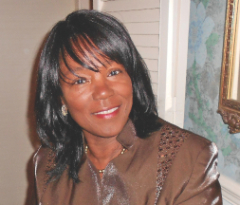
Lisa RileyBIRMINGHAM, Ala. – The nation’s largest microlending organization, Accion Texas Inc., has promoted Lisa Riley to Vice President Delta Region.
Riley, who previously served as Delta Region Manager, will remain based in Birmingham at 500 Beacon Parkway West, 1st Floor of The World Business Center of Alabama and will continue her ongoing responsibilities throughout Alabama and oversee Accion’s small business lending and education programs in Arkansas, Kentucky, Mississippi, Missouri and Tennessee.
She continues to be responsible for the management and performance of the nonprofit organization’s loan programs throughout the region, supervising all lending staff, fundraising, public relations, marketing and more.
“Lisa has proven herself a valuable member of our team and we are proud of her contributions to Accion – especially her leadership in the Delta region,” said Chief Lending Officer Dan Lawless. “We continue to move forward with our mission and continue helping entrepreneurs and existing small business owners in Alabama and the Delta Region.”
Riley helped launch Accion’s Alabama operations in January 2012. She is well established and highly regarded in business and civic circles throughout the state. She recently received the Distinguished Service Award from the Chamber of Commerce of West Alabama – where she also served as initial chair of the Minority Business Council. She serves on the boards of the Autism Society of Alabama, Cornerstone Ministries Inc. and Arts ‘N Autism. She also is a member of the Verner Elementary School PTA in Tuscaloosa. She is a judge for Round 3 Alabama LaunchPad. She was re-appointed by Alabama Governor Robert J. Bentley to the board of trustees of the State Mental Health Department. She is currently majoring in business at the University of West Alabama.

Board Member Focus: Wanda A. Guillaume

0

Wanda“Service to others is the rent you pay for your room here on earth.”
– Muhammad Ali

Wanda’s experience in education extends over decades from serving as an elementary school teacher, school principal, chief academic officer, educational consultant and project manager.  She was recruited to the Morris Jeff Community School Board by former Board President Aesha Rasheed, but had previous involvement with MJCS during her tenure as Chief Academic Officer of the Recovery School District.
“I supported school leader Patricia Perkins and her team plan a world-class, diverse community school.  I was driven by the school’s grassroots approach to educational reform and dedication to creating a racially and economically diverse public school,” says Wanda.
Wanda felt compelled to serve because she recognized that students were still being underserved after Hurricane Katrina. She believed she could add value to a system that needed talented and dedicated people to move education forward.
“The opportunity to serve on a charter board was compelling because it allows me to give back to a city that gave so much to me.  My motivation is driven by the valuable input that trustees offer toward building a solid foundation for the future successes of our children,” reflects Wanda.
In addition to her role as Board President, Wanda serves on the Governance, Academic, and Grievance Committees. Charter school boards are responsible for the evaluation of school leadership.  Wanda oversaw the school leader’s performance evaluation process.
Prior to joining the board, Trustees Melissa Jagers and Aesha Rasheed made certain that she knew the level of commitment needed and the importance of understanding governance and support versus management.  The relationship between trustees and school leaders has thrived due to a healthy flow of clear communication and clearly defined roles and responsibilities of all members and recruits.

The Top Shelf
The success of a charter school hinges largely on the decisions of its governing board. The Top Shelf enhances the capacity of charter school boards through professional development, board recruitment and community engagement.

If Farmworkers Earned More,
Could We Afford What They Pick?

0

NS_CMYKINS Veteran Shares Economic Benefits
of Tighter Immigration Control
Income inequality and the minimum wage have become national buzzwords, but noticeably absent from the conversation is the economic plight of American farmworkers.
“Almost half the people laboring in our fields are U.S. citizens and legally authorized immigrants, but Americans tend to think they’re all illegals, so they accept the situation,” says Michael Harpold, a 35-year veteran of the U.S. Immigration and Naturalization Service (INS) and author of the new book “Jumping the Line,” (www.jumpingtheline.com) a realistic and dramatic portrayal of an illegal immigrant and a Mexican-American farmworker family.
“We’re terrified food prices would skyrocket – a fear perpetuated by some in the agriculture industry — if we don’t keep the lid on labor prices.”
Ask the farmers and they’ll say, “I’m paying far more than the minimum wage,” and that’s often true, Harpold says. “What’s not said is that the work is seasonal, so the laborer works only 100 days a year. His annual income falls far below the poverty line.”
Non-supervisory farmworkers earned an average hourly wage of $10.80 in 2012, well over the federal minimum wage of $7.25, according to the Farm Labor Survey conducted by the National Agricultural Statistics Service.
The same survey found nearly half did not have year-long jobs.
The impact of extreme poverty on farmworkers – more than 2 million, including undocumented immigrants — affects all of us.
“Imagine how well local businesses would do if these workers had enough money to dine in their restaurants, visit their shops and pay for their services,” Harpold says. “Imagine the benefits to us all if their children could stay in one school for a full year, and if they could aspire to careers beyond the fields.”
If we could stem the flow of cheap labor crossing illegally into our country, and if we relied only on legal immigrants and citizen workers, wages would rise, he says.
What would that look like for the rest of us? Harpold says it’s not the frightening picture some stakeholders paint.
•    We’d pay less than $1 more a month for produce. According to University of California at Davis agriculture economist Phillip Martin, a 40 percent increase in farmworker wages would translate to a 2 to 3 percent increase in retail prices for fruits and vegetables. The trade-off is less economic cost borne by government to support impoverished farmworker families.
•    We would curtail the creation of more substandard jobs in agriculture. Guest worker programs – where foreign workers are invited to work on U.S. farms — perpetuate pockets of rural poverty by keeping labor costs low, encouraging the creation of more low-skilled, low-income jobs in the area. Pending House and Senate legislation proposes to allow in hundreds of thousands of new guest workers. If enacted, this will continue the vicious circle of poverty and inadequate education trapping immigrant farmworker families striving to assimilate in our society. Children of immigrants living in two-parent families are twice as likely to be poor (44 percent versus 22 percent) as the children of natives. Two-thirds of farmworker children who live with both parents remain poor. ¹
•    Growers will (as they have in the past) innovate to make up for fewer workers. When forced to compete for labor such as occurred when the United States stopped the importation of Mexican farmworkers in 1964, growers innovate, mechanizing harvests, planning crop cycles to coincide with worker availability, and providing housing or transportation. Then, growers signed contracts with farm workers union president Cesar Chavez containing hire back clauses for migratory workers, raising wages and providing healthcare. The brief golden age for American farmworkers ended after a decade and a half because the U.S. failed to stop illegal immigration.
As a nation, Harpold says, we cannot talk about income inequality and minimum wages without including immigration in the conversation.
“It’s all tied together,” he says. “When we address immigration, we will also address persistent poverty for a large segment of the population.”

Nothing major is going to happen unless the Republicans and Democrats work together

0
Dr. Jesse J. Lewis, Sr.

by Jesse J. Lewis, Sr.

Taken from The Christian Science Monitor by Linda Feldman

However, if not, President Obama’s promise to use executive action to get around congressional gridlock is unparalleled in modern times, some scholars say. But to liberal activists, he’s not going far enough. The course of Obama’s final three years in office, in which he has promised continuing assertive use of executive action, will be shaped by the debate where to critics, Obama is the ultimate “imperial president,” willfully violating the Constitution to further his goals, having failed to convince Congress of the merits of his arguments. To others, he is exercising legitimate executive authority in the face of an intransigent Congress and in keeping with the practices of past presidents. Here are some main points he made in his fifth State of the Union (SOTU) speech.

Inequality. Mr. Obama has referred to growing income inequality, and a lack of upward mobility by the lower and middle classes, as “the defining challenge of our time.” Critics say he is engaging in “class warfare,” but Obama is undaunted – and likely sees this populist message as central to Democrats’ chances in the fall midterms.

As he did last year, the president called on Congress to raise the federal minimum wage. But this year, he’s going for a higher minimum – from the current $7.25 an hour to $10.10 over two years. And to spur Congress on, Obama announced that he plans to sign an executive order requiring workers hired under new or renewed federal contracts be paid a higher minimum wage, at least $10.10 an hour. He will also, once again, call on Congress to extend long-term unemployment benefits.

Jobs. Obama acknowledged that the current unemployment rate of 6.7 percent, though declining, is still too high. More ominously, the US labor participation rate – the workforce’s share of people who are either working or looking for a job – is at a 35-year low. But he highlighted actions he has taken, and plans to take, to boost employment.

One such initiative, announced in 2012, aims to create 45 “manufacturing hubs” around the country, public-private partnerships aimed at spurring innovation and boosting middle-class incomes. Lacking funding from Congress, Obama has had to scale back his goal. But using repurposed federal funds, two are completed, and two are in the pipeline. Earlier this month, the president visited the new hub in Raleigh, N.C., and this could win a line in the SOTU.

Obamacare.  Obama can hardly mention his signature domestic program, the Affordable Care Act (ACA), without acknowledging the terrible problems in the rollout last year. But he didn’t dwell on it. Instead, he highlighted the fact that HealthCare.gov now works and other strides – including the 3 million (and counting) Americans who have signed up for coverage on government-run health-insurance exchanges, as well as the millions more who have newly enrolled in Medicaid. He reminded viewers of the popular elements of the ACA, including a ban on excluding people with health problems from coverage. And he reminded Republicans that he rejects any efforts to defund, weaken, or repeal the ACA citing the forty attempts to de-fund it.

Immigration. This is the one big policy area where politically polarized Washington might, repeat might, be able to find common cause this year. Republicans know they have to act on the issue of America’s 11 million illegal immigrants, many of them from south of the border, if they hope to attract significant Latino votes in the future.

Climate change. His longstanding energy policy is “all of the above” – from fossil fuels to green technologies. Environmentalists, a key Democratic constituency, want him to place more limits on fossil fuels in a transition toward more clean energy, as 18 groups said in a Jan. 16 letter to the president. Obama adviser John Podesta pushed back, defending the steps the president has taken to reduce greenhouse gas emissions.

Education. Both early childhood education and college affordability fit into Obama’s larger theme of income inequality and upward mobility, and they definitely occupy space in the SOTU. More and earlier education equals more and better job opportunities down the road, the thinking goes. In last year’s SOTU, Obama proposed universal pre-kindergarten for 4-year-olds, at a cost of $75 billion, but legislation has stalled.

Afghanistan, Iran, and NSA. During Obama’s first presidential campaign, he promised to extract the U.S. from two costly wars, those in Afghanistan and Iraq. This is the year that he can check off those two goals, as U.S. troops end their 13-year military involvement in Afghanistan at the end of 2014. The Iraq war ended in 2011. Obama is likely to put a punctuation mark on these milestones Tuesday night.

Though President Obama has streamlined his ambitions in this speech, perhaps he can get better participation from Congress in his goals that are so important to him

email:jjlewis@birminghamtimes.com

Medicaid Problems A Symptom of Alabama’s Sick Economy

0

CraigFordby Representative Craig Ford

There is a disturbing trend happening in Alabama: the growing number of people enrolling in Medicaid and what this says about our economy and job creation.
Every year for the past five years, Medicaid’s enrollment has increased dramatically. In 2010 the state spent $307 million on Medicaid, with a significant portion of that coming from the federal stimulus money. Last year, Medicaid received $615 million from the state. This year, the program’s administrators are asking for $700 million.
This increase in Medicaid enrollment is not a part of the Medicaid expansion or Obamacare. Gov. Bentley has made it very clear that he will never support expanding Medicaid, even though Alabama taxpayers are paying for that expansion.
There are two reasons why more and more Alabamians are turning to Medicaid for their healthcare needs. Both of those reasons are directly related to our stagnant economy and job growth.
The first reason for the growth in Medicaid enrollment is due to the kinds of jobs we are creating and, more importantly, the kids of jobs we are losing and not replacing.
Alabama has lost thousands of jobs over the past five years. These were jobs that paid a livable wage and usually came with some kind of health benefits. But we have been hemorrhaging jobs for years now.
The reality is that for almost every job we are creating we are also losing a job. Alabama is currently ranked 49th in the country for job creation. We only added 300 jobs to our economy in the last fiscal year. In fact, we are one of only five states that saw our economy shrink in 2013.
 The people who lost these good jobs are now left having to work part-time or lower-wage jobs that do not come with benefits, leaving hard-working Alabamians living in poverty. Our job growth in the “leisure and hospitality” industry is almost as high as our growth in manufacturing. That means of the jobs we are creating, just as many have been maids or fast-food workers as have been machinists or welders.
Because we are losing good-paying jobs and replacing them with low-wage jobs that do not come with benefits, more and more Alabamians are having to rely on Medicaid to provide their children with basic health care.
But there is a second reason that more Alabamians are enrolling in Medicaid: more people are dropping out of the workforce because they have given up hope of finding a job. The clearest evidence of this is the dropping unemployment rate and the shrinking size of our workforce.
Over the past five years, thousands of Alabamians have quit looking for work. Some have started looking again, but most have never come back. Because they are not looking for work, the government treats them like they do not exist and does not count them when calculating the unemployment rate. This is why our unemployment rate has gone down.
But because they are not employed and have given up looking for work, these Alabamians do not have health insurance. For them, Medicaid is the only way they can provide their children with health insurance.
Medicaid enrollment has ballooned since 2010, more than doubling its cost to the taxpayers. The only way we can bring Medicaid’s expenses down is to create jobs that pay a livable wage and come with benefits so that Alabamians will not be forced to rely on Medicaid.
But clearly we are not doing that. Our economy is limping along on life-support, and our state leaders seem to be out of solutions. That is why House Democrats proposed a legislative agenda that focuses on job creation and education. Our legislation would increase funding for vocational and workforce development training, as well as dual enrollment for high school students. This will allow existing businesses to expand while also making us much more attractive to the industries we are trying to recruit to our state.
Our agenda would also require that no corporate tax incentives could be given without a commitment to create jobs, and would put clawback provisions on all tax incentives. So, if a company does not create or keep the jobs it promises the taxpayers will get their money back.
These are common sense solutions that will put our economy back on the road to recovery. There is still more that needs to be done, but these proposals are a good start. Our problems with Medicaid are just a symptom of the illness. It is time to get Alabama’s economy off life-support!
Rep. Craig Ford is a Democrat from Gadsden. He has served as the House Minority Leader since 2010.