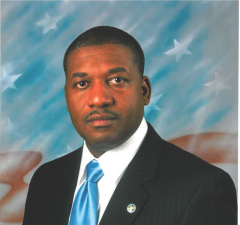
Since 1871, Birmingham has been an epicenter for change in Alabama, America and around the world.
First a “Magic City’s” iron and coal transformed a cotton-picking region into a mining and steel producing Mecca.
In the ’60s, a movement for civil and human rights transformed a “Tragic City” from Jim Crow and Discrimination towards integration and positive associations with opportunities to achieve the “American Dream” regardless of race.
Today, however, many Americans, Black or white live in low-opportunity, segregated, violent, poverty ridden communities.
May we, “Be Transformed by the Renewing of Your Minds,” seeking collective efforts to rebuild a stronger community that is Economically Strong, Educationally Sound, and Environmentally Safe – ensuring opportunities for prosperity in every zip code in this “Great City.”
Dr. King said, “I like to believe that Birmingham will one day become a model in southern race relations. I like to believe that the negative extremes of Birmingham’s past will resolve into the positive and Utopian extreme of her future; that the sins of a dark yesterday will be redeemed in the achievements of a bright tomorrow.”
Today, as we seek to eliminate hunger, may we strive to solve the problem by first choosing to be “One Birmingham”, “One Jefferson County”, “One Alabama” and “One United States of America.”
I’m looking forward to working with each of you…Thank you.
Gregory C. Townsend, MPPM
Birmingham Metro Diversity Coalition
Transformation Birmingham
MONTGOMERY—Attorney General Luther Strange has announced the conviction and sentencing of former Marshall County Revenue Commissioner Joey Masters on a charge of violating the state ethics law. Masters was sentenced in Marshall County District Court to 12 months in the Marshall County Jail, which was suspended for a term of two years of supervised probation. In addition, he was ordered to pay a $1,000 fine, a $100 fee to the Alabama Crime Victims Compensation Commission, and to perform 200 hours of community service.
Masters was arrested on November 6, 2013, pursuant to a warrant brought by the Attorney General’s Special Prosecutions Division. Later that day, he submitted his resignation as Revenue Commissioner.
In a plea agreement filed, Masters pleaded guilty to violating the ethics law by using his official position for personal gain. In the hearing, the prosecutor stated that the plea involved Masters’ taking money from a cashbox in the Revenue Commissioner’s Office for his personal use. Specifically, three dates in September and November of 2012 where $740 was used were referenced as examples of this. Evidence indicated that Masters returned the money afterward. Masters admitted that he had done this on several occasions. The plea agreement states that there is no restitution due and that it “resolves all matters now currently under investigation by the Attorney General’s Office based on information known at this time.”
Attorney General Strange commended Assistant Attorney General Bill Lisenby and Special Agents of his Special Prosecutions Division for their work in this case. “This matter was thoroughly investigated by my Special Prosecutions Division, resulting in charges against the defendant for the crime that he committed,” said Attorney General Strange. “This defendant did not have the right to use public funds for his personal use, regardless of whether he paid it back. This was an abuse of the public trust and it is appropriate that he no longer is in office and that he is being held to account for his crime.”
AG Strange Pushes Major Criminal Justice Reforms
Legislative package focuses on streamlining death penalty appeals; expanding capital offenses to include school killings
(MONTGOMERY) — Attorney General Luther Strange recently announced major criminal justice reforms that he will advocate for in the upcoming session of the Alabama Legislature. Standing with prosecutors, law enforcement officers and state legislators at news conferences held around the state, Attorney General Strange is asking legislators to strengthen the death penalty appeals process and to provide better investigative tools to fight crime.
“During my time as Attorney General, I have observed the dedication of law enforcement and prosecutors, and their determination to protect the citizens of Alabama. I have listened to their concerns for changes that are needed to give them better tools and to make the criminal justice process stronger and more effective,” said Attorney General Strange.
“Death penalty appeals in Alabama seem endless, with excessive delays that serve only to prolong pain and postpone justice for the victims of these heinous crimes. We are proposing fair and sensible changes to make the system work better for everyone. We also send a clear message that we will not tolerate the slaughter of our children at schools, with changes in the law that specify it is a capital crime to murder them and others who are particularly vulnerable. “
The Fair Justice Act offered by Attorney General Strange and the Alabama District Attorneys Association would amend two parts of Alabama’s death penalty law. This legislation is sponsored by Rep. Lynn Greer and Sen. Bill Holtzclaw.
• The first bill addresses the cumbersome and inefficient appeals process. Following a capital conviction, there is a period of “direct appeals” in which the defendant may seek to overturn the conviction and death sentence. Afterward, the defendant may file a “Rule 32” petition for post-conviction relief to challenge the conviction and death sentence. Currently, defendants may wait until one year after the conclusion of direct appeals to their convictions and sentences before even beginning Rule 32 appeals of their sentences. The Fair Justice Act requires capital defendants to file Rule 32 petitions within 180 days of filing their first direct appeal. Capital defendants would receive better representation by having their claims considered earlier in the process, and indigent defendants would be appointed counsel for the Rule 32 petition within 30 days of being sentenced. Finally, the Fair Justice Act calls for a final decision by the circuit court on the Rule 32 petition within 180 days after the direct appeal is completed. This act will make the appellate process more efficient while both maintaining the same opportunities for court review and enhancing representation currently provided to death row defendants.
• The second bill provides important protections for schoolchildren and certain others who are particularly vulnerable by expanding classifications for killings that may be prosecuted as capital offenses. These offenses would now include the murder of any person on a school campus, any person in a day care or child care facility, anyone who is covered by a “protection from abuse” order when the murder was committed for intimidation or retaliation for the order, and any family member of law enforcement or a public official when the murder was intended for intimidation or retaliation against the officer or official. The Fair Justice Act also makes it an aggravating circumstance—a factor to be considered in determining whether to impose the death penalty—to murder a law enforcement officer when the officer is acting in the line of duty.
“The Fair Justice Act takes a comprehensive approach to streamlining the appeals process in death penalty cases so that family members of victims will not have to suffer for decades awaiting justice to be done,” said St. Clair District Attorney Richard J. Minor, who is President of the Alabama District Attorneys Association. “The bill requires that direct and collateral appeals proceed simultaneously, while ensuring that those defendants sentenced by the court to death will have their rights protected at all stages of the process. This approach will significantly cut down the appeals process from what is currently a 16-year odyssey and increasing.”
Madison County District Attorney Rob Broussard, who is Vice President of the Alabama District Attorneys Association, said, “I believe we are long overdue in the State of Alabama for legislation such as this. I am tired of seeing victims’ families being re-victimized by the system. For them to be back in court 20 years after the trial to litigate baseless appellate issues is a travesty. This legislation should rectify this problem, and work to the advantage of the defendant also in that his appeals will be timely.”
Two additional bills included in the Attorney General’s legislative package emerged from the Attorney General’s Special Prosecutions Alliance, a partnership of state agencies that Attorney General Strange brought together in 2012 in a major cooperative initiative to better fight public corruption. The Child Protection and Safe Streets Act of 2014 is sponsored by Rep. Allen Treadaway. The Alabama Witness Safe Harbor Act is sponsored by Rep. Mike Ball.
· The Child Protection and Safe Streets Act of 2014 would enable law enforcement to monitor phone communications among criminals to gather evidence that may include admissions of guilt and even information about future crimes that might be prevented. Although wiretapping can be a valuable and effective tool in combating crime, current state law prohibits it use, even by law enforcement. Yet 43 other states and the federal government recognize the necessity and allow for appropriate wiretapping with the safeguard of a court order. Court orders for wiretaps would last only for 30 days, but could be extended for another 30 days. Wiretaps would only be used for crimes of murder, kidnapping, child pornography, human trafficking, sex offenses involving children under 12, and felony drug offenses.
· The Alabama Witness Safe Harbor Act repairs a deficiency in current state law regarding immunity from prosecution for witnesses. Citizens have the right not to testify if doing so might incriminate them, so valuable testimony may be acquired by granting such persons immunity from prosecution. Yet in Alabama, there is a cumbersome procedure that requires the witness to agree to accept immunity, instead of the prosecutor granting immunity and being able to compel testimony. Alabama is the only state that allows the witness to decline immunity and thus to withhold testimony.
“As they currently stand, Alabama’s laws regarding wiretapping and witness immunity serve to tie the hands of law enforcement personnel and prosecutors, and may actually work for the benefit of criminals,” said Attorney General Strange. “This is simply wrong. We owe it to our law enforcement and prosecutors to give them the tools they need to be able to fulfill their duty to protect the people of Alabama and to fight those who would harm us.”
Additional information about the Attorney General’s legislative package will be provided upon its introduction and progress through the Alabama Legislature.
Sylacauga Man Pleads Guilty to Defrauding TVA with Inflated Invoices
BIRMINGHAM — A Sylacauga man pleaded guilty today in federal court to a $72,000 wire fraud in connection with a scheme to defraud the Tennessee Valley Authority, announced U.S. Attorney Joyce White Vance.
FRANK LEWIS CONN, 49, entered his plea before U.S. District Judge Karon O. Bowdre to one count of wire fraud. His sentencing is scheduled May 28.
According to the October indictment against Conn, he devised a scheme to defraud the TVA by submitting fraudulently inflated invoices for removing vegetation from power lines and other TVA property between February 2009 and October 2009. During that time, Conn was an owner and manager of Conn Equipment Rental Company, which was doing business as Vegetation Management Services.
The TVA Office of the Inspector General investigated the case, which Assistant U.S. Attorney David Estes is prosecuting.
Birmingham Man Sentenced to Nearly Three Years in Prison for Multi-Million Dollar Tax Scheme
BIRMINGHAM – A federal judge recently sentenced a Birmingham man to nearly three years in prison and ordered him to repay the government $1.3 million for his scheme to collect millions of dollars from the Internal Revenue Service on false tax returns, announced U.S. Attorney Joyce White Vance and IRS Criminal Investigation Division Special Agent in Charge Veronica Hyman-Pillot.
U.S. District Judge L. Scott Coogler sentenced Douglas Ervin Dent, 67, to 33 months in prison on 20 counts of false claims against the government. Dent must serve three years of supervised release after completing his prison sentence. A federal grand jury indicted Dent in April. He pleaded guilty to the charges in August.
“This defendant will now go to prison for the $11 million worth of false tax returns he submitted to the IRS,” Vance said. “The tax fraud he perpetrated is both a crime and an affront to the millions of hard-working Americans who pay their justly owed taxes each year. Criminals who scheme to avoid paying taxes or to steal money from the U.S. Treasury will be prosecuted.”
“Today’s sentence of Mr. Dent should serve as a deterrent to individuals who attempt to manipulate our nation’s tax system,” Hyman-Pillot said. “As we approach tax filing season, individuals should be aware of the consequences of filing false claims, as evidenced today. IRS Criminal Investigation will continue its aggressive pursuit of those individuals who devise schemes to defraud the federal government.”
Dent was convicted of filing 20 false income tax returns in his own name and on behalf of others between April 2008 and October 2009. Dent knew that he and the other taxpayers were not entitled to the $11 million in refunds he claimed, according to court records. Each false tax return claimed that money was earned by the taxpayer and withheld by various financial institutions on behalf of the taxpayer during the tax year, and that the taxpayer was entitled to refund of those withholdings from the IRS. In truth, no such earnings and withholdings had occurred.
Among the 20 false returns, Dent filed four in his name and one in the name of his deceased mother. As a result of one of the false returns, Dent received a tax refund of $533,673 from the IRS.
In accordance with Dent’s plea agreement with the government, prosecutors recommended a 33-month prison sentence, based on Dent’s cooperation in the case.
BIRMINGHAM, Ala. – Friends of Birmingham Botanical Gardens is pleased to announce its 2014 Board of Directors.
Hanson Slaughter will serve his first term as president, taking over for Past President Tricia Noble.
Scott Walton returns as treasurer and Barbara Burton will serve her second term as secretary.
Brian Barr will serve as president-elect.
Houston Gillespy will assume the role of vice president of development, while
Elizabeth Broughton serves as vice president of gardens and buildings.
Charles Goodrich will serve as governance chair.
Robert Holmes will serve as an officer and chair of SPACE (Stakeholders, Partnerships and Community Engagement) while Beverly Hoyt will serve as an officer and chair of special events committee.
There are six new members for 2014: John Hudson, John Hurst, Turner Inscoe, Paul Jones, Katie Baker Lasker and Junior Board President Robert MacArthur. Five 2013 board members will rotate off: Laurie Allen, Margi Ingram, Lucy Tutwiler, Mary Williamson and Lou Willie.
Completing the 2014 Birmingham Botanical Gardens Board of Directors are: Cathy Adams, Mary Boehm, Chris Boles, Emily Bowron, Maggie Brooke, Gary Burley, Clarke Gillespy, Tricia Holbrook, Carl Jones, Kathryn Porter and Jeanie Sherlock.
Birmingham, AL, January 8, 2014 – The Birmingham Bar Association, at its annual meeting in December 2013, elected Robin L. Burrell as President of the Association. Ms. Burrell is a partner at the firm of Najjar, Denaburg, and has long been active with the Bar and numerous other community organizations. Ms. Burrell will serve as President through 2014.
Steven F. Casey was elected to serve as President-elect of the Association. A partner is the Birmingham office of the law firm of Jones Walker, Mr. Casey will assume the office of President in 2015.
Elected as Executive Committee members were Honora M. Gathings, Candis A. McGowan, David P. Nomberg, and Maxwell H. Pulliam, Jr. William M. (Bill) Dawson, the Deputy Public Defender in charge of trial management with the Jefferson County Public Defender’s office, received the 2013 Birmingham Bar Association Lifetime Achievement Award, and John C. Hall, III, was honored as the recipient of the 2013 L. Burton Barnes, III, Public Service Award.
The Birmingham Bar Association is the largest local bar association in Alabama, with membership of approximately 4,000 lawyers and judges.
Stillman College will hold its annual Spring Convocation, which commemorates the beginning of a new academic semester, on Thursday, January 23, at 11 a.m. in Birthright Alumni Hall. Dr. George E. Cooper, Executive Director for the White House Initiative on HBCUs (Historically Black Colleges and Universities) will deliver the convocation address.
As part of the leadership team for the White House Initiative on HBCUs, Dr. Cooper works with the presidentially appointed HBCU Board of Advisors and serves as a liaison between the executive branch and HBCUs across the country. He represents the HBCU community at the Department of Education, and helps to shape policy and deploy resources to better serve the students, faculty and families of the greater HBCU community.
“I work with 32 federal departments and agencies as an advocate for HBCUs,” states Dr. Cooper, who says that he and his department members are excited about helping President Obama to reach his goal of assuring that the United States has “the highest proportion of college graduates in the world by 2020.”
Dr. Cooper believes that HBCUs play a critical role in helping the Nation to reach this goal, and says that “promoting the excellence, innovation and sustainability of Historically Black Colleges and Universities” is among his department’s highest priorities.
He states that his department’s mission includes developing sustainable private-sector initiatives and public-private partnerships while promoting specific areas and centers of academic research and programmatic excellence throughout all HBCUs.
Prior to being appointed Executive Director on September 16, 2013, Dr. Cooper served as a Senior Fellow with the American Association of State Colleges and Universities, where he reviewed key federal legislative initiatives of significance to HBCUs. Previously, he served four years as President of South Carolina State University. Prior to that, he spent 17 years with the U.S. Department of Agriculture’s National Institute of Food and Agriculture, where he provided oversight to programs important to the historically Black land grant universities and other minority serving institutions to strengthen research, extension, academic and international programs. He has also served in faculty and administrative roles at Alabama A&M University and Tuskegee University.
“We are excited about branding HBCUs in a positive way that demonstrates that HBCUs are still viable, are making contributions to support our nation’s economy, and are preparing graduates for future challenges and opportunities. There are 106 HBCUs, and they account for 16.9 percent of bachelor degrees, 7.6 percent of master degrees, 8.1 percent of doctoral degrees and 17.2 percent of professional degrees awarded to African Americans. Approximately 300,000 students attend HBCUs, which are providing the trained manpower to help our nation grow economically,” states Dr. Cooper.
He adds, “It is important for communities to understand the economic impact of having HBCUs, and to provide the support that allows HBCUs to survive.”
Dr. Cooper, who is a graduate of two historically Black universities, says, “Having attended and worked for HBCUs prepared me for the challenges of my work in Washington, D.C.”
He received his B.S. degree in Animal Husbandry from Florida A&M University, his M.S. degree in Animal Science from Tuskegee University and his Ph.D. in Animal Nutrition from the University of Illinois –Urbana.
“For me, the HBCU experience was very important. I had faculty and advocates who encouraged me to do the best that I could do, to set priorities, and to work hard and prepare for the future,” says Dr. Cooper. “HBCUs have a very important role, and administration, faculty and staff at HBCUs are doing a great job. Faculty is willing to go the extra mile to make sure students succeed and help them turn challenges into opportunities. Investment in education will pay dividends.”
The Birmingham Water Works Board (BWWB) provides a vital service that requires the knowledge and dedication of the professional and trained individuals in its Engineering and Maintenance (E&M) Division, which works daily to ensure that customers receive the best service that the BWW can provide. Division Manager and Assistant General Manager, TM Sonny Jones, credits this dedication to the BWWB’s mission statement, which vows, “The Birmingham Water Works Board is committed to providing the highest quality water and service to our customers and future generations.” In line with the company’s mission statement, the E&M Division’s vision statement is, “To be the most efficient, effective and dependable water delivery system in the United States.”
“We grant you that this is a very broad and extensive mission and vision to accomplish,” Jones said. “It consumes the attention of the E&M Division’s large and professional staff on [a] 24 hour, 7 day-a-week basis. The design, construction, maintenance and repair of the water system’s infrastructure does not conform to a standard 40-hour a week schedule. Problems do not seem to care if it is a holiday, or if it is in the small hours of a weekend morning.”
As a water service provider that meets the goals set out in its mission, BWWB is experienced at addressing the needs of its customers and makes them top priority when problems arise.
“The E&M Department’s staff is extraordinary at handling all types of problems,” Jones said. “From small problems like a main break on a residential street on a warm summer afternoon, to large crises such as an outbreak of tornadoes in the middle of a cold and rainy night. Our staff is dedicated to solving any customer’s potable water problems as quickly and efficiently as possible, at all hours of the day.”
The Engineering and Maintenance Division encompasses more than 300 employees in its seven departments. The departments include Engineering, Mapping and Records, System Development, Revenue Water, Environmental Services, Distribution and Electrical, and Mechanical. The tasks of these departments include maintaining and installing assets valued at $1 billion at the time of their installation; changing 15,000 of the company’s 200,000 meters; maintaining 15,000 hydrants; 4,000 miles of pipe; and inspecting water shed construction to ensure water purity.
Distribution
Of the seven departments, the Distribution Department, is the largest, and managed by Reginald Nall.
“If the public is our eyes and ears in finding leaks and other problems, Distribution is our arms and feet in fixing them,” Jones said.
This department is staffed with employees that maintain and repair the distribution system, overseeing 4,000 miles of pipe as well as 1,500 miles of service line. The employees are also responsible for the repair and maintenance of 15,000 fire hydrants and 49,000 valves. Annually, the department repairs more than 7,000 leaks and related problems.
“Leaks do not respect holidays nor convenient times of the day,” Jones said. “The motto of this department is that we never leave a customer without water if it can be avoided at all costs. Our crews work at all hours of the day and night to get this job done and done right. Fourteen leak crews are backed up by seven valve crews and fourteen dump truck crews in fixing leaks; in addition to cleaning up the repair debris and eventually leaving the repair site better than they found it.”
By visiting www.bwwb.org, and clicking ‘Report a Problem’ customers are able to compose a message stating the problem, as well as its location. In doing so it better assists the organization in reporting a leak or related issues in the Distribution Department.
To Learn more about what occurs in the BWWB’s Maintenance and Engineering Division, visit www.bwwb.org.
BIRMINGHAM, Ala. – Members of the Woodlawn Merchants Association have begun collecting funds to help the family of Tyrennis Mabry, who was killed in a gas explosion at Marks Village apartments in Gate City in December. The Mabry Family Fund will be used by Mabry’s daughter to support her two minor siblings and grandmother.
“When a tragedy like this happens to a family who is already struggling, it touches us all. Friends and neighbors have been pitching in to get them through the holidays and now we are hoping the larger community will come forward to help,” said Woodlawn Merchant Association Committee Member and owner of The Shop, Wayne Honeycutt, Jr.
The account has been created at the Woodlawn Branch of Regions Bank in the name of The Mabry Family Fund (0189312422). Deposits can be made at any branch in the Birmingham area.
Woodlawn Merchants Association is comprised of area business owners working collaboratively to promote the business district, improve public spaces and support surrounding neighborhoods. For more information, contact 205.910.9749.
Station continues to expand reach and influence of CNG as an alternative fuel
APPLETON, Wis./ EVERGREEN, Ala. – Evergreen Transport, LLC has partnered with U.S. Oil for the construction of a GAIN®Clean Fuel compressed natural gas (CNG) station to be located near Birmingham, Alabama. The new station will be located at 8278 Highway 25 in Calera, Alabama, just south of Birmingham.
It will be built at an existing Evergreen Transport fueling and maintenance facility, adjacent to Interstate 65, an important shipping corridor in the southeast. The GAIN station will support Evergreen Transport’s initial conversion of 12 trucks to CNG, with the potential to convert additional trucks in the next several years.
David Wildberger, President of Evergreen Transport, cites the ability to build the new CNG fueling station at an existing Evergreen facility as one of the principal reasons for the partnership. “GAIN’s flexibility in siting the facility where it’s most advantageous to our fleet was key to moving forward with our partnership,” said Wildberger. “GAIN really worked to meet our needs and we’re excited about this new opportunity and relationship.”
“This is a unique partnership for GAIN,” said Bill Renz, General Manager for GAIN Clean
Fuel. “In addition to expanding our nationwide CNG network, this partnership is a joint venture, giving both companies the opportunity to benefit from the economic advantages of CNG.”
One of the advantages for fleets converting to CNG is that it is much more cost-effective than diesel fuel, with savings of more than $2 per gallon. Additionally, the reduced carbon emissions are better for the environment when compared to diesel fuel and CNG is a domestically-produced product.
When completed, the new location will be open 24 hours a day and will be available for use by other trucking companies and approved fleets.
U.S. Oil currently operates nine GAIN stations, and has an additional 12 new GAIN Clean Fuel stations under construction. With a goal of building 50 CNG stations nationwide in the next two years, U.S. Oil is meeting the growing demand from carriers seeking to take advantage of CNG’s benefits.
Evergreen Transport, one of the premier bulk carriers in the southeast, currently has operations at five terminal locations including Calera, Evergreen, Jackson, Leeds, and Mobile, Alabama.
The City of Birmingham is on the threshold of greatness. In order to be the best of the best, you have to work hard, smart and make some sacrifices.
We need to make this City great (I should use the word greater) because it’s the right thing to do and moreover, this City is presently being run by Black people.
I have said this many times, if you are Black, you cannot afford to be equal. We have to be better.
HERE’S WHERE WE START:
Education:
I contend that education is just like an engine to a car. If you do not have an engine in your car, you’re not going anywhere. If your education level goes down, the industry that plans to move in the City will also go down. In the event the education level goes down, crime goes up. Unquestionably, there is a direct correlation between education and crime.
When children drop out and move out of the City, it has a drastic effect on the dollar amount received from the State. Tax revenues go down, income to gas, water, electricity dissipates; apartments and houses get empty, which creates a jungle where it’s the survival of the fittest.
Thanks to Larry Langford’s penny tax, we got some new school buildings and we have to reach out to bring all the drop-outs back into schools so they can do something useful; teachers have to teach and the community has to seriously consider raising property taxes earmarked for the school system.
The Board of Education needs to purchase West Side Golf facility and turn it into a training facility where youngsters will come from all over the Southeastern Conference to see a golf training facility that’s the top in the United States.
The Board of Education needs to partner with Gary Burley, a former professional football player, who has created an organization called ProStart Academy. ProStart Academy is an extraordinary academic and athletic program, managed by former NFL players, and other professionals whose primary goal is to educate, train, develop and enhance the athletic, academic and life skill abilities of the students.
It is a combination of classroom and on-the-field instruction that develops both academic and athletic success. The program’s topics range from personal finance to college scholarships; from running better pass routes to public speaking skills; from study skills to nutrition.
The cost of the one year academy is $2000 and scholarships are available for those students who qualify. The Academy is a one year program that meets every Saturday at a local facility. Each student must commit to the program for the year and agree to abide by a code of conduct and sportsmanship. The Academy is for boys and girls in grades six through 12.
Most of the obituaries written about Amiri Baraka in the white mainstream media focus on the poet and playwright’s misdeeds or ordinary actions rather than his outstanding accomplishments.
They note his rage and not his common sense. They obsess over his controversial politics rather than his important ideas. They fixate on his blackness and Black activism instead of his overwhelming influence on the arts and the mind.
Certainly, we understand their need to downplay the significance of a man who attacked the white media as if it were a grizzly bear on dope, as if it were a hateful eel hungry to catch and devour all the pure and free fish in the sea of humanity. I guess if we were spit on as much as Baraka spit on the integrity of the white media, we would seek to diminish his significance too.
And so it’s left to Black artists and Black philosophers and Black politicians and Black journalists clothed in the royalty of Baraka’s sentiments, seasoned with the herbs of his reasoned intellect, to switch on the floodlights in the stadium of universal attention and showcase the influence this wonderful man has had on American society.
To have met Amiri Baraka is a privilege; to have been influenced by him is divine. Why? Because Baraka was an exceptional man who influenced American and Black American culture in a supreme way by conceiving, or at least helping to conceive, the Black Arts Movement.
The Black Arts Movement, that’s the main reason why many in the white mainstream media want to silence Baraka’s achievements even beyond the grave. That movement – its ideas, its impulses, its anger – not only transformed Black American culture, but white American culture as well. In fact, all ethnic America benefited from the summer of that movement’s ideas.
The Black Arts Movement aimed to encourage Black writers and artists to create politically charged works that explored African-American culture, history and experience. Two words in that definition make the movement the Eve to the serpent of traditional white notions of art up to that time.
“Black” damned the vision of those opposed to the movement as white based. And “politically” choked the very life out of the idea that art should separate itself from politics. Yet, unlike the Eve in the Garden of Eden, this Eve has continued without the corrupt consequences of having been seduced by the whispers of the serpent.
Though the Black Arts Movement only lasted formally for about 10 years, from 1960 to 1970, its influence still remains, as if its veins contained eternal blood, and its borders are universal, as if nations worldwide kidnapped its principles and made them their own.
In aesthetics, Baraka and the Black Arts Movement created a new aesthetics called the Black Aesthetics. Like the commander of a militia, she gave a revolutionary order to Black art: “Reflect the Black experience, not white experience or white views on Black experience.” She also commanded her troops even more forcefully: “Do not flee like a fox from the hounds of White Aesthetics. Instead, include political language and imagery in your masterpieces.”
In other words, Black Aesthetics made the dark and the dim as beautiful as light and brightness, and asserted that whores on crack and bums on the street are as relevant to the imagery of Black art as the sun and the moon.
In literature, the movement Baraka helped to create has produced some of America’s best writers, such as Maya Angelou, Gwendolyn Brooks and Ishmael Reed. Moreover, Latino, native, Asian and other ethnic groups have taken up the movement’s vitality and focused on politically relevant story-telling and poetry that shares with other Americans the greatness of their cultures.
In music, Baraka and the Black Arts Movement have virtually inspired hip hop culture and music associated with hip hop. From Grand Master Flash to Mary J. Blige to Public Enemy to a whole host of other musicians and musical groups, rhythms and lyrics abound with feelings of Black love, thoughts on Black politics and visions of Black aspirations.
In TV and film, programming and movies on the Black experience flourish like sermons. “Being Mary Jane,” “Fatal Attraction,” “12 Years a Slave,” “Fruitvale” and others influence the market for Black entertainment that white producers squashed before the Black Arts Movement was conceived in the virgin womb of Black pride.
On white culture, whereas whites during the Jim Crow years boldly stole creations from Black culture, such as the blues and jazz, now they integrate with Black culture in ways America’s noble Black ancestors never thought would happen. Who ever thought that hip hop would become an international phenomenon so that whites and other non-Blacks worldwide imitate the culture without an ounce of shame?
We could mention others areas in which Baraka and the Black Arts Movement continue a presence as enjoyable as sweet iced tea, such as politics, economics, philosophy, psychology, religion and civil rights. But we don’t have time or space to delve into those areas.
Yet, as you can see, Baraka and the Black Arts Movement’s influences continue despite lingering attacks and condemnations by whites and their Black doormats. Thus, even though Baraka was a Marxist and white conservatives love their capitalist Black critics of Black culture, Baraka is more influential in Black American culture as a Marxist than Stanley Crouch or Larry Elder as capitalists.
And though we can’t call Baraka a great man, because greatness requires actions and visions so immense they verge on divine inspiration, we can say that he was an exceptional man, because his influence has changed the minds and lives of so many.
Hence, we cannot put Baraka in the same category as Nelson Mandela and Martin Luther King, Jr., because he lacked their greatness. But we can place him slightly lower in stature than Jesse Jackson and Al Sharpton, because his accomplishments, though exceptional, were not extraordinary.
They who found movements that invigorate national and international culture should have an everlasting “Thank You” inscribed on their tombstones. Consequently, Baraka richly deserves to be remembered and honored for the lasting effect the Black Arts Movement has had on Black American culture and the world.
He plowed the field of Black culture with tractors of innovative rage and creative thought. Every hair on his head has made Black America the heir of timeless creations in the arts, creations by artists he inspired.
And unlike some Black journalists and painters and novelists, he died as he lived: A proud Black man unashamed to have lived as a proud Black man.