Home Blog Page 1600

Letter to the Editor

0

CraigFordAbandoning Public Education is Not the Answer

Most of us would agree that every child in Alabama deserves a quality education. That is why we have a public education system. Most families cannot afford a private school, so without public schools their children would not have a chance to get an education.
It is also true that some of our public schools are struggling to keep up with academic standards. And how we help the students in these schools has been at the center of the biggest debate in Montgomery.
Last year, the Republican legislators in Montgomery forced through the controversial Accountability Act, which provides tax credits for families that transfer their children out of “failing schools” and into private schools.
The Accountability Act also provides tax credits to individuals and corporations that make donations to “scholarship granting organizations” that are meant to give scholarships to kids in failing schools who cannot afford the costs of a private school even with the tax credits, though these organizations can award up to 20 percent of their scholarships to children who are already enrolled in private schools.
To pay for these tax credits, Republican leaders cut $40 million out of the state’s education budget. And more than half of that is going to those who donated to a scholarship granting organization rather than a family trying to transfer their child to a private school.
So more than $20 million of our tax dollars is going to people and businesses that made donations to these organizations rather than to our children’s education where the money was meant to go.
Don’t get me wrong. I am not at all opposed to private schools. But I think private schools should be privately funded. Our tax dollars should go to our children’s education, and not to those people who are trying to make a profit off of private education on the taxpayers’ dime.
And after all that, only 52 kids in the entire state transferred to a private school last year, while about 720 transferred to another public school. That is less than half as many who transferred the year before the Accountability Act was passed.
But it’s not just that the Accountability Act has failed in practice. It is also a failed concept.
The Accountability Act, and the Republican legislators who wrote it and voted it into law, is rooted in the belief that the only way to fix a failing school is to give up and abandon it.
Despite what some politicians might say, kids leaving schools is not going to help those schools perform better academically. And unless every kid in a “failing school” is able to transfer to a private school or a non-failing public school, then there will be thousands of kids still “trapped” in these “failing schools.” So are state leaders not interested in helping these kids get a quality education?
The reality is that you cannot fix something by abandoning it. That would be like a business firing half its employees and expecting the company to become more productive.
If our goal really is to help kids in struggling schools, then we cannot hope to do that by abandoning them and their teachers. We have to look at what the problems are and come up with real solutions.
We need to lower classroom sizes so that teachers can spend more one-on-one time with their students and so teachers can have an easier time controlling the classroom. We need to expand programs that we know work, like the pre-k program, the Alabama Reading Initiative and the Alabama Math, Science and Technology Initiative.
And we need to treat our educators like professionals instead of treating them like the enemy. The Accountability Act was passed without input from a single educator or school administrator. Even the governor’s own superintendent of education was left in the dark.
You can’t cure an illness without seeing a doctor, and you can’t improve our schools without talking to a teacher or principal.
But above all, we cannot hope to help kids in struggling schools by abandoning them.
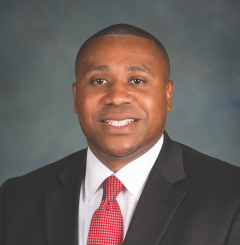
Rep. Craig Ford is a Democrat from Gadsden and the Minority Leader in the Alabama House of Representatives.

Wealthier Individuals Pay All the Taxes

0

Wayne CurtisIn a letter written in 1789, Benjamin Franklin observed, “In this world nothing can be said to be certain, except death and taxes.”  While the former is certain 100 percent of the time, the latter is not necessarily so.
This is borne out in a recent study published by the Congressional Budget Office (CBO). CBO is a nonpartisan federal agency established to provide independent analyses of budgetary and economic issues.
The December 2013 report, based on 2010 data from the IRS and the Census Bureau, is revealing.  It found that the top 40 percent of American households paid 106.2 percent of the nation’s net federal income taxes but accounted for only 72.3 percent of total income. The bottom 40 percent had 14.7 percent of income but paid negative net income taxes, accounting for -9.1 percent of taxes.
This needs further explanation. CBO calculated before-tax income to include “market income” households earned as well as what they received from government, called “government transfers.”  Market income consists of wages and salaries, business income, capital gains, dividends, retirement income for past service, and other sources.
Government transfers are cash payments and in-kind benefits. They include unemployment insurance, Social Security and Medicare, and means-tested programs such as Medicaid and food stamps.
Using this methodology, CBO concluded the top 40 percent had an average income of $95,500 and greater. The bottom 40 percent had $44,200 and less.
Transfers cause the income in all groups to increase. But the increase, both in dollars and percentage of income, is greatest for those with lower income.
To determine net income taxes paid, CBO analysts subtracted “refundable tax credits” from taxes paid. And when refundable tax credits – such as the earned income tax credit and the child tax credit – exceeded tax liabilities, households had negative income taxes. That is, they received more from the government than they paid in taxes.
Granted, the United States has a progressive system of taxation. But should the top 40 percent be expected to pay all the income taxes?  The answer depends primarily on one’s philosophy on the use of taxation to effect redistribution of income.
The CBO report, “The Distribution of Household Income and Federal Taxes, 2010,” can be accessed at www.cbo.gov.

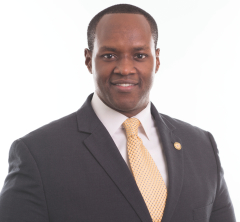
Wayne Curtis, Ph.D., is a former superintendent of Alabama banks and Troy University business school dean. He is retired from the board of directors of First United Security Bank.  Email him at wccurtis3@gmail.com.

INSIDE THE STATEHOUSE

0
Steve Flowers
Steve Flowers
Steve Flowers

By Steve Flowers

The 2014 legislative session began this week. Speculation is that it will be short and may not last the full four months allotted.

The super majority Republican legislature will put their final touch on their four-year march to the right. They have made an indelible conservative mark on state government in both fiscal and social measures.

The GOP House will emphasize financial incentives for job expansion. They are calling their agenda “Common Sense Conservative.” It will include a bill to raise the threshold where small businesses have to pay a monthly estimated income tax from $1,000 to $2,500. They will also make filing state business taxes easier by creating an online tax filing system for all taxes.

Other bills in their conservative agenda will include a tax credit to encourage adoptions. They will address the issue of legislators exiting their terms early to lobby. They will tighten the current law that prohibits legislators from lobbying for two years after they leave office.

Speaking of those legislators who left early, their replacements are ready to go after winning special elections last year. Margie Wilcox won the seat of Jim Barton in Mobile. Dimitri Polizos will replace Jay Love in Montgomery. The Elmore County seat held by Barry Mask will be filled in a special election Republican runoff on January 28th.

Several lawmakers have announced they will not seek reelection this year. These open seats will create lively contests. Veteran lawmaker Richard Laird of Roanoke has served in the House since 1978. Laird was always an archconservative although he ran as a Democrat.

Arthur Payne of Trussville will end his 36-year tenure in the House. Arthur was a very conservative legislator like Laird.

Another powerful and respected House member, Mary Sue McClurkin, will not run for reelection. Mary Sue served successfully for 16 years. Another conservative will replace her. In fact, another conservative female will likely take McClurkin’s North Shelby seat.

DuWayne Bridges will step down from his Chambers County seat. Like Laird, Payne and McClurkin, DuWayne had a very conservative voting record.

Two freshman Republicans have chosen to serve only one term. State Senator Bryan Taylor of Prattville and Wes Long of Guntersville will not run for a second term.

Steve Clouse of Ozark will assume chairmanship of the House General Fund Budget Committee. Rep. Lesley Vance of Phenix City becomes chair of the House Financial Services Committee for the second time.

The AEA fired their first salvo of the campaign year. They gave $150,000 to Gareth Moore to challenge Senator Jimmy Holley. It will be wasted PAC money. They will not defeat the popular and effective veteran South Alabama State Senator.

Gov. Bentley has said that funding for prekindergarten programs and pay raises for teachers will be among his highest priorities during the legislative session.

Speaking of Gov. Bentley, he seems determined to get to the bottom of the Alabama State University issue. He spearheaded and called for a complete audit of the university over a year ago. His report has come back and he is on the warpath. He recently released a report on a forensic audit of finances on Alabama State University, which alleges that family and friends of at least three current or former university board members benefitted financially from their ties to the university.

This 36-page audit was done by Forensic Strategic Solutions of Birmingham. This audit revealed significant discrepancies. Indeed, the audit in its conclusion calls for a further investigation to allow a jury or trier of fact to investigate multiple acts of fraud, waste and abuse that may have occurred and may be occurring currently at ASU. The audit lists numerous conflicts of interest, financial waste, inappropriate relationships, payments to family and friends of university board members, intentional obscuring of inappropriate payments circumventing policies and procedures and ASU’s practice of charging administration fees to fund a reserve account for the Center for Leadership and Public Policy. However, Gov. Bentley’s ire seems focused on allegations of fiscal mismanagement of a Medicaid contract that ended up costing the university approximately $1 million. This saga is just beginning. You have not heard the end of this story.

See you next week.

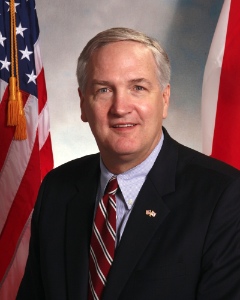
Steve Flowers is Alabama’s leading political columnist. His column appears weekly in more than 70 Alabama newspapers. Steve served 16 years in the state legislature. He may be reached at www.steveflowers.us.

What you don’t know about the Birmingham Water Works … The rest of the story

0

Jackie Robinson(Opinion by Jackie Robinson)

The Birmingham Water Works has been the focus of quite a bit of media attention
lately. It seems like there is a story in the news at least once or twice a week. But with all
that press, the public still hasn’t been told “the rest of the story.”
For example, did you know:

•     The Birmingham Water Works’ water quality is one of the top 5 in the nation and not
only meets federal drinking water standards, but exceeds them.
•     As water rates have increased nationwide because of increased federal regulation and
the need to replace and upgrade aging infrastructure, over the past couple of years the
Birmingham Water Works rate has only increased by 4.5% compared to the nation’s
average increase of 6%.
•     In 2011, Moody Investor Service upgraded the Birmingham Water Works’ bond rating
to Aa2, and Standard and Poor’s upgraded it to AA. Very few water utilities receive this
kind of investor confidence. And the bond rating increases occurred at the same time
our nation’s bond rating went down and Jefferson County declared bankruptcy. More
importantly, these higher bond ratings help save money, which translates into lower
rates for customers.
•    The Birmingham Water Works repeatedly receives national acclaim for the way it
operates and is held up as an example of how a water utility should be run. Moody’s
praised the Birmingham Water Works for its “prudent fiscal management and healthy
financial position,” and Standard and Poor’s said it had a “strong financial profile” and
“competitive water rates.”
•    In July 2012, the Birmingham Water Works opened a Health and Wellness Center to
provide free health care services and free generic drugs for its employees and their
families. The Health Center improves employee health and at the same time is projected
to decrease the Birmingham Water Works’ health care costs by 12% over 5 years.
•    The Birmingham Water Works sponsors a Young Water Ambassadors program. This
six-week program allows 100 area high school juniors and seniors to spend their
summer working and learning about the Birmingham Water Works and its operations,
impressing upon the students the importance of conserving and protecting water.

So the next time you turn on your faucet, do so knowing that the rest of the story is that
the Birmingham Water Works is not trying to get from mediocre to good, we’re trying to
get from good to great.

Jackie Robinson is Chairman, Birmingham Water Works Board

Kim Rafferty’s Comments Regarding BWWB

0

Kim Raffertyto Representative Paul DeMarco

I have done the research you challenged me to do on this subject and though I find you are correct on the aspect of the City not owning anything but the right to appoint the BWWB members, historically, I find this has always been the arrangement – before, during, and after, the City of Birmingham held the assets.  As well, I have found additional information I do believe you should be considering when contemplating refiling a legislative action to reconstitute the Birmingham Water Works Board, attached below.
I have reviewed the information provided to me by the BWWB on their operations, budget, capital, and conduct/transparency in business and have found them to be held to and delivering at the highest of standards. (state of waterworks pdf below)
It strikes me that, as there has been no outcry of poor quality, excessively high rates, or failure to maintain our water system to the highest of integrity, why one would entertain to fix what apparently is working just fine. As well, at this time in history, the City of Birmingham has appointed the most dynamic and responsive of boards that we have seen in a long time.
I understand the issues of representation that you intend to resolve, especially in an election year. However, with 95 percent of customers and revenue being generated within the borders of Jefferson County, I can see no reason to add or readjust the board to include a 5 percent interest constituency. It would seem apparent, once engaging the BWWB in conversation and doing a bit of research, that the outlying counties who receive services are City of Birmingham residents in Shelby County, outlying areas that voluntarily made the decision to align with BWWB, or – as in the case of Walker and Blount counties – had no other choice but to request to be added into the system.  I am not hearing from anyone in those sectors asking to have representation on the board. Neither do I find any fact based reasons to accuse the BWWB of failing to do their job – and according to the data given in their power point (state of the waterworks pdf) they are doing it well. I only wish our city, county, and state were run as fiscally sound.
I am attaching the data you challenged me to find as far as the legal relationship between the City and the BWWB (1st 3 pdf). I am also attaching the response of the BWWB to your past legislative proposal (bwwbresponseon pdf) to review. I find the facts to be clear and the need to continue allowing the BWWB to do what they are doing, in the manner in which they are doing it, to the best of their ability is imperative to the growth of our region, the stability of our system, and the integrity of our water assets.
I do support language that would secure, at the state level, the appointment of one representative from over the mountain as well as the term limits to two terms period. That would clarify what the City has failed to solidify with those “gentlemen’s agreements” made through the years. However, any other action towards the BWWB at this time would, without further data and justification, prove to be self-serving, irresponsible, and short sighted.
Now, I must also state, the comments made by some of your Democrat delegation were quite offensive. Many in attendance, including City Council and BWWB members, agreed those comments were made only to incite divisive action on both sides of the political coin. It is quite a shame that al.com chose to only report on the ugly and not the facts of the evening.  However, it is imperative that you, the Republican delegation, temper your forward movement in a way that will not divide us further. Please carefully consider the greater good that can be done here, scale back your actions, and engage the BWWB in a discussion for the future.
I do believe that the greater good we should be considering here is that the service and water given to us by the BWWB are top notch – ultimately that the rates are equitable, the business is conducted transparently, and the administration of this asset is responsible, proactive, and fiscally sound – which is most evidenced here by the facts. I hope this information finds your mind open, your heart forgiving to your colleagues, and your focus on ensuring that the BWWB continues on in the same manner in which it is working today – providing us with the highest quality of water and securing that delivery of that water is made in a safe, timely fashion for years and years to come.

Kim Rafferty, City Council, District 2
Birmingham, AL

Omicron Omega Chapter, Alpha Kappa Alpha Sorority, Inc.
 Celebrates the Holidays with Service Awards and Donations


0
Left to Right: Stephanie Ayers-Millsap, Dr. George T. French, Dr. Gwendolyn Tilghman and Terricetta McCall

BIRMINGHAM, Ala. – The members of Omicron Omega climaxed their 2013 Service to All Mankind Campaign by spreading Christmas cheer to area families and by adopting more than 25 angels from the Salvation Army Tree and Alabama Department of Human Resources (DHR). During the chapter’s annual Christmas breakfast, members brought numerous bags of toys, clothes and shoes to fill the wish list of local children. Among the most popular requested items were tablets, clothes, MP3 players, video games and coats.
Ms. Patricia Lee of the Salvation Army and Ms. Robin King from DHR were on hand to accept the chapter’s gifts on behalf of the foster children. Omicron Omega’s partnership with the Salvation Army and DHR was implemented last year as part of the sorority’s international program initiatives. “Inviting the leaders of the civic groups and organizations we support to the breakfast gives our members the opportunity to hear firsthand what their dedication and commitment to the community means to others,” said outgoing President Terricetta C. McCall, who implemented the partnership during her term of office.
Highlights of “A Klassy Christmas Affair” included a donation to Miles College for $4,000 that was accepted by Dr. George T. French, President of Miles College. Dr. French, in his remarks, thanked the members of Omicron Omega and its foundation, CEAF, for their continued support and alliance with the college. Dr. French also talked about the recent expansion on Miles campus and invited the chapter to the campus for future events. Also, on hand was Mrs. Brenda Wright of JCCEO to accept a $500 donation to the Head Start program.
The Christmas breakfast also serves as an opportunity to recognize chapter members for their outstanding volunteer efforts. Members recognized included:  Golden Member of the Year – Mrs. Barbara Adams; Humanitarian of the Year – Mrs. Leah Wiggins; Member of the Year- Ms. Carla Flakes; Entrepreneur of the Year – Ms. Charmel Taylor and New Member of the Year – Ms. Stephanie Alexander.  Other outstanding service awards were presented to the following members: Theadora Fancher, Delfreda Coleman, Bernadine Roby, Cynthia Garrett, Dorothy McClain, Betty Glover, Rhonda Allen, Fatima Carter, Jacqueline Carter, Susanne Matthews, Lois Scott, Cynthia Hardison, Sara Buie, Barbara Clemon, Karen Lee, Cecily Chaney, Demetrius Singleton, Pamela Steele and Patricia McAdory. 
 Singer and musician, Willese Burt provided entertainment during the breakfast. The State of the Chapter Address was given by outgoing President Terricetta McCall. The chapter’s new officers were installed at the end of the breakfast. The Christmas Breakfast was chaired by Mrs. Barbara Grant Adams and Mrs. Sonya Smith.
 Alpha Kappa Alpha is an international service organization that was founded on the campus of Howard University in Washington, D.C. in 1908. It is the oldest Greek-lettered organization established by African-American college-educated women.  For more information about Omicron Omega Chapter or AKA visit www.akaomicronomega.net.

Phi Beta Sigma Fraternity Inc. Celebrates its Centennial

0

Phi Beta Sigma photo Phi Beta Sigma Fraternity, Inc. was founded on the campus of Howard University in Washington, D.C. on January 9, 1914.  Sigma boasts an international membership of more than 130, 000 college-educated members. Men of Sigma represent a wide variety of professional occupations and careers thereby making a positive difference in the life of our communities and culture. January 9, 2014 marked the 100th year of dedicated service to the community as exemplified in our motto, “Culture for Service and Service for Humanity.”
The Honorable Founders of Phi Beta Sigma Fraternity Inc., the Most Honorable A. Langston Taylor, Leonard F. Morse and Charles I. Brown planted the seeds of Brotherhood, Scholarship and Service into Sigma to build, fortify and enrich our fraternity to be of service to the community. The Founders did not live to see the Centennial fruits of their labor but we are here to ensure that the legacy continues and lives heartily.
Phi Beta Sigma has and continues to attract men of character and integrity to the membership of its fraternal organization. Internationally renowned and notable men of Sigma include Dr. George Washington Carver, A. Phillip Randolph, James Weldon Johnson, Emmett Smith, Congressman John Lewis and former United States President William Jefferson Clinton. Locally, the Birmingham Alumni Chapter, Tau Sigma, is proudly represented by State Representative Oliver Robinson, State Representative Rod Scott, State Representative Demetrius C. Newton, former State Senator Fred Horn and many more.
On January 19, 2014 at 4 p.m., The Men of Phi Beta Sigma Fraternity Inc. will celebrate our 100 year Centennial and Founders Day at Metropolitan AME Church, 1530 4th Ave., N, Birmingham, AL 35203.
As Special guest speaker, the Honorable Jonathan Mason will travel from Newark, N.J. to deliver the Founders Day message.

Civil Rights Sit-in Pioneer Franklin McCain Dead at 73

0

Civil Rights PioneerRALEIGH, N.C. (AP) — Franklin McCain, who helped spark a movement of nonviolent sit-in protests across the South by occupying a segregated Woolworth’s lunch counter in 1960, has died, his son said Friday. He was 73.
McCain died of respiratory complications late Thursday, Frank McCain of Greensboro said Friday.
Franklin McCain was one of four freshmen students from North Carolina A&T State University in Greensboro who sat down at the local “whites only” lunch counter on Feb. 1, 1960.
“The best feeling of my life,” McCain said in a 2010 interview with The Associated Press, was “sitting on that dumb stool.”
“I felt so relieved,” he added. “I felt so at peace and so self-accepted at that very moment. Nothing has ever happened to me since then that topped that good feeling of being clean and fully accepted and feeling proud of me.”
McCain, Joseph McNeil, David Richmond and Ezell Blair Jr. (now known as Jibreel Khazan) planned their surprise action carefully. They bought school supplies and toiletries so that their receipts would offer proof that the lunch counter was the only part of the store where racial segregation still ruled.
The young men stayed until the store closed, but returned the next day and subsequent days. They were joined by more protesters, whose numbers built to at least 1,000 by the fifth day. Within weeks, sit-ins launched in more than 50 cities in nine states. The Woolworth’s lunch counter in Greensboro was desegregated within six months.
The sit-in led to the formation in Raleigh of the Student Nonviolent Coordinating Committee, which became the cutting edge of the student direct-action civil rights movement. The demonstrations between 1960 and 1965 helped pass the 1964 Civil Rights Act and the 1965 Voting Rights Act.
“To the world, he was a civil rights pioneer who, along with his three classmates, dared to make a difference by starting the sit-in movement,” McCain’s family said in a prepared statement. “To us, he was ‘Daddy’ – a man who deeply loved his family and cherished his friends.”
McCain graduated in 1964, became a research chemist and sales executive, and moved to Charlotte. His wife of 48 years, Bettye, died a year ago. He served on his alma mater’s board of trustees, then spent four years on the governing board of the 17-campus University of North Carolina system. His term on the public university board ended last year.
“What I think people should remember most about Franklin is that his courage and commitment to doing what was right didn’t end at Woolworth’s,” said state university system president Tom Ross, who grew up in Greensboro. “That commitment continued throughout his life, and he channeled it in ways that really mattered, particularly in his service and devotion to our university and to higher education.”
Richmond died in 1990. McNeil is now 71 and Khazan is 72, said Steffany Reeve, a spokeswoman for the International Civil Rights Center and Museum, which occupies the former Woolworth’s store.

New ASU President Not Allowed to Have Lovers Spend the Night

0

ASU NEW PRESIDENTBy NewsOne Staff

Dr. Gwendolyn Boyd, the new president of Alabama State University, may not have a problem with her contract, but a clause forbidding her from allowing any lovers to stay at her home has caused an uproar.
Inside Higher Ed reports that the single Boyd’s contract included $300,000, a car and the presidential residence — and a no romantic visitors clause, which may be illegal.
“…the phrasing may be illegal nonetheless”, said Raymond Cotton, a Washington lawyer who has negotiated several hundred presidential contracts. Cotton, who represents boards and presidents alike, said he’s never seen such language in any public or private college president’s contract.
The Alabama State contract, finalized late last week, says, “For so long as Dr. Boyd is president and a single person, she shall not be allowed to cohabitate in the president’s residence with any person with whom she has a romantic relation.” The contract was obtained and posted online by The Birmingham News.
Cotton said Supreme Court cases prevent government, including Alabama’s, from interfering in personal lives this way.
“I don’t know of any state that has the right to invade someone’s residence even if the state owns that residence,” Cotton said. “To convey that residence and dictate what kind of romantic relationship you can have in that facility – I mean, she’s not in prison.”
Officials at Alabama State, a historically Black university, did not explain where the language came from or say whether it’s standard language for any president, single or not.
“The contract was negotiated between Dr. Gwendolyn Boyd and the Alabama State University Board of Trustees and both parties agreed to it and have no problem with it,” a university spokesman, Kenneth Mullinax, said in the university’s sole response to questions.
The clause reads as follows: “For as long as Dr. Boyd is President and a single person, she shall not be allowed to cohabitate in the President’s residence with any person with whom she has a romantic relation.”
While a clause regulating Boyd’s personal life is unusual, legal watchers claim that it’s not unheard of, but the idea that an adult woman is not allowed to navigate her own relationships, away from her career, is still an extremely patriarchal concept.
And one has to wonder if that same language would be included for a man.

Baby Boomers Make Health Care Preparation Ultimate New Year’s Resolution

0

Baby BoomersAging population secures health care future by planning Medicare coverage

DURHAM, N.C. – New Year’s resolutions often are made only to be broken by the first day of the year. But, the ultimate resolution for baby boomers would be the commitment to health care security, a resolution that is tangible and can yield life-changing results for many years to come.
The implementation of the Affordable Care Act has resulted in progress toward the availability of affordable health care coverage for all, including the aging population comprised largely of the baby boomers. According to the 2008 U. S. Census report on the nation’s aging population, baby boomers will make-up the majority of seniors by 2050, when adults 65 and older is projected to reach 88.5 million. This more than doubles its projected population of 40.2 million in 2010, as boomers began crossing into the aging population in 2011. For African Americans, the number of seniors is expected to triple over the next 40 years, rising to 9.9 million by 2050, according to the U.S. Department of Health and Human Services, Administration on Aging.
Medicare will be baby boomers’ primary source for health care.  Though the open enrollment period closed on Dec. 7, 2013, those turning 65 in days or months before the next open enrollment period in 2014 will need to know their options for health insurance coverage.
According to Dr. Kimberly Williams Moore, director of marketing and external communications for North Carolina Mutual Life Insurance Company, it is never too early for those approaching their senior years to start planning for future health care needs. She states that the biggest misconception about Medicare is that it is totally free at age 65.
“Right now, the baby boomers are controlling the conversation about health care because there are so many of them.  So the main point we want to stress is don’t wait until your 65th birthday to start thinking about your health care choices,” says Dr. Williams Moore. “The myth that once a person turns 65, their health care will be taken care of is widely believed, as  we learned through our Health Care Panel – Seven Starter Facts Seniors Need to Know tour. People think that once they are a beneficiary of Medicare they have to pay nothing. There is going to be something beneficiaries will pay.”
The health care information tour included Charlotte, N.C., Washington, and Baltimore, where North Carolina Mutual moderated a panel of experts including Andre Walton, vice president, direct to consumer channel health care exchanges for Aon Hewitt, a representative from states’ Seniors Health Insurance Information Programs (SHIIP), and a physician/physician administrator respectively. Aon Hewitt has partnered with North Carolina Mutual to provide the African American seniors with free support and access to a national network of quality Medicare insurance products through Aon Hewitt Navigators®.
During the tour, panelists issued balanced information and answered questions about Medicare and the Affordable Care Act. Seniors were equipped with the seven facts they need to know to begin choosing their Medicare coverage and to dispel health care coverage myths pertaining to the Affordable Health Care Act. For, Dr. Williams Moore, the discussions demonstrated that having clear-cut information is invaluable, but just having the dialogue about heath care is imperative.
“In speaking with these seniors during our health care panel tour, we were extremely excited to get the dialogue started about health overall.  Though there is controversy surrounding the Affordable Health Care Act, the one positive result is that it caused African Americans to begin a plan to get healthy, make doctor visits, and think about how they can ensure they spend their senior years in a healthy state. These are the things that most people forget. We have to remember health care disparities for African Americand in comparison to our majority counterparts are still very much an issue.”
The biggest takeaway for Dr. Williams Moore is for boomers to ask the questions. “I would say, if you are employed, as soon as you start looking at retirement, you need to start thinking about ‘how am I going to pay for health care.’ If you have never had a job, you definitely need to be teasing out a lot of different options for health care.”
North Carolina Mutual has been a leader in serving the life and health insurance needs of the African American community since its founding in 1898 and currently has over 200,000 policyholders nationwide. Its health care partner, Aon Hewitt Navigators®, offers access to more than 80 health insurance carriers and 3,300 different plans, plus personalized support to ensure participants choose the right plan to meet their individual needs. Through this partnership the senior population will have access to state-of-the-art tools that help them quickly zero in on the best general type of plan for their health needs. Aon Hewitt Navigators® also offers unlimited access to independent, licensed and certified insurance agents who specialize exclusively in Medicare insurance. Personal health advocates are also available year round to help seniors navigate any questions or concerns about their policies.
To get help from a navigator today, call 1-888-628-0077 or visit www.ncmutuallife.com.