
Home Blog Page 1633

Reverse Mortgages Provide Financial Flexibility

0

Reverse Mortgages (NAPSI)—Each day, 10,000 Americans turn 62, according to U.S. Census reports. Many retire with the expectation that a solid retirement account will make it possible to travel or enjoy their home with friends and family.
Unfortunately, too often, retirees find that their savings account or investments don’t look as promising as they once did or that other expenses have emerged and need to be paid.
The good news is that a growing number of seniors are coming to the conclusion that they can put the equity in their home to work by getting a reverse mortgage.
With a reverse mortgage, seniors 62 and older can access the equity in their home to get tax-free funds that can be used for whatever they want. While this kind of mortgage may not be for everyone, it can benefit seniors who want to improve their financial situations after retirement. Plus, the seniors can continue to live in their home without monthly mortgage payments.
Putting Your Home To Work
Here are five examples of how seniors are putting reverse mortgages to work for them:
Payment of hospital or medical bills—More and more Americans are going into debt because of medical bills. Never before has the cost of medical coverage been so high. Many seniors rely on Medicare, but that only covers a percentage of the total cost of medical expenses.
Home improvements—Seniors are hesitant to make home improvements while living on a fixed income. A reverse mortgage can allow seniors to make home improvements or repairs.
Pay off debt—Reverse mortgages provide the funds needed for seniors to pay down debt or eliminate debt completely. This gives many seniors the feeling of financial relief and flexibility.
Improvement of quality of life—One of the benefits of a reverse mortgage is financial freedom. With a reverse mortgage, the current mortgage is eliminated and monthly mortgage payments are not required for as long as the senior lives in the home. Seniors receive relief by not having to make a monthly mortgage payment, as well as gain financial flexibility to be able to do more in their retirement years, like dining out, traveling to see family, or simply providing the financial cushion that some seniors seek.
Travel—Funds from a reverse mortgage give seniors a chance to take the dream vacation they have always wanted but may have not had the funds to do.
An Attractive Option
Reverse mortgages are increasingly becoming an attractive option for seniors who want a comfortable retirement. The consumer no longer makes a monthly mortgage payment but remains responsible for all applicable property taxes and homeowners insurance.
When the home is sold, the proceeds go toward paying off the reverse mortgage and any remaining money is kept by the former homeowner. The money received from a reverse mortgage is tax free and it doesn’t affect Social Security benefits.
“Reverse mortgages give senior homeowners financial flexibility so they can comfortably retire and remain in their own homes,” said Richard Mandell, CEO of One Reverse Mortgage. “There is no greater satisfaction than helping seniors do what they thought was impossible with a loan program that is insured by the federal government and has helped thousands of seniors live a better retirement.”
To learn more, visit www.onereversemortgage.com.

New Year, New Career: How to Land Your Dream Job in 2014

0

New Year CareerBy Nicole Fallon, BusinessNewsDaily Contributor

For individuals who want to take the next step in their career, January is a great time to double down on their efforts and jump-start their job search. By this time, the holidays will be over, and both job hunters and employers will be ready to start the new year by seizing new opportunities.
“Oftentimes, companies have just re-evaluated their budget and departmental needs, and are prepared to bring in new employees at the beginning of the year,” said Thomas Moran, CEO of staffing firm Addison Group. “There are easy ways for applicants to stand out and show that they’re a great fit for the job.” Moran offered these five tips for landing your dream job in 2014:
Focus. Determine what your career goals are before beginning the application process. While many people may think they can do everything, flexibility is not the right answer when determining job-search goals. Having targeted, focused and specific job goals will help ensure a successful search process.
Identify key professional groups and events. Networking is key in today’s competitive environment. Take the time to locate events that are attended by individuals in your ideal profession. Once there, present yourself in a professional manner, have talking points ready and know how to pitch yourself in a way that highlights your skills and accomplishments.
Revamp your résumé. Tailor résumés to specific positions, and include keywords from the actual job posting. Your accomplishments and skills should match the requirements set in the job description.
Clean up your online presence. Understand the differences among the various social media sites, and use them appropriately. Refrain from posting questionable content, remove any inappropriate or explicit content, and avoid posting content that is too personal. For a professional site like LinkedIn, be active and post engaging, thought-provoking content that is relevant to your desired position or industry.
Recruit help. A staffing firm is a great place to start your job search. Many companies utilize staffing firms as a way to funnel job postings and weed through the mass of applicants. In addition, a recruiter will help locate positions that align with applicants’ goals and skills, thus doing a lot of the legwork for job seekers.
Originally published on BusinessNewsDaily.

Continuing to Work During Dialysis

0

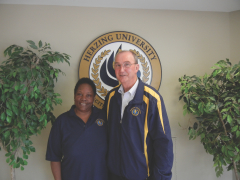
Lenora LandrumDedicated, hardworking, committed – those words describe Lenora Landrum who works in admissions and educational funding at Herzing University. Tommy Dennis, President of Herzing, says that Lenora is “as good as we’ve got.”
Lenora has been working at Herzing University for seven years. What makes Lenora different from other employees at Herzing is that she has kidney disease and is on dialysis. Upon starting dialysis in 2011, Lenora knew that she wanted to continue to work but didn’t know how she was going to be able to make it happen since dialysis is required three times a week and lasts 6 to 8 hours. She investigated her options and found out that she could choose nocturnal dialysis. She immediately approached her supervisor Kentray Sims at Herzing about an alternative work schedule. Tommy Dennis said, “Lenora has an intricate knowledge of the University which is expensive to replace. We were willing to work with her dialysis schedule so she could remain with us.” Lenora deals with her situation the best she can and says that, “I am in the right place for me. I have no complaints. I am so blessed.”   She said that being able to remain in the workplace has helped her maintain her independence. It has kept her mind busy and her body moving.
Tommy Dennis would like to encourage other employers to look at their options with employees in situations like Lenora’s. Situations can work out to be a good partnership for both parties. Employers can maintain a good employee and the employee can remain mentally and physically engaged while making a contribution in life.
The Alabama Kidney Foundation is pleased to present this article to encourage employers to consider allowing employees to continue to be part of the workforce while undergoing dialysis treatment.

The Owens Family

0
L to R - Ladarius Owens; Mother, Ora Owens

Ladarius Owens (War Eagle) spent the Christmas Holiday with his family

Check Your Credit Report

0

Credit Report(NAPSI)—Generously stuffing everyone’s holiday stockings needn’t leave you with empty pockets. Fortunately, you can keep track of your finances. By law, consumers are entitled to one free annual report from each of the three nationwide credit bureaus: Equifax, Experian and TransUnion. So now could be a good time to get a free copy of your credit report.
“Knowing how much outstanding debt you have before you head out to the mall makes sense and a credit report is the best place to get the financial facts,” said Stuart K. Pratt, president and CEO of the Consumer Data Industry Association. “We encourage consumers to give themselves a gift this holiday season by getting their free credit reports now,” he added.
Many do just that. The Consumer Financial Protection Bureau reports that 16 million consumers access their free credit reports annually, through www.annualcreditreport.com.

Best Jobs for 2014

0

Best Jobs Finding a job in the present economic climate is not simply about looking at what your present salary will be, but at what the growth in that sector will be. Here is a look at some of the best jobs that will pay you well in 2014, but are also growing over the next four to five years.
1. Network Systems and Data Analyst
It is projected that there will be a 50 percent increase in the demand for network systems analysts by 2016, which means that it is a field you will want to get into. The education requirement for the job stands at a Bachelor’s Degree, although for future improvement in position/salary you will want to consider getting a Master’s as well.
Technology is playing a huge part in businesses, which means that more data analysts are going to be required in the coming years. Instead of choosing an IT career that is declining, invest in the necessary education to be a data analyst.
2. Personal/Home Care Aides
The increase in such employees will be 50.6 percent by 2016, with a median pay of around $20,000. This salary will increase over the next few years, which is why this is a field worth considering. The education requirements for the job are low, with some states only wishing for employees to be trained on site. However, other states may prefer employees who have attended a two year university, at minimum.
With the baby boomer generation getting older, it is expected to fuel the need for care givers throughout the country. If you are interested in a medical or nursing career, this could be a great first step towards achieving that goal.
3. Home Health Aides
This job is slightly different from a home care aide, with the services involved including housekeeping, cooking, and/or babysitting. Home health aides do not need to complete a higher education, with a high school diploma said to be enough in almost all states. There will be a 49 percent increase in the availability of these jobs by 2016, in addition to a solid median pay of $20,000 to $25,000.
4. Software Engineers
With a median pay of $100,000 and an expected rise in employment of 44 percent by 2016, being a software engineer could be a very lucrative career. Most workers have a bachelor’s degree, while at least half go on to obtain their Master’s or PhD.
The world is becoming more connected with each passing day, and businesses recognize this. They will need to improve their computer networking, which is where software engineers come in. It can be expensive to maintain these computer networks, and businesses want to be as efficient as possible, which is why innovative software engineers will always do well.
Another great aspect to being a software engineer is the flexibility in work hours. As long as you get your work done by a certain deadline, there is no need for you to work the typical 9-5 hour days.
5. Veterinary Technologists/Technicians
The median pay for a veterinary technician is not that high at $35,000, but this is a fast growing field. There will be 41 percent new jobs by 2016 and the salaries are set to improve as well.
The educational background for becoming a veterinary technician is two-fold. Either you can go to two year vet school and get your associate’s degree, or you can get a four year bachelor’s degree from one of the specific schools listed by the state.
With people becoming more concerned about the well-being of their pets, the veterinary business is booming.
6. Personal Financial Adviser
With a median pay of $80,000 and a projected growth of 40 percent by 2016, this is a job that you want to get in on. A bachelor’s degree is required to be a financial adviser, but it is preferred that you have other qualifications related to the finance field. There are various courses, training sessions, and exams that ensure you are up to terms with the latest financial rules, terms, and strategies.
The reason for the growth in personal financial advisory is again related to the baby boomers. As this generation of Americans approaches the retirement age, they are more concerned with how their money will see them through the rest of their lives. As long as you are someone who is well educated, well spoken, intelligent, and reliable then you will make an excellent personal financial adviser. Just remember that the competition in this job will be fiercer than any of the others, with people looking to rake in as many clients as possible.
7. Theater and Performance Arts Make up Artists
With a surprisingly high median salary of $40,000 and a 39 percent increase in jobs by 2016, this is a field that is underrated and undervalued by most people. The educational requirements are little more than a GED or high school diploma, with people looking for creativity not intelligence. It is important to take make up training courses, unless you feel as though you are a natural at the role.
Just keep in mind that while this is a rapidly growing profession, there are still a limited number of lucrative make up artist slots to fill. You may have to endure a few years of a mediocre job before you land the make up artist role you want.
8. Medical Assistants
A medical assistant does not need much education apart from completing high school and going to a two year associate college. Most of the colleges recommended are ones that have special medical assistant programs, which ensures a specialized and streamlined education. The rest of the training is completed on the job.
Medical assistants can earn a median salary of $30,000, with a projected 35 percent increase in employment for the industry. Technological advances have helped the medical industry a great deal, in addition to the large numbers of elderly that are expected in the next 10-15 years. If you are someone who has a propensity for being a healthcare profession, this is a job to strongly consider.
9. Veterinarians
Vets are very well paid, with a median salary of $90,000. This job market will grow by at least 25 percent by 2016 and the salaries could also rise to as high as $100,000. The only difficulty in becoming a vet is the strenuous education requirements. All vets must have completed a four year post-college program that allows them to receive the Doctor of Veterinary Medicine certificate. They must also pass a state exam which gives them their vet license.
It may be a struggle to get through vet school, but it is a very rewarding profession after that point. Not only will you be helping animals get well, you will be receiving a great salary to do so. The treatments that pet owners are willing to pay for have substantially increased, giving vets more business than they could have ever imagined.
10. Counselors for Substance Abuse
This job has a median pay of $40,000 and can be a very rewarding profession. Knowing that you are making a difference to someone’s life is an unmatched feeling. You will be dealing with individuals who are alcoholics, drug addicts, or struggling with eating disorders. It is important for you to have a degree of empathy in your personality, in addition to a lot of patience.
The education requirements for being a counselor range from state to state, but it is generally expected for you to have a Master’s Degree.
The above 10 jobs may not be the most popular names you will hear, but these jobs are growing fast and will give you great job security over the next decade. Ultimately, the goal is not just to find a job for the next few months but for the next few years and beyond.
Taken from whatcomingin2014.com

A Word on Obesity

0

by Ann HeardAnn Heard

It’s not likely that we set out to become obese or overweight; however, more than two –thirds or 69 percent of adults age 20 or older are considered overweight or obese. It is a known fact that the consequences of obesity often result in type II diabetes, coronary artery disease, stroke and high blood pressure, to name a few. And, unfortunately, there is a very fine line between being overweight and obese. The weight issue is so common now that the American Medical Association has begun to classify obesity as a disease. So, the magic pills aren’t magic, and as with other diseases, will not fix the obesity epidemic.
It is a huge concern to daily observe the high incidence of obesity in our community, our children, and our families. Life expectancy of children born today is not expected to exceed that of their parents. With that said, as adults, we must begin to make lifestyle changes not only for self but because we want better for ourselves and our families. Not enough time, or being too busy cannot replace a better quality of life for self or our families. The doctor will not be the problem solver with this health matter, nor will the pill. Family and community involvement (“the village”) will and should be the mechanism for personal behavior and lifestyle changes. Let’s love our families to life not death. Health really does matter! HAPPY and !

Ann Heard RDLN,CDE
Registered Dietitian, Certified Diabetes Educator

Alabama Red Cross Responds to More Than 2,000 Disasters in 2013

0

REd CrossEffort part of overall Red Cross response to 146 large disasters nationwide
HOOVER, Ala. — In a year that had deadly tornadoes, fierce wildfires and destructive floods in many states, the Alabama Red Cross responded to more than 2,000 disasters in the region, part of the 146 large disaster relief efforts led by the American Red Cross in 42 states and territories between Jan. 1 and Dec. 1 in 2013.
“This year, the Red Cross continued to serve the people of Alabama through the dedicated work of its staff and volunteers,” said Mark Beddingfield, Executive Officer for the Alabama Red Cross. “2013 was a busy year and we are so very thankful for everyone who supported our efforts to help those in need.”
Here at Home
The Alabama Red Cross responded to a number of disasters in 2013, to include the following.
•    Nearly 6,500 residents were assisted with their immediate needs after more than 2,000 home fires damaged or destroyed their homes.
•    Nearly 500 residents were assisted with their immediate needs after severe weather moved through parts of Alabama in April.
•    Red Cross volunteers also provided canteen services and mental health services for emergency workers and victims after several man-made and natural disasters including:
◦    Several search and rescue/recovery operations in Talladega, Morgan, Elmore, Greene, and Montgomery counties.
◦    The hostage standoff near Dale County in January.
◦    The Amtrak wreck in Jefferson County in May.
◦    The UPS cargo plane crash in Jefferson County in August.
◦    The gas explosion and apartment fire in Jefferson County in December.
Behind the Numbers: Mobilizing Responses for Big Disasters
The Red Cross disaster responses across the country in 2013 included:
•    16,700 workers – many of them volunteers – providing care, comfort and support to those in need.
•    89,000 contacts by specially trained workers with disaster victims who needed mental health support or health services, which is more people than the amount of travelers who pass through Chicago’s O’Hare International Airport on an average day.
•    1.8 million meals and snacks, the equivalent of feeding the entire population of Philadelphia lunch in a day.
•    29,000 overnight stays in shelters for people forced from their homes by disasters, enough to fill the largest hotel in New York City for more than two weeks.
•    1 million relief items distributed, including more than 33,700 toothbrushes.
•    $74 million to more than 60 nonprofit partners to help people and communities recover from Superstorm Sandy.

Flooding
In April, flooding struck 10,000 homes in 10 counties in Illinois. More than a thousand Red Cross volunteers provided shelter and food to displaced families and delivered relief supplies to those returning to waterlogged homes. In September, almost a half-years’ worth of rain fell in just three days across several counties in and around Boulder, Colo. Red Crossers responded and served more than 204,000 meals and snacks, handed out more than 249,000 relief items and provided about 15,000 health and mental health contacts. The Red Cross also provided a total of 3,800 shelter stays for people forced from their homes by the flooding.
Tornados and Severe Storms
The largest and most deadly tornado outbreak in 2013 came in Oklahoma in May, when a series of tornadoes ripped through the state, and Red Cross workers were there to comfort the survivors, including the community of Moore, Okla., where two elementary schools were struck by a deadly EF-4 tornado. More than six months later, the Red Cross continues to help residents through long-term recovery centers and other community programs.
In addition, Mississippi was hit particularly hard by severe spring storms for the third year in a row, including a tornado that severely damaged the Red Cross building in Hattiesburg in February. Again in April, the Red Cross was there, opening shelters, providing food and water, and helping survivors recover. In November, dozens of tornadoes cut a path of destruction through the Midwest, damaging more than 1,000 homes and leaving hundreds of thousands without power during a cold snap.
Wildfires
When wildfires threatened communities, the Red Cross offered evacuees a safe place to stay and supported first responders. In total, the Red Cross mobilized more than 2,000 workers to support 10 large wildfire responses in eight states during 2013, such as Colorado, Arizona, California and New Mexico.
Home Fires
It’s not just the high-profile disasters that left thousands of people in need this year. The Red Cross also responded to more than 52,000 home fires across America, helping 226,000 people get back on their feet. For those who have suffered a home fire, the event can be just as devastating as the high profile disasters that get a large amount of national attention. Regardless of the size of the event, the Red Cross responds in the same way – with shelter, food and emotional support.
International Disasters
In 2013, the American Red Cross assisted an estimated 1.3 million people affected by disasters in 24 countries outside of the U.S. These included storms and floods in the Philippines, Argentina, Bangladesh and Nigeria. Red Cross workers continue to respond to the ongoing humanitarian need created by the civil unrest in Syria, as well as needs caused by conflicts in other areas around the world. The Red Cross responded to food insecurity issues in Malawi and Zimbabwe and continued our earthquake recovery work in Haiti that has been ongoing since 2010. Additionally, the Red Cross continued its vital work in reconnecting families separated by conflict and disaster, reconnecting 886 families this year alone.

What to Do When You Suspect Child Abuse

0

child-abuseOnslaught of cases prompts advocate to share tips for 
recognizing, reporting abuse
The news reports are as shocking as they are relentless:
An Army sergeant in Maryland charged with 1st-degree child abuse, accused of starving, beating and burning her 4-year-old stepdaughter.
A North Carolina Child Protective Services supervisor and her husband, a nurse, arrested after their 11-year-old foster son is found handcuffed to a porch railing with a dead chicken tied around his neck.
Three malnourished sisters in Arizona, ages 12, 13 and 17, kept locked in their bedrooms for up to two years. Neighbors reported they sometimes heard children’s voices at the house at night, but never saw anyone during the day.
“These are just a few of the most recent stories you’ll find about child abuse around the country,” says Rayne Golay, a mental health counselor, children’s advocate, and award-winning author of a newly published novel, The Wooden Chair, (http://www.raynegolay.com/), which she hopes will prompt witnesses to speak up about  suspected abuse and neglect.
“These cases remind us that child abusers can look like upstanding members of society. They can be your very nice neighbor, a trusted professional, the guy at the grocery store.”
In the case of the Army sergeant, Golay notes that an observant schoolteacher spoke up about her concerns, which led to the arrest of the child’s stepmother. The three sisters in Arizona, however, were not discovered until the two youngest girls escaped after their stepfather kicked in their bedroom door and threatened them with a knife.
“Neighbors said they’d heard children at night, but never saw them,” Golay says. “Wouldn’t you call that suspicious?”
She offers these suggestions for recognizing and reporting suspected child abuse.
• Don’t be afraid to be wrong. You don’t need to have hard evidence or proof of child abuse or neglect to report your concerns. If you’re wrong, social workers and investigators will soon discover that and close the case. It might be uncomfortable for the alleged abuser and he or she may get angry. But you can report anonymously, and it’s far better to risk someone taking offense or social workers finding no evidence of abuse than for a child to suffer because no one speaks up.
• Actions often speak volumes. Does a young child cringe, raise an arm defensively or try to hide when her mother turns to her? These behaviors can be the reflexive response of a child who’s frequently hit. Do you know a child who has become withdrawn, had a persistent loss of appetite, or started doing poorly in school? Changes in behavior may signal a variety of emotional problems, including abuse and neglect. What about witnessing an adult lose their patience with a child at a store or other public place in a manner that seems over-the-top? If it appears to be an emergency, call 911, Golay says. Otherwise, try to defuse the situation. “You might smile at the parent and say something like, ‘It can be so hard to bring kids shopping. I remember it well.’ Scolding or criticizing will only make the situation worse, but attention and understanding words may calm the person.”
• How to report your concerns? If you want to talk to a professional crisis counselor before making a report, call Childhelp National Child Abuse Hotline, 1-800-4-A-CHILD (1-800-422-4453). While counselors cannot file a report for you, they can answer your questions, provide information about resources, and discuss the situation that has drawn your concern. The hotline is staffed 24 hours a day, 7 days a week.  To report abuse, each state has a toll-free number; find the list at tinyurl.com/ReportChildAbuse. If you witness a situation that requires an immediate law enforcement response, call 911.
“Whatever you do,” says Golay, “do something.”
“We’re all very aware of child abuse and neglect, but still, most people continue to hang back and say or do nothing when they have concerns,” she says. “This is not acceptable. We all have a duty to keep our children safe.”

Gallup: Americans Rank Barack Obama, Hillary Clinton as Most Admired

0

Obama ClintonAmericans named President Barack Obama and former Secretary of State Hillary Clinton as the world’s most admired living man and woman in 2013, according to a Gallup poll released on Monday.
Obama topped the annual list for the sixth consecutive year, a typical ranking for a sitting U.S. president, the polling organization said.
But the percentage of those surveyed who choose him as the most admired man fell to 16 percent this year, down from 30 percent in 2012.
The president’s job approval rating has dropped during a year marked by a botched healthcare rollout and stalled legislative initiatives at the start of his second term.
Clinton earned the top spot among most admired women for the 12th consecutive year and 18th time overall, more than any other woman in the poll’s history.
Fifteen percent of Americans surveyed gave the former first lady and U.S. senator the highest ranking, down from 21 percent who named her as the most admired woman last year, the poll showed.
Gallup said its data came from a poll of 1,031 adults between Dec. 5 and 8, and had a margin of error of plus or minus 4 percentage points.
Other men named to the list included former U.S. presidents George W. Bush, Bill Clinton and Jimmy Carter; Pope Francis and the Reverend Billy Graham; actor and director Clint Eastwood; Microsoft Corp co-founder and philanthropist Bill Gates; U.S. Senator Ted Cruz of Texas and former Republican presidential candidates Mitt Romney and Ron Paul.
The women who finished behind Hillary Clinton included talk show host Oprah Winfrey, first lady Michelle Obama, former Alaska Governor Sarah Palin, former Secretary of State Condoleezza Rice and actress Angelina Jolie.
Also on the list were Malala Yousafzai, the Pakistani teenager shot in the head by the Taliban for demanding education for girls; German Chancellor Angela Merkel, and Britain’s Queen Elizabeth and Duchess of Cambridge, Kate Middleton.

© 2013 Thomson/Reuters. All rights reserved.