Home Blog Page 1632

Understanding the Fed’s Tapering Decision

0

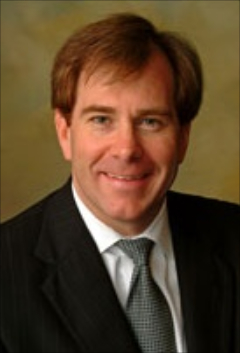
Wayne CurtisAs a new year approaches, the Federal Reserve announced it will start tapering its bond purchases.  The Fed has used the unconventional strategy in an attempt to stimulate economic activity in the wake of the Great Recession.
Through the program, the Fed has purchased about $4 trillion in Treasury obligations and mortgage-backed securities, currently at the rate of $85 billion per month, in three rounds of “quantitative easing.”  The initial reduction of $10 billion will take place in January 2014.
Why did the Fed decide to begin the taper?  What will be the impact on the financial markets?
To answer the questions, one should understand the Fed’s motives, criticized by many observers, for the purchases. Critics believe the large-scale printing of money will lead to inflation as the economy fully recovers.
Because other approaches had failed, the Fed used the unprecedented measure as a last resort. The intent was to provide liquidity to the financial system to stimulate the economy and lower long-term interest rates.  Through this action, both long- and short-term rates have been at all-time lows.
At this point, the only announced reduction will take place in January.  But others could occur as the policy-setting Federal Open Market Committee (FOMC) meets during the year.  The FOMC, comprising the seven Fed governors and five district bank presidents, is scheduled to meet eight times in 2014.  If it should decide to reduce purchases by $10 billion at each meeting, the program would terminate by the end of 2014.
The immediate impact on the financial markets was significant. As the decision was announced, the Dow-Jones Industrial Average surged to an all-time high.
The markets inferred from the Fed’s action that the economy is finally experiencing some growth. And this is borne out by the jump of 4.1 percent in gross domestic product for the third quarter of 2013 and significantly lower unemployment in November.
In the long run, much will depend upon the Fed’s actions during the year. If the purchases continue to taper off, long-term interest rates could rise if anxiety about inflation affects investors.
Short-term rates will not increase until the economy is strong enough – and unemployment  low enough – for the Fed to hike the federal funds rate.

Wayne Curtis, Ph.D., is a former superintendent of Alabama banks and Troy University business school dean. He is retired from the board of directors of First United Security Bank.  Email him at wccurtis39@gmail.com.

Let the People Vote

0

CraigFord The two most important issues that the state of Alabama will be facing in 2014 are education and job creation. These two issues are usually tied together because education is so critical to getting a good job, as well as recruiting and growing business.
But education and job creation are also connected to two other important issues: gaming and a statewide lottery.
Gaming and the lottery have been issues in Alabama politics for decades now, and they still have not been resolved.
I have frequently and publicly been in support of establishing a statewide lottery. Estimates from the Legislative Fiscal Office show that we could bring in $250 million for our schools from a lottery.
Alabamians are already spending millions of dollars on a statewide lottery. We are just doing it in other states. Tennessee, Georgia and Florida all have their own lottery and are more than happy to take our money and spend it on their children’s education.
Mississippi does not have a state lottery, but their casinos in Philadelphia are certainly making money off of customers from Alabama. And the Indian gaming facilities in Alabama are reporting record growth in gaming revenues.
The time has come to let the people of Alabama decide the fate of gaming and a statewide lottery. This is a commitment Gov. Bentley made in 2010 when he said, “I believe the people of Alabama need to decide at the ballot box on a YES or NO vote whether to allow gambling or abolish all forms of gambling.” And I am asking the leadership in Montgomery to honor that commitment.
State leaders in Montgomery have tried to go around the voters and use the courts to determine the fate of gaming. I think that is wrong. This is a democracy, and we need to let the people decide.
That is why I will reintroduce legislation this year that will allow the voters to decide if we will create a state lottery. Under my bill, the revenue brought in from the lottery will only be used for education, with $50 million being used to put a school resource officer (i.e., security guard) in every public school while the rest of the revenue will be used to provide scholarships to students who make the A/B Honor Roll. These scholarships can help our children afford an education at any university, two-year college or technical school of their choice.
It is also time to decide – once and for all – if we will allow facilities like VictoryLand to continue to operate, and if we will enter into a compact with the Indians on their gaming facilities.
Currently, the state of Alabama has not entered into a compact with the Poarch Creeck Indians. The Indian’s gaming facilities are permitted under federal law, but because the state does not have a compact with them, we are missing out on millions of dollars that could go toward our schools, economic development and other state needs.
We need to negotiate a fair compact that allows the Indians to continue their operations but also guarantees that the state benefits as well.
And by going after VictoryLand and other legal gaming facilities, the only thing the state has done is eliminate jobs and prevent these facilities from paying taxes and creating more jobs.
It is time to resolve these issues once and for all. It is time to move forward and for state leaders to keep their promise to the people of Alabama. It is time to let the people vote!
Rep. Craig Ford is a Democrat from Gadsden and the Minority Leader in the Alabama House of Representatives.

At Home with Shellie

0

Shellie LayneShellie Layne

Use it, or Let it Go

It’s a bit foreboding, scary, somewhat intimidating, disorganized and cluttered; it lacks urgency and I am guilty of having one. You probably have one At Home too. It is… the menacing junk drawer. The junk drawer is typically a small, all encompassing space resembling a pint-size attic. It is usually found near the kitchen and contains every unrelated item imaginable. The junk drawer is a stopgap for stuff we don’t want to make a decision about. It’s the holding cell for effects we lack the resolve to toss out because we believe they have some use or value, yet deep down we know that we will probably never actually use them. In many cases it acts as a tiny cosmos to store things that are moved from one place to another.
My junk drawer At Home has everything from batteries to garbage ties, birthday candles and glue to thread, recipes, expired coupons, scissors, flower food, playing cards, paperclips, bills from last year, sporks, lost screws and unread mail which landed there straight from the mailbox. You are probably shaking your head to the affirmative and can add to my not so exhaustive list. Nevertheless, the junk drawer is a quick and convenient fix for things we are not certain what to do with.
Making time to sift through, organize, put to use or discard the items in our junk drawer can be an ominous task. There always seems to be something more important to do.
However, problems arise when we avoid addressing things when they are small and manageable. The junk drawer that was designated to contain junk in a tiny area, with time and more and more stuff must enlarge itself or spill over into another area in order to accommodate more and more unusual items.
Isn’t it interesting how something At Home, like our junk drawer can parallel things in our lives? Often we are uncertain about what to do with what we store or internalize mentally, emotionally, spiritually and physically. What we watch, read, listen to and eat, the people we spend time with seem to have a use or purpose at the time, but then we realize that what has been absorbed may not actually be to our benefit and still we choose to hold on to it and it becomes difficult to discard or let go of.
Take time to investigate the items in your junk drawer At Home. You may find missing parts to gadgets that have been waiting to be put to good use, and you may discover that some of the items that are At Home in the junk drawer really don’t belong and should go in to a more permanent storage area… the trash. Do the same with your internal, personal junk drawer; those things that you took in emotionally and physically. There is only so much room and it is essential that you confront, make a decision and give priority and purpose to thoughts, feelings and dreams that are useful, and toss out everything that is just taking up space.
“I may not have all the answers, but I know the One who does.”

For more information email me at Athomewithshellie1@Yahoo.com or beginning mid January 2014, Blog and Facebook  Athomewithshellie.com or follow me on Twitter.

Affluenza—the Best of Times or The Worst of Times?

0

Dr. Victor Baugh“Be not deceived; God is not mocked;
for whatsoever a man soweth,
that shall he also reap.”
Galatians 6:7

We live in a society of clichés. A new word for this, a new concept for that. We cannot get enough of ourselves, so to speak. And we want to be the first to throw something new out there. We will do anything for a moment of glory, even if, in the end, it comes back to haunt us. (Begging your pardon for that cliché.)
I’m sure you have read the book of James in your Christian experience. Kay Arthur, internationally acclaimed Bible teacher, author, and co-CEO of Precept Ministries International, has developed courses of Scripture study that guide the learner into systematically “mining” for truths. Her study in the General Epistle of James is entitled The Gospel in Shoe Leather, an amazing title for an amazing Book of the Bible. I like that title—The Gospel in Shoe Leather. This is where the rubber meets the road in the study of Scripture.
I believe you know me well enough by now to understand that I am always going to take you where the rubber meets the road, always speaking the truth in love and sometimes scorching the temperament and causing pain. Have you ever heard the cliché, “the truth hurts”?
We are living in perilous times. I’ve said that over and again, and the Apostle Paul said it long before I did in II Timothy 3:1:  “This know also, that in the last days perilous times shall come.” Paul gives us a list of the reasons why this is true in verses 2 through 4. Read it and then read it again. At the end of this list, Paul suggests that we “turn away from such.” I’m getting to my point, and I’m coming in the front door of the book of James to do so. He says in Chapter 1, “If any of you lack wisdom, let him ask of God, who giveth to all men liberally, and upbraideth not; and it shall be given him. But let him ask in faith, nothing wavering. For he that wavereth is like a wave of the sea driven with the wind and tossed.” Now, that is easy enough for a young man of fourteen or fifteen or sixteen, even younger, to understand even if, God forbid, he has no parental guidance. If we are to be wise, we must seek our wisdom from God.
In verse 8, the Epistle of James doles out what seems to be a harsh indictment. “A double-minded man is unstable in all his ways.” If James had been a man of the cliché persuasion, he would have described this person as a paranoid schizophrenic. We would do well to ponder what James said and to read his remedy in verse 12: “Blessed is the man who endures temptation: for when he is tried, he shall receive the crown of life, which the Lord has promised to them that love him.”
Now, you need to read the entire book of James (the Gospel in Shoe Leather), for therein you get the good, the bad and the ugly. But God never tells us the problem without giving us a solution. In chapter 5, he gives a warning to the rich. “Go to now, ye rich men, weep and howl for your miseries that shall come upon you. Your riches are corrupted, and your garments are moth-eaten. Your gold and silver is cankered; and the rust of them shall be a witness against you, and shall eat your flesh as it were fire. Ye have heaped treasure together for the last days.” That is easy to understand. Just read it again, word for word, remembering I didn’t say it, God did!
The news releases are replete with accounts of young people who are in trouble, many of them steeped in poverty; many of them affluent. Trouble that leads to crime is no respecter of persons, rich or poor. We like to think that our legal system is fair, that it metes out punishment that fits the crime and that is sensitive to cases where our young people can be helped and salvaged but, on the other hand, that demands retribution for crimes done against humanity. Lately our judicial system gives us pause to wonder.
If we did not already know the cliché, Affluenza, before this week, we know it now. It has become a sickening, demoralizing combination of two words—affluence and influenza, which when combined indicates pain, contagion, socially transmission of overload, debt and anxiety, and so much more. If you are suffering from this social disease, you are familiar with all the other symptoms, mostly “having too much of this world’s goods.” We have yet to understand the extent of its affect upon society and upon individuals. I do not like to think of this social transmission as disease but sin against a Holy God.
Anatole France, winner of the 1921 Nobel Prize in literature said this, “The law in its majestic equality, forbids the rich as well as the poor to sleep under bridges, to beg in the streets and to steal bread.” Beautiful words and meaningful. But on the other hand, someone once said, “Rich people go to court; poor people go to jail.” This is a travesty. It flies in the face of Scripture, and it is an indictment of our judicial system. Where is the majestic equality?
I’m not making this discussion racially charged. That is not who I am. You have never once read one of my articles and concluded that. And this is not what I’m doing in this case. I’m talking about rich versus poor as it concerns the law and punishment of the crime.
The young man in this week’s news, who ludicrously was diagnosed with Affluenza, will never be a better person for having committed a crime against humanity and gotten off scot-free because of his or his parents’ affluence. It matters not that his parents were able to buy him out of his trouble, for Galatians 6:7 says, “Be not deceived; God is not mocked; for whatsoever a man soweth, that shall he also reap.”
The teenager who committed the crimes is responsible for his actions and will, in due time, pay the price. But it goes much deeper than this. It had a start somewhere in the mind and influence and affluence of parents who obviously have more money than respect for life, including their own son’s. That father and mother would do well to seek God’s wisdom through His Word.
It is never too late to get things right, to trust Christ as Savior, for there will come a time when “every knee shall bow” no matter how affluent that “knee” happens to be. The bottom line is Jesus came to call sinners to repentance. This is where life begins, where the rubber meets the road, where the Gospel goes to shoe leather and becomes our responsibility, where the sinner repents and comes to Christ, no matter what their station in life. Remember, Jesus said this to His disciples when teaching them about rich people, a very important message for, as a rule, a rich man has all the pleasures of this world with little need for Christ, or the law, or friends—Matthew 19:24 “Verily I say unto you, that a rich man shall hardly enter into the kingdom of heaven. And again, I say unto you, it is easier for a camel to go through the eye of a needle, than for a rich man to enter into the kingdom of God.” That proclamation does not end there. I said—Jesus never gives a negative without giving a positive. When His disciples asked, “Who then can be saved?” he said, “With men, this is impossible; but with God all things are possible.”
Hallelujah! There is an answer. There is a Savior!
Jesus loves you. Christ died for you and wants to save you and help you get your life right—rich or poor.

Through Christ Alone,

Victor W. Baugh, Sr., Th.D., Ph.D.
Pastor, St. Luke AME Church
Havana, AL


Copyright © Victor Wayne Baugh, Sr., Th.D., Ph.D. Birmingham, Alabama, December 2013

INSIDE THE STATEHOUSE

0
Steve Flowers
Steve Flowers
Steve Flowers

By Steve Flowers

With each passing day it becomes less likely that Gov. Robert Bentley will get any serious opposition in his reelection bid. We are only five months away from the June 3, 2014 GOP primary. It would be very difficult for someone to mount a significant challenge to the popular incumbent in that time span.
It also appears that Sen. Jeff Sessions and Attorney General Luther Strange will have smooth sailing towards their reelections. Young Boozer and John McMillan also appear to be headed towards reelection to second terms as Treasurer and Agriculture Commissioner.
Under our state constitution, the aforementioned statewide incumbents are term limited after two four-year terms. However, U.S. Senator Jeff Sessions has no limitations on the number of six-year terms he serves. This lack of competition portends a quiet and dull 2014 election year. This is disappointing to those of us who thrive on following political races. Therefore, political pundits will begin their speculation of who will follow Gov. Bentley as governor in 2018.
Political junkies are already thinking about the 2018 races since the 2014 contests will be sleepers. All four of the major constitutional officeholders will have to move up or out. That means that speculation will obviously focus on Luther Strange, Kay Ivey, Young Boozer and John McMillan as possible entrants into the 2018 horse races.
None of the four could be called spring chickens. McMillan and Ivey will be over 70. Strange and Boozer will be in their mid-60s. However, by today’s standards that is not old. Therefore, if they have the fire in the belly for a chase at the brass ring their age should not be a deterrent.
One major player, who has opted out of the 2014 races, is Speaker of the House Mike Hubbard. Some Goat Hill observers say he would lose power moving from his position as Czar of the House of Representatives.
Meanwhile, most of the action surrounding next year’s elections will center on Hubbard’s legislative election activities. It is expected that the legislative races will be the best contests in 2014. Hubbard has amassed his power and control of the House of Representatives by garnering the money doled out by lobbyists and special interest groups. He has corralled the lobbyists to give the money to him or his PACs and he doles it out to his friends and loyal subjects.
The state has become so divided when it comes to partisan allegiances and voting patterns that it is fairly predictable whether a Republican or Democrat will occupy a House or Senate seat in the legislature for the foreseeable future. The legislative lines were drawn two years ago for the upcoming 2014 elections. They will be in effect for the remainder of the decade. These district lines are designed to keep the GOP in control of both the State House and State Senate by about a two to one majority.
There are only a handful of seats that will be in play on a partisan battle basis. The districts are drawn to provide for 65 safe Republican seats and 35 safe Democratic seats in the House. There are about five seats that could go either way. If they split, it remains a two to one Republican advantage. The Senate is drawn about the same way. It is designed to be a 25 to 10 Republican advantage in the upper chamber. There are only three or four seats that are in play on a partisan basis.
Therefore, the liveliest challenges next year will probably be within the GOP ranks. There will be intraparty battles to see who sits in these solidly safe Republican seats. Hubbard may attempt to purge some districts that have not totally followed his reactionary orders.
This super majority Republican legislature has emasculated the only Democratic friendly organization, the Alabama Education Association, during this quadrennium. They have driven daggers into the heart and soul of this once vaunted union. In three short years, they rolled back 30 years of union accomplishments under the leadership of the legendary King of Goat Hill, Dr. Paul Hubbert.
It will be interesting to see whether the AEA will roll over and play dead or fight back. If Hubbert were still in charge, my guess is that he would fight back with a vengeance. His approach would be to strike strategically within the GOP primary.

See you next week.

Steve Flowers is Alabama’s leading political columnist. His column appears weekly in more than 70 Alabama newspapers. Steve served 16 years in the state legislature. He may be reached at www.steveflowers.us.

Two Alabama University events tied to MLK

0

MLKTUSKEGEE, Ala. (AP) – Events with ties to civil rights leader Martin Luther King Jr. are coming up at Alabama universities.
The University of Alabama has lined up Grammy winner John Legend for its Martin Luther King Jr. Realizing the Dream lecture on Jan. 19.
Tuskegee University has announced it will honor King’s life with a program Jan. 22 at the University Chapel. The former secretary of the U.S. Department of Health and Human Services, Louis Sullivan, will speak. Sullivan is the former president of Morehouse School of Medicine in Atlanta.
King’s daughter, the Rev. Bernice King, will speak at Troy University on Feb. 7. The university says she will give the key address for the Annual Leadership Conference Celebrating African-American History Month.

National Coalition of 100 Black Women, Inc. Charters Central Alabama Chapter during the Commemoration of the 50th Anniversary of the Civil Rights Movement in Birmingham

0

Black WomenOn September 7, 2013, more than 50 professional women of color were pinned by national president, M. Delois Strum and the Central Alabama Chapter received its official charter with Bea Tatum as chapter president.

The newly formed NCBW – Central Alabama Chapter, Inc. is a progressive, proactive group of African-American women leaders that advocate on behalf of women of color through national and local actions and strategic alliances that promote its national and international agendas on leadership development and gender equity in health, education and economic development.

Alpha Phi Alpha provides 18th Annual Professional Development Academy for High School Students

0

Alpha Phi AlphaThe Mu Psi Lambda Chapter of Alpha Phi Alpha Fraternity Inc. presents the 18th Annual L.E.A.D. Mentoring Academy for high school males on Friday, January 10, 2014.  The Academy is a three-month Professional Development program for high school males, similar to Leadership Birmingham for adults. The Academy provides leadership development for a select group of young men in grade levels nine through 12.  L.E.A.D. stands for Leadership, Education, Achievement, and Development. Space is only available for 30 students to participate in this year’s Academy. Parents and guardians are asked to contact 205-470-8426 or log onto www.mupsilambda.com, for applications no later than January 8, 2014 to enroll their children in the Academy.
Students will receive training in Financial Planning, Time Management, Goal Setting Strategies, and Job-training skills such as Mastering the Interview and Resume’ Writing. Students will receive assistance in College Preparation, as well as hear Motivational Speeches from positive role models in the community. During the month of February, the Academy includes a ‘Whirlwind College Tour’ of universities and colleges throughout the state of Alabama, to be visited in a single day. The College Tour is open to both high school male and female students. Students also bond and network through a weekly Step/Drill Team comprised of students from multiple school systems in the metropolitan area. The Academy climaxes with a Graduation Ceremony and Step Presentation conducted by the students. A $40 participation fee is required for the program and covers three months of mentoring, meals, and instruction. All area school systems are invited to participate. The 2014 Alpha L.E.A.D. Academy Curriculum is as follows:

January 10 – Orientation
Orientation / Registration
Overview of Program Expectations
Introduction to Leadership
Photo Session
Completion of Student Profiles

January 11 – Self Development Emphasis
Session 1 – Sales and Entrepreneurship
Session 2 – Dress for Success
Session 3 – Time Management
Session 4-Social Media/Internet Etiquette                           
 
January 25 – Career, Personal Finance and Legal Emphasis
Session 4 – Introduction to S.T.E.M. Careers
Session 5 – S.T.E.M. Professional Panel
Session 6 – Personal Finance
Session 7 – Knowing your Legal Rights

February 2 – Black History Observance
Session 8 – Civil Rights Institute Visit

February 13 – College Preparation Spotlight
Session 9 – How to Choose a College 101

February 15 – Whirlwind College Tour
Lawson State Community College
Miles College
Samford University
University of Montevallo
Talladega College
Jacksonville State University

February 22 – Men’s Health and Community Service
Session 10 – “Project Alpha-Sexual Awareness
Session 11 – Physical Fitness
Session 12 – Mental Health-How to Relieve Stress
Session 13- Introduction to Service Learning/Community Service

March 1 – Community Service Project
Session 14- Community Service Project

March 6-8 – Commencement Week
March 6 – Table Etiquette Dinner
March 7 – LEAD Graduation Rehearsal
March 8 – LEAD Academy Graduation Ceremony

Overcoming Workplace Bullying

0

Workplace Bullying (NAPSI)—We’ve all heard about the increase in bullying among children, but workplace bullying among adults is also a growing problem. According to recent reports, 35 to 50 percent of U.S. employees say they were bullied in the course of their career.
The Problem – At companies across America, employers and workers are discovering a problem that’s bad for morale, bad for their own health and happiness, and bad for the bottom line: workplace bullying.
Some Solutions – What can you do if you’re bullied at work? Dr. Colleen Logan, Walden University’s program director for the M.S. in Career Counseling program, and an expert in bullying issues, offers some advice:
• Know the signs. Workplace bullying can include verbal abuse, threats, gossip, the silent treatment, offensive conduct, humiliation, intimidation, and work interference or sabotage.
• Be honest with yourself. It’s easy to discount or ignore bullying, thinking you might be reading the situation wrongly, but if you think you’re being bullied, you likely are.
• Set boundaries. Tell yourself you do not have to stand for this behavior and will not be victimized. Remain in charge of your values, decisions, behavior and conduct.
• Get ready to confront the bully. Mentally prepare to send a clear and consistent message that the bullying needs to stop.
• Make a formal complaint. Talk to your boss. Provide specific details about the bullying and how it affects you and your work. If your boss is the bully, talk to a human resources representative.
• Seek alternative employment. If your workplace doesn’t change, take steps to find a non-hostile work environment where colleagues listen to one another’s viewpoint with respect, agree to disagree and move forward.
“Bullying in the workplace is fundamentally wrong. It can cause physical, mental and emotional harm as well as long-term career problems,” says Dr. Logan. “Although no one wants to admit to being the bully or to being bullied, everyone has the right to work in a healthy, nonhostile work environment.”
Learn More
For more information, tips and other resources for victims of bullying and those who witness bullying in the workplace, visit www.WaldenU.edu/bullyprevention.

How Technology Can Help Businesses Do More With Less

0

Technology (NAPSI)—From tax changes to utility bills and minimum wage requirements, small- to medium-sized businesses (SMBs) have a variety of expenditures and regulatory obligations. Meanwhile, governmental changes and other factors continue to alter the landscape of expenses that SMBs can expect from year to year.
This can change the way business owners invest their money and the types of expectations they have for the products they purchase to support their companies. With other growing expenses, small- and medium-sized businesses are more interested than ever in the “value of a dollar” and they expect their money to go further when it comes to technology.
Here are three tips for doing more with less and a look at the technology that can help make a difference for your business with fewer costs:
• Make your office mobile friendly—Increase employee productivity by providing the option to print on the go from smartphones and tablets. Offices that aren’t ready to buy a new printer but are interested in implementing mobile print should look at the HP 1200w Mobile Print Accessory – a simple, secure USB device that adds wireless-direct and touch-to-print capabilities to existing HP LaserJet and Officejet Mobile printers.
• Invest in cloud—enabled document management – By investing in the cloud, businesses can manage content and improve employee efficiency with access to documents from the office or on the go, without purchasing additional hardware or IT infrastructure. Look for a cloud solution that uses a subscription model, letting you scale your cloud usage as your business grows.
• Create interactive documents through the cloud—Cloud-based customer communications management solutions let users spend less time composing documents and more time engaging with customers. With these technologies, users can create sophisticated, interactive documents, including sales quotes, proposals, direct marketing and correspondence, while maintaining company brand standards.
Learn More
You can have more control of your business expenses by investing in the right technology. For further facts and tips, visit www.hp.com.