Home Blog Page 1637

We Must Get Alabama’s Economy Off Life Support

0

CraigFordNext year is an election year, and one of the topics you will hear the most about is jobs.

You don’t have to be a politician or a pollster to know that jobs are the number one issue on most voters’ minds – and with good reason!

For the past five years our economy has been limping along, struggling to create jobs. And this fear of what tomorrow may bring has kept investments stagnant and prevented businesses from growing. That, in turn, has led to stagnant job creation.

In fact, if it hadn’t been for exceptionally strong growth in Alabama’s manufacturing industry our state would have lost more jobs than it created over the past year.

According to the Alabama Department of Labor, since October of 2012, Alabama has only created a net of 300 jobs. While private-sector jobs added about 6,500 new jobs, the public-sector (including federal, state and local government employees) lost 6,200 jobs.

Our manufacturing industry is the only thing that saved us! Job losses in almost every other segment of our economy were only made up by exceptionally strong growth in the transportation manufacturing industry. Without the growth in manufacturing, Alabama would have lost more jobs than we created.

In addition to the report from the state Department of Labor, according to the magazine Business Insider, a report from the Federal Reserve Bank of Philadelphia showed that Alabama is one of only five states to have seen our economy shrink over the past year.

Clearly, what we are doing is not working. We cannot continue to gamble on a strategy of paying low wages and giving away more corporate welfare to multinational corporations without job commitments.

While I strongly support targeted tax incentives, I believe those incentives must be done the right way. When we do them the right way, everybody wins. A perfect example is the Mercedes plant in Tuscaloosa. Over the past twenty years, that plant has continued to grow and create jobs. In fact, it is a big part of the transportation manufacturing industry that saved us from being in the red on job creation over the past year.

Doing tax incentives the right way means being competitive, but including clawback provisions so that if the jobs don’t come or if the company closes after a few years the taxpayers will get their money back.

The wrong way to do it is the way we did it with ThyssenKrupp. We gave ThyssenKrupp $1 billion is tax incentives to build a steel plant in Calvert, AL near Mobile. The plant was built in 2010, and in 2012 ThyssenKrupp put it up for sale.

Thankfully, it was announced last week that the plant was bought by ArcelorMittal and Nippon Steel and Sumitomo Metal Corp. So hopefully we will survive this disaster and bring these jobs back. But we never should have been put in this terrible position in the first place.

If we are smart about recruiting industry, and use targeted tax incentives with clawback provisions, then we can create jobs again. But we cannot continue to pursue the same failed policies that we have been following.

A big part of job creation and economic recruitment is focusing on education. And it is important that we support not just traditional college education but also vocational training and our two-year colleges.

Not everyone wants or can afford a college degree. In fact, only 22 percent of Alabamians have a bachelor’s degree or post-graduate degree.

People who learn a trade can make just as much – and sometimes more – than those with a college degree. And it can be a much more affordable option for those who cannot afford a four-year degree. We need to be doing more to support our two-year schools and vocational training.

Education is so important because it not only helps the person being educated but also the community as a whole. Better schools make a community more attractive to potential employers looking to move or expand their businesses. They want to know that the workforce is educated enough to do the jobs they bring. And with the way technology is changing our economy, more and more jobs require better education.

We also need to invest more in our infrastructure. This will create jobs in the short-term, but will also help bring more jobs in the long-term by making our state and local communities more attractive to the businesses we are trying to recruit.

Alabama’s economy has been on life support for too long, and it is clear that our state leaders do not know what to do to turn things around. But the good news is that we can get back on track if we start doing what we know works and start investing in the people of Alabama once again.

###

Rep. Craig Ford is a Democrat from Gadsden and the Minority Leader in the Alabama House of Representatives.

INSIDE THE STATEHOUSE

0
Steve Flowers
Steve Flowers
Steve Flowers

By Steve Flowers

Believe it or not we are approaching the fourth year of this legislative quadrennium. The legislature will meet early next year because it is an election year. All 140 seats in the House and Senate are up for election in 2014.
These legislators were elected in 2010. Most of them are Republicans. The GOP owns a two to one super majority in both the House and Senate. These folks are not just Republicans in name only, sometimes referred to as “RINOs.” They are real Republicans.
They are conservative to say the least. They have placed in indelible conservative stamp on state government and public policy on both social and economic fronts. They have addressed abortion, immigration, gun rights, tort reform and a litany of other hot item topics and placed a reactionary result to all of these hallmark philosophical issues.
They have budgeted state dollars prudently and cut teachers’ and state employees’ incomes in the process. By virtue of their attack on public employees they have essentially emasculated the once vaunted teachers’ union, AEA. They have systematically dismantled this organization in a Machiavellian approach that has not only removed their power over the state’s education policy and dollars but has pretty much rendered them hapless in the legislative arena.
My guess is that most Alabamians approve of this GOP group’s quest to make us the most right wing state in the union because we are definitely one of the most right wing states in America. However, this trend has been prevalent throughout the country. After the 2010 elections, most states in the country moved into one corner or the other. They either became extremely conservative or extremely liberal. In 37 states, one party now controls both the statehouse and governor’s office. That is the most in 60 years. Both parties have used that omnipotent power to make sweeping changes on a myriad of major issues. Indeed in the avalanche of action have been the high profile issues of guns, immigrants, taxes, elections and gay marriage.
They have gone in divergent directions based on the party with the super majority. They have worked with a vengeance in most of these states to stake their claims. The Democrats have forged to the left and Republicans have marched to the right with both sides striving to go as far left or as far right with focus and expediency.
The two best examples of extremity are Colorado versus North Carolina. Colorado went all Democratic. They enacted total gun control, allowed free driver’s licenses and instate tuition for illegal immigrants, voted for gay marriage and chose to embrace ObamaCare by expanding Medicaid.
In contrast, North Carolina Republicans took control of the legislature and the governor’s office for the first time since 1870. The GOP in the Tarheel state has put a conservative stamp on education, tax policy, unemployment benefits and a range of social issues similar to Alabama’s agenda.
This one party control in 37 states has drowned out minority party voices much like what has happened in Alabama. The party in power has stood united and enacted almost anything they pleased and run roughshod over the minority party. Essentially, red states have turned redder and blue states have turned bluer and fewer states are purple.
In many cases partisan redistricting has driven this one-party domination. This gerrymandering has created super majorities in these 37 states that are two to three or even four to one. There are now only five states with split legislatures. They are Iowa, Kentucky, New Hampshire, New York and Washington. In 22 states one party enjoys a vote proof majority in both chambers. We are one of those states.
Perhaps no issue better illustrates the philosophical divergence more than gun control. Joining Colorado, three other majority Democratic state legislatures, New York, Connecticut and Maryland, tightened gun control laws. At the same time, more than a dozen GOP-dominated states basically did away with gun control. They followed the NRA’s lead and gave carte blanche gun carrying privileges to their citizens. Tennessee now permits gun owners to keep their guns in their cars, no matter where they park them. Wyoming voted to allow their judges to carry their guns into the courtroom.
As I said earlier, my belief is that the majority of Alabamians approve of our super Republican majority and their conservative agenda. Therefore, my prediction is that our numbers will remain about the same after next year’s elections. We will probably see around a 70 to 35 GOP majority in the House and a 24 to 11 edge in the State Senate for the next decade. We will see.

See you next week.

Steve Flowers is Alabama’s leading political columnist. His column appears weekly in more than 70 Alabama newspapers. Steve served 16 years in the state legislature. He may be reached at www.steveflowers.us.

White House Showcases Progress on the National HIV/AIDS Strategy: AIDS United’s Access to Care Program Highlighted as Delivering Results

0

HIVWASHINGTON, D.C. – At a World AIDS Day event at the White House, the Office of National AIDS Policy (ONAP) released its latest report on the progress of the National HIV/AIDS Strategy. The report spotlights AIDS United’s Access to Care (A2C) work as a public-private partnership that is truly helping to advance the goals of the National Strategy.
As the world talks about “Ending AIDS,” success will depend upon programs that can effectively link and retain HIV-positive individuals in care. Not only can care and treatment extend lives, but an HIV-positive person who is on treatment and virally suppressed is much less likely to transmit the virus, which prevents new infections. Unfortunately, according to the CDC, less than 30 percent of all HIV-infected individuals in the U.S. were virally suppressed as of Nov. 2011. AIDS United’s A2C program, with the support of public-private partnerships, is making inroads in changing that.
“It is a great honor to have our work highlighted by ONAP as a model public-private partnership helping advance the National Strategy,” said AIDS United President and CEO Michael Kaplan. “But make no mistake; our work would not be possible without the investment of many generous partners.”
“Our A2C program is working with populations that often suffer some of the worst health outcomes, but through rigorously evaluated program models and expansive networks of care, we are delivering results that show improvements in linkage and care,” said Vignetta Charles, Ph.D., AIDS United Senior Vice President.  “Over 4000 individuals have been enrolled in community-based programs under A2C. Nearly two-thirds of them are linked to care within 30 days of enrollment and three-quarters of them become actively engaged in maintaining their care. Outcomes like these are not only life-saving; but, as analysis from our partners at Johns Hopkins is showing, these programs are also cost-saving.”
To learn more about the A2C program and our 12 funded sites across the country, visit:  http://www.aidsunited.org/strategic-grantmaking/access-to-care-a2c/. This innovative five-year program was made possible with a $2.2 million annual grant from the Social Innovation Fund of the Corporation for National and Community Service (public funds) matched annually by private investors. At the national level, private investors in this program over the past 12 months have included:

•    Broadway Cares/Equity Fights AIDS
•    Levi Strauss Foundation
•    Chevron Corporation
•    MAC AIDS Fund
•    Elton John AIDS Foundation
•    Macy’s Foundation
•    Ford Foundation
•    OraSure Technologies Inc.
•    Gilead Sciences, Inc.
•    ViiV Healthcare
•    H. van Ameringen Foundation
•    Walgreens
•    Janssen Therapeutics

Divided Federal Court Rules Crack Cocaine Sentencing Reforms Do Not Apply to Those Already in Prison

0

crackA sharply divided Sixth Circuit Court of Appeals ruled that the Fair Sentencing Act (FSA), which reduced the unfair, unjustified, and racially discriminatory crack cocaine/powder cocaine sentencing ratio from 100-to-1 to 18-to-1, does not apply to thousands of individuals who are currently incarcerated pursuant to sentences imposed under the discredited 100-to-1 regime. Seven judges concluded that the FSA should apply to those serving sentences under the 100-to-1 federal sentencing structure, and 10 judges declared that it should not.
“We are deeply disappointed in the outcome of this case. Thousands of people, the majority of whom are African-American, are still serving time under an unfair drug sentencing regime that has destroyed individuals, families and communities. Today’s decision demonstrates that those who are working to eliminate the impermissible role of race in criminal prosecutions and sentences still have much more work to do. We will continue to press this issue in the court,” said Sherrilyn A. Ifill, President and Director-Counsel of the NAACP Legal Defense and Educational Fund, Inc., a leading civil rights law firm and a separate entity from the NAACP.
“We are heartened that seven judges on the Sixth Circuit Court of Appeals were willing to rule in favor of a just application of the Fair Sentencing Act. Their powerful dissents encourage us to remain steadfast in our effort to win the release of those held under draconian and discriminatory sentences,” Ifill added.
In 2010, Congress passed the FSA to reduce the irrationality and unfairness occasioned by a federal sentencing structure under which 100 grams of powder cocaine triggered the same sentence as a single gram of crack cocaine. Congress made this change in recognition of the fact that powder cocaine and crack are indistinguishable from one another and the fact that the law was imposed in starkly racially disproportionate ways. Indeed, Judge Karen Nelson Moore, who joined the majority and concluded that the law does not apply to those who are already serving 100-to-1 prison sentences, acknowledged that the 100-to-1 ratio “led to the mass incarceration of African-American men and has bred distrust of law enforcement in the larger African-American community.” Nationwide, nearly 9,000 individuals – 90 percent of whom are African American – are serving out sentences imposed on them under the 100-to-1 ratio.
In its amicus (“friend of the court”) brief in this case, LDF argued that the court’s failure to apply the FSA to individuals serving sentences based on the 100-to-1 ratio would perpetuate an irrational and racially discriminatory sentencing regime. In oral argument, Vincent Southerland, Senior Counsel in the Criminal Justice Practice at the NAACP Legal Defense and Educational Fund, Inc., urged the court to apply the Fair Sentencing Act’s new 18-to-1 crack-powder cocaine sentencing ratio to those still serving sentences under the old 100-to-1 ratio.
Mr. Southerland noted that “everyone – from all three branches of government to the law enforcement community and the American public – has recognized that the old 100-to-1 crack cocaine sentencing ratio was unfair and racially discriminatory. The Fair Sentencing Act was enacted to end that old discriminatory sentencing ratio. It is extremely disheartening that a majority of the judges on the Sixth Circuit failed to see the inherent arbitrariness and unfairness in perpetuating the unjust 100-to-1 sentencing ratio, despite Congress’s command in the Fair Sentencing Act.”
In his dissent, Judge R. Guy Cole agreed, explaining, “Congress repealed the law because the ratio is unjustified, with the full awareness of its discriminatory effects. Using the ratio to deny sentence modifications continues to treat African-American offenders more harshly than White offenders, despite Congress’s aim to the contrary.”

What do the lonely do at Christmas?

0

Munger Auditorium on the campus of Birmingham Southern College will be filled with laughter and song on December 15th at 7 p.m. The Urban Playwright, Marc Raby will roll into town with the holiday stage play “What Do the Lonely Do at Christmas?”
The show will feature R&B and Southern Soul Legend Floyd Taylor. Taylor is not only a renowned singer in his own right, but he is also the son of the Legendary Soul Singer Johnny Taylor. Also featured among the cast is Joe Little of the billboard topping Rude Boys. The group is most noted for their hit “Written All over Your Face.” The song showcased the vocals of Joe Little III and Edward “Buddy” Banks, with a cameo appearance by Gerald LeVert; the single rode the charts for 31 weeks, and finally made it to No. 1 on the Billboard R&B charts. The show also features a rousing performance from Dave Tolliver of the group Men at Large. Tolliver is most known for the R&B Classic “So Alone” which made Billboard’s Hot 100 list and was radio’s #1 song of the year in 1993.
When asked to explain the nature of the show’s story line, Raby simply explained, “The holidays are sometimes challenging for families and the dinner table is usually a huge place of drama. It’s a perfect blend of issues, humor and inspiration. In short, he’s had enough, and she’s determined to be right, things at home will never be the same.
The show’s title might sound familiar merely because it shares its name with the popular musical holiday staple made famous by The Emotions, an American all-female soul and R&B singing group who first charted the hit in 1973.
Although one of the youngest playwrights on the Gospel Theatre Circuit, Marc Raby has penned more than half a dozen stage production within the past decade. The Alabama native has written, directed and produced urban theatre which has included the likes of Shirley Murdock, Chico Debarge, Vanessa Bell-Armstrong and many more. With thrilling titles from “He’s Not the Man I Married” to “Should a Man Cry”, Raby has managed to brilliantly blend laughter, song and drama together in a manner which continues to thrill audiences throughout the southeast.
Ticket Link: https://www.eventbrite.com/e/what-do-the-lonely-do-at-christmas-birmingham-al-tickets-9467811479

Jessie Trice Community Health Center Takes National Spotlight with Kaiser Family Foundation and Media

0
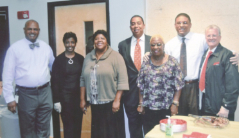
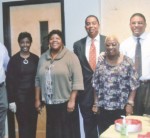
(above l to r): Annie Neasman, CEO – Jessie Trice Community Health Center, Penny Duckham - Executive Director, Kaiser Media Fellowship; and Sherwood Dubose, Board Chairman, Jessie Trice Community Health Center.
 (above l to r):  Annie Neasman, CEO – Jessie Trice Community Health Center, Penny Duckham - Executive Director, Kaiser Media Fellowship; and Sherwood Dubose, Board Chairman, Jessie Trice Community Health Center.
(above l to r): Annie Neasman, CEO – Jessie Trice Community Health Center, Penny Duckham – Executive Director, Kaiser Media Fellowship; and Sherwood Dubose, Board Chairman, Jessie Trice Community Health Center.

Group discussed the Affordable Care Act

BLACK PR WIRE – The Jessie Trice Community Health Center (JTCHC) hosted a meaningful and enlightening health discussion with representatives from the Kaiser Family Foundation and journalists from across the country. This session took place at the Center’s corporate office, in Miami and included officials from Kaiser and health policy journalists from around the country.
“We were delighted to share our thoughts on the Affordable Care Act and engage in this critically important issue with Kaiser and media representatives from around the nation,” shared Annie R. Neasman, RN, MS, President and CEO of the Jessie Trice Community Health Center.
This session was part of Kaiser’s series of national site visits looking at the way different states are implementing The Affordable Care Act. The goal was to provide the invited group of journalists with an in-depth grasp of the different approaches, perspectives and challenges, and to help their reporting on these issues.
During the visit, JTCHC provided an overview of the patients and communities it serves; and shared how that may change as the Affordable Care Act rolls out. The Center also provided a snapshot of demographics, the key health/medical challenges, cultural and linguistic needs; and the current insurance status of patients and their families now, and going forward.

The Jessie Trice Community Health Center, Inc. is a Florida 501 (c) 3, not-for-profit, Federally Qualified Health Center, which has been serving Miami-Dade County since 1967. Its mission is to provide comprehensive primary health care services by increasing access and improving the quality of life of our diverse South Florida community. A community mainstay, JTCHC owns and operates sixteen (16) facilities, including eight (8) Comprehensive Primary Care centers, twenty-five (25) school-based/university centers, and other medical facilities. JTCHC’s multicultural, multilingual, and multidisciplinary staff services a diverse population of 30,000 patients who make more than 130,000 visits annually.

Lung cancer screening beneficial in high-risk groups

0

LUNG CANCER HOUSTON – November marks National Lung Cancer Awareness Month, an ideal time to increase education and awareness about one of the most fatal types of cancer and provide new information about potentially life-saving screening methods, said an expert from Baylor College of Medicine (www.bcm.edu).
“Lung cancer kills more people than breast, prostate and colon cancer combined,” said Dr. Donald Lazarus, an assistant professor of medicine – pulmonary and a member of the NCI-designated Dan L. Duncan Cancer Center at BCM. “It may not be the most common cancer, but the most likely to be lethal.”
Conducting research on the causes of the disease and developing screening methods are critically important, Lazarus said.
“The good news is this year we have even more new data that shows a benefit to screening in high-risk populations, which could contribute to a decrease in lung cancer mortalities,” said Lazarus.
The high-risk group includes people aged 55 to 79 who have a smoking history of 30 pack-years or greater. A pack-year means that someone has smoked an average of one pack of cigarettes per day for a year; one pack smoked a day for 30 years equates to a 30 pack-year history or two packs smoked a day for 15 years).
Major groups such as the American Cancer Society and the U.S. Preventive Services Task Force support recommendations for screening in this group with a low dose CT scan.
If a positive screen comes back from a suspicious nodule, it’s important to see an expert in lung cancer, such as a pulmonologist or medical oncologist, to help you move forward appropriately, said Lazarus.
“Depending on what the screen shows, where the nodule is, how it is shaped and how easy it is to biopsy, the expert will help you decide the next course,” said Lazarus. “It could mean just follow up to note any changes or rule out any false positives.”
Identifying cancer early on in the lungs could prevent spread of the disease and death, he said.
While smoking represents the biggest risk factor for lung cancer, 10 to 15 percent of people who develop the disease are non-smokers.
Other risk factors include occupational and environmental exposures, such as second-hand smoke, which increases risk by 20 to 30 percent, and exposure to radiation such as radon gas, pollution, asbestos, arsenic, nickel, tar, soot and heavy metals.

Prevent foodborne illnesses this holiday season

0

Foodborne Illness    Recent foodborne outbreaks that resulted in hospitalizations should alert Alabamians to follow safe food preparation and storage practices. As the holidays approach and the number of
parties, covered-dish meals and family gatherings increase, the Alabama Department of Public Health promotes safe food handling practices.
“We want to emphasize to the community the importance of preventing foodborne illnesses that could make you and your family too sick to enjoy the holidays,” Dr. Mary McIntyre,
Assistant State Health Officer for Disease Control and Prevention, said. “Cross contamination of food can occur any time harmful germs, such as bacteria, viruses or parasites are
transferred from one food to another.”
Food safety starts at the time you purchase food and take it to the kitchen. Be sure to separate raw food from ready-to-eat food during transport, storage and preparation.
Some simple food safety tips are summarized here:

Clean: Wash hands and food-contact surfaces often. Bacteria can spread throughout the kitchen and get onto cutting boards, knives, sponges and counter tops.
Rinse all fresh fruit and vegetables under running water. Use different cutting boards for raw meats and fresh vegetables.
Separate: Do not cross-contaminate — do not let bacteria spread from one food product to another. This is especially true for raw meat, poultry and seafood.
Keep these foods and their juices away from ready-to-eat foods.
Cook: Cook to proper temperatures. Foods are properly cooked when they are heated for a long enough time and at a high enough temperature to kill the harmful
bacteria that cause foodborne illness. Poultry and stuffing should be cooked to a minimum temperature of 165 degrees F. Use a thermometer in the thickest, most dense part
of the food to be sure. When microwaving, cover, stir and rotate food for even cooking. Reheat sauces, soups and gravies to
a boil. Minimizing the time foods are held in the hazardous temperature zone will lessen the chance of acquiring a foodborne illness. The time-proven rule
applies: keep cold foods cold and hot foods hot.
Chill: Refrigerate foods promptly, because cold temperatures keep most harmful bacteria from growing and multiplying. Refrigerate or freeze foods within two hours
because cold temperatures slow harmful germ growth. Refrigerators should be set at 40 degrees F and freezers at 0 degrees F. Check the accuracy of the settings
occasionally with a thermometer.
Report: Report suspected foodborne illnesses to your local health department. Often calls from concerned citizens are the way outbreaks are first detected.
If a representative from public health contacts you to find out more about an illness you had, your cooperation is important. Many of the foods of the holiday
season may pose special challenges. For example, larger pieces of poultry mean a greater amount of thawing time is needed before cooking to destroy
disease-causing bacteria. Perishable food also may be left too long on buffet tables, allowing bacteria to grow. Eggnog containing uncooked raw eggs can
cause the intestinal infection called salmonellosis.
Those at greatest risk of foodborne illness are infants and young children, pregnant women, older adults, and people with weakened immune systems
caused by cancer treatment, diabetes, AIDS, and bone marrow and organ transplants. By remembering to handle potentially hazardous foods properly,
you can help ensure your family and guests have safe and healthful holiday celebrations.
Information is available on this site at adph.org. Additionally, the U.S. Department of Agriculture has materials on the Partnership for Food Safety Education website (www.fightbac.org)
such as “Limits to Leftovers” and how to shop for, handle, cook and store food that may be useful.

Cancer patients at increased risk for severe flu complications

0

CANCER PATIENTS BIRMINGHAM, Ala. – It is often noted that very young people and the elderly are most at-risk for experiencing flu-related complications, and one expert at the University of Alabama at Birmingham says people with weakened immune systems due to diseases like cancer are also at an increased risk of severe complications from the virus.
“The flu shot is recommended annually for cancer patients, as it is the most effective way to prevent influenza and its complications,” said Mollie deShazo, M.D., associate professor of Medicine in the Division of Hematology and Oncology and medical director of UAB Inpatient Oncology. “The flu vaccine significantly lowers the risk of acquiring the flu; it is not 100 percent effective, but it is the best tool we have.”
Flu activity in the United States is low, even after increasing slightly in recent weeks, according to the Centers for Disease Control and Prevention. However, more activity is expected, and people who have not had a flu vaccine this year are advised to do so.
“It takes up to two weeks to build immunity after a flu shot, but you can benefit even if you get the vaccine after the flu has arrived in your community,” deShazo said.
The flu shot — not the mist — is safe and is recommended for people with cancer.
“Patients with cancer or who are undergoing chemotherapy should not get the flu mist because it contains live flu virus and could lead to complications in immunocompromised patients,” deShazo said, adding:

•    Cancer patients should avoid contact with anyone suspected of having the flu
•    It is prudent to wash hands often and thoroughly with soap and water and avoid touching eyes, nose or mouth whenever possible
•    It is recommended that all caregivers and family members of cancer patients also get the flu vaccine to protect their loved ones

Once one is cancer-free, his or her risk lessens.
“The longer patients are cancer-free, the lower their influenza complication risk, until it is no more than the risk of those who’ve never had the disease,” deShazo said.

What Can Adults Learn from Child Heroes?

0

ChildrenFormer foster child shares examples to emulate

Wisdom does not always come with age – but it’s never too late to try, says Judy Colella.
“On so many levels of our society today, from social media, reality TV and even in our political discourse, children are seeing adults acting reprehensibly,” says Colella, a musician and author of a young adult fantasy, “Overcomer-The Journey,” (www.themacdarachronicles.weebly.com), Book I of The MacDara Chronicles.
“In fact, there are many examples in which children are taking the lead in being leaders and setting the better example.”
They include kids from disadvantaged backgrounds, children with disabilities and youngsters with few positive role models.
“I was able to overcome my childhood obstacles, and I want kids to know that they can, too,” she says. “No one determines what you do in life but you.”
Colella offers some shining examples of children’s actions that can be a lesson for both other children and adults.

•    15-year-old speaks out for education for all: In one of the scariest places on Earth, Malala Yousafzai demonstrated bravery by standing up for her right to an education. She took a Taliban bullet, shot into her skull after her bus was stopped en route home from school, and boomeranged it into one of the group’s worst PR moves. In Pakistan’s Swat Valley, the international terrorist group had intermittently banned girls from school and had targeted Yousafzai for speaking out against the ban. She continues to proactively support education for all children, and was recently listed in Time magazine’s “The 100 Most Influential People in the World.”
•    12-year-old wanted to honor his uncle: After Sam Maden’s uncle died in the winter of 2010, Maden wanted to honor his support of lesbian, gay, bisexual and transgender rights. So, he posted an online petition asking the Boston Red Sox to get in the game by producing an “It Gets Better” video. The videos are the result of a national movement that began in response to a wave of suicides among bullied teens, especially LGBT youth. In less than a week, Maden had 9,000 signatures, and the Red Sox became the third professional sports team to produce a video for the campaign.
•    A birthday wish from 9-year-old Rachel Beckwith: Rachel Beckwith’s birthday wish wasn’t for herself; it was to raise $300 to build wells in Africa. Tragically, Beckwith never had a chance to experience the benefit of her altruism – she died before her 10th birthday. News of the story went viral, inspiring donors to raise more than $1 million for the nonprofit charity. The little girl’s mom was able to visit Africa to witness firsthand how her daughter contributed to saving lives.

“Now these are touching and inspirational stories! While there sometimes seems to be obsessive coverage involving bad-behaving kids – or bad-behaving adults – it’s wonderful to know that there are so many amazing stories of children supporting the most vulnerable in society,” Colella says.